Training your staff on Non-Emergency Medical Transportation (NEMT) dispatch systems is critical for ensuring smooth operations, compliance, and safety. Without proper training, your team risks errors like missed appointments, billing mistakes, and safety violations, which can cost your business and harm your reputation. Here's a quick breakdown of the most effective strategies:
- Assess Skills and Needs: Identify staff skill gaps using data from your dispatch system. Focus on role-specific areas like driver safety, dispatcher efficiency, and billing accuracy.
- Structured Training Programs: Create clear learning goals, phased timelines, and role-specific modules to ensure new hires and existing staff can efficiently handle their responsibilities.
- Hands-On Practice: Use simulations and real-world scenarios to build confidence and prepare staff for challenges like emergencies, cancellations, and compliance issues.
- Ongoing Support: Provide continuous learning through refresher courses, updated materials, and access to resources like tutorials, checklists, and a knowledge base.
- Track Results: Maintain detailed training records and monitor performance metrics like punctuality, error rates, and compliance to measure success and identify areas for improvement.
Assess Staff Skills and System Training Needs
Before diving into training, start by gauging the current skill levels of your staff. Take into account operation-specific challenges like fleet size, types of passengers (e.g., stretcher users versus wheelchair users), and the local regulations your team must follow. For instance, managing a small operation with five vehicles is a completely different ball game compared to coordinating a fleet of 50 spread across multiple counties.
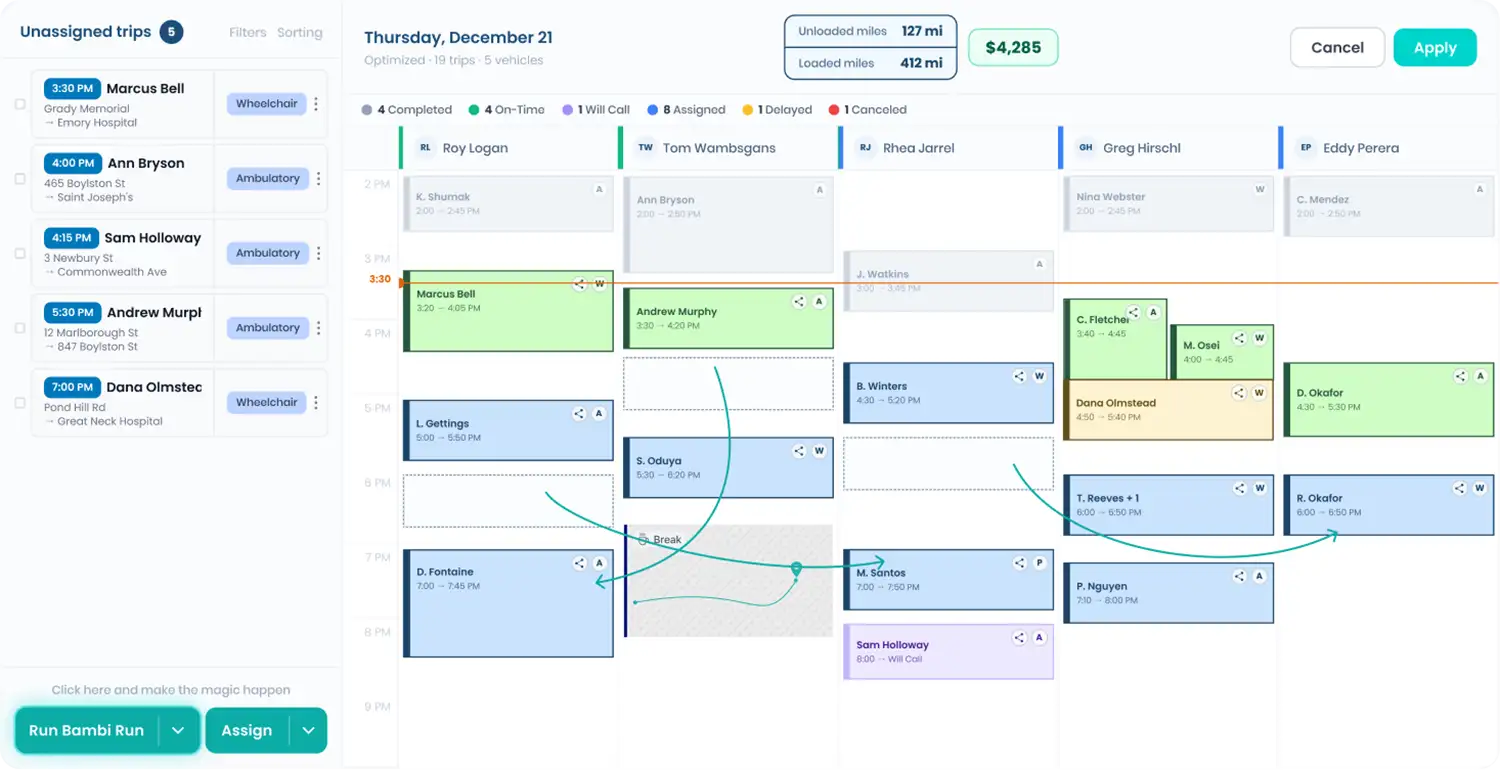
Your dispatch software can be a goldmine for spotting training gaps. Look for patterns in the data - are drivers consistently late? Do dispatchers struggle with optimizing routes? Are billing errors a recurring issue among office staff? These systems often provide real-time information on driver punctuality and adherence to safety protocols, giving you immediate insight into who might need extra support.
Drill down into role-specific skills to ensure everyone is equipped for their responsibilities:
- Drivers should be proficient in vehicle safety, patient handling, and defensive driving techniques.
- Dispatchers need to excel in call processing, radio communications, and managing emergencies.
- Office staff must stay on top of Medicaid billing guidelines, which can change annually.
To truly understand how your team performs under pressure, include scenario-based simulations in your assessments. See how they handle unexpected situations like last-minute cancellations, patient emergencies, or vehicle breakdowns during peak traffic hours.
Don’t forget to review certifications, background checks, and other essential documentation for your drivers. Missing or expired credentials can be flagged using your dispatch system's automated alerts and digital logs, making it easier to stay compliant.
Once you’ve identified the gaps, prioritize training based on your dispatch system's features and your business goals. For example, if reducing no-shows is a key focus, train staff on automated scheduling tools and patient communication protocols. If billing accuracy is a pain point, emphasize training on specialized billing modules designed to minimize errors. Each training initiative should tie directly to measurable improvements, such as higher trip volumes, better on-time performance, or fewer compliance issues.
Build a Structured Training Program

Once you've identified the areas where your team needs support, the next step is to create a training program that's well-organized, practical, and easy to maintain. Why does this matter? Because a lack of structure can be costly - 39% of job seekers leave their roles within six months due to poor onboarding experiences.
Start by distinguishing between onboarding and technical training. Onboarding is about introducing new hires to your company’s mission and culture, while technical training zeroes in on the specific tasks they’ll handle daily. Before their first day, outline what each new hire needs to know and decide how to deliver that information - whether through online modules, hands-on practice, or daily check-ins. Breaking training into smaller, weekly segments can help improve retention and make the process less overwhelming.
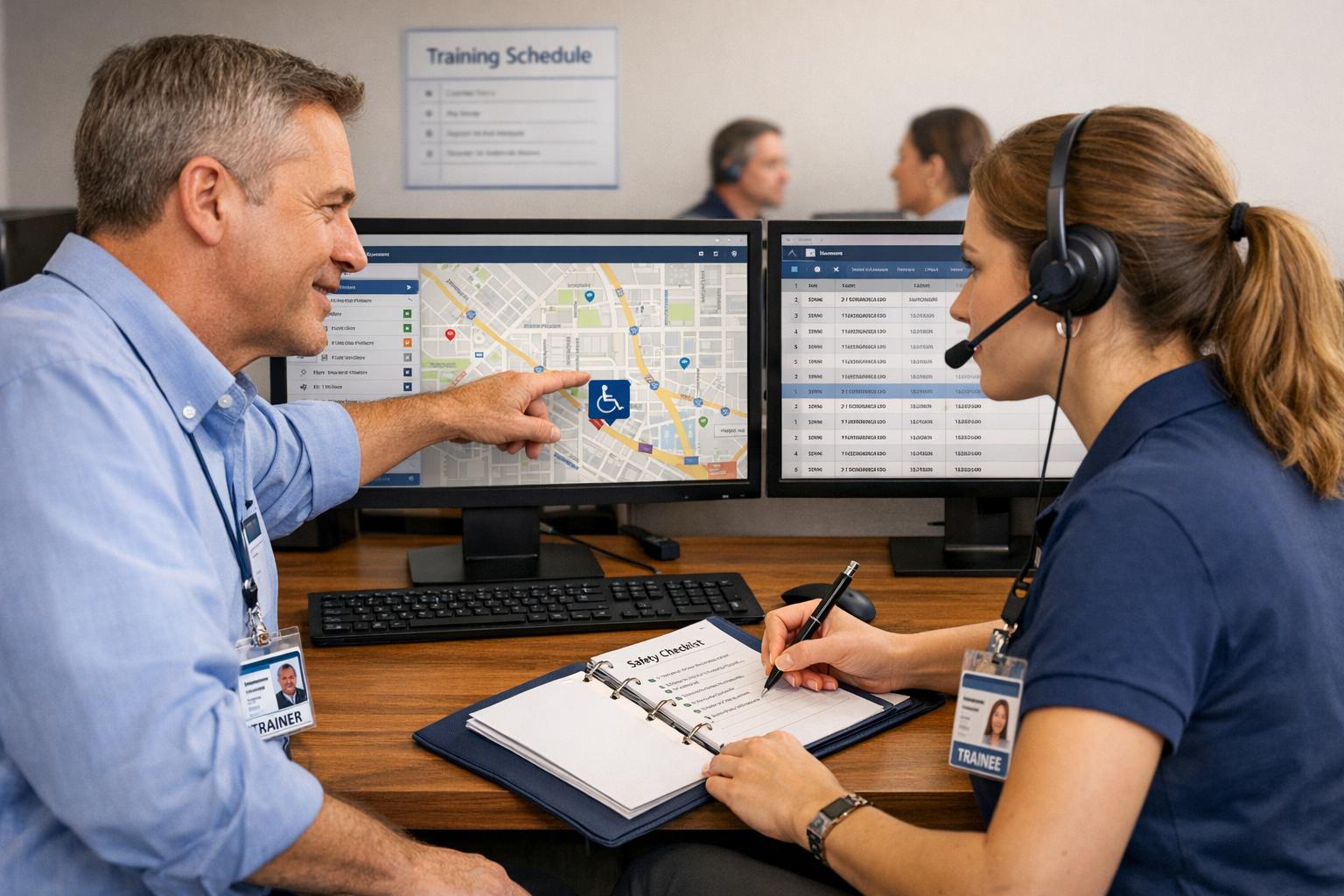
Pairing new hires with senior team members as mentors is another key step. Mentors can provide personalized guidance and ensure that tasks are being performed correctly. Regular check-ins during the training period also allow for timely feedback and quick adjustments if challenges arise. This structured approach ensures that employees feel supported from the start.
Define Learning Goals and Training Schedules
Clear and measurable goals are essential for a structured training process. For example, a new dispatcher might aim to process 20 trips without errors by the end of their second week. Meanwhile, a driver could be expected to complete vehicle inspections independently by the end of their first week. These short-term milestones give employees a sense of progress and help clarify expectations.
Create a phased training timeline that includes onboarding, hands-on exercises, and periodic refreshers. For instance, in some regions, NEMT drivers are required to complete defensive driving and Passenger Service and Safety (PASS) courses within three months of hire and then renew them every three years. Incorporate these mandatory deadlines into your training calendar from the start. Additionally, schedule regular updates on HIPAA regulations, Medicaid billing practices, and safety protocols to ensure your team stays current.
Create Training Modules for Different Roles
Tailor training modules to meet the unique needs of each role within your organization. Drivers, dispatchers, and office staff all face different responsibilities, so their training should reflect that. For example:
- Drivers should focus on defensive driving, vehicle inspections, safe patient handling (including lifting and boarding techniques), and emergency response procedures.
- Dispatchers need training on route optimization, verifying driver certifications, monitoring schedule adherence, and maintaining HIPAA-compliant trip records.
- Office staff should concentrate on billing accuracy, identifying and reporting fraud, and staying up-to-date on regulatory documentation.
Here’s a quick breakdown of role-specific training schedules:
RoleFocus AreasScheduleDriversDefensive driving, vehicle safety, patient handling, emergency responseWithin 3 months of hire; refreshers every 3 years DispatchersRoute optimization, certification checks, schedule monitoring, HIPAA complianceInitial onboarding; continuous monitoring Office StaffBilling accuracy, Medicaid regulations, fraud preventionInitial onboarding; annual refreshers
In addition to role-specific training, ensure all employees complete shared training on ADA requirements, state DOT regulations, emergency preparedness, and dispatch software for compliance tracking. This ensures that everyone is aligned on essential standards and protocols.
Use Hands-On Training Techniques
Building on structured training and role-specific modules, hands-on techniques help transform theoretical knowledge into practical expertise. This kind of training boosts confidence and sharpens real-time decision-making skills, ensuring your team can handle high-pressure situations effectively.
By practicing in a controlled environment before facing real-world operations, your team is better prepared to act decisively when emergencies arise. This preparation is especially critical given the alarming 19% rise in traffic-related deaths between 2019 and 2022. Whether it’s managing a patient showing stroke symptoms mid-transport or dealing with a vehicle breakdown in extreme weather, practical training ensures your staff knows what to do.
Run Practice Scenarios and Simulations
Realistic simulations are a great way to prepare your team for the challenges they’ll face on the job. Medical emergencies like strokes, heart attacks, or asthma attacks should be part of the practice routine to help staff stabilize patients effectively. As Nygel Varghese highlights:
"A prepared driver can make all the difference if a patient feels unwell, needs medication, or is in distress due to unforeseen complications" - Nygel Varghese, Content Creator
Operational challenges like vehicle breakdowns during severe weather or navigating emergency detours in floods should also be included. Additionally, practice handling software-related issues such as no-shows, last-minute cancellations, and correcting incorrect pickup addresses.
Don’t overlook compliance training. Scenarios involving potential Medicaid fraud - like phantom trips or forged documents - should be part of the program. Staff should also practice maintaining HIPAA-compliant records. These sessions are not just educational; they help shield your organization from financial risks, as fraud penalties can climb into the tens of thousands, and personal injury settlements can reach millions.
Use Software Tutorials and Training Resources
Pair hands-on simulations with structured software training. Tutorials, checklists, and webinars are excellent tools to help staff get comfortable with the system before managing live operations. For example, video tutorials typically take about 2.5 hours, while quick-start checklists can guide setup in just 30 minutes.
Break the training into role-specific modules for better focus. Drivers should concentrate on mastering the mobile app, GPS navigation, and trip acceptance processes. Dispatchers, on the other hand, need to focus on scheduling, route optimization, and communication tools. Office staff will benefit from training on billing and reporting functions.
To further enhance learning, schedule weekly live sessions with software experts to address operational questions. Provide access to a searchable knowledge base where staff can troubleshoot issues independently. A sandbox environment is especially useful, allowing your team to practice trip management and route planning without any real-world consequences.
Provide Continued Support and Learning Resources
Training doesn’t stop after onboarding; it’s an ongoing process. Continuous support ensures your team stays sharp and adapts as systems and requirements change. While initial hands-on training builds foundational skills, ongoing learning resources help maintain high performance. For brokers, recurring training is often a must to meet compliance standards and retain contracts. This approach reinforces best practices and deepens system expertise over time.
Keeping up with continuous training also helps minimize operational errors and ensures compliance with evolving regulations like ADA, HIPAA, and Medicaid. This not only protects your business from legal penalties but also reduces risks of accidents and personal injury lawsuits by reinforcing safety protocols.
Make Reference Materials Available
Quick-access resources are essential for troubleshooting on the job. A centralized knowledge hub can include quick reference guides, staff manuals, emergency checklists, and compliance booklets. These materials should cover everything from software shortcuts and troubleshooting steps to safety protocols, ADA requirements, HIPAA privacy rules, Medicaid fraud prevention, and DOT standards.
Enhance these resources with tutorial modules that provide step-by-step walkthroughs for dispatch and billing software. Integrating digital logs and automated alerts into your software can also help by sending real-time compliance notifications, such as reminders when driver certifications are close to expiring.
Hold Regular Follow-Up Training Sessions
Accessible reference materials are great, but structured follow-up training is just as important for maintaining skills. Schedule refresher sessions annually or semi-annually to revisit key topics, introduce software updates, and reinforce best practices. Keep these sessions short and focused by breaking them into weekly segments rather than lengthy, one-time meetings. Use data from help desk calls and IT support logs to identify areas where employees might be struggling or avoiding certain features.
"A spike in queries about specific features or frequent issues with the same tool can indicate a gap in your training."
Peer-led training can also be incredibly effective. Encourage tech-savvy team members to lead mini-lessons or share tips, making the process feel more approachable. After each session, gather feedback through digital surveys or anonymous suggestion boxes to uncover challenges employees might not feel comfortable sharing openly. Finally, track performance metrics - like task completion times and error rates - to assess whether the training is making a measurable difference.
Monitor Training Results and Measure Impact
Measuring the outcomes of your training programs is essential to ensure operational improvements, pinpoint skill gaps, and meet compliance standards. Without solid data, it's impossible to confirm the effectiveness of your training efforts. By analyzing results, you can identify what’s working, address areas where employees may need additional support, and maintain compliance when brokers or auditors request documentation. This ongoing process not only supports continuous improvement but also ensures your training aligns with regulatory and operational requirements.
Keep Training Documentation
Maintaining detailed training records is crucial for meeting compliance requirements. These records should include information on who attended, what topics were covered, and when the training took place. For instance, some brokers have strict guidelines: Logisticare mandates training within 90 days of the initial contract and annually thereafter, while MTM requires specific HIPAA and Fraud, Waste, and Abuse (FWA) training for all providers and drivers.
Using tools like a Learning Management System (LMS) or NEMT-specific dispatch software can simplify this process. Digital logs minimize human error, create clear audit trails, and streamline performance reviews. Strive for 100% documentation completion for all active staff to meet broker and regulatory standards.
Track Performance Metrics
Accurate tracking of performance metrics ensures that your training efforts deliver measurable value. Focus on key indicators that reflect the efficiency and accuracy of your operations. For example, aim for an average triage time of around 2 hours and an incident response time under 30 minutes. A strong First Contact Resolution Rate - typically between 70-80% - indicates that dispatchers are effectively resolving issues without requiring follow-ups.
Operational accuracy can also be evaluated by monitoring scheduling errors, no-show rates, and billing inaccuracies. These metrics reveal whether employees are applying their training effectively. Additionally, Customer Satisfaction Scores (CSAT) above 90% or ratings of 4.5 out of 5 are strong indicators of success. Dispatch software can help you quickly identify areas that need improvement and guide targeted interventions.
"Measuring learning outcomes - especially as they translate into business results - is the one key thing you can do to ensure [budget cuts do not happen]."
Conclusion
Training your team on NEMT dispatch systems forms the backbone of your entire operation. By designing training programs that align with your fleet’s needs, passenger requirements, and local regulations, you’re setting your staff up for success. Tailored instruction strengthens daily operations and ensures your team is prepared to handle the unique challenges of your business.
The best training combines hands-on learning with ongoing support. Activities like role-playing emergencies and running simulations help employees retain knowledge more effectively than traditional lectures. Incorporating dispatch software into these sessions and using real-time data to offer practical feedback boosts efficiency. This mix of practical exercises and technology-driven insights creates a foundation for consistent operational improvement.
As technology evolves and regulations shift, continuous learning becomes essential. Regular refresher courses keep your team up-to-date on compliance requirements and system updates. This approach minimizes errors, ensures smoother audits, and builds confidence during broker reviews.
Finally, tracking training metrics and maintaining thorough documentation demonstrate the value of your efforts. Showing brokers and auditors detailed records of who completed training and when not only protects your contracts but also strengthens your reputation. A strong training strategy goes beyond safety - it enhances your business's resilience and profitability. By investing in your team’s growth, you’re investing in the long-term success of your operation.
FAQs
How can I evaluate my staff's skills and determine their training needs for NEMT dispatch systems?
To evaluate your team's proficiency with NEMT dispatch systems and pinpoint areas for training, begin by outlining the essential tasks they need to handle. These might include scheduling rides, managing real-time updates, and ensuring all operations meet compliance standards. Pay close attention to their daily interactions with the system. Are there moments of hesitation or recurring mistakes? These can be valuable clues.
You can also use quick surveys or quizzes to measure their confidence and practical understanding of the system. Dive into performance data - such as on-time pickups or error rates - to uncover patterns or recurring issues. Direct conversations with team members can provide even more insight, revealing challenges they encounter or features they find confusing.
Once you've gathered all this information, focus on the most pressing skill gaps and develop a targeted training plan. This way, your team gets the specific support they need to improve and succeed in their roles.
What are the essential steps for training staff on NEMT dispatch systems?
Training staff to effectively use NEMT dispatch systems requires a structured approach to ensure they’re equipped to deliver excellent service. Start by implementing a detailed training program that walks them through system navigation, scheduling processes, and compliance with state and federal regulations, including Medicare and Medicaid requirements.
Include hands-on practice with simulations and real-life scenarios. This allows staff to get comfortable using the system while tackling common challenges, such as managing emergency situations or handling specialized equipment. To keep skills fresh and foster ongoing growth, schedule regular coaching sessions and refresher courses.
Make safety training a top priority by covering essential topics like driver screening, vehicle inspections, and emergency response procedures. Leverage tools such as GPS tracking and real-time communication to boost both safety and operational efficiency. By following these steps, your team will be well-equipped to manage dispatch operations with confidence and precision.
How does hands-on training improve staff proficiency with NEMT dispatch systems?
Hands-on training gives employees the chance to practice workflows in a way that mirrors real-life scenarios. By working directly with the NEMT dispatch platform during simulations or role-playing exercises, staff can see how tools like routing, scheduling, and communication systems function together. This method not only boosts their understanding but also helps them feel more confident and prepared to make decisions.
Interactive features, such as GPS demonstrations or in-platform alerts, allow employees to explore the system in a low-pressure setting. This reduces the likelihood of mistakes when the platform is live. The practical, on-the-spot experience ensures knowledge sticks longer, equips staff to solve problems effectively, and leads to smoother, more efficient dispatch operations.