

Your NEMT vehicle decals are more than just stickers - they’re a critical part of your business. They ensure compliance, build trust with passengers, and act as mobile advertisements. Here’s what you need to know:
- What They Are: Decals display your company name, logo, contact info, and required identifiers. Unlike full wraps, decals focus on key details and are durable, lasting 3-5 years.
- Why They Matter: They reassure passengers, meet regulations, and generate up to 70,000 daily impressions, boosting your brand visibility.
- Key Design Tips: Use high-contrast colors, simple fonts, and concise messaging. Ensure visibility from 100 feet away and place decals on doors, rear panels, and other strategic areas.
- Compliance: Follow state and local rules, such as minimum font sizes, placement of identifiers, and avoiding terms like "Medicaid" to protect privacy.
- Material Choices: Opt for cast vinyl for long-term use or calendared vinyl for flat surfaces. Reflective vinyl improves safety at night.
- Installation: Professional installation ensures a smooth finish, while DIY is cost-effective for smaller decals.
- Maintenance: Regular cleaning and inspections prevent wear and tear. Replace damaged or outdated decals promptly.
Your decals are the first impression of your business - make them count. Keep them clear, compliant, and professional to reinforce your brand and build trust.
Planning Your Branding and Messaging
Before diving into decal design, take a moment to define the core values and standout features of your NEMT business. Your decals should embody your company's essence - qualities like professionalism, safety, reliability, and compassion - all rooted in your mission and the needs of your clients. Think about what makes your service stand out. Is it 24/7 availability, specialized wheelchair equipment, or bilingual staff? Pick one or two of these unique selling points to craft a concise, memorable tagline that sets you apart. From there, ensure your decal design aligns seamlessly with your brand identity.
Matching Decals to Your NEMT Brand
Consistency is key when it comes to branding. Your logo, colors, fonts, and messaging should be uniform across all platforms to strengthen recognition. Colors, for instance, can communicate a lot: blue conveys trust and professionalism, while green suggests health and tranquility. Use high-contrast color combinations, like white on dark backgrounds, to ensure your decals stand out and remain easy to read.
Typography also plays a big role. Serif fonts can give off a traditional, dependable vibe, while sans-serif fonts feel modern and approachable. Whatever you choose, make sure the font is easy to read, especially when scaled for vehicle decals. Avoid decorative or script fonts that might blur or become unreadable when the vehicle is in motion. Once the visual elements are sorted, focus on the essential details your decals need to communicate.
What Information to Include on Decals
Your decals should include key information for both compliance and marketing purposes. This typically means featuring your full company name, logo, vehicle number (at least 3 inches in height), phone number for service requests, and possibly your service areas. Place these elements prominently on both sides of the vehicle using contrasting colors for visibility. Don’t forget to include any required city-issued decals on the front and back windows. To protect rider privacy and comply with HIPAA, avoid using terms like "Medicaid." Instead, consider adding a brief service description, such as "Non-Emergency Medical Transportation" or "Wheelchair & Stretcher Transport", to clarify your offerings.
Making Decals Easy to Read
Clear messaging is non-negotiable. Your decals should be easy to read from a distance, ensuring both safety and effective branding. High-contrast colors - like dark text on a light background - paired with clean, sans-serif fonts work best. Key details, like your company name and phone number, should have a minimum letter height of 3 inches. A good rule of thumb is to use 1 inch of letter height for every 25 feet of viewing distance, which means properly sized text can be visible from up to 100 feet away.
Keep the text concise and avoid clutter; too much information can make your decals harder to read and less impactful. Before finalizing your design, test it out. View it from various distances, angles, and even while the vehicle is in motion to ensure everything remains clear and legible.
Creating Effective Decal Designs
When designing decals for your vehicles, think about how to translate your branding into visuals that make an impact on the road. The goal? Create designs that are simple, clear, and calming - qualities that help reassure passengers, especially those feeling uneasy about medical appointments or transportation needs.
Design Principles for NEMT Decals
First and foremost, focus on simplicity. A clean, uncluttered design is easier to recognize and works well across different formats - whether it’s shrunk down to a business card or stretched across the side of a van. Test your design at various sizes and even in black and white to ensure it remains legible and effective. This kind of versatility is key when your branding needs to be consistent across multiple platforms.
Color psychology is another critical consideration. Colors like blue convey trust, reliability, and professionalism, while green evokes health, wellness, and calmness. These tones can help create a sense of ease for riders without causing confusion with emergency vehicles. Avoid red-heavy designs, red lights, or cross symbols, as they might make your vehicle resemble an ambulance. This could lead to public confusion, compromise safety, or even violate local regulations that distinguish non-emergency transport from emergency services.
When it comes to fonts, sans-serif options like Arial or Helvetica are ideal. They offer a modern, approachable look and are easy to read - even from a distance. Since your vehicle will often be on the move, ensure the text is legible from 50 to 100 feet away. Use high-contrast color combinations to make your message stand out, and place your design thoughtfully to balance aesthetics with compliance.
Where to Place Decals on Vehicles
Strategic placement is just as important as an eye-catching design. The sides of your vehicle, especially the doors and lower body panels, are prime real estate for visibility. Include your business name, logo, and phone number in letters at least 3 inches high, using contrasting colors to enhance readability. Position key details at eye level - around 4 to 6 feet high - for maximum impact.
The rear doors are another valuable spot for branding. Other drivers often spend time behind your vehicle at stoplights, giving them a chance to notice your company details. Just make sure your decals don’t obscure safety labels, inspection stickers, license plate decals, mirrors, windows, or headlights. Also, keep city-issued decals in mind - placing them in the lower right corner of the passenger-side rear window is usually a safe bet that won’t block the driver’s view.
Be mindful of functional elements. Avoid placing decals over wheelchair ramps, emergency exits, or ventilation areas. Keeping your vehicle’s exterior clean and professional ensures your decals enhance rather than interfere with your vehicle’s functionality.
Adjusting Designs for Different Vehicle Types
Each vehicle type comes with its own design challenges, so adapt your decals to fit the dimensions and features of each one.
For sedans, space is limited. Focus on the rear bumper and side doors, keeping text at least 3 inches tall. Highlight your logo and phone number, and avoid overcrowding the design with too much information.
Vans provide more space, making them ideal for larger side panels. Use this extra real estate to feature your full branding package, including services and contact details. Place large, high-contrast logos and company names on the side panels and rear doors for visibility from multiple angles.
Minibuses can accommodate full-side wraps with detailed graphics. However, be mindful of the vehicle’s curves and avoid placing text or images where they might distort or break awkwardly. Scale your designs proportionally and test them on each vehicle size to ensure they stay balanced and readable. While your branding should remain consistent across your fleet, it’s important to tailor each design to the unique dimensions and surfaces of each vehicle type.
Selecting Materials and Installation Methods
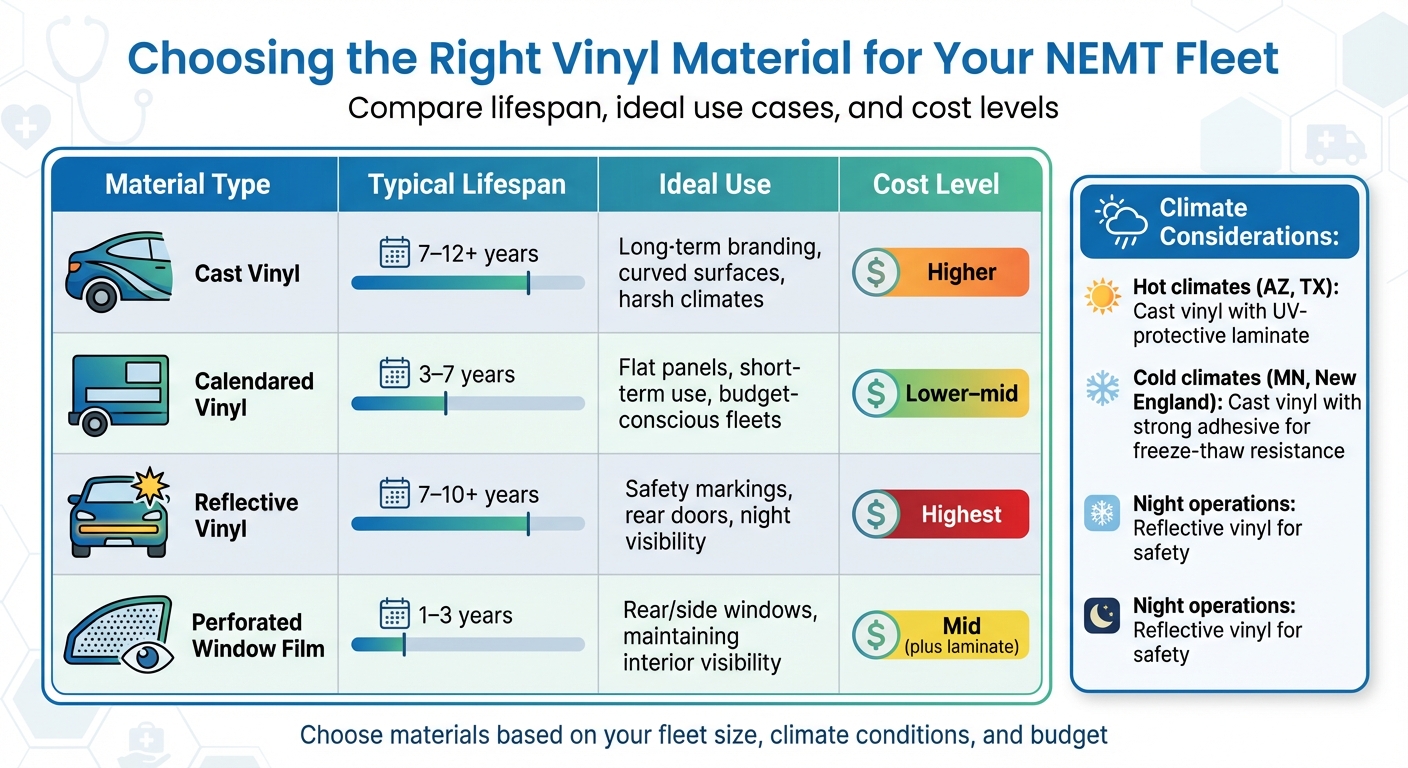
The materials you choose for your decals directly affect their durability, appearance, and overall expense. Cast vinyl is often the top pick for its thin, flexible nature, which allows it to conform seamlessly to curves and complex surfaces - perfect for vehicles like vans and minibuses. This type of vinyl can last 7–12+ years in moderate climates, standing up to frequent washing and temperature changes. On the other hand, calendared vinyl is thicker and less flexible, making it better suited for flat surfaces like sedan doors or van panels. It's a more budget-friendly option, with a lifespan of 3–7 years, depending on whether you go with monomeric (shorter lifespan) or polymeric (longer lifespan) formulations.
Climate plays a big role in material selection. If your fleet operates in sunny states like Arizona or Texas, cast vinyl with UV-protective laminate helps prevent fading and adhesive damage. For colder regions like Minnesota or New England, where freeze-thaw cycles and road salt are common, cast vinyl with strong adhesive ensures resistance to cracking and peeling. Reflective vinyl is another smart choice for safety, especially on rear doors and bumpers, as it enhances visibility by reflecting headlights - ideal for vehicles operating during early morning or evening hours. For windows, perforated window film is a great option, allowing you to display graphics while maintaining visibility from inside. However, it typically lasts only 1–3 years and requires proper lamination to avoid moisture and dirt buildup.
Choosing the Right Vinyl Materials
If your vehicles are expected to remain in service for five or more years, cast vinyl with lamination is a sound investment, as it minimizes the need for frequent replacements. For smaller fleets, calendared vinyl can be used on flat panels, while premium materials are reserved for high-wear areas. This strategy can reduce initial costs by 20–40% without compromising a professional look. Larger fleets, especially those with ten or more vehicles, often opt for cast vinyl across the board to ensure consistent branding and a lower total cost of ownership over time.
Material TypeTypical LifespanIdeal UseCost LevelCast Vinyl7–12+ yearsLong-term branding, curved surfaces, harsh climatesHigherCalendared Vinyl3–7 yearsFlat panels, short-term use, budget-conscious fleetsLower–midReflective Vinyl7–10+ yearsSafety markings, rear doors, night visibilityHighestPerforated Window Film1–3 yearsRear/side windows, maintaining interior visibilityMid (plus laminate)
Once you've selected the right vinyl, the next decision is whether to go with professional installation or tackle the job yourself.
Professional vs. DIY Installation
For full wraps or vehicles with complex surfaces - like Sprinter vans - professional installation is highly recommended. Experts have the tools and skills to handle tricky areas, ensuring a smooth, bubble-free finish. Professional installation for a single van can range from a few hundred dollars for simple decals to over $1,000 for a full wrap, often with a workmanship warranty included.
If you're working with smaller decals on flat surfaces, DIY installation can save money. However, it comes with risks. Errors like trapped dust, overstretched vinyl, or uneven cuts can lead to an unprofessional appearance and the need to reorder materials, negating the cost savings. For best results, use masking tape to mark reference lines along body panels or door handles to ensure logos and text are properly aligned. Avoid applying decals over damaged areas, rust, or textured plastic that could interfere with adhesion. Also, make sure decals don't block critical windows or regulatory markings.
Maintaining and Replacing Decals
Proper upkeep is key to extending the life of your decals. Wash them with automotive detergent and a soft cloth, steering clear of abrasive pads, harsh chemicals, or gasoline-based cleaners. If using a pressure washer, keep the nozzle at least 12–18 inches away from the edges to prevent lifting. In sunny areas, parking in shaded spots can help reduce UV damage and fading.
Inspect decals regularly - weekly or during routine maintenance - for signs of bubbling, cracks, or peeling, particularly on the south- and west-facing sides of vehicles. Replace decals when key information becomes unreadable or when more than 20–30% of the graphic is damaged. Regulatory decals, such as those showing your company name or vehicle ID numbers, must be repaired or replaced immediately to stay compliant with local laws.
If your business updates its branding, website, or contact information, make sure to update your decals as well. Some fleet operators prefer to refresh their decals on a set schedule - every five to seven years - to ensure all vehicles maintain a consistent, professional appearance.
Meeting Regulations and Safety Standards
To ensure your decals not only enhance your professional image but also comply with regulations, it's essential to meet all legal labeling requirements. Finalizing your decal design without adhering to these standards could lead to failed inspections, denied permits, or even contract termination. Both state and local rules, as well as contract-specific guidelines, need careful attention.
State and Local Requirements
In most states, NEMT vehicles must display your business name and phone number on both sides of the vehicle. The lettering should be at least 3 inches high and must stand out clearly against the background color for visibility. Additionally, an inspection sticker showing your license plate number and VIN in permanent ink is required on the lower right corner of the passenger-side rear window.
Local regulations often add more specific requirements. For instance, in Broward County, Florida, signage must include the company name, phone number, and unit number in bold letters at least 1.5 inches high. These must be visible from 32.8 feet, and three vehicle photos are needed for permit approval. Meanwhile, in Virginia, the Department of Medical Assistance Services (DMAS) enforces strict rules: vehicles must not display the words "Medicaid" or "FAMIS", as this violates HIPAA privacy laws. Additionally, exterior cleanliness is mandatory.
There are also restrictions on markings that could resemble emergency vehicles. For example, unless licensed by the Office of Emergency Medical Services, you cannot use the Star of Life emblem, flashing lights, sirens, or any symbols that could confuse your vehicle with an ambulance. Once state and local laws are addressed, it’s important to also consider contract-specific and accessibility requirements.
Contract and Accessibility Standards
Medicaid and broker contracts often come with extra branding rules. For example, many contracts prohibit the use of terms like "Medicaid" to protect rider privacy. Some brokers may require specific identifiers, such as a toll-free number or complaint procedures, to be displayed inside the vehicle where passengers can easily see them. These details must also be available in written format.
Decals should never block safety labels or ADA-compliant information. This includes instructions for seat belts, wheelchair securement, and climate control settings (e.g., cooling at 68°F and heating at 74°F). Interior displays, such as the vehicle license number and toll-free or TTY numbers, must remain visible and unobstructed. For wheelchair-accessible vehicles, ensure decals don’t interfere with securement belt indicators or tools like seat belt cutters, which drivers may need to access quickly. With these guidelines in mind, it’s time to weigh branding strategies against rider privacy.
Balancing Branding and Rider Privacy
Deciding between fully branded and minimally branded vehicles is a critical choice, as it impacts both visibility and rider comfort. Fully branded vehicles are highly visible and build trust, but they can also signal medical transport, which may cause discomfort for riders in residential areas or senior living communities.
Minimally branded vehicles, on the other hand, focus on discretion. By displaying only the required business name and phone number, you protect rider anonymity and avoid drawing unwanted attention. This approach can improve community perception and enhance security by making vehicles less identifiable as medical transport. However, it may limit your marketing reach and reduce brand recognition.
AspectFully BrandedMinimally BrandedPrivacyHigh visibility but highlights medical useProtects rider anonymitySecurityEasy identification but may attract incidentsBlends in, lowers visibilityCommunity PerceptionProfessional but may carry stigmaNeutral and approachableMarketing ReachStrong brand recallLimited brand exposure
Before implementing your decal strategy, review your state’s DMV regulations, local ordinances, and broker contract requirements. Submit vehicle photos for pre-approval if needed, and schedule regular compliance checks to ensure you stay up to date with evolving rules.
Managing Decals Across Your Fleet
After designing decals that meet regulations and choosing materials, the next step is ensuring a consistent rollout across your entire fleet. Without clear guidelines, your vehicles could end up with mismatched designs, faded graphics, or outdated details. A structured approach keeps your fleet looking professional, compliant, and aligned with your brand.
Creating Fleet-Wide Decal Standards
Begin by establishing a standard layout for all vehicles, specifying what information should be included - like your company name, phone number, website, vehicle ID, and any required permit or accessibility symbols. Opt for simple, sans-serif fonts that are easy to read from at least 50 feet away, and set clear contrast rules (dark text on light vehicles, light text on darker ones).
Next, create placement diagrams for each vehicle type. Use photos of every model in your fleet - sedans, vans, and wheelchair-accessible vehicles - and mark where decals should go. Measure distances from key features like door edges or windows, and note maximum sizes to avoid blocking safety equipment or visibility. For instance, if San Diego County requires vehicle body numbers on the left front, right front, and rear, your diagram should pinpoint their exact locations. Share these diagrams with installers to maintain consistency.
Standardize regulatory and accessibility markings as well. Specify where city-issued permits should go (such as Portland’s requirement for front and rear window placements) and ensure ADA symbols are positioned near wheelchair ramps or lifts for easy identification. Exclude unrelated stickers like political messages or ads to maintain a clean, professional look.
Once your standards are in place, test them with a controlled rollout.
Rolling Out Decals to Your Fleet
Before applying decals across your entire fleet, test the design on a few vehicles. Choose one sedan, one standard van, and one wheelchair-accessible van to apply the full decal set. Gather feedback from stakeholders, including drivers, dispatchers, and riders. Ask if the decals are easily visible at pickup zones, if glare affects readability, or if placement interferes with visibility or vehicle functions. Address any issues flagged by city inspectors, such as incorrect placement or missing permit stickers, before moving forward.
Once refined, proceed with phased installations to minimize downtime. Start with vehicles that need immediate updates - like those requiring new permits or corrected contact information. Prioritize high-visibility vehicles and those already scheduled for maintenance. Coordinate with your graphics vendor and internal team to combine decal installations with routine services like oil changes or inspections.
Before returning each vehicle to service, double-check decal placement using a checklist. Ensure all required elements - company name, contact details, vehicle ID, regulatory stickers, and accessibility symbols - are present, aligned, and free of bubbles. Track completed installations in a shared system to confirm full fleet coverage.
Communicate the updates to your team and customers. Inform drivers and dispatchers about the rollout schedule and share photos of the new designs. For riders and facility partners, distribute flyers or emails with images of the updated vehicles so they know what to expect. If you use software like Bambi, you can send in-app notifications to reduce confusion about the new identifiers.
Reviewing and Updating Decals
Maintaining decal quality is essential for preserving your brand image and staying compliant. Over time, decals can fade, peel, or get damaged, so schedule regular inspections to keep them in good condition. Many operators align decal checks with monthly or quarterly vehicle safety reviews. During inspections, verify that all required information - like your company name, phone number, and regulatory stickers - is legible and intact. Ensure no decals obstruct the driver’s view or cover safety labels, and confirm that accessibility symbols near wheelchair lifts remain visible and clean.
Pay close attention to high-wear areas like rear doors and side panels, where exposure to sunlight and contact with loading equipment can cause faster deterioration. If you notice bubbling, cracking, or fading, classify the issue as cosmetic or compliance-related and set a repair deadline. For example, Portland regulations require vehicles to be "free of dirt, grease, grime, glue, or tape" on their exteriors, so use proper tools and cleaners to replace damaged decals without leaving residue.
Certain situations require mandatory updates. Changes like rebranding (new logos or colors), updated contact details, or new regulatory requirements (such as revised permits or ADA guidelines) will necessitate fleet-wide decal replacements. Expanding into new regions with different rules or merging with another company can also mean adjusting designs and layouts.
Keep track of decal versions and renewal dates in your fleet management system, and set alerts for updates. Many city and county permits - and their associated decals - expire annually on the same date as your company permit. When retiring or selling a vehicle, remember that some jurisdictions require official permit stickers to be removed and returned within a specific timeframe (often 21 days) to avoid penalties for unreturned decals. Establish a process to handle this efficiently.
Conclusion
This guide highlights how carefully designed and well-maintained decals play a pivotal role in the success of NEMT operations. Decals are more than just decorative features - they are essential for meeting compliance standards and serve as mobile advertisements for your business. Every choice you make, from crafting your branding and messaging to selecting durable vinyl materials and ensuring compliance with state regulations, directly impacts how the public perceives your service. Keeping decals in top condition not only conveys professionalism but also fosters trust and helps fulfill contract requirements.
Start by reviewing your fleet. Make sure every vehicle displays the necessary information clearly and complies with local regulations. Standardize your designs, test for readability, and invest in professional installation to avoid common issues like misaligned graphics or air bubbles. Routine inspections are key to maintaining the appearance and effectiveness of your decals, ensuring they remain intact and visible, which reinforces your professional image. This attention to detail enhances your overall fleet strategy.
Decals work best when paired with efficient scheduling, clear communication, and excellent service delivery. For more tips on fleet management, compliance, and strategies to grow your NEMT business - like improving dispatch systems or enhancing patient care - check out the Bambi NEMT blog. By implementing these practices, you’ll ensure your fleet not only meets standards but also reflects your dedication to high-quality service. Remember, your decals are often the first impression of your business - make sure they showcase your professionalism and commitment.
FAQs
How do I make sure my NEMT vehicle decals meet local regulations?
To make sure your NEMT vehicle decals meet local regulations, start by reviewing the specific rules set by your state and local transportation authorities. These guidelines often cover decal size, color, placement, and required details like your company name and contact information.
Your decals should be clear, easy to read, and professionally designed to ensure both compliance and safety. Opt for durable materials that can handle various weather conditions while staying visible. It’s smart to check with your state’s DMV or transportation department for any additional requirements to avoid potential violations. Staying updated on these rules will help you design decals that are both effective and fully compliant.
What materials should I use for durable NEMT vehicle decals?
When it comes to durable, long-lasting decals for NEMT vehicles, cast vinyl stands out as the top choice. This material is built to handle harsh weather conditions, retain its appearance over time, and withstand frequent cleaning without peeling or fading.
What makes cast vinyl even more appealing is its flexibility. It adheres seamlessly to curved surfaces like vehicle doors, providing a sleek and professional finish. Plus, it’s tough enough to handle daily challenges like sun exposure, rain, and temperature fluctuations without losing its integrity.
How can I keep my NEMT vehicle decals in good condition and replace them when needed?
To ensure your NEMT vehicle decals remain professional and easy to read, make it a habit to check them regularly for any signs of wear. Look out for issues like peeling edges, cracks, fading colors, or dirt accumulation. To keep them looking sharp, clean the decals gently with mild soap and water - this helps maintain their visibility and overall appearance.
If your decals become damaged, unreadable, or no longer meet compliance standards, replace them without delay. Well-maintained decals not only look professional but also ensure you stay aligned with industry regulations.