
When it comes to Non-Emergency Medical Transportation (NEMT), integrations are the key to smooth operations and faster payments. Without them, providers face manual data entry, billing errors, and delayed payments. Here's what matters most:
- GPS Integration: Real-time vehicle tracking, AI-powered route planning, and geofencing improve on-time performance and reduce fuel costs by up to 30%.
- EHR Integration: Syncs patient health data directly with scheduling systems, ensuring trips align with medical needs and appointments.
- Billing Integration: Automates claims, reduces errors by 65%, and shortens payment cycles from 45–60 days to 15–30 days.
- Communication Tools: Mobile apps, automated reminders, and real-time updates lower no-show rates by up to 50% and improve customer satisfaction.
Integrated systems save time, cut costs, and help NEMT providers meet broker and Medicaid requirements. For providers, these tools aren’t optional - they’re the backbone of efficient, compliant, and profitable operations.

GPS and Route Optimization Tool Integration
Integrating GPS technology gives dispatchers a live, real-time view of fleet locations, vehicle speeds, and trip progress. This eliminates the constant back-and-forth of calls or radio updates, streamlining communication and efficiency. With this visibility, dispatchers can quickly adapt to unexpected events, like traffic delays or last-minute trip cancellations, by reassigning routes on the fly. Advanced systems even capture GPS-stamped data in areas with poor connectivity, ensuring there are no blind spots in tracking. These features enhance tracking, routing, and safety management across the board.
Real-Time Vehicle Tracking
Real-time tracking, powered by live GPS data, allows dispatchers to stay on top of fleet operations while ensuring compliance. Through a cloud-based dashboard, they can monitor vehicle progress and make adjustments on the go, no matter where they are. By combining live traffic updates with historical data, the system delivers accurate arrival times for patients and medical facilities, reducing delays. Additionally, GPS and telematics tools capture driver behaviors like speeding, harsh braking, and excessive idling, giving managers the insights they need to offer targeted safety training. These GPS-stamped events and digital signatures also create a detailed audit trail, which is crucial for meeting Medicaid and Medicare requirements.
AI-Powered Route Planning
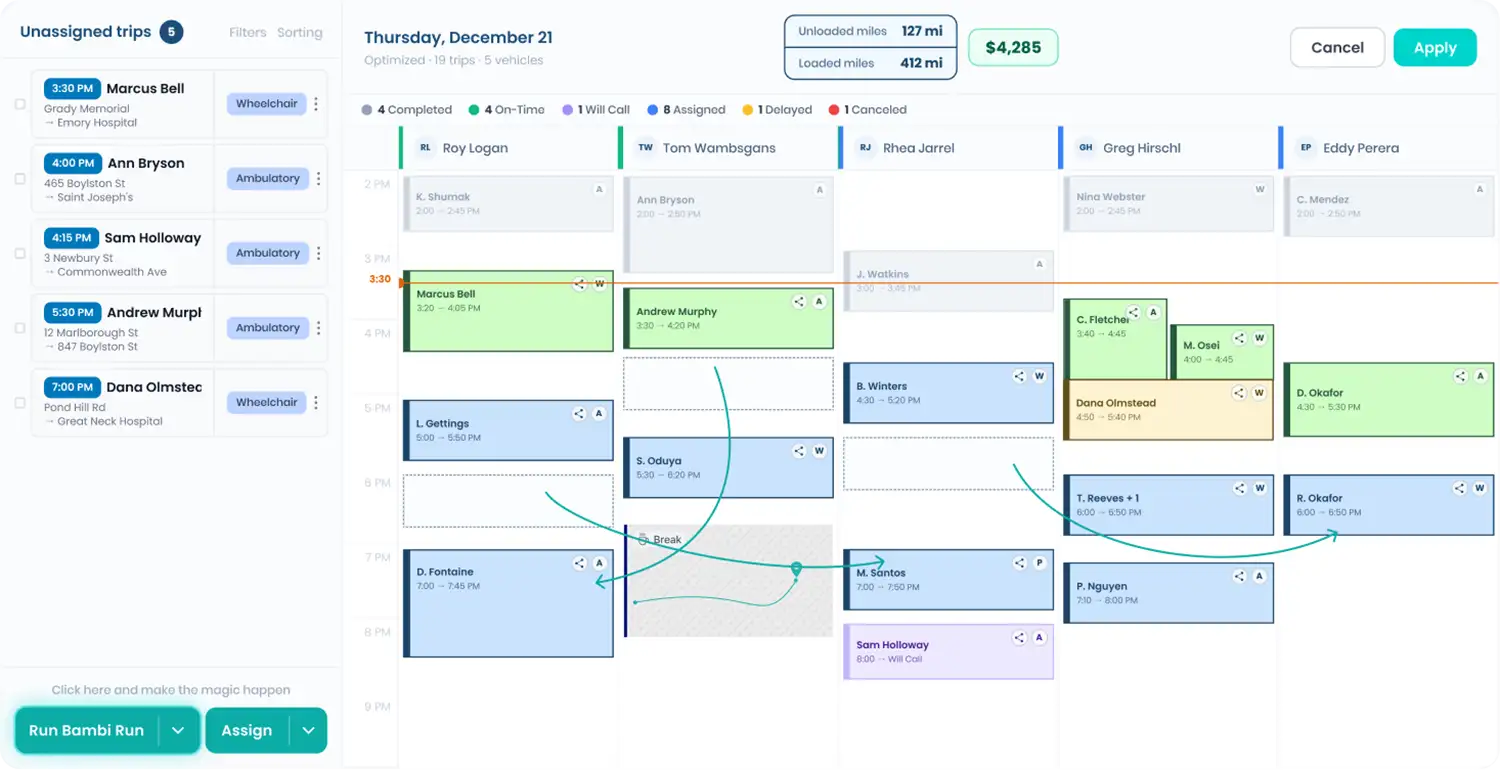
AI-driven routing systems take optimization to the next level, cutting deadhead miles by 5–15% through smarter trip sequencing. By coordinating multiple pickups and drop-offs within a single trip, these tools maximize vehicle use while reducing fleet demands. They also match patients to vehicles based on specific needs - whether ambulatory, wheelchair, or stretcher - and ensure drivers have the right certifications for the job. As MediRoutes highlights:
"By optimizing their routes, NEMT businesses can reduce travel times, fuel costs, and vehicle wear and tear, enhancing operational efficiency and profitability".
These optimized routes also incorporate geofencing tools, adding another layer of precision to traffic and safety management.
Geofencing and Traffic Overlays
The combination of geofencing and live traffic overlays helps dispatchers reroute drivers in real time while ensuring safety and timeliness. Traffic overlays provide live updates on accidents, road construction, and weather conditions, enabling the system to suggest detours and avoid delays. Geofencing tools monitor vehicle progress, ensuring drivers stick to approved routes and giving dispatchers the data they need to track performance and safety. These features also help identify and avoid high-risk areas like busy intersections or accident-prone zones, offering extra protection for vulnerable passengers.
The numbers back up the benefits. Providers using real-time GPS data report on-time arrivals increasing by up to 50%, while fuel costs drop by 15% to 25% after implementing advanced route optimization. Driver utilization rates improve dramatically, jumping from below 60% with manual routing to over 85% with automated GPS-based systems. Victoria Sean from Smart Transportation shared:
"NEMT Platform has transformed the way we manage our transportation services. With features like real-time vehicle tracking and automated route planning, our operations have become more efficient and effective".
Electronic Health Records (EHR) System Integration
Integrating Electronic Health Records (EHR) systems with NEMT scheduling software works much like a GPS guiding dispatch operations - it automates data sharing and ensures patient-specific services are handled seamlessly. Through APIs, EHR systems and transportation platforms communicate directly, syncing appointment details and medical requirements in real time. For example, when a patient schedules or updates a medical appointment in the EHR, the NEMT system is updated instantly, keeping the entire process automated. This reduces human error and ensures crucial details like wheelchair configurations or oxygen needs are accounted for, allowing for precise matching of vehicles to patient requirements. By automating these connections, providers can focus on delivering timely and accurate services.
Access to Patient Information
EHR integration provides dispatchers with instant, secure access to patient-specific medical needs. Details such as mobility requirements, special equipment needs, and appointment schedules are pulled directly from healthcare records, eliminating guesswork and ensuring the right resources are assigned. Because Protected Health Information (PHI) is involved, strict security measures like encryption, role-based access, and audit logs are essential. Non-compliance with HIPAA regulations can result in fines of up to $50,000 per violation, which is why partnering with software vendors who sign a Business Associate Agreement (BAA) is critical.
Advanced integrations also enable real-time eligibility checks through 270/271 transactions, significantly improving claim approval rates. For instance, Metro Medical Transport saw its clean claim rates jump from 77% to 91% after adopting a robust EHR integration in early 2024. This change reduced claim denials to just 6%, boosted monthly revenue by $200,000, and cut administrative costs by 18%.
Medical Appointment Scheduling Alignment
EHR integration does more than provide access to patient data - it ensures transportation schedules align perfectly with medical appointments, reducing disruptions. By syncing directly with healthcare appointment systems, delays and missed trips are minimized. Platforms that use interoperability standards like HL7 and FHIR enable secure, real-time data sharing between EHRs and NEMT software. Dispatchers receive instant notifications about schedule changes, allowing them to adjust routes on the fly. This level of synchronization is especially critical for time-sensitive treatments like dialysis or chemotherapy, where missed appointments can have serious health consequences and strain the healthcare system.
The benefits are clear: providers using comprehensive EHR integration report a 40% drop in patient wait times and a 25% boost in satisfaction levels. Multi-channel communication systems further enhance efficiency, cutting no-show rates by up to 50%. Aya Bazzi from Momentm Technologies highlights the value of this automation:
"When a member schedules an appointment at a clinic, the API can instantly update the NEMT system with the member's transportation needs".
These automated processes also create a digital record for every trip, including geocoded timestamps and patient signatures - essential for meeting state or federal Medicaid audit requirements.
Billing and Payment Platform Integration
Integrating billing and payment systems with NEMT scheduling software streamlines financial operations by connecting directly to billing platforms, insurance networks, and brokers. This setup eliminates the hassle of manual data entry and the errors that often come with it. Once a trip wraps up, the software automatically generates claims using standardized Electronic Data Interchange (EDI) formats - 837P for professional claims and 835 for Electronic Remittance Advice. By automating these processes, dispatchers and drivers can focus on service delivery, leaving the system to handle all the financial details. This integration ensures smoother claims processing, quicker insurance checks, and easier communication with brokers.
Automated Claims and Invoicing
Automating claims processing significantly shortens payment cycles - from the typical 45–60 days down to just 15–30 days - while eliminating the need for manual data entry. The software includes pre-validation checks for patient details, insurance information, and coding modifiers, catching potential errors before they lead to claim rejections. Advanced systems boast a 99.7% first-pass acceptance rate. Cheryl Kastrenakes, Executive Director at Greater Mercer Transportation Management Association, highlights the benefits:
"NovusMED's reporting capabilities provides us the data we need to accurately invoice. The report integrates with our invoicing program – this has saved us a huge amount of time".
With claims processing streamlined, the next critical step is ensuring accurate insurance verification.
Insurance Verification and Compliance
Real-time insurance checks using 270/271 transaction sets help avoid a common pitfall: providing services to patients without valid coverage. The system verifies Medicaid eligibility and transportation benefits instantly, well before the trip takes place. GPS-tracked route reconstruction further ensures mileage documentation aligns with pre-approved routes, a key Medicaid requirement that helps prevent claim rejections due to discrepancies. Mobile apps collect digital signatures and time-stamped GPS data, creating a solid audit trail for compliance reviews. With Medicaid transportation expenditures exceeding $3 billion annually, maintaining precise documentation is crucial for ensuring reimbursement. Once eligibility is confirmed, broker API links take over to complete the automated cycle from trip to claim.
Broker API Connections
Direct API connections with leading brokers like Modivcare and MTM automate every step of the trip-to-claim process. These integrations allow providers to import authorized trips, update statuses in real-time, submit billing data immediately after trip completion, and manage payments or denials directly from 835 remittance data. Providers using broker-integrated software see claims processed 40% faster and can manage 50% to 75% more trips thanks to administrative efficiencies. This high level of automation also contributes to a 30% increase in contract retention rates with brokers.
Communication Tool Integration
Communication tools play a key role in creating a fully integrated NEMT solution, complementing GPS, EHR, and billing systems. Keeping operations connected and informed in real-time ensures smoother workflows and builds trust with passengers who rely on dependable transportation for medical appointments. When scheduling software integrates with communication tools, it minimizes confusion, reduces missed pickups, and enhances overall efficiency. Tools like automated reminders, mobile apps, and two-way messaging have transformed how NEMT providers manage trips, significantly cutting down on no-shows. Just as GPS and EHR systems streamline backend processes, communication tools ensure everyone involved stays on the same page.
Driver and Passenger Mobile Apps
Mobile apps are the bridge that connects drivers, passengers, and dispatchers in real-time. Driver apps provide up-to-the-minute manifests, including passenger details and specific mobility needs. Integrated navigation ensures drivers can find healthcare facility entrances or specialized drop-off points with ease. These apps also enable digital documentation, allowing drivers to log signatures, GPS-stamped events, and photos for HIPAA-compliant records.
On the passenger side, apps give riders greater control and transparency. Features like live vehicle tracking, accurate ETAs, and driver details help reduce anxiety and improve the overall experience. According to RouteGenie, their passenger app allows users to "book and track rides, communicate with drivers en route, rate their experience, and update trip details". This level of visibility cuts down on "where’s my ride?" calls to dispatch and empowers passengers to manage their trips independently. Self-service options for confirming, modifying, or canceling rides automatically sync with the dispatch system, and multi-channel communication tools have been shown to reduce no-show rates by as much as 50%.
Automated Reminders and Notifications
One of the biggest challenges in NEMT is missed appointments, often due to passengers simply forgetting. Automated notification systems address this issue by sending SMS, email, or IVR reminders a day before and on the day of the trip. RouteGenie highlights that their automated calling system leads to "25-30% fewer no-shows". This is a crucial improvement when you consider that transportation barriers prevent around 3.6 million Americans from attending medical appointments every year.
Using a multi-channel approach ensures passengers are reached through their preferred communication methods. For example, younger riders often prefer SMS, while older passengers may rely on IVR calls. Real-time updates also notify passengers when their driver is on the way or has arrived, and alerts provide information about delays caused by traffic or weather. Two-way confirmation systems allow passengers to respond directly to notifications, enabling dispatchers to reassign vehicles quickly if cancellations occur.
Dispatch Team Coordination
Communication tools also streamline dispatcher operations, ensuring a seamless flow of information. GPS tracking gives dispatchers a live view of vehicle locations, enabling them to monitor fleet activity and adapt to changes in real-time. For instance, if a driver is delayed or a passenger cancels, dispatchers can reassign trips immediately without making a series of calls. Two-way messaging allows drivers to communicate directly with dispatchers about issues like gate codes, appointment delays, or emergencies.
Documentation is another area where communication tools shine. Mobile apps can capture electronic proof of delivery (ePOD), including digital signatures and timestamps at pickup and drop-off, creating reliable records for billing and compliance. These systems automatically log all trip events and communications, reducing claim denial rates by 25–40% by ensuring accurate data capture. Additionally, multi-language support in communication tools helps dispatchers serve diverse populations more effectively, ensuring accessibility for all community members.
Benefits of These Integrations
When NEMT scheduling software integrates with GPS tools, EHR systems, billing platforms, and communication apps, it dramatically transforms efficiency, compliance, and profitability. These connections reshape operational workflows, simplify compliance, and drive financial growth.
Streamlined Workflow Management
Integrating GPS and AI-powered route planning creates smoother workflows, cutting delays and increasing trip capacity. Automated systems replace manual tasks, saving significant time. For example, Broker API connections automate trip imports and status updates, saving 15–20 hours of manual work every week. AI scheduling tools reduce planning efforts by about 40% while boosting trip volume by 25%. Cheryl Kastrenakes, Executive Director at Greater Mercer Transportation Management Association, highlights the impact:
"NovusMED's reporting capabilities provides us the data we need to accurately invoice. The report integrates with our invoicing program – this has saved us a huge amount of time."
Real-time GPS integration lets dispatchers track vehicles and reassign trips immediately to avoid delays, eliminating bottlenecks caused by outdated information. AI-driven route optimization further reduces fuel costs by roughly 30% and cuts deadhead miles by 35%. These improvements allow providers to manage more trips without expanding their fleet, directly enhancing profitability while avoiding extra expenses. This operational efficiency also supports better compliance and financial outcomes.
Improved Compliance and Security
In the NEMT industry, regulatory compliance is non-negotiable. Integrated systems simplify this by automatically capturing and storing audit-ready documentation. Mobile apps record GPS timestamps and digital signatures, ensuring secure and tamper-proof records. This automation minimizes human error, reducing the risk of compliance violations or denied claims.
For instance, Helping Hands Transportation cut manual paperwork by 80% and achieved full compliance accuracy after adopting digital compliance tools. Similarly, Green Med Trans Inc. achieved a 99.2% claim approval rate using automation and real-time data. HIPAA-compliant platforms ensure sensitive patient data remains encrypted and secure as it moves between brokers, providers, and healthcare systems. Integrated software also tracks driver certifications and vehicle inspections, automatically alerting managers about upcoming expirations.
Higher Profitability and Customer Satisfaction
The financial impact of these integrations is substantial. Broker-integrated software speeds up claim processing by 40% and reduces billing errors by 65%, resulting in improved cash flow. Automated billing shortens payment cycles from 45–60 days to just 15–30 days. These efficiencies contribute to a 30% increase in contract retention rates, as brokers prefer working with providers who meet strict compliance and data standards.
Patient experience also sees significant improvement. GPS tracking and real-time communication reduce patient wait times from over 30 minutes to under 10 minutes. Automated notifications lower no-show rates by 20–30%, preventing wasted trips and lost revenue. Enhanced communication tools boost patient satisfaction scores by 35%. Michael Milavec, Transportation Director at PACE Health Care Transportation - Senior Life, underscores the importance of scalability:
"The ability to scale the solutions based upon the scheduling parameters and violations has been paramount to our success."
Conclusion
Modern NEMT scheduling software thrives on the integration of tools like GPS systems, route optimization, EHR platforms, billing solutions, and communication technologies. Together, these systems create a connected network where patient data moves effortlessly - from medical records to optimized routes, driver devices, and automated billing. This streamlined flow eliminates manual data entry, reducing delays, errors, and compliance risks. Beyond simplifying operations, this interconnected approach delivers both financial and regulatory advantages.
For instance, integrated systems speed up claims processing by 40%, cut billing errors by 65%, and shrink payment cycles from 45–60 days down to just 15–30 days. AI-driven scheduling slashes planning time by 40% while increasing trip volume by 25%. Fuel expenses drop by approximately 30%, and patient wait times decrease from over 30 minutes to under 10 minutes. These advancements redefine how NEMT operations function, directly improving patient care and boosting service reliability.
These integrations also tackle the core challenge of providing reliable and compliant patient transportation. Real-time GPS tracking ensures vehicles are punctual, while EHR systems help match patients with vehicles tailored to their mobility needs. Automated reminders reduce missed appointments, and digital documentation ensures HIPAA compliance and audit readiness for Medicaid requirements.
With the NEMT industry managing over $3 billion in Medicaid transportation spending annually, brokers increasingly prioritize providers that embrace technology. Providers leveraging advanced tools secure 40% more broker contracts and retain contracts 30% longer. As broker networks expand across more than 40 states, adopting these integrations is no longer optional - it’s essential for staying competitive and achieving sustainable growth in the NEMT sector.
FAQs
How does integrating GPS improve the efficiency of NEMT scheduling?
Integrating GPS into NEMT scheduling software brings real-time vehicle tracking and dynamic route planning into the mix, making trip assignments faster and more precise for dispatchers. With live updates on vehicle locations, delays can be minimized, ensuring pickups and drop-offs happen on time.
This setup also trims travel time and cuts down on fuel expenses by pinpointing the most efficient routes. Plus, it sharpens the accuracy of estimated arrival times (ETAs), which means better communication with passengers and an overall boost in customer satisfaction.
Why is integrating EHR systems important for NEMT scheduling?
Integrating electronic health records (EHR) with non-emergency medical transportation (NEMT) scheduling software plays a crucial role in streamlining patient care. By syncing health information, appointment schedules, and specific care requirements, the process ensures that transportation services are aligned with each patient’s medical needs while adhering to healthcare regulations.
This integration minimizes errors, boosts efficiency, and ensures that every ride is customized to meet the patient’s unique circumstances. The result? Better service quality and stronger trust between patients, providers, and healthcare partners.
How do automated billing integrations benefit NEMT providers?
Automated billing integrations streamline the invoicing process by cutting down on manual data entry, which not only saves time but also helps reduce the likelihood of errors. They also support quicker payment processing, ensure compliance with billing regulations, and lower the chances of claim denials.
By adopting these tools, NEMT providers can improve cash flow and run their operations more efficiently, freeing up time and resources to concentrate on providing excellent transportation services.