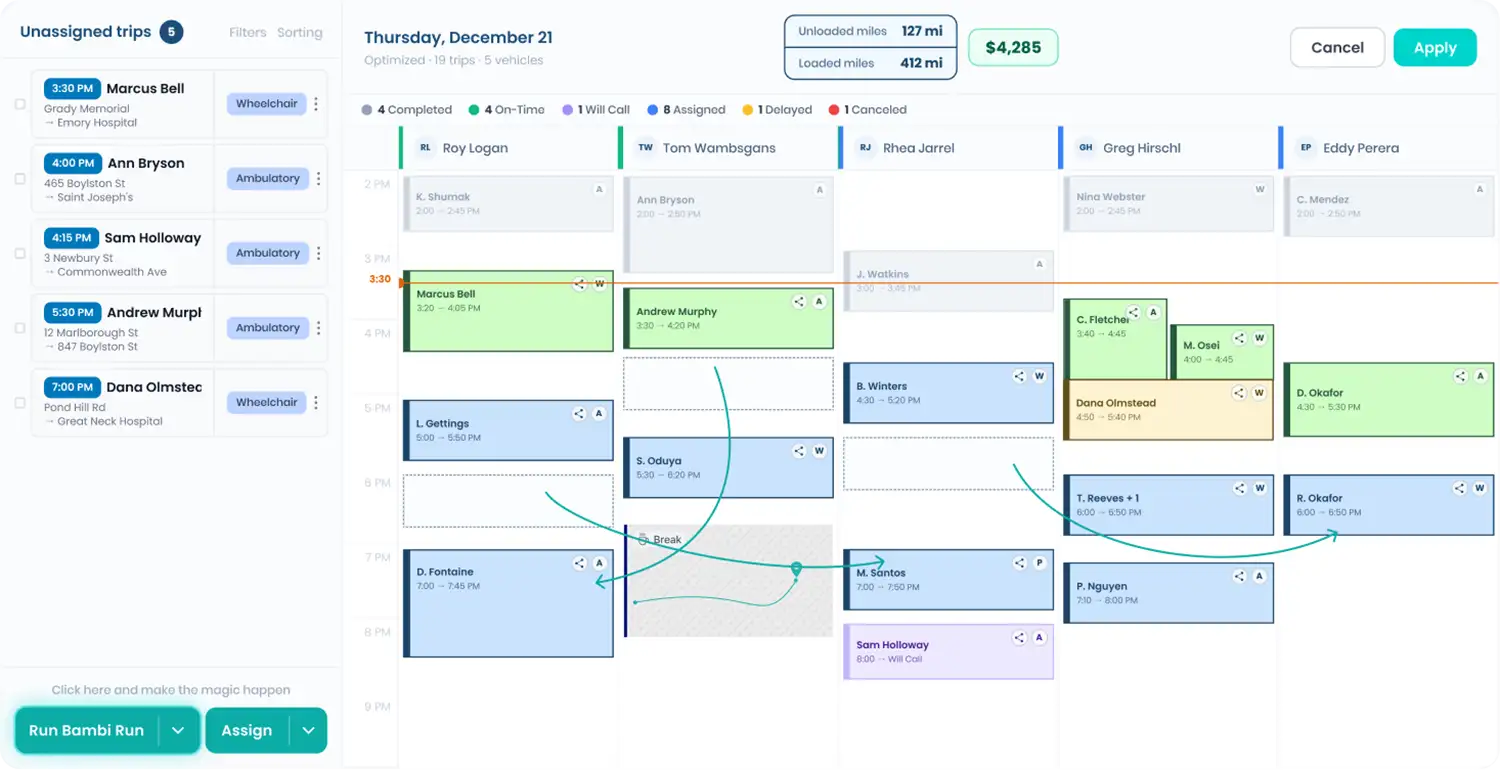

Running a Non-Emergency Medical Transportation (NEMT) business is complex, but integrating the right tools into your scheduling platform can save time, reduce errors, and improve efficiency. Here are five key integrations to consider:
- Google Maps: Optimizes routes using real-time traffic, reducing fuel costs and improving on-time arrivals.
- Modivcare API: Automates trip data management and streamlines broker communication.
- QuickBooks: Links trip data to accounting systems for faster invoicing and fewer errors.
- Net2Phone: Enhances communication with automated reminders and real-time updates.
- EHR Systems: Connects patient records to scheduling platforms for accurate trip details and compliance.
These integrations help NEMT providers cut costs, improve service, and simplify daily operations. Choosing the right combination depends on your fleet size, broker relationships, and technical needs.
1. Google Maps
Route Optimization
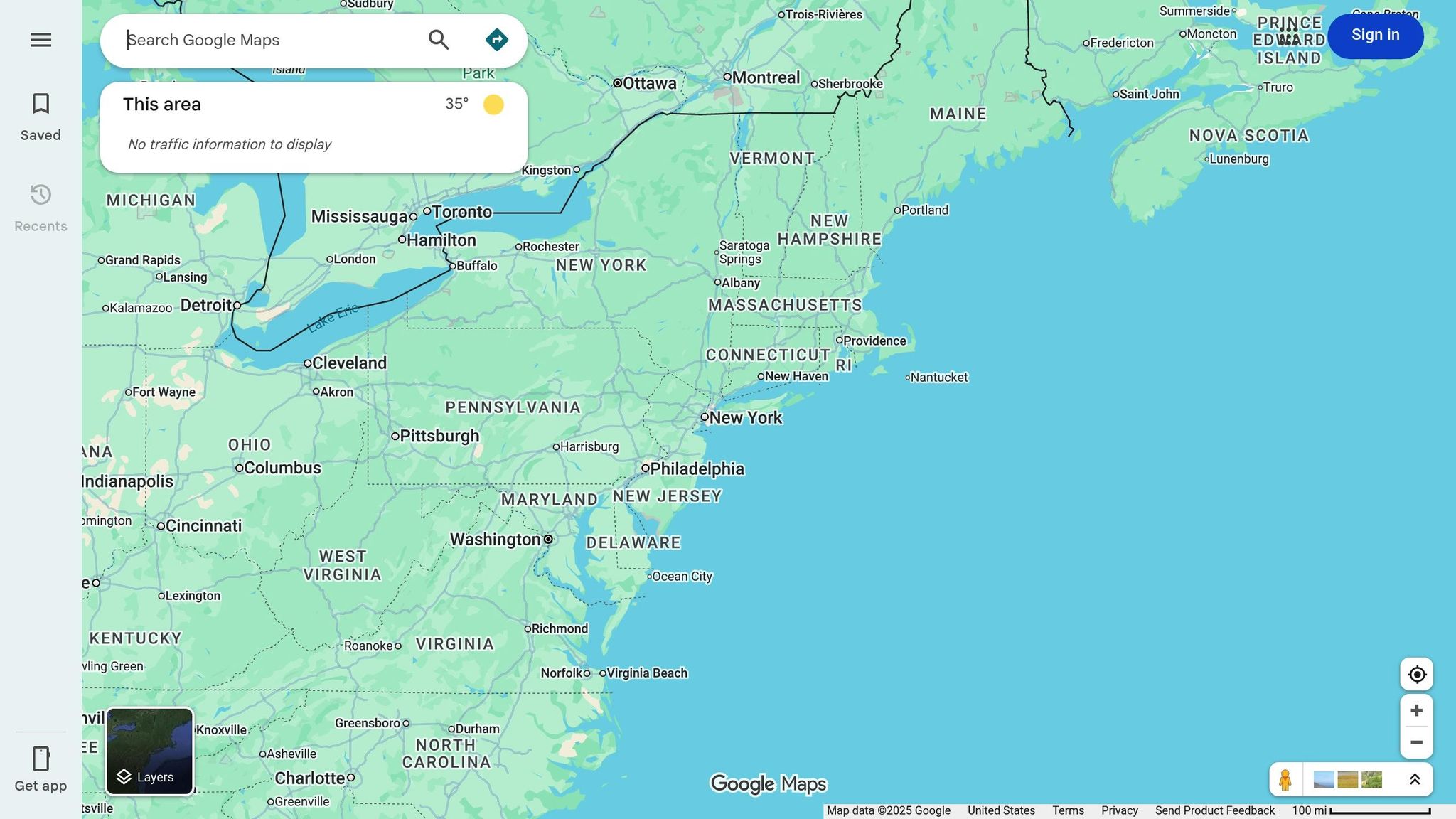
Integrating Google Maps into NEMT operations has revolutionized how trips are planned and executed. By using real-time traffic and weather data, the platform can automatically reroute drivers to avoid accidents, construction zones, or bad weather. This means less time stuck in traffic and more time ensuring patients arrive at their appointments on time.
The system’s multi-stop algorithms are designed to group passengers in the same area with similar appointment times. Instead of dispatching multiple vehicles for nearby patients, this approach increases vehicle capacity while cutting down on unnecessary detours. Providers using automated route optimization have reported operational cost reductions of 20% to 30%. Fuel expenses alone can drop by 15% to 25%, and "deadhead miles" - the distance traveled without passengers - can shrink by 30%.
Dynamic route adjustments are another game-changer. If a cancellation or urgent request pops up, the system re-sequences routes in real time, eliminating the need for manual intervention. This level of automation has boosted driver utilization rates from under 60% with manual routing to over 85%. On-time arrivals have also seen a significant improvement, increasing by as much as 50%.
These operational improvements not only streamline processes but also ensure compliance and secure handling of sensitive data.
Compliance and Data Security
GPS integration does more than just optimize routes - it ensures compliance with regulations and protects patient information. In some states, like Texas, New Jersey, and Florida, GPS validation is required for Medicaid reimbursement. This system provides timestamped and geocoded proof of service, recording exact pickup and drop-off locations for every trip. Such documentation is critical during state or federal audits.
However, because pickup and drop-off addresses can reveal sensitive information, such as treatment schedules for dialysis or chemotherapy, they are classified as Protected Health Information (PHI) under HIPAA. To safeguard this data, GPS tracking systems must use AES-256 encryption for data in transit and at rest. Additionally, providers should ensure their technology vendor signs a Business Associate Agreement (BAA) and offers proof of HIPAA-compliant hosting. Implementing GPS tracking and automated trip logging has been shown to increase Medicaid claims approval rates from 80% to 98%.
Cost and Operational Gains
Fuel and maintenance costs account for nearly 30% of an NEMT provider's total operating expenses. Google Maps integration helps reduce unnecessary mileage and detours, which in turn lowers wear and tear on vehicles, extending the lifespan of engines, tires, and brakes. Automated dispatching also plays a key role by using GPS proximity data to assign the nearest and most suitable vehicle and driver to each trip, cutting down on idle time and minimizing errors.
MetricBenefits AchievedOperational Costs20-30% Reduction Fuel Expenses15-25% Reduction Deadhead Miles30% Reduction Driver UtilizationIncreased from <60% to >85% On-Time PerformanceUp to 50% Improvement Claims Approval RateUp to 98%
Real-time tracking also meets patient expectations for transparency, offering a level of visibility similar to popular ride-hailing services. By sharing live driver locations and estimated arrival times via SMS, providers can reduce no-shows and alleviate patient anxiety. This reliability has a direct impact on health outcomes, as dependable NEMT services are associated with a 40% increase in treatment adherence and fewer hospital readmissions.
2. Modivcare API
The Modivcare API offers a seamless way to integrate your scheduling platform with Modivcare, simplifying data management and communication while enhancing operational efficiency.
Automation Depth
With the Modivcare API, your scheduling platform communicates directly with Modivcare, eliminating tedious manual tasks. Trips are automatically transmitted up to 30 days in advance, streamlining route planning and driver assignments. Driver and vehicle records are continuously updated with Modivcare's data, reducing errors caused by outdated information. Once trips are completed, the system automatically uploads data to the Modivcare portal under an "Automated User Batch", removing the need for ATMS connections or manual file uploads.
Communication Efficiency
The API also boosts communication efficiency, complementing tools like Google Maps by offering real-time visibility into broker interactions. Dispatchers can monitor live trip statuses and reject trips directly from the platform if capacity issues arise. Automated notifications, such as "Vehicle Shortage" or "Weather", are sent to Modivcare for immediate reassignment. This real-time feedback loop minimizes delays and ensures all parties stay informed.
Compliance and Data Security
The API maintains strict compliance with regulatory requirements by enforcing secure data collection and billing protocols. Mobile devices must log real-time driver locations and record digital client signatures for every trip. All data transmitted through the Modivcare platform is encrypted to protect sensitive member information. The system also supports privacy rights, including data deletion requests and transparency in data collection. However, transporters still need to manually review and submit the "Automated User Batch" on the Modivcare portal to finalize billing.
Cost and Operational Gains
By automating data entry and billing, the Modivcare API reduces administrative burdens, allowing dispatchers to focus on trip coordination rather than paperwork. Real-time updates enable dynamic route adjustments, helping to cut fuel costs and improve punctuality. Below is a summary of the key benefits:
FeatureBenefit of Modivcare API IntegrationTrip ManagementEliminates manual CSV imports/exports; updates sent up to 30 days priorBillingAutomated transfer to "Automated User Batch"; no ATMS connection neededFleet SyncAutomatic creation/update of driver and vehicle records from Modivcare dataReal-Time DataLive GPS tracking and status updates sent directly to the brokerTrip RejectionDirect rejection from dispatch screen with automated notification to broker
To ensure smooth operations, configure driver mobile devices to log positions and capture digital signatures. Work with your customer success manager to map custom fields for Modivcare IDs, and make sure to submit pick-up time changes at least three days before the scheduled service date.
3. QuickBooks
QuickBooks, much like other integrations we've explored, connects dispatch and accounting processes to simplify operations. By linking trip data directly to accounting systems, it removes the need for time-consuming manual data entry, saving hours of administrative effort every week.
Automation Depth
This integration takes automation to the next level by syncing trip completion data from your scheduling platform with QuickBooks. It automatically updates customer profiles, generates invoices, and adds line items - all in real-time as trips are completed. The result? Invoices are created instantly, cutting down on errors that often occur with manual transcription and potentially speeding up reimbursements. Plus, this seamless process aligns with stringent data security measures.
Compliance and Data Security
Because billing records often contain Protected Health Information (PHI), it's critical to use HIPAA-compliant platforms. These platforms typically employ AES-256 encryption, SOC2 Type II standards, and signed Business Associate Agreements (BAAs). Some even go a step further by implementing 7-day data retention policies, reducing the risk of exposure during automation.
"Keragon is a HIPAA-compliant alternative to Zapier. We used Zapier for many of our integrations, but when it came to working with protected health information we had to find a different solution".
Mark Callahan, Head of Engineering at BreatheSuite, shared this insight, highlighting the importance of compliance when handling sensitive data.
Cost and Operational Gains
The impact of integrating QuickBooks can be seen in real-world applications. For example, the Greater Mercer Transportation Management Association adopted a system that linked invoicing with their operations. Executive Director Cheryl Kastrenakes noted that this approach "saved us a huge amount of time" by eliminating repetitive data entry. Additionally, automating the flow from trip attestation to invoice creation speeds up reimbursement. Claims are populated in real-time with trip data, avoiding delays caused by manual processes.
4. Net2Phone
Net2Phone enhances communication between dispatchers, drivers, and patients by seamlessly connecting scheduling systems with field operations. This integration helps ensure everyone involved gets timely updates about trips, creating a smoother and more efficient coordination process.
Communication Efficiency
Net2Phone simplifies communication by automating trip reminders and sending real-time notifications through phone calls, text messages, or apps. Some platforms even use AI-powered voice bots, like "Olivia", to handle bookings and cancellations around the clock, lightening the load for dispatchers. Additionally, call centers benefit from guided workflows and centralized data, which cut down wait times and make the booking process faster and more effective.
However, effective communication must go hand in hand with robust security measures to protect sensitive information.
Compliance and Data Security
Since Protected Health Information (PHI) is involved, Net2Phone must adhere to strict HIPAA regulations. This includes implementing two-factor authentication and using encrypted data transmission protocols, like AES-256, to secure information both during transit and while stored. Maintaining detailed audit trails is also essential for tracking access and identifying any unauthorized logins.
"Security measures extend beyond billing to include dispatch systems, mobile applications, and communication platforms used throughout the transportation process." - NEMT Platform
To further safeguard PHI, secure messaging systems with role-based access controls are used. This ensures that only the necessary trip details are shared with drivers, minimizing the risk of information leaks.
5. EHR Systems
EHR integration connects scheduling platforms directly to patient records, ensuring trip details are accurate and reliable. With Epic commanding about 34% of the U.S. market share, these integrations rely on standardized protocols like FHIR (Fast Healthcare Interoperability Resources) to securely share key information, including patient demographics, mobility needs, and medical history. This setup allows dispatchers to determine if a patient requires a wheelchair or stretcher transport before assigning a vehicle, minimizing safety risks and ensuring compliance. Like other essential integrations, EHR connectivity plays a crucial role in maintaining efficient and compliant operations, laying the groundwork for automation.
Automation Depth
EHR integration takes automation to a whole new level, covering the entire workflow from authorization to trip completion. Once an appointment is scheduled, the system automatically dispatches drivers, sends notifications to patients, and captures digital signatures for a seamless, paperless audit trail. The impact is clear - NEMT providers using integrated software report 65% fewer billing errors and process claims 40% faster compared to manual methods.
Compliance and Data Security
Protecting Protected Health Information (PHI) is a top priority, and EHR integrations use multiple security measures to ensure this. These systems implement OAuth 2.0 with PKCE and AES-128+ encryption to control access and secure data during transmission. Automated audit trails also help providers stay HIPAA-compliant.
"Standardized FHIR endpoints protect PHI while enabling frictionless data exchange, setting the stage for robust telehealth, AI-driven care, and meaningful patient engagement." - Joe Tuan, CEO, Topflight Apps
Cost and Operational Gains
In addition to enhanced security, EHR integration delivers measurable financial and operational improvements. Integrated systems can achieve billing accuracy rates as high as 99.5% while reducing payment cycles from the typical 45–60 days to just 15–30 days. Epic's "Care Everywhere" platform alone facilitates the exchange of over 20 million records daily, helping providers like OLVG Hospital save time on patient registration and reduce transcription errors.
Advantages and Disadvantages
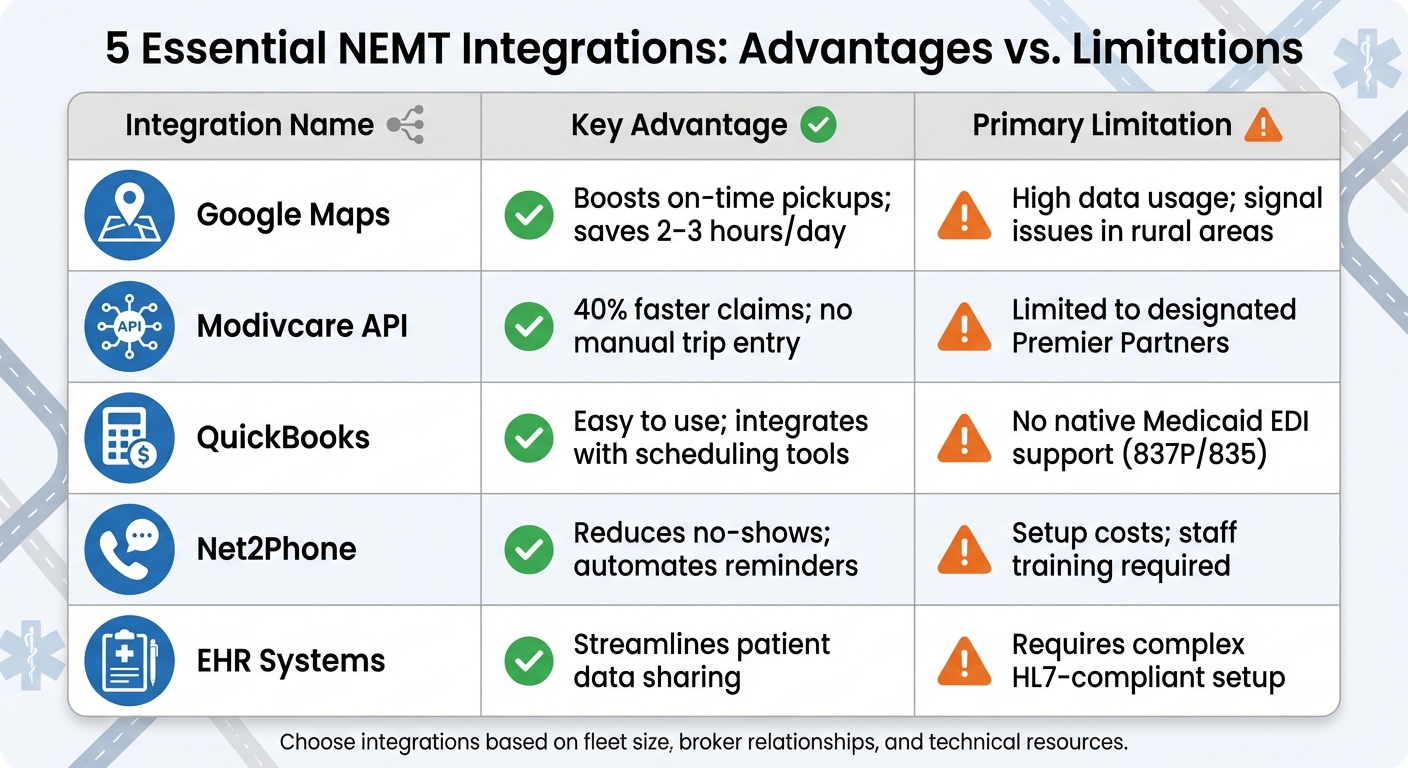
Here’s a breakdown of the key benefits and limitations of each integration.
While every integration improves efficiency, they all come with trade-offs.
Google Maps stands out for its ability to improve on-time pickup rates and save dispatchers 2–3 hours daily. However, it relies heavily on data usage and may lose signal in rural areas.
Modivcare API speeds up claims processing by 40% and eliminates the need for manual trip entry. The downside? Its full functionality is limited to designated Premier Partners, of which there are currently only three.
QuickBooks is a user-friendly tool for general accounting and integrates well with scheduling platforms like Setmore. But it doesn’t natively support Medicaid-specific EDI formats (837P/835), often requiring third-party plugins or manual workarounds.
Net2Phone and similar telephony solutions help reduce no-shows with automated reminders and simplify communication logs. On the flip side, they come with setup costs and require staff training to use effectively.
EHR systems allow for smooth patient data sharing and better care coordination. However, setting up a bidirectional data exchange requires a complex HL7-compliant interface.
For a quick comparison, refer to the table below:
IntegrationKey AdvantagePrimary LimitationGoogle MapsBoosts on-time pickups; saves 2–3 hours/dayHigh data usage; signal issues in rural areasModivcare API40% faster claims; no manual trip entryLimited to designated Premier PartnersQuickBooksEasy to use; integrates with scheduling toolsNo native Medicaid EDI support (837P/835)Net2PhoneReduces no-shows; automates remindersSetup costs; staff training requiredEHR SystemsStreamlines patient data sharingRequires complex HL7-compliant setup
"NovusMED's reporting capabilities provide us the data we need to accurately invoice. The report integrates with our invoicing program – this has saved us a huge amount of time".
Cheryl Kastrenakes, Executive Director of Greater Mercer Transportation Management Association, highlighted the financial benefits of these integrations.
Choosing the right mix of tools is key to optimizing operations and maintaining reliable service. Your decision will depend on factors like your operation's scale, broker relationships, and technical resources.
Conclusion
The right integrations can elevate your NEMT scheduling platform into a comprehensive logistics powerhouse. By streamlining routing, billing, communication, and patient data management, these tools not only cut costs but also automate essential processes that keep your operations running smoothly.
When choosing integrations, consider factors like your broker relationships, operational size, and technical resources. Opting for native API integrations can ensure real-time trip syncing and automated billing, which are critical for efficiency. For smaller fleets of fewer than 50 vehicles, mid-market solutions priced between $99 and $149 per month per vehicle often provide the best fit. Larger fleets, however, may require enterprise-level platforms equipped with advanced EDI capabilities to handle their complexity.
Providers using advanced technology consistently win more broker contracts. Integrated systems also see 65% fewer billing errors and enjoy 30% higher contract retention rates. These numbers highlight how the right tools can directly impact your financial performance, making integration strategy a cornerstone of your business growth.
To maximize these benefits, take a strategic approach. Start by reviewing your broker contracts and identifying operational pain points. Test trial platforms to evaluate features like mobile app functionality and billing automation accuracy. For businesses preparing to scale, usage-based pricing models can offer the flexibility to grow without locking into restrictive long-term commitments.
With the NEMT market expected to hit $31 billion by 2026, investing in integrations that reduce payment cycles from 45–60 days to just 15–30 days through automated EDI processing is a smart move. These improvements not only enhance cash flow but also position your business for long-term success in a rapidly growing industry.
FAQs
How does Google Maps integration benefit NEMT scheduling platforms?
Integrating Google Maps into NEMT scheduling platforms brings a host of benefits, starting with real-time navigation and traffic updates. These features make route planning more precise, helping drivers avoid traffic jams and stick to efficient paths. The result? Fewer delays, better on-time performance, and reduced fuel costs.
The platform’s detailed mapping and live updates also boost driver productivity and streamline communication between dispatchers and drivers. This seamless coordination not only makes operations smoother but also enhances the overall experience for passengers.
What are the advantages of integrating the Modivcare API with NEMT scheduling platforms?
Integrating the Modivcare API into your Non-Emergency Medical Transportation (NEMT) scheduling platform simplifies operations by automating tasks and enabling real-time workflows. It pulls in critical data - like trip limits, eligibility details, and benefit balances - directly into your platform. This automation eliminates duplicate data entry and reduces errors that could delay rides or result in claim rejections. With instant updates, dispatch teams can swiftly verify coverage, schedule trips, and create accurate invoices, all while staying compliant with Medicaid and Medicare regulations. The result? A faster, more efficient scheduling process.
The API also boosts ride management by offering real-time vehicle tracking and dynamic trip assignments. This improves vehicle utilization and helps cut costs. Plus, it integrates smoothly with third-party ride-hailing services and broker platforms, increasing access to vehicles and ensuring patients get timely transportation. These capabilities enhance on-time performance, reduce administrative hassles, and create a smoother experience for both providers and patients.
Why is integrating EHR systems important for NEMT compliance?
Integrating Electronic Health Records (EHR) systems into Non-Emergency Medical Transportation (NEMT) services plays a key role in maintaining compliance. It ensures the secure and accurate exchange of sensitive patient health data, aligning with HIPAA and other regulatory standards.
When you connect EHR systems with your NEMT platform, you create a seamless way to share data, minimize errors, and handle patient information responsibly. This approach not only keeps you compliant but also strengthens trust with healthcare providers and clients while boosting the efficiency of your services.
Run the numbers: the free NEMT operational cost estimator puts a yearly dollar figure on empty miles, no-shows, drivers waiting and retyping broker trips.