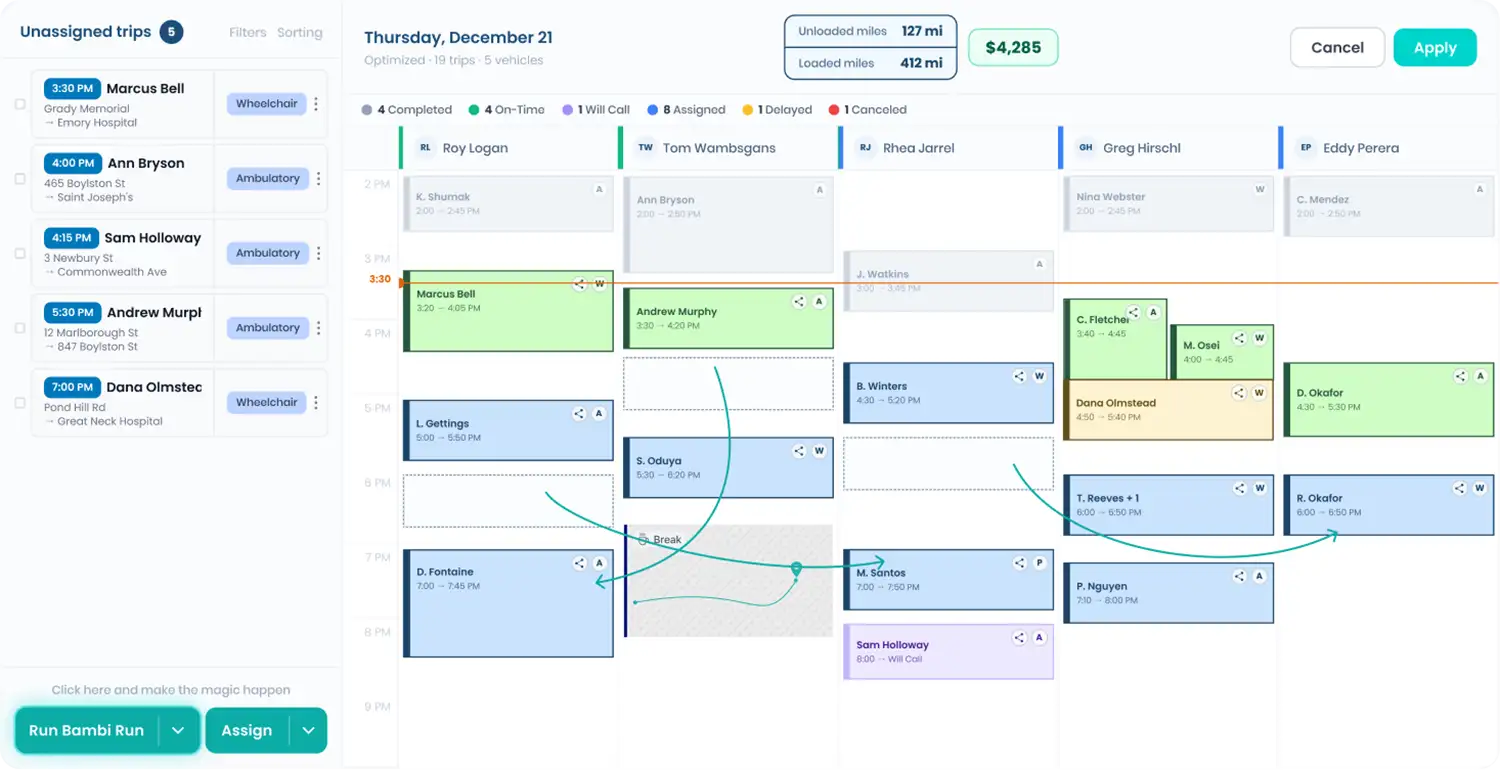

When deciding between manual and automated scheduling for Non-Emergency Medical Transportation (NEMT), the choice impacts efficiency, costs, and patient experience. Manual scheduling relies on human input through phone calls, paper logs, and spreadsheets, offering a personal touch but struggling with growing demand. Automated scheduling uses software to optimize routes, minimize errors, and handle large trip volumes quickly. Here’s what you need to know:
- Manual Scheduling: Low upfront costs, but time-intensive and prone to errors. Best for smaller providers with fewer trips or rural operations.
- Automated Scheduling: Requires investment in software but reduces fuel costs, improves on-time performance, and scales easily as demand grows.
Quick Comparison
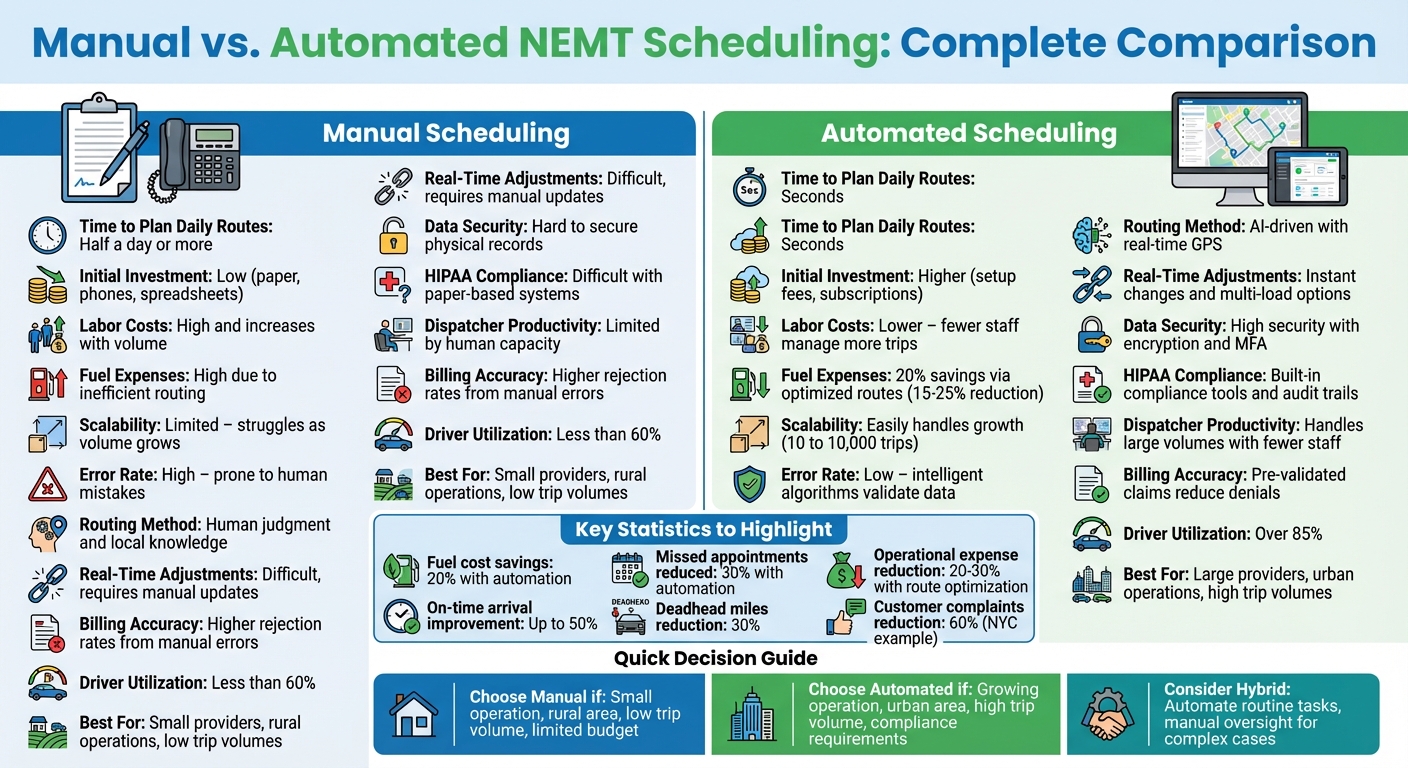
FeatureManual SchedulingAutomated SchedulingTime to Plan Daily RoutesHoursSecondsCostLow upfront, high labor costsHigher upfront, lower over timeScalabilityLimitedHandles high demand easilyComplianceDifficult with paper logsBuilt-in tools for auditsError RateHighLow
For small operations, manual scheduling may suffice. For larger or urban providers, automation saves time, cuts costs, and ensures compliance.
Manual NEMT Scheduling Explained
Let’s take a closer look at how manual scheduling works and what it brings to the table for Non-Emergency Medical Transportation (NEMT) providers.
How Manual Scheduling Works
Manual scheduling relies on phones, paper logs, and spreadsheets. When a patient calls to book a ride, dispatchers jot down the trip details and assign a driver based on their availability and local knowledge. The process involves constant communication - dispatchers coordinate with drivers through phone calls or text messages, making adjustments as needed when schedules or circumstances shift. Every decision is guided by human expertise.
This hands-on approach offers a mix of flexibility and personal touch but also comes with its own set of challenges.
Benefits of Manual Scheduling
For smaller NEMT providers, manual scheduling can be an appealing option. It’s cost-effective since most providers already have phones and basic tools like spreadsheets. Dispatchers also have the freedom to handle sensitive situations with empathy, tailoring solutions to meet complex patient needs. This human-driven approach can be particularly valuable in healthcare, where understanding and adaptability are often crucial.
"Manual dispatch delivers control and a personal touch, whereas automated dispatch offers speed, scalability, and data-driven insight".
Drawbacks of Manual Scheduling
However, manual scheduling has its limitations. It’s labor-intensive, requiring dispatchers to manage every detail by hand - a process that can be far slower than automated systems. Miscommunications are more likely when relying on phone calls or texts, leading to scheduling conflicts. As trip volumes grow, manual systems struggle to keep up, becoming inefficient for high-demand operations.
Compliance is another hurdle. Manual methods often lack the detailed documentation and performance analytics needed for smooth auditing, which can complicate billing and claims processing. Perhaps the biggest drawback is the lack of real-time visibility - without GPS tracking, dispatchers can’t adjust routes dynamically or provide accurate ETAs to patients. This gap can make it harder to meet the expectations of both patients and healthcare providers.
Automated NEMT Scheduling Explained
Automated scheduling software leverages AI and machine learning to handle trip assignments in an instant. Forget the days of juggling phone calls and spreadsheets - this technology analyzes trip requests and creates optimized schedules in just seconds. It automatically pairs passengers with the right vehicles and drivers, factoring in specific needs like wheelchair access or driver certifications.
Key Features of Automated Scheduling Software
These tools come packed with features that simplify daily operations. Routing algorithms and GPS tracking work hand-in-hand to assign trips and adjust routes in real-time, accounting for driver locations and traffic patterns. The system can handle large volumes, scheduling anywhere from 10 to 10,000 trips at once. Thanks to real-time updates, it can adapt seamlessly to changes like no-shows, last-minute pickups, or reassignments - without requiring dispatcher intervention. Plus, it logs GPS timestamps and audit histories digitally, which streamlines billing and ensures compliance with HIPAA regulations.
These capabilities are game-changers for improving operational efficiency.
Benefits of Automated Scheduling
Manual scheduling often struggles to keep up with rising demand and operational complexity. Automation, on the other hand, excels in delivering speed and accuracy. The results speak for themselves: Providers using automated systems report cutting fuel costs by 20% and reducing missed appointments by 30%. Route optimization alone can slash operational expenses by 20% to 30%, with fuel costs dropping by 15% to 25% in many cases. On-time arrivals can improve by as much as 50%, and driver utilization rates often climb from less than 60% with manual routing to over 85% with automation.
For example, in 2025, a midsize NEMT provider in Texas adopted an automated route optimization platform and saved over $50,000 in fuel costs within six months. This shift enabled them to handle 25% more trips per month by improving multi-stop planning. Similarly, a California-based provider saw late pickups decrease by 40% after replacing manual logs with an integrated automated system.
Costs and Requirements of Automated Tools
Switching to automated scheduling does require an upfront investment and technical setup. Most platforms involve initial setup fees and ongoing subscription costs, but these are often offset by reduced labor needs and better vehicle efficiency. Providers will need stable internet access for cloud-based systems and compatible devices - like smartphones or tablets running iOS or Android - for drivers to use mobile apps. Training staff is also essential to ensure dispatchers and drivers can manage issues and stay compliant with protocols. A phased rollout strategy can help ease the transition, minimizing service disruptions as operations shift from manual to automated systems.
Manual vs. Automated Scheduling: Side-by-Side Comparison
Deciding between manual and automated scheduling has a direct impact on daily operations, expenses, and your ability to scale. Here's a breakdown of how these two approaches differ across three key areas.
Efficiency Comparison
Manual scheduling is a slow and tedious process. It often involves phone calls, handwritten notes, and a heavy reliance on a dispatcher’s familiarity with routes, which can take half a day or more just to organize the daily trip schedule. This method leaves room for error and inefficiencies. On the other hand, automated scheduling completes the same task in seconds. Using AI and real-time GPS data, automated systems calculate the fastest routes, taking into account traffic, accidents, and driver locations.
This speed boost translates into better productivity. Automation allows you to manage a much higher volume of trips without needing to hire additional dispatchers. Plus, the system can match specific patient needs - like wheelchair accessibility - with the nearest available vehicle, reducing wait times and eliminating the back-and-forth communication that typically slows things down.
Here’s a quick comparison:
FeatureManual SchedulingAutomated SchedulingTime to Plan Daily RoutesHalf a day or more Seconds Routing MethodRelies on human judgment AI-driven with real-time GPS Dispatcher ProductivityLimited by human capacityHandles large volumes with fewer staff Real-Time AdjustmentsDifficult; requires manual updatesInstant changes and multi-load options
Cost and Scalability Comparison
At first glance, manual scheduling might seem cheaper since there are no software fees. But the ongoing labor costs quickly add up. As your trip volume grows, you’ll need more dispatchers, and inefficient routing will drive up fuel expenses. Automated scheduling, while requiring an upfront investment or subscription fees, offsets these costs by maximizing vehicle use and reducing fuel consumption.
Scalability is another area where automation shines. Manual systems struggle to keep up as demand increases - more trips mean more errors, more chaos, and more pressure on your team. Automated platforms, however, can manage growth seamlessly, whether you’re handling 10 trips or 10,000. With the number of older adults relying on NEMT services expected to nearly double by 2050, having a scalable system isn’t just a nice-to-have - it’s a necessity.
Here’s how the costs stack up:
Cost FactorManual SchedulingAutomated SchedulingInitial Investment CostsLow (minimal tools like paper and phones)Higher (setup fees, subscriptions)Labor CostsIncreases with volume Lower; fewer staff manage more trips Fuel ExpensesHigh due to inefficient routing 20% savings via optimized routes ScalabilityStruggles as volume grows Easily handles growth
Risk and Compliance Comparison
Manual systems are riddled with risks, from scheduling conflicts to miscommunications and errors. Compliance is another challenge - tracking everything for audits with paper logs and spreadsheets is cumbersome. Security is also a concern, as physical records are difficult to protect and don’t meet HIPAA standards.
Automated platforms are designed to address these issues. They come with built-in safeguards like data encryption, multi-factor authentication, and strict access controls to protect sensitive patient information. The software also validates data as you go, reducing errors that could lead to missed appointments or billing issues. Digital audit trails make compliance reviews straightforward, and the system checks claims for inaccuracies before submission, cutting down on rejections.
Here’s a snapshot of the risks:
Risk FactorManual SchedulingAutomated SchedulingError RateHigh; prone to human mistakes Low; intelligent algorithms validate data Data SecurityHard to secure; physical records are vulnerable High security with encryption and MFA HIPAA ComplianceDifficult with paper-based systems Built-in compliance tools and audit trails Billing AccuracyHigher rejection rates from manual errors Pre-validated claims reduce denials
How to Choose the Right Scheduling Method
Factors to Consider
When selecting a scheduling method, several factors come into play: trip volume, fleet size, budget constraints, and the complexity of your operations. If you're managing a smaller number of trips with a limited and relatively uniform fleet, manual scheduling might do the trick. But as your trip volume grows and your fleet becomes more diverse - think ambulatory vans, wheelchair-accessible vehicles, and stretchers - manual methods can quickly become inefficient and prone to mistakes.
Geography is another critical factor. In rural areas with low-density service zones, manual scheduling often works well because local knowledge and human judgment can be highly effective. On the other hand, urban operations face unique challenges like heavy traffic, tight schedules, and high trip density. In these cases, automated routing systems that leverage real-time GPS data are almost indispensable.
Budget considerations aren’t just about upfront costs. While manual scheduling may seem cheaper initially, ongoing labor expenses and inefficient fuel usage can add up over time. Automated systems, while requiring setup fees and subscriptions (often charged per vehicle, trip, or usage), can slash operational costs by 20% to 30% and reduce fuel expenses by 15% to 25%. With proper training, automation can pay off quickly, making it a smart investment for many providers.
When to Use Each Method
Manual scheduling shines for smaller providers who value personalized service and rely on human judgment to meet specific client needs. However, as operations scale, automation becomes essential. Midsize providers, for instance, have reported significant savings in both fuel and operational costs after adopting automated systems. Automation not only increases efficiency but also allows businesses to grow without needing to proportionally expand their workforce.
For many small businesses, a hybrid approach works well. This involves using manual oversight for sensitive or complex scenarios while automating routine tasks such as route planning and billing.
U.S.-Specific Factors
In the U.S., regulatory requirements add another layer of complexity. Medicaid, for example, demands detailed logs of trip times, routes, mileage, and patient information for audits and reimbursement. Manual systems relying on paper logs can be error-prone and cumbersome for compliance reviews. Automated platforms, by contrast, generate digital audit trails, making it easier to meet these stringent documentation requirements.
The size of the service area also plays a role. Take, for example, a New York-based non-emergency medical transportation (NEMT) provider serving Medicaid patients. By implementing real-time GPS tracking and automated scheduling, they reduced customer complaints about wait times by 60%. In sprawling metro areas or multi-county regions, the ability to adjust routes dynamically for traffic, weather, or last-minute cancellations is a game-changer.
Optimized routing through automation can cut deadhead miles by 30%, significantly lowering fuel costs. It also boosts driver utilization rates from below 60% to over 85%, making it particularly appealing for providers in areas with high fuel prices or long travel distances. The financial and operational advantages of automation in such cases are hard to ignore.
Conclusion
Choosing the right scheduling method depends on your operation's needs and goals. For smaller, rural providers, manual scheduling can be a cost-effective option that adds a personal touch. However, relying on paper logs or spreadsheets may limit growth as demand increases.
For operations handling higher trip volumes, automated scheduling is a game-changer. It not only scales seamlessly but also simplifies regulatory tasks with built-in features like HIPAA-compliant messaging and automated audit trails.
A hybrid approach offers a middle ground. Many providers use automation for routine tasks such as route optimization while reserving manual oversight for more sensitive or complex scenarios. This balance helps maintain efficiency without sacrificing personalized service or stretching your team too thin.
The U.S. NEMT industry is evolving rapidly, fueled by an aging population expected to nearly double by 2050 and the staggering statistic that 3.6 million people miss medical appointments annually due to transportation challenges. This growth underscores the importance of adopting a scheduling strategy that meets both current demands and future needs.
To make the best decision, consider key factors like trip volume, fleet size, and your growth objectives. If you're managing dozens of daily trips or operating in urban areas, automation can quickly pay for itself. Start small, train your team thoroughly, and use system-generated insights to continuously improve your operations.
FAQs
What are the key advantages of using automated scheduling for NEMT providers compared to manual methods?
Automated scheduling brings a host of advantages for NEMT providers compared to traditional manual methods. For starters, it slashes dispatch time from the typical 20–30 minutes per trip down to just 2–3 minutes. That’s a massive time saver, cutting scheduling efforts by up to 50% and allowing your team to focus on other critical tasks. With features like AI-powered trip assignments and real-time GPS tracking, communication becomes smoother, errors drop, and on-time performance improves significantly.
Another key advantage is scalability. As your fleet expands, automated systems adapt seamlessly - no more juggling endless phone calls, paper logs, or spreadsheets. These tools streamline operations by saving time, minimizing mistakes, and optimizing routes. The result? Improved efficiency and reduced costs. In fact, automated scheduling can save around $69 per active vehicle each month, giving your business the room it needs to grow without breaking the bank.
How does automated scheduling help NEMT providers stay compliant and avoid errors?
Automated scheduling simplifies operations by bringing all trip details into one secure, centralized system. This approach significantly reduces the chances of errors that often stem from manual data entry, mismatched spreadsheets, or miscommunications. With real-time updates and built-in validation rules, the system ensures everything is accurate before rides are dispatched, boosting reliability and minimizing mistakes.
Beyond cutting down on errors, these systems come equipped with compliance tools. They automatically generate trip logs, track driver hours, and send reminders for tasks like license renewals or meeting regulatory requirements, such as HIPAA. These features make it easier for providers to stay compliant without the hassle of constant manual checks. Using an AI-powered platform like Bambi allows providers to automate these tasks, creating a seamless, error-free process that’s ready for audits whenever needed.
When is it best to combine manual and automated NEMT scheduling?
A hybrid scheduling system - combining automated software for routine tasks with manual oversight for exceptions - offers a balanced solution for providers seeking both efficiency and adaptability. Automation plays a key role in cutting down scheduling time and minimizing errors, making it especially useful during high-demand periods or when managing tight appointment slots. On the other hand, manual input becomes essential for handling more complex scenarios, like accommodating patients with specialized medical needs, last-minute adjustments, or specific language preferences.
This method is particularly effective for midsized or expanding NEMT operations that face varying levels of demand. During peak times, automation takes care of the majority of scheduling, freeing up staff to focus on other priorities. In slower periods, dispatchers can dedicate more attention to personalized service. Additionally, this hybrid model helps ensure compliance with regulations such as HIPAA by allowing manual checks where necessary. By combining the strengths of automation with human expertise, providers can achieve a cost-efficient, high-quality service while staying flexible in their operations.
Run the numbers: the free NEMT operational cost estimator puts a yearly dollar figure on empty miles, no-shows, drivers waiting and retyping broker trips.