
Mobile apps are transforming how Non-Emergency Medical Transportation (NEMT) drivers operate, making their jobs easier and services more efficient. Here's how they help:
- Navigation & Route Optimization: Apps integrate with GPS tools like Google Maps to provide real-time traffic updates, turn-by-turn directions, and route adjustments, ensuring timely arrivals.
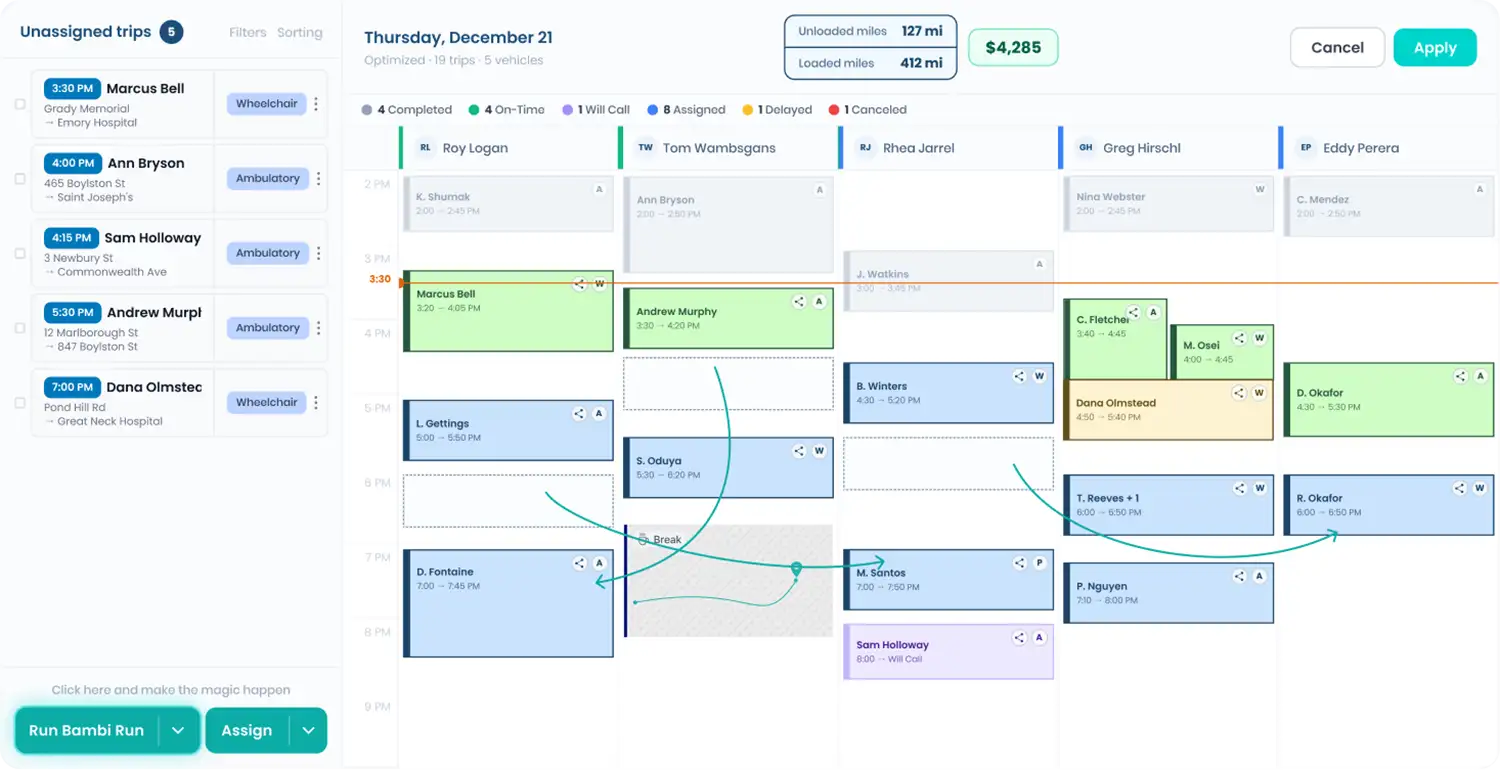
- Automated Scheduling: Algorithms match trips with the best-suited drivers and vehicles, reducing manual errors and improving efficiency.
- Real-Time Communication: Instant messaging between drivers, dispatchers, and passengers minimizes delays and confusion.
- Digital Documentation: Apps replace paper-based systems by logging GPS data, timestamps, and electronic signatures, simplifying compliance and billing.
- Offline Functionality: Data is stored even without internet access, ensuring seamless operations in remote areas.
These tools reduce costs, cut down errors, and improve both driver and passenger experiences, making NEMT services more reliable and efficient.
GPS Navigation and Route Planning
Timely arrivals are the backbone of NEMT services. Mobile apps address this need by integrating with navigation APIs like Google Maps to provide turn-by-turn directions that adjust automatically for traffic updates and road closures. This means drivers no longer need to guess the fastest route - the app uses real-time data to suggest detours around accidents or congestion.
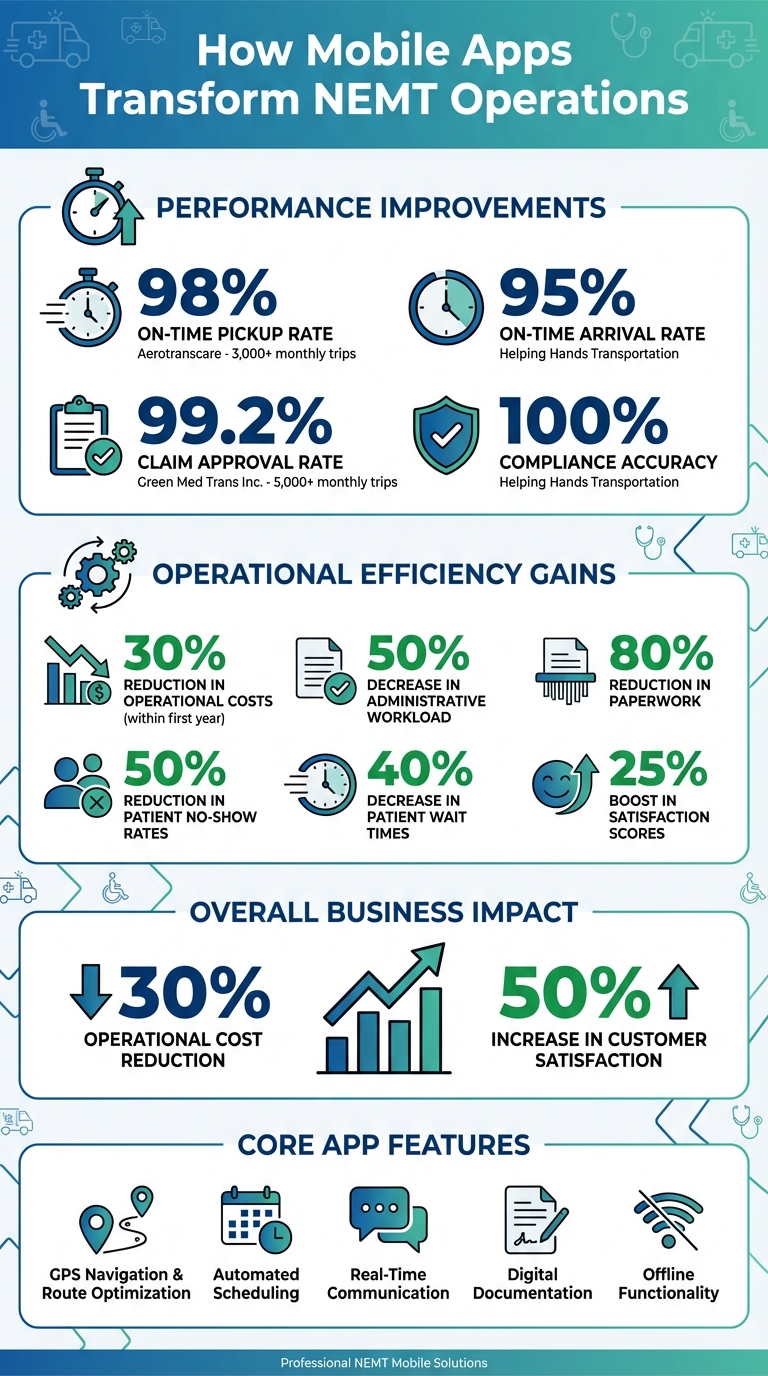
The results speak for themselves. Aerotranscare, a NEMT provider managing over 3,000 trips monthly, achieved a 98% on-time pickup rate by using real-time tracking and route optimization tools. Similarly, Helping Hands Transportation improved to a 95% on-time arrival rate while reducing paperwork by 80%.
This kind of navigation efficiency also lays the groundwork for better tracking capabilities.
How GPS Tracking Helps NEMT Drivers
Live GPS tracking gives dispatchers a real-time view of their fleet. They can monitor each driver's location, check vehicle speed, and ensure route adherence as it happens. This is especially useful for last-minute "will call" trips - dispatchers can quickly assign the closest available driver, cutting down on unnecessary miles and keeping schedules on track.
Even when offline, apps continue to collect GPS data and timestamps, syncing everything once the connection is restored. Dispatchers can also review detailed "bread-crumb" trails after trips to confirm exact pickup and drop-off points. This helps resolve billing disputes and highlights inefficiencies like fuel-wasting patterns.
But tracking is only part of the equation - effective route planning takes operations to the next level.
How Route Planning Works
Route planning software analyzes multiple variables, including distance, traffic conditions, appointment times, vehicle capacity, and specific patient needs like wheelchair accessibility. It calculates the most efficient route and can even handle multi-passenger schedules, which boosts vehicle utilization and reduces the total number of trips. This directly cuts down fuel costs and wear on vehicles.
For recurring appointments, such as dialysis, the software identifies patterns and creates standing schedules that improve fleet efficiency over time. Drivers receive clear, real-time directions, eliminating the need for constant check-ins with dispatchers and allowing them to focus on driving safely.
Automated Trip Scheduling and Tracking
Handling trip schedules manually often overwhelms dispatchers with constant phone calls, paper-based trip sheets, and last-minute changes. Mobile apps simplify this process by using automated algorithms to match trips with the most suitable driver and vehicle in real time. These systems take into account factors like proximity to pickup points, vehicle capacity, specialized equipment (e.g., wheelchair lifts), and driver certifications.
By automating scheduling, administrative workloads can drop by as much as 50%. For example, one regional NEMT (Non-Emergency Medical Transportation) provider saw a 30% reduction in operational costs within the first year. This allows dispatchers to focus on urgent exceptions rather than routine scheduling tasks.
How Automated Scheduling Assigns Trips
When a trip request is submitted, the app determines the best driver for the job. For on-demand trips, dispatchers can assign tasks with a single click. The software uses live GPS data and the driver’s current schedule to identify the closest available driver and sends the trip details directly to their device.
For patients with recurring appointments, such as those needing dialysis or physical therapy, the app recognizes patterns and suggests standing schedules. This eliminates repetitive data entry and ensures a seamless experience for both patients and providers.
"Lots of great features make our daily tasks very easy. The booking platform allows customers to book trips automatically." - Akandu Ukoha, Executive Director, Marcy Transportation Services
Once trips are scheduled, automated notifications keep all parties informed in real time.
Live Trip Updates
Paper trip sheets are replaced with digital manifests that sync instantly across devices. Drivers receive updated manifests on their devices, removing the need for radio or phone confirmations.
Drivers can log their status - such as "Arrived", "Loaded", or "Dropped Off" - with just a tap. These actions automatically record GPS timestamps and odometer readings, creating a detailed audit trail without requiring manual input. Dispatchers can monitor trip progress on a live map, where color-coded icons show vehicles heading to pickups versus those en route to drop-offs. Push notifications ensure drivers are informed of new assignments or schedule changes without additional calls.
This automated system also streamlines billing. GPS-stamped events and electronic signatures are instantly converted into claim files, eliminating the need for manual data entry for Medicaid and Medicare reimbursements.
Communication Tools for Drivers and Dispatchers
Effective communication between drivers and dispatchers is key to avoiding confusion and ensuring trips stay on track. Mobile apps have replaced traditional phone calls and radio check-ins with instant digital updates, allowing dispatchers to stay informed in real time.
"Eliminate distracting calls: Through our routing software drivers are updating trip status in real-time." - RoutingBox
Direct Messaging with Dispatchers
Beyond real-time updates, mobile apps offer secure messaging features that create a direct and private communication channel between drivers and dispatchers. This two-way messaging system ensures confidentiality and keeps everyone up to date. Dispatchers can use these tools to send last-minute “will call” trips, share specific instructions, or make schedule changes directly to a driver’s device. With instant notifications, drivers receive updates without delay, helping them adapt quickly to changes.
Passenger Notifications
Mobile apps don’t just connect drivers and dispatchers - they also keep passengers in the loop. Automated notifications via SMS, email, or phone inform passengers of estimated arrival times, reducing no-shows and cutting down on driver wait times. If delays arise due to traffic or other issues, the system updates passengers with revised arrival times, keeping them informed every step of the way. Additionally, apps can notify drivers when private payments - whether cash, credit card, or check - are due at the end of a trip. Passengers also receive instant updates about trip changes, reducing missed appointments and improving service reliability. These tools work together to streamline communication and ensure smoother daily operations.
Digital Documentation and Compliance Tools
Digital documentation, built on real-time trip updates and route data, plays a critical role in maintaining compliance while reducing human error. Accurate records are essential for NEMT audits and billing, and mobile apps have revolutionized this process by replacing traditional paper manifests. These apps automatically capture GPS points, odometer readings, and timestamps, creating a complete digital footprint that serves as solid proof of service during audits. This seamless digital trail integrates directly with advanced record management systems and compliance controls.
For example, Helping Hands Transportation achieved 100% compliance accuracy and cut paperwork by 80% after adopting digital coordination tools. Similarly, Green Med Trans Inc. reached a 99.2% claim approval rate while managing over 5,000 trips per month, demonstrating how automated documentation can significantly improve both compliance and reimbursement outcomes.
Digital Record Management
Drivers can now record compliance data directly on their mobile devices, simplifying the process while ensuring accuracy. Electronic signatures from passengers, facility staff, and drivers confirm trip completion and validate that services were delivered as required. Beyond this, apps include digital checklists for pre- and post-trip vehicle inspections, ensuring that critical safety measures - like brakes, lights, and wheelchair securement - are thoroughly verified.
To protect sensitive patient data, these systems use AES-256 and TLS 1.2+ encryption, meeting HIPAA standards and safeguarding information.
"It works well for Colorado minimum requirements on claim submission documentation.. Easy to use and reliable..my drivers love it." - Haron, Owner, Peak Elite Medride
With detailed digital records, billing becomes more efficient. The system automatically fills out necessary forms and codes, streamlining the process and reducing administrative burdens.
Automated Billing and Reports
Billing is another area where digital tools shine. Apps can automatically generate CMS-1500 forms and EDI files for Medicaid and private insurers. These systems apply the correct billing and medical necessity codes, along with authorization numbers, minimizing errors that could lead to claim denials. Real-time eligibility verification ensures patient coverage is confirmed before a trip begins, avoiding non-reimbursable services.
"One of my biggest issues before utilizing them was billing. They handle that process with ease ensuring all claims are filed timely and fix errors as needed quickly to ensure timely payments." - Raquel Purvis, Owner, Goodwill Transportation Services
Integration with broker networks and accounting software like QuickBooks eliminates the need for redundant data entry, speeding up the reimbursement process. Drivers can also process payments - whether by credit card, cash, or check - directly through the app. Every transaction is logged, simplifying accounting tasks. When it’s time for an audit, providers can quickly generate comprehensive compliance reports that include the full history of trips, electronic signatures, and safety inspections.
Offline Access and Easy-to-Use Design
Offline functionality plays a crucial role in ensuring uninterrupted service and accurate record-keeping, especially when drivers operate in areas with unreliable connectivity.
NEMT drivers frequently travel through rural or remote regions where cellular signals can be spotty or nonexistent. Apps tailored for these scenarios are designed to store critical data - like GPS coordinates, timestamps, and digital signatures - directly on the device. This means no information is lost, even if the internet connection drops. When the driver moves back into an area with stable connectivity, the app automatically syncs the stored data with dispatch and billing systems. This process creates a complete audit trail, ensuring compliance and preventing billing errors, while maintaining the efficiency of digital documentation.
Drivers can still access essential trip information, including passenger mobility requirements and scheduled routes, without worrying about connectivity issues. Events like GPS-stamped stops, passenger and staff signatures, and vehicle inspection checklists are securely logged on the device. Once the connection is reestablished, the app uploads all stored data to the administrative system, updating trip statuses and triggering the billing process. This smooth data transfer helps prevent delays or documentation gaps, even in remote service areas.
Simple App Design for Drivers
Apart from offline reliability, intuitive app design is key to making life easier for drivers. These apps are built with simplicity in mind, featuring large, easy-to-press buttons, color-coded status indicators, and straightforward navigation optimized for smartphones and tablets. Voice commands and AI-powered voice bots allow drivers to interact with the app hands-free, so they can stay focused on driving while receiving updates or confirming trip details.
"Mobile-optimized driver portals deliver critical trip information even in connectivity-challenged areas, while administrative dashboards transform complex operations into manageable workflows through intelligent visual design."
– MediDrive
To ensure usability in various lighting conditions, high-contrast interfaces and adjustable text sizes make screens easy to read, whether in bright daylight or dimly lit environments. Features like one-click "time in/time out" buttons, digital signature collection, and automated safety checklists streamline administrative tasks. Drivers can complete these actions quickly without navigating through complicated menus. Providers who have adopted these user-friendly features report a 40% decrease in patient wait times and a 25% boost in satisfaction scores.
Conclusion
Mobile apps have revolutionized NEMT (Non-Emergency Medical Transportation) operations by introducing tools like real-time GPS tracking, automated scheduling, direct messaging, and digital documentation. These features not only cut costs and reduce errors but also ensure compliance with industry standards. The results speak for themselves: providers have seen operational costs drop by 30% and customer satisfaction rise by 50%, thanks to smoother administration and better fleet management.
For drivers, these apps simplify daily tasks with user-friendly interfaces, offline capabilities, and safety checklists that safeguard both passengers and vehicles. Features like GPS-stamped events, electronic signatures, and automated time tracking eliminate cumbersome paperwork while ensuring accurate records. Additionally, multi-channel communication systems have lowered patient no-show rates by up to 50% and reduced patient wait times by 40%.
These advancements are setting the stage for significant industry growth. As NEMT continues to embrace AI-driven personalization and cloud-based solutions, mobile apps will remain at the heart of reliable service delivery and long-term business success. With these tools in hand, drivers can focus on their primary mission: providing safe and timely transportation for the patients who rely on them.
FAQs
How do mobile apps help NEMT drivers stay compliant and avoid errors?
Mobile apps are a game-changer for NEMT drivers, helping them stay on top of compliance and cut down on mistakes. They offer tools like real-time GPS tracking, automated scheduling, and digital documentation, making daily tasks easier and more efficient.
With GPS tracking, drivers get precise navigation, reducing the chances of missed pickups or wrong turns. At the same time, dispatchers can keep tabs on vehicle locations in real time, ensuring everything stays on track.
Automated scheduling simplifies trip management by providing instant updates on changes, traffic, and route adjustments. This not only minimizes human error but also helps drivers stick to proper procedures. On top of that, digital tools let drivers handle pre- and post-trip checklists, log trip details, and confirm vehicle safety - all electronically. This improves record-keeping while cutting down on paperwork-related errors.
Together, these features make daily operations smoother, boost service reliability, and help drivers meet industry regulations with ease.
What are the advantages of offline functionality in NEMT driver apps?
Offline functionality in NEMT driver apps ensures that essential features like trip information, navigation, and documentation remain accessible, even in areas with limited or no internet connection. This means drivers can stay on track and avoid delays caused by network disruptions.
Once the connection is restored, the app automatically syncs updates - such as trip statuses and location details - with dispatch systems. This is particularly helpful in rural or remote regions where cellular coverage is spotty, allowing drivers to maintain dependable service. By bridging communication gaps, offline functionality boosts efficiency and helps NEMT providers deliver consistent, high-quality service.
How does real-time communication make NEMT services more efficient?
Real-time communication plays a key role in making Non-Emergency Medical Transportation (NEMT) services more efficient. It allows dispatchers and drivers to share updates instantly, ensuring drivers are always informed about pickups, drop-offs, route changes, or unexpected issues like traffic jams or delays. This quick exchange of information minimizes confusion and delays, helping to avoid missed appointments and keeping trips running on time.
For passengers, real-time tools offer accurate updates on arrival times, enhancing their overall experience and building trust. These systems also simplify operations by automating essential tasks such as scheduling, route planning, and vehicle tracking. The result? A smoother, more reliable process for both drivers and passengers.