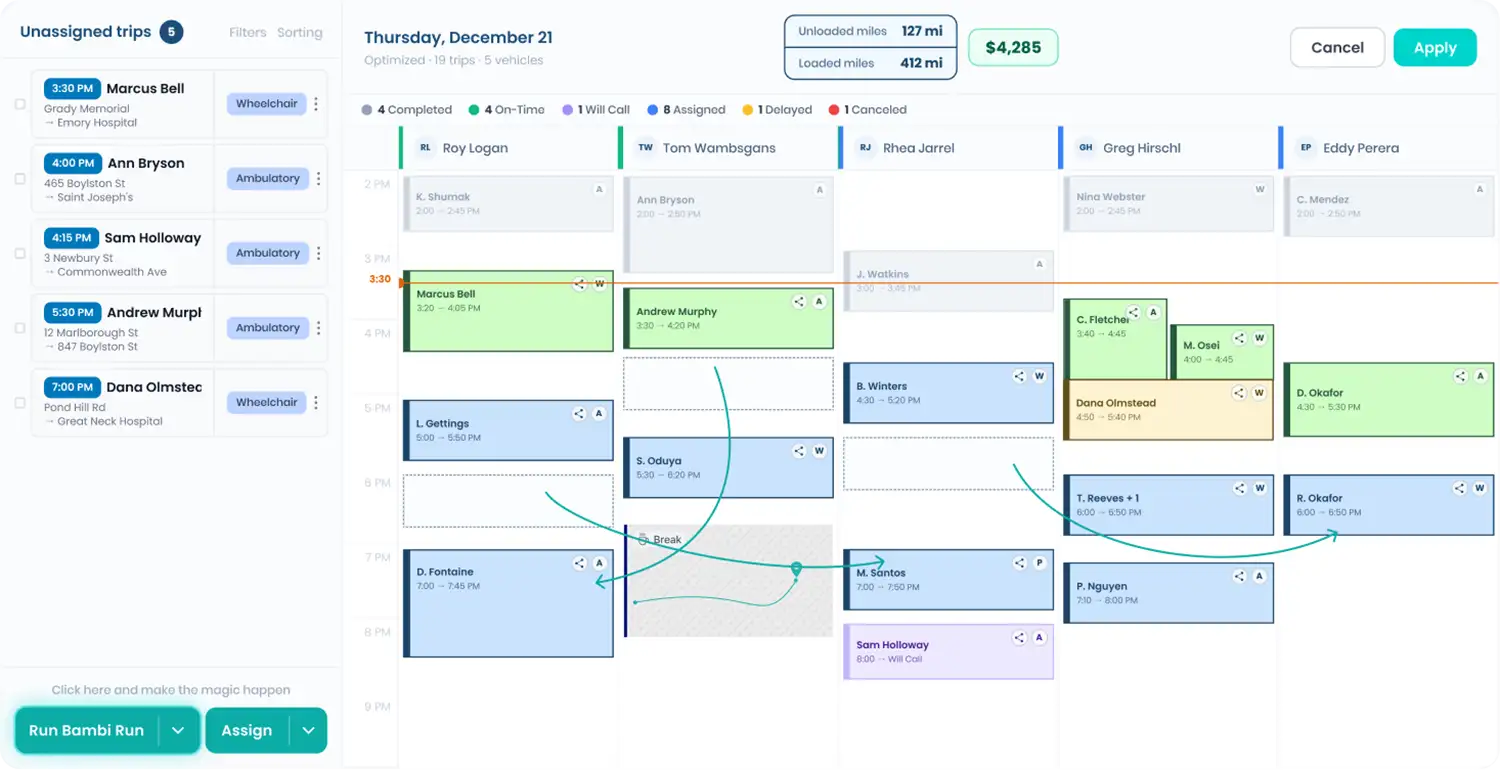

When it comes to managing Non-Emergency Medical Transportation (NEMT), the choice between manual and automated route planning can drastically impact efficiency, costs, and service quality. Here's the bottom line:
- Manual route planning relies on spreadsheets, phone calls, and human decision-making. It’s time-consuming (up to 30 minutes per trip), prone to errors, and struggles with scaling as trip volumes grow.
- Automated route planning uses AI and real-time data to optimize routes in minutes, reduce errors, and cut costs by up to 50%. It’s ideal for growing operations handling complex schedules.
Key Takeaways:
- Manual planning works for small operations with minimal trips but becomes inefficient as demand increases.
- Automation improves scheduling speed, reduces human errors, and enhances fleet usage.
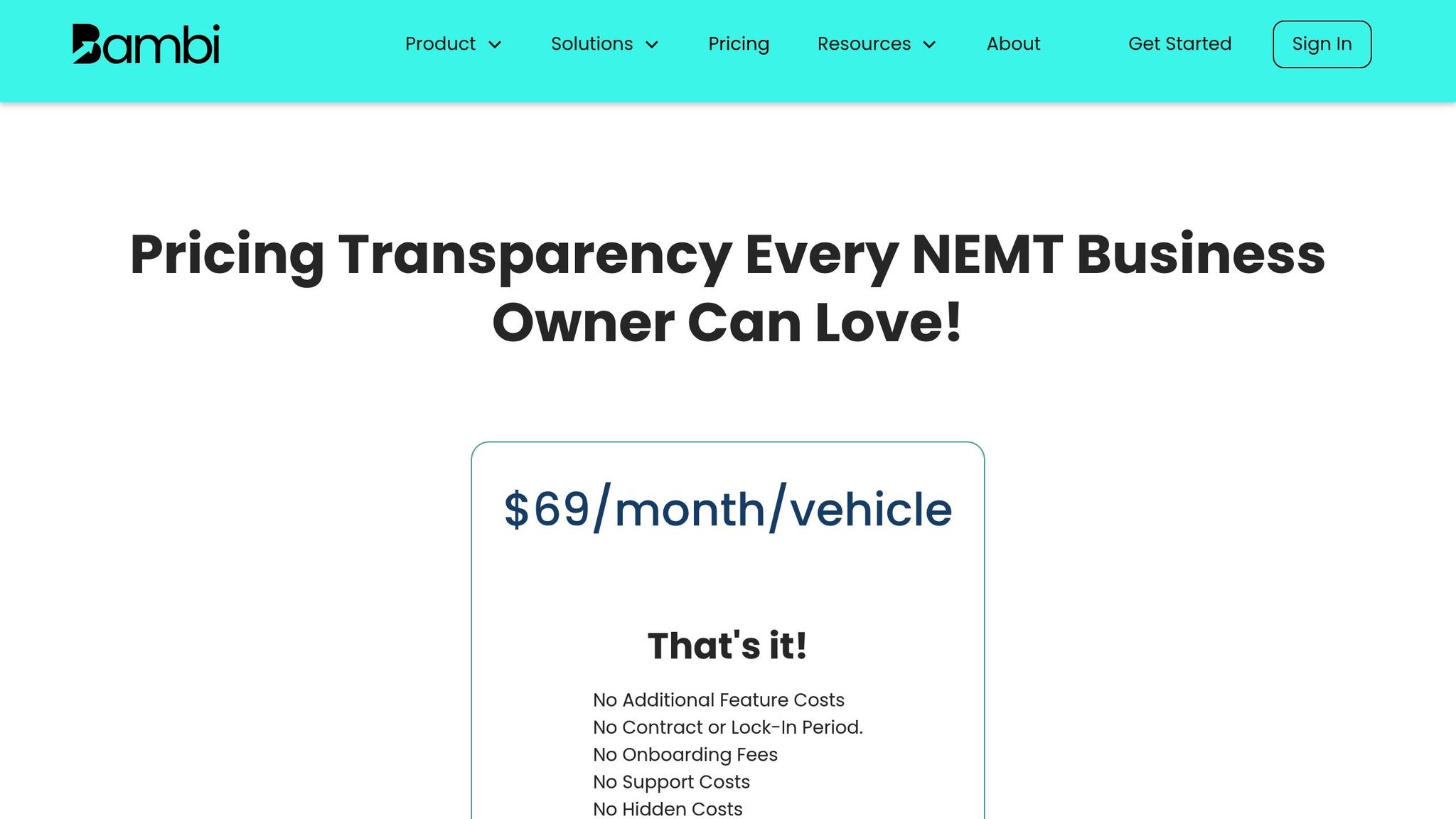
- Software like Bambi costs $69/vehicle/month and offers features like real-time tracking, compliance monitoring, and instant updates.
Quick Comparison:
FeatureManual PlanningAutomated PlanningTime Per Booking20–30 minutes3–5 minutesError RatesHighLowScalabilityLimitedHandles high volumesCost SavingsMinimalUp to 50% reductionCompliance TrackingManualAutomatic
If you’re managing a growing NEMT business, automation isn’t just faster - it’s a smarter long-term solution.
Manual Route Planning for NEMT Operations
How Manual Route Planning Works
In Non-Emergency Medical Transportation (NEMT) operations, manual route planning relies heavily on traditional methods and human decision-making to manage schedules, vehicle tracking, and compliance requirements. Typically, trip requests come in via phone calls and are logged manually in spreadsheets or physical records. Without automated tools, dispatchers must juggle driver availability, vehicle capacity, and patient appointment times using static information that can quickly become outdated. When unexpected situations arise - like traffic delays or last-minute cancellations - dispatchers are forced to make adjustments on the fly, often relying on phone calls or two-way radios to communicate with drivers. While this approach has been the norm for years, it introduces inefficiencies that are hard to ignore.
Problems with Manual Route Planning
The drawbacks of manual planning become evident as operations grow. For instance, booking a single trip manually can take up to 30 minutes, compared to just 3–5 minutes with automated systems. Planning individual routes is equally time-consuming, often requiring 15–20 minutes per trip - a workload that skyrockets as the number of trips increases. Human error is another major issue, leading to mistakes like miscalculations, overlooked traffic conditions, or even double-booked drivers. Manual systems also lack the flexibility to adapt in real time, which means driver utilization rates can drop below 60%. While this approach might work for a small number of daily trips, it becomes chaotic and unmanageable as the volume of trips grows, making it difficult to handle complex schedules and compliance needs.
Impact on NEMT Business Operations
The challenges of manual route planning have a direct, negative impact on NEMT businesses. Labor and fuel costs climb as dispatchers spend more time on administrative tasks, and inefficient routing can lead to up to a 30% increase in deadhead miles - miles driven without passengers. Service quality also takes a hit, with slower communication and a lack of real-time tracking resulting in longer wait times, missed appointments, and frustrated patients. On top of that, the manual handling of compliance, billing, and reporting increases the likelihood of errors, adding even more strain on operations. These issues highlight how manual planning becomes increasingly unsustainable as businesses scale.
Automated Route Planning for NEMT Operations
How Automated Route Planning Works
Automated route planning is reshaping Non-Emergency Medical Transportation (NEMT) operations by leveraging AI and real-time data to handle scheduling, routing, and trip assignments with minimal human involvement. These systems take into account factors like traffic patterns, driver availability, patient locations, appointment schedules, and vehicle capacity to create the most efficient routes and schedules.
The technology behind this includes machine learning algorithms for optimizing routes, cloud-based scheduling platforms, and real-time GPS tracking systems. When a trip request is submitted, the system evaluates all available options and assigns the best driver and vehicle based on factors like proximity, scheduling constraints, and the patient’s specific needs.
If traffic conditions change or last-minute trip requests come in, the AI recalculates routes and reallocates resources instantly - no dispatcher intervention required. Additionally, the system ensures compliance by automatically tracking driver certifications, HIPAA requirements, and other regulatory standards. These features lead to major efficiency improvements across the board.
Benefits of Automation
Automation dramatically reduces the time required for key processes. For example, trip processing drops from 20–30 minutes to just 3–5 minutes, route planning from 15–20 minutes to 2–3 minutes, and driver scheduling from 10–15 minutes to 1–2 minutes. This translates to a reduction in dispatch costs of up to 50%.
AI-driven systems also significantly lower error rates by replacing manual decision-making with precise algorithms. They can easily scale to handle growing trip volumes, which would overwhelm manual processes. Real-time optimization ensures resources are allocated efficiently, cutting down on unnecessary mileage and improving on-time performance.
Another key advantage is real-time fleet visibility. Automated systems can quickly adapt to unexpected changes like traffic delays or emergency trip requests, ensuring smooth operations without disruptions. A standout example of these capabilities can be seen in platforms like Bambi's software.
Example: Bambi's Software Features
Bambi's AI-powered software highlights the advantages of automation in NEMT operations. It simplifies dispatching by intelligently matching trips with drivers and vehicles, taking into account patient-specific needs such as recurring medical appointments or special accommodations.
The platform also includes built-in automated HIPAA compliance monitoring, ensuring patient data is handled securely and in line with regulations - without requiring manual oversight. Providers using Bambi's system report that trip requests are processed within minutes instead of hours, which helps reduce scheduling errors and allows operations to scale without adding administrative workload.
Another standout feature is the platform's communication tools. It sends automatic updates to patients, drivers, and healthcare facilities, eliminating delays caused by manual coordination. At $69 per vehicle per month, Bambi’s software offers clear cost savings by reducing labor expenses and boosting operational efficiency. Its ability to handle recurring appointments is especially valuable, helping providers maintain high levels of patient satisfaction and service reliability. Additionally, optimized routing improves fleet utilization and reduces fuel costs.
Manual vs. Automated Route Planning: Side-by-Side Comparison
Comparison Table: Key Metrics
When you break it down, the differences between manual and automated route planning are striking. Here's a side-by-side look at how they stack up across key performance metrics for NEMT providers:
MetricManual Route PlanningAutomated Route PlanningTrip Processing Time20–30 minutes per booking3–5 minutes per bookingRoute Planning Duration15–20 minutes per trip2–3 minutes per tripDriver Scheduling10–15 minutes per schedule1–2 minutes per scheduleError RatesHigh – prone to human mistakesLow – AI-driven accuracyScalabilityStruggles with high trip volumesEasily scales as volume increasesReal-Time AdaptabilityDifficult to adjust quicklyInstant recalculationDispatching CostsElevated labor and administrative costsCan reduce costs by up to 50%Communication MethodPhone calls and paperworkDigital, integrated, real-timeCompliance MonitoringManual tracking, susceptible to errorsAutomated, HIPAA‐compliantFleet UtilizationOften inefficientOptimized capacity usage
Analysis of the Comparison
Looking at the numbers, it's clear that automated route planning offers significant advantages over manual methods. For starters, it slashes the time needed for trip processing and route planning - manual planning takes an extra 25 minutes per booking and 17 minutes per trip on average. Multiply that by dozens or even hundreds of trips each week, and the time savings become substantial.
Cost efficiency is another major win for automation. By cutting labor hours, reducing errors, and optimizing routes, automated systems can lower dispatching costs by as much as 50%. These savings aren't just about dollars - they also mean better fleet utilization and happier patients, thanks to smoother operations and fewer delays.
Manual planning, while feasible for very small operations, often struggles as trip volumes grow. It's prone to errors, whether it's misjudging traffic, missing pickups, or failing to meet compliance requirements. These issues can lead to dissatisfied customers and potential regulatory headaches. Automated systems, on the other hand, use algorithms and real-time data to keep things running smoothly, even when traffic snarls or last-minute changes arise.
Take, for example, a mid-sized NEMT provider handling 100 trips a week. Switching to automation could save hours of administrative work while improving overall efficiency. For those using software like Bambi, which costs $69 per vehicle per month, the return on investment practically speaks for itself. It's no wonder so many providers are making the switch to automated planning.
Choosing the Right Approach for Your NEMT Business
Deciding on the best planning method for your Non-Emergency Medical Transportation (NEMT) business depends on where you are now and where you want to go. Factors like the size of your fleet, the number of trips you handle, your budget, and your growth plans all play a role in determining the right approach for your operation.
When Manual Planning Might Be Enough
Manual route planning can still work for very small NEMT providers with just a few vehicles and a steady, manageable number of trips. For instance, if you’re running a small operation with two vehicles serving 15–20 regular dialysis patients, manual scheduling might be sufficient - especially if routes and schedules don’t change much.
Why Automation Is the Next Step for NEMT
For NEMT providers aiming to grow and stay competitive, automation isn’t just helpful - it’s essential. Automated systems can slash dispatching costs by up to 50% and reduce trip processing time from 20–30 minutes to just 3–5 minutes. That’s a savings of 25 minutes per trip, time that could be reinvested into expanding your business or enhancing customer service.
Beyond saving time and money, automation simplifies compliance - a growing challenge as your business expands. Automated tools can monitor regulations like HIPAA and ensure that driver certifications and other requirements are always up to date. By eliminating manual checks, these systems make it easier to stay compliant while scaling your operations. Automation doesn’t just improve efficiency; it sets the stage for seamless transitions as your business grows.
Tools to Help You Transition to Automation
Switching to automation is a smart move for any NEMT provider looking to improve efficiency and compliance. The Bambi NEMT blog is a great resource for learning more about adopting technology, meeting compliance standards, and optimizing your operations.
When choosing an automated system, focus on solutions designed specifically for NEMT businesses. Look for platforms with clear, upfront pricing and no hidden fees. For example, Bambi’s platform can handle mass trip uploads, recurring trips, and real-time driver tracking - all tools that help growing operations manage increasing complexity. Investing in automation isn’t just about keeping up; it’s about setting your business up for long-term success as trip volumes and operational demands rise.
Conclusion
When deciding between manual and automated route planning, it all comes down to your current scale and growth objectives. For very small operations with just a handful of vehicles and predictable routes, manual planning might suffice - for a while. But as your operation grows, manual scheduling quickly becomes a roadblock. The process is time-intensive, prone to errors, and struggles to adapt to real-time changes, making it a poor fit for most modern NEMT providers.
Automated route planning, on the other hand, offers clear benefits as your business expands. It significantly reduces dispatching costs, slashes planning time, and improves overall efficiency. For instance, when Jeffrey Hoff from Reliant Transport adopted Bambi’s automated system, his team saw faster trip processing and scalable operations, along with a 20–35% reduction in costs and error rates.
Ultimately, your decision should align with your business goals. If growth, better service quality, and operational efficiency are priorities, automation isn’t just an option - it’s a necessity. The NEMT industry is rapidly embracing AI-powered solutions, and providers who adapt to this shift will be better equipped to compete and succeed.
Take a close look at your current trip volumes, growth projections, and operational hurdles. Automation isn’t just about adopting new technology - it’s about laying the groundwork for sustainable growth while ensuring better patient care and smoother operations. By embracing automation, you’ll be positioned to deliver timely, cost-effective services and build a future-ready operation.
FAQs
What challenges might NEMT businesses face when switching from manual to automated route planning?
Transitioning from manual to automated route planning offers a host of advantages, but it’s not without its challenges. One of the first obstacles is the learning curve for staff. Adjusting to new software and workflows can take time, so providing thorough training and ongoing support is crucial to help employees feel confident and capable with the new system.
Another challenge lies in the upfront costs. While automated tools can lead to long-term savings by boosting efficiency, the initial investment might feel daunting for some businesses. On top of that, making sure the new software integrates smoothly with existing systems, such as dispatch or scheduling tools, often requires some technical tweaking and attention.
Even with these initial hurdles, automated route planning can significantly improve efficiency, accuracy, and the ability to scale operations. For many NEMT providers, the long-term benefits make it a smart and forward-thinking choice.
How does automated route planning help NEMT providers stay HIPAA-compliant?
Automated route planning systems tailored for NEMT services often come equipped with features designed to meet regulatory standards like HIPAA. These systems prioritize the secure handling of sensitive patient data by implementing encryption and access controls throughout scheduling, dispatching, and communication processes.
By reducing the need for manual input, these tools help lower the chances of human error or data breaches involving protected health information (PHI). Many of these systems also include audit trails and reporting functions, making it easier for NEMT providers to maintain compliance while streamlining their operations.
What key features should I consider in automated route planning software for my NEMT business?
When selecting automated route planning software for your NEMT business, focus on tools that improve efficiency, accuracy, and communication. Key features to consider include real-time dynamic scheduling to handle last-minute changes, optimized trip assignments to cut down on travel time and expenses, and streamlined communication between dispatchers and drivers to keep everything running smoothly.
Other helpful capabilities include route optimization, compliance support (such as HIPAA adherence), and scalability to support your business as it expands - all while maintaining excellent service for patients.
Related Blog Posts
- Manual NEMT Routing with Map Apps: Can You do it? Should you do it?
- Maximize Efficiency with NEMT Route Optimizer Tools for Medical Transportation
- How Route Optimization Software Transforms Non-Emergency Medical Transportation
- Beyond GPS and Google Maps: The Difference Between Navigation and True NEMT Route Optimization