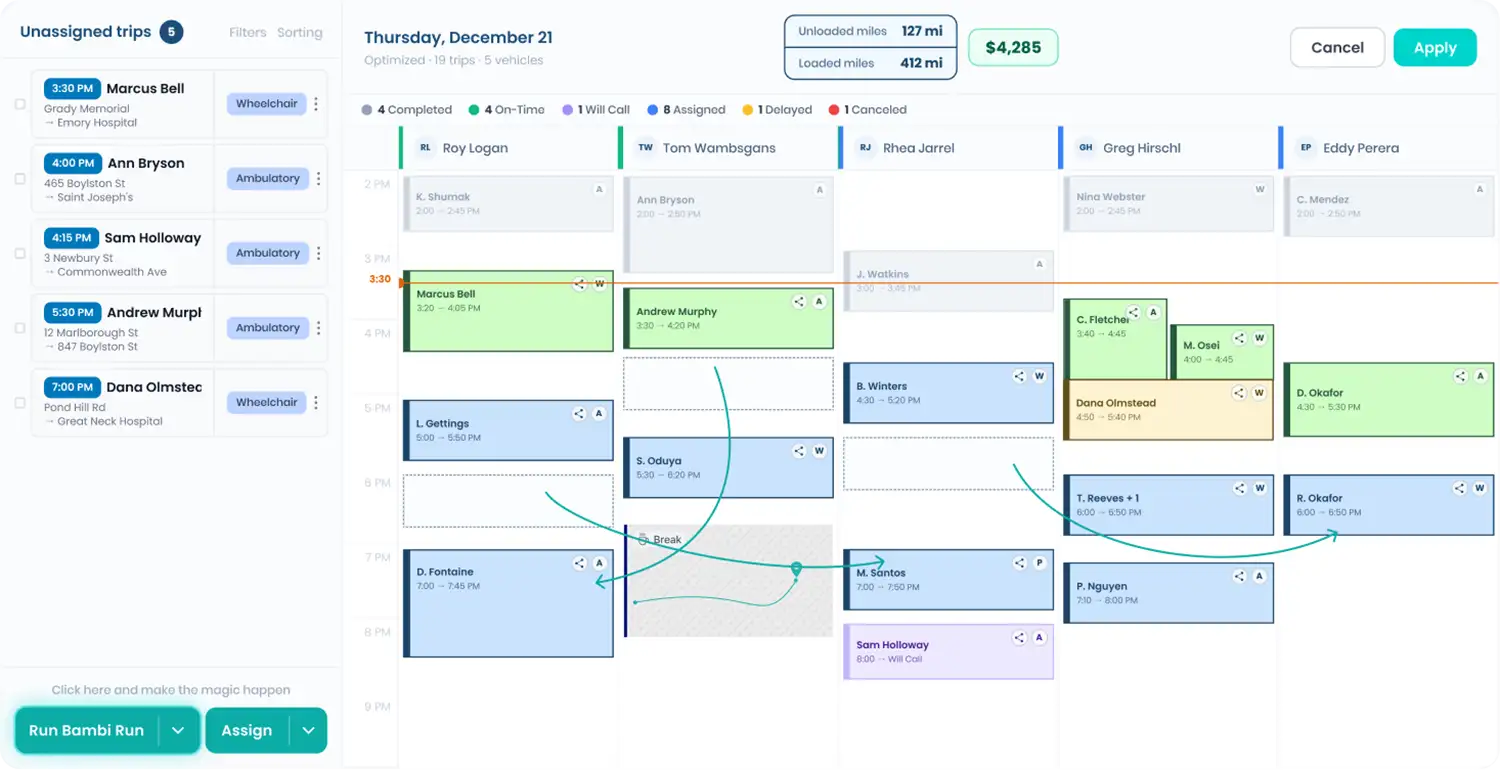

Running a Non-Emergency Medical Transportation (NEMT) business comes with strict compliance and documentation demands. Software solutions simplify these challenges by automating processes, reducing errors, and ensuring providers meet regulatory requirements. Here's how:
- Automated Record-Keeping: Tracks driver credentials, vehicle inspections, and trip details digitally, reducing manual errors and missed deadlines.
- Real-Time Monitoring: Flags expired certifications, tracks GPS-stamped trip data, and verifies Medicaid eligibility to prevent claim denials.
- HIPAA Compliance: Encrypts data, restricts access with role-based permissions, and logs all activity for audit readiness.
- AI-Powered Scheduling: Matches drivers to patient needs, optimizes routes, and ensures compliance with state regulations.
Providers using these tools report fewer claim denials, increased revenue, and smoother audits. For example, Metro Medical Transport reduced claim denials from 23% to 6%, adding $200,000 in monthly revenue. The right software keeps your operations compliant while saving time and money.
How Software Simplifies NEMT Compliance

Modern Non-Emergency Medical Transportation (NEMT) software takes the hassle out of compliance by automating processes that were once manual and error-prone. Instead of juggling spreadsheets and paper files, providers can now manage everything - driver credentials, vehicle inspections, and more - on a single, centralized platform. This shift significantly reduces manual errors that often lead to claim denials or audit complications.
Automation can save providers a considerable amount of time. In fact, billing and documentation tasks that used to take hours or even days can now be completed in just a few clicks, cutting time spent on these activities by up to 75%. Digital records are instantly accessible, securely stored, and properly timestamped, making compliance simpler and more reliable.
One of the biggest advantages? The software actively works to prevent compliance issues before they escalate - helping providers avoid costly service interruptions or fines.
Automated Record-Keeping for Drivers and Vehicles
Keeping track of driver certifications, vehicle maintenance schedules, and daily vehicle inspection reports (DVIRs) can be overwhelming. NEMT software takes over these responsibilities, logging all credentials digitally and sending reminders when expiration dates approach. This ensures that no driver is accidentally dispatched with expired certifications.
"Credential management software ensures that all driver and vehicle documents are up to date by sending automated alerts and reminders." – NEMT Cloud Dispatch
Vehicle maintenance also becomes more predictable. The software tracks mileage in real time and schedules preventive maintenance based on actual usage instead of guesswork. Drivers can complete DVIRs using mobile apps, with the data syncing instantly to a central system. This eliminates the need for manual logs, which are often inaccurate and can lead to unplanned breakdowns or safety violations.
FeatureManual DocumentationAutomated NEMT SoftwareRecord EntryPaper-based, prone to human errorDigital, paperless, and automatically recordedCredential TrackingManual spreadsheets; easy to miss expirationsAutomated alerts and renewal remindersTrip VerificationRelies on driver logs and self-reportingReal-time GPS tracking and digital timestampsBilling AccuracyHigh risk of claim denials due to typosOne-time entry with real-time validation rulesAudit PreparationDays of gathering physical filesAudit-ready records accessible in clicksVehicle SafetyIrregular maintenance checksDaily digital DVIRs and maintenance logs
This automated record-keeping seamlessly integrates with real-time monitoring, ensuring compliance is maintained across all operations.
Real-Time Tracking of Credentials and Reporting
Real-time monitoring provides providers with a clear, up-to-the-minute view of their compliance status. The software continuously tracks driver certifications, vehicle inspections, and insurance coverage, flagging any credentials that are about to expire - or that have already lapsed. Dashboards give managers instant access to their operation's compliance status, offering peace of mind and better control.
Some systems take it a step further by matching driver qualifications to specific patient needs. For example, if a patient requires Basic Life Support (BLS) or Advanced Life Support (ALS), the software ensures only appropriately certified crew members are assigned. This reduces the risk of mismatches and regulatory violations.
Additionally, the software performs regular eligibility checks - weekly or monthly - to confirm that drivers and vehicles meet Medicaid and state requirements. GPS integration tracks vehicle mileage and diagnostic codes in real time, allowing maintenance to be scheduled based on actual usage rather than arbitrary intervals. This level of precision ensures that operations stay compliant while minimizing downtime.
Data Security and HIPAA Compliance
Ensuring data security is critical for protecting PHI (Protected Health Information) and maintaining compliance with HIPAA regulations. It's also a cornerstone for audit readiness in NEMT (Non-Emergency Medical Transportation) operations.
Securing patient information isn't just a good practice - it's a legal obligation under HIPAA. NEMT software plays a key role here by embedding strong security measures throughout the system, from dispatching and billing workflows to mobile driver apps.
Modern platforms use advanced encryption standards like AES-256 and TLS 1.2+ protocols to safeguard PHI, whether it's stored or being transmitted.
Role-Based Access Control (RBAC) ensures that employees only see information relevant to their roles. For instance, drivers access trip details but not sensitive medical notes, while billing staff can view claims data without seeing unnecessary patient information. Additional layers of security, like Multi-Factor Authentication (MFA) - using text codes or biometric scans - and automatic session timeouts, help prevent unauthorized access. Together, these measures provide a strong foundation for audit preparation, which is explored further below.
HIPAA-Compliant Features and Audit Preparation
Beyond encryption and access controls, maintaining detailed audit trails is essential for meeting regulatory requirements and passing audits without complications.
Accurate documentation is key to avoiding penalties during audits. With NEMT software, providers can quickly generate detailed reports using immutable, time-stamped logs. These logs securely store everything from trip records to electronic signatures and medical necessity documentation in the cloud. This centralized, searchable system eliminates the inefficiencies and errors that often come with manual record-keeping.
To enhance compliance, the software assigns unique user IDs to track every employee's activity, making it easier to trace any suspicious actions. Some platforms even incorporate AI-powered monitoring to flag unusual login attempts or potential security breaches in real time. Additionally, states like New York require GPS tracking - known as "breadcrumb data" - to document pickup and drop-off coordinates along with timestamps. Compliant software automatically captures and shares this information with transportation managers, reducing the risk of fraud.
HIPAA RequirementNEMT Software CapabilityAccess ControlUnique User IDs and Role-Based PermissionsIntegrityDigital signatures and encrypted data transfersAudit ControlsImmutable logs of all PHI access and changesTransmission SecuritySSL/TLS encryption for data sent to driver appsAutomatic Log-offSession timeouts after inactivity
To further minimize risks, providers should conduct regular compliance checks, schedule third-party audits, enforce password updates, and require MFA. Limiting the PHI visible on driver apps to only what's needed for safe transport also reduces exposure if a device is lost or stolen.
AI-Powered Scheduling for Better Compliance
AI-driven scheduling tools are reshaping how NEMT companies stay compliant while meeting tight service deadlines. These systems can analyze over 100 routes in less than three seconds, optimizing driver assignments and minimizing delays. Manual dispatching often falls short, potentially overlooking certification requirements or creating inefficient routes. In contrast, AI automates this complex process, even matching specialized trip needs to drivers with the right skills.
With automated record-keeping at its core, the AI system ensures that only qualified drivers are assigned to trips. It evaluates factors like traffic conditions, driver certifications, and patient medical needs to create schedules that meet compliance standards. For instance, if a trip requires wheelchair accessibility or specific medical equipment, the AI ensures the driver has the proper credentials and vehicle, avoiding mismatches that could lead to violations. This seamless integration with credentialing modules means every trip assignment is verified for compliance before dispatch.
When unexpected issues arise, real-time adjustments keep operations running smoothly. If traffic or accidents cause delays, the system recalculates ETAs, suggests alternate routes, and ensures adherence to strict pickup and drop-off windows mandated by state regulations and payer contracts. Companies using these platforms report on-time pickup rates as high as 98% to 99%.
AI-powered systems also significantly reduce inefficiencies. By cutting empty miles by 40%, these tools improve operational efficiency. GPS tracking adds another layer of accountability, creating tamper-evident records of routes taken. This feature is especially critical in areas with strict Medicaid guidelines. For example, Metro Medical Transport adopted integrated NEMT software in early 2024, leveraging GPS tracking and automated scheduling to increase their clean claim rate to 91% and lower denial rates from 23% to 6% in just six months. This improvement translated to an additional $200,000 in monthly revenue.
"Our advanced AI engine optimizes medical transport routes 20 moves ahead, considering traffic patterns, driver expertise, and patient medical transportation needs." – RouteOps
Conclusion: How NEMT Software Improves Compliance
NEMT software transforms compliance challenges into opportunities for growth. By simplifying operations, providers can reduce administrative tasks by 50% while ensuring 100% HIPAA compliance. This technology removes the risk of manual errors that often lead to claim denials and regulatory issues, producing audit-ready records for every trip.
Take CareRide, for example. This urban NEMT provider expanded its fleet from 10 to 30 vehicles - a 300% increase - without needing to hire more dispatch staff. Even with this growth, they maintained a 99% patient satisfaction rate. These advancements allow teams to prioritize delivering quality care instead of being bogged down by administrative work.
Start by setting up automated alerts for driver certifications and vehicle inspections through your dashboard. Use real-time monitoring tools to stay ahead of potential issues. Require drivers to use mobile apps for tasks like mileage logging and digital signatures, cutting out the need for manual paperwork. Opt for a platform that combines dispatch, scheduling, and billing to eliminate redundant data entry and ensure smooth documentation through automated record-keeping and AI-driven scheduling.
Leverage KPI dashboards for monthly audits to catch problems early, and designate a Compliance Officer to stay updated on regulatory changes, such as the HCPCS S0215 requirement set to take effect on July 1, 2025.
FAQs
How does NEMT software help meet HIPAA compliance requirements?
NEMT software plays a crucial role in maintaining HIPAA compliance by incorporating advanced measures to safeguard sensitive patient data, also known as Protected Health Information (PHI). Some of the standout features include:
- Data encryption: Ensures that PHI is secure both during storage and while being transmitted.
- Role-based access controls: Restricts access to PHI, allowing only authorized personnel to view or handle data.
- Audit trails: Tracks every interaction with PHI, creating a transparent log to ensure accountability.
Many platforms also simplify compliance with automated record-keeping and compliance reporting tools, which reduce the chances of human error and make documentation more efficient. Regular software updates further ensure the system stays aligned with the latest HIPAA regulations, closing any potential compliance loopholes.
However, software alone isn't enough. NEMT providers should prioritize staff training and conduct internal audits to reinforce compliance efforts. Combining these strategies ensures patient data is protected and federal standards are consistently met.
How does AI improve efficiency and compliance for NEMT companies?
AI is transforming Non-Emergency Medical Transportation (NEMT) operations by streamlining processes and minimizing errors. By automating tasks like scheduling and dispatching, AI analyzes critical factors such as traffic patterns, driver availability, and patient requirements. The result? Smarter route planning, fewer unnecessary miles, and a significant boost in efficiency. Plus, these systems can make real-time adjustments to keep trips running smoothly and on schedule.
On the compliance side, AI simplifies some of the most tedious tasks, like documentation and billing. It automatically logs trip data, cross-checks routes with approved plans, and reduces mistakes, making audits less of a headache and lowering the risk of regulatory issues. Features like real-time GPS tracking and dynamic rerouting add another layer of reliability, ensuring services are punctual, safe, and meet all necessary standards - all while lightening the administrative load for NEMT providers.
How does real-time monitoring help NEMT companies stay compliant?
Real-time monitoring plays a crucial role in helping NEMT companies maintain compliance. It offers continuous visibility into vehicle locations, driver actions, and trip progress. This level of oversight ensures companies meet key regulatory requirements, such as punctual pickups and drop-offs, proper documentation, and adherence to safety protocols. By identifying potential issues as they arise, companies can address them immediately, minimizing errors, preventing violations, and avoiding costly penalties.
Beyond compliance, real-time monitoring allows for dynamic adjustments, such as rerouting to manage delays or confirming passenger pickups, all while keeping detailed and accurate records. These records, complete with timestamps and trip data, create a dependable audit trail that simplifies compliance tasks and makes audit preparation more efficient. This not only improves operational accuracy but also ensures that regulatory standards are consistently upheld.