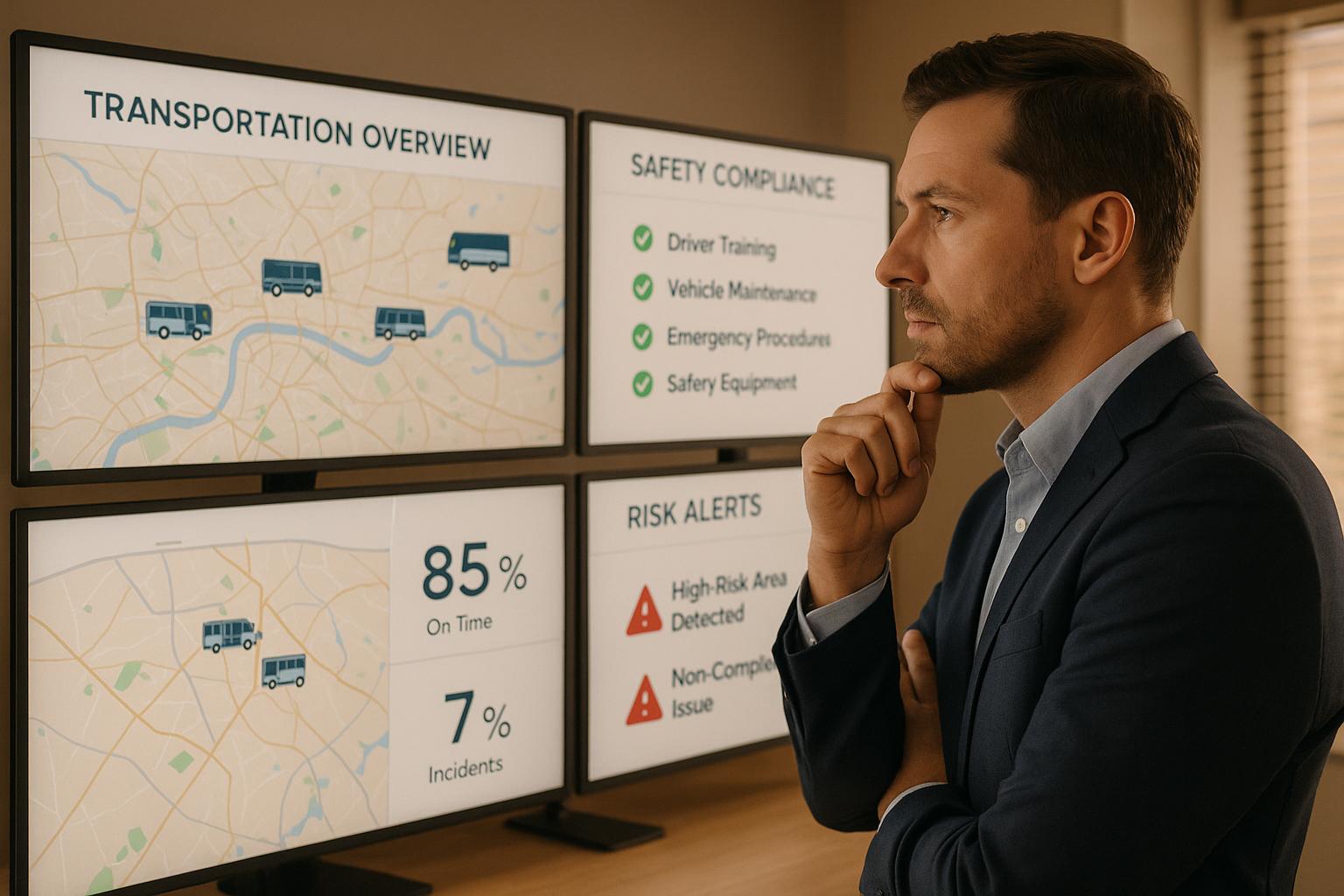
Passenger safety in Non-Emergency Medical Transportation (NEMT) relies on identifying risks and ensuring compliance with strict regulations. Modern software tools like RouteGenie, Tobi Cloud, and Bambi simplify this process by integrating pre-trip planning, real-time monitoring, and compliance automation. These platforms help providers manage safety, reduce liability, and improve service for elderly passengers, individuals with disabilities, and others requiring specialized care.
Key Insights:
- Compliance: Tools ensure adherence to ADA, FMCSA, HIPAA, and Medicaid regulations.
- Real-Time Monitoring: GPS tracking, driver behavior analysis, and incident documentation enhance safety during trips.
- Scalability: Transparent pricing models and API integrations support fleet growth.
Quick Comparison:
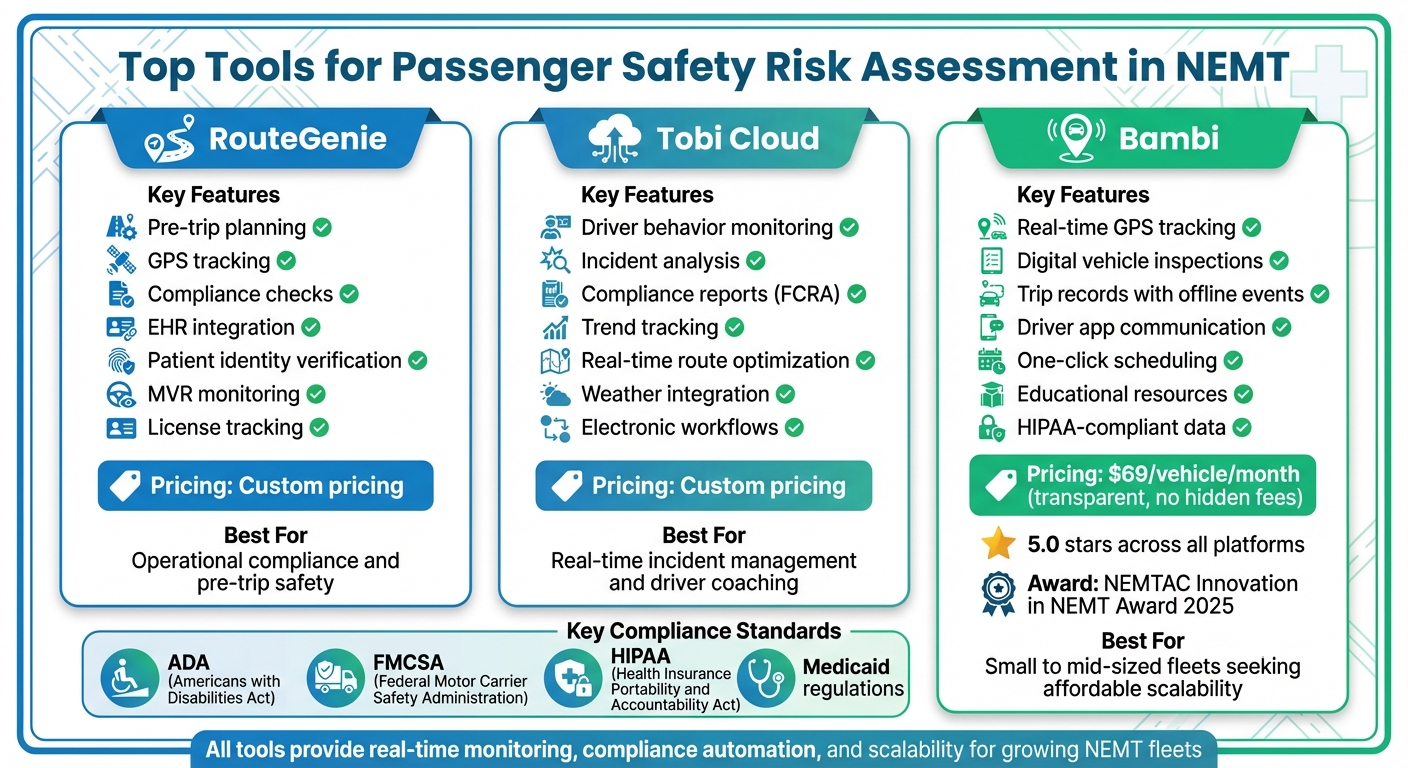
ToolKey FeaturesPricingRouteGeniePre-trip planning, GPS tracking, compliance checks, EHR integrationCustom pricingTobi CloudDriver monitoring, incident analysis, compliance reports, trend trackingCustom pricingBambiReal-time GPS, digital inspections, trip records, educational resources$69/vehicle/month
These tools are essential for meeting safety standards, improving efficiency, and managing risks effectively in the growing NEMT industry.
What to Look for in Passenger Safety Risk Assessment Tools
When choosing a passenger safety risk assessment tool, focus on three key aspects: compliance automation, real-time monitoring, and transparent pricing. These features can simplify your operations and ensure a strong compliance framework.
Compliance with ADA, FMCSA, and State Regulations
To avoid fines and potential contract losses, the software you select must align with federal and state regulations. This includes adhering to ADA standards for passengers with disabilities, FMCSA rules governing driver qualifications and vehicle upkeep, and HIPAA requirements for safeguarding patient information.
For instance, RouteGenie automates tasks like MVR monitoring and license tracking, while Tobi Cloud offers compliance reports for FCRA and supports electronic workflows. Look for tools that provide features such as automated license renewal reminders, electronic trip verification, and HIPAA-compliant data storage with GPS-stamped audit trails.
Monitoring, Reporting, and Communication Features
Staying compliant is just the beginning - ongoing monitoring is essential for maintaining safety. The best tools combine pre-trip evaluations (like weather, traffic, and vehicle conditions) with real-time GPS tracking and driver behavior analysis to catch potential issues early. For example, Tobi Cloud integrates weather forecasts and route optimization to help lower accident risks.
Look for tools that can:
- Document incidents and generate compliance reports
- Analyze safety trends
- Gather and incorporate passenger feedback
RouteGenie captures GPS data, timestamps, and route details to create detailed, auditable reports that can help resolve complaints. Additionally, real-time notifications between drivers, dispatchers, and passengers ensure quick responses to safety concerns.
Pricing Models and Growth Capacity
Choose a pricing model that supports your fleet’s growth - whether it’s per-vehicle, per-user, tiered, or usage-based. For example, Bambi offers a clear pricing structure of $69 per active vehicle per month, with no hidden fees. This kind of transparency is ideal for smaller fleets looking to start affordably and grow over time.
Also, consider tools that support scalability through API integrations and automation, such as fleet maintenance scheduling, to help streamline operations as your fleet expands.
Leading Passenger Safety Risk Assessment Tools
Building on earlier discussions about compliance and real-time monitoring, the tools below provide focused solutions for passenger safety. These platforms enhance safety by combining pre-trip risk assessments, live monitoring, and data-driven insights. They also integrate smoothly with the broader safety systems previously mentioned.
RouteGenie: Pre-Trip Planning and Incident Analytics
RouteGenie stands out for its pre-trip safety capabilities. Before a trip begins, it evaluates traffic patterns, road conditions, weather forecasts, and road closures. This proactive approach helps identify hazards early, such as severe weather or construction delays, allowing adjustments to be made before the driver even starts their route.
The platform also offers continuous GPS tracking, creating a detailed audit trail for every trip. Dispatchers can monitor vehicle locations and trip progress in real time, which is especially helpful for incident investigations or resolving complaints. Additionally, RouteGenie integrates with electronic health records (EHRs), providing drivers with critical clinical details to ensure the safe transport of passengers with complex medical needs. Features like patient identity verification - using signatures, ID scans, and vital information scans - further reduce risks, such as wrong-patient pickups, which are both safety and liability concerns.
RouteGenie complies with regulatory standards while gathering and analyzing data from passengers, vehicles, and drivers. This data helps management identify safety issues and refine policies, training, and routing strategies.
However, RouteGenie’s focus leans more toward operational and compliance aspects rather than in-depth, AI-driven driver behavior analysis. For example, it places less emphasis on monitoring patterns like harsh braking or speeding compared to other platforms. Pricing is customized based on fleet size and trip volume, with no publicly listed rates.
Tobi Cloud: Incident Documentation and Compliance Reports
Tobi Cloud takes a different approach, emphasizing real-time incident management and driver behavior monitoring. The platform integrates live route optimization with tools to track risky driving behaviors, such as harsh braking or rapid acceleration. This enables managers to coach drivers and implement targeted interventions, shifting from reactive responses to proactive risk reduction.
Tobi Cloud also prioritizes systematic incident documentation and safety trend analysis. By gathering data on trips, driver actions, and operational conditions, it identifies patterns that could lead to accidents or near misses. For instance, if a specific shift shows recurring issues with wheelchair securement, management can schedule refresher training and adjust workloads to address the problem. Features like electronic signatures, GPS tracking, and mobile access ensure that every detail - from pickup to drop-off - is documented and stored for compliance and risk management purposes.
Additional NEMT Safety Platforms
Other tools complement these primary platforms by focusing on specific aspects of safety and performance. For example, AI-driven camera and telematics systems like TrackCam provide real-time alerts for risky driving behaviors such as harsh braking, speeding, or distracted driving. These tools include time-stamped video and secure cloud storage, making it easier to review incidents, provide coaching, and maintain legal protection. They also monitor factors like sharp turns, which could cause discomfort or injury to passengers with mobility challenges.
Dispatch platforms like TripMaster offer features such as real-time GPS tracking, automated scheduling, and route optimization. These tools help dispatchers monitor on-time performance and quickly address delays or route changes that might impact vulnerable passengers. Some platforms also include driver performance dashboards, which compile metrics like on-time pickups, reported incidents, and passenger feedback. This makes it easier to identify top-performing drivers and those who may need additional training.
When selecting these tools, prioritize systems that offer digital trip documentation with e-signatures. These records provide a clear, auditable trail of pickups, drop-offs, services rendered, and passenger conditions - key components for effective incident documentation and risk management. The most comprehensive safety programs combine core dispatch software with tools like telematics, creating a multi-layered safety system that includes routing, behavior monitoring, and incident evidence.
Tools for Real-Time Passenger Monitoring During Transport
Real-time monitoring builds on pre-trip safety measures to ensure passengers are protected throughout their journey. While pre-trip checks help establish a solid safety foundation, real-time tools actively safeguard passengers as they travel.
GPS Tracking and Automated Notifications
Live GPS tracking gives dispatchers up-to-the-minute updates on vehicle locations, route compliance, and operational status. If a driver veers off route, encounters unexpected stops, or experiences delays, the system immediately flags the issue. This allows dispatchers to quickly adjust routes or deploy backup vehicles as needed.
Automated notifications keep everyone in the loop. Passengers receive updated arrival times, while dispatchers are alerted to delays or irregularities. High-priority alerts, such as a panic button activation or significant delays involving high-risk riders, are sent directly to supervisors for immediate action.
In-app messaging and pre-written status updates further enhance safety by reducing driver distractions. Changes like reroutes, cancellations, or added passengers are handled through the app, eliminating the need for phone calls and allowing drivers to stay focused on the road. This constant tracking also ensures accurate trip documentation.
Trip Documentation and Passenger Care Records
In addition to real-time alerts, digital records capture every important safety detail during transit. These trip logs include data like pickup and drop-off times, GPS routes, passenger identifiers, assistive device usage, securement checks, and any incidents. Electronic signatures from passengers, drivers, and facilities verify trip completion, creating reliable records for audits or investigations.
Passenger care records go a step further by documenting specific needs and conditions. These records track mobility status, cognitive or behavioral considerations, special handling instructions, use of medical equipment like oxygen, and any care provided during the trip. Modern NEMT platforms make it easy for drivers to log this information through mobile app forms and checklists. Often integrated with electronic health records (EHRs), these systems ensure data is encrypted and access is restricted to authorized personnel for HIPAA compliance. With role-based permissions and detailed audit logs, managers can analyze patterns like frequent late pickups, high-risk zones, or recurring issues tied to specific drivers. This structured data not only supports post-trip reviews but also helps improve overall service quality.
Bambi: Information and Software for NEMT Operations
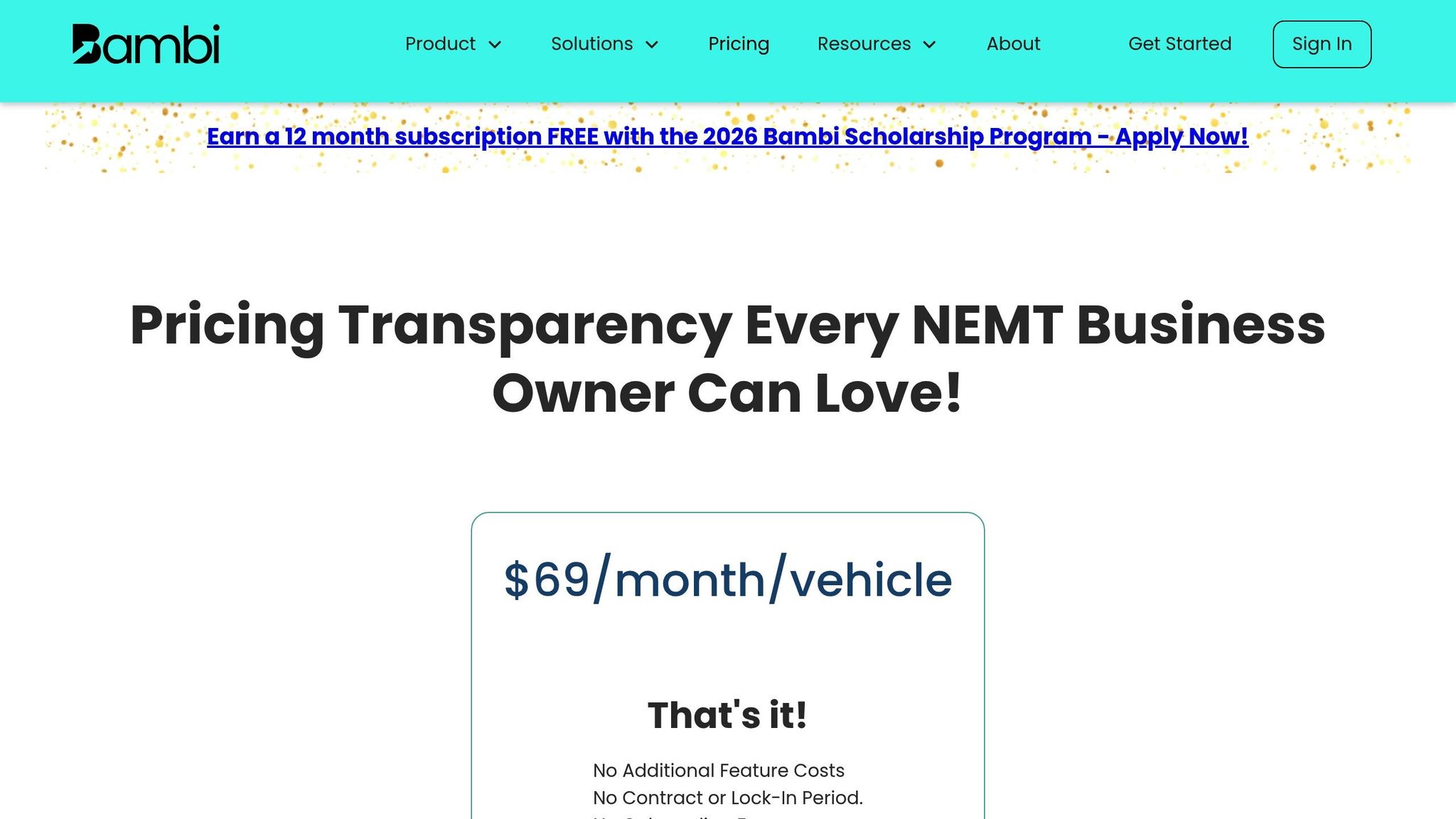
Bambi's AI-driven software is designed to boost safety and efficiency in Non-Emergency Medical Transportation (NEMT) operations by optimizing dispatch, scheduling, and communication. Its advanced algorithms analyze trip data to recommend the best assignments, all at a transparent cost of $69 per active vehicle per month - no hidden fees, no annual contracts.
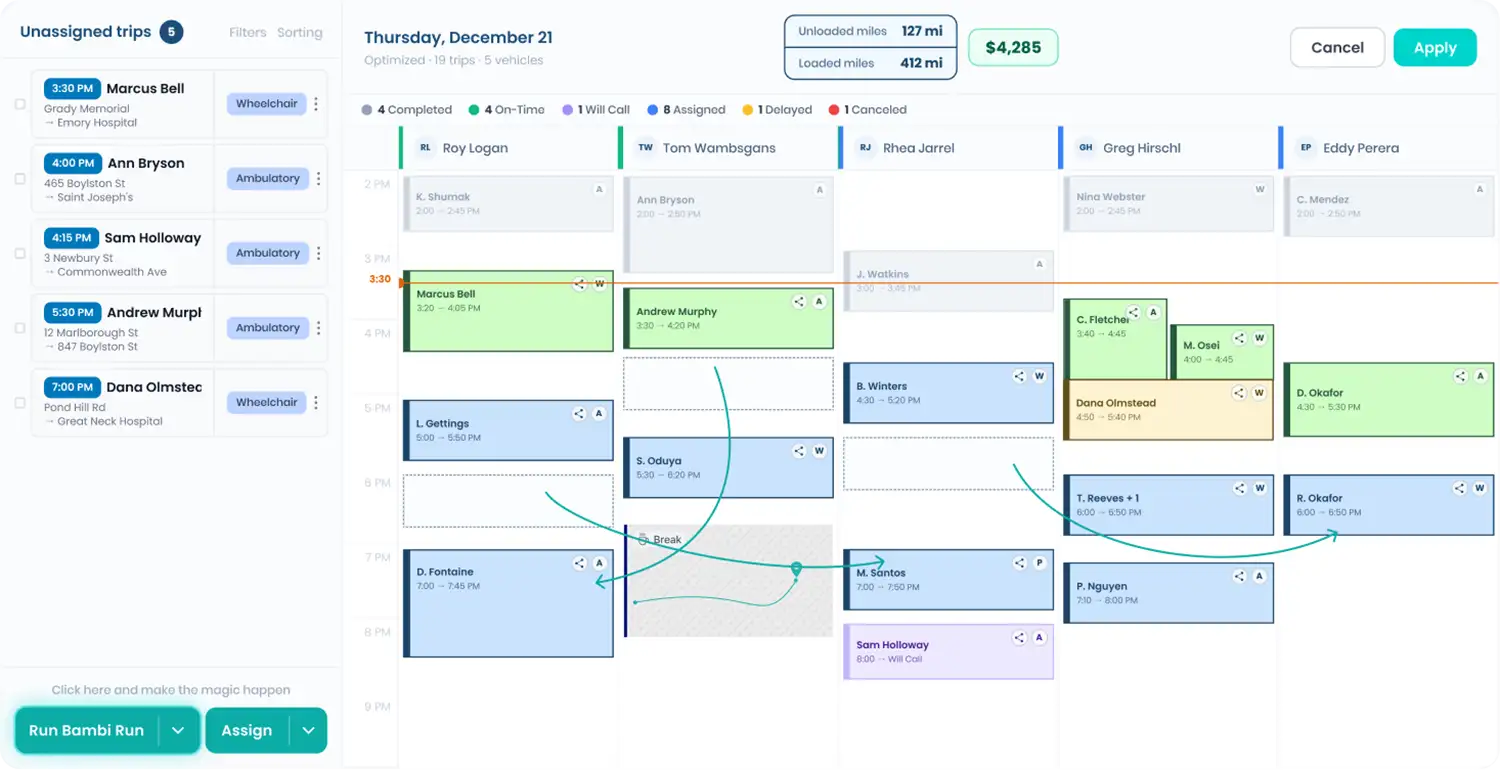
A key feature of Bambi's platform is its focus on real-time monitoring, which enhances safety through integrated tracking tools. The software includes real-time GPS tracking with automated trip status updates, enabling dispatchers to keep tabs on vehicle locations, route adherence, and any deviations as they occur. Even in areas with poor connectivity, offline GPS events ensure accurate trip records. Additionally, a dedicated driver app simplifies communication by handling vehicle inspections, location updates, and shift confirmations, all of which are critical for passenger safety.
"Integrating advanced scheduling software and real-time tracking systems has revolutionized how we operate. Our efficiency has improved dramatically, leading to better service for our clients."
- Alex Stoia, Corazon Concierge
Bambi also features the "Run Bambi Run" tool, offering one-click scheduling to free up staff for other safety-related tasks. This ease of use has earned the platform glowing reviews, with a 5.0-star rating on SourceForge, GetApp, Capterra, G2, and more. It also won the NEMTAC Innovation in NEMT Award 2025. By reducing dispatch errors and enabling quick responses to route changes, Bambi directly addresses potential safety risks for passengers.
The software's impact is evident in user testimonials. Julian from Bellshan Homecare shared, "How much time it saves me? It's like a day's worth of time", while Adham Harb from CareTrips noted, "Trip counts gone up. Efficiency has gone up" after adopting Bambi.
Beyond its operational tools, Bambi supports safety management with a wealth of informational resources. The Bambi blog covers topics like industry trends, operational challenges, compliance, fleet management, and driver training. By combining practical software with educational content, Bambi helps NEMT providers enhance safety while staying efficient and informed.
Building a Complete Passenger Safety Risk Assessment Program
Creating a passenger safety program requires weaving together pre-trip planning, in-transit monitoring, and post-trip evaluations to tackle risks at every stage of a journey.
Before a trip begins, it’s critical to verify driver credentials, ensure vehicles are properly maintained, and assess the safety of planned routes. Tools like RouteGenie simplify this process by automating compliance checks, confirming that both vehicles and drivers are prepared. During the journey, systems such as Tobi Cloud keep a close eye on driver behavior while integrating real-time weather alerts, allowing dispatchers to intervene immediately when necessary. After the trip, digital post-trip reports highlight patterns and provide actionable insights for targeted driver coaching.
To enhance safety measures, combine software tools with hands-on training. Emergency drills, defensive driving courses, and first aid training are essential. Background screening tools like Occuscreen or HireSafe ensure the hiring of qualified and safe drivers. Meanwhile, digital tools - like automated reporting, cloud storage, and digital forms - streamline compliance processes, saving staff time and enabling them to focus on passenger care. Integrating these tools with digital reporting systems strengthens your overall safety program.
For a seamless operation, integrate systems so that pre-trip data flows directly into real-time monitoring and post-trip analysis. For instance, AI-powered cameras like TrackCam automatically log critical events, which can be invaluable for insurance claims and training reviews. Passenger feedback loops add another layer of insight, providing a comprehensive view of driver behavior and passenger comfort.
Tool Comparison Table
Here’s a breakdown of how different tools contribute to a multi-layered safety program:
ToolPre-Trip PlanningReal-Time MonitoringIncident AnalysisCompliance SupportTraining ResourcesRouteGenieRoute and weather planning, fleet readiness checksGPS tracking with notificationsData analytics from trip recordsDOT/HIPAA compliance, license trackingDriver safety training integrationTobi CloudScheduling optimization, weather integrationMonitoring driver behavior with alertsTrend reports on risky behaviorFull compliance suite with audit trailsData-driven coaching for driversBambiDigital vehicle inspections via driver appReal-time GPS with offline event stampingJourney records for route analysisHIPAA-compliant data handlingEducational blog resources on operations
FAQs
How do these tools help meet ADA and HIPAA compliance requirements?
These tools are built to help meet ADA and HIPAA requirements by using strong security features like encryption, secure data storage, and controlled access. These measures are designed to safeguard sensitive patient information effectively.
On top of that, they come with features that support compliance with ADA guidelines. For instance, they offer accessible interfaces and documentation tools that make it easier to create and maintain processes that meet regulatory standards. By combining these functionalities, these tools not only help NEMT providers stay compliant but also enhance their operational efficiency.
What key features should I look for in a passenger safety risk assessment tool?
When selecting a passenger safety risk assessment tool, prioritize features that boost both safety and operational efficiency. Key functionalities to consider include AI-driven routing to create the most efficient travel paths, real-time trip tracking for enhanced monitoring, and flexible scheduling to adjust seamlessly to shifting demands.
It's also important to choose a tool with a simple, intuitive interface to ensure ease of use. Make sure it complies with HIPAA regulations to safeguard sensitive data and offers system integration capabilities to unify and simplify your operations. These elements not only enhance passenger safety but also make managing your workflow much smoother.
How does real-time monitoring improve passenger safety during NEMT services?
Real-time monitoring plays a key role in boosting passenger safety by delivering instant updates on vehicle locations, driver behavior, and trip progress. With this information at their fingertips, dispatchers can swiftly handle issues like route adjustments, unexpected delays, or potential safety risks.
Tracking trips as they happen also allows operators to respond immediately to emergencies, ensuring passengers get the help they need without delay. This hands-on approach creates a safer, more dependable transportation experience for all.