
Protecting your Non-Emergency Medical Transportation (NEMT) business from fraud is critical to maintaining compliance and avoiding financial losses. Fraud schemes like ghost rides, mileage inflation, and duplicate billing can harm your bottom line, damage trust with state agencies, and lead to penalties like fines or contract cancellations. Here's what you need to know:
- Common Fraud Types: Ghost rides (billing for trips that never occurred), mileage inflation, and duplicate claims are the most frequent issues. GPS tracking and automated systems can help detect and prevent these.
- Regulations: Federal rules require exclusion screenings, valid driver licenses, and compliance with Medicaid and Medicare billing standards. HIPAA safeguards are also mandatory to protect patient data.
- Technology Solutions: GPS tracking, automated billing, and AI-driven fraud detection tools can streamline compliance and flag irregularities.
- Prevention Strategies: Regular audits, staff training on fraud detection, and clear reporting protocols are key to reducing risks.
Fraud prevention starts with early detection, leveraging technology, and maintaining strict internal controls. These steps not only protect your revenue but also ensure compliance with Medicaid and Medicare requirements.
Common Types of NEMT Fraud
Understanding frequent fraud schemes in Non-Emergency Medical Transportation (NEMT) can help you identify potential issues early and prevent costly mistakes. Here are some common tactics to keep on your radar.
Ghost Rides and Falsified Trip Records
"Ghost rides" refer to instances where trips are billed but never actually happen. This can involve fake documentation of pickups or even collusion between drivers and passengers to claim reimbursements for trips that were never completed.
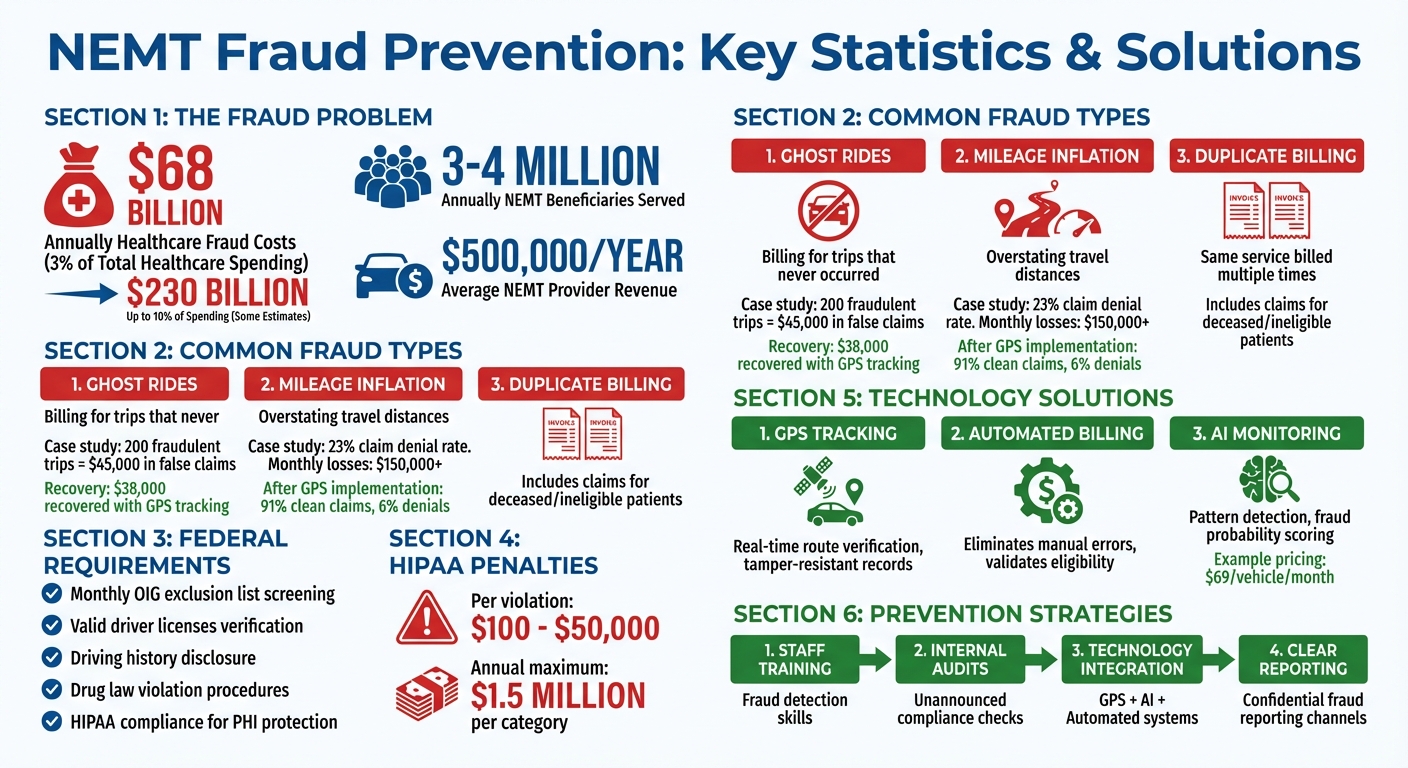
These fraudulent practices can result in serious financial losses. For instance, Regional Transport Solutions uncovered fraud in 200 trips, leading to $45,000 in false claims. By implementing real-time GPS tracking and automated mileage calculations, they managed to recover $38,000.
Keep an eye out for red flags like trips lacking passenger signatures, missing paperwork, or mismatches between GPS data and driver logs. Installing in-vehicle cameras can also provide visual evidence, ensuring that billed trips are legitimate and vehicles aren’t empty during transit.
Additionally, reviewing mileage records closely can help catch inflated distances or unauthorized route changes.
Mileage Inflation and Unnecessary Route Extensions
Mileage inflation occurs when providers overstate the travel distance to secure higher reimbursements. Some drivers may also take unauthorized detours or misuse service codes, such as billing for wheelchair transport when the patient is ambulatory.
Watch for trips that exceed approved mileage limits without prior authorization, unauthorized route deviations, or discrepancies between manual logs and GPS data. For example, Metro Medical Transport faced a 23% claim denial rate and monthly losses of over $150,000 before implementing GPS tracking and automated claim submissions. These measures improved their clean claims rate to 91% and reduced denials to just 6%.
Proactively monitoring these patterns can help protect your revenue from unnecessary losses.
Duplicate Billing and Claims for Ineligible Patients
Duplicate billing happens when the same service is billed multiple times. Fraud involving ineligible patients includes claims for services provided to deceased individuals, those who transported themselves, or people using fake identities. Additionally, some patients misuse Medicaid benefits for non-medical purposes, like grocery shopping or leisure activities. Others may transfer their discounted transportation benefits to friends or family who aren’t eligible.
To address these issues, real-time eligibility verification systems can flag problems before claims are submitted. Integrating dispatch systems with Electronic Health Records (EHR) helps verify patient eligibility and screen for duplicate entries. Regular internal audits and random beneficiary calls can also confirm that billed services were genuinely delivered.
Regulatory Requirements for Fraud Prevention
Running a compliant NEMT (Non-Emergency Medical Transportation) business means adhering to a maze of federal and state regulations designed to protect program integrity. A key piece of legislation, Section 209 of the Consolidated Appropriations Act, 2021, introduced mandatory minimum requirements for all NEMT providers and drivers by amending Section 1902(a) of the Social Security Act. Compliance with these rules is critical for securing federal reimbursement.
The Government Accountability Office (GAO) has flagged NEMT as a high-risk area for fraud, with the Centers for Medicare & Medicaid Services (CMS) closely monitoring the sector to prevent abuse.
Medicaid and Medicare Billing Rules
Federal billing compliance is non-negotiable and begins with four key requirements. First, NEMT providers must ensure that no employee or contractor appears on the HHS Office of Inspector General (OIG) exclusion list. This involves conducting monthly checks of the OIG List of Excluded Individuals/Entities (LEIE). Missing this step could disqualify your business from receiving federal reimbursements.
Additionally, all drivers must hold valid licenses and disclose their driving history, including any traffic violations, to the state Medicaid program. Providers are also required to establish procedures for addressing employee violations of state drug laws. Under 42 CFR § 431.53, state Medicaid agencies mandate that providers document how they will deliver necessary transportation while meeting standards for efficiency, cost-effectiveness, and quality of care.
Federal RequirementRegulatory BasisProvider ResponsibilityExclusion ScreeningSSA § 1902(a)Verify staff are not listed on the OIG exclusion listDriver LicensingSSA § 1902(a)Ensure all drivers have valid, current licensesDriving HistorySSA § 1902(a)Report traffic violations and driving historyDrug Law ProcessSSA § 1902(a)Establish procedures to address drug law violationsAssurance of Care42 CFR § 431.53Document methods for delivering necessary transportation
Another critical step is verifying beneficiary eligibility and the necessity of the service before scheduling a trip. Post-trip validation using GPS data, trip logs, and claims reviews is essential to prevent fraudulent activities like "ghost rides", which auditors actively investigate.
These foundational regulations also pave the way for using advanced technology to enhance compliance and detect fraud more effectively.
HIPAA and Patient Data Protection
Beyond billing compliance, safeguarding patient data under HIPAA (Health Insurance Portability and Accountability Act) is equally crucial. Every trip record contains sensitive protected health information (PHI), such as patient names, addresses, medical appointment details, and mobility needs. To meet HIPAA requirements, your dispatch systems, electronic trip logs, and billing software must implement technical, physical, and administrative safeguards.
Data breaches can lead to penalties ranging from $100 to $50,000 per violation, with annual maximums climbing to $1.5 million per category. Beyond the financial fallout, breaches can severely harm your reputation. To protect PHI, encrypt all data, train staff on secure handling practices, and establish strict policies defining who can access patient information. Maintain detailed audit logs to track when and why PHI is accessed. If you work with third-party vendors, such as software providers or billing services, ensure they sign business associate agreements (BAAs) to comply with HIPAA standards.
OIG Monitoring and Audit Preparation
The Office of Inspector General (OIG) keeps a close watch on NEMT providers, using data analytics, complaint investigations, and random audits to identify fraud. Common allegations include billing for trips that never happened and using unauthorized drivers or vehicles. If the OIG launches an investigation, they’ll request detailed documentation, often covering several years.
To prepare for audits, maintain thorough trip records with precise timestamps, GPS coordinates for pickups and drop-offs, beneficiary signatures, and driver details. Your GPS tracking system should provide an automated digital trail that aligns with your billing records. Any discrepancies between GPS data and submitted claims will immediately raise red flags.
Establish a verification process that screens providers and vehicles, confirms beneficiary eligibility before trips, and validates trip data afterward. Keep essential documents like vehicle registrations, proof of ownership, specialized NEMT insurance policies, and driver credentials readily available. Conduct quarterly internal audits to identify and address compliance gaps before regulators do. Finally, document your fraud prevention policies in writing and ensure all employees sign acknowledgment forms confirming they’ve been trained on these procedures.
Technology Solutions for Fraud Detection
In today’s NEMT (Non-Emergency Medical Transportation) operations, preventing fraudulent claims requires leveraging automated tools. These tools not only streamline processes but also ensure that trip data is verified and fraud risks are minimized.
GPS Tracking and Route Verification
GPS technology plays a key role in fraud prevention by creating a secure, digital record for every trip. It tracks driver locations in real time and logs precise coordinates and timestamps throughout the journey. This ensures an accurate and tamper-resistant record of trip data, effectively eliminating issues like ghost rides or inflated mileage claims.
"GPS tracking data automatically validates trip details, including pickup and delivery locations, route efficiency, and service times." – NEMT Platform
Real-time alerts can notify operators of route deviations or false trip completions. During audits, these GPS logs provide undeniable evidence that can be cross-checked against submitted claims. Discrepancies flagged during this process are ideal starting points for further investigation.
While GPS ensures trip accuracy, automated billing systems take over to validate claim data.
Automated Billing Systems
Manual claim entry is prone to errors - whether accidental or intentional. Automated billing systems address these risks by integrating with dispatch software and GPS data. This integration ensures that claims are based on verified trip details, including mileage calculated from actual coordinates. These systems also capture digital signatures with timestamps and confirm patient eligibility through payer databases before trips are even dispatched.
Automated claim scrubbing tools are invaluable for detecting coding errors, missing documents, and duplicate submissions. They can also track driver credentials - such as licenses, permits, and certifications - ensuring that only authorized personnel and vehicles are billed. By 2025, systems will incorporate advanced features like two-factor authentication (2FA), encrypted data transmission, and detailed audit trails to meet stringent HIPAA compliance standards.
FeatureFraud Prevention BenefitCompliance ImpactGPS IntegrationPrevents mileage inflation and ghost ridesProvides audit-ready trip validation2FA & EncryptionSecures systems from unauthorized accessMeets 2025 HIPAA digital security standardsAutomated EligibilityBlocks billing for ineligible patientsEnsures compliance with Medicaid/MCO rulesCredential TrackingPrevents billing for unauthorized driversEnsures compliance with state licensing rulesReal-time ValidationFlags duplicate or improper billing patternsReduces claim rejections and audit findings
With these automated processes in place, AI technology can take fraud detection to the next level.
AI-Based Monitoring and Pattern Detection
Building on the foundation of automated systems, artificial intelligence (AI) adds another layer of sophistication to fraud detection. AI algorithms analyze large amounts of trip and billing data to uncover unusual patterns. For instance, the system might flag a driver who consistently reports longer trip durations on the same route or detect claims submitted for patients who were never transported. Each claim is assigned a fraud probability score, which helps prioritize reviews.
Healthcare fraud is a massive issue in the U.S., costing an estimated $68 billion annually - about 3% of total healthcare spending. Some estimates suggest the figure could be as high as $230 billion, or roughly 10% of spending.
"AI and ML free people to perform more sophisticated, analytical tasks, but the technology must be continually monitored to ensure it uses its enormous data mining capacity to lead to correct, actionable conclusions." – Ellen Zimiles, JD, and Rod Fontecilla, PhD
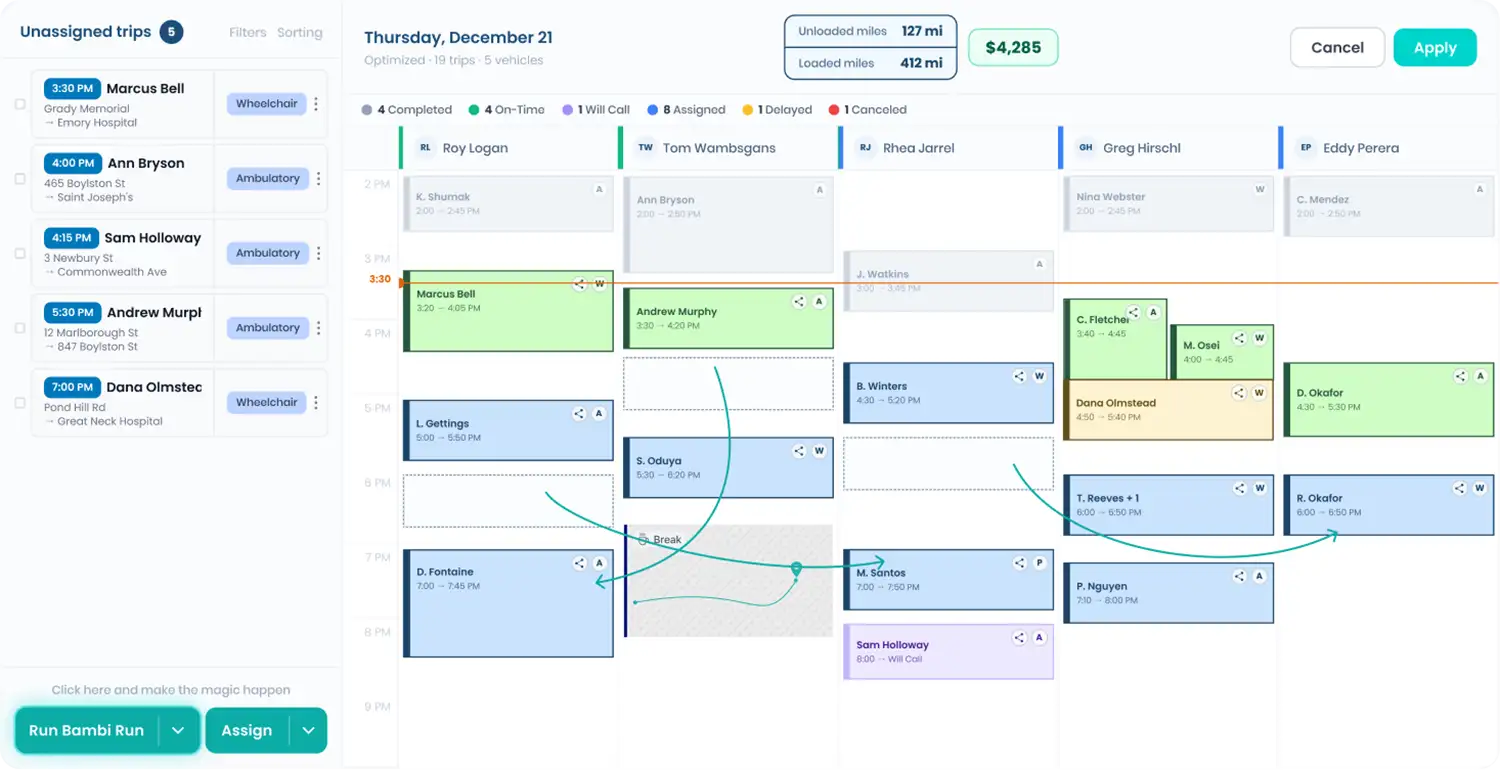
Advanced platforms like Bambi bring together GPS tracking, AI-driven pattern detection, and HIPAA-compliant data handling. At $69 per active vehicle per month, Bambi can flag trips with irregular durations, unexpected routes, or documentation issues for immediate review by management.
Combining AI monitoring with human oversight ensures a balanced approach. Automated systems can flag potential issues, but a compliance team should step in to investigate anomalies and determine whether they stem from fraud, system errors, or legitimate changes in operations. This blend of technology and human expertise strengthens fraud prevention efforts while maintaining operational integrity.
Building a Fraud-Resistant NEMT Operation
Technology can help detect unusual patterns, but it’s not a magic bullet against fraud. A strong defense requires a combination of advanced tools and vigilant human oversight. To build a solid fraud-resistant operation, you need a team that’s well-trained, alert, and proactive. Every member of your organization should understand their role in preventing fraud and feel confident reporting anything suspicious. This starts with comprehensive training programs and regular internal reviews to keep everyone aligned.
Staff Training on Fraud Detection and Documentation
Your drivers and dispatchers are the first line of defense against fraud. They need to be trained to spot warning signs like fake IDs, requests for non-medical stops, or inconsistencies that suggest a trip didn’t actually happen. It’s also critical for them to stay updated on Medicaid billing protocols, ensure accurate documentation, and verify passenger identities. Since Medicaid regulations change annually, ongoing education is a must.
Accurate trip logs are a cornerstone of fraud prevention. Drivers and staff should record detailed information, including confirmed pickup and drop-off times, GPS-verified mileage, and passenger acknowledgments with timestamps. These records are essential during audits and help flag potential issues early. Training sessions should include real-world scenarios, such as recognizing repeated trips to the same location in a single day or unusually long trip durations, to sharpen fraud detection skills.
Regular Internal Audits and Risk Monitoring
Unannounced audits are a powerful way to ensure compliance and catch discrepancies before external regulators do. A thorough audit process involves cross-checking trip logs with GPS data to confirm driver activity, verifying that all drivers have valid licenses and up-to-date certifications, and conducting background checks. Vehicle permits and random drug screenings should also be part of the routine. Following Section 209 of the Consolidated Appropriations Act, 2021, states are required to address drug law violations and report driver traffic violations to Medicaid programs.
Prepayment edits are another effective tool for preventing eligibility issues before they arise. Regularly monitoring federal healthcare program exclusion lists can help ensure that no one with a history of healthcare fraud is employed.
Fraud Reporting Procedures and Investigation Protocols
Set up a confidential channel for reporting fraud. Whether it’s a driver noticing unusual Medicaid card usage or duplicate billing records, staff should know exactly who to contact and what steps to follow. Investigation protocols should include reviewing GPS data, interviewing involved parties, and keeping detailed documentation of all findings.
If fraud is confirmed, work openly with your Medicaid payer or managed care organization to address the issue. Document every step of the investigation, including corrective actions and preventive measures, to demonstrate your organization’s commitment to integrity. This transparency not only helps resolve the issue but also protects your operation during audits.
Conclusion
Preventing fraud in NEMT services demands a combination of strategies to safeguard against financial losses and reputational harm. As seen in various cases, fraud can lead to severe penalties like hefty fines, jail time, and even permanent bans from federal health care programs such as Medicaid.
A well-rounded approach to fraud prevention blends detection tools, adherence to regulations, and the use of advanced technology. With the typical NEMT provider earning around $500,000 annually, protecting this revenue through strong compliance measures is not just smart - it's essential.
Pairing technology with a vigilant, well-trained team forms a strong defense. Equip drivers and dispatchers to identify red flags, conduct surprise internal audits to catch irregularities early, and implement clear reporting protocols so employees know how to act if something seems suspicious. These steps not only help prevent fraud but also foster trust with brokers, payers, and the millions of Medicaid beneficiaries - between 3 million and 4 million annually - who depend on NEMT services.
To protect your operation, stay alert, keep systems up to date, and ensure every team member understands their role in preserving integrity. The effort you invest now secures your business's future and guarantees patients continue receiving the transportation they depend on.
FAQs
How does GPS tracking help prevent fraud in NEMT services?
GPS tracking is a game-changer in fraud prevention, offering accurate location data and timestamps for every trip. With this information, providers can verify that rides are completed by authorized drivers and follow the correct routes, ensuring both precision and accountability.
Beyond that, GPS tracking establishes a dependable audit trail. This helps tackle fraud issues like false mileage claims or phantom trips. By enabling real-time monitoring and maintaining detailed trip records, it boosts transparency and supports compliance efforts in NEMT operations.
What regulations should NEMT providers follow to prevent fraud?
To combat fraud, NEMT providers must adhere to important federal and state regulations. This means they need to be screened and enrolled following Medicaid guidelines. These standards involve checking driver licenses, vehicle registrations, and insurance, as well as ensuring that no employees are barred from participating in federal health-care programs. It's equally important for providers to stay informed about rules specific to their state.
Another key step is pre-trip eligibility verification, which ensures a passenger’s Medicaid status and the medical necessity of the trip are confirmed before scheduling. This process helps prevent unauthorized billing. Similarly, post-trip validation is crucial, requiring detailed records such as driver logs, GPS timestamps, and signed service attestations to align with reimbursement claims.
In addition, providers must comply with HIPAA privacy standards, maintain accurate billing practices, and perform regular audits to stay within the rules. Following these measures not only helps prevent fraudulent activities but also shields providers from penalties and investigations.
How does AI help prevent fraud in NEMT operations?
AI-driven tools are transforming fraud prevention in Non-Emergency Medical Transportation (NEMT) by analyzing data from trips, pricing, drivers, and vehicles to spot irregularities. For instance, they can detect issues like duplicate passenger profiles, unauthorized trips, or pricing inconsistencies. These systems provide real-time alerts and maintain detailed audit logs, offering better oversight and quicker responses to potential problems.
By automating the fraud detection process, AI minimizes the chances of human error that often come with manual reviews. It also helps NEMT providers stay compliant with regulations while safeguarding their operations from financial losses. Ultimately, this technology simplifies workflows, enabling businesses to concentrate on delivering safe and dependable transportation services.