
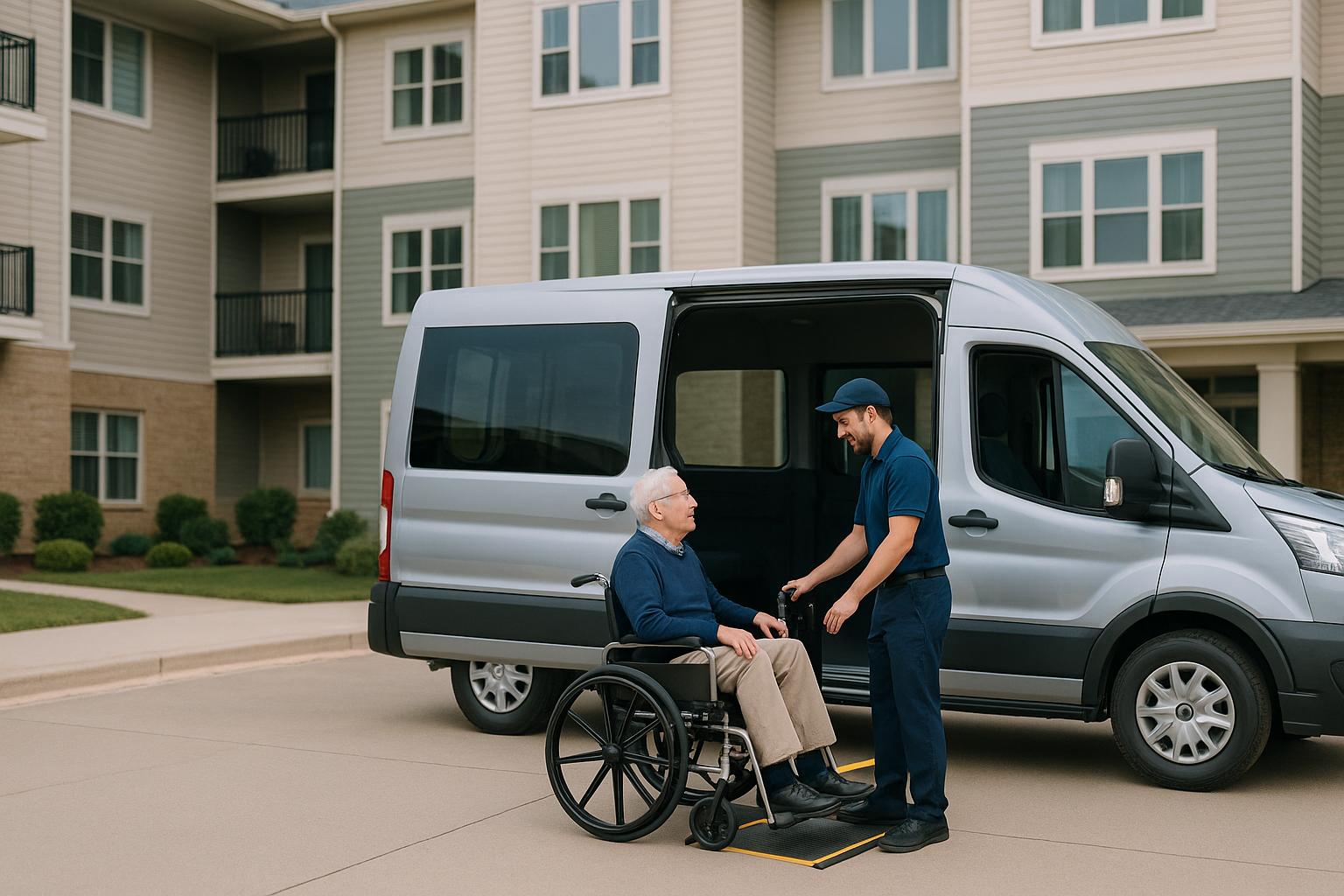
Accessible transportation is a lifeline for seniors in assisted living communities. It ensures they can attend medical appointments, participate in social activities, and maintain independence. However, providing reliable transportation requires more than just vehicles - it involves meeting legal standards, modifying vehicles for mobility aids, training drivers to handle age-related needs, and leveraging technology to streamline operations.
Key points covered include:
Legal Compliance : ADA mandates features like wheelchair lifts , ramps, and securement systems, while HIPAA ensures privacy during medical trips.
Vehicle Modifications : Features like slip-resistant flooring, low-floor designs, and kneeling systems improve safety and usability.
Driver Training : Drivers must be skilled in securing mobility aids, assisting seniors with cognitive or sensory impairments, and handling emergencies.
Technology Integration : Tools like AI scheduling, GPS tracking, and real-time updates enhance efficiency and reduce delays.
Facility Collaboration : Strong partnerships with senior living facilities ensure smooth pickups, drop-offs, and better service coordination.
5 Essential Components of ADA-Compliant Senior Transportation Services
Legal Requirements and Compliance Standards
Senior transportation providers must adhere to strict federal regulations designed to protect passengers with disabilities and ensure the privacy of health-related information. The Americans with Disabilities Act (ADA) establishes the groundwork for accessibility, while HIPAA governs how medical trip details are handled. A clear understanding of these laws is crucial, as they form the basis for providing safe and reliable services for seniors.
ADA Guidelines for Senior Transportation
The ADA applies to a wide range of senior transportation services, whether they’re offered by public transit agencies or private operators. Under Title II, state and local government services must ensure accessibility, while Title III mandates that private transportation providers avoid discrimination and maintain accessibility standards.
The U.S. Department of Transportation enforces these requirements through 49 CFR Part 37. To meet the "readily accessible" standard, vehicles must include features like wheelchair lifts or ramps , securement systems for mobility devices, adequate maneuvering space, and clearly marked priority seating. These features aren’t optional - they’re required by law.
ADA obligations go beyond vehicle modifications. Providers must allow sufficient boarding time, accommodate mobility devices within ADA size and weight limits, assist with securement, and ensure all accessibility features remain functional. If a lift breaks down, the vehicle must either be removed from service until repaired or alternative services must be provided.
Public transit agencies must also offer complementary paratransit services. These services must operate within 0.75 miles of fixed routes, match the same hours and days of operation, and charge fares no more than twice the fixed-route fare for comparable trips. For instance, CCTA 's One Seat Medical Ride Service in San Pablo, California, offers ADA-accessible shuttles for seniors aged 50 and older to medical appointments without requiring transfers, illustrating how agencies can go above the baseline requirements.
Accessibility isn’t just about vehicles - it extends to communication, too. Schedules and booking materials should be available in formats like large print, Braille, or screen-reader-compatible digital versions. Additionally, phone lines and websites must support assistive technologies to accommodate seniors with visual, hearing, or cognitive impairments.
HIPAA and Passenger Privacy
While the ADA focuses on physical accessibility, HIPAA ensures the protection of passenger privacy. Transporting seniors to medical appointments often involves handling protected health information (PHI), such as details about diagnoses, treatments, or specialists. Providers acting as covered entities or business associates under HIPAA must implement safeguards to protect this sensitive information across scheduling systems, trip manifests, dispatch communications, and even in-vehicle interactions.
Compliance measures include using encrypted communication for scheduling, restricting driver access to only essential trip details, securing digital logs with role-based access controls, and training staff to recognize and address potential privacy breaches. Drivers should avoid discussing a passenger's health information in public or over unsecured channels. Additional steps, like using privacy screens in vehicles or confirming details verbally without revealing PHI, further safeguard passenger confidentiality.
AI-powered scheduling platforms, like those offered by Bambi (https://hibambi.com), can support HIPAA compliance by providing features such as audit logs, secure messaging, and role-based access controls. These tools help reduce the risk of accidental disclosures while improving operational efficiency. The Bambi NEMT blog highlights how proper software solutions can help providers balance compliance with streamlined operations.
Beyond federal regulations, additional state laws often expand on ADA and HIPAA requirements. Maintaining accessible vehicles, ensuring drivers are adequately trained, and carefully handling medical information are all critical for staying compliant.
Regular compliance audits are essential to avoid costly violations. Providers should routinely inspect vehicles, routes, and facilities for accessibility, track complaints and incident reports, and address any shortcomings promptly. By training drivers and dispatchers on both ADA service requirements and HIPAA privacy practices, providers can deliver respectful, professional service to the seniors who depend on them.
Vehicle Modifications for Accessibility
Turning legal requirements into practical solutions, vehicle modifications are essential for creating safe and user-friendly transportation for seniors using wheelchairs, walkers, or canes. According to U.S. DOT ADA rules (49 CFR Part 37), a vehicle is considered "readily accessible" only when it meets detailed specifications for lifts, ramps, door width, securement areas, lighting, handrails, and controls. These modifications aren't just optional features - they form the backbone of a compliant and functional transportation service for seniors.
Accessibility features improve both safety and comfort, addressing risks like falls through slip-resistant flooring, high-contrast step edges, grab bars, adequate maneuvering space, proper lighting, and climate control. For transportation providers working with senior living communities, these modifications can make the difference between residents maintaining their independence or being limited in accessing medical appointments, social events, and daily errands. These foundational adjustments also support driver training programs, ensuring efficient and secure transportation for seniors.
Wheelchair Lifts, Ramps, and Securement Systems
Wheelchair lifts and ramps are critical for bridging the gap between the ground and the vehicle floor. ADA standards require lifts to be automatic or semi-automatic, capable of handling up to 800 pounds, and equipped with a minimum 30x48-inch platform, handrails, slip-resistant surfaces, and illuminated controls. Ramps, on the other hand, must have a maximum slope of 1:4 (12 degrees), be at least 30 inches wide, and include slip-resistant surfaces with 2-inch-high side barriers to prevent wheelchairs from rolling off.
Proper installation is key and involves certified processes like reinforced mounting points, electrical systems for automatic lifts, and ensuring at least a 30x48-inch clear floor area inside the vehicle. Regular inspections and load tests are also mandatory.
Examples from the field show how quality equipment can transform accessibility. Assisted living facilities often use lift-equipped vans with Q'Straint retractable securement systems , which automatically adjust to wheelchair size and cut driver assistance time by 50%. Similarly, BraunAbility lifts paired with Sure-Lok systems ensure safe transport for 90% of residents using mobility aids while meeting ADA standards.
Securement systems are designed to anchor wheelchairs with four tie-downs or belts and lap and shoulder restraints , securing the wheelchair at four points (front and rear). These systems must meet a minimum 2,500-pound working load limit per tie-down assembly and are tested for stability during sudden stops, simulating impacts at up to 30 mph. Proper driver training is crucial to avoid tipping and to maintain passenger safety.
Low-floor and kneeling vehicle adaptations add another layer of accessibility, simplifying boarding and enhancing the overall experience.
Low-Floor and Kneeling Vehicles
Low-floor vehicles , with floor heights between 10–14 inches instead of the standard 24–36 inches, remove significant barriers to boarding. This design enables level-entry access and reduces fall risks, particularly for seniors using walkers or canes. These features are commonly found in paratransit shuttles serving assisted living communities.
Kneeling systems take it a step further by using air suspension to lower the vehicle entrance by 6–9 inches at stops , allowing near-level boarding with ramps. Controlled via a dashboard feature, this system reduces physical strain for seniors and improves boarding efficiency by 40% , meeting ADA standards for equivalent facilitation in existing fleets.
Retrofitting older vehicles with kneeling systems involves installing air-ride suspension kits, such as those from Link Mfg , on vehicles like the Ford Transit . This process requires 12–16 inches of chassis clearance and costs between $15,000 and $25,000 USD per vehicle . New low-floor models must meet DOT standards, including at least 98-inch interior height and illuminated, slip-resistant entry areas.
The benefits of these modifications are clear. ADA compliance reports indicate a 70% reduction in boarding injuries for paratransit services using low-floor vehicles, with states like Florida mandating their use for assisted living shuttles. Additionally, wheelchair user ridership increases by 85% when kneeling features are available , boosting independence and overall quality of life. Experts from the National Aging and Disability Transportation Center suggest hybrid setups, combining automatic lifts with low-floor minivans, which result in a 25% improvement in dispatch efficiency while maintaining full ADA compliance .
To maintain reliability, regular testing and timely repairs are essential. ADA guidelines require that lifts, ramps, and securement systems remain in working order, with alternative services provided when equipment is temporarily out of operation. This commitment to maintenance ensures seniors can depend on transportation services whenever they need them.
Driver Training for Senior Transportation
Vehicle modifications are only part of the equation - drivers must operate these vehicles safely and communicate effectively to ensure seniors feel secure and respected. Proper training transforms technical compliance into meaningful accessibility, creating a better experience for everyone involved.
Driver training begins with essential qualifications and certifications. Drivers must have a valid state driver’s license - often a Commercial Driver's License (CDL) with a passenger endorsement for larger vehicles - and maintain a clean driving record. Training typically includes defensive driving, passenger assistance, CPR/first aid certifications, and thorough background checks. Familiarity with the Americans with Disabilities Act (ADA) is also crucial, as drivers need to understand their legal responsibilities around equal access, assistance, and non-discrimination. Beyond technical skills, drivers should demonstrate patience, strong communication, and the ability to follow specific care instructions.
Ongoing training often involves skills assessments, including wheelchair securement, lift operation, and emergency procedures, using ADA-aligned checklists. Supervisory ride-alongs and incident reviews - covering issues like falls, unsecured devices, or drop-off errors - help turn real-world challenges into learning opportunities. Refresher courses on topics like dementia care, fall risk awareness, and new equipment ensure drivers maintain high standards over time. These foundational skills are key to safely handling mobility aids.
Handling and Securing Mobility Aids
Drivers must know how to handle and secure mobility aids such as wheelchairs, walkers, canes, and scooters to prevent injuries during transit. For instance, LADOT fixed-route buses are equipped with two wheelchair tie-down positions, and drivers are trained to assist passengers using service dogs, walkers, or crutches. Training emphasizes asking for permission and explaining each step to maintain a passenger’s sense of independence. Drivers should also be familiar with folding and storing mobility aids in designated spaces that don’t block aisles or exits.
When securing occupied wheelchairs, drivers use manufacturer-approved tie-down systems with lap and shoulder belts to secure all four points, ensuring stability during sharp turns or sudden stops. This process includes locking wheelchair brakes, positioning footrests safely, and ensuring that passengers’ limbs remain within the chair’s frame. Loose items like oxygen tanks, bags, or baskets should also be secured to prevent hazards during transit.
Training should include hands-on practice with lift-equipped vans, different tie-down systems, and a variety of mobility devices, such as manual wheelchairs, power chairs, and scooters. For wheelchair lifts and ramps, drivers must conduct pre-trip inspections, position the vehicle on a flat surface, engage the parking brake, and activate hazard lights. Wheelchairs should board and exit platform lifts facing outward, with drivers maintaining control by keeping at least one hand on the chair. Training also prepares drivers for common mistakes - like overloading lifts, leaving brakes unsecured, or using ramps on steep inclines - and includes emergency procedures for lift malfunctions.
Drivers also need to understand the health challenges many seniors face. Mobility impairments like arthritis, post-stroke effects, and neuropathy can affect balance, grip strength, and the ability to climb steps, requiring slower boarding and extra support. Sensory changes, such as hearing or vision loss, call for adjustments in communication and heightened vigilance. Cognitive conditions like Alzheimer’s disease or mild cognitive impairment may lead to disorientation or anxiety, and targeted training can help drivers manage these situations with patience and clarity. Chronic conditions like COPD, heart failure, or diabetes may require drivers to watch for signs of distress during transit.
Clear communication is essential. Drivers should speak slowly and clearly, maintaining eye contact and confirming understanding by asking passengers to repeat key details, such as their destination or pickup time. Announcing stops for riders with sensory impairments and using large-print materials or high-contrast signage can further aid passengers. Introducing themselves and their organization at each pickup builds trust, while breaking instructions into simple, manageable steps reduces confusion.
For passengers with dementia, training focuses on calm reassurance, avoiding confrontation, and offering clear choices. Drivers are also trained to recognize warning signs like chest pain, sudden confusion, or loss of consciousness and follow protocols by pulling over safely, calling 911, and notifying dispatch and caregivers. In cases of agitation or attempts to exit the vehicle, maintaining a calm demeanor and using de-escalation techniques is critical. Role-playing exercises can help drivers practice these skills in a controlled setting.
Maintaining passenger dignity and privacy is another key aspect of driver training. Drivers should avoid discussing passengers’ medical conditions or personal details in public areas and ensure that paperwork containing sensitive information is kept out of view. While not clinicians, drivers often handle trip manifests or appointment details, so they must follow HIPAA-aligned confidentiality practices. Training covers obtaining consent before providing physical assistance, securing privacy during adjustments to clothing or mobility aids, and using respectful forms of address.
Technology’s Role in Driver Training
Technology plays a growing role in improving driver effectiveness. Tablets and smartphones provide real-time access to trip manifests, service instructions, and facility contacts. GPS directions, dynamic route updates, and alerts about delays or schedule changes help reduce confusion. Drivers can document pickups, drop-offs, and incidents with time-stamped entries, supporting compliance and quality assurance. AI-powered platforms can further optimize routes, reduce wait times, and flag high-risk trips, making technical proficiency an increasingly important part of modern driver training.
sbb-itb-6bd01f8
Technology for Accessible Transportation
Modern technology is reshaping how senior transportation is managed, making it more reliable, safer, and better coordinated. With the right tools and software, providers can match passengers to wheelchair-accessible vehicles, cut down on wait times, and keep everyone informed throughout their journey.
AI-Powered Scheduling and Dispatch Software
AI-driven scheduling platforms simplify the challenging task of pairing ride requests with the right vehicle and driver. These systems rely on rider profiles that highlight mobility aids, special assistance needs, and other requirements. When a trip is booked, the software automatically assigns a lift-equipped vehicle and a trained driver, reducing the chance of mismatches.
Route optimization algorithms further streamline trips, minimizing ride durations and wait times by grouping similar trips and adjusting routes in real time. This is especially valuable for seniors dealing with chronic pain, fatigue, or cognitive challenges, as it helps avoid long, unpredictable journeys. For instance, Bambi's AI-powered NEMT software uses trip requests, traffic data, and historical trends to assign the nearest suitable driver while keeping schedules flexible. This approach reduces late pickups and no-shows while ensuring accessible vehicles are prioritized for high-need trips.
Automation also lightens the load for dispatchers and reduces errors. Instant scheduling suggestions eliminate much of the guesswork. Christina from Plan B Express Transit shared:
"It's the easiest and best system that we have ever worked with scheduling wise,"
while Julian from Bellshan Homecare added:
"How much time it saves me? It's like a day's worth of time. And sometimes once I make the dispatch the system just does the work, so I don't have to sit on the computer all day trying to see where the driver is."
This efficiency allows staff to focus on improving service quality instead of being bogged down by manual scheduling. These tools also integrate seamlessly with vehicle modifications and driver training protocols.
AI systems go beyond scheduling by ensuring compliance with accessibility standards. They track which trips require accessible vehicles and generate documentation for audits tied to federal or state funding. By embedding ADA rules directly into dispatch logic, these platforms help ensure accessibility is consistently applied in daily operations.
GPS Tracking and Real-Time Updates
Real-time tracking complements AI scheduling by adding another layer of precision. GPS tracking provides visibility into vehicle locations, allowing dispatchers, riders, and caregivers to monitor trip progress and arrival times. This transparency enhances safety by enabling quick responses to accidents, medical emergencies, or breakdowns and ensures smoother coordination during pickups and drop-offs.
Automated reminders and notifications also play a key role in reducing no-shows and easing anxiety for seniors. Pre-trip reminders sent 24 hours - and again one to two hours - before pickup help passengers prepare. Notifications like "driver on the way", ETA updates, and arrival alerts for facility staff or family members improve coordination and reduce outdoor wait times, which is especially helpful during extreme weather. Delay alerts allow for quick rescheduling when traffic or other factors cause disruptions.
For older adults who may feel uneasy about transportation or have cognitive impairments, knowing that trips are monitored and help is readily available provides peace of mind and encourages them to use these services. Alex Stoia from Corazon Concierge remarked:
"Integrating advanced scheduling software and real-time tracking systems has revolutionized how we operate. Our efficiency has improved dramatically, leading to better service for our clients."
GPS data also supports ongoing improvements. Providers can track metrics like on-time pickups, ride durations by rider type, and patterns in incidents to identify recurring issues. For example, delays for wheelchair users at specific facilities can highlight the need for adjustments to loading zones or staffing. Platforms like Bambi consolidate this data into dashboards, enabling providers and senior living facilities to make informed decisions that improve accessibility and overall satisfaction.
Working with Senior Living Facilities
Collaborating effectively with senior living communities is all about fostering strong relationships. These partnerships thrive on clear communication, well-defined procedures, and a shared dedication to supporting residents' independence and safety. From vehicle modifications to driver training, every detail should ensure full accessibility.
Pickup and Drop-Off Procedures
Start by coordinating closely with facility staff to establish clear protocols. Use digital tools to streamline scheduling and designate a primary contact who can confirm residents' readiness, mobility aid requirements, and any last-minute changes.
When planning drop-offs, work with the facility to identify zones that are safe and accessible. Look for areas with level boarding surfaces, curb ramps, plenty of room for maneuvering, slip-resistant walkways, handrails, and good lighting - especially crucial for early morning or evening appointments. Drivers should offer door-to-door assistance, escorting residents from the facility entrance to the vehicle and back.
Real-time tracking and alerts can make a big difference. By notifying facility staff in advance, they can ensure residents are ready on time, reducing the need for outdoor waiting. For drop-offs, always confirm with staff that someone is available to assist residents, particularly those who need extra help.
Building Facility Partnerships
Once pickups and drop-offs are running smoothly, it’s time to strengthen your partnerships with these facilities. Long-term relationships are built on trust and collaboration. Schedule quarterly meetings to review performance, gather feedback, and fine-tune procedures. Sharing key metrics, like on-time rates (aiming for 95% or better), completed trips, and incident reports, can help demonstrate reliability and build confidence.
Tailor contracts to meet specific needs. Offering volume discounts or bulk scheduling options can make transportation more cost-effective for facilities while ensuring consistent revenue for your service.
Additionally, nine U.S. states - including Florida, Hawaii, Indiana, Louisiana, Montana, North Carolina, Oregon, Pennsylvania, and Wyoming - require assisted living facilities to provide transportation services. This creates a natural opportunity to position your service as a key partner. Highlight your expertise in accessibility and ADA compliance to stand out. Reliable service, quick problem-solving, and a genuine commitment to residents’ well-being can turn a transactional arrangement into a lasting partnership that benefits everyone involved. This holistic approach supports the goal of providing seamless, accessible transportation for seniors.
Conclusion
Accessible senior transportation plays a crucial role in helping older adults maintain their independence and stay actively connected to their communities. From essential ADA-compliant vehicle features like wheelchair lifts and securement systems to specialized driver training for handling mobility aids and understanding age-related conditions, every detail contributes to meeting seniors' unique needs. These core elements not only ensure compliance but also create opportunities for innovation and building strong community relationships.
Strict legal regulations are in place to ensure accessible vehicles meet required standards while protecting passenger privacy. These safeguards help your business provide essential services to seniors safely and confidently.
Technology has become a game-changer in delivering reliable and efficient transportation services . Tools like AI-powered scheduling and dispatch software simplify manual tasks, while real-time GPS tracking provides accurate updates. For instance, platforms like Bambi offer these capabilities at just $69/month per vehicle, making it easier to streamline operations without breaking the bank.
Beyond vehicle modifications and driver training, forming strong partnerships with care facilities can further enhance service quality. In some states, regulations even require assisted living communities to provide transportation services. These partnerships offer a chance to showcase your dedication to accessibility, dependability, and the well-being of senior residents.
To get started, evaluate your current fleet and operations. Identify gaps in ADA compliance, invest in driver training programs, and adopt scheduling and communication technologies. By addressing these areas step by step - upgrading your fleet, enhancing driver skills, and utilizing technology - you can create a seamless and accessible experience for seniors. These incremental upgrades not only improve service quality but also expand your reach and empower more seniors to live independently. By integrating legal standards, vehicle enhancements, technology, and partnerships, you can elevate your services and make a meaningful difference in the lives of older adults.
FAQs
What are the key ADA requirements for transportation vehicles serving seniors?
The Americans with Disabilities Act (ADA) outlines specific requirements for senior transportation vehicles to ensure they are accessible to passengers with disabilities. These vehicles must include wheelchair lifts or ramps for easy boarding, securement systems to keep mobility devices stable during transit, and clearly marked signage to assist with navigation. Additionally, they should feature accessible controls and communication systems to cater to a variety of needs.
These elements aim to create a transportation experience that is safe, comfortable, and accommodating for seniors and individuals with disabilities, adhering to ADA guidelines.
How does technology improve transportation services for seniors?
Technology has become a game-changer in improving the efficiency and reliability of senior transportation. With tools like AI-driven routing and real-time dispatching , trip assignments and schedules are optimized, cutting down on manual work. These advancements can improve operations by as much as 34%, ensuring rides are timely and well-coordinated.
Modern systems also enhance communication between drivers, passengers, and operators. This makes it easier to manage trips and quickly resolve any issues that arise. By using these tools, transportation providers can deliver a smoother and more dependable service that caters specifically to the needs of seniors.
What kind of training do drivers need to safely transport seniors with mobility aids or cognitive challenges?
Transporting seniors, particularly those using mobility aids or facing cognitive challenges, requires drivers to complete specialized training. This training focuses on several key areas:
Safely managing mobility devices : Learning how to handle and secure wheelchairs, walkers, and other aids to ensure passengers' safety during transit.
Clear and compassionate communication : Developing techniques to effectively engage with seniors who may experience memory issues or have difficulty processing information.
Emergency preparedness : Gaining the skills to calmly and safely respond to unexpected situations that may arise during a trip.
Drivers are also taught to emphasize patience, empathy, and adherence to accessibility guidelines, ensuring every passenger feels both comfortable and secure throughout their journey.
Related Blog Posts
Comments
Lorem ipsum dolor sit amet, consectetur adipiscing elit. Suspendisse varius enim in eros elementum tristique. Duis cursus, mi quis viverra ornare, eros dolor interdum nulla, ut commodo diam libero vitae erat. Aenean faucibus nibh et justo cursus id rutrum lorem imperdiet. Nunc ut sem vitae risus tristique posuere.