

Non-Emergency Medical Transport (NEMT) groups run into big roadblocks when they serve many places across the U.S. Even though it's key - 3.6 million people in the U.S. miss doctor visits every year since they have no ride - trouble with place is still there. Country parts battle with far rides and high fees, and city parts face dense cars, low parking, and tough paths. Add state-by-state rules and changing pay rates, and the hard stuff is easy to see.
Key Points:
Providers need to plan well and use tech to give sure services and face rising need in a market set to hit $15.58 billion by 2028.
NEMT services face different problems in city and country spots, each needing its own ways and tools. Solving these is key to making good and quick services.
Running NEMT in country spots often means long trips and few people, which can raise costs and make plans hard. People in these spots often need to go far for special care, and the wide spread of riders can lead to bad routes. To make things worse, the money given back often doesn't cover the extra miles, putting money stress on providers.
The shut-down of country hospitals only adds to the mess, making providers reach out further and upping travel times. Finding and keeping drivers for these long, lonely trips is tough, with many leaving the job, making it even harder.
Weather in country spots can also block the way. Snow, ice, and floods can make far roads risky or even closed, causing last-minute no-shows or unsafe drives when no other roads are open.
City spots might not have long trips, but they have their own struggles. Care centers are often in just some spots, leaving other parts not served well. Even if city trips are short, heavy traffic and no parking can make a quick ride last long and cost more.
City providers have to deal with complex stop plans and limits from insurance, making them choose longer paths even if places are close. Also, building work and ever-changing road rules need live checks and flexible paths to dodge slow downs.
Both city and country spots have their own issues that NEMT providers must solve to get better and meet what people need. Plans that fit each spot’s needs are key for good work planning.
NEMT providers work in a web of area rules on payment and what's covered by insurance. These rules change from one state to another and can even be different in local areas. This makes it hard for providers to know what services get paid for and how money comes back to them. Below, we talk about how Medicaid, Medicare Advantage, and other benefits change how things work.
Medicaid plans are run by each state, so the rules on what is covered and needed can be very different. Some states make it easy to get services approved, while others have very strict steps. Rules on shared rides change too - some places let more people share a ride if certain rules are met, while others don't pay for such services.
Medicare Advantage plans, run by areas, make things more complex. These plans have their own ways of approving services, how much they pay, and rules on where you can go. Providers moving into new areas must learn many different rules, as local care groups set up their contracts in many ways.
How benefits are set up is key in shaping how services are given. City areas, with many ways to get around, often have tight limits on benefits. In contrast, country areas mostly have wider coverage as there are fewer travel choices. Limits might be placed on certain types of doctor visits, which shapes how providers plan their paths and use their resources.
Other parts of benefit design - like needing prior OK, limits on how far you can go, and different times when payments are made - make things even more complex. For providers, knowing these differences in areas is key to making good plans for travel, handling money well, and keeping services running smoothly.
With other roadblocks like where it is or rules to follow, up and down price plans add extra hard parts to map out plans for Non-Emergency Medical Ride (NEMT) help. Unlike set travel costs, NEMT rates change with a mix of where it is, rules, and day-to-day work stuff, and these can vary a lot. This mess changes how pay back amounts are set in different places.
The changing way people pay, mixed with wavy prices, makes hard work for people providing this. One big hard spot is the uneven way pay back works. Some spots set costs by how far you go, others have a set cost no matter what. This can really change how much money they make - more so in country spots with long trips - or in city spots where it's busy and costs more to park. City ride givers often have big costs but don't always get the more pay back they should.
State health help plans set their own pay back, making a mixed bag system all over the U.S. For instance, normal chair ride costs on weekdays mostly sit between $45 and $50. But, states with more costly living, like California, New York, or Washington, D.C., often see bigger swings in costs.
These wavy cost plans hit the daily grind. For example, simple walking ride help might ask $25-$30 on weekdays, $30-$40 after normal hours, and $35-$45 on holidays. Those giving help have to work through these local cost changes while also getting money from many places, like Medicaid, Medicare, private insuring, or direct-pay folks.
Specialized services make things even more mixed up. Chair rides mostly cost $45-$50 on weekdays and jump to $75-$90 after hours. Bed rides can be between $100 and $200 in normal time, with costs going up to $125-$225 after hours or on holidays. While deals straight with health places might give better rates, they come with the big job of handling many billing systems.
This tricky price map can make smaller helpers cut down their service spots or skip trips that bring unsure pay back.
Work near the end parts of service zones has its own hard spots for NEMT providers. Long rides, unsure weather and roads, and on-and-off signals can mess up plans and use up a lot of help. Even a small timing error here can cause big hold-ups, making waves that hit the whole work. These points show why smart time planning at service ends is key.
Making paths with lots of stops in far places is tough. The big gaps between pick-up spots make hard to keep to set meet times. A hold-up at a stop can mess up all the other stops fast, starting a wave of slow-downs. Plus, special rides need more work to make sure cars are ready and times are kept.
Signal troubles in far spots add more problems. With no good talk lines, it's hard to fix things on the fly when hold-ups or changes come up.
Share rides in thin people spots bring more problems. With less people going the same way, mixing trips well is a trick. Providers must pick: give rides to one at a time or go for less good share rides that make trip times long. On top of this, unsteady medical times make route plans tougher, leading to long waits and more push on work.
Running NEMT services in several areas brings many hard rules. Each city, county, and state has its own rules, and what works in one place might not fit in another. This mix of rules can make it hard for providers to grow.
The amount of work grows a lot as providers work through the different permit needs and rules of each state. These differences need special ways to stay right in each place.
Going into many areas means facing a mix of permit and insurance rules. Each place might have its own needs for keeping records, checking vehicles, and following rules. Providers must keep track of certifications and when they need renewal to keep their service going.
Handling these different rule needs calls for good systems. Federal, state, and local rules often need a lot of paperwork, which can get too much when operating in many places.
Digital tools can make this easier. Automated rule systems let providers save trip data, driver names, and client OKs electronically, making records and checks easier to handle. Also, better tools in scheduling, dispatch, and vehicle checks not only make work smoother but also make the service better. By using these techs, providers can lessen work stress and keep things running well in all their service spots.
Today's tech has made Non-Emergency Medical Transport (NEMT) area planning way better by making vehicle use, timetables, and services in areas a lot smoother. GPS and scheduling tools are key in making things work better and keeping operations smooth.
GPS lets us see where fleets are in real time, letting people in charge quickly shift vehicle tasks when there are hold-ups. This keeps problems that could hurt patient care and the reputation of the provider low.
Being on time is key in NEMT, as about 30% of patients have missed meetings because of delays. With good track of where things are and when they will get there, we can cut delays. GPS also finds the best and safest ways to go by using live traffic data. This saves time, cuts fuel use, lessens wear on vehicles, and makes fleets last longer.
Online scheduling works with GPS to make timing and routing better. These tools look at things like traffic jams, road work, and sudden delays when they fix daily plans. The result? Better time use and more true pick-up times for patients.
GPS also makes sticking to rules simpler by making digital logs that are easy to check, making audits and billing checks simpler. Plus, live updates on where vehicles are and when they will arrive boost talks with clients and health partners, making trust and strong links.
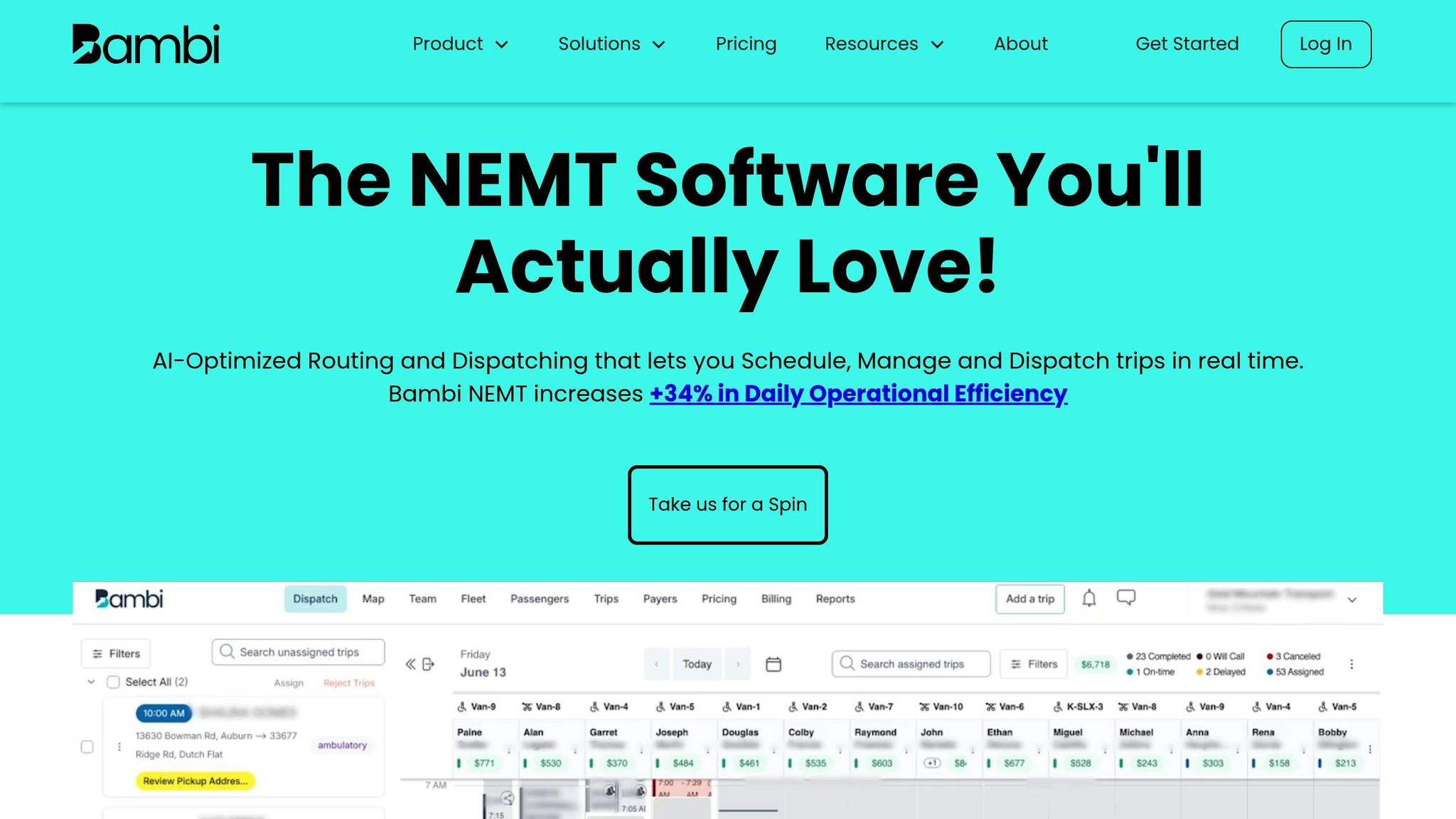
While GPS and online planning help daily work, Bambi's AI system takes doing well to a whole new stage. By mixing GPS with smart send-out and planning, Bambi tackles hard NEMT jobs in big service areas.
The system uses AI to look at past traffic, patient pick-up spots, and meeting times. This makes the best ways to go that lower travel time and fuel costs. Whether it's city traffic or long country roads, Bambi's systems adjust well to these tests.
Bambi also makes rule following simpler by tracking driver hours and logging trip details across areas. This cuts the need for paper work, especially in places with different rules. Its talk tools make things run better by sending updates and reminders to patients, cutting missed meetings and cancellations. The AI also guesses delays and tells patients about changes in plans.
At $69 per car each month, Bambi gives a not costly choice for making area cover bigger. With detailed trip data and checks, providers can spot where things could be better and boost being on time. This helps make smarter choices about where to use resources and extending service areas while keeping the service trusty across all areas.
Map troubles in NEMT don't need to slow your business down. The trick is smart planning and using the right tech to grow well in many work areas.
Planned, fact-based planning changes last-minute rushes into an orderly and steady method. Top NEMT groups look at their own reach, spot missing spots, and use old facts to see demand trends in places. For instance, aim like "grow into three new areas in 12 months" with set steps and using resources right makes sure there's a firm way to bigger work. Mixing this plan with top tech sets a strong base for running work in many map spots.
Tech gives you an advantage in handling the hard parts of map work. New NEMT tools with GPS help, best paths picks, and AI for fixing schedules make work smooth in many places while keeping it by the rules. These tools are key to face issues like changing costs and different deal ways in new places.
Facing map tests in NEMT needs both sharp planning and strong tech. Groups using advanced tools, like Bambi's AI system, stand better at handling these hard parts while they keep giving good, steady work in all spots.
.png)
See the full interview on YouTube
Please don't forget to subscribe and like NEMT Experts Podcast on YouTube.
Also, available to watch on Spotify
And listen (audio only) on your other favorite podcast platforms Apple and Pandora.
Dr Dee Jones explains how she humbly started and ran her NEMT business for years, and recently having her fleet grow from 4 to 25 vans!
“I thought I was going to be a millionaire in like 30 days, but it definitely did not happen that way… I relied heavily on YouTube University.”
“The marketing — just really get out there. Don’t wait for your phone to ring… You’ve got to get in the community… and really give good quality service.”
“Stop worrying about the finances… when I took my mind off of finances and just really went into delivering the quality service… it just happened… Don’t go into it just for the money… the money will come.”

Efficiently managing driver shifts is critical for Non-Emergency Medical Transportation (NEMT) providers. Analytics-driven scheduling offers solutions to common challenges like unpredictable demand, driver fatigue, and compliance with strict regulations. By analyzing historical data and using real-time adjustments, providers can:
Platforms like Bambi ($69 per vehicle/month) simplify this process with AI-powered tools for scheduling, dispatching, and tracking performance metrics. Providers using analytics have seen reductions in overtime (up to 12%) and improved on-time performance (8%). By combining pre-planned schedules with real-time adjustments, NEMT operations can reduce costs, improve service reliability, and boost driver satisfaction.
Getting demand predictions right is a key piece of the puzzle when it comes to planning shifts in Non-Emergency Medical Transportation (NEMT). By digging into historical data and using adaptable scheduling strategies, providers can align driver availability with fluctuating demand. Let’s break down how past trends and flexible shift planning can make operations smoother.
Historical trip data holds the key to spotting patterns in demand. For example, it can highlight daily and weekly trends, show how geography influences requests, and reveal seasonal shifts. In urban areas, requests might spread out more evenly across the day, while rural regions often see demand clustered around specific medical facilities. Seasonal changes and weather conditions can also play a role in request volumes, requiring providers to adjust staffing proactively. Recognizing these predictable trends helps fine-tune capacity planning, ensuring the right resources are available at the right time.
Traditional static schedules often fall short in the fast-paced world of NEMT. Flexible shift templates, on the other hand, offer a more adaptable solution. These templates can include features like standby periods to handle unexpected surges or staggered start times to maintain consistent coverage throughout the day. Operators might also use split shifts to cover peak times while reducing downtime during slower periods.
To handle spikes in demand, providers can implement strategies like extending shifts, bringing in part-time drivers, or redistributing assignments. Taking driver preferences into account and offering cross-training opportunities can further improve flexibility. Regularly reviewing and tweaking these templates ensures that staffing stays in sync with changing business needs, creating a more responsive and efficient operation.
Creating efficient Non-Emergency Medical Transportation (NEMT) shift plans means juggling strict rules with the need for operational efficiency. The trick lies in identifying which constraints are fixed and which have some room for adjustment. Data analytics plays a crucial role in finding this balance, ensuring compliance without sacrificing performance.
Some scheduling constraints in NEMT are set in stone. For instance, rider appointment time windows - covering the earliest pickup and latest drop-off times - and limits on ride duration are critical for meeting regulatory standards. Vehicles must also meet specific rider needs, such as wheelchair accessibility or bariatric support. These requirements are treated as hard constraints to prevent scheduling conflicts or impractical assignments.
Legal and contractual obligations add another layer of complexity. These include maximum shift lengths, mandatory break periods, and daily or weekly work-hour caps. Hours-of-service rules are particularly important to ensure drivers don’t exceed safe working limits. Violating these rules isn’t just a legal issue - it’s a safety concern. Workforce analytics tools can also help by matching drivers with the appropriate skills and availability to the right shifts.
Driver fatigue is a serious issue that affects both safety and service quality. To combat this, planners should limit back-to-back long trips and keep active driving hours within safe limits. Breaks must be built into shifts as non-negotiable activities, with flexibility in timing but strict adherence to regulatory deadlines. Analytics-driven scheduling has proven its worth. For example, a mid-sized operation that switched from manual Excel-based planning to a demand-driven platform saw a 12% reduction in overtime and an 8% boost in on-time performance. Additionally, creating stable schedules minimizes last-minute changes, helping reduce stress and driver turnover.
The best NEMT operations blend pre-planned schedules with real-time adjustments. Knowing when to rely on each approach can make a big difference in efficiency and service reliability.
| Aspect | Pre-Planned Scheduling | Real-Time Adjustments |
|---|---|---|
| Primary Goal | Build compliant, cost-efficient rosters for known demand | Maintain compliance and on-time performance during unexpected changes |
| Best Use Cases | Recurring medical appointments, clinic schedules | Hospital discharges, will-calls, traffic or weather disruptions |
| Optimization Method | VRPTW (Vehicle Routing Problem with Time Windows); batch optimization | Real-time re-optimization; nearest-feasible reassignment |
| Strengths | Reduces deadhead miles, maximizes driver hours, ensures vehicle-rider compatibility | Adapts to real-time issues like no-shows and traffic delays |
| Weaknesses | Less flexible for intraday changes; depends on forecast accuracy | May increase computational demands and dispatch workload |
| Key Metrics | Planned service hours, deadhead percentage, on-time rate | Actual on-time rate, ride time violations, driver overtime |
To stay ahead, publish demand-based rosters one to two weeks in advance, including mandatory breaks and buffer time for predictable needs. For unexpected events, real-time analytics can help redeploy drivers efficiently. Heuristic methods, such as simulated annealing or genetic algorithms, can minimize deadhead miles while keeping time windows intact. Tools like Bambi's AI-powered dispatching system can automate compliance and adjust schedules dynamically to maintain service quality and reduce idle time.
These scheduling methods provide a solid foundation for tracking performance metrics and driving continuous improvement.
Handling unexpected disruptions is a critical part of maintaining quality service in Non-Emergency Medical Transportation (NEMT). While pre-planned schedules provide a solid foundation, they often fall short when faced with real-world unpredictability. Traffic jams, last-minute cancellations, vehicle issues, or urgent hospital discharges can quickly derail even the most carefully designed plans. This is where real-time adjustments, supported by automated dispatch systems and dynamic routing, step in to keep operations running smoothly.
Real-time data transforms decision-making throughout the day, allowing for smarter, faster adjustments. For instance, GPS traffic updates can alert dispatchers to congestion, enabling the system to reroute drivers or reassign trips to others nearby who have available capacity.
With vehicle location tracking, dispatchers gain a live view of their fleet, making it easier to respond to emergencies. Imagine a rider needing an immediate pickup after a hospital discharge - real-time tracking allows the system to locate the nearest available driver and calculate the most efficient route, all without disrupting other scheduled rides.
Cancellations and no-shows also create sudden gaps in schedules that can be efficiently filled with pending will-call requests. However, these changes must respect strict requirements like time windows, vehicle specifications, and driver work-hour limits. Advanced algorithms ensure that these constraints are met while maximizing efficiency.
Weather-related disruptions, such as snow or heavy rain, further highlight the need for dynamic routing. These systems can adjust routes to avoid hazardous areas and extend travel times as needed, ensuring both safety and reliability.
The benefits of dynamic routing become even more impactful when integrated with automated dispatch systems, creating a seamless flow of adjustments and optimizations.
Automated dispatch systems provide a practical solution to the chaos of rapid disruptions. By handling routine reassignments and optimizations, these systems significantly reduce the workload for dispatchers. Instead of manually recalculating routes or juggling driver availability, dispatchers can focus on more complex issues and customer service.
Urgent requests, like hospital discharges, can be processed and assigned to drivers in moments. Automation streamlines the initial steps, allowing for faster response times compared to traditional manual methods.
Compliance tracking is another major advantage. These systems monitor driver hours, required breaks, and vehicle maintenance, minimizing the risk of violations and ensuring safety standards are upheld without constant manual oversight.
Resource optimization is also a game-changer. Automated systems combine trips, reduce deadhead miles, and balance workloads, cutting down on overtime and lowering operational costs. The result? Better vehicle utilization and significant savings.
Customer communication improves as well. Automated updates about pickup times, delays, or driver assignments keep riders informed without requiring dispatcher involvement. For example, Bambi’s system, priced at $69 per vehicle per month, automates compliance checks and dynamically adjusts schedules, helping operators maintain quality service while controlling costs.
The move from manual, reactive dispatching to proactive, automated systems marks a significant shift in how NEMT operations can scale. These tools don’t replace human decision-making - they enhance it by managing routine tasks and providing valuable insights for more complex challenges.
To gauge how effective your shift planning strategies are, you need to track key performance indicators (KPIs) that reflect operational efficiency. These metrics provide a clear picture of whether analytics-driven planning is making a difference. They also highlight areas requiring improvement, enabling real-time adjustments and better decision-making for automated dispatch.
Here are some KPIs that showcase how analytics can measure operational success and guide improvements:
Building on earlier optimization strategies, historical data transforms these metrics into actionable insights. For example, if performance consistently dips on weekends, it might be time to reassess staffing for those days.
Over time, analytics can identify seasonal patterns, such as increased demand during flu season or slower periods at other times. Recognizing these trends allows providers to proactively adjust staffing and shift templates.
Driver performance data can also reveal individual strengths and areas for training. For instance, some drivers may excel on specific routes, which could inform more strategic shift assignments.
Route optimization insights emerge when comparing planned versus actual travel times. If drivers frequently encounter delays on certain routes, it might be necessary to update travel time estimates rather than blaming driver performance.
Consistently comparing predicted and actual trip volumes helps refine demand forecasting. This process ensures staffing models evolve to better match changing demand, creating a feedback loop that supports continuous improvement.
Real-time data also plays a critical role. Tools like Bambi's live dashboards display current performance against targets, enabling dispatchers to make informed decisions throughout the day. If OTP drops or wait times spike, supervisors can address the issue immediately, preventing small problems from escalating.
Benchmarking can help set realistic goals. Instead of striving for perfection across every metric, focusing on steady, incremental progress often leads to more sustainable improvements.
Regular review cycles - whether weekly for immediate concerns or monthly and quarterly for broader trends - ensure that data insights translate into actionable strategies. This ongoing, data-driven approach enables NEMT providers to enhance efficiency while maintaining high-quality service.
Switching from static scheduling to analytics-driven shift management is reshaping how NEMT providers operate. By focusing on three key areas, providers can see real, measurable improvements: demand forecasting, which matches driver capacity to rider needs by time and location, cutting down on overstaffing during slow periods and understaffing during busy ones; schedule efficiency analysis, which enhances coverage, creates fairer shift distributions, and lowers labor costs; and prescriptive optimization, which designs shift templates to reduce unserved demand and excess supply, improving both service quality and cost control.
For mid-sized providers, these strategies can lead to a 5–15% reduction in labor costs by better aligning capacity and cutting down on overtime. A structured rollout over 60–90 days makes the transition smoother. Providers start by gathering 6–12 months of data - like trip demand and driver availability - then develop forecasting models, analyze schedule efficiency, and test prescriptive scheduling, all while adhering to HIPAA and DOT guidelines. The result? More precise scheduling that reduces unserved trips and keeps on-time performance consistent.
Once forecasting and scheduling are optimized, real-time automation takes operations to the next level. It turns solid planning into seamless execution. Features like dynamic routing and driver reassignment help providers manage last-minute disruptions - such as no-shows, traffic delays, or extended appointments - without compromising on-time performance or overall service coverage. Change management tools, like transparent dashboards and schedule stability metrics, ensure smoother adoption by maintaining patterns that drivers rely on, boosting staff morale and operational consistency.
For providers ready to make the leap, platforms like Bambi offer AI-powered tools to scale these strategies. With features such as HIPAA-compliant workflows, automated dispatching, and performance dashboards - all priced at $69 per vehicle per month - Bambi makes sophisticated optimization accessible. These tools set the stage for a future where data-driven efficiency becomes the industry standard.
Adopting analytics-driven shift management doesn’t just improve operations - it creates a competitive edge. Providers can ensure better care for patients while running more sustainable and profitable businesses. Smarter shift management benefits everyone involved: providers, drivers, and the patients they serve.
Analytics-based scheduling plays a key role in addressing driver fatigue within Non-Emergency Medical Transportation (NEMT) operations. By examining trip data, traffic trends, and driver availability, these systems create balanced and efficient schedules. The result? Shifts are distributed more evenly, helping to prevent excessive overtime or overly long hours that could lead to burnout.
This method doesn't just benefit drivers - it also boosts safety for passengers and others on the road. By minimizing fatigue-related risks, NEMT providers can deliver a more dependable and secure service while maintaining smooth operations.
Real-time adjustments and automated dispatch systems are game-changers for improving the reliability of Non-Emergency Medical Transportation (NEMT) services. These tools provide instant updates on vehicle locations and driver availability, enabling dynamic route adjustments and quicker responses to unexpected issues like traffic jams or last-minute schedule changes.
By streamlining operations, these systems help minimize booking mistakes and fine-tune routes, which can cut costs and boost efficiency. The result? Fewer delays, smoother coordination, and dependable transportation that ensures patients reach their appointments on time.
By looking at historical data, NEMT providers can spot trends in trip demand, patient appointments, and seasonal fluctuations. This allows them to anticipate busy periods and schedule drivers more effectively while positioning vehicles in the right locations.
With this data-driven strategy, providers can cut down idle time, avoid extra repositioning expenses, and respond to requests faster. The payoff? Smarter resource use, smoother operations, and happier patients.
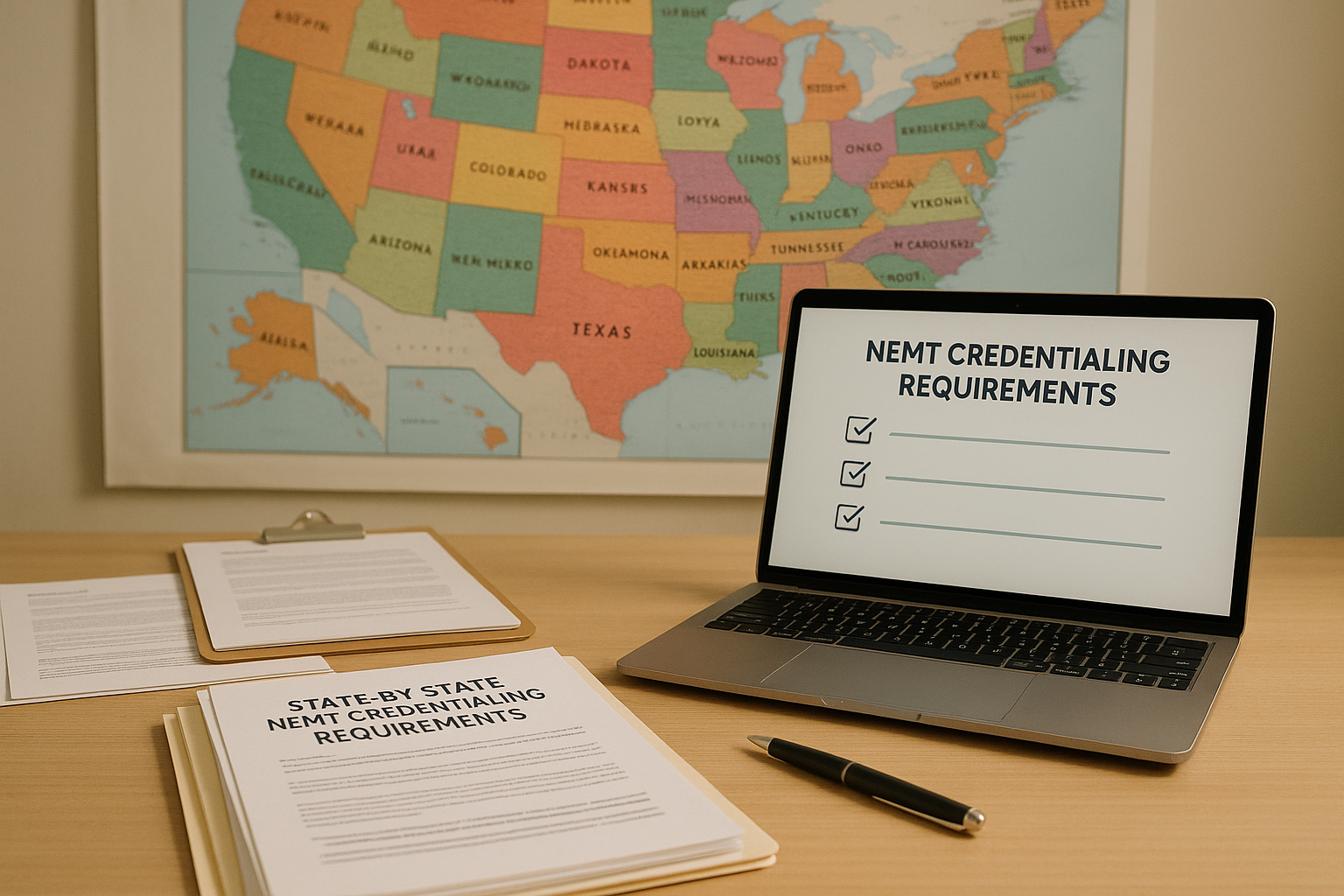
Non-Emergency Medical Transportation (NEMT) providers face a maze of credentialing rules that vary by state, city, and even Medicaid programs. These regulations cover driver background checks, insurance minimums, ADA compliance, training, and Medicaid enrollment. Missing even one requirement can lead to denied claims or penalties.
Here’s a quick breakdown of key points:
For multi-state operators, compliance becomes even more complex with varying renewal cycles, local permits, and training mandates. Staying organized is critical to avoid disruptions.
| State | Insurance Requirement | Key Credentialing Features | Medicaid Enrollment |
|---|---|---|---|
| California | $1M liability per occurrence | ADA compliance, insurance-focused | State-specific |
| Texas | Varies (higher for Medicaid) | Background checks, drug tests, driver certifications | Separate state health authority |
| New York | Standard | Centralized MAS system, criminal checks for all staff | MAS-managed |
| Florida | $300,000 minimum | CPR certification, frequent insurance updates | Through state Medicaid program |
| Illinois | Proof of compliance required | Drug testing, passenger safety training | HFS-managed |
Managing these rules demands strong systems for tracking renewals, maintaining documentation, and ensuring compliance across jurisdictions. Providers must weigh the challenges of state-specific requirements against the potential benefits of a unified national standard.
In California, Non-Emergency Medical Transportation (NEMT) providers are required to carry a minimum of $1 million in liability insurance per occurrence. This policy must serve as the primary coverage for their operations. Partnering with a knowledgeable insurance agent can simplify the process of securing coverage that not only meets but potentially exceeds these state requirements, ensuring full compliance with regulatory standards.
"The minimum liability insurance requirement is $1 million per occurrence, which must be maintained at all times during the operation of the transportation business." - WHINS Insurance
This strict insurance requirement reflects California's commitment to setting a high bar for NEMT providers, ensuring safety and accountability as they navigate the state's credentialing process.
Texas takes a thorough approach to credentialing for Non-Emergency Medical Transportation (NEMT) services, focusing on driver qualifications, vehicle safety, and regular recertification. The rules vary depending on whether providers serve Medicaid clients or operate in the private sector, with Medicaid providers facing stricter vehicle safety standards.
Every NEMT driver in Texas must clear an in-depth background check. This includes a review of their criminal history and driving record. Certain serious offenses are automatic disqualifiers. Beyond this, drivers must pass certified drug and alcohol screenings. Failing any part of these checks means they cannot provide NEMT services. These steps reflect Texas’ commitment to ensuring safety for both drivers and passengers.
Texas requires NEMT providers to carry a minimum level of liability insurance. Providers serving Medicaid clients must meet even higher insurance standards, including general liability coverage. Additionally, all vehicles used in NEMT services must have comprehensive insurance to cover potential losses from accidents.
NEMT drivers in Texas are required to complete an initial certification program approved by the state. The training covers essential topics like assisting passengers, securing mobility equipment, and responding to emergencies. Practical, hands-on training is often included, along with lessons on defensive driving and privacy protocols for medical transportation. Drivers must pass both written and practical tests to be certified. Medicaid providers must meet extra training requirements beyond these standard programs.
Providers aiming to serve Medicaid clients must go through a separate enrollment process with state health authorities. This involves submitting detailed documentation, including financial records and plans for service delivery. They also need to show they have enough vehicles to meet the needs of their community.
NEMT providers in Texas must regularly recertify to continue operations. This process includes updated background checks, proof of current insurance, and verification of completed training. Drivers are also required to take continuing education courses to stay informed about regulatory changes. Providers that fail to complete recertification lose their operating privileges until they comply.
New York has a centralized system for credentialing Non-Emergency Medical Transportation (NEMT) services, with Medical Answering Services (MAS) acting as the primary transportation manager for Medicaid-eligible individuals. While the state follows a similar approach to others with its focus on background checks and training, the MAS system simplifies Medicaid enrollment for providers.
In New York, all NEMT drivers must undergo a detailed criminal background check as part of their initial credentialing process. This includes a thorough review of their driving history to identify any traffic violations or license suspensions that could compromise passenger safety. Drivers are also required to hold a valid New York state driver’s license, which is verified by the Department of Motor Vehicles during the application process. Beyond drivers, MAS mandates that providers conduct criminal background checks for administrative staff and direct service personnel. After completing these checks, providers are responsible for ensuring that drivers receive proper training to adhere to the state’s safety standards.
State regulations require NEMT providers to establish a driver hiring and training program. This program is designed to prepare drivers to handle passenger safety and meet the specific requirements of medical transportation.
To serve Medicaid clients, providers must fulfill these credentialing requirements and enroll through the MAS system. Once approved, they are authorized to offer services across the state.
Florida places a strong emphasis on stringent insurance requirements and regulatory compliance for Non-Emergency Medical Transportation (NEMT) providers. Here’s a breakdown of the key state requirements for insurance, Medicaid enrollment, and recertification.
NEMT companies in Florida must maintain commercial auto insurance with a minimum coverage of $300,000. This ensures protection against third-party claims resulting from accidents.
To further safeguard their operations, providers can also opt for comprehensive and collision coverage, which helps cover damages to their vehicles caused by theft or accidents.
When enrolling in Medicaid, NEMT providers are required to demonstrate compliance with Florida’s insurance mandates. Failing to meet these standards can result in penalties or delays in approval.
It’s essential for providers to regularly review and update their insurance policies to align with Florida’s evolving requirements. Adopting an organized system to track policy renewal dates and regulatory changes can help ensure uninterrupted compliance.
When it comes to credentialing for Non-Emergency Medical Transportation (NEMT) services, Illinois has a strict set of requirements managed by the Illinois Department of Healthcare and Family Services (HFS).
In Illinois, NEMT drivers must pass criminal background checks and complete routine drug testing. These measures are in place to ensure the safety of passengers, particularly those who are more vulnerable, like patients traveling to medical appointments.
To operate as an NEMT provider in Illinois, you must enroll through HFS as a Medicaid transportation provider. The application process includes submitting:
For help with the application, you can contact HFS Provider Enrollment Services at 217-782-5565 or 888-618-8078.
One key detail to keep in mind: transportation for Managed Care Organization (MCO) members is coordinated by their specific MCOs rather than through the state program. This impacts how providers handle both service delivery and billing.
Although Illinois doesn’t require pre-application training, drivers must still meet the state’s qualifications. This includes passing background checks and demonstrating competency in transporting patients safely.
Having all necessary documentation ready before applying is critical. This preparation can help avoid delays and ensure that your operations comply with Illinois regulations from the start.
This section takes a closer look at the pros and cons of state-specific versus national credentialing standards, building on the earlier discussion of detailed state requirements. Understanding these trade-offs is crucial for providers deciding where to operate and how to handle compliance effectively.
| Aspect | State-Specific Requirements | National Standards |
|---|---|---|
| Flexibility | Rules tailored to local healthcare needs | A single framework simplifies processes but may overlook regional differences |
| Compliance Complexity | Providers must navigate varying rules across states | One set of standards reduces the complexity and administrative workload |
| Market Entry | Diverse state rules can hinder multi-state expansion | Unified standards make it easier to expand across state lines |
| Safety Standards | Custom-fit for specific populations and risks in each state | Consistent safety measures nationwide |
| Cost Impact | Higher administrative costs for multi-state operations | Standardization lowers overall compliance expenses |
For providers working across multiple states, these trade-offs play a significant role in shaping operational efficiency and compliance strategies.
State-specific requirements offer the advantage of being tailored to local needs, as states often design rules to address unique healthcare challenges within their populations. However, this customization can lead to administrative hurdles. Providers operating in multiple states face the challenge of navigating different compliance frameworks, each with its own credentialing timelines and training mandates.
Take driver training as an example: Illinois requires passenger assistance and safety training, Florida mandates CPR certification along with state-approved programs, and North Carolina requires certification through its Division of Health Service Regulation. These differences highlight the complexity of managing compliance across state lines.
On the other hand, national standards, such as those advocated by organizations like NEMTAC, aim to resolve these inconsistencies by offering a unified framework that prioritizes safety, efficiency, and compliance. A standardized approach could improve access to transportation services and boost industry credibility by ensuring consistent practices across regions.
While state-specific rules may create localized barriers to entering new markets, they also lead to higher administrative costs for providers operating in multiple jurisdictions. Separate systems, training programs, and compliance processes are often required for each state. This comparison underscores the importance for NEMT providers to carefully evaluate local requirements against the advantages of adopting standardized practices.
Navigating the maze of state-by-state NEMT credentialing requires careful attention to detail and a commitment to staying compliant. Each state has its own set of rules - California, for instance, enforces extensive standards, while Florida requires CPR certification, and Illinois mandates passenger assistance training. These differences can make compliance a challenging puzzle for providers.
For businesses operating across multiple states, managing this patchwork of regulations is no small feat. It calls for strong systems to track license renewals, keep documentation current, and ensure drivers meet the specific qualifications required in each state. Without these processes in place, staying compliant becomes an uphill battle.
These regulatory complexities also bring tough decisions. Providers must balance the advantages of state-specific rules, which address local healthcare needs, against the administrative hurdles they create. This balancing act can influence everything from operational efficiency to decisions about where to expand services. The debate over state-specific regulations versus a unified national standard remains a central challenge for the industry.
Fortunately, technology offers a way to simplify these processes. Tools powered by AI can make tasks like dispatching, scheduling, and compliance tracking more manageable across different jurisdictions. Resources like the Bambi NEMT blog provide helpful advice on using technology to improve operations, covering topics like fleet management and driver training. These solutions can help providers tackle the complexities of today’s regulatory landscape with greater ease.
Ultimately, compliance shouldn’t be viewed as just another box to check - it’s an investment in the future. By setting up clear processes, prioritizing proper training, and leveraging technological tools, providers can not only ensure safety and quality but also gain a competitive edge. Proactive compliance management is the key to thriving in the ever-changing NEMT industry.
NEMT providers working across multiple states often encounter hurdles due to differing credentialing requirements. Each state may have its own rules for licensing, insurance coverage, and vehicle registration, which can complicate compliance efforts and add to the administrative burden.
Handling these requirements manually is not only time-intensive but also leaves room for mistakes. This is especially true when credentials need to be shared with partners or when ensuring compliance with specific state regulations. Such challenges can result in delays, increased costs, and even the risk of non-compliance if not managed properly.
To keep operations running smoothly and avoid these issues, adopting reliable systems that simplify credential management and ensure compliance with all regulations is crucial.
Technology has the power to simplify compliance and credentialing processes for NEMT providers in a big way. Automated systems can handle tasks like tracking driver credentials, sending reminders before certifications expire, and generating compliance reports to ensure all standards are met. This not only cuts down on tedious paperwork but also boosts overall efficiency.
Cloud-based platforms add another layer of convenience by offering real-time updates. These platforms can also integrate with dispatch and scheduling systems, keeping everything connected and running smoothly. With these tools in place, providers can spend less time worrying about regulatory requirements and more time focusing on delivering safe and dependable transportation services.
A nationwide standard for credentialing Non-Emergency Medical Transportation (NEMT) drivers could bring a host of benefits to the industry. For starters, it would establish consistent safety and service quality benchmarks across all states. This consistency would make it much simpler for providers to meet requirements, especially those operating in multiple states, by cutting down on administrative hassles and reducing confusion.
Beyond logistics, having a unified standard could boost the reputation and professionalism of NEMT providers on a national level. This would go a long way in building trust with clients and healthcare partners. By addressing inconsistencies, such a standard could lead to better service delivery and set the stage for growth and advancements in the industry.

Optimizing pre-scheduled Non-Emergency Medical Transportation (NEMT) routes can significantly reduce costs, improve scheduling efficiency, and enhance patient satisfaction. This process involves using precise trip data, AI-powered tools, and smart driver and fleet management practices to ensure timely and efficient transportation. Here's a quick overview of the key takeaways:
Organizing pre-scheduled routes efficiently requires a structured approach that combines detailed data collection, smart algorithms, and thoughtful trip grouping. The goal is to create a repeatable process that works seamlessly, no matter how many trips need to be managed daily. Here's a step-by-step guide to help refine your planning.
The foundation of effective route planning lies in the quality of your data. Start by gathering all essential trip details, such as exact pickup and drop-off addresses, appointment times, and any specific requirements passengers may have, like wheelchair accessibility or oxygen needs.
Avoid vague location descriptions - always collect full, precise addresses. This becomes especially critical when managing multiple stops in busy urban areas or sprawling medical complexes where navigation can be tricky.
Passenger mobility needs also play a big role in planning. For instance, individuals requiring extra assistance or specialized equipment may need additional time for boarding and safe transfers. Accounting for these factors ensures realistic schedules.
Additionally, be aware of your fleet’s capacity. Know how many wheelchairs, stretchers, or ambulatory passengers each vehicle can accommodate so you can assign trips appropriately.
Don’t forget to include buffer times for appointments. Many medical facilities require patients to arrive early for check-in, so adding these buffers ensures your schedule reflects real-world timing. With complete and accurate data, route optimization algorithms can work their magic.
Once you’ve gathered all the necessary data, route optimization algorithms take over to simplify the planning process. These tools analyze multiple factors far more quickly and accurately than manual methods.
The algorithms map all pickup and drop-off points, calculate travel times, and consider variables like traffic patterns, road construction, and common congestion areas. They also adjust routes dynamically based on real-time updates, such as weather or unexpected delays.
Interestingly, the shortest route isn’t always the fastest. For example, a slightly longer path might bypass traffic-heavy zones, saving time overall. That’s why these algorithms evaluate multiple factors - such as total travel time, fuel efficiency, driver hours, and passenger wait times - before finalizing routes.
If your fleet includes vehicles with specialized capabilities, like wheelchair-accessible vans, the algorithm ensures passengers are matched with the right vehicle while still optimizing efficiency.
Combining trips to share rides is a smart way to reduce costs and improve service. The aim is to transport multiple passengers in a single vehicle while keeping travel times reasonable for everyone.
Geographic clustering is key to effective trip consolidation. Group passengers traveling to the same facility or nearby locations within similar timeframes. For example, if multiple patients have appointments at the same hospital, scheduling shared rides becomes much easier.
Return trips can also be coordinated to pick up additional passengers whose appointments finish around the same time. This strategy minimizes unnecessary mileage and maximizes vehicle usage.
However, it’s important to respect passengers’ preferences. Some people, particularly those who are tired after medical treatments, might prefer private rides. Incorporating these preferences into your planning ensures a better experience for everyone.
Finally, set limits on detours to ensure that additional stops don’t significantly extend travel times. Be mindful of your vehicles’ seating and equipment capacities when determining how many trips can be combined effectively.
AI-powered tools are transforming how pre-scheduled NEMT (Non-Emergency Medical Transportation) routes are planned and managed. By automating routing decisions and making real-time adjustments, these systems process data like traffic patterns and vehicle capacity to create efficient routes while easing the workload for dispatchers. This technology lays the groundwork for smoother scheduling and dispatching.
Planning routes manually often leads to errors and places a heavy burden on dispatchers. AI-driven solutions simplify this process by automatically assigning trips based on real-time factors like driver availability, proximity, and vehicle capacity. When a trip request comes in, the AI quickly matches it to the right vehicle, driver, and location.
Automated scheduling software removes the guesswork from assigning trips. It ensures that specialized vehicle needs are met without manual oversight, avoiding mismatches that can occur with traditional methods. This allows providers to handle more trips with fewer dispatchers, optimizing resources and lowering operational costs. With routine tasks automated, dispatchers can focus on addressing exceptions and providing better customer service.
AI systems also analyze historical data to identify patterns, such as recurring appointments or preferred pickup times. This enables proactive adjustments to scheduling. Once trips are assigned, the system continuously monitors and updates routes to ensure they remain efficient.
AI-powered tools go beyond scheduling by offering dynamic navigation capabilities. One of their standout features is the ability to update routes in real time based on live conditions. Using GPS tracking and AI-based navigation, these systems determine the fastest and most fuel-efficient routes, adjusting for traffic and weather changes. For example, if an accident blocks a highway, the AI recalculates the route instantly, rerouting drivers and updating passengers with new estimated arrival times.
Geofencing technology adds another layer of oversight, helping monitor vehicles for schedule adherence and fuel efficiency. If a passenger cancels at the last minute, the AI swiftly reallocates resources, reassigning vehicles and notifying all relevant parties in real time. During severe weather, the system can suggest safer alternative routes, keeping schedules reliable and prioritizing passenger safety.
AI tools also track key performance indicators (KPIs) like on-time performance, trip duration, fuel efficiency, client satisfaction, and vehicle utilization. These metrics are collected and reported automatically, giving providers actionable insights without manual effort. Real-time dashboards help identify inefficiencies, forecast demand, and allocate resources more effectively.
For instance, tracking on-time performance can highlight recurring delays, prompting schedule adjustments or additional buffer times during peak periods. Monitoring fuel efficiency might reveal vehicles in need of maintenance or drivers who could improve their habits. AI systems can even analyze driver behavior - such as excessive idling or speeding - allowing providers to offer targeted coaching to improve safety and efficiency. Insights into vehicle utilization help determine if the fleet size aligns with current demand, while automated client satisfaction surveys can reveal areas for service improvement.
Bambi's AI solution, priced at $69 per vehicle per month, combines dispatch, GPS tracking, and performance monitoring into one system. This integration ensures smooth data sharing, accurate billing, and coordinated dispatching, which are essential for scaling operations and maintaining high-quality service.
Managing your fleet and drivers effectively is just as important as using AI-powered tools for route optimization. While technology can map out the most efficient routes, the success of these plans relies on the human and mechanical elements behind the scenes. Poor vehicle maintenance or ineffective driver management can quickly derail even the best-laid plans. Let’s dive into how proper upkeep and smart driver strategies can ensure smooth operations.
Preventive maintenance is the backbone of keeping your fleet running reliably. With NEMT vehicles often logging 20,000 to 30,000 miles a year, regular upkeep is a must to avoid disruptions.
Creating an efficient schedule for drivers is key to balancing productivity with compliance. Federal Hours of Service regulations cap commercial drivers at 14 hours on duty, with a maximum of 11 hours of driving. Smart planning ensures you stay within these limits while maximizing efficiency.
GPS tools are invaluable for tracking driver performance and fine-tuning operations. They provide real-time data on speed, route adherence, and driving habits, helping managers identify areas for improvement.
Even the best-planned routes can hit unexpected snags like last-minute cancellations, traffic jams, or vehicle breakdowns. Keeping operations running smoothly means having systems in place that can quickly adapt and improve based on real-world performance data.
Last-minute cancellations can throw a wrench into NEMT schedules, leaving drivers with idle time and disrupting the flow of the day. To minimize the impact:
These strategies not only address immediate disruptions but also contribute to smoother operations over time.
Beyond dealing with day-to-day hiccups, regularly analyzing performance metrics can help fine-tune operations for the long haul. Key metrics to track include on-time performance, trip duration variances, and fuel costs per mile. For instance, if on-time rates dip, it’s worth digging into the data to see if traffic patterns, vehicle issues, or scheduling conflicts are to blame.
Periodic route reviews can uncover recurring delays in areas affected by construction or other disruptions. Seasonal trends, like increased demand during certain times of the year, can also inform adjustments to staffing and scheduling.
Cost analysis is another valuable tool. Identifying which routes are more or less profitable can guide decisions about pricing or scheduling changes. Additionally, monitoring driver productivity - such as completed trips per shift or customer satisfaction scores - can highlight areas where training or support might be needed.
While data provides valuable insights, direct feedback offers a human perspective that’s just as important. Combining both can lead to meaningful improvements.
Patterns in complaints can reveal systemic issues. For instance, frequent complaints about late pickups in a particular area might indicate that travel time estimates during peak hours need adjustment.
Finally, it’s crucial to track how feedback is implemented. For example, if enhanced dispatch communication is introduced based on feedback, monitor its impact to ensure it’s making a difference. The best NEMT providers treat feedback as an ongoing dialogue, using it to refine and improve services continuously. By combining data-driven insights with human input, they create a system that evolves to meet the needs of all stakeholders.
This guide has highlighted how optimizing pre-scheduled NEMT routes can transform operations from reactive scheduling to a more proactive, data-driven approach. By leveraging AI-powered platforms, routing becomes automated and more accurate, paving the way for streamlined and scalable operations. Tools like real-time GPS tracking and automated scheduling form the backbone of these improvements.
Tracking key metrics - such as on-time performance, trip duration, vehicle utilization, fuel consumption, and client satisfaction - provides valuable insights into operational strengths and areas for improvement. These metrics also play a crucial role in managing fleets and drivers effectively. Pairing regular vehicle maintenance with thoughtful driver scheduling ensures that technological advancements are fully supported by day-to-day practices.
What sets successful NEMT providers apart is their focus on adaptability and continuous improvement. Analyzing performance data regularly uncovers opportunities for long-term optimization. Additionally, incorporating feedback from both patients and drivers refines operations in ways that data alone cannot achieve.
Platforms like Bambi, priced at $69 per vehicle per month, offer a suite of tools including AI-driven optimization, automated dispatching, and integrated fleet management. These features help reduce costs, improve efficiency, and enhance client satisfaction, making them a valuable asset for NEMT providers aiming to excel.
AI-powered tools make NEMT route planning easier by factoring in real-time traffic, patient needs, and vehicle availability to create efficient routes. This helps cut down travel time, reduce costs, and boost operational performance.
When choosing such tools, providers should prioritize features like dynamic routing that adapts to changing traffic, automated scheduling to align with patient priorities, and AI-driven analytics to pinpoint opportunities for improvement. These capabilities ensure on-time pickups, better use of drivers, and higher-quality service, enabling providers to meet industry standards while maintaining dependable care.
Consolidating Non-Emergency Medical Transportation (NEMT) trips isn’t without its hurdles. High cancellation rates - sometimes as high as 15%–30% - and the complexity of managing schedules and routes can create significant inefficiencies. These issues often result in wasted resources, underutilized vehicles, and financial setbacks.
To tackle these problems, many providers are turning to AI-powered scheduling and routing tools. These tools simplify trip planning, help cut down on cancellations, and improve vehicle usage. By optimizing routes and allocating resources more effectively, providers can boost service reliability, manage costs, and create a smoother experience for both patients and staff.
Real-time GPS tracking is a game-changer for NEMT fleet and driver management, offering precise, up-to-the-minute updates on vehicle locations. With this level of visibility, dispatchers can make smarter decisions, adjust routes on the fly, and respond more effectively to unexpected delays or last-minute changes. This means passengers experience shorter wait times and more reliable service.
GPS tracking also plays a key role in boosting safety and operational efficiency. By monitoring driving behaviors like speeding or harsh braking, it provides valuable data to encourage safer driving habits and reduce unnecessary wear on vehicles. With these insights, NEMT providers can streamline their operations, enhance the passenger experience, and cut down on costs.

The Non-Emergency Medical Transportation (NEMT) industry is seeing rapid growth, fueled by an aging population, increased chronic illnesses, and expanding Medicaid and Medicare Advantage programs. However, scaling NEMT operations requires careful financial planning due to delayed reimbursements, rising operational costs, and regulatory requirements. Here's what you need to know:
To succeed, NEMT providers must forecast expenses, optimize cash flow, and invest in efficiency-driving tools like AI-powered dispatch systems. Strategic vendor negotiations and funding options like SBA loans or equipment financing can further support growth. Regular financial reviews and strong planning will help businesses thrive in this evolving market.
Building a budget for a Non-Emergency Medical Transportation (NEMT) business that supports growth means carefully managing funds. A solid budget typically focuses on three key areas: startup or expansion costs, ongoing monthly expenses, and revenue projections. Getting these right can be the difference between steady growth and financial challenges.
Starting or growing an NEMT business requires a significant upfront investment. The biggest expense? Vehicles. Most providers finance their vehicles, spreading payments (plus interest) over 5–7 years. It’s crucial to ensure these payments fit within your growth plans.
Next, there’s insurance and bonding. General liability insurance for NEMT businesses usually costs $3,000 to $8,000 per vehicle annually, depending on coverage and location. Add commercial auto insurance, which ranges from $2,500 to $5,000 per vehicle each year. Many contracts also require surety bonds, typically between $25,000 and $100,000, with premiums at 1-3% of the bond amount.
Licensing and compliance is another unavoidable cost. Depending on your state, you’ll need business licenses, DOT permits, and NEMT-specific certifications, which can total $2,000 to $10,000 initially. Some states also require facility inspections, background checks, and certifications, further adding to the bill.
Don’t forget technology investments. Dispatch software, GPS systems, communication tools, and HIPAA-compliant data security are must-haves. Expect to spend $5,000 to $15,000 upfront, plus ongoing monthly fees.
Once these initial costs are covered, the focus shifts to managing recurring expenses efficiently.
To maintain healthy cash flow, it’s essential to understand and plan for recurring costs. Fuel alone typically accounts for 15–20% of operating expenses. For example, a vehicle averaging 20 miles per gallon and driving 1,000 miles a month will need about 50 gallons of fuel. At $3.50 per gallon, that’s $175 per vehicle each month just for gas.
Routine maintenance and unexpected repairs add another $250–450 per vehicle monthly.
Payroll and benefits are often the largest expense. Driver wages vary by region but generally range from $15 to $22 per hour. A full-time driver working 40 hours a week costs around $2,600–3,800 monthly in wages. Add payroll taxes, workers’ compensation insurance, and benefits, and the total jumps to $3,500–5,000 per driver.
Administrative costs include office rent, utilities, dispatch staff, and communication services. A small operation might spend $2,000–4,000 monthly, while larger setups could see expenses climb to $10,000–20,000.
Technology subscriptions for dispatch software, GPS, and communication tools typically cost $50–150 per vehicle each month. Compliance-related costs, such as drug testing, background checks, and training updates, can add another $200–500 monthly for a small fleet.
These recurring expenses directly influence revenue projections and cash flow planning.
With costs mapped out, revenue projections need to reflect your operating realities. Medicaid reimbursements are often the most reliable income source, though they come with payment delays of 30–90 days. Rates vary by state, ranging from $15–45 per trip for basic transportation to $25–75 for wheelchair-accessible services.
Medicare Advantage plans tend to pay faster, usually within 30–45 days. These contracts may offer slightly higher rates per trip and sometimes include performance bonuses for meeting on-time arrivals and customer satisfaction targets.
Private pay clients and healthcare facility contracts offer immediate payment options. Private rates are often 25–50% higher than Medicaid reimbursements, making them an attractive option for managing cash flow. Healthcare facilities may also provide monthly contracts for regular transportation needs, creating a steady revenue stream.
Revenue projections should also account for seasonal trends. For example, medical appointments usually increase during the fall and winter as patients rush to use year-end insurance benefits. On the flip side, summer months often see a 10–15% drop in trip volume.
When forecasting trip volumes, consider that new Medicaid contracts often take 3–6 months to ramp up fully as referral sources grow familiar with your services. Expect a gradual increase rather than an immediate surge.
Finally, your payment mix affects cash flow. A provider with 70% Medicaid, 20% Medicare Advantage, and 10% private pay clients should plan for average payment delays of 45–60 days. Shifting to faster-paying sources can improve cash flow but may require adjustments in marketing and service offerings.
Forecasting market trends is essential for making informed budget decisions. The landscape is evolving quickly, and staying ahead requires a solid understanding of market dynamics paired with effective planning strategies.
Several key trends are shaping the Non-Emergency Medical Transportation (NEMT) industry, creating both opportunities and challenges:
These trends highlight the importance of precise forecasting and strategic planning to navigate the shifting landscape effectively.
To align with these market dynamics, NEMT providers can use several forecasting methods to refine their budgets and plan for growth:
Keeping expenses in check while expanding requires a careful balance between investment and efficiency.
In Non-Emergency Medical Transportation (NEMT) operations, your fleet and workforce account for the bulk of your expenses. That’s why these areas offer the most potential for cost savings.
Start with smart vehicle selection. Opt for fuel-efficient models - hybrids, if they fit your budget - to cut down on fuel costs. Over time, these savings can add up significantly.
Preventive maintenance is another critical step. Routine oil changes, tire rotations, and inspections help prevent expensive breakdowns and extend the life of your vehicles. Building strong relationships with reliable mechanics can also reduce repair costs and minimize downtime.
Investing in driver training programs can lower operational expenses in multiple ways. Well-trained drivers are less likely to get into accidents, which can reduce insurance claims. They’re also more likely to drive efficiently, saving on fuel. Focus training efforts on defensive driving techniques and fuel-efficient vehicle operation.
Optimized scheduling is key to managing labor costs while maintaining service quality. Efficient route planning reduces travel time and allows for more trips per shift. Cross-training drivers can also create more flexibility in your scheduling, ensuring you’re making the most of your workforce. Pair these efforts with performance-based pay to align driver incentives with your business goals. Bonuses for fuel-efficient driving, punctuality, and top-notch customer service can encourage cost-saving behaviors.
Technology offers powerful tools for improving efficiency and cutting costs. For instance, AI-powered dispatch systems can replace manual scheduling, using data like traffic conditions and driver locations to create optimized routes.
Real-time GPS tracking does more than just locate vehicles. It allows for dynamic route adjustments, reducing fuel use and improving punctuality. Plus, the data collected can highlight inefficient driving habits or unauthorized vehicle use, giving you actionable insights.
Automated scheduling tools save time and improve accuracy by handling routine tasks, freeing up your staff to focus on customer service and growing your business.
Platforms like Bambi’s AI-powered software tackle many of these challenges head-on. For $69 per vehicle per month, this system combines dispatching, scheduling, and compliance management into one package. It includes features like route optimization, HIPAA-compliant communication, and automated reporting, eliminating the need for multiple software subscriptions and ensuring seamless data flow across operations.
Digital communication tools can also streamline your workflow. Text confirmations, automated reminders, and real-time trip updates help reduce no-shows and last-minute cancellations, improving overall reliability.
Lastly, compliance automation tools can save both time and money. Features like driver qualification tracking, vehicle inspection reminders, and billing compliance checks help you avoid costly regulatory penalties and cut down on administrative work.
These tech-driven efficiencies create a strong foundation for negotiating with vendors.
Reducing costs doesn’t stop at internal improvements - negotiating better deals with vendors is another key strategy. Start with insurance. A strong safety record can help you negotiate lower premiums, and fleet insurance bundling often provides cost savings compared to insuring vehicles individually. Many insurers offer discounts for larger fleets, which can make this option particularly appealing.
Building strategic vendor relationships can also yield savings. For example, fuel suppliers might offer volume discounts or fleet cards with reduced per-gallon rates. Maintenance providers might agree to fixed-rate service contracts, making your expenses more predictable.
Negotiating favorable payment terms with vendors can improve cash flow. Extended payment cycles for fuel, maintenance, or equipment purchases can provide financial flexibility, especially when your business faces delays in receiving payments.
Take advantage of group purchasing opportunities through industry associations or provider networks. Collective buying power can help you secure better rates on essentials like insurance, fuel, maintenance, and equipment.
Regularly reviewing and renegotiating contracts is essential as your business grows and market conditions shift. By documenting your payment history, service volumes, and overall business stability, you’ll be in a stronger position to negotiate better terms.
Lastly, consider performance-based contracts with key vendors. For example, you could negotiate maintenance agreements that guarantee vehicle uptime or fuel contracts that include efficiency bonuses. These arrangements align vendor goals with your cost-saving objectives, fostering partnerships that benefit both sides.
After cutting unnecessary costs, the next step in growing your Non-Emergency Medical Transportation (NEMT) business is securing the right funding. With startup costs for small NEMT businesses typically ranging from $100,000 to $225,000, having a solid financial plan is essential for sustainable expansion.
There are several ways to finance your NEMT business, each with its own pros and cons:
Once you’ve decided on a funding source, the preparation phase becomes crucial. A strong application can make all the difference.
Start with a well-crafted business plan. This document should outline your growth strategy, market insights, and detailed financial projections. It shows lenders or investors that you understand the NEMT market and have a clear vision for the future.
Gather all required paperwork before applying. Commonly requested documents include your Tax Identification Number (TIN), recent financial statements (like balance sheets and profit/loss reports), and a thorough operational plan. Being organized from the beginning can help streamline the process.
Clearly address how you’ll handle challenges like regulatory compliance, cash flow delays, staffing, vehicle maintenance, and scheduling. Demonstrating a deep understanding of these issues can strengthen your application.
Tailor each application to meet the lender’s specific priorities. Research their goals and highlight how your NEMT services align with their objectives.
Pay close attention to eligibility requirements. Missing even one detail could result in disqualification. Carefully review all instructions and double-check that you’ve included everything before submitting.
Submit early to avoid last-minute issues. After sending your application, follow up with the funding agency to confirm receipt and check on its status.
If the process feels overwhelming, consider hiring consultants who specialize in NEMT funding. They can guide you through the industry-specific requirements and help simplify complex applications.
When presenting financial projections, keep them realistic and grounded in actual market data. Lenders and investors prefer conservative estimates that you can exceed rather than overly ambitious ones.
Highlight your competitive advantages. Whether it’s advanced scheduling tools, specialized vehicles, or strong partnerships with healthcare providers, make it clear what sets your business apart.
Finally, ensure all business records, contracts, and operational procedures are organized and ready for review. Being prepared for due diligence not only shows professionalism but also builds trust with lenders and investors.
Crafting a budget that can adapt to change is essential for long-term success in the NEMT industry. This field evolves rapidly, with regulatory updates, shifts in insurance reimbursements, and market fluctuations happening throughout the year. A forward-thinking budget helps you stay prepared and ensures each financial component is built for resilience.
Regular monthly reviews are key to spotting trends early. By keeping a close eye on your financial data, you can make timely adjustments before minor issues grow into major setbacks.
Set aside a contingency fund to handle surprises like vehicle repairs, rising fuel costs, or temporary staffing needs. Allocating a portion of your operating funds for emergencies ensures that your growth plans remain on track, even when unforeseen expenses arise.
Monitor critical KPIs like cost per mile and revenue per trip every month. These metrics act as early indicators of potential problems, giving you the chance to address them before they affect your bottom line.
Investing in technology isn’t just about staying current - it’s a smart way to cut costs. Tools for route optimization and streamlined administrative tasks can lead to meaningful savings. When planning tech upgrades, factor these efficiency gains into your revenue projections to get a clearer picture of your financial outlook.
Strong ties with financial partners can enhance your budget’s stability. Regular communication with lenders, investors, and advisors keeps them informed about your progress and builds trust for future funding needs. Consider sending quarterly updates that highlight your achievements and how you’re tackling challenges.
Cash flow management becomes even more important as you scale. Insurance reimbursements often face delays, so maintaining a healthy cash reserve is crucial. This ensures you can cover operating expenses without disruptions while waiting for payments to come through.
As your business expands, your budget should evolve with it. Strategies that work for a small operation may not suit a larger, multi-regional provider. Prepare for these transitions by creating scalable financial processes from the start, setting the foundation for sustained growth.
To tackle cash flow issues caused by delayed reimbursements, NEMT providers can implement a few practical strategies to maintain financial health and support business growth:
These approaches can help providers navigate reimbursement delays, maintain steady operations, and create opportunities for growth within the NEMT sector.
Investing in technology can make a huge difference in how Non-Emergency Medical Transportation (NEMT) services operate, boosting efficiency while lowering costs. For example, AI-powered route optimization can cut travel times by up to 30% and reduce fuel costs by as much as 25%. On top of that, automated scheduling systems can help prevent no-shows, simplify dispatching, and improve billing accuracy - saving both time and money.
Technology also strengthens communication and ensures compliance, leading to smoother day-to-day operations and better service quality. By embracing modern tools, NEMT providers can grow their businesses without compromising on care standards or operational performance.
Expanding your NEMT business in 2025 comes with a variety of funding options. Some of the most promising include federal grants from the Federal Transit Administration (FTA), Medicaid programs, and state or local grants. Another reliable route many NEMT providers explore is Small Business Administration (SBA) loans, which can help support growth and operational scaling.
To improve your chances of securing funding, start by ensuring your financial records are accurate and up-to-date. Create a detailed business plan that clearly outlines your operational goals, the positive impact your services will have on the community, and how you aim to address unmet transportation needs. Being proactive about meeting industry regulations and preparing all required documentation beforehand can also make the application process much smoother.
{"@context":"https://schema.org","@type":"FAQPage","mainEntity":[{"@type":"Question","name":"How can NEMT providers handle cash flow challenges caused by delayed reimbursements?","acceptedAnswer":{"@type":"Answer","text":"<p>To tackle cash flow issues caused by delayed reimbursements, NEMT providers can implement a few practical strategies to maintain financial health and support business growth:</p> <ul> <li><strong>Leverage billing software tailored to the industry</strong>: Using specialized tools can make invoicing more efficient and speed up payment processing. This not only cuts down on errors but also helps secure timely reimbursements.</li> <li><strong>Reduce claim rejections</strong>: By ensuring accurate documentation and adhering to compliance standards, providers can aim for a rejection rate below 5%. Lower rejection rates translate to a smoother revenue stream.</li> <li><strong>Explore factoring services</strong>: Selling receivables to a factoring company provides immediate cash flow. This can be reinvested into daily operations or used to scale the business without waiting for lengthy reimbursement cycles.</li> </ul> <p>These approaches can help providers navigate reimbursement delays, maintain steady operations, and create opportunities for growth within the NEMT sector.</p>"}},{"@type":"Question","name":"How does investing in technology help NEMT providers improve efficiency and lower costs?","acceptedAnswer":{"@type":"Answer","text":"<p>Investing in technology can make a huge difference in how Non-Emergency Medical Transportation (NEMT) services operate, boosting efficiency while lowering costs. For example, <strong>AI-powered route optimization</strong> can cut travel times by up to 30% and reduce fuel costs by as much as 25%. On top of that, <strong>automated scheduling systems</strong> can help prevent no-shows, simplify dispatching, and improve billing accuracy - saving both time and money.</p> <p>Technology also strengthens communication and ensures compliance, leading to smoother day-to-day operations and better service quality. By embracing modern tools, NEMT providers can grow their businesses without compromising on care standards or operational performance.</p>"}},{"@type":"Question","name":"What are the best funding options to grow an NEMT business, and how can providers prepare to secure funding?","acceptedAnswer":{"@type":"Answer","text":"<p>Expanding your NEMT business in 2025 comes with a variety of funding options. Some of the most promising include <strong>federal grants</strong> from the <a href=\"https://www.transit.dot.gov/\" target=\"_blank\" rel=\"nofollow noopener noreferrer\">Federal Transit Administration</a> (FTA), <strong>Medicaid programs</strong>, and <strong>state or local grants</strong>. Another reliable route many NEMT providers explore is <strong>Small Business Administration (SBA) loans</strong>, which can help support growth and operational scaling.</p> <p>To improve your chances of securing funding, start by ensuring your financial records are accurate and up-to-date. Create a detailed business plan that clearly outlines your operational goals, the positive impact your services will have on the community, and how you aim to address unmet transportation needs. Being proactive about meeting industry regulations and preparing all required documentation beforehand can also make the application process much smoother.</p>"}}]}
Non-Emergency Medical Transportation (NEMT) providers in California must navigate a complex regulatory system involving four key agencies: DHCS, CPUC, DMV, and local authorities. Each agency focuses on specific responsibilities, from Medicaid compliance to driver and vehicle safety, creating overlapping rules that impact operations. Here's a quick breakdown:
This layered system ensures safety and service quality but increases complexity for providers, especially those operating across multiple counties. Compliance requires careful planning, like maintaining licenses, meeting safety standards, and adhering to local rules. Providers must also manage costs, including insurance premiums and technology tools, to stay competitive in a growing $15 billion industry.
The California Department of Health Care Services (DHCS) oversees Non-Emergency Medical Transportation (NEMT) providers for Medi-Cal, which serves over 14.2 million enrollees. Their mission is to ensure safe and reliable transportation for individuals who depend on these services.
To operate as an NEMT provider under Medi-Cal, businesses must submit a Medicaid Transportation Provider Application to DHCS. This process involves demonstrating compliance with strict standards, including vehicle safety, driver training, and service quality.
The application requires detailed documentation about the provider’s operations, safety measures, and staff qualifications. While NEMT providers must meet stringent operational requirements, they are not required to hold extensive medical certifications. However, drivers operating larger vehicles are mandated to have a Commercial Driver's License (CDL).
Once licensed, providers are held to high standards through regular compliance checks.
After obtaining licensure, DHCS actively monitors NEMT providers to ensure they adhere to both state and federal regulations.
One key monitoring tool is the review of Physician Certification Statements (PCS). These documents confirm that transportation services are medically necessary, ensuring that NEMT services align with patients' needs.
For NEMT brokers serving Medi-Cal managed care health plans, DHCS enforces additional compliance rules. These include meeting performance benchmarks and maintaining detailed data standards. This oversight helps managed care plans track program performance and identify areas needing attention.
Brokers must ensure that transportation services match the level specified in the PCS form while offering the most cost-effective option that fulfills the patient’s medical requirements. They are also responsible for punctuality, requiring members to arrive within 15 minutes of their scheduled appointments. If delays occur, brokers must promptly notify the relevant managed care health plan.
When providers fail to meet compliance standards, DHCS takes action through enforcement measures. These can include conducting medical review audits and requiring providers to implement corrective plans to address deficiencies.
While the Department of Health Care Services (DHCS) focuses on Medi-Cal, the California Public Utilities Commission (CPUC) takes charge of regulating passenger transportation across the entire state. The CPUC is the key authority overseeing passenger transportation companies, including Non-Emergency Medical Transportation (NEMT) providers in California. Unlike DHCS, which centers on Medi-Cal compliance, the CPUC’s role is to ensure statewide safety and proper licensing for transportation operations.
In California, NEMT providers must secure a Public Transportation Permit from the CPUC before they can begin operations. This mandate applies to all passenger transportation companies, whether they serve Medi-Cal patients or cater to private-pay clients.
The licensing process is managed by the CPUC's Transportation Licensing and Analysis Branch (TLAB) through the Transportation Carrier Portal (TCPortal). This platform allows passenger carriers to handle permits, certificates, and other regulatory needs. The CPUC grants operating authority based on compliance with state safety and operational laws, rather than specific medical program requirements. Stakeholders are also engaged in shaping transportation regulations through this process.
Once a license is obtained, the CPUC moves forward with strict monitoring to ensure ongoing compliance.
The CPUC doesn't stop at issuing licenses - it actively monitors transportation providers to ensure they adhere to approved safety and operational standards. If a carrier strays from these standards, the CPUC has the authority to suspend their activities.
To maintain effective oversight, the CPUC may assign monitoring responsibilities to qualified consultants or specialized monitors, particularly for situations that could pose significant safety risks. This strategy allows the CPUC to oversee California’s vast transportation network efficiently while addressing potential safety concerns comprehensively.
The CPUC takes enforcement seriously, implementing both formal and informal methods to ensure compliance. Formal investigations can lead to hefty fines and corrective measures.
"Strong enforcement is critical to ensuring that the CPUC's statutory mandates are carried out and that ratepayers and the public are protected from safety, reliability, service quality, and other violations."
The Transportation Enforcement Branch (TEB) is tasked with investigating violations. It has the authority to issue fines, conduct audits, and implement Administrative Consent or Enforcement Orders . For example, in 2022 alone, the CPUC levied $175,000 in fines against transportation companies.
In 2020, the CPUC adopted an Enforcement Policy that lays out nine guiding principles for enforcing regulations. These principles emphasize transparency and consistency, ensuring transportation providers understand compliance expectations and the consequences of violations. This structured approach helps maintain accountability and safety across the industry.
The California DMV plays a key role in overseeing NEMT (Non-Emergency Medical Transportation) drivers and vehicles. Its regulations work alongside the Department of Health Care Services' (DHCS) Medi-Cal requirements and the California Public Utilities Commission's (CPUC) passenger safety oversight to uphold safety and operational standards.
The DMV enforces strict licensing and certification processes to address the safety concerns tied to NEMT services.
To legally operate, every NEMT provider must obtain a Motor Carrier Permit from the DMV, regardless of whether they cater to Medi-Cal recipients or private clients.
Driver certification requirements depend on the type of passengers served. Some drivers need additional certifications, which are issued as standalone documents, or endorsements, which are added directly to their licenses.
For NEMT providers, two key certifications stand out: the General Public Paratransit Vehicle (GPPV) certificate and the Vehicle for Developmentally Disabled Persons (VDDP) certificate. Obtaining these certifications involves specialized training, rigorous testing, meeting higher medical standards, and adhering to stricter driver record requirements.
Drivers must provide several documents during certification, including their driver's license point total, health certification, results of a criminal background check, and consent for random drug testing. The California Highway Patrol (CHP) conducts criminal background checks for new applicants using Department of Justice and FBI databases.
For those carrying an Ambulance Driver Certificate, renewal is required every five years and six months from the date it is issued.
The DMV ensures that both vehicles and drivers consistently meet strict safety and operational standards through continuous monitoring.
All NEMT drivers must comply with state and federal licensing and transportation regulations. Vehicles used in NEMT services must also meet ADA (Americans with Disabilities Act) requirements. These include specifications for door height, wheelchair lift dimensions, secure tie-downs, and gearshift interlocks.
Drivers are subject to continuous record checks to monitor their driving history. They must hold a valid California driver's license, and the DMV sets limits on the number and severity of moving violations drivers can have while maintaining their certifications.
The DMV actively tracks certificate holders using automated systems, Department of Justice reports, law enforcement data, and employer feedback.
Certified drivers are held to stricter negligent operator standards. While regular drivers face consequences at higher thresholds, certified drivers are considered negligent if they accumulate 4 points in 12 months, 6 points in 24 months, or 8 points in 36 months.
Some certifications, such as those for School Bus, SPAB, Youth Bus, Farm Labor, GPPV, VDDP, and Ambulance drivers, are particularly sensitive. The DMV can immediately refuse or revoke these certifications if a driver receives a 2-point conviction, or if their license is suspended, revoked, or placed on probation within a three-year window.
To ensure drivers remain fit for duty, the DMV may request medical information, conduct re-examinations, and require vision, knowledge, or driving tests.
The DMV employs a range of enforcement tools to address non-compliance and violations. These include refusing to issue or renew certifications, suspending or revoking them, and imposing restrictions. Reasons for such actions include accidents, code violations, false statements on applications, negligent driving, substance abuse, failure to meet medical standards, criminal convictions, and safety-related terminations.
Enforcement actions can range from warning letters to full revocation of certifications. Suspensions typically last between 30 and 90 days, depending on the severity of the violation. The DMV can also impose restrictions on licenses, such as requiring special mechanical devices, limiting driving times or areas, or mandating corrective lenses.
The DMV investigates alleged violations through both administrative and criminal processes. Complaints trigger a review to determine whether further action is needed, which could lead to formal investigations. These investigations may result in penalties such as fines or other legal consequences for businesses.
The DMV's enforcement scope includes issues like document fraud, unlicensed operations, and other safety-related breaches. This comprehensive system ensures that NEMT providers maintain high standards, prioritizing public safety and reliable service.
Operating a Non-Emergency Medical Transportation (NEMT) business in California means navigating a web of local licensing requirements. These rules, set by local agencies and permitting authorities, often vary by region and are designed to address the specific needs of each community. They work alongside state regulations to create a comprehensive oversight system.
In addition to state-level licenses, many cities and counties require their own permits. For instance, businesses operating in unincorporated areas of San Diego County need a County NEMT Permit. A business license is also a common requirement in many municipalities. To avoid any surprises, it's essential for providers to consult their local city or county offices to confirm what additional permits or certifications may be necessary.
Local agencies play an active role in ensuring NEMT providers meet their obligations. They conduct vehicle inspections, review driver qualifications, and evaluate service reports. To stay on top of these requirements, NEMT businesses should consider using a trip management system. These systems can track trip data, driver logs, vehicle inspections, and any incidents. Another helpful strategy is maintaining a compliance calendar to monitor deadlines for license renewals, inspections, and driver certifications across various jurisdictions.
Local authorities enforce these licensing rules through regular checks and require businesses to stay informed about regulatory updates. Keeping open communication with local agencies is crucial for staying compliant and avoiding penalties. Understanding how local enforcement fits into California's broader regulatory landscape can help NEMT providers operate smoothly and efficiently.
Building on the earlier discussion of regulatory roles, this section dives into the operational impact and compliance costs associated with different agencies overseeing California's Non-Emergency Medical Transportation (NEMT) services.
DHCS (Department of Health Care Services) provides a direct connection for Medicaid providers. Since most NEMT regulations stem from Medicaid programs, working with DHCS often minimizes conflicting requirements. The agency offers clear reimbursement guidelines, with California NEMT rates typically ranging between $20 and $40 per trip. However, DHCS oversight comes with strict pre-authorization requirements, and its reliance on rideshare companies has led to rising costs. Additionally, some Medi-Cal enrollees report experiencing administrative and operational hurdles.
CPUC (California Public Utilities Commission) enforces a broad regulatory framework focused on safety, reliability, and reasonable rates for all passenger transportation companies. This comprehensive approach ensures accountability and consistent standards. On the flip side, the commission’s extensive oversight can make NEMT-specific guidance harder to navigate, leading to regulatory complexity.
DMV (Department of Motor Vehicles) is known for its clear standards for vehicles and drivers, ensuring alignment with general transportation safety practices. The main drawback here is the lengthy processing times and the need for frequent renewals, which can disrupt operations if not handled proactively.
Local agencies bring community-specific oversight, tailoring regulations to address regional needs. Their understanding of local geography and population demands can be advantageous. However, this localized approach often results in regulatory fragmentation, with varying requirements across jurisdictions. For providers operating in multiple counties, this can significantly increase complexity and costs.
| Agency | Primary Strength | Main Drawback | Cost Impact | Compliance Complexity |
|---|---|---|---|---|
| DHCS | Direct Medicaid alignment | Administrative challenges | Moderate ($20–$40/trip) | Medium |
| CPUC | Broad safety standards | Regulatory complexity | High (multiple requirements) | High |
| DMV | Clear vehicle/driver standards | Processing delays | Low (standard fees) | Low |
| Local Agencies | Community-focused oversight | Jurisdictional variations | Variable by location | Very High |
For providers aiming to reduce regulatory challenges, focusing on Medicaid compliance through DHCS is often the most cost-effective strategy. With national Medicaid reimbursement rates ranging from $10 to $25 per trip, this revenue stream forms the financial backbone for many NEMT providers. Companies with profit margins exceeding 30% typically prioritize DHCS compliance to avoid the complexities of multi-agency regulations.
Operational efficiency also varies by agency. DMV requirements generally impose the least administrative strain, while local agency regulations introduce the most substantial challenges due to their variability. NEMT providers operating across multiple counties often face higher administrative costs and a steep learning curve as they navigate these fragmented regulations. Aligning operational strategies with agency-specific demands is critical for maintaining both profitability and efficiency.
Understanding California's NEMT regulatory framework means grasping how four key agencies collaborate to oversee various aspects of the industry. The California Department of Health Care Services (DHCS) ensures Medicaid compliance and reimbursement, the California Public Utilities Commission (CPUC) enforces safety standards, the Department of Motor Vehicles (DMV) oversees vehicle and driver regulations, and local agencies manage community-specific rules. This layered system presents both opportunities and hurdles for providers.
The financial stakes are substantial. With the NEMT sector projected to hit $15 billion in annual revenue by 2027, and vehicles generating around $50,000–$60,000 per year, compliance isn't just a regulatory necessity - it’s essential for protecting your revenue.
Operational costs add another layer of complexity. Meeting multi-agency requirements demands significant investment. For instance, the $1 million liability insurance mandate comes with annual premiums ranging from $5,000 to $12,000. Providers must also maintain meticulous records, including trip logs, driver certifications, and vehicle maintenance reports, to stay compliant.
Challenges multiply for those operating across multiple counties. Although 90% of NEMT trips are under 20 miles, cross-county operations introduce unique administrative burdens that can cut into profits. The Medical Transportation Access Coalition highlights the scale of coordination required, with its founding members supporting nearly 38 million Medicaid beneficiaries across 45 states.
"The CMTA was established in 1978 to advocate for the interests of NEMT providers and offer them essential support and resources."
Despite these challenges, technology and partnerships offer practical solutions. Providers leveraging software tools - typically costing around $50 per vehicle - often navigate multi-agency requirements more efficiently. Resources like the Bambi NEMT blog provide insights on using AI-powered tools to streamline compliance, improve dispatching, and maintain detailed records for audits.
Incorporating multi-agency compliance into your operations isn't just about meeting regulations; it’s about ensuring service quality and profitability. Providers who effectively manage this complex landscape will be well-prepared to meet the rising demand fueled by an aging population expected to reach 70 million by 2030.
California's Non-Emergency Medical Transportation (NEMT) providers operate under a strict framework of state and federal regulations to ensure compliance and quality service. On the state side, the California Department of Health Care Services (DHCS) is responsible for key areas like licensing, driver qualifications, and vehicle inspections. Federally, providers must align with Medicaid (Medi-Cal) guidelines as outlined by the Centers for Medicare & Medicaid Services (CMS).
Beyond these, providers must also handle local requirements, such as obtaining permits, ensuring vehicles meet accessibility standards, and implementing measures to prevent fraud. Staying informed about these rules and keeping thorough documentation helps providers meet regulatory demands while delivering dependable services.
Adhering to DHCS regulations offers several advantages for NEMT providers. It opens the door to Medi-Cal reimbursements, connects them with a broad Medicaid patient base, and boosts their credibility by aligning with California's state standards. Together, these benefits can help providers build trust and ensure steady operations over time.
That said, meeting compliance requirements isn’t always straightforward. Providers often encounter intricate licensing and registration processes, strict reporting rules, and the need for meticulous documentation to retain eligibility and secure reimbursements. Staying well-organized and proactive is key to navigating these hurdles and keeping everything on track.
To operate smoothly across various counties in California, NEMT providers must secure a Business License for every municipality they serve and obtain a Motor Carrier Permit from the California DMV. Beyond these essentials, it's important to stay updated on the specific rules in each county, including those related to safety and accessibility standards.
Maintaining open communication with local agencies and keeping thorough, current records can make compliance much easier. These steps not only help manage regulatory challenges but also keep operations running efficiently across different regions.

Driver shortages are creating major challenges for the Non-Emergency Medical Transportation (NEMT) industry. Providers are struggling to meet rising demand as fewer drivers are available, leading to missed trips, delays, and increased costs. This directly impacts patients who rely on NEMT for access to healthcare services.
NEMT software is helping providers overcome these challenges by automating scheduling, optimizing routes, and improving communication. Tools like RouteGenie and Bambi allow providers to complete more trips with fewer drivers, reduce costs, and maintain service reliability. With features like real-time GPS tracking and AI-powered dispatching, these platforms ensure better efficiency and patient satisfaction even during staffing shortages.
For providers, adopting these tools isn't just about solving immediate problems - it’s about staying prepared for a future of increasing healthcare demand.
When Non-Emergency Medical Transportation (NEMT) providers face driver shortages, the impact ripples through every part of their operations. It’s not just about unfilled schedules - it’s about the strain on patient care, financial stability, and the ability to fulfill their mission of providing dependable healthcare transportation. These challenges highlight that solving the problem isn’t just about hiring more drivers; it’s about addressing the deeper operational pressures that come with these shortages.
One of the most immediate effects of driver shortages is a drop in service reliability. With fewer drivers to cover scheduled trips, delays and missed appointments become all too common.
This isn’t just an inconvenience - it’s costly. Missed medical appointments cost the U.S. healthcare system around $150 billion each year. For healthcare providers, that translates to about $200 in lost revenue for every missed appointment. When NEMT services can’t transport patients on time, they directly contribute to this growing issue.
The consequences go beyond financial losses. Missed routine check-ups or treatments can lead to worsening health conditions, which often result in more expensive emergency care later. For NEMT providers, frequent delays and cancellations erode trust and reliability. Once patients and healthcare partners see a provider as unreliable, rebuilding that trust is an uphill battle. This can lead to fewer referrals, frustrated patients, and a damaged reputation.
The problem becomes even more pronounced during peak times, such as early morning appointments, hospital discharges, or the end of the week. What should be routine scheduling often turns into a scramble, with dispatchers juggling limited resources and patients left waiting longer than they should.
Driver shortages don’t just affect schedules - they also put immense pressure on the remaining staff and resources, creating a chain reaction of challenges.
With fewer drivers available, those still on the job face longer hours, back-to-back trips, and mounting stress. This can lead to fatigue, reduced performance, and even safety concerns. Overburdened drivers are more likely to burn out, increasing turnover and leaving providers even more short-staffed.
The financial strain makes things worse. NEMT providers are competing with other industries for qualified drivers, many of whom require additional training and certifications. This tight labor market makes recruiting and retaining drivers an uphill battle.
Meanwhile, vehicles that are ready and maintained often sit unused because there aren’t enough drivers to operate them. As demand for services grows, this mismatch between resources and need only intensifies, leaving providers struggling to keep up.
Administrative staff aren’t immune to the pressure either. Dispatchers spend extra hours trying to fill gaps, customer service teams deal with more complaints about delays, and managers shift their focus from long-term planning to putting out fires. This reactive approach makes it nearly impossible to focus on growth or improving services.
The cycle of burnout is hard to break. Overworked drivers are more likely to leave for less demanding jobs, which puts even more strain on those who stay. By the end of 2021, the truck driver shortage reached a record high of over 80,000 drivers, illustrating how competitive the labor market has become. For NEMT providers, this means the challenge of finding skilled, reliable drivers isn’t going away anytime soon.
Driver shortages are a tough obstacle for NEMT providers, but modern software tools are helping businesses adapt and thrive. By using technology, companies can boost efficiency, streamline communication, and maintain top-notch service - even with limited staff.
Automated scheduling is changing the game for NEMT providers. With machine learning, trips are assigned based on factors like driver availability, proximity, and the most efficient routes.
Take RouteGenie, for example: its users report completing 25% more trips thanks to real-time scheduling that adjusts for last-minute cancellations or unexpected delays. If a patient cancels or a driver gets stuck in traffic, the system automatically reallocates trips, ensuring no time or resources are wasted.
Balanced workloads are another key feature, helping prevent driver burnout and improving retention rates. The software also identifies multiload opportunities, combining trips to save on fuel and increase driver productivity.
"Bambi saves me about a whole day's worth of time. Once I finished the dispatch, I could go do other things, and the system just does the work."
- Julian Ssemalulu, Owner of Bellshan Homecare
Real-time GPS tracking provides dispatchers with the visibility they need to make quick, informed decisions. For instance, if a driver gets delayed by road construction, the system can reroute them or assign another vehicle to avoid disrupting the schedule. This flexibility helps prevent a cascade of missed appointments.
By reducing delays and no-shows, real-time tracking significantly cuts financial losses. For context, delays in NEMT services result in missed appointments for nearly 30% of patients. The system also enables dispatchers to send reminders and confirm pickups, further minimizing no-shows.
Drivers benefit from mobile apps that keep them updated with trip details, route changes, and patient information. This reduces confusion and eliminates the need for constant radio communication. Additionally, these tech-driven solutions have helped modern NEMT services cut ride costs by 30% to 70% compared to traditional methods.
With tools like these, platforms such as Bambi are taking operational efficiency to the next level.
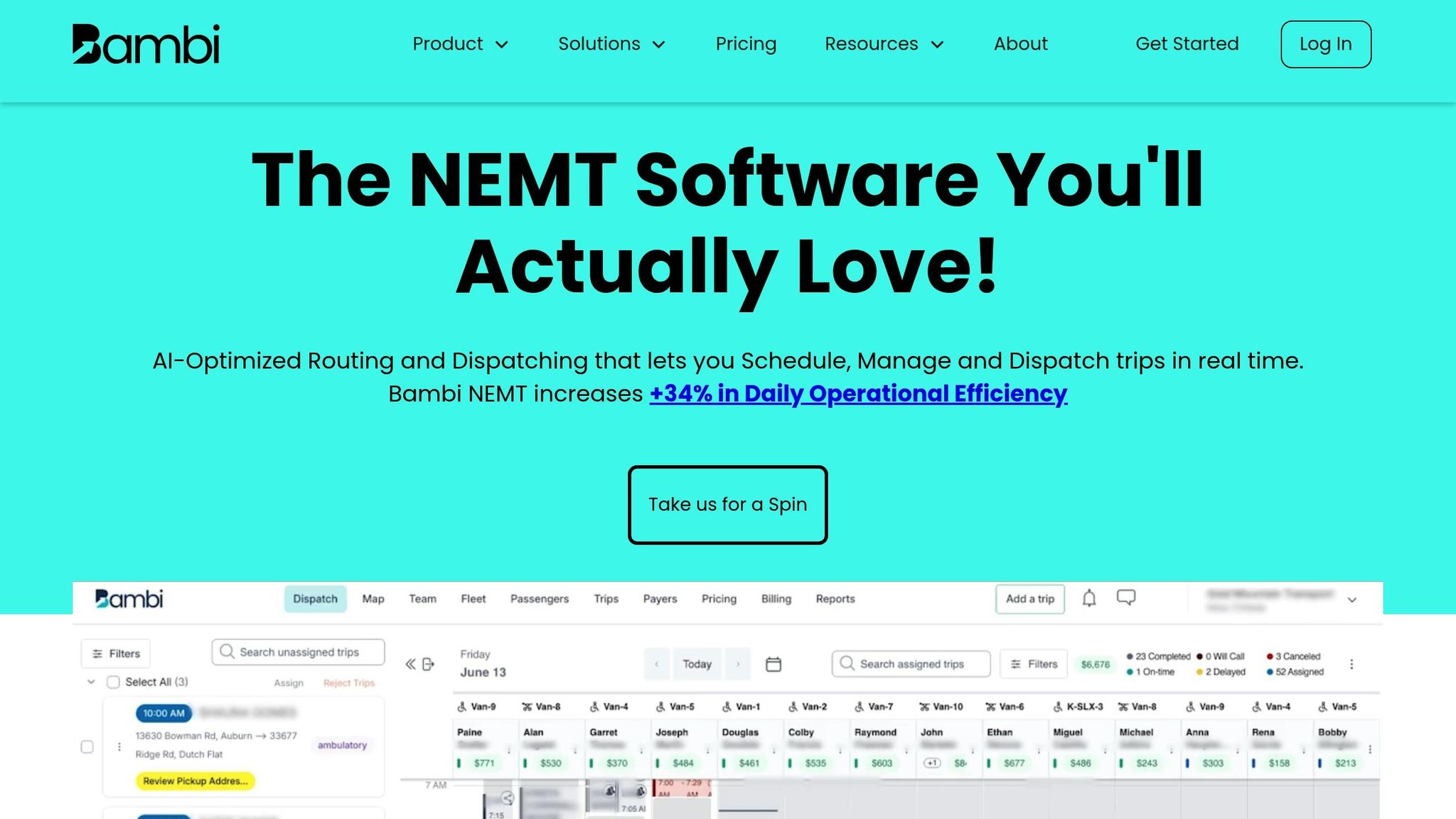
Bambi's AI-powered platform builds on these advancements, combining automated scheduling and real-time tracking into a single, user-friendly system. By handling complex calculations - like driver locations, patient needs, vehicle capacity, and traffic conditions - it creates schedules that would be nearly impossible to manage manually.
"It's the easiest and best system that we have ever worked with scheduling-wise. If I have a question, you guys are right there to answer me, and I just can't say enough good things. I just really appreciate Bambi, and I'm so glad we found you. Run Bambi Run!"
- Christina, Plan B Express Transit
The platform also ensures HIPAA compliance by automatically adhering to all necessary protocols, keeping patient information secure without adding extra administrative work. Its communication tools keep patients informed about pickup times and any changes, while drivers receive clear, real-time instructions - easing the workload on dispatchers.
At $69 per vehicle per month, Bambi’s solution offers a strong return on investment. Providers can complete more trips with the same number of drivers, maintain compliance, and keep customer satisfaction high. This efficiency not only offsets the cost but also enhances revenue and operational stability.
Expanding on how software helps alleviate operational challenges during driver shortages, let’s compare manual and automated dispatch systems. Manual dispatch relies heavily on human judgment, with each dispatcher typically managing just 8–12 vehicles. This limitation often leads to missed trips and overburdened staff. In contrast, software-driven systems can manage hundreds of vehicles at once, enabling providers to meet rising demand even with fewer drivers.
Scaling manual dispatch methods involves adding more vehicles, drivers, dispatchers, and staff. This can drive up operating costs by as much as 90% if capacity doubles, forcing providers to either reject new business or compromise on service quality.
On the other hand, software-driven dispatch revolutionizes operations. By automating tasks like real-time traffic analysis, patient requirements, vehicle capacity, and driver location tracking, it improves route efficiency by 20–30%. This allows providers to complete significantly more trips with the same number of drivers, even during staffing shortages.
The table below outlines the key differences between manual and software-driven dispatch systems, emphasizing why automation is critical during driver shortages:
| Metric | Manual Dispatch | Software-Driven Dispatch | Impact During Driver Shortages |
|---|---|---|---|
| Dispatcher Vehicle Capacity | 8–12 vehicles per dispatcher | Hundreds of vehicles | Essential when dispatcher resources are limited |
| Route Efficiency | Baseline performance | 20–30% improvement | Enables more trips with fewer drivers |
| Administrative Tasks | Fully manual | 50–70% automated | Allows staff to focus on recruiting and retaining drivers |
| Reception Staffing | Full human coverage required | 60–80% reduction | Frees up staff to address operational needs |
| Scaling Costs | 80–90% increase when capacity doubles | Minimal increase in fixed costs | Supports profitability during growth |
| Routine Inquiries | Handled manually | 80–90% automated | Reduces workload on remaining staff |
Source:
By automating up to 70% of administrative tasks, staff can shift their attention to critical areas like driver recruitment and retention. Many modern platforms also include features like real-time optimization and billing integration, making it easier to reroute vehicles instantly if a driver becomes unavailable.
This level of automation helps providers maintain service quality and expand operations efficiently, even during persistent driver shortages. It increases both revenue and service capacity while keeping fixed costs steady, proving that automation is not just a solution for shortages - it’s a pathway to sustainable growth.
For Non-Emergency Medical Transportation (NEMT) providers, advanced software solutions have become indispensable in tackling driver shortages. These tools enhance on-time performance, reduce missed appointments, and improve patient satisfaction. They also lower costs by cutting down on fuel consumption, overtime, and administrative mistakes. Beyond cost savings, these efficiencies pave the way for scalable growth.
Automation isn’t just a convenience anymore - it’s essential. The right platforms, with user-friendly interfaces and customizable workflows, can simplify training and onboarding. Features like real-time GPS tracking, automated scheduling, and integrated communication tools make it possible to maximize the efficiency of both drivers and vehicles.
These benefits are only the beginning, as new technologies continue to reshape the industry. Trends like AI-powered route optimization, predictive demand analytics, and automated compliance tracking are setting new benchmarks for operational efficiency. Unified platforms that integrate scheduling, dispatching, compliance, and communication tools are becoming the norm, making it easier for providers to manage operations even when resources are stretched thin.
Looking ahead, the evolution of technology promises even more impactful solutions for NEMT providers. Deeper AI integration will enable predictive scheduling, while automated tools will help providers stay compliant with ever-changing regulations. Advanced telematics will play a bigger role in fleet management, allowing providers to identify and address potential issues before they disrupt service.
As driver shortages and demand continue to rise, the reliance on automation and AI is expected to grow. For example, platforms like Bambi’s AI-driven software optimize dispatching, scheduling, and communication while ensuring compliance and operational efficiency.
The tools to overcome these challenges are already available. The question is whether providers will adopt them quickly enough to stay ahead of the curve and meet the demands of a rapidly changing industry. By investing in these technologies, NEMT providers can position themselves for success in the future.
NEMT software plays a key role in tackling driver shortages by making operations more efficient and streamlined. With advanced route optimization tools, it cuts down on travel time and fuel expenses, allowing fewer drivers to handle more trips without compromising service quality.
Features like real-time tracking and traffic updates give dispatchers the ability to monitor routes, adjust schedules as needed, and reduce delays. This ensures timely pickups and drop-offs, keeping everything running smoothly.
On top of that, the software simplifies communication between dispatchers and drivers while automating tasks such as scheduling and compliance checks. This means providers can maintain dependable service levels even with a smaller driver pool, ensuring patients get the transportation they need while making the most of the available fleet.
Automated dispatch systems have the potential to cut operational costs by 20–35% in just the first year. These savings primarily stem from smarter route planning, lower fuel consumption, and less idle time.
In addition to cost savings, these systems simplify scheduling and fine-tune routes, which lightens the load on drivers and boosts overall efficiency. This can be a game-changer for providers dealing with driver shortages while still delivering reliable, high-quality service.
NEMT software is a game-changer when it comes to tackling driver burnout and improving retention, especially during staffing shortages. By streamlining scheduling and route planning, it cuts down on unnecessary travel and ensures drivers have manageable workloads, making their day-to-day tasks more efficient and less stressful.
On top of that, these tools enhance communication by keeping drivers connected and supported throughout their shifts. They can even help spot early signs of burnout, allowing for proactive measures to address issues before they escalate. This creates a healthier, more supportive work environment, which is crucial for keeping drivers onboard during tough times.

Keeping your Non-Emergency Medical Transportation (NEMT) vehicles in top condition is non-negotiable. Reliable transportation ensures patients get the care they need while avoiding costly repairs and downtime. Here’s a quick rundown of five essential maintenance tips to keep your fleet safe, efficient, and compliant:
Preventive maintenance saves money, ensures safety, and avoids disruptions. Stick to a maintenance schedule to extend the life of your fleet, meet regulatory standards, and maintain trust with your passengers.
Tires are your vehicle's only connection to the road, making them one of the most important safety features. Worn or damaged tires can lead to a loss of control, increasing the risk of accidents - a serious concern when you're transporting patients who rely on your service.
Begin by inspecting your tires for any visible damage, such as cuts, abrasions, exposed steel, tread separation, or missing chunks. Keep an eye out for uneven wear patterns, which could point to alignment or suspension issues. For example, wear on one side of the tire, shoulder step wear, or "river wear" often signals problems that need addressing.
Run your hand along the tire's surface to feel for feathering or cupping. These irregularities also suggest alignment or suspension troubles. Left unchecked, uneven wear can reduce tire lifespan and negatively impact handling.
The Department of Transportation has specific minimum tread depth requirements for commercial vehicles. Front tires must have at least 4/32 of an inch of tread depth, while all other tires need a minimum of 2/32 of an inch. To measure this, use a tread gauge or try the penny test to ensure your tires meet the 2/32-inch minimum.
For NEMT (Non-Emergency Medical Transportation) vehicles, tire pressure should be checked weekly - or at least every two weeks. These vehicles endure more wear and tear than regular passenger cars, and tires can lose about 1 PSI of pressure each month under normal conditions.
Always check tire pressure when the tires are cold, as this ensures more accurate readings. A reliable tire pressure gauge is essential. Digital options like the Accutire MS-4021B Digital Tire Pressure Gauge ($14) are easy to use and precise, while the Milton S-921 Pencil Tire Pressure Gauge ($8) is a compact, durable choice for quick checks.
Roughly 28% of light vehicles on the road have at least one underinflated tire. Running on underinflated tires causes wear on the outer treads, generates excessive heat, and can lead to rapid wear, blowouts, and loss of control. On the other hand, overinflation wears out the center of the tire more quickly.
If your vehicle pulls to one side or experiences excessive bouncing, it could indicate tire or suspension problems that need immediate attention.
Paying close attention to your tires not only ensures safety but also sets the stage for other critical maintenance tasks, like timely oil changes.
Keeping your NEMT fleet running smoothly and safely starts with timely oil changes. Your vehicle's engine relies on clean oil to operate efficiently, so sticking to the manufacturer's recommended oil change schedule is key. Forget the outdated "3,000-mile rule" - modern vehicles often go 5,000 to 15,000 miles between oil changes.
For the most accurate oil change intervals, consult your vehicle's owner's manual. Manufacturers design engines with specific needs, so a one-size-fits-all rule doesn’t work. Check the manual, note the recommended intervals, and add them to your maintenance calendar.
"Check your number today and save time, money, and the environment!" - CalRecycle
Oil changes aren’t just routine - they’re essential for your fleet’s performance. Fresh oil reduces friction, cools engine components, and clears out dirt and sludge that can harm your engine over time. For NEMT vehicles transporting patients, engine reliability is non-negotiable. It’s about more than avoiding breakdowns; it’s about ensuring safety and earning trust.
Plus, regular oil changes can boost fuel efficiency by up to 2% and help vehicles last beyond 200,000 miles. That’s a major win for fleet longevity and cost savings.
Synthetic oil offers several advantages: it lasts longer, performs better in extreme temperatures, improves fuel economy, and provides extra protection for turbocharged engines. While it’s more expensive upfront, the extended intervals between changes can offset the cost. Conventional oil typically needs replacing every 5,000–7,000 miles, while synthetic can last 10,000–15,000 miles.
Don’t wait for your scheduled oil change if you notice warning signs. Be alert for dark, dirty oil, engine knocking, reduced fuel efficiency, or unusual exhaust smoke. Other red flags include engine stalling, trouble shifting gears, or rattling noises - these may indicate dangerously low oil levels that need immediate attention.
Regular oil changes not only protect your engine but also help maintain your warranty and increase your vehicle’s resale value. For NEMT operators balancing fleet costs and planning replacements, these benefits are worth noting.
With your engine in top shape, it’s time to ensure your braking system is up to par. Next, inspect and service your brakes to prioritize passenger safety.
The brake system is one of the most essential safety components in your NEMT vehicle. Regular inspections and timely servicing are critical - not just for the safety of your passengers but also for keeping your operations running smoothly.
"When you take care of your brakes, they'll take care of you when you need them most." - Les Schwab
Make daily brake inspections a part of your routine. Before each shift, perform a quick brake test to confirm they’re working properly. Weekly inspections should go a step further, helping you catch potential problems before they turn into costly repairs.
Encourage drivers to report any unusual sensations or sounds when braking, such as reduced responsiveness or odd noises. This proactive approach helps identify problems early, ensuring they’re addressed by professionals before they worsen.
Certain warning signs indicate it’s time to get your brakes checked by a professional. Pay attention to:
Recognizing these symptoms early can save you from more extensive repairs and ensure your fleet remains safe and dependable.
Daily checks are great for spotting early issues, but professional servicing is essential to keep the system in top condition. Trained technicians can thoroughly examine brake pads, rotors, fluid levels, and the hydraulic system - areas that may not show problems during routine checks.
"Your car's brake system is crucial to your safety. Recognizing the signs of potential problems can save you from costly repairs and ensure your safety on the road." - Auffenberg Chevrolet Buick GMC
For NEMT operators, well-maintained brakes are non-negotiable. They not only protect your passengers but also uphold your business’s reputation. If you notice any unusual sounds, vibrations, or performance issues, don’t delay - get the brakes inspected immediately . Spending a little on preventive maintenance now can save you from the serious risks and costs of brake failure during patient transport. Once your brakes are in order, you can shift your focus to providing a safe and comfortable experience for your passengers.
Keeping NEMT vehicles clean and sanitized isn’t just about appearances - it’s a critical safety measure. Many passengers have weakened immune systems, making hygiene a top priority.
Start every shift with a detailed cleaning routine. Pay close attention to areas frequently touched by passengers, such as door handles, seat belts, armrests, and wheelchair access points. These spots can easily become breeding grounds for germs. Between trips - especially after transporting someone who appears ill - take a moment to disinfect these surfaces using an appropriate cleaning product.
The Centers for Disease Control and Prevention (CDC) highlights the importance of regular cleaning, stating:
"Current evidence suggests that COVID-19 virus may remain viable for hours to days on surfaces made from a variety of materials."
Once the daily cleaning is complete, ensure you’re using products that effectively clean, sanitize, and disinfect.
For NEMT vehicles, select cleaning products that meet health safety standards . Look for EPA-registered disinfectants proven to be effective against SARS-CoV-2 on hard, non-porous surfaces. Alcohol-based solutions containing at least 70% alcohol work well for most surfaces, including electronics. For tougher cleaning tasks, diluted household bleach solutions - when used according to manufacturer instructions - can be highly effective. Products commonly used in healthcare settings are often a reliable choice.
Some NEMT providers go beyond daily cleaning with robust sanitization protocols. For instance, PARS equips drivers with sanitizing wipes and detailed cleaning instructions for use after each trip. Their professional cleaning teams follow a structured process: they wear personal protective equipment (PPE), use EPA-approved disinfectants, remove all trash, vacuum using HEPA filters, thoroughly clean all surfaces, and even run the vehicle’s heater at full blast for 30 minutes to kill any lingering pathogens.
Always wear disposable gloves during cleaning. Afterward, dispose of gloves properly and wash your hands with soap and water for at least 20 seconds. If soap and water aren’t available, use a hand sanitizer with at least 60% alcohol. For reusable cleaning cloths or uniforms, wash them in the hottest water setting that’s safe for the fabric, and remember to wash your hands after handling them to avoid spreading germs.
Soft surfaces like seats and carpets require cleaners designed for porous materials. For electronics - such as GPS devices, communication tools, or wheelchair lifts - stick to the manufacturer’s cleaning guidelines. Alcohol-based wipes or sprays with at least 70% alcohol are generally safe for most electronic components, but it’s always smart to double-check to avoid potential damage.
Just as routine maintenance like tire checks and oil changes keeps vehicles running smoothly, a consistent cleaning regimen protects passenger health. A spotless, sanitized vehicle reflects your dedication to safety and professionalism, earning trust and confidence in your NEMT service.
Having the right safety equipment on hand can make all the difference in an emergency. For NEMT vehicles, this isn't just a good practice - it's a legal requirement. Staying prepared with functional safety gear ensures that minor incidents don’t spiral into major problems, building on the other preventive measures we’ve already covered.
The Department of Transportation (DOT) requires all trucks, truck tractors, and buses to carry fire extinguishers. The type and rating depend on what’s being transported. For non-hazardous materials, you’ll need either one fire extinguisher rated 5 B:C or greater or two extinguishers rated 4 B:C or greater. For hazardous materials, the requirement increases to 10 B:C or greater.
To keep your fire extinguishers ready for action:
First-aid kits are only useful if the supplies are effective. Over time, items can expire or get used up, so it’s important to stay on top of their condition. Conduct monthly inventory checks and replace anything that’s expired or missing right away.
Here’s a quick breakdown of inspection and servicing guidelines for your safety equipment:
| Equipment Type | Inspection Frequency | Replacement/Service |
|---|---|---|
| Fire Extinguishers | Monthly visual inspections | Annual maintenance; service dry chemical extinguishers every 6 years and refill after use |
| First-Aid Supplies | Monthly inventory checks | Replace expired or used items immediately |
Keeping safety gear in top shape is just as critical as regular vehicle maintenance. It’s a key step in ensuring the safety of your passengers and the reliability of your fleet.
Choosing between preventive and reactive maintenance has a direct effect on your fleet's performance and overall efficiency. While reactive maintenance might seem less expensive at first glance, it often leads to unexpected costs and operational risks. Understanding the differences between these approaches can help you make informed decisions that benefit your fleet in the long run.
Preventive maintenance focuses on addressing potential issues before they become problems. This involves regular, scheduled upkeep such as changing oil before it deteriorates, replacing brake pads before they wear down, and inspecting tires to catch issues early. While this method requires consistent investment, it offers predictable costs and ensures reliable performance.
Reactive maintenance, by contrast, waits for something to break before taking action. While this might reduce short-term expenses, it often leads to unplanned downtime, higher repair costs, and increased risks to both operations and passenger safety.
Preventive maintenance ensures compliance with safety standards, reducing the risk of fines and penalties. It also safeguards critical safety features like brakes, lights, and emergency equipment, protecting both passengers and drivers. Many states require daily and weekly checklists to document compliance.
Failing to meet these standards can lead to fines, license suspensions, and even lost contracts. Non-compliance can also increase liability in the event of an accident, resulting in higher insurance premiums and potential damage to your reputation.
| Aspect | Preventive Maintenance | Reactive Maintenance |
|---|---|---|
| Cost Structure | Predictable, lower long-term costs | Higher costs due to emergency repairs |
| Vehicle Downtime | Minimal, scheduled during off-peak hours | Unplanned, extended downtime during peak hours |
| Safety Record | Prevents failures, improving safety | Failures may pose risks to passengers |
| Regulatory Compliance | Easier to meet inspection and documentation requirements | Higher risk of penalties for missed inspections |
| Fleet Lifespan | Prolonged through regular care | Shortened due to neglect |
| Service Reliability | Fewer disruptions, higher on-time performance | Frequent breakdowns, leading to missed trips |
The benefits of preventive maintenance are clear when you consider the broader impact. A single breakdown doesn't just result in repair costs - it can also lead to missed appointments, dissatisfied passengers, compliance issues, and harm to your company's reputation.
By scheduling maintenance during off-peak hours, preventive strategies minimize downtime and keep costs manageable. Reactive maintenance, on the other hand, often results in breakdowns at inconvenient times, straining resources and disrupting operations.
Incorporating preventive practices alongside regular inspections and cleaning ensures your fleet operates safely and efficiently. Modern tools like fleet management software simplify this process by tracking maintenance schedules, sending reminders, and identifying patterns that could indicate larger problems. These technologies take the guesswork out of fleet management, helping you make the most of your maintenance budget.
Keeping your NEMT fleet in top condition starts with focusing on the basics. Routine tire checks, oil changes, brake inspections, thorough cleaning, and safety equipment assessments are key to keeping your vehicles running smoothly and your passengers safe. These simple yet essential steps work together to ensure your fleet is always ready to hit the road.
When comparing preventive maintenance to reactive repairs, it’s clear that sticking to a scheduled maintenance plan saves money and prevents service interruptions. Tackling potential problems early avoids costly breakdowns that not only hurt your budget but can also damage your reputation. A proactive approach like this reduces unexpected setbacks and strengthens your overall fleet care strategy.
Maintenance isn’t just about mechanics - it also involves keeping vehicles sanitized and ensuring safety equipment is in working order. This attention to detail highlights your commitment to passenger care and helps you stay compliant with regulations. It’s the kind of diligence that builds trust with both healthcare providers and patients who rely on your services.
Fleet management software can make this process even easier by tracking service schedules, monitoring performance, and flagging issues before they escalate. By leveraging these tools, you can simplify maintenance tracking and ensure nothing gets overlooked. Technology becomes a valuable partner in supporting every aspect of your maintenance plan, helping you maintain operational efficiency.
For NEMT providers aiming to improve their fleet management and overall operations, the Bambi NEMT blog is a great resource. It offers insights on industry best practices, technology solutions, and strategies for business growth. From compliance tips to driver training advice, their content is designed to help you run a more efficient and profitable operation. Dive deeper into these topics by visiting the Bambi NEMT blog.
Staying on top of maintenance not only keeps your fleet performing at its best but also strengthens trust with the healthcare providers and patients who depend on you.
For NEMT vehicles, a thorough maintenance check is usually advised every 12 months or 12,000 miles - whichever comes first. That said, the exact timing can depend on factors like the vehicle's age, how frequently it's used, and the manufacturer's guidelines.
Sticking to regular inspections is key to keeping your fleet safe, dependable, and in line with regulations. Be sure to review your vehicle’s maintenance manual and factor in the unique demands of your NEMT operations to set up the most effective schedule for detailed check-ups.
NEMT vehicles are required to adhere to both federal and state safety regulations to guarantee safe and dependable transportation for passengers. Routine inspections, usually conducted every 3,000 to 5,000 miles, are crucial for evaluating brakes, tires, and overall safety systems. These vehicles must also meet FMVSS (Federal Motor Vehicle Safety Standards) to ensure crash safety and comply with ADA (Americans with Disabilities Act) guidelines to provide accessibility for all passengers.
Keeping up with regular maintenance and inspections not only ensures your fleet remains compliant but also enhances its longevity while prioritizing the safety of those you transport.
Fleet management software makes maintaining NEMT vehicles much easier by automating critical tasks such as scheduling preventative maintenance, monitoring vehicle health, and managing repairs. This approach helps reduce unexpected breakdowns, cuts down on downtime, and lowers long-term maintenance expenses.
When selecting the right software, it's important to look for features like automated maintenance alerts, real-time vehicle tracking, fuel usage monitoring, and compliance management. These tools not only improve vehicle performance and safety but also ensure operations run smoothly while meeting regulatory standards.
