

NEMT apps are changing the game for medical transportation by fixing communication gaps between drivers and riders. Here's what they do:
Modern NEMT apps are packed with tools that bridge the gap between drivers and riders, ensuring smooth and efficient communication throughout the journey. Here’s a look at some standout features that make a difference in NEMT services.
Gone are the days of relying solely on phone calls for ride updates. Automated alerts now provide passengers with real-time ride details, cutting down on traditional communication hiccups. Once a driver is assigned, passengers receive key information like the driver’s name, vehicle details, and estimated pickup time. If there’s a delay, the system sends updates automatically.
These notifications go beyond just pickup times. For example, as the driver approaches the pickup location, passengers get an alert, giving them enough time to get ready. This is especially helpful for individuals who may need a few extra moments to gather their belongings or reach the pickup point.
Direct messaging creates a quick and reliable way for drivers and riders to communicate, bypassing the common issues of phone-based coordination. Whether it’s clarifying directions, sharing updates, or addressing specific needs, this feature ensures both parties stay on the same page.
For example, riders can use messaging to request a specific drop-off location, like a particular hospital entrance, or to ask for extra time during pickup. On the other hand, drivers can notify passengers about unexpected delays or ask for help locating an address.
"Our app lets drivers communicate with dispatchers with just a single push on their phones." - NEMT Cloud Dispatch
When NEMT Cloud Dispatch rolled out Version 2.5 of their driver app in June 2025, they introduced in-app chat functionality. This feature makes it easier for drivers to share updates about route changes, delays, or other challenges. Combined with automated alerts, this direct communication ensures that everyone stays informed.
GPS tracking has become a cornerstone of modern NEMT services, offering real-time visibility into vehicle locations and trip progress. This transparency helps passengers feel more confident and reduces the uncertainty that often accompanies medical transportation.
By integrating GPS with dispatch software, passengers receive automated updates about their trip status and estimated arrival times. They can even track the driver’s location on a map - similar to rideshare apps - so they know exactly when to expect their ride. For caregivers or family members, this feature provides peace of mind by allowing them to monitor the journey in real time.
"Real-time GPS tracking is a game-changer for NEMT services, improving efficiency, safety, and overall service quality." - Tom Malan, NEMT Cloud Dispatch Marketing Director
Beyond convenience, GPS tracking enhances safety by enabling rapid response in emergencies or vehicle breakdowns. It also helps drivers navigate traffic or road closures, ensuring passengers are kept informed about potential delays or detours. This level of communication not only minimizes wait times but also boosts overall satisfaction with the service.
When NEMT apps streamline communication between drivers and riders, they can dramatically improve operations. Better information flow impacts every aspect of service, from cutting down on missed appointments to freeing up staff for more important tasks.
Poor communication can throw even the best schedules into chaos, causing delays and missed rides that disrupt operations for both healthcare providers and transportation companies.
Real-time communication steps in to solve these problems by keeping everyone in the loop. For example, if a driver encounters traffic, they can notify passengers immediately. This allows riders to adjust their plans and inform their healthcare providers of any delays. GPS-enabled route optimization also helps drivers avoid traffic jams and construction zones, ensuring they take the fastest route. With automated notifications, passengers get accurate arrival estimates based on real-time road conditions. These updates create a smoother, more responsive experience for everyone involved.
Beyond reducing delays, better communication also makes it easier to provide personalized service. Through patient profiles stored in the app, drivers can prepare for passengers with specific needs, such as mobility assistance, wheelchair accessibility, or extra time for boarding and drop-off. One regional NEMT provider reported a 50% boost in customer satisfaction within a year of using a mobile app designed to improve communication and tailor services.
Advanced communication tools also help avoid last-minute surprises. For instance, if a rider needs help getting from their door to the vehicle, the driver can plan ahead and bring the necessary equipment. Riders can also share specific preferences, like which hospital entrance they need to be dropped off at, ensuring the service is more tailored to their requirements. Robert Williams, IT Supervisor at Golden Empire Transit in Bakersfield, CA, noted that their new NEMT service offers a seamless solution for people with disabilities, enabling all operations to run through a single software system.
This level of customization is especially valuable for patients with regular medical appointments, ensuring consistent and reliable service every time.
Traditional NEMT operations often rely heavily on phone calls between dispatchers, drivers, and passengers. Overloaded phone systems and missed calls can lead to inefficiencies and frustration.
Automated alerts help solve this by providing timely updates to passengers. Smart scheduling tools with automated reminders have been shown to reduce no-show rates by 35–50%, thanks to better communication and appointment management. These systems send confirmation messages, pickup reminders, and real-time updates without requiring human intervention, allowing dispatchers to focus on more complex tasks.
When passengers can track their rides and receive updates about delays or changes, the number of incoming calls drops significantly. For example, one independent NEMT provider in a rural area improved their on-time performance from 73% to 91% in just three months, while also reducing missed appointments by 31%. Similarly, a regional healthcare network cut no-show rates from 28% to 12% within six months of implementing automated reminders and real-time tracking, resulting in 2,400 additional completed trips annually.
When NEMT apps manage sensitive patient data and facilitate communication between drivers and riders, they must adhere to strict privacy and safety standards. These measures not only protect passengers and providers but also ensure compliance with healthcare industry regulations. By prioritizing these requirements, NEMT technology enhances trust, safeguards operations, and streamlines processes.
Encryption plays a key role in securing messages both during storage and transit. Cloud-based dispatch systems safeguard sensitive appointment details and pickup locations with multiple layers of security, access controls, and routine audits. These systems determine who can access specific information, ensuring patient privacy is maintained at every step.
When selecting NEMT software, providers should confirm that the platform offers end-to-end encryption and undergoes regular security evaluations. Interestingly, over 70% of NEMT providers using cloud-based dispatch tools report noticeable improvements in operational efficiency, and 85% see reduced costs within the first year of adoption.
HIPAA compliance is a must for NEMT providers, as they handle sensitive patient information during every trip. Meeting these standards not only ensures legal protection but also strengthens trust with healthcare partners by reassuring patients that their medical details are secure.
NEMT software offers several features to support HIPAA compliance:
However, as Momentm Technologies points out:
"While NEMT software encourages the establishment of a secure data network, it in-and-of itself is not responsible for addressing the total list of HIPAA compliant regulations."
To fully comply, NEMT providers must implement specific policies and procedures alongside their software. Additionally, carrying business and cyber liability insurance helps protect against potential lawsuits stemming from data breaches.
Beyond compliance, rigorous safety measures enhance both the ride experience and data security. Modern NEMT apps go beyond basic communication, incorporating features that ensure secure interactions and reliable service. Identity verification tools allow drivers to confirm they are picking up the correct passenger using digital signatures, patient information scans, and ID verification.
For wheelchair-accessible trips, apps include safety checklists to verify wheelchair security, proper ramp operation, and essential vehicle functions. As NEMT Platform explains:
"The app includes safety checklists for wheelchair trips, ensuring passenger safety. Drivers verify wheelchairs are secure, ramps are lifted and essential vehicle checks (brakes, headlights) are completed daily."
Emergency SOS features enable drivers to request immediate assistance if safety issues arise during a trip. GPS tracking provides real-time updates on vehicle locations, while digital signatures confirm trip completion and simplify billing processes.
These safety protocols create a detailed record of each ride - from initial pickup verification to final drop-off confirmation. This comprehensive documentation helps resolve disputes, supports insurance claims, and demonstrates compliance with safety regulations to healthcare partners and regulatory authorities.
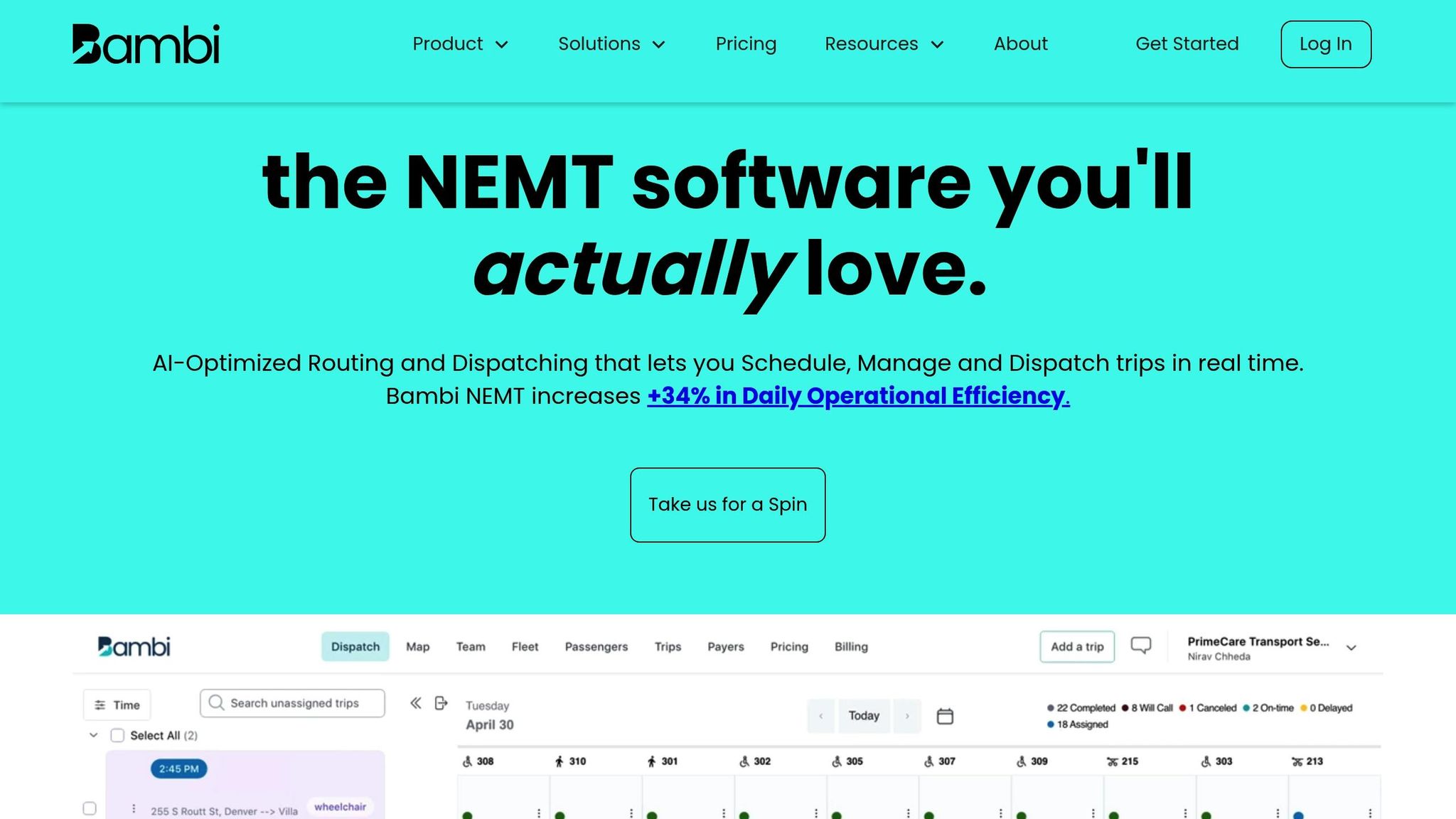
Bambi takes the challenges of Non-Emergency Medical Transportation (NEMT) communication and transforms them into streamlined, real-time solutions. By replacing outdated processes with automation and instant connectivity, Bambi enhances coordination between drivers, riders, and dispatchers.
Bambi brings everything together with tools designed to keep everyone on the same page. Real-time updates, SMS and app alerts, and an integrated driver-dispatch chat ensure delays are reported instantly. GPS tracking paired with live ETA updates keeps dispatchers informed and riders reassured about their trips.
On top of that, Bambi’s AI-driven dispatching system evaluates trip details to recommend the best driver for the job. Once assigned, drivers receive instant push notifications. The platform also includes an online booking portal, allowing healthcare facilities and patients to schedule rides effortlessly while maintaining HIPAA-compliant security for sensitive information.
The impact of these tools is clear in the results reported by NEMT providers. Many have seen significant gains in efficiency and communication. Julian Ssemalulu of Bellshan Homecare shared:
"How much time it saves me? It's like a day's worth of time. And sometimes once I make the dispatch the system just does the work, so I don't have to sit on the computer all day trying to see where the driver is. I know my drivers and I know my customers so once I make the dispatch that night I'm good for the whole day."
Michael from a Hospital & Health Care facility highlighted how Bambi enhances profitability:
"Bambi is increasing their profitability because the real time dispatch screen allows them to see reality and react and anticipate."
Other providers have echoed these experiences, noting how tasks that once took hours can now be completed in a fraction of the time. For example, one provider reduced a three-hour process to just 30 minutes, while Jax Nemt reported booking trips in under two minutes. These improvements have collectively led to a 34% increase in daily operational efficiency, cutting down administrative workloads and delivering better service to both providers and patients.
Mobile apps have reshaped how NEMT drivers and riders connect. As the industry increasingly leans into digital solutions, providers who embrace these tools are setting themselves up for growth and better patient care.
The shift to digital communication tools brings clear benefits. Mobile apps can take over routine tasks like scheduling and communication, provide real-time vehicle tracking, and cut down on administrative work.
Better communication means happier customers. Features like automated ride reminders, live updates, and direct messaging with drivers improve the overall experience for patients. This can lead to higher appointment attendance rates and stronger partnerships with healthcare facilities.
On top of that, smarter routing, fewer missed rides, and reduced admin costs can lower transportation expenses by 30–70%, all while improving access to care for millions.
Digital platforms also make it easier to stay compliant with regulations. They keep accurate, up-to-date records automatically, reducing the risk of errors and ensuring HIPAA compliance for sensitive patient information.
To modernize your communication processes, start by identifying areas where manual efforts slow things down. Then, prioritize digital solutions that address those challenges.
NEMT apps ensure sensitive patient information stays secure by following HIPAA regulations and employing robust security practices. These measures include encryption, secure data transmission, and restricting access strictly to authorized personnel.
They also rely on administrative, physical, and technical safeguards to block unauthorized access. For instance, patient data is encrypted during communication and stored securely, maintaining both privacy and compliance standards.
NEMT apps make communication smoother by offering real-time updates and automated notifications for both drivers and riders. This keeps everyone in the loop about key trip details - like pick-up times, delays, or route changes - cutting down on confusion and making the service more dependable.
On top of that, these apps improve efficiency with tools like automated scheduling, GPS tracking, and route optimization. These features help drivers navigate more effectively, reducing delays and ensuring they stay on track. By keeping everything coordinated, NEMT apps provide a more reliable and timely service for riders who depend on medical transportation.
To improve communication between drivers and riders, choose an NEMT app that offers real-time trip tracking, instant messaging, and automated alerts. These tools keep everyone updated on trip progress and any schedule changes.
Additional helpful features include navigation assistance, an easy-to-read display of trip details, and simple scheduling options. When combined, these elements help minimize confusion, enhance coordination, and make the transportation process smoother for everyone involved.

Tracking the right Key Performance Indicators (KPIs) is essential for running a successful Non-Emergency Medical Transportation (NEMT) business. These metrics provide insights into efficiency, client satisfaction, and financial stability. Here are the 10 KPIs that matter most:
On-time performance measures how well NEMT (Non-Emergency Medical Transportation) services handle timely pick-ups and drop-offs. The industry standard often requires vehicles to arrive at least 15 minutes before a patient’s appointment.
"On-time performance is a key performance index (KPI) that determines the efficiency of the transportation service." – RouteGenie
Staying punctual isn’t just about keeping appointments; it’s about ensuring the entire system runs smoothly. When routes are on time, drivers stay on schedule, vehicles are used more effectively, and more trips can be completed. On the flip side, delays can throw the whole operation into chaos.
Digital tools have made a big difference here. Automated scheduling and real-time data have led to a 30% increase in productivity and improved on-time performance by more than 10%. By automating tasks like route planning and driver assignments, companies minimize human error and eliminate the guesswork that often causes delays.
Timeliness plays a critical role in patient care. Patients depend on these services to make it to life-saving treatments and essential medical appointments.
"Consistent on-time performance builds trust between patients and transportation providers." – NEMT Cloud Dispatch
When transportation is reliable, patients feel reassured, and that trust translates into stronger relationships and better financial stability for the provider.
Punctuality isn’t just good for patients - it’s good for business. Late arrivals can lead to canceled trips, penalties, and lost revenue . On the other hand, consistently delivering patients on time builds a solid reputation, which in turn attracts more contracts and referrals.
Research shows that companies offering better service experiences can boost revenue by 4% to 8%. Plus, 85% of customers are willing to go out of their way to work with businesses known for exceptional service.
Meeting regulatory requirements is another reason on-time performance matters. Many state Medicaid programs and managed care organizations closely monitor this KPI as part of their oversight process.
"Consistent on-time performance is, therefore, essential for maintaining patients' health and managing their medical conditions effectively." – NEMT Cloud Dispatch
Keeping precise time records is also crucial for audit purposes. These records not only protect your business in case of disputes but also help secure contracts with healthcare payers. On-time performance metrics feed into broader KPI dashboards, which are essential for tracking and improving operations over time.
Trip completion rate refers to the percentage of trips successfully completed as planned. It serves as a critical metric for identifying and addressing operational challenges.
Think of trip completion rate as a litmus test for how well an operation runs. Just as punctuality reflects service quality, a high trip completion rate signals smooth coordination across scheduling, routing, and driver management. When completion rates are consistently high, it suggests the system is functioning efficiently. On the flip side, a decline in completion rates often points to underlying issues that demand immediate attention. Tracking this metric allows providers to spot and address bottlenecks, whether through adjusting staffing levels, tweaking schedules during peak times, or re-routing problematic areas.
Additionally, integrating real-time data across operational systems improves fleet visibility and minimizes disruptions, directly reducing the number of incomplete trips.
For patients relying on Non-Emergency Medical Transportation (NEMT) services, incomplete trips aren’t just an inconvenience - they can have serious consequences. Missed rides can lead to skipped medical appointments or treatments, undermining trust in the service. Leveraging real-time feedback systems allows providers to address issues promptly, helping to maintain reliability and build patient confidence.
Incomplete trips don’t just affect patients - they’re costly. Wasted resources, penalties, and missed appointments collectively contribute to the $150 billion annual loss in the U.S. healthcare sector. By using data analytics to optimize the balance between company-operated vehicles and rideshare services, providers can enhance efficiency and manage expenses. Monitoring trip completion rates also supports cost-control strategies and ensures compliance with contractual obligations.
Most industry standards set completion rate benchmarks between 95% and 99%. While striving for perfection is admirable, expecting a 100% completion rate can unfairly penalize even top-performing providers. Instead, modern contract enforcement now includes approaches like Corrective Action Plans (CAPs) alongside traditional penalties to encourage performance improvement.
Furthermore, achieving NEMTAC accreditation showcases a provider's dedication to quality and compliance. Some states, such as Mississippi, even accept this accreditation as an alternative to state licensing. By incorporating trip completion monitoring into broader quality assurance frameworks, providers can align with regulatory expectations while fine-tuning their operational strategies.
Understanding and managing no-show and cancellation rates is critical for improving the performance of Non-Emergency Medical Transportation (NEMT) services. These metrics measure how often trips are missed or canceled, offering a clear picture of service reliability and operational hurdles that can greatly influence the success of your NEMT business.
High no-show and cancellation rates waste valuable resources like fuel, driver time, and scheduling efforts. On average, NEMT providers report no-show and cancellation rates between 15–30%, significantly higher than the 5–8% seen in general transportation services.
Patterns in cancellations - such as spikes on Monday mornings, Friday afternoons, in areas with limited transportation options, or during extreme weather - highlight operational weak spots. Poor communication accounts for 40% of missed appointments. When dispatchers lack real-time tools or when patients are unclear about pickup details, confusion can disrupt schedules. Recognizing these patterns allows providers to implement targeted strategies to minimize disruptions.
Now, let’s explore how these inefficiencies impact financial performance.
No-shows and cancellations don’t just waste time - they also hit the bottom line hard. Each canceled trip costs providers between $35 and $75 in direct expenses. For instance, a company completing 1,000 trips per month with a 20% cancellation rate could lose $7,000 to $15,000 every month.
Beyond financial losses, frequent cancellations can lead to staff burnout and high turnover rates among drivers and dispatchers. Unreliable service may also damage relationships with healthcare providers, putting crucial partnerships at risk.
Some providers have successfully tackled this issue. MedTransport Solutions, for example, reduced cancellations from 28% to 12% in just six months. Their approach included automated trip confirmations, same-day reminders, risk alerts for problematic trips, and a patient portal for easy rescheduling.
But the impact doesn’t stop at finances - it also affects patient satisfaction.
Missed rides can have serious consequences for patient care. Transportation issues account for 25–30% of missed medical appointments, delaying treatments and worsening health conditions in many cases. Across the healthcare industry, no-shows cost over $150 billion annually.
Appointment reliability is closely tied to patient retention. Patients who miss one appointment are nearly 70% more likely to stop scheduling altogether, compared to a 19% attrition rate for those who consistently attend. Communication plays a pivotal role here - 83% of patients express a desire for reminders about appointments, prescriptions, and follow-ups. Tools like SMS and voice reminders can reduce no-show rates by 20–30%, while advanced scheduling systems can cut them by 35–50%.
Keeping no-show and cancellation rates under control is also essential for meeting regulatory and contractual obligations. Many NEMT contracts require providers to meet minimum trip completion standards, and high cancellation rates can jeopardize these agreements. Poor communication contributes to up to 31.5% of patient no-shows, emphasizing the importance of clear and consistent messaging. Setting up well-defined no-show policies and ensuring patients are aware of them is crucial - especially since 33% of patients admit they missed appointments simply because they forgot.
Tracking vehicle utilization is a key factor in managing operational costs and ensuring reliable service for customers. This metric measures how effectively your NEMT fleet is being used, offering insights into whether your vehicles are being maximized or sitting idle - both of which impact expenses and service delivery.
To calculate vehicle utilization, divide the actual fleet mileage by its maximum mileage capacity. This calculation can pinpoint excess capacity, signaling when to reallocate vehicles or reduce fleet size to cut costs. Idle vehicles still incur expenses like insurance, registration fees, and depreciation, making efficient use of your fleet essential.
Depreciation, one of the largest fleet management costs, occurs whether vehicles are in use or not. Strategies like advanced scheduling, routine maintenance, real-time tracking, and optimized routing can help improve vehicle productivity and reduce unnecessary expenses.
Vehicle utilization has a direct impact on financial performance. Having the right number of vehicles in your fleet - neither too few nor too many - is crucial. An oversized fleet leads to unnecessary fixed costs, while an undersized one can result in missed revenue opportunities. Establishing clear utilization benchmarks allows operators to weigh the costs of vehicle operation against alternative options, enabling smarter decisions about deployment and route planning.
Accurate data collection is key to managing these benchmarks. By tracking metrics such as miles driven, hours in service, days used, number of trips completed, fuel usage, and repair history, you can identify underperforming assets and decide whether to reallocate, retire, or retain them. For instance, a vehicle with consistently low utilization might be better suited for a different service area or indicate that your fleet size exceeds demand in certain regions. Proper utilization also ensures better service availability, enhancing customer satisfaction.
Reliable vehicle availability is critical for providing dependable service to patients. Underutilization can point to inefficiencies in scheduling or routing, leading to delays and longer wait times. On the other hand, overutilization can stretch resources too thin, potentially lowering service quality. According to Forbes, 85% of customers are willing to go out of their way for better service. In the NEMT industry, this translates to timely and dependable transportation being a significant advantage. Companies that focus on customer service often see revenue growth between 4% and 8% above market averages.
Real-time GPS tracking supports this goal by allowing you to monitor fleet movements and quickly address operational challenges. When delays or breakdowns occur, effective utilization ensures backup vehicles are available, maintaining consistent service for your customers.
Many NEMT contracts include specific requirements for service availability and response times, which rely on proper vehicle utilization. Maintaining optimal utilization rates ensures efficient operations and helps you meet these contractual obligations. Detailed utilization records are essential for demonstrating compliance during audits or contract reviews, showing that your fleet meets service level agreements.
Driver training also plays a role in vehicle utilization. Well-trained drivers who prioritize safe driving and good customer service complete trips more efficiently, experience fewer accidents, and help maintain vehicle condition - all of which contribute to better fleet performance.
Optimizing utilization connects strategic planning with on-the-ground results, ensuring both operational efficiency and customer satisfaction.
Driver performance plays a key role in the reliability and quality of Non-Emergency Medical Transportation (NEMT) services. It directly impacts whether patients can access the care they need. By tracking specific metrics, you can pinpoint which drivers excel and which may need additional training, creating a pathway for continuous improvement.
Keeping an eye on driver metrics - such as punctuality, adherence to routes, and safety - provides an objective way to assess strengths and identify areas for improvement.
Key indicators like on-time performance, route compliance, and safety records offer valuable insights. For instance, if a driver is often late, they might benefit from training in route optimization. On the other hand, a consistently punctual driver could serve as a mentor for newer team members.
Safety monitoring is another critical aspect. Reviewing driving records, incident reports, and vehicle inspections regularly can reduce accidents and associated costs. Proactively addressing safety concerns helps maintain an efficient fleet and avoids turning minor issues into major disruptions. These measures also contribute to smoother customer interactions.
Patients often judge the quality of NEMT services through their interactions with drivers. Punctuality, professionalism, and clear communication build trust and leave a lasting impression. Studies show that prioritizing a better service experience can lead to revenue increases of 4% to 8%. This is especially important when considering that 20% of U.S. adults face transportation challenges that hinder access to healthcare.
Collecting feedback from patients about their experiences with drivers can highlight areas for improvement. Drivers who show empathy, assist with mobility equipment, and provide clear updates about their arrival times create positive experiences. These interactions not only encourage patient loyalty but also lead to referrals, helping your business grow.
High-performing drivers contribute directly to cost savings and improved service quality. Efficient drivers help lower fuel expenses, reduce vehicle maintenance needs, and minimize turnover, all while enhancing customer retention.
With the NEMT market expected to grow to $15.6 billion by 2028, optimizing driver performance is more important than ever. Companies with skilled, well-trained drivers are better positioned to win contracts and expand into new service areas.
Regularly reviewing driver performance ensures adherence to NEMT contracts and healthcare regulations. These reviews can also highlight training needs, such as HIPAA compliance, proper equipment handling, or emergency protocols. Documenting these efforts demonstrates your commitment to quality and helps during audits, reinforcing trust with stakeholders and regulators.
CSAT, or Customer Satisfaction Score, measures patient satisfaction on a 1–5 scale and highlights areas where your operations may be falling short.
CSAT feedback is like a mirror for your operations, reflecting patterns that might be causing issues. For example, if patients frequently report long wait times or confusing routes, it's a clear sign that something in your system needs attention. This kind of feedback is invaluable - it helps you fine-tune scheduling, adjust route planning, and allocate resources more effectively.
Addressing CSAT insights can significantly improve how smoothly your operations run. Fixing issues like booking errors or poor communication can reduce delays, cut down on no-shows, and boost on-time performance. These changes not only enhance efficiency but also make the entire process more patient-friendly.
Take SafeRide Health, for instance. They collect feedback after every ride, allowing them to tackle issues promptly. This proactive approach has helped them reduce complaints and improve overall satisfaction. Similarly, Modivcare uses real-time analytics to monitor service performance and make data-driven adjustments. These efforts translate into better efficiency and fewer negative experiences for patients. In short, operational improvements directly impact patient satisfaction, as we'll explore next.
CSAT isn’t just about tracking satisfaction - it’s about creating a cycle of continuous improvement. Gathering feedback on areas like driver behavior, vehicle comfort, booking processes, and communication helps you refine every touchpoint of the patient experience. This is especially critical when you consider that 20% of U.S. adults face transportation challenges that prevent them from accessing quality healthcare.
A closed-loop feedback system - where you not only act on the feedback but also communicate those changes back to patients - builds trust. This transparency encourages repeat engagement and strengthens relationships.
CSAT has a direct impact on your financial health. Happy patients are more likely to use your services again, which lowers customer acquisition costs and generates valuable word-of-mouth referrals. In the healthcare sector, this can mean the difference between maintaining and losing contracts.
For instance, a high CSAT score - one that exceeds industry averages - can lead to repeat business and contract renewals. While this concept is often seen in retail, it applies just as well to NEMT services: satisfied patients help secure long-term partnerships and bring in referrals.
On the flip side, poor CSAT scores can be expensive. Dissatisfied patients may file complaints with brokers or insurers, jeopardizing contracts and driving up the costs of replacing lost business.
Monitoring CSAT isn’t just about satisfaction - it’s also a regulatory necessity. NEMT providers are required to address passenger complaints as part of industry regulations. A well-organized system for managing feedback and resolving issues promptly helps ensure compliance and keeps operations running smoothly.
Timely complaint resolution also demonstrates to regulators that you’re committed to quality care. Beyond compliance, some programs - like Medicare - reward providers who deliver high-quality services. This can improve your ratings and open doors to more partnership opportunities.
Training your team to handle feedback professionally and empathetically is key. By resolving complaints swiftly, you can turn potentially negative experiences into moments that reinforce your dedication to quality care. This approach not only satisfies regulatory requirements but also strengthens your reputation as a provider patients can trust.
After evaluating operational and customer performance metrics, it's essential to focus on revenue per trip to assess your financial health. This figure is calculated by dividing your total revenue by the number of completed trips. It provides a clear snapshot of how much income each trip generates, helping you determine if your pricing strategy is working effectively.
Revenue per trip is a key metric for understanding the financial stability of your business. It highlights areas where you can cut costs or increase income, whether through pricing adjustments or adding new services.
The numbers can vary significantly depending on your payment sources and the types of services offered. For instance:
Here’s an example: A non-emergency medical transportation (NEMT) provider in California completing 8 trips daily at an average of $30 per trip would earn $240 per day (8 trips × $30). Meanwhile, a provider in a state with lower Medicaid rates completing the same number of trips at $15 per trip would only earn $120 per day.
On a broader scale, the average NEMT company generates between $300,000 and $2 million annually, with profit margins typically ranging from 20% to 30%. These figures show how revenue per trip, along with operational efficiency, can significantly affect overall earnings.
Beyond its financial implications, tracking revenue per trip can spotlight opportunities for operational improvements. By identifying which routes or service types yield the highest revenue, you can refine your offerings and focus on the most profitable areas.
Using modern tools, such as route optimization software, can help streamline your operations and enable real-time pricing adjustments. Completing more trips while keeping costs low directly enhances your financial outcomes.
There’s also potential to increase revenue by offering premium services for additional fees, such as advanced wheelchair equipment or assistance during appointments. For example, a report from March 2025 highlighted how specialized equipment reduced the need for stretcher trips, resulting in notable annual savings.
Dynamic pricing is another strategy worth exploring. Adjusting rates during peak hours can boost earnings. Additionally, offering multiple payment options - like private pay, insurance, and government programs - can help diversify and maximize your revenue streams. Understanding your expenses, including fuel, maintenance, insurance, and wages, is crucial to determining the average fare needed to maintain profitability.
After exploring revenue per trip, it's just as important to focus on managing cost per trip. This metric reflects the total expenses associated with each completed trip - covering fuel, vehicle maintenance, driver wages, insurance, and administrative overhead. It’s a key tool for refining pricing strategies and allocating resources effectively.
Cost per trip serves as a vital marker of operational efficiency and financial stability. For instance, Aerocare Transport, Valley Rise Transportation, and Metro Services managed to cut their cost per trip by 14%, 12%, and 15%, respectively, while simultaneously scaling their operations. This led to improved net profit margins, with some reaching 33.9%. These numbers highlight how streamlining operations can directly impact profitability - a topic covered in more depth in the next section.
NEMT (Non-Emergency Medical Transportation) pricing varies depending on the service type. Ambulatory services typically cost between $25 and $50 per trip, wheelchair services range from $50 to $100, and stretcher services cost between $200 and $300. Bariatric transport, which requires specialized equipment, often exceeds $300 per trip.
Cost per trip also sheds light on inefficiencies in areas like scheduling, routing, and resource use. For example, vehicle downtime can cost anywhere from $448 to $760 per day per vehicle. However, adopting route optimization software can cut fuel consumption by 15% to 25% . Providers implementing broader operational improvements often see cost savings of 20% to 35% within the first year.
Digital tools like automated dispatch and scheduling systems further improve cost efficiency. These systems assign trips in minutes rather than hours, trimming labor costs significantly. Routine vehicle maintenance also plays a critical role, ensuring vehicles run smoothly, consume less fuel, and avoid costly emergency repairs.
Urban areas tend to have lower per-trip costs thanks to shorter distances and higher trip density. In contrast, rural areas face higher costs due to longer routes and fewer opportunities to cluster trips. These insights are essential for tailoring pricing strategies and refining route planning.
The clean claims rate reflects the percentage of claims submitted without errors, while AR (Accounts Receivable) days measure the average time it takes to collect payment. Together, these metrics play a crucial role in maintaining steady cash flow and ensuring efficient operations.
The Healthcare Financial Management Association (HFMA) suggests aiming for a clean claims rate of at least 90%, with 95% being the ideal target. On average, 15% of claims are denied initially, with Medicare and Medicaid showing denial rates of 15.7% and 16.7%, respectively. However, clean claims - those free from errors - have a much lower denial rate, typically under 5%, compared to the 15–20% seen with error-prone claims. The financial impact of denied claims is significant, with each costing between $25 and $118 to reprocess, adding up to over $25.7 billion annually in adjudication costs.
"A clean claim refers to a medical insurance claim that is free from errors, omissions, or inconsistencies. It adheres to the payer's specific guidelines and includes accurate patient information, coding, and documentation." - Riddle Compliance
For AR days, the American Academy of Family Physicians recommends keeping this metric below 50 days, with the optimal range being between 30 and 40 days to ensure smooth cash flow. Additionally, industry benchmarks suggest that accounts receivable aged over 90 days should not exceed 10% of the total.
These metrics spotlight areas where operations may need improvement. For instance, implementing claims quality assurance can cut errors by 30% and accelerate processing times by 20%. A noteworthy example is The SSI Group, which achieved an impressive 99.89% first-pass acceptance rate in 2024.
Breaking down AR into specific time buckets - such as 0–30, 31–60, 61–90, and 90+ days - can help track trends and prioritize overdue collections. Regular staff training on coding accuracy, documentation standards, and payer-specific policies can significantly reduce submission errors. Additionally, verifying insurance eligibility in real time before providing services helps avoid denied claims and minimizes administrative corrections. These operational improvements not only enhance efficiency but also align with broader compliance goals.
Maintaining a high clean claims rate and low AR days ensures adherence to payer requirements and industry best practices. While an 80% clean claims rate is considered acceptable, the goal should be 90% or higher. To stay compliant, it’s essential to track and categorize denials monthly, monitor payer bulletins for updates, and use automated claim scrubbing tools combined with regular audits. Efficient re-submission processes and clear communication between billing teams further support financial and regulatory objectives.
In the world of Non-Emergency Medical Transportation (NEMT), compliance metrics play a crucial role in ensuring safety, quality, and adherence to legal standards. These metrics track how well providers follow federal, state, and local regulations, covering areas like certification, licensing, HIPAA compliance, vehicle standards, driver qualifications, Medicaid billing protocols, and insurance requirements. By focusing on these metrics, NEMT providers can deliver reliable services while avoiding legal pitfalls and maintaining operational integrity.
From 2015 to 2020, the Medicaid Fraud Control Unit uncovered nearly 200 fraud cases across 25 states. Violations of HIPAA alone can lead to civil penalties ranging from $1,280 to $63,973 per violation, with criminal fines reaching up to $50,000 and imprisonment for up to one year.
Compliance isn’t just about following rules - it’s essential for maintaining effective and legally sound operations. Key compliance areas include certification renewals, HIPAA audit performance, vehicle inspection rates, driver qualifications, and timely regulatory reporting. NEMT providers must ensure license renewals are up to date, vehicles meet ADA requirements, drivers complete mandatory training and background checks, and Medicaid billing adheres to guidelines from CMS and state agencies.
HIPAA compliance demands secure handling of patient health information (PHI), staff training, and robust data security measures. Similarly, vehicle compliance focuses on meeting ADA standards and maintaining equipment, while driver compliance involves specialized training, physical exams, drug testing, and regular background check updates.
Monitoring compliance effectively doesn’t just meet legal requirements - it also improves how smoothly operations run. For example, companies using integrated dispatch solutions have reported a 35% boost in on-time performance. Automated tools can send alerts for expiring certifications and licenses, generate regulatory reports, and streamline document management. These systems store critical records digitally, such as driver licenses, training certifications, vehicle inspection logs, and insurance documents, reducing administrative workloads and helping providers meet deadlines.
Regular self-audits and continuous staff training are also key. They allow providers to catch potential issues early and create a proactive culture of compliance. Open communication within teams further strengthens this approach, ensuring that everyone is aligned with regulatory expectations.
Strong compliance metrics don’t just satisfy regulators - they also build trust with patients and healthcare partners. Keeping certifications current and following safety protocols demonstrates a commitment to quality and reliability. HIPAA compliance, for instance, protects patient privacy and highlights professionalism, while vehicle compliance ensures safe and accessible transportation for all.
Proactive compliance management also reduces service interruptions, helping providers avoid contract losses or certification lapses that could disrupt patient access to transportation. By prioritizing compliance, NEMT providers can enhance their reputation and maintain seamless service delivery.
Today’s NEMT providers are moving away from manual tracking methods and embracing AI-powered platforms to reshape how they monitor performance. These advanced tools provide real-time visibility into operations, allowing providers to shift from simply reacting to problems to actively improving performance. This approach ensures constant oversight of critical KPIs.
Real-time dashboards act as the nerve center for NEMT operations. They provide instant access to metrics like on-time performance, trip completion rates, and vehicle utilization. Instead of waiting for end-of-day reports, dispatchers and fleet managers can track these KPIs as they happen, making immediate adjustments to address any issues that arise.
Another game-changer is the use of predictive alerts. By analyzing historical data, these systems can forecast delays, flag drivers nearing overtime, and identify demand surges. This helps optimize driver allocation and reduces scheduling conflicts, keeping operations running smoothly.
"The Non-Emergency Medical Transportation (NEMT) industry is rapidly evolving, and providers who rely on data-driven decision-making are better positioned to optimize operations, improve efficiency, and increase profitability." - NEMT Platform
Modern NEMT technology also offers customizable reporting, enabling providers to track KPIs that align with their specific business goals and contract requirements. For example, systems can segment data by region, client type, or service category, providing detailed insights into trends and costs. Metrics like cost per trip, fuel usage, driver productivity, and maintenance expenses can all be analyzed to fine-tune operations.
The benefits of integrating these technologies are evident. Providers using broker-integrated software report 40% faster claim processing, 65% fewer billing errors, and 30% higher contract retention rates. GPS tracking combined with route optimization can cut patient wait times by up to 30% and reduce fuel consumption by up to 20%.
Take H&M Transport as an example. In July 2025, they adopted an enterprise-level NEMT management system that matched patients with vehicles and drivers based on specific needs - like wheelchair accessibility or stretcher capabilities. The system also allowed for real-time adjustments to accommodate early discharges or changing traffic conditions, showcasing how technology can adapt to dynamic scenarios.
The Bambi NEMT blog (https://nemtrepreneur.com) highlights AI-powered software solutions designed to streamline dispatching, scheduling, communication, and compliance tracking. These platforms, priced at $69 per vehicle per month, include automated KPI reports and compliance tools to reduce billing errors and support data-driven decision-making.
To build a strong KPI monitoring strategy, consider adopting AI-powered software that automates analytics, tracks real-time data, and forecasts demand. Systems with built-in compliance tracking not only help maintain HIPAA standards but also reduce administrative burdens, offering a comprehensive solution for modern NEMT operations.
Focusing on the right KPIs can transform NEMT operations from merely addressing problems as they arise to actively managing and improving performance. The ten metrics discussed - ranging from on-time performance to compliance tracking - serve as a solid framework for achieving long-term growth and delivering top-notch patient care.
But tracking KPIs is just the beginning. Measuring your performance against industry standards takes things to the next level. This method relies on concrete data to evaluate financial health, conversion rates, customer satisfaction, and service quality - key factors that shape your competitive edge. Aligning with these standards helps providers stay in step with best practices across both healthcare and transportation.
By examining metrics like customer satisfaction scores, cost per trip, and service quality alongside industry leaders, you can find opportunities to cut costs, improve efficiency, and deliver better patient experiences. Pairing these insights with advanced tools and technology can fine-tune your performance even further.
With real-time dashboards and automated reporting, continuous monitoring becomes manageable for providers of all sizes. These tools promote a culture of ongoing improvement, where small, consistent upgrades can lead to major competitive advantages over time.
Providers who embrace data-driven strategies and commit to continuous improvement don’t just enhance their services - they also position themselves for financial growth. This approach lays the groundwork for building a sustainable and profitable business in the ever-evolving NEMT landscape.
Reducing no-shows and cancellations is a critical step for Non-Emergency Medical Transportation (NEMT) providers to streamline operations and boost financial outcomes. Here are some practical ways to tackle this challenge:
Focusing on these strategies can lead to fewer disruptions, more dependable services, and happier patients.
Technology has become a game-changer in improving how key performance indicators (KPIs) are tracked and managed for NEMT services. Tools like real-time GPS tracking, automated dispatch systems, and route optimization make it easier to cut down on delays and boost overall efficiency.
On top of that, advanced data analytics and management software allow providers to keep an eye on performance trends, pinpoint issues, and make smarter decisions. These tools work together to elevate service quality, enhance patient care, and simplify business operations.
To stay compliant and provide excellent service, NEMT providers need to focus on driver and vehicle compliance, keep thorough and accurate records, and adhere to established industry regulations. Regular audits and strict compliance with guidelines like HIPAA are crucial to avoid fines and safeguard patient privacy.
For better customer satisfaction and smoother operations, providers should prioritize collecting customer feedback, use data to optimize routes, and leverage AI-driven tools for dispatching and scheduling. On top of that, ongoing driver training and regular vehicle maintenance not only improve service reliability but also help ensure compliance with industry standards.
Starting a Non-Emergency Medical Transportation (NEMT) business in Michigan involves several steps to meet state and local requirements. Here’s what you need to know:
Starting a Non-Emergency Medical Transportation (NEMT) business in Michigan involves several key steps. Each phase is crucial to ensure your business complies with state and local regulations. Below is a breakdown of the registration and certification process for NEMT providers in Michigan.
The first step is to establish your business as a legal entity with Michigan's Department of Licensing and Regulatory Affairs (LARA). Decide on a business structure - such as a sole proprietorship, partnership, LLC, or corporation - and file the necessary paperwork with LARA. You’ll also need to select a unique business name during this process.
Once your business is registered with the state, apply for an Employer Identification Number (EIN) through the IRS. This number is essential for tasks like hiring employees, opening a business bank account, and managing taxes.
"Register your business and obtain necessary state licenses." - Spedsta
Getting certified as a Medicaid provider is a must if you want to access a significant portion of Michigan's NEMT market. The Michigan Department of Health and Human Services (MDHHS) oversees this certification process, which includes thorough documentation and strict compliance standards.
To begin, visit Michigan's Medicaid program website or contact their office to review the certification requirements. You’ll need to complete the Medicaid Transportation Provider Application Package. This includes submitting documents such as:
Keep in mind that Medicaid certification isn’t a one-time process. Providers are required to renew their certification every one to three years to stay compliant with updated standards. Additionally, it’s a good idea to research transportation brokers in your area, as many regions in Michigan rely on third-party brokers to manage NEMT services.
After obtaining state-level certification, you’ll need to secure the appropriate local licenses and permits to operate within your city or county. Michigan requires NEMT providers to work with their local government offices to acquire these permits. Contact your city or county municipality to understand the specific requirements for your area.
You should also check with local health departments for any additional regulations that apply specifically to medical transportation services. Staying in touch with municipal licensing offices is essential to stay updated on regulatory changes or permit renewal deadlines.
Michigan enforces strict guidelines for vehicles, drivers, and insurance in the non-emergency medical transportation (NEMT) industry. These rules are essential for ensuring safety, legal compliance, and Medicaid certification.
NEMT vehicles in Michigan must adhere to specific safety and accessibility standards. All vehicles must be registered with the Michigan Secretary of State and pass required safety inspections. However, Michigan does not mandate emissions testing for vehicles.
To meet Medicaid standards, vehicles must include accessibility features like wheelchair ramps and secure mobility equipment. The Michigan Department of Health and Human Services monitors these requirements as part of Medicaid reimbursement standards.
Maintaining detailed records of vehicle maintenance and inspections is crucial for compliance. While Michigan only mandates inspections for salvage vehicles, NEMT providers should keep organized logs of maintenance activities, inspection certificates, and repair receipts to streamline audits.
Vehicles must also meet state safety standards, including functional lighting, reliable brakes, and secure passenger seating. Regular safety checks not only ensure compliance but also provide a smoother, more reliable experience for passengers.
Once vehicles meet these requirements, qualified drivers further enhance the safety and reliability of NEMT services.
Michigan sets high standards for NEMT drivers to ensure passenger safety. Drivers must hold valid Michigan driver’s licenses and pass comprehensive background checks and drug tests. They are typically required to be at least 21 years old and maintain a clean driving record for the past 3–5 years. Physical fitness is also essential, as drivers often assist passengers and handle mobility equipment.
Beyond driving skills, drivers should be trained to manage medical emergencies and assist passengers with disabilities. Many NEMT providers require certifications in CPR and First Aid. Disability awareness training is another key component, helping drivers communicate effectively with passengers who have mobility challenges or other special needs.
These stringent driver qualifications align with Medicaid certification requirements, ensuring providers remain eligible for reimbursement.
Comprehensive insurance is a critical component of running a safe and compliant NEMT business. Providers typically need several types of coverage, including general liability, commercial auto, professional liability, and worker’s compensation insurance.
Municipalities and private facilities may have specific minimum coverage requirements, so it’s important to review contracts carefully. Factors like location, driving history, vehicle value, and prior claims can influence the coverage you need.
"Make sure you're not risking quality coverage for a cheaper insurance rate. It's important to have a non-emergency medical transportation insurance policy that both fits your budget and offers adequate protection." - Progressive Commercial
To ensure your policies are up-to-date and comprehensive, work with insurance agents who specialize in NEMT coverage. Proper documentation and regular updates can help protect your business from unexpected risks.
Keeping your NEMT license active in Michigan involves more than just an initial application. It requires staying on top of renewals, ongoing training, and meticulous recordkeeping. These responsibilities are essential for maintaining compliance and ensuring eligibility for Medicaid reimbursements. Here’s what you need to know about meeting these requirements.
In Michigan, NEMT providers must follow strict renewal schedules to keep their licenses and certifications valid. All applications and renewals are processed online through the Michigan EMS eLicensing Portal, where licenses are issued in PDF format. Certification renewal requirements differ based on the type of certification - whether you’re an EMR, EMT, Advanced-EMT, Paramedic, or an Instructor Coordinator (IC). For instance, Instructor Coordinators must complete 30 approved continuing education credits every three years.
Renewal reminders for Instructor Coordinators are sent out about 60 days before their license expiration. Additionally, all continuing education must meet Michigan’s approval standards, and healthcare provider CPR certification is mandatory. Missing renewal deadlines can disrupt your ability to operate, leading to service interruptions and penalties that may affect Medicaid reimbursements.
Compliance doesn’t stop with annual renewals - it also involves keeping up with training requirements. Drivers must regularly update their certifications and stay informed on safety protocols. This includes ongoing education in ADA compliance and emergency response procedures, ensuring they can meet the diverse needs of passengers. The Michigan Department of Health and Human Services monitors these training standards as part of Medicaid certification.
Achieving NEMTAC accreditation is another way to demonstrate your dedication to safety and service excellence.
"Accreditation is more than just a certificate - it proves your organization is committed to doing things the right way. It shows you care about your passengers, follow the rules, and always aim to provide safe, reliable transportation." - NEMTAC
By pursuing accreditation, you not only enhance your reputation but also ensure your team is consistently trained and your safety protocols are up-to-date. This can set your business apart in a crowded market.
Good recordkeeping is essential for compliance and audit readiness. Accurate documentation safeguards your business during audits and helps you meet licensing requirements. For instance, licensees must retain records for one year after their license expires, while Instructor Coordinators need to keep proof of continuing education for a year after renewal. Failure to provide these records when requested could result in serious consequences, including a presumption of false statements in your application.
Audits often scrutinize trip records to ensure compliance with transportation and billing standards. Poor documentation can lead to deeper investigations and potential legal issues, while clear and organized records can protect your business. To stay ahead, standardize your documentation processes, use tools like digital signatures and real-time data systems, and back everything up securely.
Conducting regular self-audits can help you catch and resolve issues before they escalate. Encourage open communication within your team so staff feel comfortable reporting discrepancies. Advanced software tools can also be a game-changer, helping you analyze data, manage billing, and generate compliance reports efficiently. For more insights on using technology to streamline operations, check out resources like the Bambi NEMT blog.
Lastly, don’t hesitate to consult compliance experts or legal professionals when navigating complex regulations. Organized and thorough recordkeeping not only ensures compliance but also provides critical evidence during audits.
NEMT software has revolutionized the way licensing renewals, driver certifications, vehicle inspections, and compliance tracking are managed. By automating these tasks, modern platforms allow Michigan NEMT providers to stay compliant while dedicating more time to serving passengers.
NEMT software today does much more than just scheduling - it tackles compliance challenges head-on. Features like automated scheduling and dispatching help reduce manual errors and ensure every trip is properly documented. With real-time GPS tracking and mobile apps, compliance becomes easier to maintain.
Automated compliance tools are particularly useful for tracking and documenting requirements in real time. These systems monitor driver certifications, keep tabs on vehicle inspection deadlines, and produce detailed records for licensing renewals and audits without extra effort.
Take Bambi’s AI-powered dispatching software, for example. It simplifies trip scheduling, routing, and recordkeeping, cutting down on manual tasks and minimizing compliance risks. The Bambi Driver App, available for iOS and Android, ensures drivers can complete trips accurately and communicate with dispatch in real time.
The benefits go beyond compliance. Advanced NEMT software reduces administrative burdens, speeds up billing processes, and boosts operational efficiency. Choosing platforms that are HIPAA-compliant and Medicaid-ready, with strong recordkeeping capabilities, can also help cut costs and make audits less daunting. This blend of efficiency and compliance ensures providers can meet state requirements while staying focused on their business goals.
While software handles many compliance tasks, staying informed about industry changes is just as important. The Bambi NEMT blog is a go-to resource for providers navigating Michigan’s licensing requirements and operational challenges. Covering topics like regulatory updates and practical business advice, the blog helps you stay ahead of changes that could impact your business.
The blog offers actionable strategies for improving compliance, streamlining operations, and growing your business. It frequently addresses key issues like driver training, vehicle inspections, and effective recordkeeping - all essential for maintaining your Michigan NEMT license.
It also dives into how technology, including AI-powered solutions, can help solve compliance challenges. As Nirav Chheda, CEO of Bambi, puts it:
"We focus on making things simpler for NEMT providers. This integration with Call the Car means less time spent on paperwork and more time helping passengers. Drivers can manage their day more easily, and owners can get paid faster. We just want to help them run a better business".
For Michigan providers, this kind of guidance translates into practical steps for meeting state requirements while improving efficiency. Regularly engaging with resources like the Bambi blog not only keeps you prepared for regulatory changes but also strengthens your compliance efforts. After all, missed medical appointments in Michigan cost providers millions each year, making efficiency and compliance more critical than ever.
Starting a Non-Emergency Medical Transportation (NEMT) business in Michigan means navigating a series of regulatory steps designed to ensure safe and reliable services. The journey begins with registering your business through the Michigan Department of Licensing and Regulatory Affairs (LARA). After that, obtaining Medicaid provider certification from the Michigan Department of Health and Human Services (MDHHS) is crucial, as it opens the door to serving the largest segment of the market. These foundational steps create a strong base for meeting the state’s detailed requirements for vehicles, drivers, and insurance.
Your fleet and drivers must comply with Michigan’s strict safety and certification standards. Keeping all necessary documentation current is essential to stay aligned with the state’s accessibility and safety rules.
Another critical step is securing comprehensive liability insurance that meets Michigan’s minimum requirements. This not only protects your business but also builds trust with clients.
NEMT businesses often see annual profits ranging between $40,000 and $60,000, fueled by the high demand for transportation services. With over 4 million Americans facing transportation barriers, the need for dependable NEMT providers is substantial.
To maintain compliance and high service standards, develop systems to track renewals, inspections, and insurance. Regular staff training is also a must - it helps ensure quality service while minimizing liability risks.
Technology can make these processes much easier. Using AI-powered tools to automate scheduling, recordkeeping, renewals, and inspections can significantly boost efficiency and help you stay compliant.
Stay informed about regulatory updates from MDHHS and LARA. Building relationships with healthcare providers, retirement communities, and adult daycare centers early on can also strengthen your business foundation. These steps collectively outline the framework needed to thrive as a Michigan NEMT provider.
In Michigan, vehicles used for Non-Emergency Medical Transportation (NEMT) must adhere to strict safety and accessibility guidelines to ensure both passenger security and regulatory compliance. For starters, these vehicles need to be ADA-compliant, which means they should include wheelchair lifts or ramps to accommodate passengers with mobility challenges.
When it comes to vehicle dimensions, larger vehicles - those over 22 feet - must have door heights of at least 68 inches. Smaller vehicles, on the other hand, require a minimum door height of 56 inches to meet accessibility standards.
Additionally, every vehicle must have a securement system in place. This includes four tie-downs to stabilize mobility devices, along with lap and shoulder belts to keep passengers safe during transit. It's the operator’s responsibility to ensure that all accessibility features are not only functional but also properly maintained and used correctly. Meeting these standards doesn’t just protect passengers - it also strengthens trust and reliability with your clients.
To become a Medicaid-certified provider for Non-Emergency Medical Transportation (NEMT) in Michigan, you'll need to navigate the MILogin and CHAMPS systems - these are the state's online platforms for registration. The process includes setting up accounts, verifying your identity, and submitting your application.
Here’s what you’ll need to have on hand:
After submitting your application and required documents, the state will review everything. Once approved, you'll be ready to offer Medicaid NEMT services in Michigan.
To run an NEMT business in Michigan, you must have residual third-party automobile liability insurance with a minimum combined single limit of $1,000,000 for bodily injury or property damage. On top of that, it’s a good idea to invest in professional liability insurance - also known as errors and omissions (E&O) coverage - to safeguard your business from claims tied to professional services.
Make sure your insurance policies align with Michigan's legal and operational standards. Check state regulations and review any additional insurance requirements that may be part of contracts with municipalities or healthcare providers. Staying compliant isn't just about following the rules - it’s about protecting your business and building trust with your clients.

Non-Emergency Medical Transportation (NEMT) providers face major billing challenges, from coding errors to compliance issues, that disrupt cash flow and hurt revenue. Third-party billing services solve these problems by reducing administrative tasks, improving accuracy, ensuring compliance, and speeding up payments.
By outsourcing billing, NEMT providers can focus on patient care while improving financial stability and operational efficiency.
Third-party billing services bring expertise and advanced tools to the table, making Non-Emergency Medical Transportation (NEMT) billing more efficient and less costly. By tackling billing challenges head-on, they help providers save time and focus more on patient care.
One major advantage is the noticeable drop in administrative workload. Instead of juggling billing tasks, providers can concentrate on delivering quality transportation services. These services handle everything from preparing claims to following up with insurers, taking the burden off in-house staff. With one knowledgeable partner managing billing, providers no longer have to navigate the complexities of dealing with multiple payers - be it Medicaid, private insurers, or individual clients.
Accuracy and speed are key when it comes to billing, and third-party services excel in both. Their teams of experienced coders stay up to date with the latest CPT, ICD, and HCPCS codes, ensuring claims are processed correctly and on time. Unlike in-house staff who may juggle multiple roles, these specialists focus entirely on billing, reducing costly errors.
Automated systems streamline the process further. Claims are submitted immediately after trips, with real-time validation to catch errors before they occur. GPS tracking adds another layer of accuracy, automatically verifying trip details like pickup and drop-off locations, route efficiency, and service times. This eliminates manual data entry mistakes and provides solid documentation to back up claims.
Take Metro Medical Transport, for example. By switching to a third-party service, they slashed their claim denial rate from 23% to just 6% in six months, boosting their monthly revenue by $200,000.
Beyond reducing workload and improving accuracy, third-party billing services ensure providers stay compliant with ever-changing regulations. They implement strong HIPAA-compliant measures like data encryption, strict access controls, and secure backups to protect patient information. These services also stay on top of regulatory updates, such as the July 1, 2025 mandate requiring HCPCS S0215 for billing ambulatory/mobility vehicle mileage.
Their expertise extends to understanding the nuances of Managed Care Organization (MCO) policies and Medicare and Medicaid transportation rules. Providers benefit from enhanced digital security without needing to invest in complex systems themselves. Regular training and coding reviews further minimize the risk of compliance issues, keeping operations smooth and worry-free.
Third-party billing services bring more than just operational efficiency and compliance improvements - they offer clear financial advantages that can significantly enhance profitability and support long-term growth. These benefits directly influence the financial health of Non-Emergency Medical Transportation (NEMT) providers, making them a strategic choice.
Outsourcing billing can dramatically reduce overhead expenses. By partnering with a third-party service, you eliminate the need for hiring and maintaining an in-house billing team. This means no costs for competitive salaries, payroll taxes, or employee benefits. On top of that, you avoid expenses tied to purchasing billing software, upgrading hardware, maintaining office space, and keeping up with ongoing training as regulations and coding standards change. Third-party services typically charge around 5–6% of revenue, which is often far less than the total cost of running an internal billing operation. Plus, outsourcing minimizes hidden costs associated with billing errors, such as denied claims, compliance issues, and delayed payments. The result? Lower operating expenses and a more stable financial foundation.
Improved cash flow is another key benefit. Third-party billing services speed up payment cycles by processing claims more efficiently and achieving higher first-pass approval rates. For example, professional billing services often boast approval rates exceeding 95%, compared to the 70–80% rate commonly seen with in-house teams. Automated systems further streamline the process, reducing the time between providing services and receiving payments. This faster cash flow gives providers the flexibility to manage expenses, expand their fleets, and handle unexpected costs with ease.
As the NEMT market is projected to reach $12.8 billion by 2027, providers need scalable solutions to grow effectively. Third-party billing services offer the adaptability required to support expansion. Whether you're adding vehicles, entering new regions, or increasing trip volumes, these services scale effortlessly to meet your needs - without the added burden of hiring more staff or investing in new infrastructure. This scalability is crucial, especially when manual dispatchers can only manage 8–12 vehicles efficiently, while automated systems can handle hundreds at once. By outsourcing advanced billing technology, you can focus on growing your fleet and ensuring quality patient care without being bogged down by administrative challenges.
Taking a closer look at outsourced billing, we can better understand how it stacks up against in-house operations. Let’s dive deeper into the key factors: cost, accuracy, compliance, and scalability.
Running an in-house billing team comes with steep fixed costs, including salaries, benefits, software licensing, training, and even office space. These costs can quickly add up, and hidden expenses like employee turnover or extra management time often make the total even higher.
On the other hand, third-party billing services charge a percentage of collected revenue - typically 3–6%. This pay-for-performance model can be a more budget-friendly option since you’re only paying when claims are successfully processed. Plus, it aligns the service provider’s goals with your financial outcomes.
In-house teams may offer you full control, but they’re also more likely to make mistakes. Complex billing codes and constant industry updates can overwhelm even experienced staff. With healthcare claim denials increasing by 31%, errors can have a big impact on cash flow.
Third-party billing companies employ specialists who focus solely on medical billing. Their expertise results in fewer errors and faster claim processing, helping to keep your revenue cycle running smoothly.
Keeping up with healthcare regulations is a constant challenge for in-house teams. Staff need to regularly update their knowledge and systems, which eats up resources. Missing an update can lead to audits, penalties, or denied claims - all of which hurt your bottom line.
Outsourced providers, however, handle compliance updates as part of their service. This reduces the risk of penalties and ensures your billing stays aligned with current regulations.
If your NEMT business is expanding, scalability becomes essential. For in-house teams, doubling capacity can increase costs by as much as 80–90%. Growth often requires hiring more staff, investing in training, and upgrading infrastructure, which can strain resources.
In contrast, third-party billing services can scale effortlessly with your growth. Whether you’re adding vehicles, entering new markets, or increasing trip volumes, these providers can adapt without requiring additional internal investments.
Here’s a quick comparison to summarize these factors:
| Factor | In-House Billing | Third-Party Billing |
|---|---|---|
| Cost Structure | Fixed costs: salaries, benefits, software, training, and office space | Variable costs: 3–6% of collected revenue |
| Accuracy Rate | More prone to human errors due to manual entry | Higher accuracy with specialized expertise |
| Compliance Management | Requires continuous internal updates and training | Handled by dedicated compliance specialists |
| Scalability | Doubling capacity can boost costs by 80–90% | Seamless scaling without major infrastructure investment |
| Control Level | Full internal control | Shared control with the billing service provider |
| Expertise Access | Limited to the knowledge of internal staff | Access to specialized medical billing experts |
For NEMT providers, administrative tasks like billing can consume 30–40% of their time. Managing an in-house billing team requires hiring, training, and daily oversight, pulling attention away from core activities like fleet management and patient care.
By outsourcing billing, you can free up these resources and direct them toward improving service quality and growing your business. Shifting focus away from billing and toward patient care not only streamlines operations but also enhances the overall service experience.
While the right choice depends on your specific needs, the data suggests that outsourcing often delivers benefits in cost, accuracy, compliance, and scalability for many NEMT providers.
Choosing the right billing partner is a critical step in maintaining steady cash flow and operational efficiency for your NEMT business. A well-suited partner can significantly impact your financial health, while a poor choice can lead to costly errors and inefficiencies. To make the best decision, you need to carefully weigh factors like technical capabilities, security measures, and industry knowledge. Here’s how to navigate the selection process and build a productive partnership.
Industry Expertise is Key
Your partner should have a solid track record in the NEMT space, with a deep understanding of Medicaid, Medicare, and commercial insurance regulations. This expertise ensures they can handle the unique challenges of the industry effectively.
Seamless Technology Integration
Modern billing services should include features like real-time eligibility checks, automated claims submissions, and electronic remittance advice (ERA) processing. Make sure their system integrates smoothly with your dispatch and EHR software to avoid data silos and reduce manual errors.
Strong Payer Network Relationships
A good partner will have established connections with insurance payers, including state Medicaid programs, Medicare, and private insurers. Confirm their experience with your key payers and typical claim processing times.
Revenue Cycle Management Proficiency
Look for a partner well-versed in revenue cycle management, including handling denied claims and correcting coding errors. They should have clear processes for managing appeals and rejected claims.
Transparent Pricing
Get a detailed breakdown of costs, including whether fees are fixed or percentage-based. Be aware of any setup fees, monthly minimums, or termination charges to avoid surprises.
References and Performance History
Ask for references from other NEMT providers to assess the partner’s reliability. Investigate their claim processing times, collection rates, and how they handle disputes.
Once you’ve selected a billing partner, fostering a collaborative relationship is essential for long-term success. Here’s how to ensure smooth operations:
Establish Open Communication
Keep your billing partner informed about changes in your fleet, driver availability, or services. Regular check-ins can help address concerns and review performance metrics.
Respond Promptly to Requests
Timely responses to inquiries or documentation requests can prevent delays in the revenue cycle and build trust with your partner.
Provide Accurate Documentation
Submit clear and complete invoices along with any necessary supporting documents. This reduces the chances of errors and speeds up claim processing.
Conduct Regular Performance Reviews
Schedule monthly or quarterly reviews to identify trends, address issues, and refine the billing process. Consistent evaluations help maintain efficiency.
Leverage Technology
Consider using specialized NEMT billing software to streamline data sharing with your partner. These tools can minimize errors and accelerate processing.
A great example of a successful partnership is the collaboration between Call the Car and Bambi. Michael Fell, COO of Call the Car, shared:
"When transportation providers have better tools, it improves the reliability of the entire system. This connection with Bambi helps our network of providers operate more effectively and efficiently, ultimately benefiting the people we all serve by ensuring safe and timely access to critical medical treatments."
Data security is non-negotiable when working with a billing partner. Here are key measures to ensure patient data remains safe:
Encryption Standards
Your partner should use AES-256 encryption for all patient data and ensure data transmissions occur over encrypted protocols. Two-factor authentication is also a must.
Access Controls and Monitoring
Limit access to PHI based on employee roles, maintain detailed access logs, and conduct both internal and external security audits regularly.
HIPAA Compliance
Verify that your partner adheres to HIPAA standards, including regular compliance training, incident response plans, and security audits. Request documentation to confirm their compliance practices.
Backup and Recovery Plans
Ensure your partner has robust backup systems and disaster recovery plans. Ask about how often data is backed up and how quickly services can be restored in case of disruptions.
Clear Data Agreements
Establish agreements that define how data will be shared, protected, and handled in the event of a breach. These agreements should also specify data retention periods and deletion protocols when the partnership ends.
When chosen carefully, a billing partner becomes an extension of your team, taking over one of the most critical aspects of your operation. By conducting thorough research and maintaining a strong working relationship, you can ensure smooth operations and better financial outcomes for your business.
Third-party billing offers a practical way for Non-Emergency Medical Transportation (NEMT) providers to streamline operations and improve financial performance. With claim denials increasing by 31% across the healthcare sector, outsourcing billing can significantly boost accuracy, cash flow, and compliance efforts.
Billing companies bring in trained specialists who stay on top of changing regulations and coding updates. This expertise leads to fewer errors and faster claim approvals. In fact, real-world examples highlight notable improvements in both approval rates and revenue recovery.
By outsourcing billing, NEMT providers can shift their internal focus back to patient care. Growing businesses no longer need to hire additional staff or invest heavily in complex software systems. Instead, third-party providers supply the necessary infrastructure and expertise, allowing for expansion without the burden of increased overhead.
The key to success lies in choosing a reliable billing partner and fostering strong communication. A dependable third-party billing relationship can seamlessly integrate into your team, helping to optimize operations while ensuring compliance with healthcare regulations.
Through third-party billing, NEMT providers can enjoy better cash flow, reduced errors, and scalable growth. The combination of specialized knowledge, advanced tools, and established processes supports long-term development while freeing providers to prioritize patient care. This approach not only ensures financial stability but also paves the way for sustainable success.
For more tips and insights, check out the Bambi NEMT blog.
Third-party billing services offer a practical way for NEMT providers to improve their cash flow by simplifying claim submissions and speeding up reimbursement processes. By reducing billing errors, these services help cut down on claim denials and delays, ensuring payments arrive faster.
What’s more, billing experts in these services stay current with compliance rules, making sure claims are accurate and meet regulatory standards. This not only strengthens financial reliability but also frees up providers to concentrate on expanding their business and delivering dependable transportation services to their clients.
When selecting a third-party billing service, NEMT providers should focus on services that specialize in NEMT-specific billing and adhere to healthcare regulations like HIPAA. It's essential to choose a provider with robust security protocols to protect sensitive information and a track record of transparent and effective communication. A strong grasp of the NEMT industry's unique demands - like handling claims accurately and ensuring prompt reimbursements - can make a big difference. These qualities can streamline cash flow, minimize billing errors, and reduce delays or compliance issues.
Third-party billing services play a crucial role in helping NEMT providers navigate the ever-changing landscape of healthcare regulations, including HIPAA requirements and payer-specific policies. They employ robust security measures like encryption and two-factor authentication to protect sensitive data, reducing the risk of breaches and ensuring compliance with strict standards.
These services also streamline the claims process, minimizing errors that could lead to denials or payment delays. By keeping cash flow steady and handling compliance concerns, they allow NEMT providers to concentrate on what they do best - offering reliable transportation services to those in need.
.png)
How this NEMT business owner in California is buying and partnering with NEMT business to scale up to perform one million rides annually!
See the full interview on YouTube
Please don't forget to subscribe and like NEMT Experts Podcast on YouTube.
Also, available to watch on Spotify
And listen (audio only) on your other favorite podcast platforms Apple and Pandora.
“We work for our drivers. If we take care of them, everything else will follow.”
“You can live without a package—but you can’t miss a cancer treatment. That’s the difference in NEMT.”
“We’re not here to destroy companies—we want to continue legacies.”
.png)
See the full interview on YouTube
Please don't forget to subscribe and like NEMT Experts Podcast on YouTube.
Also, available to watch on Spotify
And listen (audio only) on your other favorite podcast platforms Apple and Pandora.
1. Scaling Fast Creates Stability — Not Chaos
Nikola proved that growing quickly isn’t reckless when it’s strategic. By adding vans monthly and aligning closely with a reliable broker (Provider Ride), he filled scheduling gaps and improved operational efficiency. “It’s easier to be bigger than smaller,” he said — because more vehicles and drivers meant less dead time and better coverage.
2. Driver Recruiting Can Be Creative — and Crucial
The biggest challenge wasn’t logistics — it was finding dependable drivers. Nikola treats drivers as assets, not costs, paying top market rates, offering bonuses, and even recruiting delivery people by simply observing who shows up on his doorstep with a good attitude.
3. Operations Need Redundancy and Systems
From backup key fobs and dispatchers to written procedures, Nikola emphasized preparing for the unpredictable. He’s actively turning tribal knowledge into documented systems so the business can run without him — a true mark of building a scalable company.
1.
“It’s easier to be bigger than smaller.”
— Nikola Simic
2.
“All my Uber drivers, pizza guys, Instacart — I’m interviewing all of them. They just don’t know it.”
— Nikola Simic
3.
“I’d rather make a dollar and not worry, than make a hundred and worry all the time.”
— Nikola Simic

Non-Emergency Medical Transportation (NEMT) is essential for adult day centers to ensure clients can access care consistently and safely. Many seniors and adults with disabilities face significant barriers, including mobility challenges, financial constraints, and geographic limitations, making traditional transportation unreliable or inaccessible. Here's why NEMT is critical:
NEMT isn't just about transportation - it's a lifeline that ensures clients receive consistent care while improving overall center operations.
Adult day centers face numerous transportation challenges that can significantly impact their ability to serve clients effectively. These obstacles don’t just affect individual clients - they ripple through the entire operation, influencing attendance, care quality, and overall efficiency.
For many seniors and individuals with disabilities, getting from point A to point B isn’t just a logistical hurdle - it’s a significant safety concern. Research shows that roughly 8.4 million seniors rely on others for their transportation needs.
Cognitive impairments, such as dementia or Alzheimer’s, add another layer of complexity. These conditions can lead to confusion or disorientation during travel, making public transportation or rideshare services unsafe and unreliable. Clients with such needs require specialized supervision to ensure their safety.
Physical disabilities also play a major role. Many clients depend on wheelchair-accessible vehicles or need accommodations for mobility aids like walkers or oxygen tanks. Unfortunately, standard transportation options often fall short, leaving these individuals with limited ways to reach the centers. These mobility challenges contribute to higher no-show rates, creating disruptions in the services adult day centers strive to provide.
When transportation barriers prevent clients from attending sessions, the consequences can be profound. For starters, missed appointments often lead to deteriorating health and increased social isolation. Each year, transportation challenges prevent 3.6 million Americans from accessing medical care. This creates a domino effect: without consistent care, chronic conditions worsen, preventive screenings are missed, and reliance on emergency services increases.
Social isolation, a common result of missed sessions, negatively impacts both physical and mental well-being. Adult day centers offer more than just care - they provide structured activities, social interaction, and professional oversight. When clients can’t attend, they miss out on these critical benefits, further isolating them.
The stakes are even higher for some. Studies show that missed appointments are a significant risk factor for all-cause mortality, with mental health patients facing an eightfold increase in risk. Reliable transportation isn’t just a convenience - it’s a lifeline.
The challenges don’t stop at physical and cognitive limitations. Financial and geographic barriers also play a major role. For clients on fixed incomes, transportation costs can be prohibitive. In one study, 4.5% of participants canceled medical appointments because transportation wasn’t available, while 6.1% cited cost as the reason.
These issues disproportionately affect vulnerable groups, including low-income individuals, people with disabilities, and those with chronic illnesses. Elderly clients, children, minorities, and veterans also face significant hurdles, deepening access inequalities.
Geography compounds the problem. Rural clients often live far from adult day centers, with limited public transit options and few alternatives like rides from family or friends. Even in urban areas, public transportation isn’t always equipped to meet the needs of those with mobility or cognitive challenges.
The operational impact on adult day centers is staggering. Industry-wide, no-shows and last-minute cancellations cost an estimated $150 billion annually. With no-show rates averaging 15%, centers face lost revenue, underutilized resources, and longer wait times for other clients. This creates a vicious cycle: the people who need these services the most are often the ones who struggle the hardest to access them.
Without reliable transportation solutions, adult day centers face an uphill battle to maintain steady attendance, deliver consistent care, and operate efficiently. The result? A system that struggles to meet the needs of its most vulnerable clients.
Adding Non-Emergency Medical Transportation (NEMT) services to adult day centers not only solves transportation challenges but also strengthens their overall operations. By integrating NEMT, these centers enhance care delivery and create smoother workflows.
Reliable transportation services make it easier for clients to attend regularly, leading to better attendance and increased revenue. In fact, studies indicate that improving customer service can result in a 4–8% revenue boost. Drivers who are trained to meet the specific needs of seniors and individuals with disabilities play a big role in creating a positive experience. Additionally, clear communication - such as timely updates about pickups, route changes, or delays - builds trust. Research shows that 85% of customers are more likely to remain loyal to businesses that provide excellent service. These efforts not only strengthen client retention but also ease the strain on family caregivers.
For many family caregivers, arranging transportation for an older adult or a person with disabilities can be a significant source of stress. In the U.S., over 42 million family caregivers - about 80% of the total - shoulder this responsibility. This task often disrupts their daily routines and adds emotional strain. NEMT services take on this burden, reducing stress and helping prevent caregiver burnout.
By managing transportation needs, NEMT allows caregivers to focus on other aspects of their lives. Christy Kwan, a policy advisor at AARP's Livable Communities, highlights the importance of transportation options:
Having a variety of convenient and safe transportation options makes it easier for people to age in place.
Integrating NEMT also helps adult day centers meet regulatory and accessibility requirements, demonstrating their dedication to serving all clients. Reliable transportation ensures that clients can participate consistently in planned programs, which is essential for meeting care plan goals.
Tracking performance metrics like on-time arrivals, customer satisfaction, and client retention allows centers to continually improve their services. This focus on accessibility and quality care strengthens the center’s reputation, making it more appealing to families, healthcare providers, and funding partners.
Technology is reshaping the way adult day centers handle transportation, making processes smoother and more dependable. Tools like AI-driven scheduling, real-time tracking systems, and data analytics come together to create a more efficient transportation network. These advancements not only streamline Non-Emergency Medical Transportation (NEMT) operations but also improve the experience for both centers and their clients.
AI is revolutionizing how adult day centers manage transportation logistics. By using real-time data and predictive analytics, AI-powered scheduling tools optimize routes, taking into account factors like traffic, weather, and vehicle capacity. This ensures trips are planned with greater precision.
Real-world examples highlight the impact of these tools. One city bus fleet saw a 30% reduction in delays after adopting automated scheduling software. Another service cut fuel costs by 25%, while a food delivery operation increased delivery speed by 35% through efficient route planning. Automated rerouting further minimizes mileage and idle time, ensuring schedules stay on track and expenses are kept in check.
Real-time tracking has become a game-changer for NEMT, offering instant updates on fleet locations, trip progress, driver availability, and client status. This is especially crucial for adult day centers that cater to vulnerable populations.
With GPS tracking, clients and staff can access live arrival times via automatic SMS or app notifications, reducing uncertainty. Additionally, monitoring driver behavior - such as speeding or harsh braking - helps maintain high safety standards. Dispatchers can respond quickly to cancellations or last-minute requests, ensuring services remain uninterrupted.
In one notable case from April 2025, a transportation provider used GPS tracking to avoid traffic delays and ensure timely arrivals for patients. This not only reduced wait times but also improved service reliability and passenger satisfaction.
Data analytics plays a vital role in refining NEMT operations. By analyzing historical trip data, traffic trends, and client locations, adult day centers can identify inefficiencies and make informed decisions. This data-driven approach helps optimize routes, allocate resources more effectively, and monitor key performance metrics like revenue and cost per trip.
For instance, in June 2025, a new driver interface was introduced to enhance NEMT operations. It focused on improving data accuracy, communication, and member safety. Additionally, analyzing client data allows centers to build detailed profiles, enabling more personalized and efficient services.
Together, AI scheduling, real-time tracking, and data analytics create a powerful ecosystem that simplifies transportation management for adult day centers. These tools reduce costs, improve safety, and elevate the overall experience for clients.
Adding Non-Emergency Medical Transportation (NEMT) to your adult day center can enhance care and streamline operations. It’s a process that requires thoughtful planning, the right tools, and a focus on your clients' needs. By integrating NEMT into your existing workflows, you can avoid starting from scratch and ensure a smooth transition. Here’s how to get started:
The foundation of a successful NEMT program lies in selecting the right software. You’ll need a platform that simplifies dispatch, scheduling, and compliance while integrating smoothly with your center’s operations.
Bambi offers an AI-powered software solution designed for adult day centers at a cost of $69 per vehicle per month. This platform simplifies transportation management by automating dispatch, scheduling, and communication, while also ensuring HIPAA compliance. Real-time tracking and route optimization are just a few of the features that make managing transportation more efficient. When evaluating software, prioritize tools that offer automated scheduling, compliance management, and an easy-to-use interface for both staff and clients.
Once you’ve chosen the right software, the next step is preparing your team. Training is a critical component, especially when working with vulnerable populations. Tailor training programs to specific roles, covering everything from onboarding to ongoing education to ensure your staff stays current with best practices and regulations.
Focus training on key areas such as driver safety, scheduling protocols, customer service, and compliance. Staff should also be equipped to handle emergencies, assist passengers, and effectively use your NEMT software. Programs like the Community Transportation Association of America’s Passenger Assistance Safety and Sensitivity (PASS) training can provide standardized education for transportation professionals. Combining in-person workshops, online modules, and practical exercises helps create a culture of continuous learning, which ultimately improves safety and service quality. Once training is complete, use key performance indicators (KPIs) to measure effectiveness and refine your approach.
To ensure your NEMT program is working as intended, monitor KPIs regularly. Important metrics include on-time performance (aim for over 95%), client satisfaction, trip duration, and vehicle utilization. Quick response times - under 5 minutes for scheduling requests - can improve client safety, while optimizing routes and vehicle use can cut costs by 5–10% monthly and boost revenue growth by 10–15% quarterly.
For example, BJC HealthCare partnered with Kaizen Health to successfully implement an NEMT program in 2020. The initiative provided 6,195 rides for 3,633 patients, with a median ride distance of 5.4 miles. Wait times for just-in-time calls were typically under 10 minutes, and the program saved approximately $114,000 compared to traditional taxicab vouchers. Staff feedback highlighted the platform’s ease of use (77%), faster scheduling (91%), and quicker ride arrivals (93%) compared to previous methods.
Review KPIs monthly to identify trends and address any operational challenges. Use real-time dashboards and gather feedback from clients and staff to continuously improve service quality. By staying proactive, you can ensure your NEMT program delivers reliable, efficient transportation for your clients.
When it comes to adult day centers, the presence - or absence - of Non-Emergency Medical Transportation (NEMT) services can make a world of difference. Centers that lack transportation support often face challenges that ripple through their operations, affecting everything from client health outcomes to overall efficiency.
Transportation barriers are a widespread issue in the U.S., impacting millions. For instance, 3.6 million community-dwelling adults in America miss out on healthcare annually due to a lack of transportation. For vulnerable groups, the situation is even more dire: adults with disabilities are over three times more likely to skip care because of transportation challenges. These barriers often lead to fewer clients showing up and missed opportunities for care.
In contrast, centers that offer NEMT services see noticeable improvements. Reliable transportation boosts attendance, enhances health outcomes, and eases the burden on family caregivers. Clients can focus on their healthcare without relying on family or friends for potentially unreliable rides, creating a more stable and supportive environment.
The following table highlights the operational differences between centers that offer NEMT and those that don’t:
| Metric | With NEMT | Without NEMT |
|---|---|---|
| Attendance Consistency | High – clients maintain regular schedules | Low – frequent cancellations and no-shows |
| Health Outcomes | Improved – consistent care supports better chronic condition management | Declining – missed sessions disrupt care continuity |
| Caregiver Burden | Reduced – families rely on dependable transportation | Increased – families struggle with daily transportation needs |
| Compliance Risks | Minimal – meets accessibility and care standards | High – risks of non-compliance with care requirements |
| Administrative Efficiency | Optimized – fewer cancellations and smoother scheduling | Inefficient – staff spend extra time resolving transportation issues |
The benefits of NEMT go beyond just operational efficiency. Studies show that up to 6 million Americans annually delay or miss non-emergency medical appointments due to transportation barriers. Additionally, the industry faces no-show rates ranging from 10% to 30%, which can significantly disrupt care delivery and center operations.
Centers offering NEMT also achieve higher occupancy rates and provide more consistent care, ensuring they can serve populations that might otherwise be left behind. For example, over 20% of U.S. adults face transportation-related obstacles to accessing care. Among these, Black adults (8%), low-income individuals (14%), and those with public health insurance (12%) are disproportionately affected.
Beyond attendance, NEMT integration streamlines daily operations, reduces last-minute cancellations, and offers families peace of mind. This becomes increasingly critical as the population of adults aged 65 and older is projected to grow by 47% between 2022 and 2050 - rising from 58 million to 82 million. The growing demand underscores the importance of reliable transportation services in meeting the needs of an aging population.
It's undeniable: Non-Emergency Medical Transportation (NEMT) is a cornerstone for adult day centers striving to provide accessible care for vulnerable populations. Without reliable transportation, many individuals face delays or miss out on crucial healthcare services, which not only impacts their well-being but also leads to financial losses and operational inefficiencies for the centers themselves.
For centers that embrace NEMT services, the benefits are clear. Attendance rates improve, client retention strengthens, and administrative hurdles are minimized. But NEMT is more than just getting clients from point A to point B - it’s about creating a dependable, scalable business model that adapts to growing demand.
Technology is playing a transformative role in maximizing these benefits. Modern NEMT software is a game-changer, slashing dispatching costs by 50% and increasing trip capacity by 25%, all with the same fleet size. For instance, in 2023, RouteGenie showcased how smart solutions could increase trip volume by 25% without adding new vehicles.
"With NEMT software, transport providers can operate their business with ease and efficiency, leading to customer satisfaction." - Yurii Martynov, Marketing Director, RouteGenie
The financial case for NEMT is equally compelling. The industry is on track to grow from $8.6 billion in 2021 to $15.6 billion by 2028, with an annual growth rate of 9%. Advanced NEMT networks can cut ride costs by up to 70%, translating to an average savings of $268 per patient annually. For adult day centers, this represents not only access to a booming market but also an opportunity to provide meaningful value to clients and their families.
Non-Emergency Medical Transportation (NEMT) is essential for keeping adult day centers running efficiently. It ensures clients can get to services on time and without hassle, cutting down on missed appointments and keeping daily operations on track.
When paired with AI-driven scheduling tools like Bambi's software, NEMT becomes even more effective. These tools help simplify transportation planning, improve overall service quality, and create a better experience for clients. Satisfied clients are more likely to remain loyal, which supports retention and helps the center thrive in the long run.
Getting around can be a big challenge for seniors and people with disabilities. Many face hurdles like limited mobility, difficulty walking, or a lack of accessible public transit. For those living in rural areas, transportation options can be even scarcer. These barriers make something as simple as attending an adult day center a significant challenge.
This is where Non-Emergency Medical Transportation (NEMT) services step in. NEMT provides safe and reliable rides designed specifically for individuals with unique mobility needs. By offering dependable transportation, these services ensure that seniors and individuals with disabilities can access care and community activities consistently. For adult day centers, this means happier clients, better retention, and the ability to meet essential care standards.
Adult day centers can simplify Non-Emergency Medical Transportation (NEMT) services by using AI-driven scheduling tools and integrated platforms. These advanced systems allow for real-time coordination, smarter route planning, and automated reminders, which help minimize no-shows and ensure clients get to their appointments on time.
Incorporating these technologies can make operations more efficient, improve access to services for individuals with mobility or medical needs, and help centers stay aligned with care standards. The result? Happier clients, better retention rates, and stronger support for the center’s mission to deliver dependable, high-quality care.

Digital tools are changing how adult day care centers and Non-Emergency Medical Transportation (NEMT) providers work together. These platforms solve common problems like scheduling conflicts, communication breakdowns, and billing errors. By using features like AI-powered scheduling, real-time GPS tracking, and automated billing, they improve service efficiency and client satisfaction.
These tools save time, cut costs, and improve the experience for clients and staff alike. Providers using these platforms report fewer delays, increased revenue, and better client outcomes. With an aging population driving demand, digital solutions are becoming essential for efficient and reliable service delivery.
Digital platforms are reshaping how adult day care centers and Non-Emergency Medical Transportation (NEMT) providers operate. These tools tackle long-standing challenges in scheduling, communication, and billing, offering smarter ways to improve efficiency and client satisfaction.
Artificial intelligence has transformed scheduling and route planning for NEMT providers. These systems don’t just map out routes - they adapt in real time, considering factors like traffic, road closures, and changing schedules.
AI systems match appointments by assessing patient needs, driver availability, professional expertise, and vehicle requirements, such as wheelchair accessibility. They handle the complexity of managing pickups, drop-offs, and wait times while meeting specific vehicle constraints.
One standout feature is capacity management. By accounting for factors like wheelchair space and equipment loads, these tools prevent overbooking and ensure every client gets the right transportation.
When unexpected events arise, such as delays in medical appointments or heavy traffic, the system recalibrates routes automatically. This minimizes travel time by continuously optimizing routes based on driver locations and availability.
For example, preventive care services reported a 40% reduction in scheduling time with NextBillion.ai's NEMT solution, while paratransit services saw 40% savings in API costs using the same platform.
Key features to seek include real-time traffic integration, customizable maps for local conditions, and the ability to set trip-specific constraints. Private map editing capabilities, which allow management of temporary detours or unique road knowledge, can also be a game-changer.
Real-time communication and GPS tracking take the guesswork out of transportation logistics, reducing missed appointments and client frustration. These tools create a transparent network linking drivers, dispatchers, adult day care staff, and family members.
GPS tracking offers constant visibility into vehicle locations, estimated arrival times, and route progress. This transparency helps prevent service disruptions and simplifies schedule adjustments when delays occur. Automatic notifications ensure everyone stays informed, making it easier to adapt plans as needed.
Mobile apps enhance this connectivity by providing real-time trip updates, instant messaging, and electronic signatures for trip completion.
For adult day care centers, these tools improve daily operations by ensuring more accurate pickup and drop-off times. Staff can prepare clients more effectively, cutting down on wait times and improving the overall experience. Families also benefit from real-time updates, offering peace of mind about their loved ones’ transportation status.
"StoriiCare has the best customer service we have ever experienced. It provides us with the ability to keep track of our clients, and communicate with client families. StoriiCare definitely saves us a lot of time." - Maria Nicolacoudis, Executive Director
Modern platforms are compatible with both iOS and Android devices, ensuring universal access for drivers and staff. This cross-platform functionality is essential for maintaining seamless communication and service coordination.
Billing and compliance are some of the trickiest aspects of NEMT operations, but automated systems are simplifying these processes. These tools streamline Medicaid claims, reduce administrative workloads, and ensure adherence to regulations.
Automation covers the entire billing cycle - from recording trip details to submitting claims. Essential trip information like pickup and drop-off times, mileage, and passenger data is captured automatically, reducing manual errors that often lead to claim denials or delays.
Built-in HIPAA compliance ensures patient data remains secure, while detailed audit trails make it easier to respond to regulatory reviews or inquiries. These features not only speed up billing but also reduce errors, easing the workload for administrative teams.
For NEMT providers, accurate billing is critical to maintaining proper compensation and meeting regulatory standards. With the U.S. NEMT market valued at over $15 billion and projected to grow nearly 8% annually through 2028, having reliable billing and compliance tools is essential for long-term success.
Transitioning to digital coordination tools can significantly change daily operations, from scheduling to workflows. A clear, structured plan can help minimize disruptions and set your team up for success. Here's how to approach it step by step.
Start by identifying the specific challenges your organization faces. For adult day care centers and NEMT providers, this could mean addressing issues like missed appointments, inefficiencies in managing patient records, or communication breakdowns among staff. Make a list of these pain points to guide your search.
Factor in all costs - not just the upfront price but also expenses for implementation, training, and ongoing maintenance. Cloud-based platforms are often a practical choice for smaller operations, as they eliminate the need for expensive hardware or infrastructure.
Ease of use is non-negotiable. The platform should be intuitive, requiring minimal technical training for your team. A complicated system can lead to frustration and lower productivity, defeating the purpose of upgrading.
Integration is another key consideration. Ensure the software works seamlessly with your existing systems, like Electronic Health Records (EHRs), to streamline workflows and avoid redundant data entry.
Look for scalability and customization, too. The platform should grow with your needs, accommodating more clients, vehicles, or expanded services without requiring a complete overhaul.
Before making a final decision, research thoroughly. Read reviews, seek recommendations from similar organizations, and speak to current users to understand their experiences and any challenges they faced during implementation. Choosing the right platform sets the stage for a smooth transition to digital workflows.
Introducing new technology often comes with resistance. Around 40% of workers report "automation anxiety", fearing that technology might replace their roles. Reassure your team that these tools are meant to enhance their work by reducing administrative burdens and freeing up time for more meaningful tasks, like client care.
Develop a training program that starts with the basics. Offer computer skills refreshers for those less comfortable with technology, then gradually introduce more specific training tailored to both front-line and back-office roles. This step-by-step approach prevents information overload.
Use a mix of training methods to cater to different learning styles. Combine hands-on workshops, video tutorials, online modules, and even role-playing exercises. Pair less tech-savvy staff with colleagues who can provide mentorship and support.
Adopt a phased implementation strategy. Begin with tools like scheduling and billing systems, which offer immediate, visible benefits. Once staff gain confidence, expand to more complex backend systems. This gradual rollout builds trust and encourages buy-in for the broader digital transformation.
Celebrate early successes to keep morale high. For instance, organizations using digital scheduling tools have reported overtime cost reductions of 15% to 30% and improved schedule adherence by 20% or more.
Make data security and HIPAA compliance a core part of the training. Help staff understand not just how to use the system but also why security protocols are essential. This transparency builds trust and reinforces the importance of safeguarding sensitive information.
"Digital transformation in healthcare is creating a culture of innovation and change." - Mandeep Maini, Northeastern MBA alum and mentor at Northeastern University's National Science Foundation Innovation Corps
Finally, establish ongoing training programs. Technology evolves quickly, so schedule regular refreshers to keep everyone up to date on new features and best practices.
Securing Protected Health Information (PHI) is a top priority when adopting digital tools. Start by implementing strong access controls, like unique user IDs, robust passwords, and multi-factor authentication. Limit access to only the information necessary for each role.
Encrypt all data, both stored and transmitted, to protect it from unauthorized access. Regular risk assessments are essential - conduct these annually to identify and address vulnerabilities in your system.
Map out how PHI flows through your organization to pinpoint any security gaps. Establish monitoring systems to detect unauthorized access or breaches, and maintain detailed audit trails to track who accessed or modified data. These records are invaluable for compliance and investigations.
Prepare for potential breaches by creating and testing a security incident response plan. Between 2009 and 2022, more than 5,000 healthcare data breaches exposed over 350 million records. A strong response plan can minimize damage and ensure you meet reporting requirements.
Keep your software up to date by applying patches and updates promptly. Outdated systems are a common target for cyberattacks. Where possible, segregate networks - use separate systems for backups and recovery to contain potential breaches and protect sensitive information.
Conduct regular vulnerability scans every six months and perform annual penetration tests to identify weaknesses before they can be exploited.
Lastly, ensure all vendors handling PHI sign Business Associate Agreements (BAAs). These agreements clearly outline their responsibilities for protecting client data.
With these steps, you can implement digital coordination tools effectively while safeguarding sensitive information and ensuring compliance.
The real value of technology lies in its ability to deliver measurable results. Digital platforms are transforming the way NEMT (Non-Emergency Medical Transportation) providers operate, showcasing tangible benefits like cost savings, operational improvements, and better service for clients.
By leveraging advanced scheduling and billing systems, digital platforms are helping NEMT providers achieve significant operational gains and cost reductions. Many providers report savings of 20–35% within the first year of adopting these solutions.
Take Aerocare Transport, for example. After implementing an all-in-one NEMT platform, they expanded their fleet from 8 to 18 vehicles, increased monthly trips from 580 to 1,450, and saw revenue jump from $18,560 to $48,300. Their net profit margins climbed from 23.2% to 33.9%. Similarly, Valley Rise Transportation grew their fleet from 6 to 15 vehicles, increased monthly trips from 420 to 975, and boosted revenue from $15,960 to $39,000. Their customer retention rate also rose from 78% to 94%. Metro Services experienced similar growth, expanding their fleet from 7 to 20 vehicles, with monthly trips increasing from 650 to 1,680 and net profit margins improving from 25.3% to 34.7%.
Route optimization also plays a key role, cutting fuel consumption by 15–25%. Automated billing systems further streamline operations, as Robert McBride, Founder and CEO of Divine Right Transportation, explains:
"Billing can be very labor-intensive and manual. Kinetik has automated a huge part of the process and allows our people to deliver a better customer experience because they are not pushing paper".
These tools not only save money but also address missed appointments, which account for over 25% of clinic no-shows due to transportation issues. These efficiency gains directly improve client outcomes.
Real-time tracking systems reduce late arrivals by 25–40%, offering clients and their families greater peace of mind. For instance, Metro Services increased customer satisfaction from 87% to 96% and improved on-time performance from 89% to 97% after adopting digital solutions. Modern NEMT networks also cut ride costs by up to 70%, saving patients around $268 annually.
Innovative partnerships are also making a difference. A CareMore pilot program with Lyft reduced per-ride costs by 32.4% in just two months, leading to $1 million in savings over the course of a year.
Digital platforms empower clients with mobile apps and communication tools, offering real-time updates and accurate pickup estimates. This improved coordination helps address transportation barriers that prevent 3.6 million people from accessing necessary medical care each year. These advancements translate into more reliable and patient-focused services.
As digital platforms continue to evolve, the future of NEMT coordination looks even more promising. Machine learning algorithms are becoming better at handling complex scheduling tasks, taking into account factors like client preferences, appointment times, and traffic conditions. Real-time data analytics go beyond simple tracking, enabling providers to analyze trends and make informed decisions about fleet expansion.
With the NEMT market expected to reach $8.6 billion by 2026, advancements in mobile technology are enhancing client experiences by offering greater visibility and control. These platforms are also tailoring transportation services to meet the specific needs of adult day care clients, paving the way for even more efficient and client-centered solutions.
Digital platforms are reshaping how adult day care centers and NEMT providers manage their operations, delivering real gains in efficiency and client care. Organizations that embrace these tools aren't just keeping up - they're excelling.
For example, NEMT providers leveraging digital solutions report saving 2–3 hours daily on administrative tasks, achieving a 99.2% claim approval rate, and automating 88% of dispatch operations. Jeffrey Hoff from Reliant Transport shared his experience:
"Changing to Bambi it's the most impactful thing I did for my NEMT Business. Bambi's saving my staff hours of daily work and our team has much more time to focus on improvements."
The client experience is also seeing marked improvements. Real-time tracking enhances service reliability, while AI-driven scheduling ensures over 95% accuracy in forecasting demand and optimizing routes. These advancements directly tackle the transportation challenges faced by the 3.6 million people who struggle to access essential medical care each year.
Compliance is another critical area where digital platforms shine. In a heavily regulated industry, staying ahead of requirements is non-negotiable. Government initiatives are actively encouraging NEMT technology adoption, and states like Connecticut now mandate GPS tracking and trip verification tools. These measures not only ensure compliance but also provide a scalable framework to meet rising service demands.
With an aging population driving increased demand, the stakes are high. Organizations investing in digital coordination tools today are positioning themselves to handle this growth efficiently and profitably.
Ultimately, digital platforms are more than just technology - they’re the backbone of modern care delivery. Providers who choose the right tools, train their teams effectively, and keep client satisfaction front and center are setting the standard for reliable and compassionate care in their communities. The results are clear: success in this space requires a commitment to operational excellence and a willingness to adapt to the future.
Digital platforms are transforming Non-Emergency Medical Transportation (NEMT) services with tools like real-time tracking, AI-driven scheduling, and route optimization. These technologies help reduce delays, ensure timely arrivals, and make the entire process smoother. By automating trip assignments and improving communication between providers, these systems also allow for quick adjustments when unexpected issues arise, benefiting everyone involved.
For adult day care centers and NEMT providers, adopting these advanced technologies means better efficiency, lower costs, and happier clients. This leads to more dependable and consistent transportation services tailored to the specific needs of adult day care clients.
To make the shift to digital coordination tools as smooth as possible, adult day care centers and NEMT providers should focus on comprehensive staff training. It's crucial that employees not only learn how to use the new systems but also feel confident navigating them. Providing ongoing support ensures any issues or questions are addressed quickly, keeping operations running smoothly.
Another key step is incorporating real-time communication tools. These tools help drivers, facility staff, and management stay connected, allowing for better coordination and more reliable service. On top of that, using AI-driven scheduling and dispatch software can streamline route planning, minimize delays, and boost efficiency, making the transition to digital tools more seamless and effective.
To keep sensitive client information secure on digital platforms, a few key practices are non-negotiable. Start with data encryption - both during transmission and storage - to ensure that information stays protected at all times. Pair this with strict access controls, allowing only authorized personnel to access the system. On top of that, use firewalls and dependable security software to guard against external threats.
Staying on top of system updates and implementing intrusion monitoring helps you quickly spot and address potential vulnerabilities. Don’t overlook the human factor either - regular staff training on cybersecurity best practices can significantly lower the risk of mistakes. Together, these steps help protect client data, maintain its integrity, and meet industry compliance requirements.

Non-Emergency Medical Transportation (NEMT) is transforming access to adult day wellness programs by solving a critical issue: transportation. These programs provide daytime care, social activities, and health services for seniors and individuals with disabilities, but many participants struggle to attend due to mobility challenges or lack of reliable transport.
Key Takeaways:
NEMT isn't just about rides - it's about ensuring access to essential care, fostering independence, and supporting aging at home. By embracing technology and building strong partnerships with wellness centers, NEMT providers can meet growing demands while improving quality of life for participants.
When adult day wellness programs incorporate Non-Emergency Medical Transportation (NEMT) services, they unlock a range of advantages, from improved access to better health outcomes and operational efficiencies. These services play a vital role in ensuring participants receive consistent care while also helping wellness programs operate more effectively.
Transportation challenges are a significant barrier for millions of U.S. adults, including those in wellness programs. In fact, 3.6 million adults miss out on care due to these obstacles. NEMT services address this issue by offering specialized transportation options, such as wheelchair-accessible vans and vehicles equipped for individuals with mobility challenges, ensuring safe and comfortable travel.
For individuals earning between $5,000 and $30,000 annually, transportation costs can consume up to 24% of their income. By leveraging Medicaid or other insurance-covered NEMT services, participants can overcome this financial hurdle. Additionally, areas with limited transportation options often see appointment no-show rates as high as 30%. Reliable NEMT services help reduce these rates, ensuring participants can attend regularly and receive the care they need.
Reliable NEMT services do more than just provide rides - they improve lives. A 2019 study by Lyft revealed that 90% of older adults reported an improved quality of life after three months of free rides, and 66% noted an increase in social visits.
This independence allows participants to take charge of their healthcare, maintain their dignity, and avoid feeling like a burden on family or friends. Beyond medical appointments, NEMT enables access to social activities, errands, and leisure outings, which helps reduce isolation and keeps participants engaged with their communities.
NEMT services don’t just benefit participants - they also create financial and operational advantages for wellness programs. These services save healthcare systems approximately $268 per user annually, contributing to a nationwide savings of $537 million. A key operational benefit is the reduction in missed appointments, which directly impacts the revenue and stability of wellness programs.
For example, a pilot program by CareMore using Lyft reduced per-ride costs by 32.4% in just two months, saving $1 million over a year. Additionally, modern tools like digital scheduling and route optimization cut travel times and fuel costs, while grouping trips lowers per-person expenses. Reliable transportation also supports preventive care, ensuring participants attend sessions regularly. This is especially critical given that 59% of Medicaid beneficiaries reported at least one emergency room visit last year due to difficulties accessing non-emergency care. By handling scheduling and coordination, NEMT providers free up wellness centers to focus more on direct care for participants.
Modern technology, including AI tools and data analytics, is reshaping Non-Emergency Medical Transportation (NEMT). These advancements aim to make transportation more reliable, efficient, and cost-effective while improving coordination with wellness centers.
Artificial intelligence is changing the game for how NEMT providers manage scheduling and routing, especially for adult day wellness programs. AI algorithms can create optimal routes by factoring in real-time conditions like traffic, road closures, and delays. This is a game-changer for wellness programs that depend on consistent and timely transportation.
"Real-time route optimization uses advanced algorithms and data analytics to adjust routes based on current conditions - traffic, road status, and more - to improve scheduling, resource use, and accuracy."
Smart scheduling systems take it a step further by matching participants with suitable vehicles and drivers. These tools ensure that accessibility needs, such as wheelchair accommodations, are met while grouping riders from similar areas to save time and resources. For instance, NextBillion.ai achieved a 40% reduction in scheduling time using their routing API, which accounts for over 50 constraints.
AI also helps predict demand patterns, allowing providers to allocate resources more effectively. By identifying peak times for transportation, optimizing staff schedules, and planning vehicle maintenance, providers can minimize disruptions and keep services running smoothly.
This seamless scheduling process also enhances communication, keeping all parties informed and aligned for every trip.
Technology is bridging communication gaps between NEMT providers and adult day wellness centers. Integrated platforms now enable real-time updates on trip details, participant status, and schedule changes, ensuring everyone stays on the same page.
"The quality of your communication determines the size of your result."
- Meir Ezra, Entrepreneur
A great example is Momentm's Novus 7.3 software, which introduced the Novus-to-Novus API. This tool addresses common communication challenges by allowing brokers and providers to share trip data, tracking updates, and completion statuses in real time. The result? Faster payments, improved trip visibility, and no need for manual interventions.
Another key feature is interoperability with electronic health record (EHR) systems. When NEMT software integrates with healthcare platforms, it eliminates redundant documentation and ensures that transportation schedules align with medical appointments and therapy sessions.
Mobile communication tools are also enhancing the experience, keeping families and caregivers informed throughout the transportation process.
Data analytics is giving NEMT providers a clearer picture of how to better serve adult day wellness programs. By analyzing operational data, providers can pinpoint successes and identify areas for improvement, leading to more targeted service upgrades.
"One thing you can always trust when operating your own business is data."
- Momentm Technologies
For example, route optimization leverages historical trip data, traffic patterns, and participant locations to cut down travel time and fuel costs while improving punctuality. Demand forecasting uses data to predict transportation needs across different times and locations, enabling better vehicle and driver allocation while reducing wait times.
Providers can also create personalized service profiles by analyzing participant data, making it easier to anticipate individual needs and streamline the booking process. Financially, data analysis helps track key metrics like revenue per trip and cost per trip, improving billing accuracy and reducing errors. MTM Health reports that it has helped lower NEMT costs by up to 25% for previously unmanaged programs, showcasing the potential for significant savings.
Automated compliance monitoring and continuous data analysis further ensure that providers meet regulatory standards, uncover trends, and refine their services over time.
By leveraging advanced technology and fostering collaborative care, Non-Emergency Medical Transportation (NEMT) providers can build meaningful partnerships with wellness centers. At the same time, they must meet specific requirements and uphold exceptional standards of care and compliance.
Effective partnerships start with understanding the unique needs of wellness centers and delivering dependable services from day one. NEMT providers should prioritize being credentialed, punctual, and experienced in elderly care. This ensures they can address challenges like mobility limitations, cognitive impairments, and the need for specialized medical equipment.
To ensure reliability, system integration and open communication are key. Shared scheduling platforms and regular check-ins with wellness center staff help address concerns and fine-tune services. Collaborative care plans are another essential element - they capture detailed information about participants, including their specific needs, preferred pickup times, emergency contacts, and any special accommodations.
Take, for example, the Mass Transportation Authority (MTA) in Flint, Michigan. Using funds from several Federal Transit Administration (FTA) programs - such as Section 5307, 5310, and 5339 - the MTA launched the Rides to Wellness program. This initiative offers door-to-door service, same-day transportation, and mobility management for various appointments. It illustrates how strategic partnerships can broaden service options and improve care delivery.
Beyond partnerships, operational success depends on having skilled drivers and properly outfitted vehicles. Drivers must receive specialized training to assist passengers with mobility challenges and communicate effectively with individuals who may have conditions like dementia or Alzheimer’s. Training should also include recognizing signs of medical distress, understanding common medication side effects, and knowing when to contact emergency services or wellness center staff.
Vehicles play a critical role, too. They need to be equipped with accessibility features such as ramps, lifts, and secure wheelchair accommodations. Regular safety checks, secure seatbelts, and well-maintained climate control systems are essential for passenger safety and comfort - particularly for elderly individuals who may be more sensitive to temperature changes. Clear communication protocols with families and caregivers further enhance trust, ensuring everyone stays informed about pickup times, delays, or any incidents during transport.
Adhering to regulations is a cornerstone of safe and reliable service. Compliance with federal, state, and local rules not only protects participants but also shields providers from potential penalties. For example, HIPAA-compliant practices - like encrypted communication, restricted access to sensitive data, and ongoing staff training - help safeguard patient information. This is especially important given the 809 healthcare data breaches reported in 2023, which exposed over 133 million records.
Billing compliance is equally critical. Providers must follow Medicaid and insurance guidelines, which include obtaining pre-authorizations, maintaining accurate documentation, and using proper coding to avoid errors. Regulatory fines can range from $100 to $50,000, making meticulous record-keeping a necessity.
Driver and vehicle compliance is another layer of responsibility. Routine inspections, valid commercial licenses, background checks, and certifications in CPR and first aid are all essential. These measures build trust between NEMT providers and wellness centers.
Staying informed about regulatory updates is also vital. For instance, starting January 1, 2025, Social Adult Day Cares (SADCs) in New York State will need to manage their own transportation for Managed Long Term Care (MLTC) members. This change requires SADCs to either acquire vehicles or partner with transportation providers, as MLTC Plan-arranged transport will no longer be available.
To stay audit-ready, providers should maintain organized records of transportation services, driver certifications, vehicle maintenance, and compliance training. Integrated NEMT software can simplify this process by automating record-keeping, generating reports, and sending alerts for upcoming certification renewals or inspection deadlines. This proactive approach ensures smooth operations and continuous compliance.
The connection between Non-Emergency Medical Transportation (NEMT) services and adult day wellness programs holds immense potential to reshape healthcare access for millions across the country. With the U.S. population aged 65 and older projected to reach 95 million by 2060, the demand for efficient and accessible healthcare solutions is growing rapidly. This rising need creates a dual advantage - better health outcomes for participants and significant financial benefits for service providers.
Advanced NEMT services are already delivering results, cutting ride costs by 30–70% and saving $268 per user annually. These improvements not only make transportation more affordable but also support providers in achieving greater efficiency and profitability.
To succeed in this evolving landscape, NEMT providers must prioritize technology, partnerships, and participant-centered service. Technology is the backbone of modern NEMT operations, with tools like AI-powered scheduling, real-time GPS tracking, and automated fleet management reducing late arrivals by 25–40%. These advancements directly address common reliability issues, ensuring participants arrive on time and stress-free.
Forming strong partnerships with adult day wellness centers is equally critical. This goes beyond offering transportation - it means understanding each center's unique needs, integrating scheduling systems, and maintaining open lines of communication. When transportation is seamlessly aligned with wellness programs, it becomes an asset rather than a hurdle.
Another essential focus area is driver training and vehicle compliance. Drivers trained in elderly care, mobility assistance, and emergency protocols can build trust with families and wellness centers. Meanwhile, vehicles equipped with accessibility features and climate control systems ensure safe and comfortable rides for participants.
Looking ahead, NEMT providers should adopt comprehensive software solutions that streamline operations. Features like real-time tracking, automated scheduling, and integrated billing systems can simplify processes for providers and participants alike. Adding customer self-service portals will further enhance the experience, enabling participants and their families to book rides, track vehicles, and communicate with drivers in real time.
The integration of telehealth services into transportation models is another promising opportunity. By connecting in-person wellness programs with virtual care options, NEMT providers can stay ahead in an evolving healthcare landscape. This approach not only enhances access to care but also positions providers as leaders in holistic healthcare delivery.
Regulatory changes are also paving the way for innovation. For instance, Tennessee has shown that secure digital credential platforms can reduce administrative work by 75–86%. Similarly, Connecticut’s 2023 requirements for GPS tracking and trip verification tools highlight an industry-wide push toward transparency and fraud prevention.
"NEMT lies at the intersection of healthcare access and technology. The ongoing evolution of NEMT, driven by technological advancements and a deep understanding of patient needs, promises to further improve health outcomes, reduce healthcare costs, and enhance the quality of life for millions of Americans."
– Ryde Central
Non-Emergency Medical Transportation (NEMT) serves as a lifeline for participants in adult day wellness programs, offering reliable and secure transportation to and from care centers. This essential service enables individuals to maintain their independence, stay socially active, and access critical care without the added worry of arranging transportation.
By addressing challenges like missed appointments and isolation, NEMT directly supports better health and emotional well-being. For older adults and those with mobility limitations, it ensures they can engage fully in wellness programs, enriching their lives and contributing to a sense of community and support.
Technology has become a game-changer for Non-Emergency Medical Transportation (NEMT) services, especially when it comes to supporting adult day wellness programs. With innovations like AI-driven scheduling, route optimization, and real-time GPS tracking, transportation providers can deliver rides that are not just punctual but also reliable. These tools help cut down on delays, streamline coordination, and boost overall satisfaction for participants.
On top of that, easy-to-use apps are simplifying the process for both wellness centers and participants. They make it simple to schedule rides, monitor vehicle locations, and receive updates in real time. By weaving these technologies into their operations, NEMT services can better cater to the specific needs of adult day wellness programs, making transportation more accessible and improving health outcomes in the process.
NEMT providers and adult day wellness programs have an opportunity to work together by tailoring transportation services to fit the specific needs of participants. This could mean developing personalized transportation plans, leveraging AI-driven scheduling tools to streamline routes, and offering flexible solutions like shared rides to boost reliability and minimize no-shows.
Building strong relationships with healthcare providers and Medicaid can further improve coordination. By maintaining open communication and sharing data consistently, both parties can ensure smooth service delivery. These strategies not only make it easier for participants to access care but also contribute to better health outcomes and more efficient operations for everyone involved.
