
Part 1: Research the Iowa NEMT Market
Before launching a new NEMT business in Iowa, thorough market research is essential. This step ensures you avoid an oversaturated market and identifies gaps in existing NEMT services. For example, you might find that while there are NEMT providers, they only serve adult day care centers, leaving an opportunity to expand services to rehabilitation centers, hospitals and other healthcare facilities.
1 | Identify existing NEMT providers in your area
In Iowa, the Non-Emergency Medical Transportation (NEMT) system is managed through a network of managed care organizations (MCOs) that coordinate services for Medicaid beneficiaries. These MCOs contract with multiple transportation providers to ensure access to medical appointments.
Each MCO has its own network of providers, tailored to the regions they serve and the needs of their members. Providers must meet specific requirements and standards set by the MCOs.
This managed care model provides flexibility and choice for Medicaid beneficiaries, ensuring reliable transportation that meets healthcare needs across the state. Some of the most notable NEMT providers that work with these MCOs are as follows:
These providers and brokers collaborate with Iowa's managed care organizations to deliver NEMT services to Medicaid beneficiaries, ensuring access to essential healthcare appointments across the state.
2 | Assess the demand for NEMT services
Assess the demand for your NEMT business in your local Iowa area. Determine if you'll cross multiple jurisdictions or operate within a limited radius. Research local hospitals, health and wellness facilities and other relevant establishments such as:
3 | Decide on a target market
After researching NEMT market opportunities and assessing demand, pinpoint the demographic that is most viable to target, such as seniors, individuals with disabilities, or a broader patient population. Focusing on a specific group will enable you to tailor your services and marketing strategies more effectively.
The population of Iowa is estimated to be around 3.2 million (Source: Iowa State Data Center).
4 | Choose a specific NEMT service (or offer them all!)
NEMT providers offer ambulatory, stretcher, and wheelchair services. Starting with one service based on market needs and gaps is advisable, then expanding gradually. This approach ensures sustainability. Monitor competitors and either differentiate your services or find a niche that needs support. Begin with a well-equipped fleet tailored to your chosen service, whether for adult day cares or physical therapy centers.
5 | Understand the different Medicaid delivery models
The Iowa Medicaid Enterprise (IME), a division of the Iowa Department of Human Services (DHS), administers the Iowa Medicaid program. Effective April 1, 2016, most Iowa Medicaid members transitioned to the IA Health Link managed care program. Some members continue to receive services through Iowa Medicaid Fee-for-Service. IA Health Link is managed by three contracted MCOs, providing comprehensive health care services, including NEMT, to members.
NEMT services are available to members with full Medicaid benefits who require travel reimbursement or transportation to medical appointments. Eligible members receive NEMT services through different brokers, depending on their eligibility status and coverage provider (either Iowa Medicaid Fee-for-Service or an IA Health Link MCO). The appropriate broker verifies member and trip eligibility, and handles trip scheduling and claims.
The Iowa Health and Wellness Plan (IHAWP) is a Medicaid program developed in response to the Affordable Care Act. IHAWP benefits align with the state employees' commercial health insurance plan and do not include traditional Medicaid benefits. Notably, NEMT services are not covered for IHAWP members.
For further details on the Iowa Medicaid program and its NEMT services, please consult the Iowa Medicaid program or the relevant managed care organization.
Here are some fast AR facts according to report State-by-State Profiles for Examining the Effects of Non-Emergency MEdical Transportation Brokerages on Transportation Coordination:
6 | Getting Paid
In Iowa, NEMT providers typically get paid through the following methods under the Medicaid program:
Providers are typically paid based on the submission of claims for services rendered, and they must follow Medicaid billing guidelines and procedures. For specific details and requirements, providers should consult with the Iowa Medicaid program or the managed care organization they are contracted with.
Well done on navigating through this information-packed first part! Now, let's proceed to Part 2, where our focus will be on developing a business plan. Click here to continue, or you can skip ahead to other sections in the series by visiting the table of contents.
Hey y'all! Welcome to the picturesque corn fields and lush landscapes of Iowa. Known as the Heartland State, Iowa boasts stunning natural beauty and a deep-rooted agricultural tradition. Iowans are known for their friendliness, strong work ethic, agricultural expertise, community spirit and political influence, all of which contribute to the state's unique identity and character and make an ideal environment for your new entrepreneurial journey.
Iowa isn't just about its cash crops of corn and soybeans; it’s about the hearty farmers of the heartland who care for them, too. And many farmers in the fields today aren’t getting any younger (for instance, the average farmer’s age is 57 years old!) and retiring. This is all to show that there is an increasing need for healthcare and transportation to and from medical appointments.
Iowa presents a prime opportunity in the Northern Midwest to launch your non-emergency medical transportation (NEMT) business for several reasons beyond the aging farmer population. From the vibrant urban centers of Des Moines, Cedar Rapids and Davenport to the expansive rural areas across the state, there are abundant opportunities to establish your NEMT business.
In this Bambi Knows Best series, we’ll guide you through each step of starting your own certified NEMT business in Iowa. From researching the local market and crafting a business plan to navigating regulations, securing funding, building your fleet, hiring and training your team and managing essential technology (or maybe you’re already softies using of our software!).
As you begin your research, we recommend hiring local consultants and connecting with other NEMT business owners in your area for valuable insights. Because at Bambi, we believe in cultivating a forest of friends over frenemies!
Here's a hoof-full table of contents to guide you through the articles that cater to your specific needs:
Part 1: Research the Iowa NEMT market
Part 2: Develop a business plan and get registered in Iowa
Part 3: Study Iowa’ regulations and get insured
Part 4: Secure funding in Iowa
Part 5: Flesh Out Your NEMT Fleet in Iowa
Part 6: Hire and Train Up Your NEMT Dream Team
Part 7: Take Care of That Tech
As you’ll see, starting an NEMT business in Iowa demands dedication, meticulous planning and an unwavering commitment to delivering exceptional patient care. Through comprehensive research of the Iowa market, adherence to local rules and regulations, securing funding and vehicles, assembling a skilled team and leveraging technology, you can be sure you’ll be tackling challenges with the agility of Bambi and establish a thriving NEMT business that makes a positive impact on your local Iowa community. You can do this!
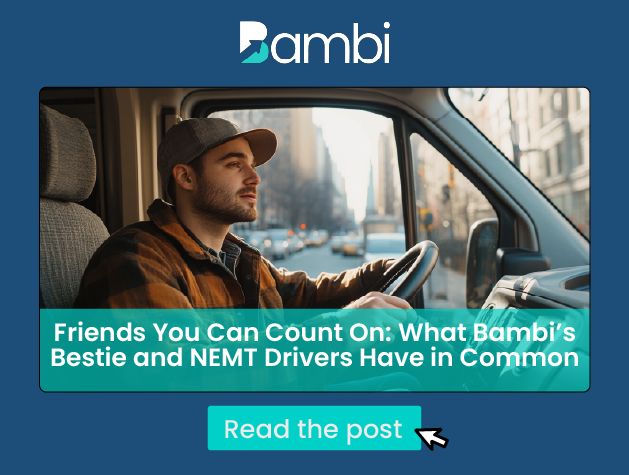
Perhaps it may seem a bit strange of a comparison at first, but if you think about it, there are quite a few similarities between Bambi’s bestie, Thumper and non-emergency medical transport (NEMT) drivers. Just like Thumper, NEMT drivers embody warmth, showcasing a shared dedication to compassion and service.
Here's why they're more alike than you might think:
Friends to all: Much like Thumper's affable nature, NEMT drivers radiate friendliness. It's rare to encounter a grumpy NEMT driver! Their welcoming demeanor not only puts passengers at ease but also brightens their day, making their entire journey a pleasant one.
Pros of their roads: Just as Thumper was familiar with the laws of the forest, NEMT drivers undergo thorough training to grasp the complexities of the road and medical equipment. Their proficiency guarantees passengers a secure and seamless journey, offering reassurance every step of the way.
Big hearts: Just as Thumper demonstrated empathy and kindness towards Bambi in his coming of age challenges, NEMT drivers are renowned for their compassion. They go above and beyond to provide care and support to passengers, recognizing the importance of empathy in their role as "dears of the road."
Consistent and reliable: Much like Thumper was a reliable friend to Bambi, NEMT drivers are known for being dependable, ensuring passengers reach their destinations on time and in safety. Their steadfast dedication to their role makes them essential contributors to the healthcare transportation system.
Quiet heroes: Despite their vital role, both Thumper and NEMT drivers often operate behind the scenes, quietly carrying out their responsibilities without seeking recognition. Their humility and dedication to service make them true heroes in their own right.
As you can see, NEMT drivers share many admirable qualities with Bambi’s BFF. Their unwavering friendliness, professional expertise, compassion, reliability and humility make them true allies in ensuring that patients reach their medical appointments with ease and dignity.
So, the next time you step into an NEMT vehicle, remember this little Disney resemblance to Thumper — a steadfast friendly companion on life's nimble journey.
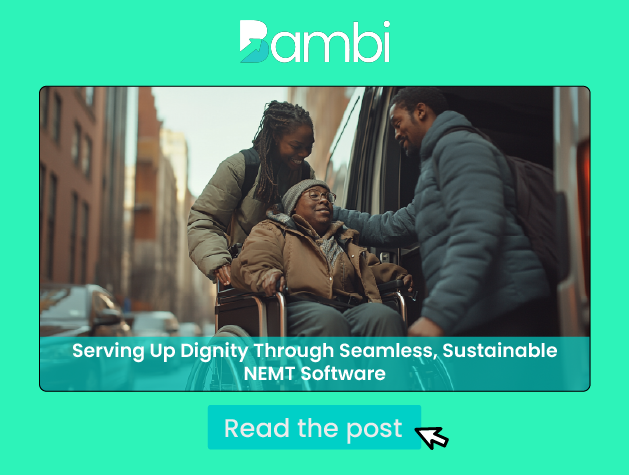
Nowadays, in the fast-paced modern life in which we live, the simple act of making it to medical appointments should not be a burden or cause for anxiety. Unfortunately, for many folks, particularly those facing mobility challenges or disabilities, the journey to healthcare facilities can present all kinds of obstacles.
Enter non-emergency medical transportation (NEMT) software, like our very own Bambi! It's here to fundamentally transform the healthcare experience by providing a seamless, sustainable, and dignified transportation solution to and from medical appointments — always served up with compassion and care.
For first-time riders, the to-do of organizing rides to their appointments can feel like a whole Disney film production. It involves a series of phone calls to loved ones, begging for that one more favor, enduring the potentially obnoxious hold music from the dispatcher to then anxiously waiting for the driver to show up — or not. This outdated approach not only adds unnecessary stress (ironic for someone needing to get to an appointment to check their cortisol levels) but also compromises the dignity of individuals seeking medical care.
But park it right there! We don’t have to roll old-school anymore — there’s something new-ish out there: NEMT software, a game-changer in caretech making healthcare that much more accessible for all.
Forget the out-dated hassle, now with just a few taps on your phone or clicks on the computer, you can summon a ride customized to your niche needs. Need a wheelchair-accessible vehicle? No problem. A helping hand for Grandma? You got it. Specialized medical transport? Consider it booked! With NEMT software like ours, every rider's wish is Bambi’s command, served up with bright eyes and a cushy backseat and, of course, that sprinkle of digital (Disney) magic.
aiNEMT technology like ours shines brightest — like that calming sunlight flickering through Bambi’ backyard or forest, rather — in its user-friendly interface. New users of Bambi, for instance, are gently guided through a straightforward booking process, clearing up any confusion often tied to calling on traditional transportation arrangements. With clear instructions; an intuitive, clean and simple design; as well as real-time updates, the entire booking experience becomes a Bambi breeze.
Moreover, NEMT software prioritizes reliability and punctuality. Riders can rest assured that their transportation will arrive promptly, allowing them to reach their medical appointments on time without delays. Okay, well sometimes there’s a traffic jam, but for the most part, at least Bambi delivers the shortest and most sustainable routes ensuring timely arrivals.
An additional perk of NEMT technology’s reliability is that it not only boosts the confidence for first-time riders but this increased pep in their step improves their overall health.
Going beyond mere convenience, NEMT technology really does prioritize upholding the dignity of patients. By offering door-to-door service, it eliminates the challenges associated with navigating public transportation or depending on friends and family for help. Instead, they can get to their medical appointments with a sense of independence and empowerment, knowing that their needs are being met with care and compassion.
All in all, NEMT technology is not just about booking seamless and sustainable rides—it's about transforming the way people access healthcare. For first-time riders, it empowers them to, quite literally, nimbly navigate the complexities of their medical appointments with ease and dignity.
.png)
Bambi CEO Nirav Chheda talks with Ryan Kaspar, who worked for a decade at MTM (one of the largest NEMT broker companies) about larger trends in the NEMT industry and how they affect NEMT business owners.
Reach out to Ryan Kaspar for his NEMT consulting services at https://carrywell-consulting.com/.
See the full interview on YouTube.
Please don't forget to subscribe and like NEMT Experts Podcast on YouTube.
Also, available to watch on Spotify
And listen (audio only) on your other favorite podcast platforms Apple and Pandora.
Ryan Kaspar, an expert in Non-Emergency Medical Transportation (NEMT) with 15 years of experience, talks about the major transformations and challenges in the industry.
Conclusion: The NEMT industry is undergoing significant changes. To succeed in this environment, new and existing NEMT businesses must be proactive, tech-savvy, and focused on building strong relationships with their partners. Diversification and a hunger for growth are also essential for long-term success.

In this article, we’re going global! Non-emergency medical transportation (NEMT) aren’t only quiet heroes of healthcare systems in the US, they are so worldwide — ensuring that patients can access their essential medical appointments and services when they can’t manage the transportation themselves.
Let’s take a fun-filled trip around the globe to explore how the different continents handle NEMT services, from city buses to the smooth tracks of infamous rails like the Deutsche Bahn!
In North America, particularly in the United States and Canada, NEMT services are highly developed and often integrated with public health programs. In the US, Medicaid provides extensive NEMT coverage, including ambulatory vans, taxis and even air transportation in remote areas like in Alaska. Services are typically brokered through specialized companies or state-managed programs, ensuring broad coverage and flexibility for all.
Canada's NEMT services vary by province. For example, in Ontario they call it non-emergency patient transport services (NEPTS). And this service provides transportation via specialized vehicles and taxis for patients needing medical appointments. The focus is on accommodating patients with mobility issues, with a growing emphasis on integrating technology for scheduling and tracking — just like what we’re doing with Bambi!
For the following continents, we thought we’d start off with some stark stats to prove that this NEMT market is, in fact, a global billion dollar booming one!
The various European countries have diverse approaches to NEMT, reflecting the different healthcare systems across the continent. In the UK, the National Health Service (NHS) provides transportation through its Patient Transport Services (PTS), which include ambulances and volunteer drivers. The service is designed for patients who need assistance but are not in an emergency situation, ensuring that everyone has access to necessary medical care.
Germany, renowned for its premium automotive brands like Volvo, Mercedes and Audi — so you know they will have high-quality NEMT fleet in terms of their vehicles. There they boast a highly effective NEMT system — where transportation is often coordinated by healthcare providers or insurance companies. Public transportation options are also tailored to meet patient needs, with many cities offering accessible buses and trains. This integration, known as Krankentransport, ensures that even those in urban areas can efficiently access medical services.
Some examples of the leading NEMT companies in Europe include ERS Transition Ltd, GLOBAL RESCUE LLC, London Medical Transportation Systems and FirstGroup plc.
Asia’s NEMT solutions are as varied as its landscapes. In India, for instance, private operators dominate the scene, offering affordable transport with a growing trend of app-based solutions that connect patients with rides. Meanwhile, Japan combines cutting-edge technology with public transport, featuring high-efficiency systems for scheduling and real-time tracking, making medical journeys smoother than ever.
Australia and New Zealand both are managing well with their comprehensive NEMT services. Australia’s Patient Transport Service offers a range of options from ambulances to taxis, all well-integrated with public health services. New Zealand also excels with well-organized services supported by both government and private providers, ensuring that patients in even the most remote areas have access to necessary care. Much like Alaska, New Zealand has many individuals living off the grid, making robust NEMT services crucial for reaching those in isolated locations.
The leading players in the Asia Pacific non-emergency medical transportation market include Ambulance on Call, Ambulance Private Pty Ltd, Athulya Homes Pvt Ltd, CareFlight Ltd, and GLOBAL RESCUE LLC.
The NEMT market in South and Central America is projected to expand from the $221.54 million it was in 2022 to $329.42 million by 2028, with an estimated annual growth rate of 6.8% over this period. The increasing role of technology in NEMT is driving this growth in the region. In Brazil, local governments and private operators team up to provide patient transport, though access and quality can vary, especially in rural areas. Argentina is making Bambi-esque strides with specialized vehicles and coordinated programs, aiming to boost access and reliability for patients throughout the country.
Leading companies in the South & Central America non-emergency medical transportation market include Air Ambulance, On Call International, Horizon Air Ambulance and AirCARE1.
The NEMT market in the Middle East and Africa is anticipated to rise from $79.42 million of what it was in 2022 to $116.18 million by 2028. This growth is largely driven by the increasing prevalence of chronic diseases in the region. Africa faces unique NEMT challenges due to infrastructure and resources. Many countries rely on community-based solutions and informal transport. In Kenya, NGOs often step in to fill gaps, providing crucial rides to rural clinics. South Africa, on the other hand, boasts a more developed system with public and private options, though disparities still exist between urban and rural regions.
Prominent players in the Middle East & Africa non-emergency medical transportation market include Horizon Jets Charter Inc, Medical Air Service, Saudi Response Plus Medical Services, and Team 1.
All in all, from bustling cities to serene rural areas, NEMT services are vital in connecting patients with their medical needs across the globe. Whether it's the high-tech solutions in Japan or the community-based models in Africa, every region adapts its services to meet local needs.
.png)
See the full interview on YouTube.
Please don't forget to subscribe and like NEMT Experts Podcast on YouTube.
Also, available to watch on Spotify
And listen (audio only) on your other favorite podcast platforms Apple and Pandora.
In this episode, Larry Greene shares his journey from running a luxury transportation business to successfully expanding into the Non-Emergency Medical Transportation (NEMT) industry. He discusses the challenges, strategies, and key partnerships that have driven his company's rapid growth, including the pivotal role played by Model 1 and Bambi's software solutions.
Key Takeaways:
Interesting Quotes:
Conclusion:
Larry Greene's journey into the NEMT industry showcases the importance of customer service, strategic growth, and investing in quality relationships and technology. His partnership with Model 1 and Bambi played pivotal roles in his success, emphasizing that reliability and strong support systems are critical to scaling in the NEMT sector.
.png)
See the full interview on YouTube.
Please don't forget to subscribe and like NEMT Experts Podcast on YouTube.
Also, available to watch on Spotify
And listen (audio only) on your other favorite podcast platforms Apple and Pandora.
In this podcast interview, Tony Jackson, lead dispatcher at Top Choice Medical Transport in Orlando, Florida, shares how the company has grown significantly in just one month after implementing Bambi NEMT software. He emphasizes the importance of professionalism, honesty, and integrity in building relationships with facilities and hospitals. Tony discusses the company's plan to expand statewide and how they prioritize driver training and customer service.
Key Takeaways:
Interesting Quotes:
Conclusion:
The interview highlights the significant improvements and growth experienced by Top Choice Medical Transport due to the implementation of Bambi software. The company's commitment to professionalism, a supportive work environment, and honest communication with facilities has set it apart in the NEMT industry.

Founded in 2018 by Cathy and Chris Stoia, Corazón Concierge has become a trusted provider of safe and reliable transportation for seniors in Santa Fe and Albuquerque. The company's mission is to help clients maintain their independence and active lifestyles by offering door-to-door transportation services tailored to their needs.

Corazón Concierge goes beyond simply providing transportation. They prioritize the safety and comfort of their clients, offering a personalized experience with knowledgeable and friendly drivers. The company's commitment to punctuality ensures that clients arrive at their destinations on time, whether it's a doctor's appointment, family gathering, or a special event.
One of the key differentiators of Corazón Concierge is their specialization in ADA-accessible transportation. They understand the unique needs of individuals with mobility challenges and have equipped themselves with two ADA vans that can accommodate wheelchair passengers and their companions.
Corazón Concierge offers a wide range of transportation services, including:
Whether it's a short trip across town or a longer journey to another state, Corazón Concierge is committed to providing safe, reliable, and comfortable transportation for seniors. They strive to make every ride an enjoyable experience, allowing their clients to focus on their destination and the people they are with.
For Corazón Concierge, transportation is about more than just getting from point A to point B. It's about enhancing the quality of life for seniors, allowing them to participate in activities they enjoy, maintain social connections, and remain independent.
In a state known for its "Land of Mañana" pace, Corazón Concierge stands out for its punctuality and reliability. This commitment to timeliness, combined with their compassionate and knowledgeable staff, has made them a valued resource for seniors and their families in New Mexico.
Need a NEMT Ride in NM? Call Corazón Concierge: 800-762-7058 or visit Corazón Concierge online.

