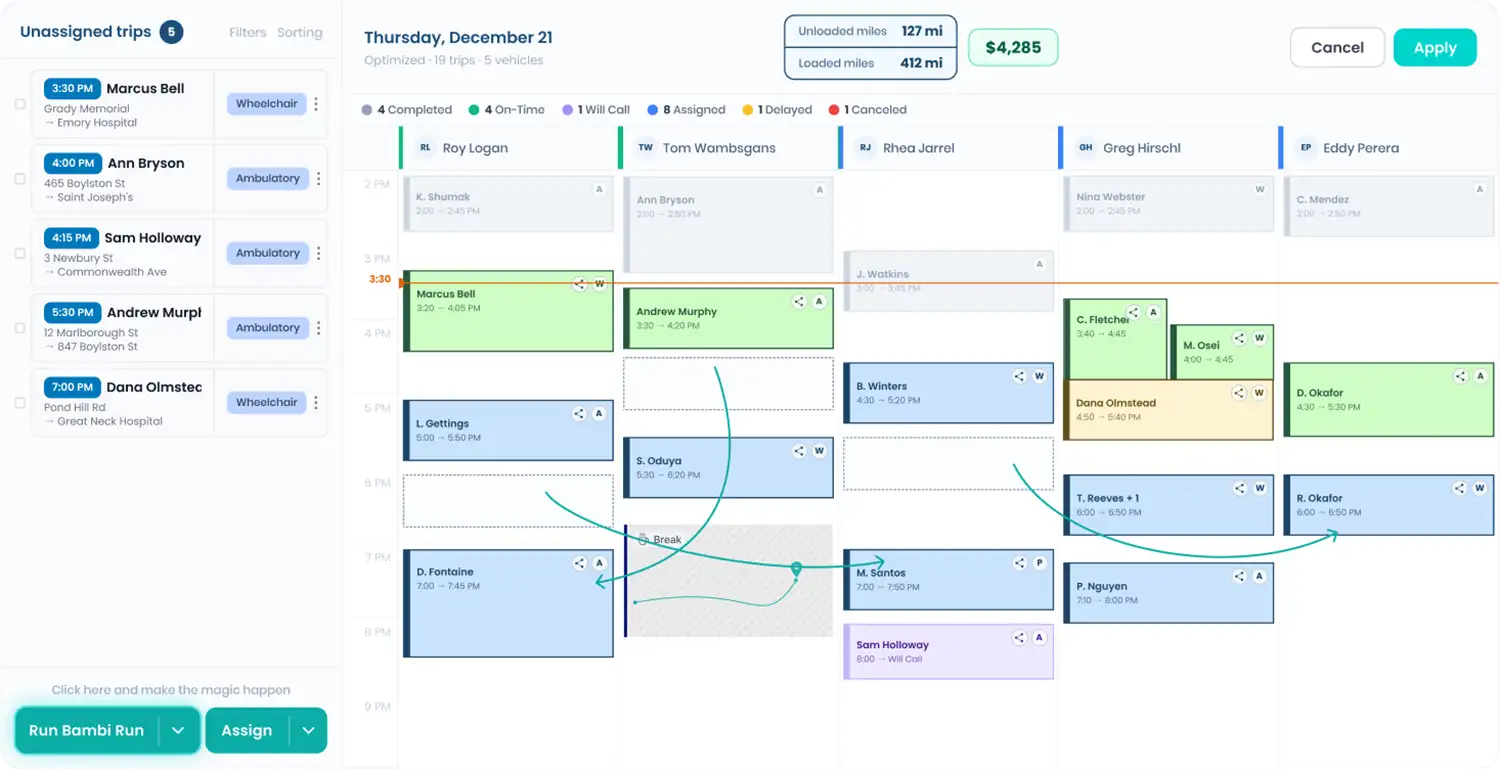

Dynamic scheduling tools powered by AI are reshaping how trip requests are matched with vehicles, especially for Non-Emergency Medical Transportation (NEMT). These tools improve efficiency by reducing scheduling time, cutting fuel costs, and managing thousands of trips monthly. Key features include real-time route adjustments, automated dispatching, and compliance with regulations like HIPAA.
Below is what a dynamic scheduling tool should do for passenger load balancing, the questions to ask before you buy, and how Bambi handles each piece.
What to look for in a dynamic scheduling tool
Every scheduling tool claims automation. These are the capabilities that decide whether it actually balances your passenger load day to day:
- Re-planning when the day changes. A cancellation, a late driver or a will-call return should update the schedule in seconds, with a dispatcher approving the changes.
- Multi-loading that respects the rules. Grouping riders only works if the tool also respects pickup windows, appointment times, mobility levels and vehicle capacity.
- Driver and vehicle constraints. Certifications, wheelchair or stretcher equipment and shift hours should be built into every assignment.
- Broker trips that arrive on their own. Ask how each of your brokers connects, live API or file import, so trips reach the schedule without retyping.
- Audit-ready trip records. GPS timestamps, signatures and inspections on every trip, so billing and audits do not depend on paperwork.
- Pricing you can predict. Compare the all-in cost on your busiest month, including setup, per-trip and add-on fees.
How Bambi handles dynamic scheduling
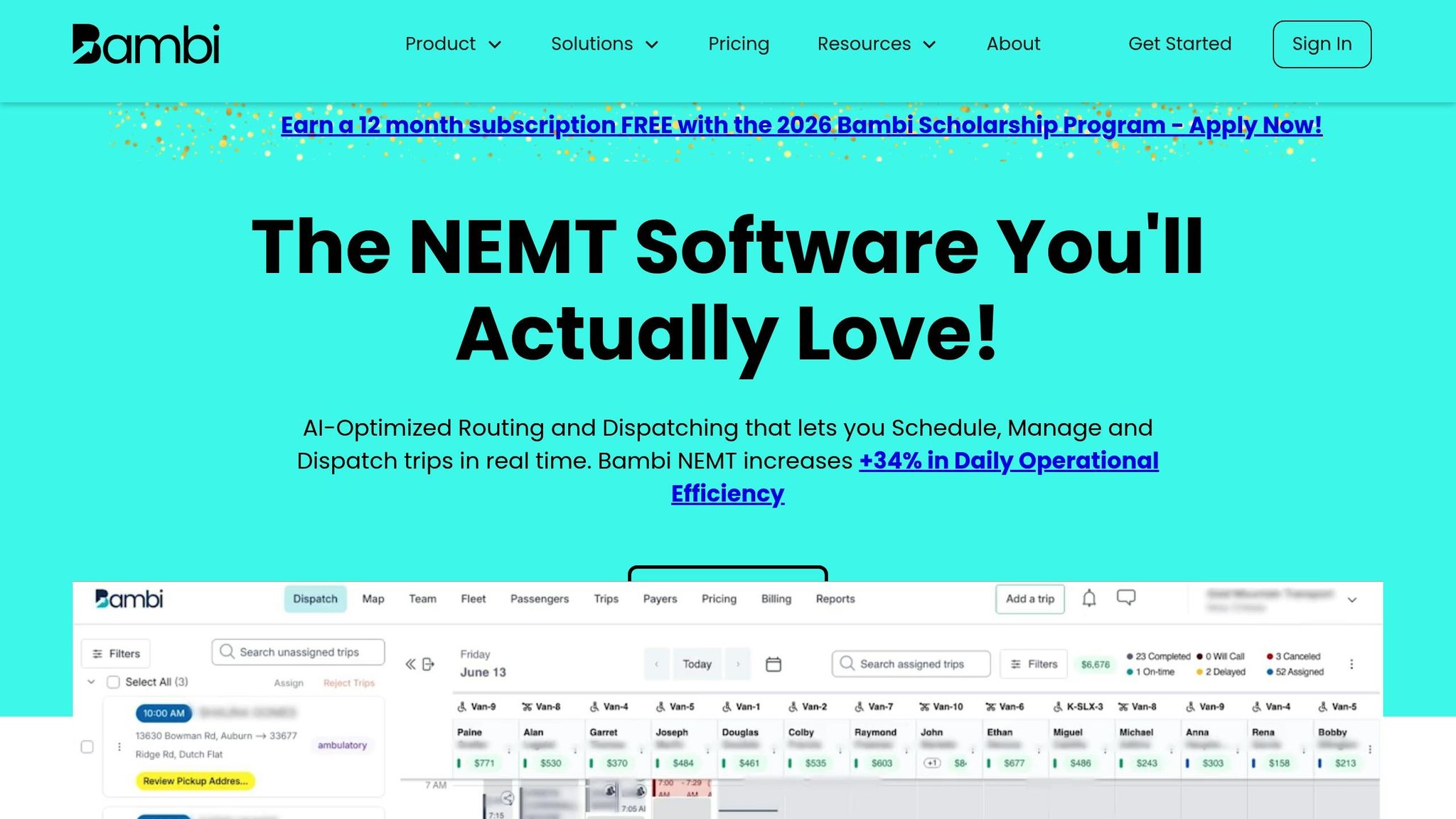
Bambi leverages machine learning to match trip requests with fleet capacity in real-time, ensuring efficient operations throughout the day. The platform was honored with the NEMTAC Innovation in NEMT Award in 2025 and boasts a perfect 5.0/5 star rating across platforms like G2, Capterra, Software Advice, GetApp, and SourceForge.
Real-Time Optimization
Bambi's "Run Bambi Run" tool instantly assigns or reassigns trips as situations evolve. It handles challenges like no-shows, late arrivals, and cascading trip delays without skipping a beat. If a driver is running late or a passenger cancels, the AI quickly reallocates idle vehicles to high-priority trips - no manual effort required.
"Bambi's been a game changer for us, especially with the scheduler optimizer. Beforehand, assigning the trips to the drivers was very time consuming and now with Bambi it's as easy as clicking Run Bambi Run!" - Tanner Ramsey, Dispatcher, PrimeCare Patient Transport
AI Integration
The platform’s multi-loading feature can schedule anywhere from 10 to 10,000 trips simultaneously, ensuring vehicles are used efficiently. It accounts for driver and vehicle constraints, assigning certified crews and properly equipped vehicles based on passenger needs. Users report that booking a trip now takes just two to three minutes, cutting administrative tasks in half.
"Bambi's AI is literally saving my staff hours of daily work. Our team has more time to focus on improvements and finding new customers." - Jeffrey Hoff, Owner, Reliant Transport
Pricing
Bambi costs $69 per active vehicle per month, counted on your busiest day, so unused vehicles cost nothing. Every feature, every integration and live support are included, with no onboarding fees and no annual contract.
Compliance Features
Bambi meets HIPAA compliance standards, automatically logging GPS data, timestamps, and electronic attestations to simplify audits. It also provides a comprehensive audit history and supports pre-shift vehicle inspections through its mobile app. The platform integrates seamlessly with major NEMT brokers such as Modivcare and SafeRide.
Conclusion
In an industry where accuracy and compliance are critical, the right scheduling tool makes all the difference. Choose one that fits your fleet size, budget and broker mix, re-plans the day when things change, and keeps every trip audit-ready.
AI-powered automation is transforming the industry. Many providers report saving up to 12 hours per week - or 48 hours per month - by using advanced scheduling tools. Jeffrey Hoff from Reliant Transport shares that Bambi’s AI has been instrumental in saving his team valuable time.
Compliance remains a non-negotiable factor. Your chosen tool must support critical features like HIPAA compliance, GPS audit trails, and electronic signatures. By combining operational efficiency with these essential compliance safeguards, providers can shift their focus to what truly matters - improving patient care. Ultimately, the best scheduling tool isn’t necessarily the priciest one; it’s the one that meets your operational needs, offers clear pricing, and delivers real, measurable time savings so you can spend less time on logistics and more on patient care.
If you want to see how that looks with your own trips, see Bambi run your own trips.
FAQs
How do dynamic scheduling tools improve efficiency for NEMT providers?
Dynamic scheduling tools are transforming the way Non-Emergency Medical Transportation (NEMT) providers manage their operations. By leveraging AI, these tools automate the scheduling process, analyzing trip requests, driver availability, vehicle needs, and real-time traffic conditions to create efficient schedules. What used to take significant time and effort can now be completed in as little as three minutes, cutting down on manual work and speeding up bookings.
These platforms are also built to handle the unexpected. Whether it’s a delay, cancellation, or vehicle issue, they can instantly reassign trips, ensuring minimal disruption. With integrated GPS tracking, dispatchers can offer precise ETAs, adjust routes on the fly, and keep trips running on schedule. The result? Fewer missed appointments, reduced operating costs, and a smoother experience for everyone involved - all of which contribute to greater patient satisfaction.
By centralizing critical data - like trip details, driver limitations, and billing information - dynamic scheduling systems reduce errors and simplify invoicing. They also provide actionable insights into performance metrics, helping NEMT providers make better use of their resources, lower expenses, and deliver higher-quality service.
What should I look for in a dynamic scheduling tool for passenger load balancing?
When selecting a dynamic scheduling tool, focus on features that boost productivity and elevate service quality. Start with AI-driven trip assignment, which automates the scheduling process and adjusts seamlessly to last-minute changes. Pair that with real-time vehicle tracking using GPS-based ETAs to simplify dispatching and keep passengers updated. The tool should also account for driver and vehicle-specific requirements, such as certifications or specialized equipment, and support multi-passenger loading to make routes more efficient and cut costs.
It’s also important to look for route optimization with live traffic updates, as well as integration with billing systems and health record platforms for smoother operations. Clear, scalable pricing ensures transparency, while built-in communication features - like chat options between drivers and dispatchers and passenger notifications - are key for staying coordinated and enhancing the overall experience. A well-designed, easy-to-use system will help you manage passenger loads efficiently while improving day-to-day operations.
How do these tools help ensure compliance with regulations like HIPAA?
These tools come equipped with HIPAA-compliant safeguards to keep sensitive patient information secure. Features such as secure EHR and billing integration, encrypted data handling, and role-based access controls ensure that only authorized personnel can access specific data.
They also offer detailed audit logs, GPS time-stamped electronic signatures, and other traceable records. These features not only help NEMT providers stay compliant with regulations but also streamline their operations for better efficiency.