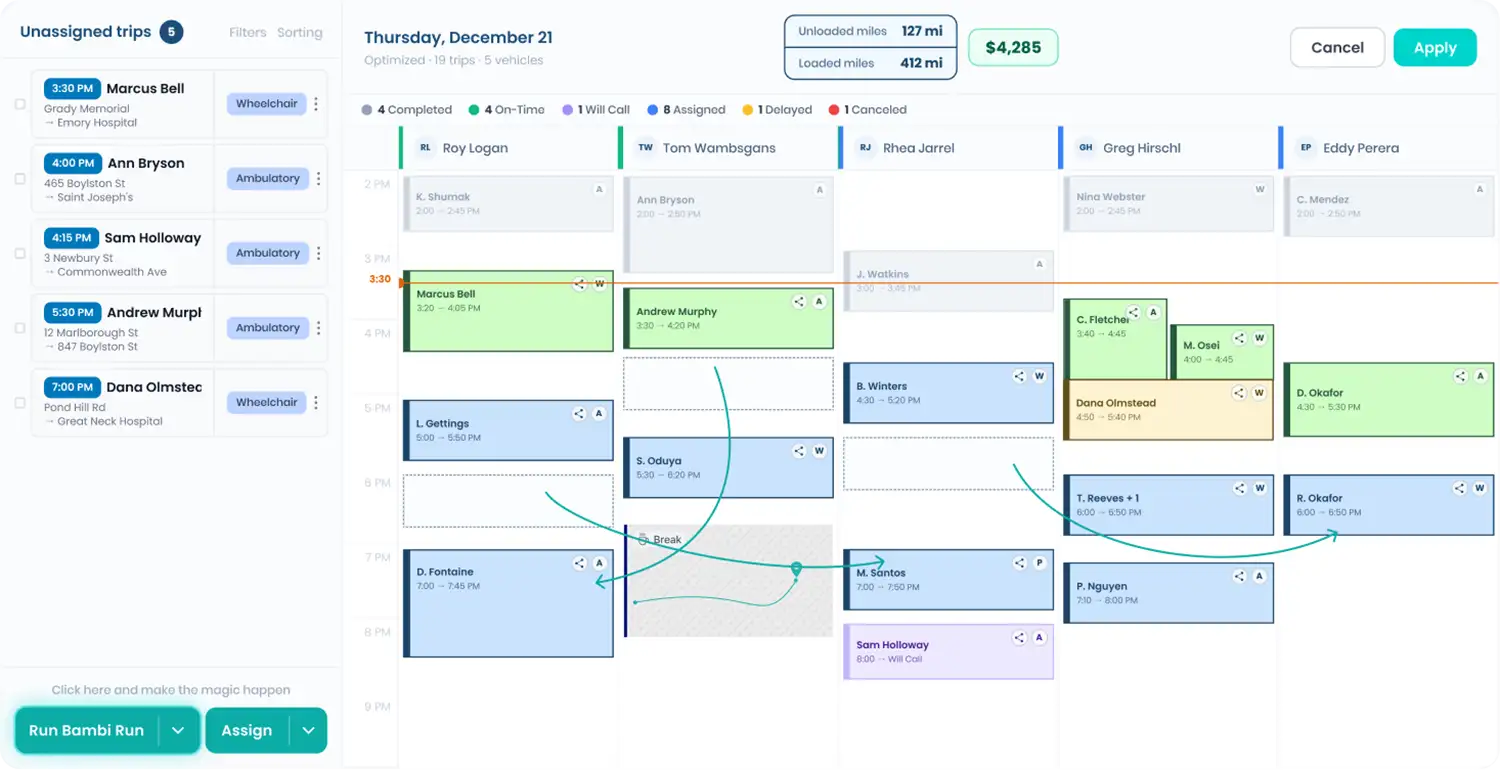

Real-time tracking helps NEMT (Non-Emergency Medical Transportation) dispatchers manage trips efficiently by using GPS, centralized dashboards, and AI tools. These systems show vehicle locations, trip statuses, and ETAs, allowing dispatchers to act instantly during delays or changes. Features like geofence alerts, automated scheduling, and mobile driver apps streamline communication and reduce errors. Key benefits include improved on-time performance, lower costs, and better service reliability.
Key Features:
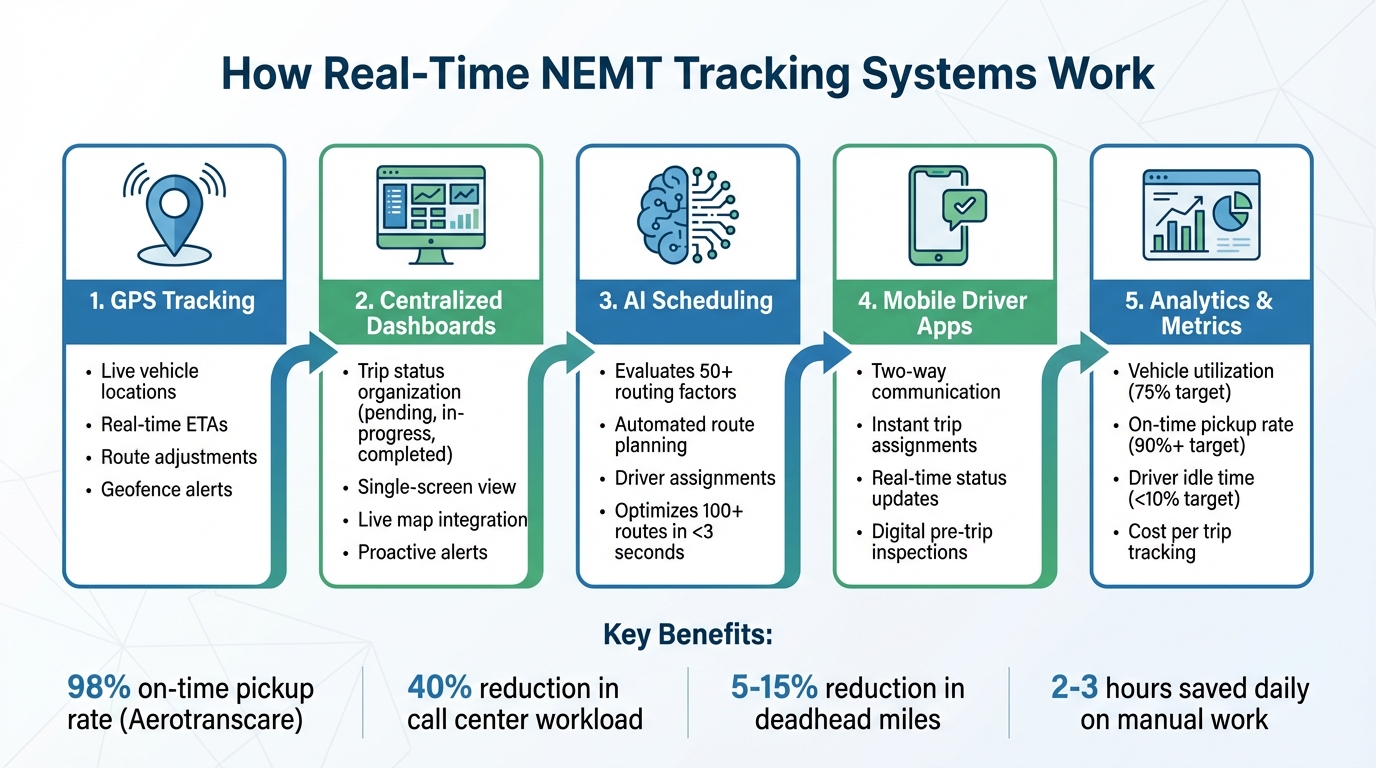
- GPS Tracking: Live vehicle locations, ETAs, and route adjustments.
- Centralized Dashboards: Organizes trips by status (e.g., pending, in-progress).
- AI Scheduling: Automates route planning and driver assignments.
- Mobile Apps: Enables real-time communication with drivers.
- Analytics: Tracks performance metrics like on-time rates and trip costs.
These tools simplify operations, save time, and improve passenger experience.
Using GPS Tracking to Monitor Vehicles in Real Time
GPS tracking combines mobile driver apps with cloud-based dashboards to deliver a real-time map view of your entire fleet. Dispatchers can instantly see each vehicle's location, speed, and route without relying on manual updates or constant radio communication. This streamlined approach reshapes how daily dispatch operations are managed. Let’s break down how GPS boosts trip visibility and fleet efficiency.
How GPS Enhances Trip Visibility
GPS tracking goes beyond just pinpointing locations. Dispatchers can monitor trip statuses like "on-route" or "arrived", while advanced mapping tools calculate precise ETAs using live traffic data and historical patterns. If a driver veers off the planned route, the system sends immediate alerts, allowing dispatchers to respond before a minor detour turns into a significant delay.
Geofence alerts further simplify operations by automatically notifying dispatchers when vehicles enter or exit specific zones, such as hospital pickup areas. This eliminates the need for drivers to manually check in, letting dispatchers focus on trips that require attention. For instance, between 2024 and 2025, Aerotranscare in Virginia leveraged these tools to manage over 3,000 trips monthly, achieving a 98% on-time pickup rate while cutting call center workload by 40%. Beyond tracking, GPS plays a key role in improving overall operational efficiency.
How GPS Boosts Fleet Efficiency
GPS-powered route optimization takes into account real-time traffic, accidents, and road closures to suggest instant detours, ensuring trips stay on schedule. This dynamic rerouting can reduce unoccupied driving, or "deadhead miles", by 5–15%, which directly lowers fuel expenses and vehicle wear. Some systems can even optimize over 100 routes in less than 3 seconds.
Geolocation-based driver assignment adds another layer of efficiency by automatically matching the closest available driver to urgent trip requests, saving dispatchers 2–3 hours of manual work each day. Additionally, GPS telematics track driver behavior, flagging risky actions like harsh braking or speeding. This not only enhances safety but can also lead to reduced insurance costs.
Managing Trip Status with Centralized Dispatch Dashboards
While GPS tracking tells you where vehicles are, a centralized dispatch dashboard takes it a step further by offering a complete picture of every trip in real time. Instead of juggling spreadsheets, phone calls, and multiple browser tabs, dispatchers can monitor live trips on a single screen, with updates flowing in as drivers check in through their mobile apps.
The dashboard organizes trips into queues based on their current status, reflecting the natural flow of a ride. For example, trips awaiting driver assignment fall under "pending", while those with a confirmed driver move to "scheduled." Active rides are tagged as "in-progress", and completed trips are ready for billing. This structure allows dispatchers to focus on trips that need immediate attention, rather than getting bogged down tracking every completed ride. By grouping rides by status, the dashboard ensures a clear and structured workflow.
Take Green Med Trans Inc., for instance. They used this system to scale their operations to 5,000 trips per month, all while maintaining a 99.2% claim approval rate and automating 88% of their dispatching.
Organizing Trips by Status Categories
Status categories act like a smart filing system, updating automatically as trips progress. For instance, when a driver marks "arrived at pickup" in their app, the trip seamlessly moves from "assigned" to "in-progress" on the dashboard. During busy hours, dispatchers can filter the view to focus only on unassigned trips, while live status counts at the top of the screen give a quick snapshot of overall operations.
This level of visibility made a huge difference for Helping Hands Transportation. They achieved a 95% on-time arrival rate and cut down manual paperwork by 80%.
Making Faster Decisions with Single-Screen Views
When a facility calls about a delayed pickup, dispatchers no longer have to dig through multiple systems to find answers. The dashboard’s live map shows exactly where the assigned vehicle is, its updated ETA based on current traffic, and any flagged issues. If a driver is delayed by traffic, the dispatcher can reassign the trip with just one click.
"One live dashboard replaces spreadsheets and phone calls, letting dispatchers spot issues faster and keep service on schedule." - SHARE Mobility
Proactive alerts further streamline operations by flagging issues like no-shows, late vehicles, or overlapping assignments. These alerts significantly reduce the workload of call centers, especially for high-volume operations.
Automated Scheduling and Route Optimization
Planning trips manually can get messy, especially when juggling multiple appointments, traffic delays, and vehicle availability. AI-powered scheduling tools simplify this process by evaluating over 50 routing factors at once. These include driver certifications, specialized vehicle needs like wheelchair lifts, patient medical requirements, and appointment timeframes. The system groups trips efficiently to cut down on "empty miles" - those wasted drives without passengers - and ensures vehicles are utilized to their fullest potential.
For example, if a patient schedules a multi-stop trip - like traveling from home to a clinic, then to a pharmacy, and back - the AI takes into account appointment times and necessary waiting periods at each stop. If a cancellation or no-show occurs, the system immediately adjusts the remaining routes, filling gaps and minimizing wasted mileage. This kind of instant re-optimization is a game-changer, especially during busy hours, and far exceeds what human dispatchers can handle on the fly.
"The introduction of AI has revolutionized this process by transforming the dispatcher's role from a reactive problem-solver into a strategic manager." - NEMT Platform
Take Preventive Care as an example: they reduced their scheduling time by 40% after adopting an AI-powered routing solution. This tool automated the pairing of patients with healthcare professionals based on specific skills and vehicle requirements. It created efficient, ready-to-go routes without constant manual tweaking, paving the way for more advanced scheduling methods.
How AI-Powered Scheduling Works
The technology behind these systems is impressive. AI optimization engines pull in live traffic updates, historical delay trends, and current vehicle locations to craft the best possible routes. For instance, if a particular route tends to run late every Tuesday, the system automatically adjusts the travel time to account for it, reducing the risk of missed appointments. It also clusters trips for facilities like nursing homes or dialysis centers, grouping patients into shared rides to cut costs and improve punctuality.
The system can manage shared rides for 2–6 passengers, balancing factors like time windows, medical needs, and vehicle capacity. For unpredictable scenarios - like hospital discharges - a "will-call" feature ensures a vehicle is dispatched only when the patient is ready, avoiding unnecessary driver wait times and keeping schedules on track.
Reducing Errors with One-Click Trip Assignments
AI doesn’t stop at scheduling - it also simplifies trip assignments. With one-click functionality, dispatchers no longer need to cross-check schedules or vehicle specifications manually. The software automatically assigns the nearest qualified driver using real-time GPS, current workload, and vehicle type.
"The app's automated dispatching and billing features have helped us save time and reduce errors, while the real-time tracking and communication features have helped us provide better service to our clients." - Rachel Green, Careful Transportation
Many platforms also integrate seamlessly with brokers like Modivcare and MTM. Ride requests flow directly into the dashboard, eliminating manual data entry. This streamlined process reduces typos, missed appointments, and billing disputes, allowing dispatchers to focus on handling exceptions rather than routine tasks.
Real-Time Communication with Mobile Driver Apps
Communicating Directly with Drivers
Gone are the days of relying on phone calls, radios, and paper logs to coordinate trips. Mobile apps now make it possible for dispatchers to send trip assignments and updates directly to drivers' smartphones in seconds. This eliminates the delays and confusion that used to plague manual communication methods. Drivers can confirm receipt instantly, creating a smooth and efficient workflow.
This upgrade matters because manual coordination often leads to miscommunication. A missed radio call or a misunderstood verbal instruction could result in missed pickups, eroding patient trust. Digital messaging ensures that all instructions are clear and easily accessible. If a patient’s appointment time changes or a facility needs to update pickup details, dispatchers can send the new information directly through the app. Drivers can acknowledge these updates with just one tap.
These apps also enable two-way communication, allowing drivers to report issues like trouble finding a patient or traffic delays. Instead of clogging communication channels, they use messaging or integrated calls to resolve problems on the spot. This real-time exchange keeps everyone informed and allows for quick adjustments to trips without disrupting operations.
Improving Trip Reliability with Driver Updates
Direct communication is just the start - driver feedback takes trip reliability to the next level. Real-time updates from drivers transform how trips are managed. Dispatchers can see live status updates on their dashboards, eliminating the need for constant radio check-ins and providing a clear view of every trip’s progress.
"Real-time dispatch reduces missed trips and confusion, making sure that passengers get where they need to go on time." - NEMT Platform
For example, if a driver flags a mechanical issue during a digital pre-trip inspection, the app immediately alerts the maintenance team. This proactive approach prevents breakdowns mid-route, avoiding situations where patients are left stranded or appointments are canceled at the last minute. Facilities benefit from knowing exactly when their patients will arrive, while patients experience shorter wait times and fewer “where is my ride?” calls to the dispatch center.
These app features, combined with centralized dashboards and AI-driven tools, create a system that’s responsive and efficient, ensuring trips run smoothly from start to finish.
Connecting Trip Tracking with Fleet and Crew Management
Once scheduling and real-time updates are in place, integrating trip tracking with fleet and crew management takes operational efficiency to the next level. By linking fleet maintenance schedules and crew management directly to the dispatch board, this system builds on the benefits of real-time tracking.
Avoiding Vehicle and Driver Scheduling Conflicts
Nothing derails a dispatcher’s day faster than assigning a trip to a vehicle that’s out of commission or a driver who’s unavailable. With integrated systems, vehicles needing maintenance - like an oil change or those flagged during a digital pre-trip inspection - are automatically marked as unavailable, ensuring they’re removed from the scheduling pool.
Driver qualifications are also monitored digitally. Alerts notify dispatchers 30 to 60 days before licenses, background checks, or certifications expire, ensuring only fully qualified drivers are assigned to trips. Real-time driver check-ins prevent ghost assignments, and if a vehicle breaks down mid-route, GPS tools quickly identify the nearest qualified replacement to keep disruptions to a minimum. By addressing these potential conflicts, dispatchers can focus on keeping operations running smoothly.
A Unified View of Operations
Beyond avoiding conflicts, integrated dashboards provide a comprehensive view of daily operations. A centralized system combines details like active trips, vehicle locations, driver assignments, and maintenance schedules into one screen. This "single pane of glass" approach eliminates the need to juggle multiple tools or make time-consuming calls to drivers for updates.
For example, Helping Hands Transportation used such tools to achieve 100% compliance, cut manual paperwork by 80%, and maintain a 95% on-time arrival rate.
"The system takes over the stuff that usually eats up time. Scheduling, routing, billing - all of it just runs smoother. Dispatchers don't have to double-check every ride." - NEMT Platform
This streamlined view helps dispatchers focus on exceptions rather than routine trips, leading to faster decisions and better coordination across the board.
Tracking Performance Metrics with Real-Time Data
Real-time tracking goes beyond simply pinpointing vehicle locations - it also generates performance data that sheds light on operational efficiency. By keeping an eye on the right metrics, dispatchers can quickly identify potential issues, make informed decisions, and improve overall service quality. This data becomes the backbone for monitoring critical performance indicators.
Key Performance Indicators for NEMT Operations
Four essential metrics offer a clear view of how well operations are running. Vehicle utilization rate measures the time or distance vehicles are actively in use versus idle, with a goal of hitting at least 75% during peak operating hours. On-time pickup rate tracks how often drivers meet their scheduled pickup times, with alerts typically set to trigger if performance drops below 90%. Driver idle time measures periods when drivers are available but not transporting passengers, with efficient operations aiming to keep this under 10% of total working hours. Finally, cost per trip combines expenses like fuel, wages, maintenance, and overhead; for instance, cutting the cost per trip from $45 to $38 can significantly improve monthly profits.
With real-time tracking, NEMT providers can use these metrics to uncover patterns in their operations and make data-driven changes. By continuously monitoring these indicators, dispatchers can address inefficiencies before they affect service quality.
Using Analytics Dashboards to Improve Operations
Analytics dashboards take these metrics to the next level by transforming raw data into actionable insights. These tools allow dispatchers to filter data by driver, vehicle, or service type, making it easier to pinpoint recurring issues like consistently late routes or areas with insufficient vehicle coverage. Addressing these problems early prevents them from escalating further.
Metrics also pave the way for targeted improvements. For example, reducing driver idle time from 25% to 12% could boost the number of completed trips per driver by 15%. Similarly, increasing on-time pickup rates from 84% to 94% is a common goal for companies that adjust schedules based on automated alerts. Dispatchers can act immediately, reallocating idle vehicles to high-demand areas or building in buffer times at the start of shifts to handle early delays.
"The ability to see our business financials breakdown via brokers, corporate clients, dispatch jobs is simply awesome." - Evariste, Kinsemen Transport
Conclusion
Real-time tracking tools have transformed NEMT dispatch by integrating GPS for instant vehicle tracking, centralized dashboards for comprehensive trip oversight, and AI-driven scheduling that saves up to 2–3 hours of administrative work each day.
These advancements directly enhance service quality. Improved performance is further reinforced by seamless communication between drivers and dispatchers.
With mobile driver apps and automated notifications, real-time connectivity becomes effortless. Dispatchers can instantly relay updates to drivers, patients receive precise ETAs, and facilities stay informed about arrivals. This level of coordination minimizes no-shows and builds confidence among passengers who rely on dependable transportation.
Real-time data also equips dispatchers to monitor critical metrics like vehicle usage, on-time performance, and trip costs, enabling them to quickly address inefficiencies. Additionally, tracking driver behavior and route compliance adds a layer of accountability, boosting safety and lowering insurance expenses.
"NEMT Platform has simplified my dispatching process and allowed me to focus on growing my business." - Lisa M, Owner, Metro Medical Transport
As NEMT services expand, real-time tracking remains a cornerstone for maintaining high-quality operations.
FAQs
How does GPS tracking in real time enhance NEMT dispatch efficiency?
Real-time GPS tracking plays a key role in helping NEMT dispatchers run operations more efficiently. With live updates on vehicle locations, dispatchers can make quick route adjustments, anticipate potential delays, and provide passengers with accurate ETAs. This ensures better coordination and a smoother experience for everyone involved.
Beyond route management, GPS tracking allows dispatchers to make smarter decisions about resource allocation. It helps cut down on idle time and keeps vehicles running on schedule. The result? More reliable transportation services for passengers who count on timely rides.
How does AI help streamline NEMT trip scheduling?
AI is transforming how NEMT (Non-Emergency Medical Transportation) trip scheduling works by automating critical tasks. For instance, it can assign trips to the best-suited drivers and adjust routes in real time. This not only cuts down on delays but also boosts punctuality and streamlines operations.
Another game-changer is AI's ability to offer predictive ETAs and quickly adapt to unexpected events, like traffic jams or last-minute cancellations. This keeps both dispatchers and drivers well-informed and operating efficiently. With these tools, NEMT providers can offer services that are more dependable and budget-friendly.
What are the benefits of using a centralized dashboard for NEMT dispatchers?
Centralized dashboards give NEMT dispatchers a real-time, all-in-one view of their entire operation, streamlining the way trips are managed and making it easier to respond to changes on the fly. By bringing together key details like vehicle locations, trip statuses, driver updates, and rider information into a single interface, these tools empower dispatchers to make quick, well-informed decisions while minimizing service disruptions.
With features like live GPS tracking, instant alerts for delays or no-shows, and insights into rider needs and vehicle availability, dispatchers can fine-tune routes, improve punctuality, and maintain smooth communication with both drivers and patients. The result? Greater efficiency in operations and a better overall experience for customers.