Want to expand your NEMT business into student transportation? Here's what you need to know:
Quick Comparison:
| Category | NEMT Services | Student Transportation |
|---|---|---|
| Scheduling | On-demand, flexible timing | Fixed routes and schedules |
| Vehicle Safety | Basic safety restraints | Child safety seats, emergency exits |
| Driver Training | Patient care, medical focus | Behavior management, child safety |
| Communication | Patient privacy | Real-time updates for parents |
Your NEMT expertise already aligns with many student transportation needs. With the right adjustments, this transition can open up new revenue streams while maximizing your fleet’s potential.
Mastering student transportation regulations requires building on your existing knowledge of NEMT compliance.
Student transportation rules can differ significantly depending on the jurisdiction. At the federal level, the focus is on safety standards and non-discrimination policies. Meanwhile, state and local regulations dive deeper into specifics like driver certifications, vehicle inspections, and district-specific protocols.
State laws often outline detailed requirements, such as mandatory driver qualifications, regular vehicle inspections, and operational guidelines. Many states demand additional certifications for drivers transporting students, including background checks, drug testing, and specialized training programs - standards that often surpass those for NEMT operations.
Local school districts add yet another layer of compliance. They may enforce policies requiring extra insurance coverage, specific communication protocols with parents, or additional vehicle equipment beyond what state laws mandate.
Safety is always the top priority. For context, in 2021, 715 children lost their lives in motor vehicle crashes in the U.S., and over a third of them were not properly restrained.
Understanding these regulations is key to creating a thorough compliance checklist.
A strong compliance checklist should cover driver qualifications, vehicle standards, and operational procedures.
Vehicle compliance is non-negotiable. Ensure your vehicles are registered for student transportation, equipped with child safety restraints and emergency exits, and inspected regularly to meet or exceed local standards.
Operational procedures also need to be clearly documented. This includes emergency response protocols, communication plans with schools and parents, and route safety assessments. Many states require an annual review of routes to address potential hazards. Your checklist should also account for safety, health, and environmental regulations relevant to your operations. As regulations evolve, make sure your checklist is updated to reflect the latest standards.
Once your checklist is complete, compare how student transportation requirements differ from NEMT standards.
Transitioning from NEMT to student transportation involves adapting to stricter safety and procedural standards. For example, while NEMT providers are familiar with HIPAA compliance for handling health information, student transportation demands additional measures like school-specific pickup and drop-off protocols, strict scheduling, and designated communication channels with school administrators.
Child safety is another critical area. Drivers must be trained in the proper installation and use of child safety and booster seats, which are often required.
"Safety is always the primary consideration when it comes to transportation. It is especially important when it comes to students going to and from school. This is why more stringent regulations are being implemented for student transportation operators, and, traditionally, NEMT providers, who are already used to strict regulations, can fit the bill."
– Yurii Martynov, Marketing Director, RouteGenie
The regulatory landscape for student transportation is tightening. For instance, the proposed School Bus Safety Act of 2025 aims to introduce new equipment mandates, such as 3-point safety belts and automatic emergency braking systems. Your experience navigating NEMT's complex regulations will help you adjust to these changes.
Insurance and liability requirements also vary between the two sectors. Student transportation often demands higher coverage limits and may include specific provisions for transporting minors. While NEMT funding comes from diverse sources with fragmented regulations, student transportation funding is typically standardized through school district budgets, which come with their own compliance expectations.
These differences in compliance will directly impact how you approach scheduling, dispatch, and vehicle modifications, which will be explored further in later sections.
Shifting from flexible NEMT operations to the structured world of student transportation requires significant adjustments in scheduling, routing, and communication. Here's how to navigate these changes effectively.
The biggest operational change is moving away from the flexibility of NEMT services. Unlike NEMT, which often accommodates last-minute bookings and flexible pickup windows, student transportation revolves around fixed routes and schedules. Everything must align with strict bell times and consistent daily routines.
This shift demands predictability. While NEMT passengers might reschedule appointments, school start times are non-negotiable. Scheduling systems need to support recurring trips instead of one-time rides. By setting up customizable scheduling profiles, you can create templates tailored to specific schools, grade levels, or students with special needs, ensuring smooth daily operations.
Routing software also needs a new approach. While NEMT routing focuses on flexibility - adjusting for traffic and appointment times - student transportation prioritizes consistency. Routes must remain the same each day, minimizing variation while still accounting for efficiency. Establishing a fixed schedule is the foundation for better routing and communication with all stakeholders.
AI technology is transforming student transportation by simplifying complex routing challenges. AI-powered school bus routing software uses advanced algorithms and real-time data to optimize routes dynamically, going well beyond the capabilities of traditional NEMT systems.
The results are impressive. For example, in Colorado Springs, a school district improved its "highly utilized bus routes" by 46% using RouteWise AI. This shift helped them eliminate a driver shortage by creating more efficient routes.
"Adding more drivers into an inefficient routing system may help with late buses to a certain extent, but it is not solving the root of the problem: inefficient routes."
- Tyler Maybee, Director of Transportation Operations, Denver Public Schools
AI also delivers financial and operational benefits. Over a decade, districts can achieve up to 40% savings in capital costs while improving on-time arrival rates from 85% to 99%. These enhancements are crucial, as reliability is a top priority in student transportation.
Beyond cost savings, AI addresses real-time challenges like traffic, road closures, and weather conditions, ensuring the most efficient routes are always in use. It also helps maximize ridership, making the best use of available vehicles while supporting environmental goals by identifying route changes that reduce carbon emissions. Automated route optimization, complete with real-time adjustments, ensures seamless handling of last-minute changes like student absences or weather-related delays.
Student transportation requires a completely different communication strategy from NEMT services. While NEMT emphasizes patient privacy, student transportation prioritizes real-time transparency with parents and schools. Timely updates are critical to maintaining trust and meeting expectations.
Parents expect precise, real-time information about bus arrivals, as school schedules leave little room for error. Tools like live GPS tracking, combined with communication channels such as email, text messages, social media, and transportation websites, keep families informed and reduce uncertainty.
Reliable communication is directly tied to student attendance. In 2023, nearly 28% of students nationwide were chronically absent. Clear updates on bus schedules and delays can help improve attendance by ensuring families are informed and prepared.
To build trust, provide regular updates on routes, schedules, and delays, and set up a feedback system for parents, school staff, and transportation personnel. This two-way communication helps identify and resolve issues quickly, demonstrating a commitment to service improvement.
Safety is another key concern. While students are 70 times safer on a school bus than in other vehicles, parents need to trust the systems in place. Proactive communication reassures families about the safety and reliability of professional transportation services.
Modern tools can automate much of this process.
"The ability for parents to receive real-time updates, whether through email, text, or the ChipMunk App, is a game-changer. We've moved away from outdated methods like faxes and emails, creating a seamless, automated process that saves time and keeps everyone informed."
- Scott Denton, Solutions Consultant, BusPlanner
Finally, your communication system must be prepared for emergencies. Unlike NEMT, school transportation requires immediate notification of parents, school administrators, and even law enforcement in cases of accidents or significant delays. Training transportation staff in effective communication ensures they can handle these high-pressure situations professionally.
Switching to student transportation involves more than just a change in passengers - it requires upgraded vehicle safety measures and specialized driver training. The standards for transporting students are stricter than those for typical NEMT (Non-Emergency Medical Transportation) services, demanding close attention to regulations and a tailored approach to both equipment and staff preparation. By combining these upgrades with focused training, you can seamlessly transition from patient to student services.
Vehicles used for student transportation must meet specific federal safety standards that go beyond the requirements for NEMT services. For example, smaller school buses (weighing 10,000 pounds or less) must have lap and/or lap/shoulder belts at all designated seating positions. Larger buses, in contrast, rely on compartmentalization for safety.
Federal Motor Vehicle Safety Standard (FMVSS) No. 217 outlines detailed requirements for emergency exits in student transportation vehicles. These include specifications for window retention, emergency exit dimensions, and markings. The goal is to prevent passengers from being ejected during a crash while providing clear and accessible escape routes.
Emergency exits must remain unobstructed. Wheelchair securement systems should be installed away from door openings, with labels on all emergency exits stating "DO NOT BLOCK". For buses with a seating capacity exceeding 46 passengers, side emergency exit doors are recommended for easier and safer access compared to exit windows.
Child safety is a top priority. In 2021, 715 children lost their lives in motor vehicle crashes, with over a third not properly restrained. To address this, your vehicles must be equipped with child safety seats appropriate for various age groups, and drivers need thorough training on how to install and use them correctly.
"Safety is critical for all NEMT passengers. Children have different needs than adults, and safety features within NEMT vehicles must account for their curiosity and propensity for pushing buttons and playing around." - Yurii Martynov, Marketing Director, RouteGenie
The statistics speak volumes: students are about 70 times more likely to reach school safely on a bus than in a car. This is due to the unique weight and crash force distribution of large school buses, which differ significantly from passenger vehicles. These vehicle modifications form the foundation for the specialized training required for drivers and staff.
Transporting students requires a completely different approach compared to NEMT services. Drivers must be trained in defensive driving, emergency protocols, and crisis management. Regular drills and clear procedural guides should cover topics such as emergency preparedness, behavior management, and local safety considerations.
In 2021, school bus-related crashes resulted in 108 fatalities in the U.S., with 70% of deaths occurring to occupants of other vehicles, 16% to pedestrians, and only 5% each to school bus passengers and drivers. Driver-related factors played a role in 27% of fatal school bus crashes between 2000 and 2014, with 12% linked to physical or mental conditions. This highlights the importance of comprehensive driver training.
Managing student behavior is a unique challenge. Unlike patient care, student transportation requires drivers to maintain authority over a group of passengers. Effective behavior management starts with a calm and consistent demeanor, along with clear rules. Assigned seating can improve discipline, create a sense of security, and minimize disruptions. Drivers should use interior mirrors to monitor behavior and reinforce positive actions.
Conflict resolution is another critical skill. Drivers must be equipped to handle disputes, recognize signs of bullying, and intervene appropriately. When conflicts arise, they should stay calm, assess the situation, and, if necessary, pull over in a safe location. Techniques like calling students by name or using a loud clap can help redirect attention [21]. Training should also cover proper documentation of incidents and when to involve school authorities. Physical intervention is never acceptable; in extreme cases, uninvolved students should be evacuated while emergency services are contacted.
The table below outlines the key differences between NEMT services and student transportation, helping clarify what’s needed for a successful transition:
| Requirement Category | NEMT Services | Student Transportation |
|---|---|---|
| Scheduling | On-demand, flexible timing | Fixed routes and schedules |
| Vehicle Safety Equipment | Basic safety restraints, medical equipment | Lap/shoulder belts, emergency exits, child safety seats |
| Driver Training Focus | Patient care, medical assistance, privacy | Behavior management, emergency procedures, child development |
| Communication | Patient confidentiality, appointment coordination | Real-time parent updates, school coordination, transparency |
| Regulatory Compliance | Healthcare regulations, ADA compliance | FMVSS, state education codes |
| Emergency Procedures | Medical emergencies, patient privacy | Evacuation drills, conflict resolution, crisis management |
| Passenger Management | Individual patient needs, medical conditions | Group behavior, discipline, safety supervision |
| Vehicle Modifications | Wheelchair accessibility, medical equipment storage | Emergency exits, child restraint systems, behavior monitoring |
Transitioning to student transportation requires significant investment in both equipment and training. While your experience with NEMT provides a solid starting point, additional training tailored to student needs is essential.
Technology also plays a different role in student transportation. While NEMT services focus on appointment scheduling and patient tracking, student transportation relies on route optimization, parent communication systems, and behavior monitoring tools. Using technology to match the right vehicle and safety features for each trip is key.
Finally, navigating the regulatory landscape is crucial. Student transportation rules vary by state and district, so it’s essential to understand local requirements in addition to federal standards . Consulting with local authorities ensures compliance and smooth operations.
Shifting from healthcare-focused services to student transportation is a major adjustment. With the right vehicle upgrades and staff training, you can ensure safety, compliance, and success in this new venture.
Once you've fine-tuned your scheduling and made necessary vehicle adjustments, it's time to focus on the broader strategies that will ensure a seamless move to student transportation. This transition calls for careful planning, strong partnerships, and continuous refinement of your approach to meet the unique demands of this service.
Forging strong connections with local school districts is a key step in securing long-term student transportation contracts. Start by understanding the specific needs of each district, paying close attention to factors like budget constraints and accessibility challenges. Research the local education system to pinpoint areas where transportation services are lacking.
To build these partnerships, engage with decision-makers like superintendents, principals, and curriculum directors. Present a clear and concise proposal that outlines your goals, the resources you bring to the table, and the benefits your services can provide. Highlight how your solutions align with their educational objectives, such as supporting state learning standards. Regular communication is crucial - schedule meetings, host collaborative sessions, and even make informal visits to maintain a strong rapport. To ensure these relationships remain productive, use tools like surveys and periodic check-ins to evaluate and adjust your approach as needed.
Jumping into full-scale operations without testing the waters can lead to unnecessary complications. Instead, begin with a pilot program. Conduct a thorough needs assessment, then roll out a smaller-scale operation on select routes. Use this trial phase to gather feedback and refine your processes before expanding.
During the pilot, adapt your existing dispatch and scheduling systems to fit the new requirements. Track key performance metrics such as wait times, route efficiency, and safety incidents. This data can help you demonstrate the value of your services to school districts and make informed adjustments.
For example, in 2020, Kaizen Health provided 6,195 rides for 3,633 patients, with 88% of those rides being rideshares and 66% related to hospital discharges. The median ride distance was 5.4 miles, and wait times for on-demand rides dropped to under 10 minutes - significantly better than the 30 minutes to several hours experienced previously. This approach saved approximately $114,000 compared to taxicab voucher expenses in 2019.
Transitioning to student transportation doesn't end with vehicle modifications and initial planning. It's an ongoing process that requires continuous staff training and technology upgrades. To maintain high service standards, provide training on topics like defensive driving, child safety, emergency protocols, behavior management, and conflict resolution. Offer a variety of learning formats, including workshops, online courses, and mentorship programs, to ensure your team remains well-equipped. As Dale S. Beach aptly put it:
"Training is a highly useful tool that can bring an employee into a position where they can do their job correctly, effectively, and conscientiously." – Dale S. Beach
Feedback is equally important. Gather input from school staff, parents, and even the students themselves through surveys and regular check-ins. Use this information to fine-tune your operations and training programs.
On the technology front, leverage tools like GPS tracking for real-time updates, telematics for monitoring vehicle performance, and fleet management software to simplify administrative tasks and maintenance schedules. Keep your systems updated to ensure reliability. Additionally, maintain open communication with parents and school administrators by providing real-time updates on bus locations, delays, and schedule changes. As INSURICA emphasizes:
"Effective management of school fleet operations is paramount for ensuring the safety, efficiency, and reliability of student transportation." – INSURICA
Shifting from NEMT to student transportation requires focusing on three key areas to ensure success: compliance, operational adjustments, and leveraging technology.
Regulatory compliance is the backbone of this transition. Strictly following federal, state, and local regulations is essential to ensure the safety and well-being of the children in your care.
Next, operational changes are unavoidable. Unlike NEMT, student transportation revolves around fixed routes and schedules, which means rethinking route planning and improving communication with families. As Yurii Martynov, Marketing Director at RouteGenie, puts it:
"Your NEMT business should not be limited to providing transportation services only to passengers going to and from medical appointments. You should strongly consider diversifying into student transportation to help kids reach their educational facilities."
The market is ripe with opportunity. In the U.S., over half of students rely on private transportation, while only 37% take school buses, leaving a large gap for specialized providers to step in.
Technology is your ally in this transition. AI-powered tools can optimize routes, cut costs, and improve safety. Take UPS’s ORION system as an example - it processes massive amounts of data daily to streamline delivery routes, yielding impressive operational efficiencies. Applying similar technology to student transportation can enhance your service quality while reducing overhead.
To succeed, you’ll need to invest in updated vehicles, ongoing staff training, and advanced technology. Building partnerships with school districts through pilot programs can help showcase your value and refine your operations. Considering that 75% of carriers cite resource shortages as a major hurdle, automation and AI-driven solutions become increasingly critical for staying compliant and efficient.
The good news? Your existing NEMT infrastructure already provides a solid foundation. Dispatch systems, vehicle maintenance protocols, and safety measures can be adapted to meet the demands of student transportation. This shift not only opens up new revenue streams but also maximizes the use of your resources, especially during NEMT downtime.
Success in this space hinges on your ability to embrace change while maintaining the safety and reliability standards that have defined your NEMT services. Providers who adapt quickly and leverage the right tools will be well-positioned to meet the unique needs of this growing market. By aligning your expertise in safety, compliance, and technology, you can confidently transition into student transportation and thrive in this new venture.
When moving from NEMT to student transportation, it's crucial to recognize the heightened safety and compliance standards that come with the territory. For instance, vehicles used for transporting students often need specialized equipment like wheelchair lifts or harnesses to support children with disabilities. On top of that, there are state-specific regulations for transporting minors, which tend to be stricter than those governing NEMT services.
Driver qualifications are another key area to address. Your team will likely need to complete more thorough background checks and undergo training programs centered on child safety. Keeping up with these requirements ensures you can deliver safe and dependable transportation for students while staying compliant with all applicable rules.
AI is reshaping student transportation by making it smarter and more efficient. Using real-time data, it optimizes bus routes, cutting down delays, saving fuel, and ensuring students arrive on time. By analyzing traffic patterns, weather, and other factors, AI helps create schedules that adapt to changing conditions.
When it comes to safety, AI-driven systems take things up a notch. They can monitor driver behavior, spot potential hazards, and issue alerts to help prevent accidents before they happen. This proactive approach offers a level of reliability and prevention that goes well beyond traditional safety measures, keeping students safer on their daily commutes.
Building strong relationships with local school districts hinges on open communication and teamwork. Start by connecting with district leaders to get a clear picture of their priorities and challenges. Establishing a two-way communication system is key to fostering trust and ensuring ongoing feedback.
Collaborate with districts to design solutions that align with their specific objectives. This might involve joint planning sessions, sharing resources, or tailoring transportation services to fit their unique needs. By consistently emphasizing safety, reliability, and efficiency, you can demonstrate your ability to deliver on their expectations.
Keep the conversation going by addressing any concerns promptly and staying flexible as needs evolve. This approach lays the foundation for a partnership that’s both effective and enduring.

NEMT bridges the gap between traditional school buses and the unique needs of students with disabilities, ensuring consistent attendance and stress-free transportation.
Transporting students, especially those with special needs, requires an unwavering commitment to safety. Non-Emergency Medical Transportation (NEMT) providers adhere to stringent safety protocols to ensure every student’s journey to and from school is secure. By meeting rigorous regulatory requirements and providing specialized training for drivers, NEMT creates a reliable safety framework tailored to the unique challenges of student transportation.
NEMT providers operate within a detailed regulatory framework that varies between states and districts, all while maintaining compliance with federal laws. Basic requirements include vehicle registration, proper taxation, safety restraints, and liability insurance. Federal law also mandates that vehicles transporting 11 or more passengers for student purposes meet all Federal Motor Vehicle Safety Standards (FMVSS) for school buses. These standards include additional safety measures - like stop arms - that go beyond what’s required for regular passenger vehicles. To meet these expectations, NEMT providers invest in vehicles that align with or exceed these federal guidelines.
The Americans with Disabilities Act (ADA) adds another layer of requirements. NEMT vehicles must be equipped with securement devices, ramps, and wheelchair lifts to accommodate students with mobility challenges. These features undergo routine maintenance and testing to ensure they remain in optimal working condition.
State-specific regulations further enhance safety. For instance, NEMT operators in California must register with the California Public Utilities Commission (CPUC) and meet strict insurance and safety standards. Meanwhile, in Florida, providers are required to secure a certificate of public convenience and necessity through local government authorities.
Beyond vehicle compliance, driver training plays a critical role in ensuring student safety. NEMT drivers undergo extensive training that goes far beyond standard commercial driving requirements. This includes passenger assistance, defensive driving, HIPAA compliance, and cultural competency training. Many drivers also earn certifications for operating medical equipment and assisting passengers with mobility needs. Such training equips drivers to handle emergencies and operate specialized equipment like wheelchair lifts with confidence and care.
Regular vehicle inspections are another cornerstone of safety. These inspections ensure that all systems, including ADA-specific features, are functioning properly. The importance of thorough inspections is underscored by federal data: in 2024, 93.6% of Federal Motor Carrier Safety Administration (FMCSA) investigations revealed at least one critical or acute violation. This highlights the need for strict inspection schedules and detailed record-keeping, including logs for trips, driver certifications, and vehicle maintenance.
"Collaboration between government and industry improves road safety and saves lives." - Commercial Vehicle Safety Alliance (CVSA)
A comparison between traditional school buses and NEMT vehicles highlights the added focus on individualized care for students with special needs.
| Safety Feature | Traditional School Bus | NEMT Vehicle |
|---|---|---|
| Federal Compliance | Meets FMVSS for school buses | Meets FMVSS and ADA requirements |
| Driver Training | Basic safety training | Specialized training in medical needs |
| Vehicle Inspections | Standard commercial inspections | ADA-specific inspections |
| Accessibility Equipment | Basic wheelchair accommodations | Advanced lifts, ramps, and securements |
| Insurance Requirements | Standard liability insurance | Enhanced safety and liability standards |
| Passenger Assistance | Limited to basic boarding help | Door-to-door, personalized assistance |
While traditional school buses prioritize mass transportation, NEMT vehicles are tailored for students with complex medical and mobility needs. From advanced accessibility equipment to specialized driver training, NEMT services are designed to provide a higher level of care and attention.
Additionally, NEMT providers must follow regulations set by the Federal Transit Administration (FTA) and the Department of Transportation (DOT), particularly when serving passengers with disabilities. With periodic inspections by organizations like the Commercial Vehicle Safety Alliance (CVSA), these services maintain consistently high safety standards, ensuring students receive the care and protection they need.
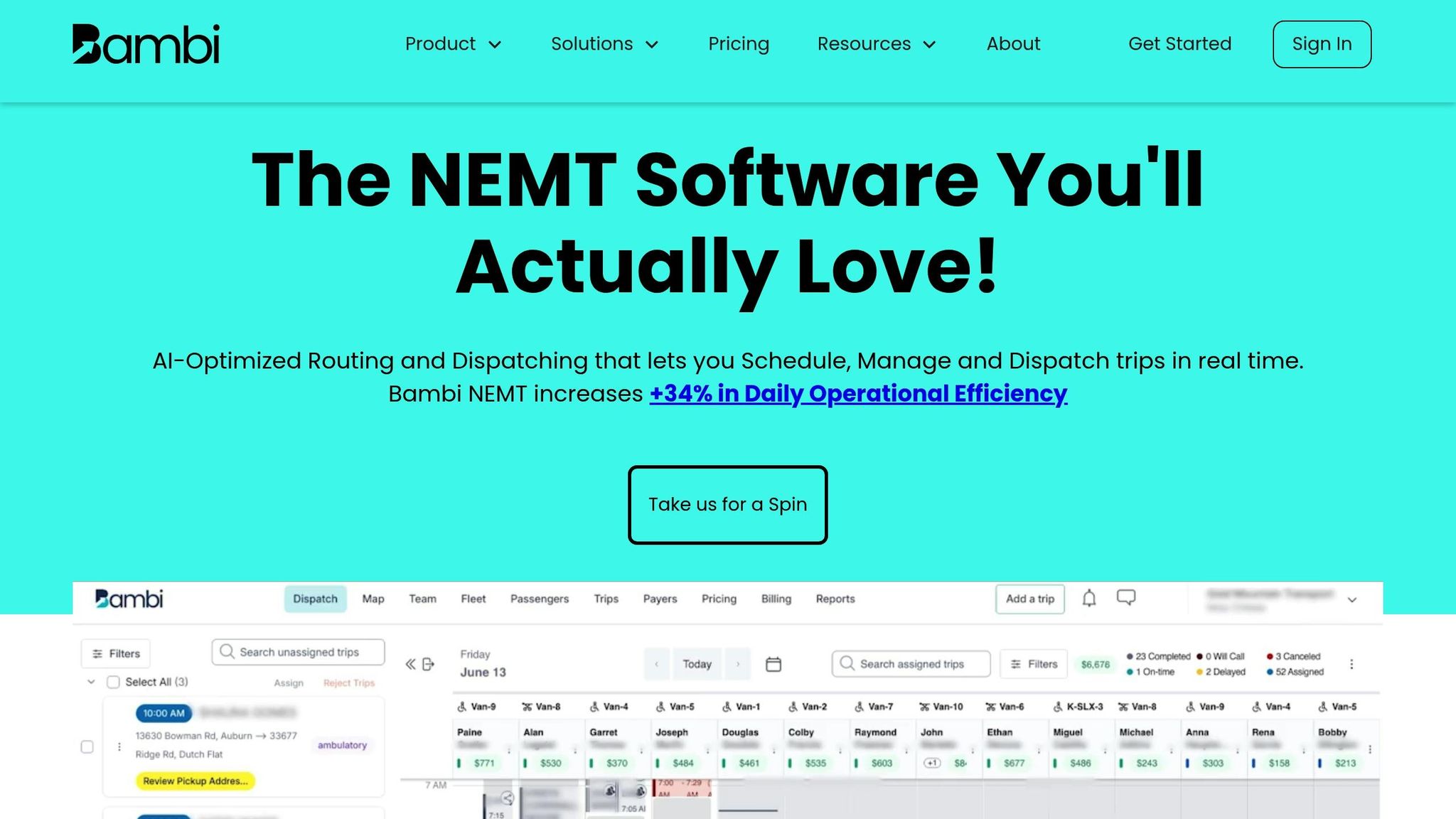
Today's Non-Emergency Medical Transportation (NEMT) services are increasingly using technology not just to improve efficiency but also to meet the specific safety needs of student transportation. Tools like Bambi, powered by AI, simplify route planning, communication, and real-time responsiveness, making it easier to handle the complexities of student transport - especially for those with special needs.
AI-based routing tools analyze real-time data and patterns to create the most efficient routes. These systems consider historical traffic trends, current road conditions, and live updates to adjust routes dynamically when delays happen.
For instance, one study revealed a 46% boost in bus route efficiency, 40% cost savings over a decade, and an increase in on-time arrivals from 85% to 99%. These advancements ensure more reliable service and provide peace of mind to both families and schools.
Such optimizations also pave the way for better real-time responsiveness.
Real-time GPS tracking allows families and schools to monitor vehicle locations and receive updates instantly. This feature not only reduces uncertainty but also reassures parents - over 70% report feeling safer with this level of visibility.
The benefits extend beyond peace of mind. One implementation led to a 30% drop in bus-related accidents, a 15% improvement in on-time arrivals, and a 10% reduction in fuel consumption through optimized routing. GPS tracking also automates status updates, reduces no-shows, and equips dispatchers with tools to respond quickly, enhancing overall safety and efficiency.
For students with medical needs, real-time communication becomes even more critical. Immediate updates on medical concerns enable prompt action. Delays can have real consequences - nearly 30% of students miss transportation appointments, resulting in an average loss of $200 per unused appointment slot.
The integration of technology into student transportation directly influences safety, reliability, and efficiency for everyone involved:
| Stakeholder | Technology Benefits | Specific Outcomes |
|---|---|---|
| Parents | Real-time tracking, automated notifications, and ETA updates | Reduced stress, better daily planning, and instant alerts for delays or changes |
| Schools | Monitoring trip status, coordinating attendance, and automated reporting | Improved tracking of student arrivals, fewer administrative hassles, and streamlined resource planning |
| NEMT Providers | Optimized routes, seamless driver communication, and performance insights | Lower fuel costs, better punctuality, and data-driven operational improvements |
| Students | Predictable pickups, shorter travel times, and enhanced safety features | More reliable attendance, less travel-related stress, and an overall better experience |
Platforms like Bambi integrate these features into all-encompassing systems that handle scheduling, dispatching, and compliance. They also ensure regulatory adherence by keeping detailed records of routes, driver communications, and service metrics.
Advanced data analytics further enhance these systems by tracking metrics like on-time performance, vehicle usage, and user satisfaction. This continuous monitoring identifies areas for improvement, whether it’s additional training or resource allocation.
For students with special needs, these platforms go a step further. Features like flexible scheduling, automated dispatching, billing tools, and client interaction capabilities help providers deliver more personalized and efficient service. This adaptability ensures that schools and families alike benefit from improved transportation solutions tailored to their unique needs.
Students with disabilities often face transportation challenges that traditional school buses may not fully address. Non-Emergency Medical Transportation (NEMT) providers step in to offer services specifically designed to meet the unique needs of these students.
NEMT vehicles are carefully modified to address the wide-ranging needs of students with disabilities. These adjustments go far beyond standard accessibility features, integrating specialized equipment such as wheelchair lifts, stretcher transport systems, and adaptive seating options. Depending on the modifications, costs can vary from a few hundred to tens of thousands of dollars, ensuring that every student can safely and comfortably access transportation.
Inside the vehicles, the design focuses on comfort and sensory needs. Noise-dampening features help students who are sensitive to sound, while climate-controlled interiors ensure comfort for those with specific medical conditions. Adjustable seating systems allow quick customization to fit individual requirements.
For students requiring medical assistance during transit, vehicles are outfitted with features like oxygen tank storage, medical monitors, and specialized harness systems. Additionally, staff are trained in first aid, CPR, and how to respond to the specific medical needs of students while en route. These vehicle modifications and staff training ensure that transportation services align with each student’s unique schedule and needs.
Creating a personalized transportation plan starts with understanding the specific needs of each student. School districts are required to meet the transportation mandates outlined in a student's Individualized Education Program (IEP), which means NEMT providers must handle complex and customized scheduling.
To streamline this process, dedicated scheduling platforms include a "Rider Notes" section where parents and caregivers can detail their child’s preferences, routines, and specific needs. This information helps drivers anticipate and accommodate special circumstances, fostering a sense of comfort and familiarity for students. Consistency is another key factor - students typically interact with only one to three drivers over a 90-day period, helping to reduce anxiety and build trust.
NEMT services also adapt to non-traditional schedules, accommodating medical appointments, therapy sessions, and specialized school programs outside standard school hours. This level of flexibility ensures students don’t miss out on essential services due to transportation barriers. Alongside these scheduling efforts, providers implement practical methods to enhance service delivery for students with special needs.
Delivering effective transportation services relies on thorough training, clear communication, and thoughtful planning. Providers invest in disability awareness and sensitivity training for all staff. Drivers are often required to have at least five years of experience working with individuals who need extra support, ensuring they are prepared to handle diverse needs.
Open communication with families is equally important. Real-time tracking and regular updates during the ride help parents stay informed, easing concerns and aiding daily planning. Consistent routines - such as maintaining the same pickup and drop-off procedures and following familiar routes - help students feel secure and foster a sense of independence.
Detailed records of each student’s needs and emergency contacts ensure seamless care, even when multiple staff members are involved. By combining well-equipped vehicles, specialized training, and proactive communication, NEMT services minimize missed appointments and disruptions to education. This approach allows families to focus on their child’s overall well-being, knowing transportation is safe, reliable, and tailored to their needs.
While advanced technology plays a vital role in student safety, clear and consistent communication is just as crucial for building trust with families. When parents rely on Non-Emergency Medical Transportation (NEMT) services, they need more than just a ride - they need the assurance that their child will get to their destination safely and on time. That sense of security comes from open communication, dependable systems, and accountability measures that keep everyone informed throughout the process.
Transparent communication, paired with reliable technology, helps establish trust in NEMT services. These systems automatically send parents trip details, such as estimated arrival times and driver information, while also offering direct communication with drivers or dispatchers to address any questions or concerns. Drivers are equipped with mobile devices or two-way radios, ensuring they remain in constant contact with dispatchers or medical staff when needed. If delays occur, families are notified right away, minimizing stress and uncertainty.
For children with special needs, communication becomes even more essential. Pediatric patients may feel anxious or uncomfortable when traveling to medical appointments, so NEMT providers work closely with families and healthcare professionals to ensure transportation aligns seamlessly with medical schedules and treatment plans.
NEMT providers use advanced tracking systems to maintain detailed records, ensuring service quality and accountability. Passenger profiles stored in dispatch systems include critical information like medical conditions, mobility needs, and preferred contact methods. GPS tracking enables real-time monitoring of vehicle locations and movements, allowing dispatchers to handle delays, optimize routes, and provide accurate updates to parents and schools.
Incident reporting systems further enhance accountability by documenting and resolving any issues that arise during trips. Both passengers and drivers can report incidents, creating a transparent record of events. These systems also help providers meet regulatory requirements, including safety and vehicle standards. Automated billing and documentation features add another layer of transparency, offering a clear overview of operations.
The integration of advanced technology with effective communication delivers multiple layers of reassurance for families, schools, and students. These features address concerns about safety, reliability, and accountability while catering to the specific needs of children with special requirements.
| Feature | Parent Benefits | School Benefits | Student Benefits |
|---|---|---|---|
| Real-Time GPS Tracking | Always know the child’s location | Monitor arrival times | Predictable daily routines |
| Automated Notifications | Pickup/drop-off confirmations | Immediate delay alerts | Clear expectations |
| Direct Driver Contact | Quick communication with drivers | Fast issue resolution | Prompt attention to concerns |
| Compliance Reporting | Confidence in safety standards | Clear regulatory documentation | Consistent safe experiences |
| Incident Tracking | Transparent issue resolution | Accountability for all parties | Improved safety measures |
The benefits of these systems go beyond individual trips. By ensuring students arrive at appointments on time, NEMT services help maintain continuity of care, leading to better health outcomes and avoiding costly disruptions.
"Non-emergency transportation embodies a proactive approach, offering a reliable solution that allows patients to manage their care without unnecessary interruptions."
- R&A Non Emergency Medical Transportation, LLC
Self-service portals add another layer of convenience, allowing families to schedule rides, track bookings, and communicate directly with drivers. This added control not only enhances the overall experience but also eases the administrative workload for schools and healthcare providers.
Through these thoughtful communication strategies, NEMT services provide families and schools with the confidence they need. By prioritizing safety, reliability, and transparency, these systems allow families to focus on their child’s education and well-being, laying the groundwork for long-term trust between NEMT providers, families, and schools.
Non-Emergency Medical Transportation (NEMT) has reshaped the landscape of student transportation by offering a safer, more reliable alternative to traditional school buses. While 37% of students still depend on conventional school buses and over half rely on private transportation, NEMT services fill critical gaps by catering to the unique needs of every student.
The safety benefits are striking. Nearly two-thirds of school bus-related fatalities occur outside the vehicle. NEMT providers tackle this issue head-on with rigorous safety measures, including thorough background checks, professional driver training, and detailed vehicle inspections. These steps create a secure environment that goes well beyond the basics of transportation.
Advanced technology plays a vital role in NEMT's effectiveness. Real-time GPS tracking, AI-powered scheduling, and streamlined communication not only enhance service quality but also cut down travel time and operational costs. As Tom Malan, Marketing Director at NEMT Cloud Dispatch, explains:
"Real-time GPS tracking is a game-changer for NEMT services, improving efficiency, safety, and overall service quality".
This technological edge aligns seamlessly with NEMT's commitment to personalized care.
What truly sets NEMT apart is its ability to provide customized services. For students with special needs, this means access to modified vehicles, trained staff, and constant monitoring - features that standard transportation options simply can't match. Whether it's accommodating last-minute schedule changes, specialized medical equipment, or unique accessibility needs, NEMT ensures every student receives the attention they deserve.
These advancements also benefit school districts. By improving efficiency, reducing commute times, and ensuring compliance with state and federal regulations, NEMT services have helped districts cut transportation costs and streamline operations. The result? Students spend less time in transit and more time focused on their education.
Ultimately, NEMT delivers peace of mind for families, offering a transportation solution that is safe, stress-free, and adaptable to each child's specific needs. It represents a new era in student transportation - one where technology and care work together to ensure every child arrives safely, on time, and ready to learn. This approach not only supports students but also alleviates stress for families and simplifies logistics for schools, creating a win-win for everyone involved.
NEMT services place a strong emphasis on the safety and comfort of students with special needs by utilizing specially designed vehicles. These vehicles are equipped with features tailored to meet diverse medical and accessibility needs, such as wheelchair ramps, secure harness systems, and even stretcher accommodations when required.
The staff and drivers operating these vehicles undergo thorough training to handle a wide range of medical and mobility challenges. This ensures that each student is transported with care and sensitivity. To further enhance safety, many vehicles are outfitted with advanced protective measures like side-impact airbags, offering an added layer of security in the event of an accident.
By combining specialized equipment, trained personnel, and enhanced safety features, NEMT creates a reliable and supportive transportation experience for students with special needs.
NEMT uses cutting-edge tools such as AI-driven scheduling, routing, and dispatch systems to enhance the safety and reliability of student transportation. These technologies help create efficient routes, oversee trips as they happen, and improve communication among drivers, parents, and schools.
By simplifying operations and delivering real-time updates, these systems ensure that students - particularly those with special needs or medical conditions - get to school safely and on schedule. This provides much-needed reassurance to both families and educators.
Non-Emergency Medical Transportation (NEMT) services are specifically designed to cater to the needs of students with disabilities. These services provide specialized vehicles, such as wheelchair-accessible vans, and staff trained to assist with mobility and medical needs. Unlike standard school buses, which often lack these essential accommodations, NEMT prioritizes a safer, more comfortable travel experience tailored to each student’s unique requirements.
To enhance efficiency and communication, many NEMT providers utilize advanced tools like AI-powered scheduling systems. These systems help optimize travel routes and offer real-time updates to parents and schools, ensuring everyone stays informed. By focusing on safety, reliability, and seamless communication, NEMT services help students arrive at school on time and without unnecessary stress, giving families peace of mind.
See the full interview on YouTube
Please don't forget to subscribe and like NEMT Experts Podcast on YouTube.
Also, available to watch on Spotify
And listen (audio only) on your other favorite podcast platforms Apple and Pandora.
What really are the tips and tricks to building a successful NEMT private pay business? Bruce Troll of Gentle Heart Transportation learned the hard way and shares his secrets so that you can learn the easy way. In this episode, Bruce shares his secrets about how he marketed his business and started to get trips.

Did you know? Over 7.5 million students in the U.S. receive special education services, yet many lack proper transportation options. This growing need presents a clear opportunity for NEMT (Non-Emergency Medical Transportation) businesses to expand into special needs student transportation.
Expanding into this market not only boosts revenue but also fulfills a critical community need, helping students with disabilities access education and care. Ready to learn how? Let’s dive in.
Stepping into the special needs student transportation market means tackling an additional layer of federal and state regulations beyond standard NEMT compliance. Understanding these rules is essential - not just to protect your business, but to ensure the safety of the students you transport.
Transporting special needs students involves navigating a complex web of federal and state rules. At the federal level, the Americans with Disabilities Act (ADA) provides the foundational framework. Under 49 CFR Part 37, vehicles must meet ADA accessibility standards and provide nondiscriminatory service to all passengers.
Child passenger safety regulations add another layer of responsibility. Unlike standard NEMT, these rules are stricter because they focus on protecting younger, more vulnerable passengers. The National Highway Traffic Safety Administration (NHTSA) and the American Academy of Pediatrics (AAP) have established detailed guidelines. Considering that nearly 250,000 children are injured in car crashes annually, with almost 2,000 fatalities, these regulations go beyond legal obligations - they're about saving lives.
"Transportation includes expenses for transportation and other related travel expenses determined to be necessary by the agency to secure medical examinations and treatment for a beneficiary." - 42 CFR § 440.170
State regulations often go further than federal requirements. Each state has its own mandates for driver qualifications, vehicle safety features, and insurance coverage. In many cases, state-specific child passenger safety measures exceed federal guidelines. If you plan to operate across multiple states, you'll need to research and comply with each state's unique rules.
Vehicles must be equipped with proper child restraints, and drivers are responsible for securing children before every trip. Additionally, NHTSA guidelines require regular vehicle inspections and maintenance to ensure safety.
Driver qualifications are another critical area. States typically require thorough background checks, drug testing, and ongoing monitoring, which often go beyond standard NEMT protocols. These requirements help ensure that drivers are not only qualified but also trustworthy and reliable. A deeper dive into driver verification standards is provided in the following sections.
Meeting regulatory requirements also means obtaining the right certifications and keeping meticulous records. For special needs student transportation, driver certification standards are more demanding than those for standard NEMT services. Drivers must hold a Commercial Driver's License (CDL) with both Passenger (P) and School Bus (S) endorsements. The School Bus endorsement includes additional testing focused on the unique challenges of operating school buses, which aren't typically encountered in standard NEMT work.
In addition to a CDL, drivers must pass a medical examination to confirm they're fit to operate commercial vehicles carrying children. These medical certifications often need to be renewed more frequently than those for drivers transporting adults.
One way to stand out in this market is through the Certified in Special Needs Transportation (CSNT) program. This certification involves completing eight training courses, submitting an application with four professional references, passing an online exam with a score of at least 80%, and maintaining annual membership in the National Association for Pupil Transportation (NAPT). While not always legally required, this certification highlights your commitment to providing specialized care and can give you a competitive edge when bidding for contracts.
Vehicle certification requirements are also more stringent. For example, in Minnesota, vehicles used for special transportation must be certified by the Department of Transportation and either owned by the school or contracted through an approved provider. These vehicles often require custom adaptations tailored to the needs of individual children. This may involve specific inspections and certifications for specialized equipment.
Documentation is another critical aspect. You'll need to maintain detailed records of driver training, vehicle modifications, safety inspections, and incident reports. Some states also require higher insurance coverage limits for vehicles transporting multiple children compared to standard NEMT operations.
In certain cases, education-related passenger carriers may be exempt from some Federal Motor Carrier Safety Administration (FMCSA) regulations. However, these exemptions depend on the jurisdiction and specific circumstances. To stay compliant, always consult your local Department of Motor Vehicles or equivalent agency for the latest rules and procedures.
The complexity of these regulations is one reason many school districts struggle to manage transportation services internally. By mastering these compliance requirements, you can position your business as a trusted partner for schools. However, keep in mind that the additional certifications, training, and documentation will increase both operational costs and the time it takes to enter this market effectively.
Shifting to transporting students with special needs involves more than just adding accessibility features. It requires tailored vehicle modifications, comprehensive driver training, and smarter scheduling to meet the unique challenges of this service.
Adapting vehicles for transporting students with special needs goes beyond standard accessibility features. While many fleets already include wheelchair lifts and securement systems, additional modifications are often necessary to ensure safety and comfort.
For example, wheelchair lifts can cost between $1,500 and $4,000, while ramps range from $500 to $30,000. A model like the VMI Honda Odyssey is a great example of a purpose-built vehicle, featuring an in-floor ramp, spacious interiors, and a lowering suspension system designed for passengers with disabilities.
Beyond mobility access, other adjustments may be required to accommodate students with varying needs. Fine motor features, such as automatic door openers or modified knobs, complement gross motor adaptations like hand controls (ranging from $150 to $1,500), left-foot accelerators ($100 to $1,200), or specialized lifts. Seat adjustments can cost up to $10,000, while steering wheel knobs range from $10 to $300. For students with sensory sensitivities, modifications like sound-dampening materials, reduced lighting, or custom seating can help minimize overstimulation, particularly for children with autism or sensory processing disorders.
The cost of a fully modified vehicle can range from $20,000 to $80,000, depending on the level of customization. Smaller-capacity vehicles often provide greater flexibility and a more personalized experience for student transportation. It’s essential to consult with a driver rehabilitation specialist and work with a mobility dealer registered with the National Highway Traffic Safety Administration (NHTSA) to ensure proper installation and compliance. Regular maintenance of these adaptive systems is also critical to uphold safety standards and maintain warranties.
Once vehicles are equipped, the next step is ensuring drivers are trained to handle the unique demands of transporting special needs students.
Drivers must be equipped with the skills to manage behavioral, medical, and communication challenges specific to students with disabilities. Behavioral management is particularly important, as children may express discomfort or distress in ways that require quick and thoughtful responses.
Nationally recognized programs like the Certified Transport Specialist (CTS) course provide foundational training for $55 per student, with certification valid for two years. In April 2025, NEMTAC reduced the CTS course fee to make it more accessible, and major brokers such as Modivcare, SafeRide Health, and MTM accept this certification. For drivers handling mobility devices, Advanced Mobility Device Securement (AMDS) training, offered at $140 per student, ensures proper handling of wheelchairs, walkers, and similar equipment.
Drivers may also need training for medical complexities. For instance, the Certified Stretcher Operator (CSO) course, priced at $140 per student, and the Transporting Students with Special Needs Training Curriculum ($179.95) cover emergency preparedness and effective communication strategies. States like Tennessee, Colorado, and Idaho have officially approved NEMTAC credentials, highlighting the growing recognition of these specialized programs.
Efficient scheduling is the backbone of reliable student transportation. Unlike medical appointments, student transport revolves around fixed school schedules, offering predictable pickup and drop-off times Monday through Friday. This consistency can create steady revenue streams but requires robust scheduling software capable of managing automated schedules, real-time updates, and route optimization.
Optimizing routes is crucial when serving multiple students across different neighborhoods and schools. Grouping nearby pickups can help reduce travel time, fuel expenses, and vehicle wear. Additionally, effective communication with parents and caregivers is key. Sending personalized reminders - 24 hours and again one hour before pickup - can improve punctuality and build trust.
Flexibility is also important, as unexpected changes like sick days, early dismissals, or weather-related issues can arise. A dispatch system that handles real-time challenges, such as traffic incidents or the need for replacement vehicles, is essential. For example, one NEMT business that implemented advanced scheduling software saw fewer missed appointments and significant improvements in efficiency.
With about 14% of public school students (approximately 7.3 million children) receiving special education services under IDEA in 2019–20, the market for specialized student transportation is substantial.
Technology has revolutionized how Non-Emergency Medical Transportation (NEMT) services operate, especially when it comes to transporting special needs students. With the right software, what once were logistical headaches - like scheduling and compliance - can now become smooth, efficient processes. These tools also help ensure clear communication with schools and parents, creating a more reliable and transparent system.
AI-powered scheduling takes the guesswork out of planning routes and assigning drivers. By automating these tasks, dispatchers save countless hours. One standout feature, "Run Bambi Run", provides instant scheduling suggestions, making operations far more efficient.
"It's the easiest and best system that we have ever worked with scheduling wise... I just really appreciate Bambi and I'm so glad we found you. Run Bambi Run!" - Christina, Plan B Express Transit
Smart algorithms take things a step further by optimizing routes and delivering real-time GPS updates. This not only reduces travel time and fuel costs but also allows for on-the-fly adjustments when serving students from different schools or neighborhoods. The result? Less wear on vehicles and a higher likelihood of students arriving on time.
Automated dispatching simplifies the complexity of managing multiple routes at once. These systems allow dispatchers and drivers to communicate seamlessly through trip statuses, live location updates, and shift confirmations - all without the need for disruptive phone calls.
Technology doesn’t just improve logistics; it also helps ensure compliance and fosters trust through better communication.
Digital compliance management tools make it easier to stay on top of regulatory requirements. Fleet management software can automatically track driver certifications, vehicle inspections, and maintenance schedules, reducing the risk of violations and keeping your operations compliant.
Student tracking applications offer much-needed transparency. These tools allow schools and parents to monitor vehicles in real time, providing immediate updates and peace of mind. This is particularly valuable, as nearly one-third of parents report feeling anxious about their child’s commute to elementary school.
"Student tracking applications provide transparency and peace of mind while building trust between districts, schools, parents, and students. The result is a smoother, more informed experience for everyone." - Sonu Kansal, Chief Technology Officer, EverDriven
Emergency response systems integrated into transportation platforms provide instant alerts in case of delays, breakdowns, or medical emergencies. With geofencing capabilities, these systems automatically notify parents and school staff if a vehicle deviates from its planned route or encounters unexpected stops.
Communication tools are critical for keeping everyone informed. Features like driver-dispatch chat and automated notifications ensure that parents are updated about pickup times, delays, and arrivals. This is especially important for special needs students, who may require additional support or have unique scheduling needs.
Finally, reporting and analytics enhance operational transparency. By tracking metrics like on-time performance, route efficiency, and compliance, these tools not only improve daily operations but also help demonstrate reliability to school districts - an essential factor for securing contract renewals or expansions.
For NEMT businesses thinking about expanding into special needs student transportation, understanding the financial dynamics is essential. By applying operational improvements discussed earlier, you can create a solid financial plan that opens up new revenue opportunities. Success in this area hinges on choosing the right pricing model and carefully analyzing investment returns.
Special needs student transportation typically uses a per-trip billing model, which aligns well with school district budgets and offers more predictable income compared to hourly rates. The standard pricing structure includes a few key elements:
Optimizing routes is another way to boost revenue. By consolidating trips and cutting operational costs, providers can improve efficiency. Flexible contracts with school districts also allow adjustments based on actual needs. Switching to fuel-efficient vans or sedans instead of traditional school buses, combined with smart routing and better vehicle utilization, can cut transportation costs by as much as 30%.
These pricing strategies not only aim to meet revenue goals but also ensure expenses are covered, as outlined below.
Once pricing models are in place, a detailed cost analysis helps determine your break-even point. While the initial investments can be high, careful planning can lead to strong returns.
Calculating ROI involves dividing revenue from student transportation services by total operating costs. Additionally, vehicle utilization can be improved by offering traditional NEMT services during off-peak hours. For instance, wheelchair transportation base fees often start at $50+, while ambulatory trips range from $25 to $30.
Efficient scheduling and automated billing systems further reduce costs and increase profit margins. With a well-thought-out plan, many businesses see positive returns within 12 to 18 months. Conducting a thorough needs assessment and preparing a detailed budget that factors in both upfront and ongoing expenses is critical. A gradual, performance-focused rollout allows you to refine operations while keeping risks low.
Once you've fine-tuned your operations and financial plans, it's time to focus on entering the special needs student transportation market. This niche requires careful planning, strong partnerships, and effective marketing to ensure a successful launch.
Forging partnerships with schools and local organizations is key to establishing a special needs transportation service. Collaborating with school transportation systems can create additional revenue opportunities for NEMT businesses while meeting a critical need. It's essential to align these partnerships with the specific regulations of each school district.
Start by identifying schools in your area and evaluating their transportation requirements. Reach out to special education coordinators to understand the challenges they face. Many districts struggle to accommodate students with mobility needs due to a lack of properly equipped buses.
"Each child's IEP team is responsible for determining both if transportation is required to assist a child with a disability to benefit from special education, and how the transportation services should be implemented."
– John Eisenberg, Executive Director of the National Association of State Directors of Special Education
Engage with schools, PTAs, and community groups to get a clearer picture of their needs. Attending school board meetings can help you learn about budget constraints, service gaps, and potential contract opportunities. Collaboration across sectors - including schools, bus companies, medical transportation providers, and families - can enhance driver training and improve resources for staff. Consider organizing joint training sessions with special-needs educators to further strengthen these partnerships.
Expand your network by joining organizations like the National Association for Healthcare Transportation Management (NAHTM). Attending industry events, health fairs, and community meetings can also help you connect with the families and institutions you'll serve. Once these relationships are in place, communicate your value directly to parents and school officials.
When marketing your services, focus on safety, reliability, and the unique value you bring. Create a professional, user-friendly website and maintain active social media profiles that showcase testimonials, safety records, and real-time updates. Clearly outline your specialization in special needs transportation, including vehicle modifications, driver training, and safety protocols.
Safety should be the centerpiece of your messaging. Highlight your adherence to ADA standards and Medicaid guidelines to reassure parents and schools of your commitment to their children's well-being.
Participate in community events and school fairs to promote your services. Setting up booths at resource fairs, autism awareness events, and disability advocacy gatherings can help you connect directly with families who need your services.
Use a transparent feedback system to gather input from parents and schools. Regular communication, such as monthly newsletters featuring updates on safety measures, driver recognition, and service improvements, can foster trust and loyalty. Additionally, consider targeted digital advertising to address the specific concerns of families and schools in your area.
These marketing efforts will prepare you for a smooth and structured launch.
Specializing in student transportation not only opens a new revenue stream but also addresses a vital community need. Here's how to get started:
Leverage the partnerships you've established to secure contracts with healthcare providers, hospitals, and clinics that cater to pediatric patients. Partnering with Medicare and Medicaid programs can unlock additional revenue opportunities, and working with a broker can help you quickly tap into established networks.
Begin with a pilot program involving one or two schools. This allows you to refine your operations, train staff, and build a track record of success. Track performance metrics - such as on-time arrivals, parent satisfaction, and operational costs per trip - to make improvements, set competitive pricing, and demonstrate your value to prospective clients.
By leveraging your expertise in compliance, vehicle modifications, and efficient scheduling, you’re well-positioned to tap into new opportunities in the specialized transportation market for students with special needs.
Across the United States, the demand for these services is steadily growing. With over 7.5 million students receiving special education services under IDEA, there’s a clear need for reliable transportation solutions tailored to their unique requirements. Your experience in NEMT (Non-Emergency Medical Transportation) gives you a head start - skills in navigating regulations, operating specialized vehicles, and serving vulnerable populations seamlessly translate to this sector.
The financial potential is undeniable. The NEMT market is projected to grow from $9.7 billion in 2024 to more than $13 billion by 2028, reflecting an 8% compound annual growth rate. Expanding into student transportation not only diversifies your services but also reduces vehicle downtime and provides a steady income stream, even during industry fluctuations.
But this is about more than just numbers. Reliable transportation has a profound impact on students and their families. It ensures that children with special needs can attend school consistently, access therapy sessions, and receive the medical care they need to thrive academically and personally.
"NEMT services are more than just transportation; they are a crucial tool for enabling students with special needs with the tools for success." - BriteLift
Your current investments in driver training, technology, and safety compliance create a strong foundation for entering this market. Start small by partnering with one or two schools to establish your reputation. Once you’ve proven your operational capabilities, scaling up becomes a natural next step. This path not only strengthens your business but also makes a meaningful difference in the lives of countless families.
To transport special needs students safely and within the law, NEMT businesses must meet a mix of state and federal regulations. State-specific licensing and permits are a must, and drivers often need certifications such as a valid driver’s license or even a commercial driver’s license (CDL). Many states also require specialized training, like the Certified in Special Needs Transportation (CSNT) program, to address the unique needs of these students.
On the federal level, compliance with the Americans with Disabilities Act (ADA) is essential to ensure accessibility, while HIPAA regulations safeguard student privacy. Regularly updating training programs and keeping thorough records are key to maintaining compliance and delivering reliable, high-quality transportation services.
NEMT businesses can adjust their services to meet the needs of special needs students by equipping their vehicles with ADA-compliant features like wheelchair lifts, ramps, and securement systems. Adding extras such as swivel seats, safety bars, and adjustable straps can make rides even safer and more accessible for these passengers.
It's equally important for drivers to undergo specialized training to better support this group. Training should cover areas like effective communication, understanding unique requirements, and handling emergencies. Staying up to date with state and federal regulations is also key to ensuring both safety and legal compliance.
When these vehicle modifications are paired with tools for reliable scheduling and route optimization, NEMT businesses can offer transportation services that are dependable, inclusive, and designed specifically for special needs students.
Expanding your NEMT (Non-Emergency Medical Transportation) business to include services for special needs students can open up new financial opportunities. It allows you to diversify your income, make better use of your vehicles, and cater to the growing demand for specialized transportation. Beyond the financial benefits, stepping into this market also lets your business play a bigger role in supporting the community by providing a vital service.
That said, this kind of expansion isn’t without its hurdles. You’ll need to comply with strict safety regulations, invest in vehicle modifications tailored to special needs, and ensure your drivers receive proper training. While these changes require an upfront investment and operational adjustments, they can pave the way for long-term success and make a meaningful difference in the lives of students and their families.

School transportation in the U.S. is in crisis. Severe bus driver shortages have forced 60% of schools to cut routes, leaving parents to shoulder the burden - 79% now drive their kids to school. Meanwhile, $28 billion is spent annually on outdated, unreliable systems that fail to meet the needs of students, especially the 7.3 million with disabilities.
Non-Emergency Medical Transportation (NEMT) providers offer a practical solution. These companies specialize in safe, flexible, and accessible transportation, using AI-powered route planning, trained drivers, and wheelchair-accessible vehicles. Schools partnering with NEMT services can reduce costs by up to 70%, improve safety, and ensure reliable transport for all students.
For schools struggling with transportation challenges, NEMT providers bring expertise, technology, and flexibility to ensure every student gets to school safely and on time.
Non-Emergency Medical Transportation (NEMT) companies have the tools and experience to tackle challenges in school transportation. Their expertise in managing complex logistics and safely serving vulnerable populations makes them well-suited for this role.
A survey found that about 96% of transit agencies face workforce shortages, with 84% stating it negatively impacts their services. At the same time, NEMT providers operate trained fleets designed to handle passengers with special needs - skills that align with the requirements of school transportation.
NEMT providers bring operational strengths that directly address school transportation demands. For instance, over 5 million Americans rely on wheelchairs, and NEMT vehicles are equipped with features like wheelchair accessibility, ramps, lifts, and enhanced safety measures. These include slip-resistant surfaces and contrasting color bands for better visibility, which benefit all students, not just those with disabilities. These features also help alleviate common issues such as overcrowding and inadequate accessibility.
Special education students make up around 13% of the school population, and transportation for these students accounts for a significant portion of the education budget - up to 21% in some cases. NEMT providers can offer flexible scheduling to better meet these students' needs, along with specialized care that goes beyond what traditional school buses typically provide. Additionally, NEMT services include door-to-door assistance, offering a personalized touch that standard bus routes often lack.
NEMT companies excel at managing intricate scheduling and route planning, coordinating numerous daily appointments while addressing individual passenger requirements. Their drivers are trained to assist passengers with disabilities, secure wheelchairs, and handle emergencies.
These providers also follow strict maintenance schedules and comply with rigorous safety regulations, ensuring a higher level of passenger safety. In contrast, traditional school buses often lack the necessary space and equipment to accommodate students with special mobility needs. This expertise positions NEMT providers as a strong solution for the evolving challenges of school transportation.
NEMT (Non-Emergency Medical Transportation) services bring noticeable improvements to school transportation by addressing logistical challenges, enhancing safety, and reducing costs. These solutions are reshaping how schools manage transportation for students.
NEMT providers use AI-powered scheduling systems to overhaul traditional school transportation logistics. These systems automatically create efficient routes and quickly adapt to unexpected changes like traffic or schedule updates.
With route optimization software, adjustments happen in real-time, factoring in variables like distance, traffic, and timing. This approach is far more efficient than the manual planning methods most school districts still rely on.
The outcomes are impressive. RouteGenie customers can complete 25% more trips using the same number of vehicles and drivers. For schools facing driver shortages, this means they can serve more students without needing to expand their fleet or hire additional staff.
"RouteGenie has reduced the time it takes to create schedules from 6 hours to 45 minutes. It has helped us manage our drivers: we know where they are, which trips have been completed, who's on lunch, etc." - Sherina T., Great Lakes PACE
Additionally, multi-loading capabilities allow for multi-stop routes, ensuring vehicles are used efficiently. This is especially beneficial for schools with students spread across large areas or districts operating multiple campuses.
Beyond improving efficiency, NEMT providers prioritize safety and cater to students with special needs. They follow strict safety protocols and train drivers to handle unique requirements, often exceeding the standards of traditional school transportation.
These companies adhere to guidelines from the National Highway Traffic Safety Administration (NHTSA) and the American Academy of Pediatrics (AAP) to ensure child passenger safety. In many cases, state regulations for NEMT are stricter than federal ones, adding an extra layer of protection.
| Safety Feature | Requirement | Benefit |
|---|---|---|
| Driver Experience | Minimum 2 years driving experience, over 18 years old | Ensures experienced drivers handle student transport |
| PASS Training | Completion of Passenger Service and Safety course | Specialized skills for working with vulnerable populations |
| Vehicle Equipment | Seat belts, secure wheelchair belts, stocked first aid kit | Enhanced safety measures beyond standard requirements |
| ADA Compliance | Vehicles meet full accessibility standards | Proper accommodations for students with disabilities |
For students with medical needs or those who are immunocompromised, NEMT services offer a safer and more controlled environment than traditional school buses. Smaller vehicle capacities and personalized attention reduce risks, including bullying for children with developmental challenges.
"Safety is critical for all NEMT passengers. Children have different needs than adults, and safety features within NEMT vehicles must account for their curiosity and propensity for pushing buttons and playing around." - Yurii Martynov, Marketing Director, RouteGenie
Child safety seats are another critical component. Proper use of car seats can lower the risk of fatal injury by 71% for infants and 54% for toddlers. NEMT providers ensure compliance with child safety seat requirements, providing the right equipment for students of all ages.
NEMT services not only improve safety and efficiency but also significantly reduce costs. By optimizing routes and streamlining operations, these providers help schools save money while improving reliability.
Modern NEMT services can cut transportation costs by 30% to 70%, offering much-needed budget relief for schools. For example, a CareMore pilot program with Lyft demonstrated a 32.4% per-ride cost reduction in just two months, leading to $1 million in savings over a year. While this case is from healthcare, the same principles apply to school transportation.
These cost reductions are achieved through AI-based dispatch and routing, which shorten transit times and reduce fuel expenses. With rising fuel costs, this efficiency becomes even more critical.
NEMT services also provide on-demand scheduling, electronic records, direct routes, and higher reliability. Schools benefit from fewer missed days due to transportation issues, resulting in better attendance rates.
"RouteGenie has helped us manage our routes in a much more efficient manner compared to our last software. We are able to control labor better, and we are able to look up past reservations quickly and easily, in case we need to reference notes." - Mitch T., Life Fleet
Another financial advantage is improved billing accuracy. RouteGenie users report 98% fewer unbilled claims on average, helping schools better manage transportation contracts and reduce administrative burdens.
Schools today face a range of transportation challenges, and teaming up with Non-Emergency Medical Transportation (NEMT) providers can help address these issues with greater efficiency and safety. However, integrating NEMT services into school operations requires careful planning, with a focus on safety and clear communication.
Technology plays a key role in coordinating school and NEMT services. AI-powered scheduling tools help streamline operations by managing routes and keeping everyone updated in real time.
Fixed-route software and real-time dispatch systems ensure students are picked up on time and that route changes are handled smoothly. These tools allow schools and NEMT providers to adapt quickly to unexpected road conditions or delays.
"Pre-order planning, routing and dispatching are crucial, and leading companies use technology to optimize and automate the planning process." - Sima Megrel, VP Marketing, Autofleet
Mobile apps designed for drivers further enhance communication. Features like in-app messaging, real-time updates, and incident reporting allow drivers to stay connected with dispatch centers without losing focus on the road. For example, if a driver encounters an issue, they can report it instantly and receive updated instructions.
Fleet tracking technology integrates with school administrative dashboards, providing a bird's-eye view of transportation operations. Automation also helps with compliance by managing documentation, monitoring driver credentials, and ensuring all legal and safety requirements are met. This reduces the administrative workload for school staff while maintaining high safety standards.
By leveraging these tools, schools and NEMT providers can create a transportation system that prioritizes both efficiency and safety.
Safety starts with strict adherence to legal standards. Schools must thoroughly verify vehicles, driver qualifications, and operational procedures before partnering with NEMT providers.
Driver qualifications are a cornerstone of safe student transportation. Schools should ensure that NEMT drivers hold the proper licenses, have undergone drug testing, and passed background checks. NEMT companies are responsible for conducting thorough screenings, and schools should request proof of these checks.
Driver training is equally important. Schools need to confirm that NEMT drivers are trained to transport students, including those with special needs. This training often involves using specialized equipment and assisting passengers with additional care requirements.
Vehicle compliance is another critical area. Schools should verify that NEMT vehicles meet all safety standards, including proper child restraints, regular maintenance, and adherence to state-specific regulations. For example, some states have stricter requirements for NEMT vehicles than for traditional school buses.
| Compliance Area | School Verification Requirements | NEMT Provider Responsibilities |
|---|---|---|
| Driver Licensing | Confirm valid commercial driver’s license | Maintain certifications and specialized training |
| Background Checks | Review completed screening documentation | Conduct thorough background checks |
| Vehicle Safety | Verify child safety restraints and ADA compliance | Ensure regular maintenance schedules |
| Insurance Coverage | Confirm adequate liability coverage | Maintain comprehensive insurance policies |
State-specific licensing requirements can vary widely. For instance, in California, NEMT providers must register with the California Public Utilities Commission (CPUC) and meet specific insurance and safety standards. Meanwhile, in Florida, providers are required to obtain a certificate of public convenience and necessity from local authorities.
Schools should regularly consult federal and state government websites to stay up-to-date on the latest legal requirements. NEMT services must also comply with regulations enforced by the Federal Transit Administration (FTA) and the Department of Transportation (DOT), ensuring they meet the same safety benchmarks as traditional school transportation.
Clear and effective communication is essential to keeping parents, staff, and transportation providers on the same page.
Schools should develop a detailed communication plan that specifies how and when updates will be shared with parents, staff, and drivers. This plan should outline protocols for emergencies, designate who receives specific information, and establish clear roles for everyone involved.
Using multiple channels - like email, text, and apps - can ensure timely updates about route changes, delays, or other important announcements. For parents, passenger apps can be a game-changer. These tools allow them to track vehicle locations and receive real-time updates on arrival times, offering peace of mind and better coordination between home and school.
At Pecos-Bartsow-Toyah ISD in Texas, Transportation Director Lee Serrano implemented FirstNet to improve communication. This system allows for rapid messaging to the appropriate parties when a student cannot be located, significantly reducing the time it takes to resolve such situations.
"When I first heard about FirstNet, it immediately sounded like something that we needed for our school buses... The safety aspect is really what sold us. If a student is unable to be located, I can quickly send out a message to all appropriate parties and significantly reduce the time that student is not accounted for. That's what we value the most. Peace of mind." - Lee Serrano, Transportation Director, Pecos-Bartsow-Toyah ISD, Pecos, Texas
Regular updates on bus routes, schedules, and delays help build trust with families and staff. Schools should also establish feedback systems so parents and staff can report issues or share suggestions for improvement. Training transportation staff on communication skills ensures professional and consistent interactions with all stakeholders.
Creating a strong partnership between schools and Non-Emergency Medical Transportation (NEMT) providers takes careful planning and attention to detail. With nearly 240 million children worldwide living with disabilities, many face daily mobility challenges. These partnerships can make a meaningful impact on students' lives by ensuring they have reliable transportation options. The process involves drafting clear agreements, smoothly integrating services, and maintaining high standards over time.
Schools must decide whether to use formal contracts or service agreements when partnering with NEMT providers. Each option has its own pros and cons. Contracts are legally binding and come with strict obligations - violating them can lead to legal consequences. On the other hand, service agreements are more flexible and easier to terminate, making them a better fit for certain situations.
Health insurance companies and large medical institutions often require formal contracts, while service agreements are more commonly used by brokers and non-medical organizations. Schools should consult legal professionals to choose the best option for their needs.
Key elements to include in these agreements are:
For NEMT providers, presenting strong business certifications can demonstrate professionalism and reliability. Those seeking an extra layer of credibility can pursue accreditation from the Non-Emergency Medical Transportation Accreditation Commission (NEMTAC), which reflects adherence to industry standards for safety and quality care.
During contract negotiations, clear communication is essential. Schools should detail their transportation needs, such as accommodations for students with disabilities, preferred routes, and scheduling requirements. NEMT providers, in turn, should honestly present their capabilities, limitations, and service guarantees. Tailoring agreements to meet specific goals ensures a smoother collaboration. Once the terms are agreed upon, schools can integrate these services into their existing operations without major disruptions.
Integrating NEMT services into a school’s transportation system can boost reliability without causing confusion for families or disrupting daily routines. By leveraging existing strategies like route optimization and strict safety protocols, schools can ensure a seamless transition.
Some steps to ensure smooth integration include:
NEMT providers can be particularly helpful for handling specialized routes, assisting students with disabilities, or stepping in as backup during high-demand periods. However, state regulations vary, so both schools and NEMT providers need to be familiar with local requirements before rolling out services. Some states require school districts to provide transportation and even offer funding to support these efforts. Understanding these rules is key to ensuring compliance and a hassle-free implementation.
After establishing contracts and integrating services, maintaining high-quality transportation becomes a top priority. Regular performance reviews and open feedback channels are crucial for identifying and resolving issues quickly. Both schools and NEMT providers should set clear performance metrics and review systems to keep standards high.
Performance monitoring can include:
These reports provide valuable insights, helping schools make informed decisions about their transportation partnerships. Schools should also set up dedicated support lines or online portals for staff and parents to report issues and track resolutions. This not only ensures timely problem-solving but also strengthens trust between both parties.
Technology can play a big role in maintaining service quality. GPS trackers and automated notifications provide real-time updates on transportation status, helping schools stay informed. These tools can also reveal patterns in delays or other issues, allowing for proactive adjustments.
Regular meetings between schools and NEMT providers are another way to ensure continued success. These discussions can cover daily operations, student needs, and transportation challenges, helping providers adapt their services to meet evolving demands. This collaborative approach leads to tailored solutions and stronger relationships over time.
Reliability and professionalism are non-negotiable when it comes to transportation. Punctuality, well-maintained vehicles, and consistent service are key to building trust. NEMT providers who prioritize these qualities position themselves as indispensable partners in supporting education systems.
The collaboration between schools and Non-Emergency Medical Transportation (NEMT) providers offers a practical way to tackle the ongoing challenges in school transportation. With traditional school buses facing driver shortages and rigid routes, NEMT providers bring a level of flexibility and expertise that aligns with the needs of today’s education systems.
One of the key advantages of NEMT services lies in their use of technology. Around 75% of parents express a desire to track their child’s commute to and from school. By incorporating GPS tracking, real-time monitoring, and user-friendly mobile apps, NEMT providers enhance both safety and communication - an area where traditional school buses often fall short.
NEMT services also stand out for their ability to adapt to changing needs. Unlike fixed bus routes, these services can accommodate students attending schools outside their immediate neighborhoods or those requiring more personalized pick-up and drop-off arrangements. This flexibility not only addresses inefficiencies in traditional transportation but also shortens ride times, contributing to student well-being. Additionally, this operational adaptability paves the way for cost-effective and environmentally conscious solutions.
Environmental impact is another area where NEMT providers excel. Traditional school buses contribute significantly to U.S. carbon emissions, accounting for nearly 25% annually. By transitioning to electric vehicles, emissions can be slashed by up to 92%. Many NEMT providers are already adopting green practices, such as using electric vehicles, supporting carbon offset programs, and offering multi-modal transportation options. These initiatives resonate with eco-conscious students and families while enriching the overall school experience.
A case from Grand Rapids, Michigan, highlights the financial benefits of NEMT partnerships. Ride Your Way NEMT tackled billing hurdles by negotiating directly with facilities, creating sustainable billing models. These stretcher-alternative trips turned out to be far more affordable than traditional ambulance services. This strategy not only saved costs but also built long-term partnerships and dependable revenue streams - a blueprint that schools can emulate.
For schools ready to embrace modern, reliable, and flexible transportation solutions, NEMT providers offer a proven path forward. Combining specialized transport expertise, advanced technology, environmental initiatives, and adaptable services, they represent a meaningful investment in safer, more efficient, and forward-thinking student transportation.
Student safety is the top priority for NEMT (Non-Emergency Medical Transportation) providers, and they take a multi-faceted approach to ensure it. Vehicles undergo routine inspections to ensure brakes, ramps, and other critical equipment are in excellent working condition. On top of that, drivers receive comprehensive training focused on safety protocols, compliance standards, and emergency response techniques, so they’re prepared to handle any situation with confidence.
Security measures go even further with regular risk assessments to identify and address potential vulnerabilities. Providers also conduct consistent incident reviews, learning from past experiences to strengthen safety practices. By following strict safety guidelines and maintaining these high standards, NEMT providers create a dependable and secure transportation environment for all students, including those with special needs.
To bring Non-Emergency Medical Transportation (NEMT) services into the mix, schools need to start by assessing their current transportation setup. This includes looking at factors like how many drivers are available, how efficient the routes are, and what specific accessibility needs students might have. Once that's clear, working with NEMT providers can help tailor services to meet these needs while sticking to safety regulations.
Another smart move is to use AI-powered scheduling and dispatch tools. These tools can help fine-tune routes and make the entire system more efficient. Schools might also benefit from teaming up with local and state transportation agencies to simplify policies and secure funding, which can make integrating NEMT services smoother. On top of that, connecting these services with Medicaid or public transit programs can make transportation more accessible and cost-effective. By following these steps, schools can build a transportation system that’s more dependable and inclusive for all students.
Switching to electric vehicles for Non-Emergency Medical Transportation (NEMT) services offers a cleaner alternative to traditional diesel-powered school buses. These electric vehicles can slash greenhouse gas emissions by more than 50%, making a noticeable dent in the carbon footprint of school transportation. To put it into perspective, just one electric vehicle can prevent up to 181 metric tons of CO2 emissions every year.
Diesel school buses, on the other hand, are a significant source of transportation-related emissions in the U.S. Electric NEMT fleets not only align with broader environmental goals but also contribute to healthier communities by cutting down on air pollution. This transition represents a win-win: it helps protect the planet while promoting cleaner air for students and neighborhoods alike.

AI is transforming Non-Emergency Medical Transportation (NEMT) by improving demand forecasting accuracy by over 20%. It helps providers predict when and where rides are needed, reducing costs, improving efficiency, and ensuring patients get timely service. Here's how:
For example, companies like Aerocare Transport and Valley Rise Transportation used AI to increase trips by over 130% while cutting planning time and costs.
Want to integrate AI into your NEMT operations? Start by organizing your data, choosing tools tailored for NEMT, and training your team to use AI effectively. The future of NEMT is AI-driven, offering better service and sustainable growth.
Old ways of guessing needs for Non-Emergency Medical Transportation (NEMT) show big problems in how smooth the operation runs. These ways mostly use past data and simple trend checks, which can't keep up with the fast and mixed needs of medical rides.
These shortfalls touch on all parts, from everyday plans to plans for the future. As Gylian Verstraete, a pro in this field, rightly says:
"Statistical forecasting is probably the most wrongly applied analytical technique in history."
Here's a good look at the big issues with old ways of guessing what will come:
Old ways to guess often don't work well when needs change fast, like when a new health place opens or health trends for the season come up. These systems use past numbers and easy plans and are slow to pick up new things.
Also, people entering data by hand mess up and slow down making choices. Many use data that’s all mixed, so the fine details get lost. For example, a service might know it does about 100 trips each week, but that number won’t show things like more people canceling because of bad weather.
A big weak point of old guessing is that it doesn't think about outside stuff like weather, traffic, or local events, which can really change needs.
For instance, a snowstorm can slow down cars and cause more people to skip their plans. Also, traffic jams, like when a big road is closed, can make travel times long and mess up schedules. These ways also miss what each person needs, like special tools or help moving around, and trends like more people canceling when the weather’s bad.
Not right guesses push NEMT providers to a tough spot: having not enough or too many staff, both mess up how well they work and make people unhappy.
Not enough staff means trips are missed and people are unhappy. For example, people not showing up for NEMT services is often between 15% and 30%, and not being ready for this can leave open spots in service. Too many staff means wasting resources, as drivers do too little while big costs like insurance, car payments, and pay keep coming.
Bad work makes things worse. Poor communication causes 40% of missed NEMT plans. Also, using systems that don't work together for setting times, billing, and taking care of vehicles mixups and bringing in data more than once, making it hard to see what needs are or find spots to get better. Blocks in getting around, which play a part in 25–30% of missed health plans, add to these troubles, keeping a cycle of bad planning and lower service quality.
Artificial intelligence (AI) is changing how providers of Non-Emergency Medical Transportation (NEMT) guess future travel needs. By looking at a lot of real-time data, AI fixes issues and fills holes that old ways leave behind. What's the end result? More right guesses and easier work.
AI is great at seeing patterns that human ways might miss. By taking hints from many data spots, it makes a fuller view of demand drifts and what might come next.
"AI technology, specifically machine learning and predictive analytics, can analyze historical trip data, patient appointment patterns, seasonal trends, and external factors like weather conditions or traffic. This information is used to generate accurate demand forecasts, allowing NEMT providers to anticipate the number of trips, required vehicles, and staff needed for a given period."
For example, AI may show that high need meets with steady patient times or that some weather types make more people skip plans. Its skill to keep learning lets it change guesses live, adding new bits like shifts in times or the start of new health help.
What makes AI guesses stand out is how they take in live info. News on traffic, roads, and weather are used right then, helping to make better and on-time tips.
"AI-powered routing systems use real-time data to determine the most efficient route for each trip. They analyze current traffic conditions, road closures, weather patterns, and historical travel data to optimize real-time routes."
This new way lets AI switch roads and plans as things shift, making less late times and making the ride better for all. As time goes by, the learning tech gets better at guessing, even when things don't go as planned, by using every new piece of data.
AI is sharp in predicting, which means smarter use of things. It stops the big losses that happen if you have too many or too few workers. McKinsey said AI can cut mistakes by 30–50%, make keeping stock better by up to 15%, and up the whole right rate by 20–30%. These gains mean less cost and more trust in what NEMT firms offer.
Look at Aerocare Transport, for example. After they started using AI, they grew their fleet from 8 to 18 cars and made 150% more trips each month. The time to plan dropped to just 12 hours a week, and what they spent on fuel went down to 21% of their costs. Valley Rise Transportation also grew, from 6 to 15 cars, with a 132% jump in monthly trips and less admin time from 45 to 18 hours a week. Driver work went up from 3.5 to 5.4 trips per driver each day, and more customers stayed, going from 78% to 94%.
AI also helps a lot with using less fuel. Smart planning can cut fuel use by 15–25%. UPS, for example, saved almost $320 million with an AI system for finding paths.
More than just saving money, AI brings better control over fleets by making setting up jobs automatic. It picks cars and drivers based on things like nearness, traffic, and space, taking away much of the hard guesswork that leads to using more than needed.
"AI is poised to revolutionize the NEMT industry by improving demand forecasting accuracy and enabling providers to allocate resources more effectively." – Tom Malan, NEMT Cloud Dispatch Marketing Director
Adding AI to your NEMT demand forecasting can change how things run, making work smoother and more right-on. With good ready-work and tools, you can move in easily and see good results soon. Start by setting up your data and systems right, as they are key to good AI forecasting.
Before you start with AI, your data needs to be neat and sorted. Look at old business info to find trends like when it's busy, how many trips, and costs. This old info is needed to make a trusty AI model.
You need to get important data bits, such as:
To keep the data right, check it often, remove doubles, and make sure your data looks the same. Also, bring in info from outside like the weather, local happenings, and place times. Your systems must take this outside info so your AI tools can use it well.
Then look at your current tech - like sending, timing, and keeping customer info - to see if they can work with AI tools. If needed, think about changes or adding ways to link data better. Good data set up and ready systems are key for right guesses and smooth work.
Picking the right AI tools is very important. Choose options made for NEMT needs, not just any guessing software. For example, AI tools have helped make 30% to 50% fewer mistakes in stuff like supply chains.
Set your aims at the start - like making daily plans better, good plans for the week, or ready for more cars in time. These aims will lead your pick. Go for tools that work easy with your stuff, are easy to use, and show clear guess ways. Stay away from systems that don’t explain how they get their guesses.
For example, places like Bambi give AI tools for NEMT needs at $69 per car each month. These tools handle key things like timing and making sure people can move as needed.
Look for systems that can mix many types of data, checking old info, market shifts, busy times, and outside bits. This full view lets you change plans fast if needs change. Also, look at if the seller knows about NEMT needs, like keeping medical info safe and knowing doctor visit trends.
Before you pick, test how the AI links with your current ways to make sure it fits without issues.
Once your AI system is ready, the next thing to do is teach your team how to use it well. Give them training to learn how to read AI-made forecasts and use these ideas in making choices. Make training fit each job, with choices like one-on-one help, online stuff, and video helps.
Show your team how to understand forecast sheets, trust AI tips, and know when to count on human thoughts. From the start, watch key things like how right the forecast is, money saved, and how happy customers are. Often ask for their thoughts to make things better and be sure the system does what you need.
To keep your AI models good, train them again often with new data. As your AI system grows, keep putting money into more learning and refresher courses for your team. Set up flexible ways that can change fast new info and market shifts. Keeping up with steady feedback and changes is key to making sure your AI tools stay useful and fit your work aims.
AI changes how Non-Emergency Medical Transportation (NEMT) providers work. It makes their work easy, lowers costs, and makes the ride better for patients. These changes help not just every day, but also help the business grow in the long run.
AI does better than old ways of guessing, making it 20% more right. It looks at big sets of data and finds things that people often miss. Old ways look at basic trends, but AI looks at past trips, when patients set their visits, and even changes with seasons. This helps providers know when more cars and drivers are needed. They can plan well for each patient they help.
AI cuts costs by picking smarter ways to drive, less waiting time, and less gas use. Smart systems for setting up trips make things quicker and help use vehicles better. For example:
These facts show how AI turns hard tasks into big savings and better work. Here's how it looks in use:
"Reduced costs through better resource allocation and route optimization."
- Brian Atkiss, Founding Partner, VP of AI and Data Strategy, Gen AI Enable
AI-driven plans don't just make things work better - they make the patient's time better too. By making sure rides come on time with fewer waits or missed visits, patients get a smooth, trusted service. Things like tracking trips, less waiting, and easy booking help lift the experience.
Good talk helps a lot too. Riders who get updates - like when their ride will come, where their driver is, or if times change - are 40% more likely to show up. Also, AI makes it quicker to set up rides back home, cutting down the wait after healthcare visits.
For older folks or those not well, these upgrades mean a lot. Trusted rides, shorter waits, and clear talk build trust, which leads to more use and telling others. It's clear that AI is key in making NEMT services better and helping them grow.
AI is reshaping how Non-Emergency Medical Transportation (NEMT) providers approach demand forecasting, replacing manual and error-prone methods with automated, data-driven systems. For example, AI can cut planning time by 40% while increasing trip volume by 25% for providers, leading to fewer missed rides, more efficient resource use, and lower operational costs - all of which contribute to better rider service.
The future of the NEMT industry looks just as encouraging. With a projected compound annual growth rate of 9.0% from 2022 to 2028, AI adoption is expected to play a major role in driving this growth. Providers who embrace AI now will not only be better prepared to meet increasing demand but will also secure a competitive edge in the market.
To make the most of these advancements, focus on organizing your data, choosing the right tools, and equipping your team to integrate AI effectively. At its core, AI is about streamlining operations, enhancing patient care, and improving overall business performance.
For more practical tips on implementing AI in NEMT, check out the Bambi NEMT blog. The future of NEMT is already unfolding, and AI-powered demand forecasting is at the forefront of this transformation.
AI brings a new level of precision to NEMT demand forecasting by using machine learning algorithms to analyze massive datasets. These algorithms take into account real-time factors like weather conditions, traffic flow, and local events, enabling constant updates and more accurate predictions. This means providers can anticipate demand with much greater accuracy.
Traditional forecasting methods often depend on historical data and simple statistical models, which can be limiting. In contrast, AI offers real-time adaptability and scalability, cutting down on forecasting errors. This leads to better resource allocation, smoother scheduling, and more efficient dispatching, ultimately improving how NEMT providers operate.
To make the most of AI in their operations, NEMT providers should begin by using AI-powered tools like advanced dispatching and routing software. These tools can streamline scheduling, improve accuracy, and cut down on inefficiencies, leading to fewer errors and more reliable transportation for patients.
Another key step is adopting AI-driven demand forecasting. By predicting service needs with greater precision, providers can allocate resources more effectively and avoid unnecessary expenses. Pairing this with real-time fleet management systems can further enhance operations by improving tracking, reducing costs, and delivering a smoother experience for patients.
To ensure a successful rollout, start with smaller-scale projects, tackle any data compatibility challenges early on, and invest in thorough staff training. Taking a phased approach allows for a smoother transition and helps maximize the advantages that AI can bring to NEMT services.
AI-powered demand forecasting is transforming the way patients experience non-emergency medical transportation (NEMT). By ensuring on-time and dependable rides, it minimizes delays and missed appointments, giving patients peace of mind about accessing critical medical care without added worry.
With the ability to predict busy periods and streamline route planning, AI helps providers manage resources more efficiently. The result? Operations run more smoothly, and patients enjoy consistent, hassle-free service - ultimately leading to improved care and greater satisfaction.

NEMT (Non-Emergency Medical Transportation) folks must put safety and law rules first with right insurance. Here’s what you should know:
Good insurance and risk plans not only fit the law but also shield your work and the folks who count on you.
When we talk about covering harm to passengers, there are rules from big places (like the whole country) and small places (like each state). The big rules come from groups like the Federal Transit Administration (FTA) and Department of Transportation (DOT). They say what all businesses that carry people from place to place without an emergency (NEMT) must do. Also, a law called the Americans with Disabilities Act (ADA) helps make sure people with disabilities are treated fairly and can use these transport services too. If a private NEMT company has over 15 workers, they have to follow ADA rules.
Big place rules also make sure all NEMT cars and their drivers have insurance to cover if there are accidents or if someone says they did something wrong. Even though there are these big rules, each state can add more rules of their own.
How much and what kind of insurance NEMT providers need can change a lot from one state to another. Some states say you need insurance for your vehicles and also for professional mistakes NEMT might make. To make sure they're doing things right, providers should talk to their state's insurance office or groups that make the rules. Sometimes local rules or the needs of specific businesses might ask for more insurance than what the state says is needed, especially if towns or private groups have their own rules. Also, Medicaid rules might change what insurance you need.
The way states handle their Medicaid can really shape what kind of insurance is needed. Like the Centers for Medicare & Medicaid Services (CMS) explain:
"Medicaid transportation is a critical service that assists beneficiaries with accessing covered Medicaid services and has a direct impact on health outcomes."
The new law in 2021, mainly Section 209, sets fresh rules for federal money. States must use smart, low-cost, and top-notch pay methods to get this money. CMS also put out a guide on Medicaid rides, shared in a letter to state Medicaid leaders, gathering info on Medicaid ride rules.
Section 209 also sets basic rules for those who give non-emergency rides and their drivers. They must make sure providers are okay to work in federal health programs, keep valid driving licenses, deal with drug rule breaks, and check driving records. These rules are there to make sure rides for Medicaid users are safe and can be trusted.
For Non-Emergency Medical Transport (NEMT) teams, the right mix of covers is must-have to guard against claims if a rider gets hurt. Each kind of cover takes care of set risks in daily work, making sure your set-up is safe from mishaps, from those on-site to the ones tied to your trucks.
It is key to get these covers in line with what the law says to handle risks well.
This cover keeps your NEMT set safe from claims about body harm, harm to things, or personal and ad hurt that happen at your spot or out of your trucks. For example, if a person slips and falls where you wait, this cover would deal with the claims. But, note that this cover usually does not deal with issues about putting on or off folks or things from trucks. While it is a key part of your total safety plan, it does not take care of truck-linked wrecks.
Truck hurt cover is key for NEMT sets as it covers harm done by your drivers if there is a wreck. This cover helps with hurt to bodies or things, and the cost of lawyers. Plus, it deals with cash for deals, doctor bills for hurt people, and more.
For instance, HC&C noted in July 2024 how key this is for NEMT firms in Massachusetts. They said to cover body and thing harm, hurt to trucks, doctor bills for drivers and riders, and cover for when others have no or not enough cover. These bits together make a strong layer of guard, cutting money risks tied to truck wrecks.
One of the high-risk parts of NEMT work is the load and unload of riders. There are set covers for these risks. Load and unload hurt cover deals with harm that might pop up when helping folks in and out of trucks. For instance, if a person’s chair tips on a ramp or they fall when moved on a bed, this cover would pay for the doctor bills and might deal with taking them to court.
Think of a time your set moves an old person to see a doc, and their chair tips while switching. Without this cover, your set could be in big trouble. With it, you could deal with their doctor costs and any courtroom claims.
It's crucial for NEMT firms to check their covers to make sure load and unload risks are well cared for. Working with your cover person to cut out things that are not needed or to make cover better can help fill any gaps in guard.
When passengers get hurt, a quick and well-made plan is key to meet laws and keep everyone safe. Next, we will go through the main steps to deal with injury claims and cut risks.
How you act right after a passenger gets hurt will shape everything after, from insurance to maybe going to court. A clear plan helps manage these events well:
This plan makes sure claims are handled right and shows your focus on safety and doing things right.
Non-emergency medical transport (NEMT) companies must make sure passengers are safe. As common carriers, you must keep passengers safe all the time, even when they get on and off. Not training drivers well, bad car care, or just not caring enough can break this safety promise.
Laws in places like the Virginia Department of Medical Assistance say what NEMT companies must do. This includes making sure cars are right to use and drivers have the right papers and insurance. Also, states say how much insurance you need. Following these laws stops claims of not caring and costly legal fights.
Lowering the chance of passenger injuries means more than just meeting legal needs. Acting before things happen can really cut down injury claims. Here are some ways to keep risks low in the NEMT field:
In our NEMT world today, tech is key for following rules and boosting work speeds. It can change you from paying big fines - from $100 to $50,000 - to having a great, growing company.
NEMT apps make hard billing steps easy, cut mistakes, and keep you in line with rules. Look at Metro Medical Transport's story. In early 2024, they had a 23% denial rate for claims, lost a big contract, and saw money drop by over $150,000 each month due to paper problems. They got a new billing app, did better staff training, and got compliance staff. All this made things better fast. In six months, their good claim rate was 91%, denial rates fell to 6%, monthly money went up by $200,000, and staff leaving went down from over 40% to 15% each year.
Tech also handles driver training and papers, making sure all rules are followed. Digital tools keep track of when certs expire, send auto reminders for renewal, and keep records for checks. GPS adds more trust by showing trips in real time to stop false trip and claim issues. For example, Regional Transport Solutions found billing tricks in 200 trips, worth $45,000. Using GPS and digital papers, they got back $38,000 through talks with payers.
Beyond tracking and rule-following, NEMT apps can auto-fill papers, which cuts mistakes in patient files and trip logs. These systems make safe records that back up billing claims and stop fraud. Many also use safe, HIPAA-ok ways to talk and keep patient info private while meeting rule needs.
Take Bambi's AI-driven app, for example. At $69 per vehicle each month, it has tools like built-in dispatch, planning, driver cert tracking, and paper handling. These tools not only smooth out work but also keep injury coverage valid - a must for following rules.
Another tech plus is real-time check for who is covered. By linking with payer databases, apps can confirm passenger coverage before services start, dodging costly errors. While tech offers strong tools, knowing the latest rule changes is just as key.
Along with tech fixes, solid work tools are vital for keeping up with new rules. Websites from the government, industry groups, and pro networks are great tools to stay on track.
The Centers for Medicare & Medicaid Services (CMS) site is your go-to for Medicaid policy, rules, and advice updates. State Medicaid or Health Department sites give details specific to your state that can touch insurance and coverage needs.
Groups like the Non-Emergency Medical Transportation Accreditation Commission (NEMTAC) offer help on standards, certs, and rule needs. Signing up for health compliance newsletters, like the HIPAA Journal, also keeps you clued in on changes in data laws and insurance stuff.
Talking to other NEMT providers and trade groups is a good way to swap ideas and keep up with rules. Making links with medical lawyers or NEMT pros can give you smart tips to deal with hard rules. Often training your team on Medicaid rules, how to bill insurance, and keeping good records - like trip sheets, patient OK forms, and driver sheets - helps make your rule-following stronger.
Keeping your riders safe is key to taking care of your NEMT company. The laws we've gone over build a strong base for a ready group, able to face sudden hard times with sure hearts. This sort of shield not only keeps you on the right side of the law, but also helps your work run without a hitch.
The cost for breaking rules can be as low as $100 or as high as $50,000, and not following them might lead to high cost legal fights. But staying within the law is not just about dodging these costs. As Ishika Banerjee from Tobi Cloud puts it:
"Compliance does not just safeguard a business; it enhances operations, improves service quality, and builds customer trust."
Many of your riders are old, not well, or have health issues. They rely on you to get them safely to key health checks. Having the right insurance helps you keep doing this, even if things go wrong.
It’s key to know that insurance rules change by state and keep updating. Working with good insurance agents, keeping track of your policy in detail, and changing coverage as your business grows are key to stay safe and ready.
Also, training your staff well is important. A team that knows what they're doing can stop costly errors.
Tools like Bambi’s AI may make tracking rules simple, yet really knowing the laws, keeping good insurance, and watching every small thing are what truly keep you on track. This effort not only builds trust but also helps your business do well.
Tech is changing how the Non-Emergency Medical Transportation (NEMT) field works, making it easier to follow rules and making work flow better. A top tool is real-time GPS tracking. This helps drivers stick to set paths, make trips shorter, and save money - all while keeping up with set rules.
NEMT-focused software is another big help. It makes key jobs like billing, planning, and keeping data safe easier. For instance, these tools help providers keep up with health rules such as HIPAA, making sure that private patient info stays safe.
By using these new tools, NEMT providers can fine-tune plans, make sending out vehicles simpler, and run things more smoothly. The end result? A better trip for patients and less work trouble for providers.

Want to streamline your NEMT billing process and eliminate costly errors? Implementing billing software can save time, reduce claim denials, and improve compliance. Here's a quick guide to get started:
Quick Tip: Use tools with real-time claim tracking, automated coding, and integration with accounting systems to simplify operations. Start with clear goals and ensure vendor support for a successful rollout.
Before jumping into selecting software for your NEMT operation, it’s crucial to take a step back and assess your specific requirements. This groundwork is essential - it helps you avoid unnecessary expenses and ensures you choose a solution tailored to your needs.
Billing in the NEMT world is more than just sending invoices. A major focus is complying with Medicaid’s strict billing and documentation standards, as enforced by the Centers for Medicare & Medicaid Services (CMS) and state Medicaid agencies.
Start by documenting your payer mix. While many NEMT businesses primarily handle Medicaid claims, you might also work with private insurance, managed care organizations (MCOs), or private-pay clients. Each payer comes with its own rules for pre-authorization, documentation, and coding. For Medicaid, in particular, your software should handle pre-authorization requests from MCOs and record every trip detail - patient information, pickup and drop-off points, trip dates and times, driver details, and the medical purpose of the trip.
HIPAA compliance is non-negotiable. With 809 data breaches impacting 133 million records in 2023, your software must have strong encryption, access controls, and audit trails. It should also maintain training records for staff and detailed logs of system access.
Accurate coding is another must-have. Your software should handle procedure codes and modifiers for various trip types effectively. Mistakes in coding can lead to claim denials, so the system should either automate this process or provide clear guidance for your billing team.
Take a close look at your existing billing workflows to identify bottlenecks and inefficiencies. Manual processes often hide problems that become clear when you map them out step by step.
Create a detailed map of your billing process and pinpoint areas where issues occur, such as delays in paperwork, frequent errors, or repetitive tasks. Pay special attention to denied claims - understanding why they’re rejected can highlight gaps in your current system.
"Comprehensive NEMT software will help monitor the status of your claims in real time."
- Momentm Technologies
Audit your recent billing cycles to uncover patterns like incorrect passenger details, coding errors, or missing documentation. Look for missed deadlines or duplicate claims, as these insights will help you determine the features your new software must include.
Think about the broader impact, too. With state and federal governments spending approximately $2.6 billion annually on NEMT services, even small gains in billing efficiency can make a big financial difference. Also, track how much time your team spends on billing tasks versus other responsibilities - this will help you measure the software’s impact once implemented.
Define clear and measurable goals. For instance, aim to reduce the time it takes to submit a claim after a trip from five days to just 24 hours.
When setting a budget, consider more than the upfront price. Cloud-based software typically involves monthly or annual subscription fees that scale based on the number of users, vehicles, or trips. On-premise solutions, on the other hand, often require a one-time license fee along with installation, maintenance, and upgrade costs. Some vendors even offer flexible pricing models, such as pay-per-use or pay-per-trip.
Evaluate your potential return on investment (ROI). Providers using digital solutions have reported savings on rides ranging from 30% to 70%. Factor in savings from fewer claim denials, faster payment processing, and reduced administrative workloads when making your case for the investment.
Create a budget that covers software costs, staff training, data migration, and ongoing maintenance. Don’t forget to account for possible productivity dips during the transition. A realistic budget ensures you choose a system that delivers real value rather than just the lowest price. Use these goals and budget estimates as a guide when exploring software options in the next phase.
Once you've assessed your needs and set a budget, the next step is finding software that aligns with your operational requirements. This means carefully evaluating features, pricing, and support options to ensure the software meets your expectations.
The ideal NEMT billing software should simplify the complexities of your industry while being user-friendly. Start with core billing features. At a minimum, the software should automate scheduling and dispatching, provide real-time GPS tracking, and include a mobile app for drivers and riders. These tools streamline operations and ensure accurate trip records, which are essential for billing.
Automation is a game-changer. Look for software that handles billing and claims processing to reduce manual input and errors - it could save up to 75% of your billing time.
Security is non-negotiable. Ensure the system complies with HIPAA standards, offering encryption, access controls, and audit trails to safeguard sensitive medical data.
Integration capabilities are another critical factor. Software that connects with Electronic Health Records (EHR) systems allows seamless data exchange, reducing errors and avoiding duplicate entries that could lead to claim issues.
Customization is key to fitting the software into your workflows. Look for options like customizable trip manifests and incident report forms. The system should also support electronic claims submissions for Medicaid and other payers and include audit reporting tools to track charges and reimbursements.
Lastly, consider scalability. Your software should grow with your business, accommodating more vehicles, drivers, and trips without requiring a complete overhaul.
With the features checklist complete, turn your attention to pricing models to ensure you're getting the best value.
Pricing structures vary widely among NEMT software providers, so it's important to understand your options.
When comparing costs, think about your return on investment. Higher upfront costs might be worth it if the software reduces errors, speeds up claims, and boosts efficiency.
Once you've narrowed down your options, focus on the vendor's support and training offerings to ensure a smooth transition.
Strong support and thorough training are crucial for implementing new software successfully. Your team needs to feel confident using the system, and you need reliable help when challenges arise.
Effective training programs should cater to the unique needs of different roles in your organization. For instance, dispatchers, billing staff, and drivers often require tailored training rather than generic sessions.
Hands-on training in a controlled environment can help your team identify potential issues before the system goes live. This approach also builds confidence, especially for staff who might be hesitant about adopting new technology.
Ongoing support is just as important as initial training. Look for providers that offer refresher courses, online tutorials, or one-on-one sessions to address new challenges or train new hires.
Support availability varies between vendors. Some offer 24/7 phone support, while others provide email assistance during business hours. Choose a provider whose support aligns with your operational schedule, especially if you run evening or weekend trips.
Good documentation and resources - like user manuals, video tutorials, and FAQs - can empower your team to solve issues independently. This reduces reliance on vendor support and helps new employees get up to speed quickly.
"Effective billing software enhances accuracy, compliance, and reduces rejected claims." - Momentm
Finally, assess the vendor's commitment to your success. Providers who prioritize customer success often offer comprehensive onboarding, regular follow-ups, and proactive tips for optimizing the software. This level of support can make all the difference, turning a potentially stressful rollout into a smooth transition.
Rolling out NEMT billing software successfully requires a well-structured plan. By focusing on timing, data organization, and team coordination, you can ensure a smooth transition and set the stage for an efficient billing process.
A realistic timeline is key to avoiding rushed decisions and ensuring every step gets the attention it deserves. Your timeline should cover planning, testing, training, and the go-live phase, with milestones to track progress.
Start by setting a target go-live date and work backward. Many organizations benefit from a phased approach, which allows time to address data migration challenges, train staff, and manage unexpected issues. Break the timeline into these main phases:
Set specific milestones to measure progress, such as completing data cleansing, running successful test bills, certifying staff on the system, and submitting the first claims successfully.
Also, build in extra time for unexpected delays. Software implementations rarely go exactly as planned, so a buffer can help you address any hiccups without derailing the project. Avoid scheduling the rollout during peak periods or times when key staff members are unavailable. Once your timeline is set, the next step is to prepare your data for migration.
Data migration is a crucial part of the process, and its success hinges on how well your existing records are organized and cleaned. Start by reviewing your data for errors, duplicates, or irrelevant information.
Work closely with your software vendor to ensure a smooth transfer of data between systems. This collaboration can help identify and address compatibility issues early on.
Prioritize essential data for migration, such as:
You might also consider transferring additional information, like patient notes, referral details, driver performance metrics, or historical routes, as these can provide operational insights.
Decide whether to archive older records or include them in the migration. This decision should factor in compliance requirements, like HIPAA, and the need for maintaining complete patient histories. Create a detailed plan for each phase of the migration process, including data extraction, cleansing, conversion, and validation. This roadmap will guide your team and vendor through a smooth transition.
Here’s an example of how data cleansing can improve accuracy:
| Data Before Cleansing | Data After Cleansing |
|---|---|
| Patient Name: John Doe | Patient Name: John Smith |
| DOB: 01/02/1990 | DOB: 01/02/1991 |
| Insurance Provider: ABC Insurance | Insurance Provider: XYZ Insurance |
Involve IT staff from the vendor early on to address system requirements and compatibility concerns. They can help avoid costly mistakes and ensure the software performs well from day one. To protect your data, use encrypted transfers and access controls, and schedule migration activities during off-peak hours to minimize downtime.
With your data prepared, the next step is to assign clear roles within your team.
Defining team roles is critical for keeping the implementation process organized and ensuring accountability.
It’s also a good idea to assign backups for critical roles. Implementation projects can take months, and having backups ensures continuity if someone becomes unavailable.
To secure team buy-in, communicate the benefits of the new system clearly. Involve staff in the decision-making process and provide comprehensive training to build their confidence. Document everyone’s responsibilities and contact information to keep the process organized and ensure a successful rollout.
Once team roles are defined and data is prepared, the next step is training your staff and testing the system. These steps are critical to avoid delays and errors that could disrupt operations or hurt your revenue.
Training your team is essential for smooth operations. Focus on teaching staff how to handle data collection, verification, and claims processing tasks effectively. This not only improves billing accuracy but also minimizes errors that could lead to claim denials or payment delays.
Start with role-specific training tailored to each department. For example, billing staff need a strong understanding of NEMT billing codes and payer-specific rules. They should also be familiar with the different requirements for Medicare, Medicaid, and private insurance. Missteps in these areas can result in costly errors, so thorough training is non-negotiable.
Make sure your team knows how to use specialized software to streamline operations and boost efficiency. For new employees, provide detailed tutorials on internal systems to help them get up to speed quickly.
Fraud recognition training is another key area to cover. Teaching employees how to spot fraudulent claims can help your organization avoid fines and legal troubles. Schedule training during quieter times and break it into multiple sessions so employees can absorb the material and ask questions as needed.
Keep in mind that training isn’t a one-and-done process. Regular refresher courses are vital to keep staff updated on changes in billing codes, dispatching, and scheduling procedures. The healthcare industry evolves constantly, and staying informed is crucial. During training, establish clear communication protocols between drivers, dispatchers, and billing staff to reduce misunderstandings and improve collaboration.
After completing training, move on to testing the system with real-world scenarios to ensure everything works as intended.
Testing your billing system is about more than just checking if it works. You need to verify its performance, security, and compatibility with other systems. Start by defining clear objectives, including what success looks like and how you’ll measure it.
Create realistic test cases that reflect your actual operations. For instance, simulate billing scenarios for wheelchair-accessible vehicles, multi-stop trips, and even claim rejections or appeals. These scenarios should match your patient demographics, insurance types, and trip patterns.
Don’t stop at normal operations - test how the system handles outages and peak billing periods too. Use anonymized patient data that mirrors your typical case mix, including various insurance providers and trip types. This ensures the tests are as close to real-life conditions as possible.
Automation tools can help streamline the testing process. Record the results of every test, noting both successes and any errors or unexpected behaviors. Pay special attention to critical areas like claim submissions, as mistakes here can directly affect your cash flow. Also, confirm that the system calculates mileage accurately, applies the correct billing codes, and formats claims properly for each payer. Make sure it integrates seamlessly with other systems, such as dispatch and accounting software.
Thorough testing doesn’t just prevent delays; it ensures your billing process is ready to handle real-world demands. Once testing is complete, gather feedback from your team to fine-tune the system.
Feedback is invaluable during testing and the early stages of implementation. It helps you catch and address issues before they escalate. During training, emphasize the importance of providing feedback and equip your team with tools to share their thoughts effectively.
Offer multiple feedback channels to accommodate different preferences. Some employees might prefer written forms, while others are more comfortable with verbal discussions or digital surveys. Everyone - drivers, customer service reps, and managers - should feel empowered to share their experiences with the system.
Encourage staff to report both what’s working well and what’s not. Make it clear that feedback is about improving the system, not critiquing individual performance.
Analyze the feedback alongside your test results to identify patterns. For example, if several employees struggle with the same feature, it might indicate a training gap or a design flaw in the system. Categorize issues - such as user interface problems or data accuracy concerns - and prioritize them for resolution. This organized approach ensures you address the most pressing problems first.
Recognize and reward your team for their efforts during the testing phase. Implementation can be challenging, and showing appreciation helps maintain morale and encourages ongoing participation in the feedback process.
Finally, hold regular feedback review meetings - weekly sessions often work well. These meetings allow you to address urgent issues promptly while keeping the project on track for a successful launch.
Once your NEMT billing software is live, it’s time to oversee its performance and address any issues that might pop up. This phase is where all your preparation and testing come together, confirming your readiness to handle real-world operations. While a smooth launch is the goal, it’s also the moment when unforeseen challenges might arise, requiring quick action.
The first few billing cycles are crucial for identifying and resolving any hiccups. During this time, keep a close eye on claim statuses and be prepared to address rejections or denials immediately. Investigating the reasons behind these issues will help you fix problems at their root and prevent them from recurring.
Track each claim through its entire journey - from submission to payment. Note which claims are approved right away, which need additional details, and which are rejected. Timely corrections, appeals, or resubmissions are essential to keeping the billing process on track and avoiding cash flow disruptions.
Reconcile payments carefully, comparing what was billed to what was received. If there’s a mismatch, dig into the reasons behind it. Sometimes it’s a minor coding error; other times, it might signal a deeper issue with your billing process. Address any discrepancies promptly to avoid larger problems down the line.
Stay on top of outstanding payments by enforcing a clear collection policy. The longer payments remain unpaid, the harder they are to recover. Use digital tools to maintain detailed records for reconciliation and audits, ensuring you have a clear view of your financials in real time.
Compliance is another critical area. Verify that all billing codes align with payer regulations, following standards set by HIPAA and the Office of Inspector General (OIG). This ensures your claims meet coding and formatting requirements, reducing the risk of rejections.
Once your initial monitoring is underway, shift your focus to tracking key metrics that measure your software’s performance.
Keeping an eye on key performance indicators (KPIs) is essential for evaluating how well your billing system is working and identifying areas for improvement. The right metrics can help you ensure accurate reimbursements while addressing inefficiencies before they escalate.
Some important KPIs for NEMT billing include:
Leverage daily or weekly reports and automated tools to get real-time data. This will help you pinpoint bottlenecks and maintain a steady cash flow. For instance, monitoring Days in AR can reveal delays in payment collection, giving you a chance to streamline the process. Regularly compare billed amounts to received payments, and investigate any discrepancies to catch underpayments or errors that could impact revenue.
When these metrics are managed effectively, the results can be impressive. For example, Green Med Trans Inc achieved a 99.2% claim approval rate using specialized NEMT software. Similarly, Helping Hands Transportation reached a 95% on-time arrival rate, 100% compliance accuracy, and a 98% customer satisfaction score.
To maintain high compliance rates, conduct regular audits and stay informed about regulatory updates. Also, gather feedback from patients through surveys or direct communication to gauge how well your billing system is meeting their needs.
These insights will guide you in making necessary adjustments.
Even with thorough planning, the first few months of operation often reveal areas that need fine-tuning. The key is to address these issues quickly and systematically.
Monitor invoices from creation to payment, and identify any delays or recurring problems. If you notice consistent bottlenecks, dig into the cause - it could be as simple as updating payer contact details or adjusting staff schedules. Use your software’s reporting tools to gather insights on payment times, outstanding receivables, and revenue trends. These insights can help you refine your processes and make informed decisions.
Your software should also be flexible enough to adapt to specific billing rules and requirements, such as varying rate structures or service codes by payer or region. If certain payers have unique needs, collaborate with your software vendor to accommodate these.
Electronic remittance advice (ERA) is another valuable tool for addressing claim rejections. This feedback helps you prevent similar issues in the future and provides a training opportunity for staff to avoid common mistakes.
User feedback is equally important. Haron, the owner of Peak Elite Medride, shared his positive experience:
"It has been great working with you guys... You [are] very flexible on our request and concerned... It has been a dream come [true] for me as [a] company owner to be part of this app development. You never questioned our team on our request... It works well for Colorado minimum requirements on claim submission documentation... Easy to use and reliable... my drivers love it. I can write a novel... Keep up the good work." - Haron, Owner, Peak Elite Medride
This feedback highlights the importance of ongoing vendor support and adaptability in meeting user needs.
Finally, invest in regular staff training to keep everyone updated on the latest coding changes and best practices. Use lessons learned during the initial months to shape ongoing training programs, and stay informed about new healthcare laws and insurance policies to keep your billing processes efficient and compliant.
Once your system is up and running, the next step is to tap into industry resources to keep improving. Successfully implementing NEMT billing software requires both technical know-how and staying updated on the latest industry practices, regulations, and trends. In 2023, the NEMT market was valued at $9.4 billion and is expected to grow at a 9% annual rate through 2032. Despite this growth, around 3.6 million Americans still miss medical appointments due to transportation challenges. Leveraging trusted insights can help you streamline your implementation, cut costs, and remain competitive in this growing market.

For expert advice and strategic tips, the Bambi NEMT blog is a go-to resource. It builds on foundational planning and vendor selection strategies, offering practical advice tailored to billing software implementation.
The blog dives into key topics like pricing structures and operational efficiency, helping you avoid surprises. It sheds light on often-overlooked costs, such as implementation fees, training expenses, support charges, and data migration. With this knowledge, you can create a more accurate and realistic budget.
Bambi’s AI-powered software simplifies billing by automating tasks like invoice generation, applying custom billing rules, and enabling secure online payments. This automation helps address common challenges like integrating workflows and training staff. The blog emphasizes that streamlined billing is critical for staying competitive in today’s fast-moving NEMT market.
On the compliance side, the blog provides actionable tips for training staff on proper documentation, understanding billing codes, and staying aligned with regulations. It also stresses the importance of setting clear billing policies, communicating them effectively, and conducting regular audits to maintain compliance. Investing in reliable billing software not only makes claims processing easier but also improves accuracy, speeds up invoicing, and ensures you can track payments systematically while catching discrepancies early.
The blog also highlights emerging trends shaping the industry. With an aging population and growing health awareness driving the sector’s shift toward technology , these insights can help you adapt to evolving demands and keep your operations running smoothly.
Following the steps outlined - from identifying your billing needs to keeping a close eye on performance - can set you up for a smooth and effective NEMT billing software implementation. Each phase plays a critical role in ensuring operations run seamlessly and revenue cycles improve over time.
"A successful billing implementation project is the result of careful planning, collaboration, and a commitment to excellence." - RESPEC
Accurate and thorough documentation is a cornerstone of successful reimbursements. Using tools like GPS tracking can help ensure trip details are recorded correctly, supporting your claims. Every trip must have complete service records that align perfectly with billing codes.
Strong communication is another key factor. Clear coordination between drivers, dispatchers, and billing staff minimizes misunderstandings and prevents information gaps, which can enhance overall business performance. Encouraging collaboration among coders, billers, and front-office staff helps create a streamlined and unified billing process.
Remember, the work doesn't stop once the system is live. Conducting regular internal audits ensures coding accuracy, complete documentation, and adherence to billing policies. Reviewing denial reports and establishing processes for handling rejected claims can help you resolve issues efficiently and learn from them.
Stay proactive by maintaining feedback loops and updating training protocols as regulations change. Keeping up with Medicaid and insurance updates helps you avoid compliance pitfalls, while ongoing training ensures your billing team stays informed about new codes and procedures. For continued guidance, resources like the Bambi NEMT blog can provide valuable insights as the industry evolves.
When selecting NEMT billing software, it's essential to focus on features that streamline operations and ensure regulatory compliance. Tools like automated invoicing and electronic claims submission can make billing faster and more efficient, reducing manual effort and potential errors.
Equally important are features like HIPAA compliance and data encryption, which safeguard sensitive patient data and maintain confidentiality.
Additional capabilities such as real-time reporting, audit trails, and financial tracking tools are invaluable for staying on top of regulatory requirements while promoting transparency. These features not only simplify compliance but also improve how you handle billing and patient information, setting a solid foundation for smoother operations.
When implementing NEMT billing software, a smooth data migration starts with thorough planning. Set clear timelines, assign responsibilities to your team, and identify potential risks that could disrupt the process. It’s also crucial to have a solid backup plan in place to protect your data and ensure it can be recovered if something goes wrong.
Before launching the software, invest time in rigorous testing to confirm that all data is accurate and the system functions as intended. Opting for a phased rollout can be a smart move - it allows you to catch and fix any issues early while keeping your services running without interruptions. Following these steps can help make the transition as seamless as possible.
To get your team up to speed with new NEMT billing software, start with a thorough onboarding process. This should include an overview of billing workflows, compliance guidelines, and step-by-step software navigation. Combining hands-on training, interactive online lessons, and one-on-one mentorship can address different learning preferences and help solidify understanding.
Incorporating practice sessions and mock scenarios is a great way to build confidence and reduce mistakes when using the software. It's also important to keep your staff informed about any regulatory updates and offer ongoing support with refresher courses. By ensuring open communication and providing easy access to helpful resources, you can make the transition smoother and set the stage for long-term success.

Did you know that up to 90% of insurance claim denials are preventable? For NEMT (Non-Emergency Medical Transportation) providers, denied claims can lead to financial strain, disrupted cash flow, and additional administrative costs. Here’s what you need to know to stay ahead:
Bottom Line: A proactive denial management strategy can protect your revenue, improve efficiency, and reduce stress for your team. Let’s dive into how to make it happen.
Getting a handle on why private insurance companies deny Non-Emergency Medical Transportation (NEMT) claims is crucial for avoiding these costly setbacks. While insurers have their own specific rules, there are several recurring issues that often lead to claim rejections.
Mistakes in patient or trip details are surprisingly common and entirely avoidable. Even minor errors - like a typo in the patient’s name, an outdated address, or incorrect contact information - can result in automatic claim denials. Similarly, providing inaccurate insurance details, such as policy numbers or coverage dates, can trigger rejections. Key identifiers like birth dates or gender mismatches can also raise red flags in an insurer's system. These errors not only lead to rejections but also increase the time and cost needed to fix them. To avoid these pitfalls, establish a strict process for verifying all information. Double-check paperwork and confirm details with patients at every interaction to catch issues before they cause problems. Next, let's look at the importance of proper authorizations.
Not securing valid prior authorizations is a major stumbling block in NEMT billing. In fact, about 80% of denied claims stem from authorization issues. Each insurer has its own rules - some require pre-authorization for every trip, while others may only need it for specific services, depending on the patient’s plan. Missing deadlines for authorization requests, which are often required before service or within a 14-day window, typically results in automatic denials. While retroactive authorizations are sometimes possible, they demand extensive documentation and are rarely granted. To stay ahead, implement standardized procedures with clear timelines and maintain detailed communication records. Another common issue lies in coding and documentation.
Errors in coding and incomplete documentation are frequent culprits behind denied claims. Using outdated codes, selecting the wrong codes for services, or leaving out required modifiers can all lead to problems. Additionally, missing or incomplete trip logs, absent physician orders, or insufficient proof of medical necessity can trigger rejections. To minimize these risks, ensure billing staff receive regular training on coding updates and payer-specific requirements. This not only reduces errors but also helps speed up the claims process. Alongside coding, understanding policy limits is equally important.
Every patient’s insurance plan comes with its own set of rules, and failing to understand these can lead to denials. For example, some plans might limit coverage to a specific number of trips - like 12 round trips per year - and any additional trips may require prior approval and payment arrangements. Geographic restrictions, exclusions for certain vehicle types, or limits on attendant services can also result in claim rejections. To avoid these issues, conduct thorough eligibility checks before each trip. Confirm details such as remaining trip allowances, covered services, and any other restrictions. Staying on top of submission deadlines is also critical.
Timely filing is non-negotiable. Most private insurers enforce strict deadlines for claims, ranging from 30 to 180 days, although some may allow up to a year. Missing these deadlines means even valid claims are automatically denied. With multiple payers and varying deadlines to manage, the process can quickly become overwhelming. Denials due to late submissions are particularly hard to appeal. To stay on track, use automated systems to file claims within 24–48 hours and resolve denials within 30 days. This approach helps prevent correctable issues from turning into permanent revenue losses.
Reducing claim denials starts with verifying details, keeping thorough records, and using the right technology. By adopting reliable verification processes, maintaining accurate documentation, and utilizing modern systems, NEMT providers can minimize denials and safeguard their revenue.
Checking insurance details before providing services is the first step in avoiding claim denials. As Experian Health highlights:
"Patient eligibility verification offers providers a first line of defense to protect revenue cycles against revenue leakage".
This step ensures that the patient has active insurance coverage and clearly defined benefits before the service is delivered.
To avoid issues, gather complete patient information during scheduling and verify coverage immediately. Confirm insurance ID numbers, active policies, co-pays, deductibles, and any pre-authorization requirements. Even minor mistakes can lead to denials, so double-check every detail with the patient.
Timing is key. Perform eligibility checks as soon as the appointment is scheduled rather than waiting until after the service. Early verification helps ensure claims are accurate from the start and provides time to address any coverage concerns before the transportation takes place.
To standardize the process, create checklists or workflows for your team, provide regular training on updated verification procedures, and document everything for future reference. These steps not only protect your revenue but also streamline your operations.
Once eligibility is confirmed, thorough documentation becomes essential to support your claims.
Accurate and complete records are the backbone of successful claims. Your documentation should provide a clear and detailed account of every trip and establish the medical necessity of the service.
Ensure patient files are up to date with correct names, addresses, Social Security numbers, birthdates, and current insurance details. Discrepancies between your records and the insurer’s information can result in denials, so routinely update this data.
Include all trip specifics - times, mileage, vehicle type - alongside physician orders and medical necessity notes to strengthen your claims. The more detailed your records, the better your chances of approval.
Keep copies of all claim-related materials, such as receipts, invoices, prior authorizations, and correspondence with insurance companies. Supporting medical documentation is also crucial. As Pearson Legal points out:
"The outcome of your claim will depend largely on your ability to prove your losses".
Using a digital record-keeping system, like NEMT billing software, can help you organize patient data, trip details, and billing information in one place. This reduces the risk of losing paperwork and simplifies retrieval when additional documentation is required. Additionally, maintaining open communication with insurance providers and documenting all interactions can help resolve issues quickly.
To take your record-keeping to the next level, consider integrating technology into your workflow.
Modern NEMT software can significantly reduce human errors that often lead to claim denials. These platforms automate billing tasks, integrate scheduling with documentation, and allow for real-time data entry, minimizing mistakes.
For instance, AI-powered tools like Bambi's software combine scheduling, billing, and real-time eligibility checks, which can dramatically improve claim approval rates. Priced at $69 per vehicle per month, such solutions can quickly pay for themselves by reducing denials and increasing efficiency.
Automated eligibility verification systems can check insurance coverage in real time, flagging potential issues before services are provided. These tools integrate with insurance databases to verify coverage, confirm authorization requirements, and check benefit limits automatically.
Investing in billing software specifically designed for NEMT operations can also make a big difference. While standalone billing tools are helpful, comprehensive NEMT platforms offer an all-in-one solution by combining scheduling, routing, documentation, and billing into a seamless system. These technological upgrades not only enhance accuracy but also help protect your revenue and simplify your processes.
Even with thorough precautions, claim denials can still happen. Addressing them quickly is essential - delays can lead to lost revenue. The process boils down to identifying the denial reason, correcting the issue, and resubmitting within the required timeframe.
Start by carefully reviewing the denial notifications from the insurance company. A key tool here is the Electronic Remittance Advice (ERA), which outlines how claims are adjusted and provides a roadmap for resolving issues. ERAs include several types of codes:
Common reasons for denials include:
If the denial codes or notifications seem unclear, don’t guess - contact the insurance carrier directly. Ask for clarification on the codes and any additional documentation required to resolve the issue. Once you have a clear understanding, you can move on to fixing the errors.
After identifying the problem, correct the errors and gather any missing information. Denial notifications typically include an explanation of why the claim was rejected and what’s needed to resubmit or appeal.
To stay on top of denials, set up a resolution process that addresses them within 30 days of receipt. Assigning a dedicated "denials specialist" can also streamline the process. This person can identify patterns in denials and work efficiently to resolve claims. If resubmission doesn’t lead to approval, it may be time to file an appeal.
If the denial stems from a coverage dispute rather than an error, you’ll need to file a formal appeal. Each insurance provider has a specific appeals process, so it’s crucial to follow their steps carefully.
Appeals typically involve two stages:
Before submitting your appeal, gather all relevant documents, including:
Request a letter of medical necessity from the doctor, explaining why the service was required for the patient’s condition. When writing the appeal letter, use a professional tone and reference specific policy documents to validate the claim. Be mindful of deadlines - insurance companies must respond within 30 days for pending treatments, 60 days for completed treatments, and 72 hours for urgent care. Follow up if you don’t hear back within the required timeframe.
Statistics show that half of all appealed claims are overturned, highlighting the importance of persistence and thorough documentation. Keep detailed records throughout the process, including the date of denial, reason codes, attached documents, contact details, status updates, and final outcomes. This level of organization not only helps track progress but also provides critical evidence if an external review becomes necessary.
Effectively managing claim denials isn’t just about solving problems as they pop up. The most successful Non-Emergency Medical Transportation (NEMT) providers take a systematic approach, tackling the root causes of denials while working to prevent them altogether. This strategy can make a huge difference financially - healthcare organizations lose about 6 to 8 percent of their total revenue to payment denials, even though 90 percent of these denials are completely avoidable.
A denial tracking system is essential for spotting recurring issues and protecting your revenue. Using your practice management software, create a dashboard that keeps you updated on claim statuses and denial trends in real time. Categorizing denial reasons allows you to identify patterns and focus on areas that need improvement.
For every denial, log key details like the date, reason code, insurance carrier, amount, resolution time, and outcome. A claims denial log helps you keep track of this data, archive communications with insurers, and analyze past errors. Conduct monthly denial audits to review your claims submission process. These audits can reveal trends, such as specific carriers that frequently deny claims, common documentation mistakes, or trip types that result in more denials. Regular feedback and training sessions with your team can help address these issues and prevent repeat errors. Insights from tracking systems also tie into the benefits of NEMT management software.
Modern NEMT management software can revolutionize how you handle claim denials by automating error-prone manual processes. Automation not only reduces mistakes but also speeds up reimbursement cycles. With tools like data analytics and streamlined workflows, this software improves efficiency, cuts costs, and boosts revenue. By automating administrative tasks, you can eliminate paperwork and manual errors that often cause denials.
Take Bambi’s AI-powered platform, for example. At $69 per vehicle monthly, it offers features like claim tracking, coding verification, EMR integration, and billing, all designed to reduce errors and accelerate reimbursements. The platform includes real-time monitoring and performance tracking, enabling better resource management by optimizing routes, adjusting schedules, and minimizing idle time. Additional integrated tools - such as fleet and GPS tracking, customer management, and automated billing - provide a complete view of your operations. Setting up a denial resolution process within the software to address all denials within 30 days can help you avoid missing appeal deadlines and maintain a steady cash flow.
Thorough documentation is your best defense during audits. Poor record-keeping can lead to penalties, so it’s crucial to maintain detailed trip records, including times, mileage, driver signatures, and passenger verification. Keep all correspondence with insurance companies, such as call notes, emails, and letters, along with copies of submitted claims, denial notices, appeals, and final resolutions.
Your record-keeping system should also include supporting documents like driver certifications, vehicle inspection records, and insurance verification. These can be critical during appeals or when additional information is requested. Organize records both chronologically and by insurance carrier to make retrieval easier during audits. Digital storage with reliable backup systems ensures you won’t lose critical information, while a well-structured filing system allows for quick access to specific documents. Establishing a standardized process for documenting trips to meet the requirements of various insurance carriers can minimize errors and enhance the reliability of your records. Regular staff training on documentation standards further ensures consistency across your operations.
Managing denials effectively hinges on three pillars: proactive prevention, smart use of technology, and ongoing improvement. Did you know that one in five claims is denied on the first try, and 35% of those are never followed up on? That’s a significant revenue drain for NEMT providers.
Forward-thinking providers are cutting administrative tasks by 30–40% per claim by focusing on prevention and streamlining workflows. It’s not just about working harder - it’s about working smarter.
Technology plays a major role in reducing errors and boosting efficiency. For instance, AI-powered documentation tools can cut coding errors, leading to 30% fewer denials tied to documentation issues. Pre-authorization workflows integrated into billing systems have also proven effective, slashing unauthorized service denials by more than 40%. Liz Serie, Vice President of Product Management at Inovalon, sums it up perfectly:
"It's all about getting the data you need, where and when you need it, without making staff do additional work. Reducing the number of steps it takes to get a claim out the door not only increases efficiency, but greatly reduces denials".
Data analysis is another game-changer. By consistently tracking and analyzing denial patterns, providers can pinpoint issues and fix them for the long haul. Predictive analytics, for example, has helped some providers cut denial write-offs by 29% and improve clean claim rates by 19%. Considering that up to 90% of denials are preventable, focusing on prevention is far more cost-effective than trying to fix problems after the fact.
A solid strategy that includes accurate verification, automated tools to catch errors, and thorough documentation can protect your revenue. And with appeal deadlines being so strict, resolving issues quickly is non-negotiable.
Denials can cost healthcare organizations 6–8% of their revenue, and 65% of those denied claims are never resubmitted. To safeguard your bottom line, invest in the right technology, train your team well, and keep a close eye on your progress. These steps can help stabilize your finances and position your organization for long-term success.
NEMT providers can significantly cut down on private insurance claim denials by incorporating automated billing and claims management software into their operations. These tools simplify the documentation process, minimize manual errors, and offer real-time tracking of claim statuses, making the entire process smoother and more efficient.
On top of that, adopting denial management systems can be a game-changer. These systems pinpoint recurring issues, address them promptly, and help avoid similar mistakes in the future. By weaving these technologies into their daily workflows, providers can decrease claim rejections, accelerate reimbursements, and boost their financial outcomes.
To tackle a denied insurance claim, the first step is to carefully review the denial notice. This will help you pinpoint the reason for rejection - whether it’s due to missing information, documentation mistakes, or eligibility concerns.
After identifying the issue, address it by correcting any errors or gathering the required documents. Then, resubmit the claim, making sure to follow the insurer’s instructions closely. If the claim is denied again, you can escalate the matter by filing an appeal. This typically involves submitting additional evidence and requesting a detailed review of the case.
Staying clear and persistent in your communication is key to navigating the process and increasing the chances of resolving the claim successfully.
Verifying patient eligibility before offering Non-Emergency Medical Transportation (NEMT) services is a crucial step. It ensures that only those who meet the qualifications receive the service, helping to avoid claim denials, minimize fraud risks, and stay compliant with funding and legal regulations.
By conducting eligibility checks ahead of time, providers can streamline their operations, cut down on unnecessary expenses, and save valuable time. Plus, it strengthens relationships with insurance companies and ensures that your services align with their policy requirements.