
Starting an NEMT business in Hawaii means you’re setting up a fleet that can handle everything from Honolulu’s bustling cityscape to the lush, winding roads of the Big Island. Here’s how to create a fleet that’s as ready and keen for the islands as you are:
1 | Select the Right Vehicles
Choose vehicles that can handle Hawaii’s diverse island terrain. Opt for models with good air conditioning to keep your patient passengers cool during those tropical days. ADA compliance is an absolute Bambi must, so ensure your vehicles are wheelchair accessible. With occasional rain showers and varied road conditions, consider all-wheel drive options to navigate confidently. Hybrid or fuel-efficient models are great for island sustainability and can definitely help keep your operational costs in check.
2 | Equip for Comfort and Safety
Help make your fleet feel like a true island getaway with amenities that keep passengers comfortable and safe. Equip your vehicles with wheelchair lifts, first-aid kits and up-to-date safety tech. For longer trips or areas with limited facilities, stock up on medical supplies, emergency gear and a few comfort items — think beach books, local snacks and maybe some relaxing island-vibes music. Partner with local Hawaiian suppliers for maintenance and extras to support the island economy and add a touch of Aloha to your service.
3 | Commit to Regular Maintenance
Keep your fleet in top shape with a regular maintenance schedule. Frequent inspections and servicing ensure you’re ready for any road condition, from sunny coastal routes to rain-soaked and slippery hills. Reliable upkeep not only keeps your vehicles running smoothly but also enhances your reputation with your cool and confident patient riders as a dependable NEMT provider across the islands.
Ready to continue your Hawaiian NEMT journey? Click here to dive into Part 6, where we’ll explore strategies for recruiting and training your ideal team. Or, check out the series table of contents for more insights to guide your island business adventure.
Aloha and welcome to the funding chapter of your NEMT journey in Hawaii! Just like surfing the most perfect wave, finding the right financial support is key to riding smoothly with your business venture. Whether you're eyeing loans, grants or local incentive programs, we’ve got the insider tips to help you launch your NEMT business with that aloha confidence.
Here’s how to navigate the financial landscape and make waves with your Hawaii NEMT startup:
1 | Explore Small Business Loans
Hawaii offers various loan programs to help your NEMT business take off. Start with the US Small Business Administration (SBA) for options like the 7(a) loan program, perfect for covering startup and operational expenses. Local banks and credit unions can also provide tailored advice. Check out the Hawaii Small Business Development Center for additional guidance — they’re your local lighthouse guiding you through the financial waters.
2 | Tap into Hawaii’s Financial Incentives
Hawaii’s Department of Business, Economic Development & Tourism (DBEDT) provides several financial incentives to support new businesses. From tax credits to low-interest loans, these programs are designed to give your business a Bambi boost. Explore these opportunities like hidden treasures, helping you thrive amidst the islands’ unique landscape.
3 | Seek Out Grants and Specialized Funding
Grants can be competitive, but for healthcare-focused ventures, they’re worth pursuing. The SBA offers various grants, and local organizations like the Hawaii Community Foundation provide funding opportunities. Additionally, if your NEMT services target underserved areas, federal grants on Grants.gov could offer helpful support.
4 | Leverage Networking and Community Resources
In Hawaii, building connections is key. Engage with local chambers of commerce, business associations, and entrepreneurial events to open doors to funding and partnerships. Attend workshops, pitch events, and community gatherings — you might just meet your next investor or funding partner while soaking up the local spirit.
By diving into these funding options and staying proactive, you’ll be set to launch your NEMT business in Hawaii with that splash of island charm. Keep the aloha spirit alive as you secure that green and other financial resources needed to connect communities across the lush, green islands.
Ready to catch the next wave? Head over to Part 5, where we’ll guide you through building the perfect NEMT fleet for Hawaii. For more tips and insights, check out our table of contents and continue your island adventure with Bambi Knows Best!
Aloha! You’re ready to set sail with your NEMT business in Hawaii, and we’re stoked to help you navigate the journey. As you prepare to launch your business amidst the islands’ stunning landscapes, it’s important to understand the local regulations and secure the right insurance to keep everything smooth and island breezy.
No need to worry — Bambi’s here to guide you through the process. From island-specific rules to insurance essentials, here’s how to keep your NEMT business cruising with cool and confidence:
1 | Understand Hawaii’s NEMT Regulations
To operate an NEMT business in Hawaii, you’ll need to follow regulations set by the Hawaii Public Utilities Commission (PUC) and the Hawaii Department of Human Services (DHS). These rules cover everything from driver qualifications to vehicle safety standards. Being compliant ensures that you’re serving the community with the utmost care and safety, keeping both your business and passengers happy, healthy and sound.
2 | Follow Federal NEMT Standards
Along with state regulations, make sure your services meet federal standards from the Centers for Medicare & Medicaid Services (CMS). This is especially important if you’re providing Medicaid-funded rides. These guidelines ensure that your operations align with national standards, helping you stay on track with both state and federal requirements.
3 | Secure the Right Insurance
Insurance is a must-have for NEMT businesses. Look for coverage that includes liability insurance, vehicle insurance, and specific protections for medical transport services. Find an insurer with expertise in NEMT to ensure you’re covered for any unexpected bumps. Keeping your insurance in check means your team, passengers and business stay protected while cruising around the islands.
4 | Obtain Necessary Licenses and Permits
In Hawaii, you’ll need specific licenses and permits to operate legally. The Hawaii Public Utilities Commission oversees transportation permits, but don’t forget to check with local agencies for any additional requirements tied to your particular location or suite of services. Securing these permits will keep you on course and avoid any unwanted regulatory detours.
5 | Know Your Employer Responsibilities
As your NEMT business grows, it’s essential to stay on top of employer responsibilities in Hawaii. This includes providing workers' compensation, unemployment insurance and adhering to local hiring regulations. The Hawaii Department of Labor and Industrial Relations and the Hawaii Department of Taxation are great resources to help you ensure compliance and keep your business running smoothly.
By mastering Hawaii’s regulations and securing the right insurance, you’ll be ready to ride the waves of your NEMT business calmly and with confidence. Keep everything in check and sail smoothly across the islands.
What’s next on your journey? Head over to Part 4, where we’ll dive into financing options for your NEMT business in Hawaii. Or explore our table of contents for more tips to guide your island adventure!
Now that you’ve scoped out Hawaii’s NEMT market, it’s time to lay down the foundation with a solid business plan. Just like catching the most epic wave, this part is all about getting the essentials right — securing funding, setting up your business and navigating Hawaii’s regulatory landscape!
Ready to paddle out into the ocean of NEMT biz opportunities? Let’s dive into the key steps to starting your NEMT operations in the Aloha State.
First and foremost, check out resources like the Hawaii Small Business Development Center (SBDC), the Hawaii Department of Commerce and Consumer Affairs, and the Hawaii Business Express for tips on how to get started. These island resources are like your guiding stars, offering advice, training and support to new businesses. Don’t forget to tap into local chambers of commerce — they’re your network and resource hubs!
Here’s how to ride the wave and get your NEMT business up and running in Hawaii:
Your business structure is like choosing the right surfboard — it sets the vibe for your entire journey! Common options in Hawaii include Sole Proprietorship, Partnership, Limited Liability Company (LLC), and Corporation (C-Corp or S-Corp). Each comes with its own legal and tax implications, so pick the one that suits your goals best. If you’re unsure, consult a local legal advisor or accountant to help navigate your choices.
Once you’ve nailed down your structure, it’s time to pick a name that reflects your brand’s aloha spirit and sticks in people’s minds—like a catchy ukulele tune! Register your business name with the Hawaii Department of Commerce and Consumer Affairs (DCCA) to make it official. You’ll also need to file the correct paperwork to meet Hawaii’s business registration requirements.
If you plan to hire employees or manage business finances, you’ll need to get an EIN from the IRS. This number is crucial for handling payroll, taxes and keeping everything legit. Think of it as your NEMT business’s ID in the big financial ocean!
You’ll need to register with the Hawaii Department of Taxation to handle the state taxes your business will be subject to. This includes General Excise Tax (GET), which applies to most business activities in Hawaii, including your NEMT operations. Make sure you understand the tax structure — Hawaii does things a bit differently from the mainland!
Depending on your business location and the services you provide, you may need specific licenses and permits. Check with the Hawaii Department of Health and City and County of Honolulu (or the relevant county) for local requirements. This includes safety certifications, vehicle inspections, and any other health regulations your NEMT business must meet. Make sure you're following all the necessary guidelines so you can ride the regulatory wave without any unnecessary wipeouts.
With your business plan shaping up, you're ready to take on the next challenge! In Part 3, we’ll guide you through Hawaii’s NEMT regulations and insurance requirements to ensure your business is operating smoothly across the islands. Click here to continue your journey, or explore our table of contents for more steps to help launch your NEMT business in paradise

Before you dive into Hawaii’s NEMT market, it’s important to understand the unique healthcare and transportation systems of the islands. From Honolulu’s bustling streets to the quiet shores of Maui, Hawaii’s geography and strong sense of ‘ohana (family) create distinct demands for NEMT services. Here’s how to navigate and hop along Hawaii’s NEMT scene, island by island:
1 | Identify Existing NEMT Providers in Hawaii
Get to know the competition and potential collaborators! Hawaii’s Medicaid program oversees NEMT services for Medicaid recipients, using brokers to manage operations and maintain state and federal standards. Major providers include:
Check local directories, state resources, and online listings to discover more NEMT providers, especially in urban hubs like Honolulu or remote regions like Kauai and the Big Island.
2 | Assess the Demand for NEMT Services
Hawaii’s growing population of kupuna (elders) and its island geography create a high demand for NEMT. For the latest data, reach out to the Hawaii Department of Health. Key areas to explore include:
3 | Decide on a Target Market
Focus on specific demographics such as kupuna (remember this new word you learned from the TOC? It means elderly in Hawaiian), individuals with chronic conditions or patients needing regular medical or mental health appointments. Tailoring your services to Hawaii’s unique healthcare needs will help you stand out and use your marketing dollars the most wisely. It’s like finding your favorite surf spot — once you find your niche, the ride gets smoother!
4 | Choose Specific NEMT Services
Decide which services best fit Hawaii’s needs — whether it’s routine medical appointments, specialized transport for dialysis or mobility assistance for kupuna. Establishing your niche service will help you navigate Hawaii’s NEMT market and make the most of your marketing efforts.
5 | Understand Medicaid Delivery Models in Hawaii
Hawaii’s Medicaid program uses a managed care model, with Medicaid overseeing NEMT services through contracted brokers. Here’s what you need to know about Hawaii’s NEMT system:
Key facts about Hawaii’s NEMT system:
6 | Getting Paid
Payments for NEMT services in Hawaii are mainly handled through Medicaid. Here’s how you’ll typically receive compensation:
Make sure to follow Medicaid billing guidelines carefully to avoid delays in payment. Contact Hawaii’s Med-QUEST Division or your brokerage partners for more details.
With this market overview, you’re ready to move forward. Stay tuned for Part 2, where we’ll help you craft a business plan suited to Hawaii’s NEMT market, or jump ahead to our table of contents to start your NEMT journey in the islands!
Aloha, and welcome to our Hawaii edition of Bambi Knows Best! As experts in the NEMT non-emergency medical transportation (NEMT) industry, we’re here to guide you through setting up your NEMT business with Bambi ease and a warm tropical breeze. In Hawaii, where the spirit of ‘ohana (family) runs deep, our mission is to help you connect Hawaiians to the healthcare they need, bridging the gap between care and community.
Just as surfers balance on their boards, Hawaii’s island lifestyle is all about balance and support — values that align perfectly with Bambi’s values. Whether you're transporting kupuna (elders) or keiki (children) from Oahu's lush valleys to the Big Island's volcanic vistas, staying connected to the island communities will help your business thrive. With Bambi’s technology, your operations will flow as smoothly as a gentle wave across the Pacific, allowing you to focus on providing compassionate, dependable service with that local touch. Now let’s get to some data!
Hawaii's unique geography means NEMT services are essential in ensuring access to healthcare, especially for those living in more remote areas. With a significant percentage of the state’s 1.5 million in population being over 65, your services will play a key role in keeping the aloha spirit alive by helping residents maintain their health and independence.
All in all, running an NEMT business in Hawaii means being adaptable — navigating the state's urban hubs, rural landscapes and island-to-island transport needs.You’ll need to understand local regulations and operational strategies that fit Hawaii’s unique vibe. But don’t worry — we’ve got your back like a hibiscus lei, offering support and guidance every step of the way!
This guide is your map to starting and running a successful NEMT business in Hawaii. From market research to building your fleet, we've got you covered. Here’s what you can expect to learn:
So grab your sweet shades, hop on your NEMT surfboard and let us help you ride the wave to success in Hawaii. With our step-by-step guide, you'll be ready to make an impact and bring much-needed care to the islands. Let’s dive in! Mahalo for trusting Bambi as your guide!
You’re almost there, we promise! Like Thumper would tell Bambi, we’re asking you to “Trust the journey.”
After navigating the essential steps to launch your NEMT business in Delaware, it’s time to dive into technology to elevate your operations from good to the absolute Bambi best. Let’s explore how cutting-edge tech and software can enhance your service and efficiency across the First State.
Unleash the Power of NEMT Software
At Bambi, our advanced aiNEMT software is designed to set new standards in patient care and operational efficiency. Whether you're managing rides in Wilmington's urban hustle or coordinating transport across the tranquil Sussex County landscapes, Bambi’s technology keeps you ahead of the coastal curve, allowing you to coast. It’s like putting your business on cruise control. With our Run Bambi Run feature, the software handles the operational side so you can focus on what matters most — nurturing customer and business relationships. Our comprehensive solution covers everything from scheduling and dispatching to care coordination and real-time GPS tracking.
Get Started with Bambi
Interested in how our aiNEMT software can transform your Delaware NEMT business? Get in contact with us for a demo or personalized guidance tailored to your needs. Embrace the technology that will help you seamlessly manage Delaware’s diverse regions and set your business up for success.
Here’s to delivering outstanding NEMT services across the beautiful state of Delaware!
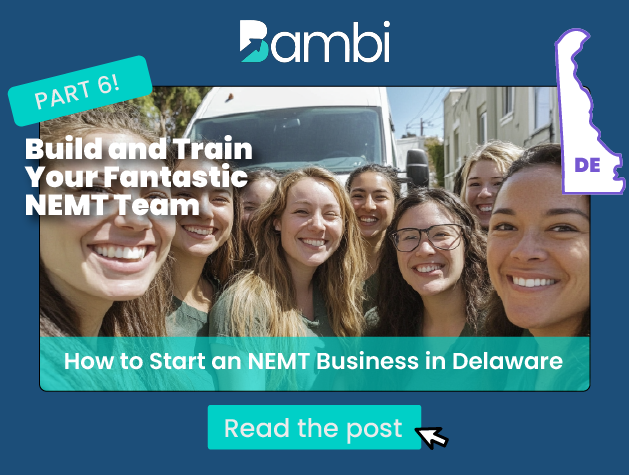
Creating an outstanding NEMT team in Delaware involves finding and developing drivers and support staff — capable and charming as Bambi’s woodland friends — who can handle everything from the bustling streets of Wilmington to the tranquil corners of Kent County.
Here’s how we suggest in starting to build up and train a team that’s ready to take on Delaware’s diverse challenges with enthusiasm, patience for patients and care:
1 | Finding Your Dream Team
In Delaware, local lay of the land familiarity is a real advantage. Seek out individuals who understand the state’s mix of the fast-paced urban energy and rural calm. If you’ll be offering service across the entire state, it’s good if you look for candidates who know their way around the lively areas of Wilmington, the suburban charm of Dover and the peaceful towns of Sussex County. Use job platforms like Indeed, LinkedIn and local job fairs to find your ideal team members. Consider innovative recruitment methods — like hosting your own career event — to discover talented individuals who might be flying (or rather driving!) close, yet under the radar!
2 | Training for Success
Once you’ve assembled your team, be Bambi sure you provide them with comprehensive training to handle Delaware’s unique conditions. It’s imperative that they’re well-versed in safety protocols, excellent customer service and the specific needs of your NEMT passengers. Tailor your training to Delaware’s moderate climate and varied terrains. Effective training will prepare your team to deliver reliable and compassionate service, whether they’re navigating city streets or rural forest roads.
3 | Cultivating a Positive Work Culture
A happy team (like ours) is a productive team! We’re showcasing ourselves as an example here to show that having a positive and supportive work environment to keep your staff engaged and motivated, also creates space for innovation. Encourage open communication, provide growth opportunities and celebrate achievements (big and small). A cheerful, well-supported team not only delivers outstanding service but also drives your NEMT business toward more business and even more success. Foster a workplace where teamwork and fun (it’s one of our core values!) are integral to daily operations, and watch your team excel!
As you approach the final steps of our Bambi-guided series, get ready for Part 7, where we’ll explore how technology can elevate your NEMT operations. Click here to continue, or check out the table of contents for more insights to guide your Delaware business journey.
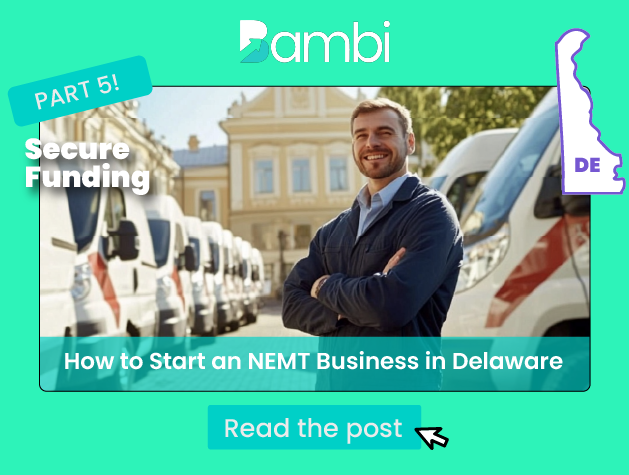
Launching an NEMT business in Delaware requires a fleet that’s ready to handle the state’s diverse landscape, from the vibrant city streets of Wilmington to the peaceful rural roads of Sussex County. Here’s how to build a fleet tailored to Delaware’s unique needs:
1 | Select the Right Vehicles
Choose vehicles that can navigate Delaware’s varied terrain, including urban environments and rural routes. Ensure ADA compliance and wheelchair accessibility. Delaware’s climate — ranging from chilly winters to humid summers — calls for vehicles with good air conditioning and heating systems. For rural routes and occasional rough roads, it’s best to consider vehicles with all-wheel drive. Hybrid or fuel-efficient models align with modern sustainability goals and can help reduce operational costs.
2 | Equip for Comfort and Safety
Outfit your fleet with essential amenities such as wheelchair lifts, first-aid kits and the latest safety technologies — you are a medical vehicle after all! For longer trips or areas with limited medical facilities, be sure to stock your vehicles with necessary and extra medical supplies, emergency gear and some comfort items (like some books, magazines, card games and a few snacks). These free add-ons can make all the difference in customer service! Partner with local suppliers for these extras and even for your vehicle maintenance to support the Delaware economy.
3 | Commit to Regular Maintenance
Implement a thorough maintenance schedule to keep your fleet in top condition. Always. Regular inspections and servicing will help prevent breakdowns and ensure compliance with all Delaware's state regulations. Reliable maintenance enhances your reputation as a dependable NEMT provider, ensuring safe and consistent service for your cool and confident patient passengers.
Ready to move forward? Click here to explore Part 6, where we'll cover strategies for recruiting and training your ideal NEMT team. Or, check the series table of contents for more resources to guide your Delaware business journey.
