
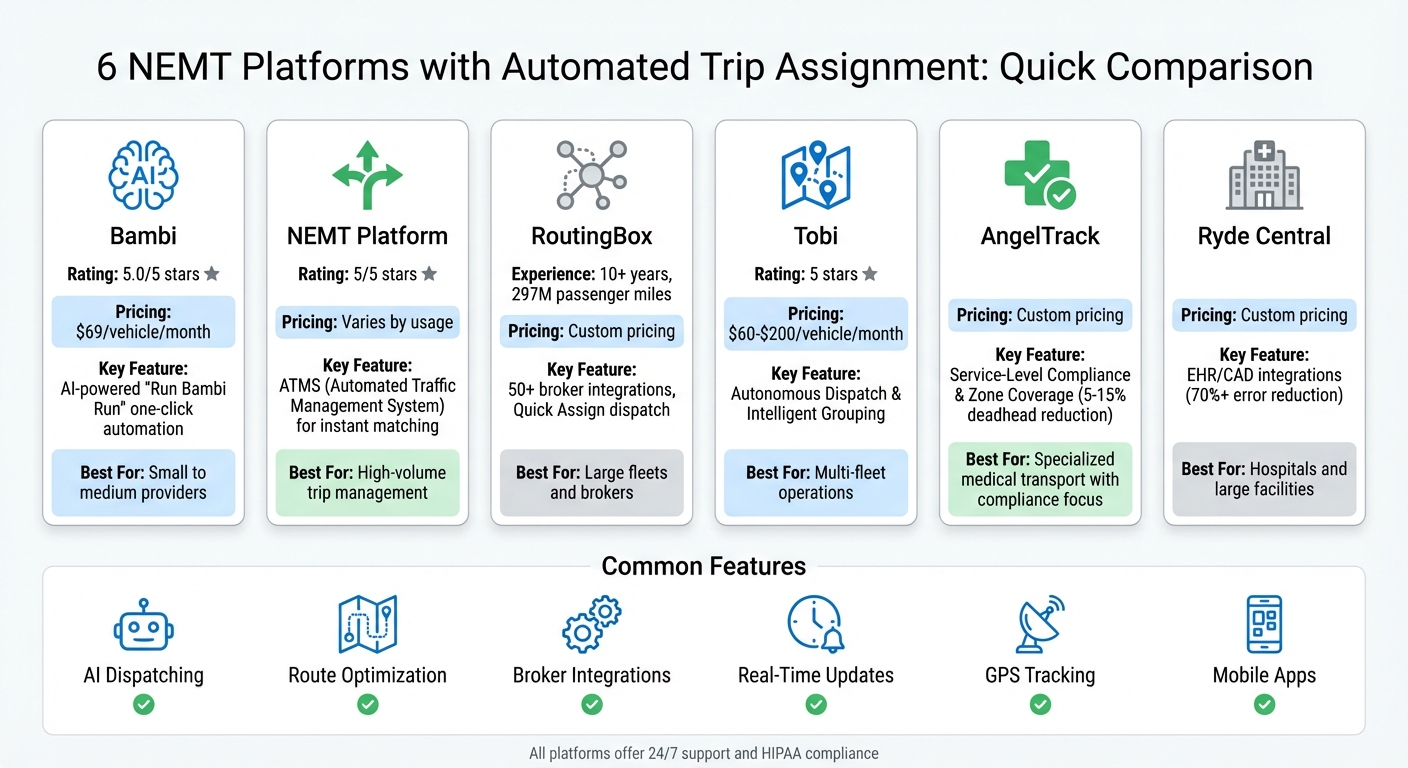
Automated trip assignment simplifies NEMT (Non-Emergency Medical Transportation) operations by using AI to match trips with the right drivers and vehicles. This eliminates manual scheduling, reduces errors, and improves efficiency. Key features of these platforms include AI dispatching, route optimization, broker integrations, and real-time updates. Here are six platforms offering these capabilities:
- Bambi: $69/vehicle/month. Known for its "Run Bambi Run" AI dispatch tool, dynamic routing, and seamless broker integrations.
- NEMT Platform: Offers Automated Traffic Management System (ATMS) for instant trip matching, route planning, and compliance tracking.
- RoutingBox: Integrates with 50+ brokers, provides Quick Assign dispatch, and optimizes routes for large fleets.
- Tobi: $60–$200/vehicle/month. Features Autonomous Dispatch and Intelligent Grouping for efficient trip scheduling.
- AngelTrack: Focuses on compliance and recurring trip automation with tools like Service-Level Compliance and Zone Coverage Insights.
- Ryde Central: Designed for hospitals, it automates trip matching and integrates with EHR/CAD systems for fast scheduling.
Quick Comparison
PlatformKey FeaturePricingIdeal ForBambiAI-powered "Run Bambi Run"$69/vehicle/monthSmall to medium providersNEMT PlatformATMS for instant matchingVaries by usageHigh-volume trip managementRoutingBoxBroker integrationsCustom pricingLarge fleets and brokersTobiIntelligent Grouping$60–$200/vehicle/monthMulti-fleet operationsAngelTrackCompliance-focused toolsCustom pricingSpecialized medical transportRyde CentralEHR/CAD integrationsCustom pricingHospitals and large facilities
Each platform addresses specific NEMT challenges, offering tools to save time, reduce errors, and improve trip management. Choose based on your fleet size, operational needs, and budget.
1. Bambi
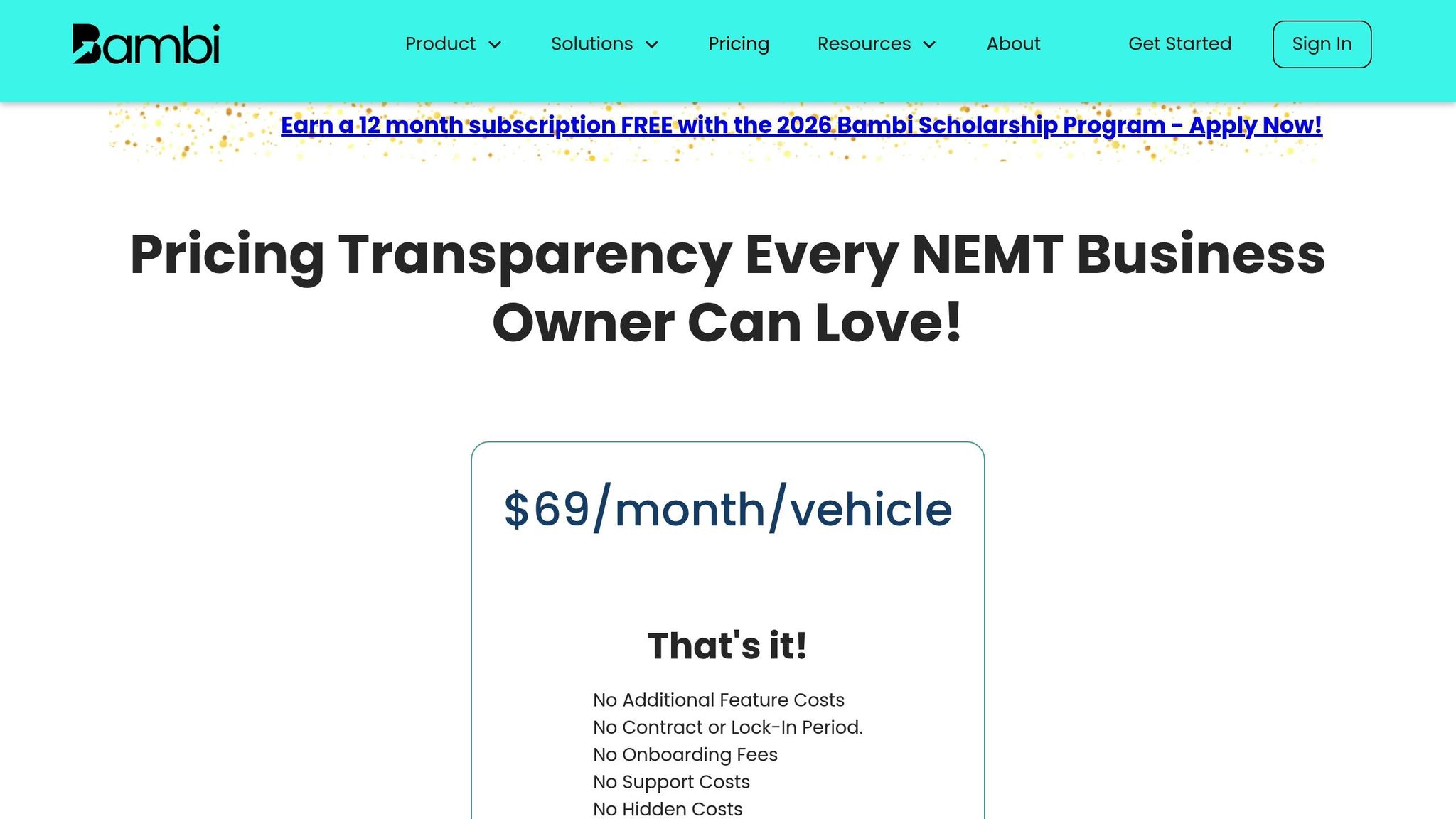
Bambi is a highly-rated AI-powered NEMT software, earning a perfect 5.0/5 on platforms like SourceForge, G2, Capterra, and Software Advice. It’s available for a straightforward flat rate of $69 per vehicle per month - no hidden fees, no contracts.
What sets Bambi apart is its impressive lineup of features, including AI dispatching, dynamic routing, broker integrations, and real-time updates, all designed to streamline NEMT operations.
AI Dispatching
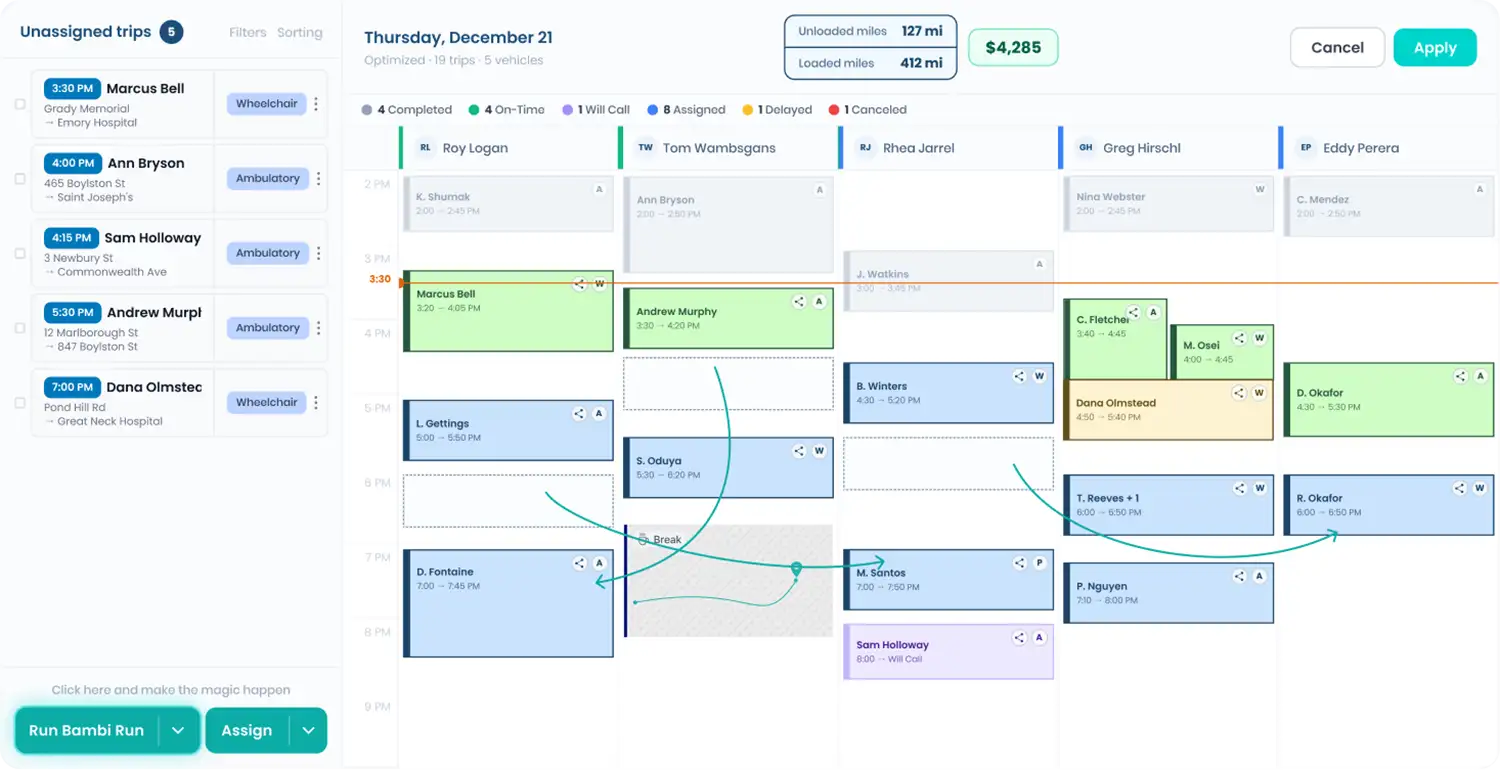
One of Bambi’s standout features is "Run Bambi Run", a one-click automation tool powered by AI and machine learning. This tool analyzes trip requests in seconds and generates optimized schedules, saving dispatchers valuable time. It even adjusts on the fly to handle no-shows, last-minute changes, and call-offs.
Tanner Ramsey, a dispatcher at PrimeCare Patient Transport, shared his experience in October 2025:
"Beforehand, assigning the trips to the drivers was very time consuming and now with Bambi it's as easy as clicking Run Bambi Run!"
Bambi’s AI uses constraint-based logic to assign passengers to the right vehicles and drivers, considering factors like certified medical crews or specialized equipment (e.g., wheelchairs and stretchers). Scott S., CEO of SMART Ride LLC in New Hampshire, noted that Bambi helped his company grow from a small regional operation to a major provider serving 11 facilities and managing hundreds of daily transports.
This advanced dispatching works hand in hand with its route optimization capabilities.
Route Optimization
Bambi dynamically optimizes routes to maximize vehicle usage and minimize mileage, factoring in real-time traffic and last-minute pickup changes. Jeffrey Hoff, owner of Reliant Transport, highlighted in 2025 how Bambi transformed his business by cutting down on manual dispatching time and allowing his team to focus on client growth.
Efficient routing is further enhanced by seamless broker integrations.
Broker Integrations
Bambi connects with leading NEMT brokers like SafeRide and Modivcare, enabling bulk uploads of anywhere from 10 to 10,000 trips. This eliminates tedious data entry and simplifies broker management, making operations smoother than ever.
Real-Time Updates
The platform offers real-time tracking, digital manifests, and turn-by-turn navigation, while also recording GPS-stamped trip data offline to ensure nothing is missed, even in low-connectivity areas. The driver app, available on iOS and Android, includes direct chat with dispatchers for instant communication. Automated SMS and push notifications further reduce no-shows and keep everyone in the loop throughout the trip lifecycle.
With these features, Bambi delivers a comprehensive solution for modern NEMT operations.
2. NEMT Platform
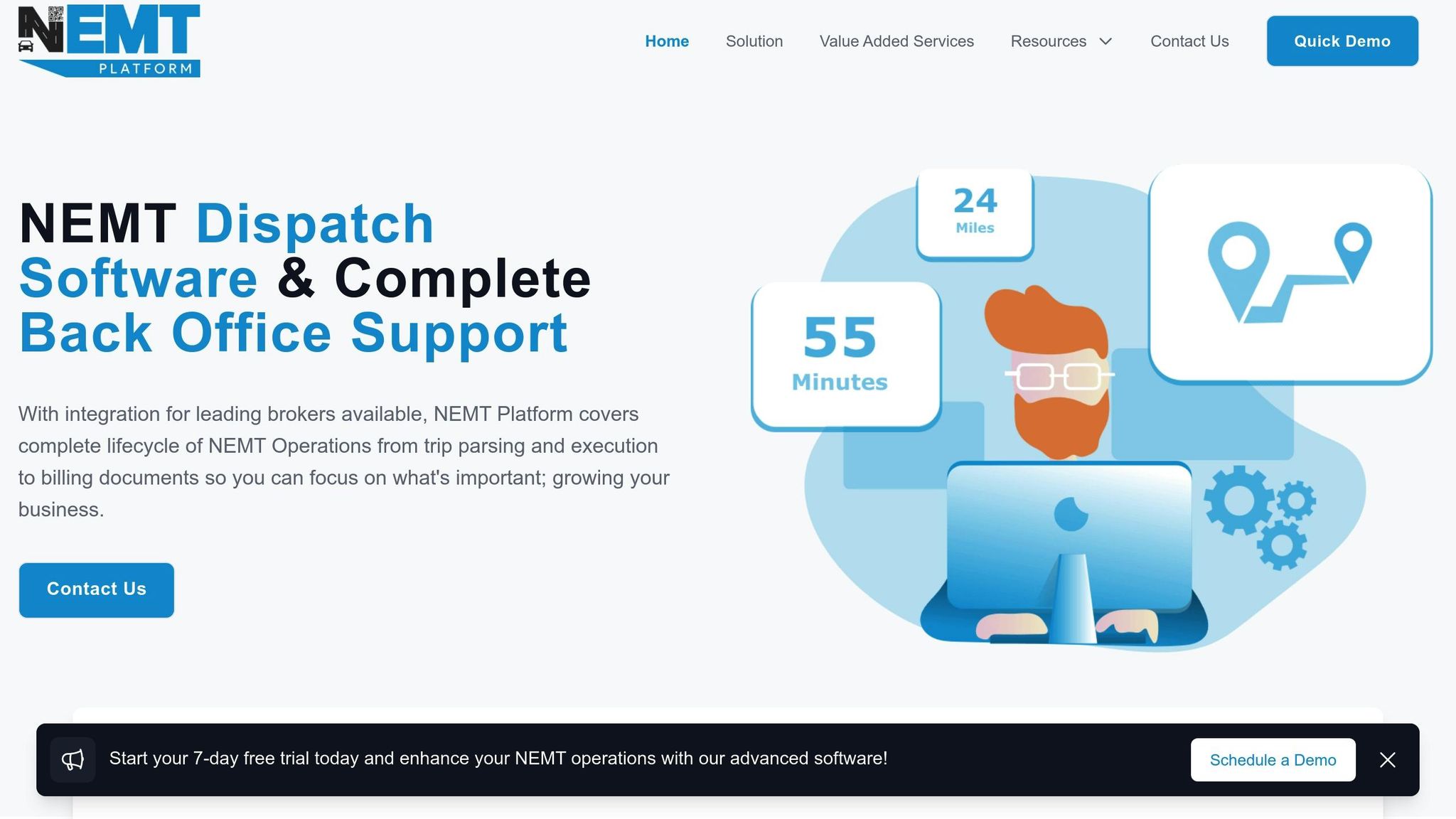
The NEMT Platform has received a perfect 5/5 stars from verified users, making it a standout solution for automated trip management. By leveraging real-time data, it connects trip requests with nearby providers seamlessly, ensuring efficient and reliable service.
AI Dispatching
The platform's Automated Traffic Management System (ATMS) takes the hassle out of trip assignments by instantly matching trips to the closest available vehicles. Once assigned, trips are automatically confirmed with providers, reducing no-shows and boosting service dependability.
A Chaddarh from Hoosier Medical Transport shared their success using the platform:
"NEMT Platform has been a tremendous help in taking my business to new levels. Using their solution, I have been able to offer NEMT-compliant services to some of the largest insurance brokers in Indiana State."
Fred Potts, the owner of FPE LLC, also noted substantial growth:
"I started using NEMT Platform over a year ago and since then we have doubled our company trip volume. With NEMT, we have been able to save time, energy, efficiency, and revenue."
This smart dispatch system sets the stage for enhanced route planning, seamless broker integrations, and real-time communication.
Route Optimization
Beyond dispatching, NEMT Platform takes efficiency up a notch with automated route planning. It helps reduce travel time, mileage, and operational costs by creating optimized routes. Drivers can access interactive maps to view trip details and monitor their routes in real time, ensuring faster and safer transportation. Some users even manage over 300 trip "legs" daily, thanks to these features.
Broker Integrations
The platform includes a Broker Panel, acting as a digital hub for trip distribution. Providers can process trip requests through file uploads or direct API integrations with healthcare providers and brokers. Trips are auto-assigned to nearby companies, and when internal capacity is maxed out, the platform’s marketplace allows providers to "farm out" trips to third-party services.
Real-Time Updates
NEMT Platform keeps dispatchers in the loop with live status updates across six stages: Assigned, Unassigned, In Progress, Completed, Cancelled, and Archived. A single screen displays real-time counts for each status, along with provider-specific breakdowns. Automated notifications further reduce no-shows and cancellations. Additionally, the system sends reminders for expiring driver licenses, vehicle registrations, and insurance documents, helping businesses maintain compliance.
Rachel Green from Careful Transportation praised the platform's impact:
"The app's automated dispatching and billing features have helped us save time and reduce errors, while the real-time tracking and communication features have helped us provide better service to our clients."
3. RoutingBox
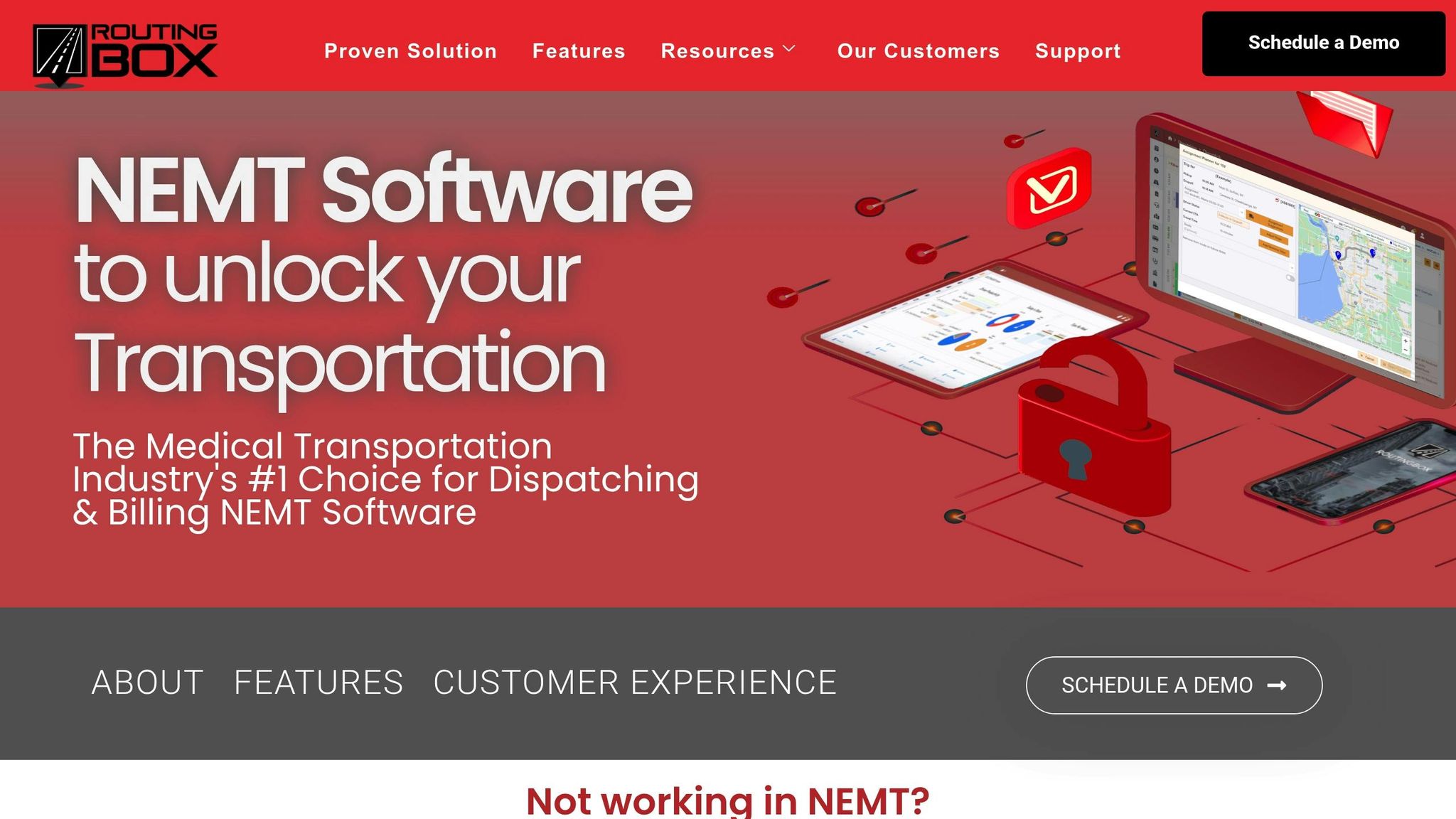
RoutingBox has been a key player in the NEMT industry for over a decade. With an impressive track record, the platform has managed over 297 million passenger miles, facilitated transportation for more than 1 million unique passengers, and supports a daily operation of more than 15,000 vehicles across 43 states.
AI Dispatching
At the heart of RoutingBox's efficiency is its Quick Assign feature. This tool uses real-time data to instantly match trips with available drivers, cutting down on scheduling delays. It’s especially helpful for managing last-minute changes, ensuring providers can adapt quickly.
Route Optimization
RoutingBox’s Route Optimization tool is designed to streamline operations. By evaluating vehicle capabilities alongside passenger needs, it creates efficient routes that maximize fleet use, reduce the number of vehicles needed, and minimize wasted miles. The platform also includes a Trip Importer feature, which validates addresses before dispatch to prevent drivers from heading to incorrect destinations.
Broker Integrations
One of RoutingBox’s standout features is its integration with over 50 regional brokers across the U.S. By connecting directly with broker portals through APIs and document uploads, the platform automates workflows from trip scheduling to payment processing. It eliminates the need for manual data entry and ensures a smooth process. Once trips are completed, RoutingBox sends back essential data - like electronic signatures, GPS coordinates, and timestamps - to speed up payment approvals.
Real-Time Updates
RoutingBox keeps dispatchers and drivers in sync with live tracking and updates. Dispatchers can monitor driver locations and even review historical GPS trails on a live map. Meanwhile, the mobile app provides real-time trip updates. Passengers are kept in the loop with automated SMS reminders, and dispatchers can customize the dispatch screen with color codes and layouts to prioritize critical information.
4. Tobi
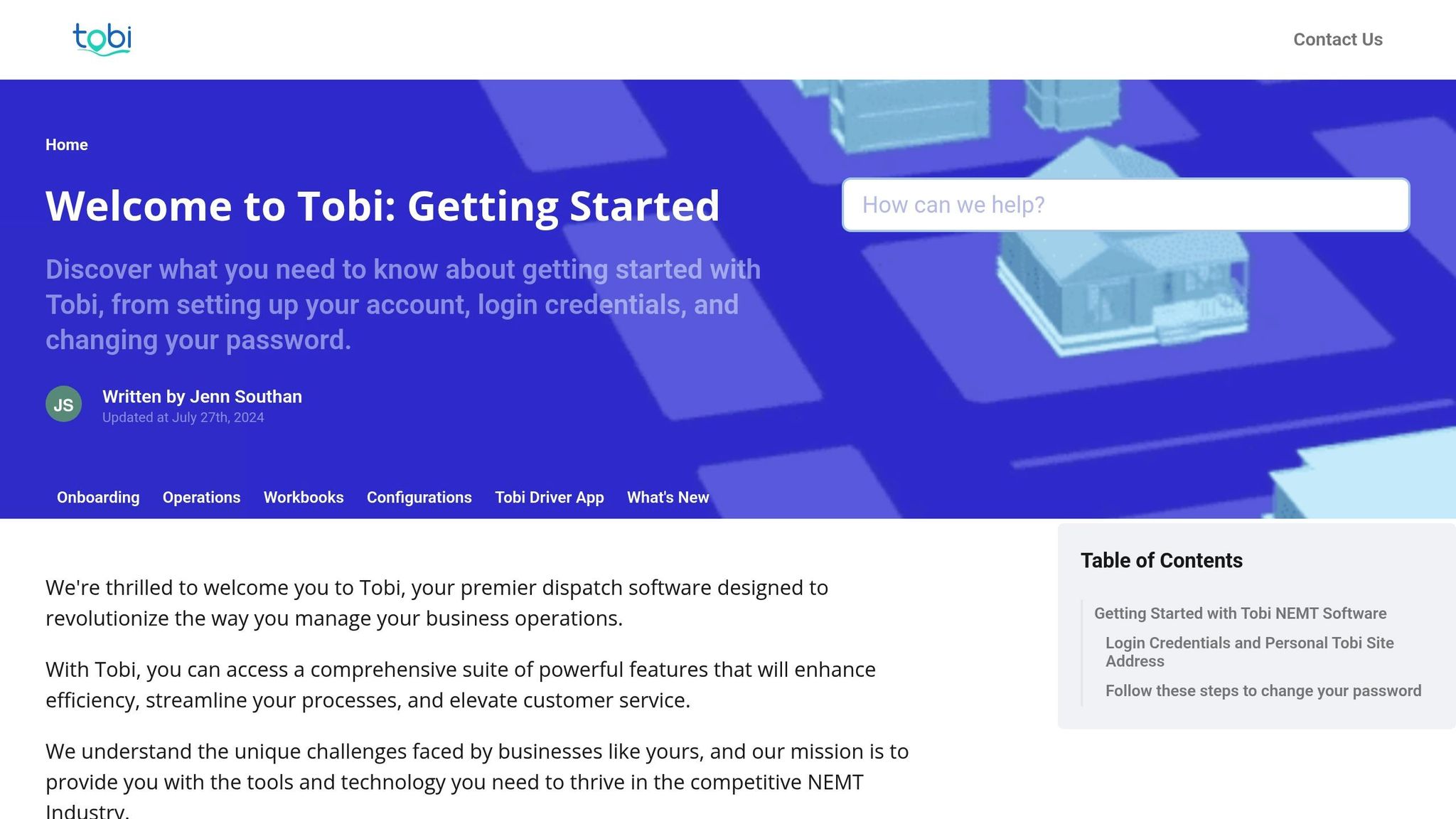
Tobi is a cloud-based platform designed to streamline non-emergency medical transportation (NEMT) operations. With pricing ranging from $60 to $200 per vehicle per month and a 30-day free trial, Tobi has earned a 5-star rating for its affordability and user-friendly interface.
AI Dispatching
Tobi's Autonomous Dispatch feature automates the process of assigning drivers and planning routes. Its Run Suggestions tool uses proprietary algorithms to match drivers with trips efficiently. According to Tobi Cloud, this system "uses algorithms that pick the most efficient routes and select the ideal driver for each trip, all on its own". Akandu Ukoha, Executive Director at Marcy Transportation Services, shared:
"Lots of great features make our daily tasks very easy. The booking platform allows customers to book trips automatically. The price is very affordable, and customer service is responsive".
Route Optimization
The platform’s One-Click Routing feature generates optimal routes instantly, helping reduce travel time and mileage. With its Intelligent Grouping capability, Tobi clusters similar trips together, planning routes months ahead to cut down on fuel expenses and minimize empty miles. The system also adapts dynamically to last-minute changes like patient cancellations or traffic conditions, ensuring accurate ETAs for both patients and medical facilities.
Broker Integrations
Tobi simplifies workflows by automatically importing transport requests from major NEMT and Medicaid brokers through its open API and prebuilt integrations. This eliminates the need for manual data entry and streamlines processes from trip scheduling to billing. Additionally, it provides automated documentation, including GPS breadcrumb data, to support compliance and audit-ready reporting.
Real-Time Updates
Tobi enhances operational visibility with live GPS tracking and geofencing features, allowing dispatchers to monitor fleet activity in real time. The Tobi Driver App keeps drivers informed with real-time navigation, trip updates, and push notifications. Live messaging ensures the team stays coordinated on trip assignments and schedule changes. These tools help providers manage overlapping schedules and minimize delays. For added support, Tobi offers 24/7 assistance via phone, email, and in-app chat.
5. AngelTrack
AngelTrack is a cloud-based dispatch platform designed to streamline the complexities of ambulance operations. It’s tailored for wheelchair, stretcher, and ambulatory transports, utilizing automated trip assignments to support NEMT providers. This system prioritizes precision and efficiency in scheduling and trip management.
Route Optimization
AngelTrack simplifies trip assignments with its Service-Level Compliance feature, which matches vehicles and crews to trips based on certifications and specific state or facility requirements. To ensure consistent geographic coverage, the Zone Coverage Insights tool uses color-coded maps to highlight demand areas.
For recurring trips, like dialysis or therapy appointments, AngelTrack offers Recurring Shift Automation. This feature allows providers to schedule trips weeks in advance using customizable patterns. Any changes are synchronized instantly, cutting down on unnecessary communication and ensuring smooth operations.
Real-Time Updates
With AngelTrack’s integrated CAD platform, dispatchers gain real-time visibility into crew capabilities and vehicle locations. The system also reduces no-shows by sending SMS and email reminders an hour before shifts. GPS-stamped mobile clock-ins accurately log driver locations and shift start times, supporting both payroll accuracy and compliance.
Handling last-minute changes is seamless. Relief drivers are automatically assigned when shift swaps or vacation requests occur, ensuring uninterrupted service. Supervisors can manage schedules from any device, making it easy to oversee multi-station operations without being tied to a specific location.
6. Ryde Central
Ryde Central is a cloud-based platform that connects health facilities, brokers, and NEMT (Non-Emergency Medical Transportation) providers through automation. It’s built to tackle scheduling challenges and cut down on errors for hospitals handling large volumes of discharges and appointments. Like other platforms in this space, Ryde Central uses automation to streamline trip coordination and minimize operational hiccups.
AI Dispatching
Ryde Central’s automated matching system instantly pairs rides with transport providers based on factors like vehicle type, availability, distance, and specific patient needs. It uses a tiered approach, first sending trip requests to primary providers, and then to secondary ones if the request isn’t accepted within a set timeframe.
The platform also automates policy decisions, such as accepting or rejecting alternate pickup times based on compliance with on-time performance thresholds. Its level-of-care optimization feature ensures the right vehicle - whether a wheelchair van, stretcher vehicle, or standard car - is assigned, avoiding unnecessary expenses. By integrating with Electronic Health Records (EHR) and Computer-Aided Dispatch (CAD) systems, Ryde Central allows for one-click data retrieval and automatically sends confirmed bookings to transport providers, cutting down on repetitive data entry. This approach has been shown to reduce scheduling errors by over 70%. Additionally, its route optimization tools further reinforce timely and reliable service.
Route Optimization
Ryde Central automatically calculates travel times and estimated arrival times (ETAs). For brokers juggling multiple providers, the system rejects pickup or drop-off times that don’t comply with scheduling standards, ensuring only feasible plans move forward. Its GPS-enabled routing integration links scheduling directly with dispatch systems, eliminating the need to manually re-enter trip details across platforms.
"Ryde Central has cut down the amount of time to order patient transport from 45 minutes to a click of a button."
Deb Youngquist from the University of Maryland Medical System highlighted this improvement. The platform allows staff to complete transport requests in as little as 60 seconds.
Real-Time Updates
Ryde Central offers live status tracking at every stage of a trip - whether a vehicle is on its way, has arrived at the pickup point, or has reached its destination. Automated SMS and email notifications keep dispatchers, caseworkers, providers, and patients informed in real time. All trip details and updates are displayed on a centralized, cloud-based dashboard, with any changes instantly visible to all users. This eliminates the need for repeated phone calls and reduces miscommunication across the board.
Advantages and Limitations
Each platform brings something distinct to the table when it comes to improving Non-Emergency Medical Transportation (NEMT) operations. Here's a closer look at their strengths and challenges.
Bambi stands out for its ease of use and the AI-powered "Run Bambi Run" feature, which simplifies scheduling with just one click. It boasts a 5.0-star rating on major review platforms and offers straightforward pricing at $69 per vehicle per month. On the downside, it lacks robust options for customizing reports and relies on external mapping apps for navigation.
NEMT Platform shines with its automated trip-matching system (ATMS) and a perfect 5/5-star rating from verified users. Its Broker Panel and marketplace features make trip distribution seamless. However, for users managing large volumes of trips, fine-tuning workflow configurations may take some time.
RoutingBox offers excellent broker management tools, integrating with over 50 regional brokers and enabling real-time communication between drivers and dispatchers. That said, some users have reported issues like slow loading times and unexpected route changes without proper notifications.
Tobi provides tiered pricing starting at $60 per vehicle per month and supports multi-fleet management with features like Autonomous Dispatch and Intelligent Grouping. However, its driver app is limited to Android, leaving iOS users without access. Akandu, a verified user, shared this feedback:
"The application is not on the App Store and only works on Android. The configuration of the application to adapt to business is difficult".
AngelTrack uses its Vertex AI A-Star routing engine to cut deadhead miles by 5–15%, improving fuel efficiency through tools like Service-Level Compliance and Zone Coverage Insights. Its complexity, however, might require additional training, especially for smaller fleets.
Ryde Central specializes in connecting health facilities, brokers, and providers through automated trip matching and EHR/CAD integrations, reducing scheduling errors by over 70%. This makes it ideal for hospital discharge coordination. However, providers looking for standalone dispatch tools might find it less adaptable.
These highlights underscore how each platform uses automation to address specific NEMT challenges, offering unique solutions tailored to diverse operational needs.
Conclusion
Picking the right automated trip assignment platform means finding one that aligns with your operational goals while addressing key NEMT challenges like manual dispatching, scalability, and system integration. Whether it’s one-click AI scheduling or advanced routing with Vertex AI, the goal is to simplify processes, save time, and support growth without unnecessary complications.
Industry feedback highlights how advanced AI scheduling can save hours of manual work. Providers often describe these solutions as recovering "a day's worth of time", which directly translates to increased trip capacity without additional costs. A truly automated platform can reduce dispatch time by up to 50% in just weeks. During trials, pay attention to how many steps it takes to generate a full schedule - leading platforms manage this with a single click, while also adapting in real time to traffic delays or driver callouts without manual adjustments.
Driver experience is equally important. A user-friendly and reliable mobile app is critical since drivers rely on it constantly. As Cho Ndiforchu of Skyline Transport shared:
"With Bambi, it was super... my lead driver told me it's perfect... they can now make adjustments on their route."
An intuitive app keeps drivers happy, which helps ensure timely pickups and satisfied clients - no matter how advanced the dispatch system is.
Lastly, don’t overlook compliance. The platform must be HIPAA compliant, offering features like GPS timestamps, digital signatures, and audit-ready logs. Compliance isn’t just a legal requirement; it’s the backbone of a scalable and secure operation, especially when dealing with Medicaid audits. The best platforms make compliance seamless, not an added burden.
Ultimately, choosing the right platform is a critical step toward streamlining your dispatch process and achieving operational efficiency in NEMT.
FAQs
How does AI make trip assignments more efficient for NEMT providers?
AI is revolutionizing the way trips are assigned in Non-Emergency Medical Transportation (NEMT), turning what used to be a tedious manual task into a quick and efficient process. By analyzing factors like passenger requirements, live traffic updates, driver availability, vehicle capacity, and service agreements, AI creates optimized schedules in just seconds. The result? Passengers arrive on time, mileage is minimized, and labor costs are reduced.
These AI systems don’t just stop at creating schedules - they continuously learn from previous trip data. This means they can adapt and improve as they go. If a driver becomes unavailable, traffic patterns shift, or an urgent trip is added, the system can automatically adjust the schedule without the need for manual intervention. This dynamic adaptability not only saves time but also enhances the overall reliability of services.
For NEMT operators, the advantages are undeniable: quicker dispatching, fewer mistakes in scheduling, lower fuel expenses, and a more balanced workload for drivers. By simplifying these processes, AI allows providers to offer passengers a smoother, more dependable experience while improving their operational efficiency.
What should I consider when selecting an NEMT platform for automated trip assignments?
When selecting an NEMT platform, it's essential to focus on a smart scheduling system. Look for one that leverages AI to efficiently match riders with vehicles, adjust to real-time changes like cancellations or traffic, and optimize routes. This not only helps cut down on fuel expenses but also boosts on-time performance. Make sure the platform accommodates patient-specific needs, such as wheelchair accessibility, while minimizing idle miles to keep operations efficient.
Another critical feature is seamless integration with your current systems. Whether it's electronic health records, billing software, or GPS tracking, the platform should work smoothly with what you already use. This can help reduce manual tasks, ensure compliance with Medicare and Medicaid requirements, and streamline overall operations. Customizable scheduling options, like prioritizing urgent trips, can also make daily workflows more efficient.
Lastly, evaluate the platform’s scalability, user-friendliness, and support. It should be able to grow alongside your fleet, offer easy-to-use tools for both dispatchers and drivers, and provide clear pricing to help you manage budgets effectively. Strong customer support and regular updates are equally important to ensure compliance and maintain smooth operations.
How do automated trip-assignment platforms help ensure regulatory compliance in NEMT?
Automated trip-assignment platforms play a crucial role in helping NEMT (Non-Emergency Medical Transportation) providers meet federal, state, and payer regulations. These systems integrate compliance rules directly into their scheduling processes, ensuring every trip adheres to Medicaid, Medicare Advantage, and state transportation standards before assigning a driver.
Some of the standout compliance features include real-time eligibility checks to match patients with the right vehicle type - whether it's for wheelchair users, stretchers, or ambulatory passengers - and ensuring drivers have the necessary certifications. Additionally, these platforms offer secure, cloud-based record-keeping, which creates detailed audit trails, and they automatically generate required forms and electronic signatures. By embedding these safeguards, these tools minimize errors, ensure only qualified providers handle trips, and streamline documentation for both audits and reimbursement claims.