Automated trip verification simplifies the way Non-Emergency Medical Transportation (NEMT) providers manage trips, reduce billing errors, and comply with state regulations. By using GPS tracking, digital signatures, and automated mileage logging, providers can ensure accurate trip records, prevent claim denials, and even detect fraud. Here's why it's important and how it works:
Improves Billing Accuracy : Automatically logs timestamps, routes, and mileage, reducing manual errors and increasing claim approval rates.Cuts Costs : Optimizes routes, lowers fuel usage, and reduces administrative overhead.Supports Compliance : Meets Medicaid requirements in states like Texas, Florida, and New Jersey, where GPS validation is mandatory.Prevents Fraud : Detects discrepancies in mileage or trip documentation, saving thousands in potential losses.Enhances Efficiency : Streamlines operations with integrated software, reducing paperwork and speeding up billing processes.
Automated systems not only improve financial outcomes but also build trust with clients and Medicaid brokers by providing transparent, auditable records. If you're struggling with claim denials or documentation issues, automation can transform your operations.
What Is Automated Trip Verification?
Manual vs Automated Trip Verification: Key Differences for NEMT Companies
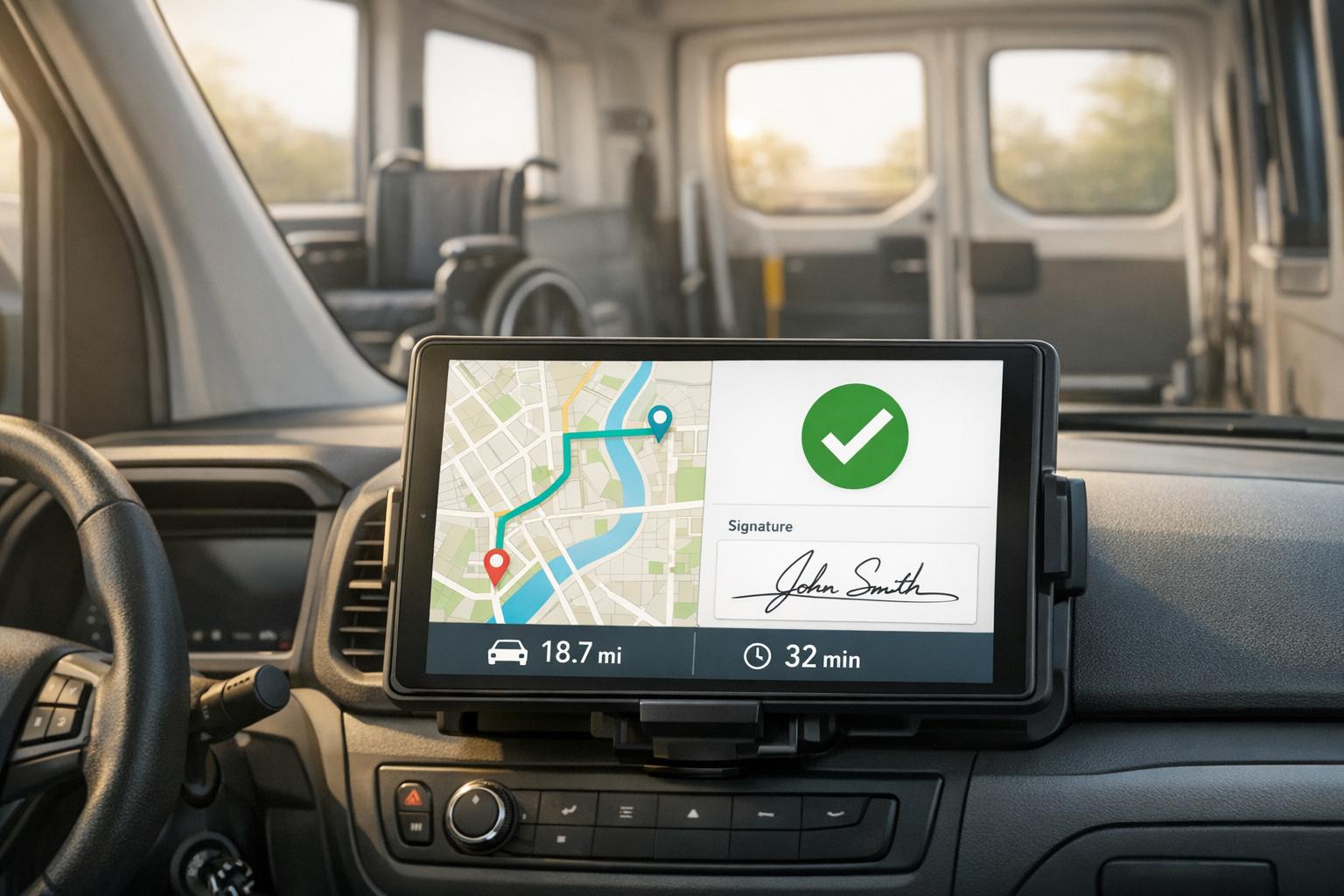
Automated trip verification relies on GPS tracking, timestamps, and digital signatures to confirm that a medical transport trip was completed according to pre-approved guidelines. By capturing real-time location data, the system creates digital records that include pickup and drop-off times, exact mileage, and the route taken.
Here’s how it works: GPS coordinates are collected throughout the trip, and Route Reconstruction APIs are used to map the route with precision. The software compares the actual route against the approved one, flagging any deviations for review. This verified trip data integrates directly into billing systems, reducing the need for manual data entry and minimizing errors.
With this system, every data point is automatically captured and securely stored, eliminating guesswork.
How the Verification Process Works
The process kicks off the moment a driver begins a trip. GPS devices installed in the vehicle or mobile apps on the driver’s phone transmit live location data in real time, creating a detailed digital record. At each stop - pickup and drop-off - the system automatically logs the exact timestamp and GPS coordinates. During the trip, the software calculates the actual distance traveled based on the route’s geometry, offering a more accurate measurement than rough estimates or odometer readings.
Once the trip ends, the system compares the actual route to the pre-approved one. If there are major deviations or unauthorized detours, the trip is flagged for further review. The final step involves digital confirmation, where the member, escort, or medical facility staff electronically signs to verify the trip and the driver confirms the member’s identity. This digital record not only meets compliance standards but also ensures accuracy.
These automated records streamline operations and help reduce claim denials.
Why NEMT Companies Need Automated Verification
Understanding the process is just the beginning - here’s why NEMT companies should adopt automated verification.
This technology doesn’t just reduce errors; it directly improves claim approvals and curbs fraud. Manual documentation can be risky. For example, one mid-sized NEMT provider operating across three counties was losing about $50,000 annually due to a 15–20% Medicaid claim rejection rate caused by incomplete documentation and missing GPS logs. After implementing a GPS dispatch system with automated trip logging, their claims approval rate skyrocketed to 98% within six months.
Another provider faced a 23% claim denial rate and even lost a major MCO contract due to poor documentation. By switching to an automated verification system with GPS tracking and electronic documentation, they cut their denial rate to just 6%, increased monthly revenue by $200,000, and reduced administrative costs by 18% within six months.
Fraud prevention is another major advantage. One operator uncovered a $45,000 fraud scheme involving inflated mileage and false trip documentation. After adopting GPS tracking and automated mileage calculations, they stopped further fraud and recovered $38,000 through corrected claims and payer negotiations.
Regulatory compliance is also becoming stricter. States like Texas, New Jersey, and Florida now require electronic GPS validation for Medicaid reimbursements. In Colorado, NEMT claims for specific procedure codes are flagged for review if they exceed 52 miles (or 125 miles in rural counties). This ensures trips are properly documented, including accurate pickup and drop-off times and identity verification.
Here’s a quick comparison of manual versus automated processes:
Feature
Manual Documentation
Automated Trip Verification
Mileage Tracking Often estimated or handwritten; prone to inflation
GPS-calculated based on actual route geometry
Timestamps Manually recorded; often inaccurate or missing
Automatically captured at precise GPS coordinates
Audit Readiness High risk; requires manual reconciliation of paper logs
Provides defensible digital trails and audit logs
Claim Denials Frequent due to missing data or discrepancies
Significantly reduced; ensures data matches payer requirements
Technologies That Power Trip Verification
Three key technologies work together to automate trip verification: GPS tracking systems , digital signatures , and automated time and mileage logging . Each plays a crucial role in ensuring accurate, tamper-proof records that meet billing requirements and regulatory standards.
GPS Tracking Systems
GPS technology is the cornerstone of automated trip verification. By tracking vehicle locations in real time, it creates a permanent digital record of every journey. Throughout a trip, the system collects GPS waypoints , which are used to reconstruct the actual route and calculate the precise distance traveled. This method is far more reliable than relying on odometer readings or driver estimates.
One standout feature is route matching , which compares the GPS-tracked route against the pre-approved route. Any unauthorized detours or deviations are automatically flagged for review. As NEMTPlatform.com puts it, "GPS data validates trip details, from pickups to route efficiency".
For NEMT providers, the benefits are clear. GPS telematics can lead to 30% savings per mile and lower insurance premiums by up to 30%. Real-time monitoring also lets managers track vehicle status, location, and idling patterns, boosting fleet productivity and reducing fuel waste. Additionally, automated monitoring can cut high-risk driving behaviors by up to 90% through real-time coaching and tracking.
Digital Signatures
Digital signatures provide secure, electronic proof of service completion. When a driver arrives at a pickup or drop-off point, the rider or facility staff signs electronically on a mobile device, confirming the service was delivered. This eliminates the hassle of paper trip sheets, which can easily get lost, damaged, or become unreadable.
These signatures are automatically attached to trip records, creating a searchable trail that simplifies audits . By adopting automated systems with digital signatures, NEMT providers can cut billing claim processing time by up to 75% . Digital signatures also support insurance claims, reducing denials caused by missing or incorrect documentation. With over 90% of trip reservations made through member web portals on mobile devices, having mobile-friendly verification tools is essential.
Automated Time and Mileage Logging
Automated logging systems gather trip data directly from GPS devices and driver apps, eliminating the need for manual entry and reducing the risk of errors. These systems calculate exact distances using GPS coordinates and also track wait times.
This automation ensures billing accuracy by preventing both underbilling, which results in lost revenue, and overbilling, which can lead to penalties. Timestamped records also deter mileage inflation and fraudulent claims for trips that never occurred. As NEMTPlatform explains, "NEMT software solutions have become essential for companies and organizations running these services. They help streamline every step, from scheduling rides to billing, making the process smoother for both passengers and providers".
One real-world example is Metro Medical Transport , which saw its claim denial rate drop from 23% to 6% within six months in early 2024 after implementing automated billing software integrated with GPS tracking and electronic documentation. This change boosted monthly revenue by $200,000 and cut administrative costs by 18%.
Together, these technologies create a solid foundation for automated trip verification, improving both accuracy and operational efficiency.
How to Implement Automated Trip Verification
Switching to automated trip verification involves upgrading your systems, training your team, and making the most of your operational data. This change impacts every aspect of your operation - from drivers on the road to billing staff in the office. Here’s how to make the transition as smooth as possible and start seeing results quickly.
Selecting Verification Software
Choosing the right software is essential for a seamless integration with your current systems while leaving room for future upgrades. Look for features like GPS tracking to monitor locations, verify routes, and provide accurate arrival estimates for patients and facilities. A mobile app is equally important, allowing drivers to log digital signatures and update trip statuses in real time.
Security and compliance are non-negotiable. Opt for software that includes HIPAA-compliant data encryption, secure login protocols, and automated documentation tracking to keep you prepared for audits. Additionally, ensure the software connects easily with your existing billing platforms - such as Waystar , Medicaid brokers, and Electronic Health Records - through APIs. Automating the logging of timestamps, mileage, and coordinates can significantly reduce errors and speed up billing.
Cloud-based platforms are a cost-effective option, as they scale with your fleet without requiring additional infrastructure. Pricing typically starts at $60 per vehicle per month for smaller fleets (Bronze tier) and can go up to $200 for businesses using advanced dispatch technology. When evaluating options, think about both your current needs and potential future requirements.
Once you’ve selected your software, training your team to use it effectively is the next step.
Training Your Team
Proper training is crucial to ensure your team can fully utilize the new system. Tailor training sessions to the specific roles within your organization. For example:
Drivers should focus on using the mobile app for GPS tracking and capturing digital signatures.Dispatchers need to learn how to monitor real-time fleet visibility and make dynamic route adjustments.Administrative staff should get comfortable managing automated invoicing, eligibility verification, and denial management tools.
Incorporate hands-on practice sessions, and provide resources like quick guides and instructional videos. Assign a project manager to address any questions or challenges that arise. For instance, Metro Medical Transport adopted this approach in early 2024. Within six months, they saw their claim denial rate drop from 23% to 6%, monthly revenue increase by $200,000, and staff turnover decrease from 40% to 15%.
"We've cut our billing time in half and reduced denials, rejections, and errors by about 25%." – Kelnisha W., Demitri Transportation LLC
Remember, training isn’t a one-and-done process. Schedule regular updates as software features evolve and regulations change. Conduct mock claim reviews to identify and fix documentation gaps before audits occur.
Using Data to Improve Operations
Your automated system generates a wealth of data that you can use to refine operations and improve efficiency. For example, route reconstruction allows you to compare GPS-tracked routes with pre-approved ones, helping you identify and address inefficiencies like unnecessary detours that waste time and fuel. Monitoring driver behavior - such as harsh braking, speeding, or excessive idling - can also enhance safety and reduce vehicle wear and tear.
Leverage real-time dashboards and periodic reviews to track key performance indicators like on-time pickups, fleet utilization, and driver behavior. For example, Regional Transport Solutions used GPS tracking and automated mileage calculations to uncover fraudulent mileage claims across 200 trips, recovering $38,000 through corrected claims.
You can also automate SMS, email, or voice reminders to reduce no-shows. These data-driven adjustments not only improve operational efficiency but also enhance the quality of service you provide.
sbb-itb-6bd01f8 Measuring Results from Automated Verification
Automated verification significantly improves clean claim rates, with first submission approvals jumping from 80% to 98% within just six months. This leads to fewer rejections, faster payments, and reduced administrative burdens.
Let’s dive into how these advancements translate into cost savings and operational improvements.
Cost Savings and Efficiency Gains
Automation delivers financial benefits across multiple areas. For example, fuel and maintenance expenses - which typically make up about 30% of total costs - can decrease by as much as 30%. Administrative costs also see a noticeable reduction; Metro Medical Transport cut theirs by 18% after introducing automated billing and GPS tracking in early 2024.
By tracking saved staff hours from tasks like reconciliation and verification, your team can redirect their energy toward growth-oriented activities.
Building Client Trust Through Transparency
The benefits of automation extend beyond cost savings - it also strengthens trust with clients and partners through enhanced transparency. Automated records not only simplify billing and reduce errors but also boost client confidence. Systems that log GPS data, digital signatures, and timestamped proof of service allow billing disputes to be resolved in minutes. This level of transparency is especially crucial in states like Texas, New Jersey, and Florida, where electronic GPS validation is now required for Medicaid reimbursement.
Real-time tracking features also improve the patient experience by easing concerns. Patients who rely on time-sensitive treatments, such as dialysis or chemotherapy, benefit from automated notifications with updates on driver location and estimated arrival times. Additionally, digital signatures confirm that trips occurred as documented, removing any doubts about service delivery. This transparency not only builds trust but also supports ongoing partnerships with Medicaid brokers and health systems, where meeting on-time performance standards is essential for contract renewals.
Conclusion
Automated trip verification is reshaping Non-Emergency Medical Transportation (NEMT) operations by integrating GPS-stamped routes, digital signatures, and precise timestamps. These tools create a reliable audit trail that tackles common industry challenges like billing accuracy, regulatory compliance, and fraud prevention.
The financial impact is hard to ignore. Some companies have seen claim denial rates drop from over 20% to as low as 6%, while administrative costs have been slashed by up to 18%. Additionally, fuel and maintenance costs - typically around 30% of operating expenses - can decrease by 20% to 30% with optimized routing and automated verification systems.
Beyond cost savings, automation strengthens your market position. With many states requiring electronic GPS validation, these systems are no longer optional. Features like real-time tracking and automated notifications align with patient expectations for transparency, cutting no-show rates by up to 50%. Together, these advancements not only improve efficiency but also ensure your organization stays ahead in a competitive landscape.
FAQs
How does automated trip verification help NEMT providers meet Medicaid compliance requirements?
Automated trip verification plays a key role in accurately recording pick-up and drop-off times, GPS routes, and confirming passenger eligibility - all in real time. This ensures the creation of detailed records that align with Medicaid billing and audit requirements, helping providers maintain compliance with ease.
By cutting down on manual errors and simplifying documentation, these systems reduce the chances of mistakes or fraud. This not only boosts operational efficiency but also builds trust between providers and their clients.
What technologies help NEMT companies automate trip verification?
Automated trip verification has become a game-changer for NEMT (Non-Emergency Medical Transportation) companies, thanks to tools like GPS telematics , post-trip verification systems , and compliance-focused software . GPS technology tracks vehicles in real time, creating detailed logs of routes, timestamps, and mileage. This data is then cross-checked with pre-approved trip plans to confirm accuracy, ensuring proper billing and meeting regulatory standards.
Today's platforms take it a step further by offering features such as automated dispatching , real-time route adjustments , and electronic trip logs . These tools not only cut down on manual errors but also flag inconsistencies and produce audit-ready reports for Medicaid or private payers. By combining these technologies, NEMT companies can streamline their operations, stay compliant, and avoid costly claim denials.
How can NEMT companies use automated trip verification to reduce claim denials?
Automated trip verification is a game-changer for NEMT companies looking to cut down on claim denials. By leveraging GPS-enabled systems, you can capture critical trip data - like pick-up and drop-off times, addresses, mileage, driver details, and member information - in real time. This approach eliminates the risk of manual entry errors and ensures all required fields are accurate and complete, keeping you compliant with Medicaid and payer regulations.
To take it a step further, incorporating real-time insurance verification can confirm eligibility and coverage before a trip even begins. Combine this with automated tools that flag route deviations or discrepancies, giving your team the chance to resolve issues before claims are submitted. Automating pre-scheduled trips also adds another layer of efficiency - approved routes can be locked in and drivers assigned automatically, ensuring Medicaid compliance while speeding up workflows. These measures not only streamline your operations but also enhance accuracy and safeguard your revenue.
Related Blog Posts 


Comments
Lorem ipsum dolor sit amet, consectetur adipiscing elit. Suspendisse varius enim in eros elementum tristique. Duis cursus, mi quis viverra ornare, eros dolor interdum nulla, ut commodo diam libero vitae erat. Aenean faucibus nibh et justo cursus id rutrum lorem imperdiet. Nunc ut sem vitae risus tristique posuere.