Choosing the right NEMT dispatch software can make or break your business. The right platform helps you manage trips, optimize routes, and ensure compliance with Medicaid and broker requirements. The wrong choice can lead to missed appointments, billing errors, and hefty penalties. Here’s what to focus on:
- Fleet Size & Growth: Whether you have 5 or 50 vehicles, pick software that scales with your needs.
- Billing & Compliance: Ensure it handles Medicaid claims, HIPAA compliance, and broker-specific workflows.
- Core Features: Look for real-time GPS tracking, automated scheduling, and integrations with EHRs and brokers.
- Ease of Use: A user-friendly interface for dispatchers and drivers saves time and reduces errors.
- Security: HIPAA compliance, encryption, and audit logs are non-negotiable.
- Vendor Support: Strong onboarding, training, and responsive customer service are critical.
- Pricing: Understand upfront, ongoing, and hidden costs to calculate the total cost of ownership.
Test the software through demos and trial periods to ensure it fits your operations. A good system can improve efficiency, reduce claim denials, and prepare your business for future demands.

Identify Your Business Requirements
The size of your fleet, the number of daily trips, and your plans for growth play a big role in determining which software features you need. For instance, a small operation with five vehicles handling 30 daily trips will have different priorities compared to a larger fleet of 50 vehicles managing 500 trips across various regions. These factors set the foundation for evaluating the software features discussed in the next sections.
Fleet Size and Trip Volume
Smaller fleets (fewer than 10 vehicles) often assume they don’t need advanced systems, but that’s no longer the case. As Tom Malan from NEMT Cloud Dispatch points out:
Although some providers think advanced systems are only for large fleets, that is no longer true. Instead, scalable platforms allow small businesses to start simple and grow without changing systems later.
Even at a smaller scale, features like automated trip assignments and broker-specific workflows can improve accuracy and reduce the workload for dispatchers.
Larger fleets with higher trip volumes face a different set of challenges. Relying on manual processes can slow operations and increase the likelihood of errors. For these businesses, tools like real-time GPS tracking and route optimization are essential for managing fuel costs and ensuring timely service. Additionally, operations working with multiple brokers need software capable of automatically validating trip eligibility and applying the correct billing rules.
Planning for Growth and Scalability
Investing in software that can’t grow with your business can result in costly, time-consuming system migrations down the road. By 2026, a cloud-based platform is a must-have. It should allow for seamless scaling - whether that means adding vehicles, expanding to new locations, or handling a higher volume of trips. During software demos, ensure the platform can scale quickly and adapt to broker-specific workflows. The right system can maintain high claim accuracy rates, even as your operations become more complex, with some achieving rates as high as 97%.
As your business grows, it’s equally important to align your financial and regulatory processes with your expanding operations.
Billing and Compliance Requirements
Your software should handle critical financial and regulatory tasks, such as automated Medicaid claims processing, multi-payer management, and HIPAA-compliant tools. Ali Khan from Caretap emphasizes this shift in perspective:
In 2026, choosing NEMT software is no longer an IT decision; it's a financial and compliance decision.
Look for features like automated claim scrubbing, GPS-backed proof of service, role-based access controls, detailed audit logs, and support for Electronic Remittance Advice (ERA/EDI). Before committing to a platform, test its billing workflows in a sandbox environment using your specific payer mix. It’s also crucial to confirm the vendor will sign a Business Associate Agreement (BAA). Software that links dispatch timestamps directly to billing events can help resolve disputes and speed up payment cycles.
Core Features to Look for in Dispatch Software
After determining your business needs, the next step is to evaluate the specific features that align with your daily operations. These features should not only address your current challenges but also adapt as your business grows.
User Interface and Ease of Use
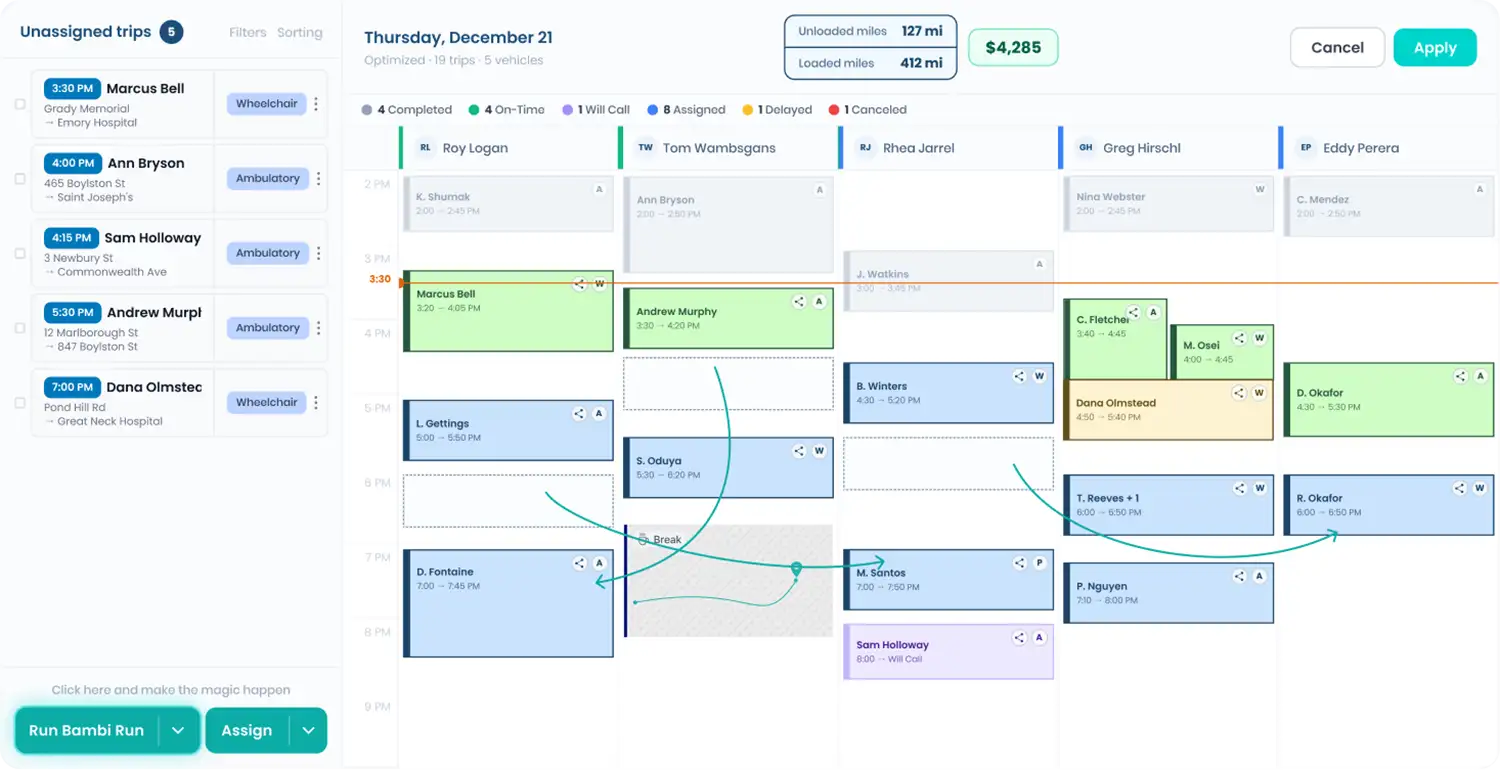
A clunky or outdated interface can slow down your team and lead to costly mistakes. A well-designed, centralized dashboard that clearly shows trips as pending, in progress, or completed allows dispatchers to stay on top of operations more efficiently. On the other hand, an outdated interface often signals poor performance and a lack of real-time validation.
Mobile access is just as important. Drivers need an app that’s straightforward and provides features like instant updates, optimized routes, and digital signature collection. Before committing to a platform, ask for a demo that includes dispatch simulations and a walkthrough of the driver app. Testing the system in realistic scenarios - like handling last-minute cancellations or no-shows - can give you a clearer picture of its reliability. Platforms with automated dispatch systems often report up to 40% fewer missed trips due to better scheduling accuracy. A user-friendly interface also ensures smooth integration with other essential systems.
Integration with Other Systems
Seamless integration is key to reducing data entry errors and ensuring compliance between dispatch and billing systems. The software should easily connect with EHR systems, billing platforms, and Medicaid verification tools to eliminate repetitive tasks. Integration with brokers is particularly important, as 86% of states use a non-emergency medical transportation (NEMT) model that involves regional or statewide brokers. Syncing trip data automatically with broker systems not only enhances reporting accuracy but also supports broker-specific workflows.
Look for software that offers API integrations for real-time trip validation with state agencies and Medicaid brokers. These integrations streamline the verification process, reducing the risk of reimbursement delays and improving overall transparency.
Route Optimization and Scheduling
Automated scheduling and AI-driven trip assignments can significantly reduce manual workload. Advanced algorithms calculate the best routes using traffic data, driver availability, and vehicle capacity. This leads to lower fuel costs and fewer delays, especially during high-demand periods. When paired with accurate scheduling, route optimization becomes a powerful tool for managing trip volumes effectively.
Features like live GPS tracking, subcontractor portals, and automated passenger notifications further minimize delays and enhance communication. Subcontractor portals allow third-party providers to accept or decline trips based on their capacity, ensuring everyone stays in sync. Meanwhile, automated passenger notifications - via SMS, phone calls, or apps like WhatsApp - reduce no-shows and cut down on "where is my ride" calls to the dispatch center. Some platforms even offer passenger apps with real-time ETA tracking, improving customer experience while easing the workload on your team.
Compliance and Security Requirements
Meeting regulatory standards is more than just a checkbox - it’s about protecting sensitive information and building trust with healthcare partners. For NEMT providers, handling Protected Health Information (PHI) is part of daily operations. This could include patient names, Medicaid IDs, or even trip destinations linked to treatments like dialysis or oncology. Choosing software that adheres to strict legal standards is essential for keeping this data secure and ensuring compliance.
HIPAA and ADA Compliance
HIPAA compliance is non-negotiable. It demands role-based access, ensuring drivers only see their assigned trips, and tamper-proof audit trails that log every access to PHI. These measures help safeguard sensitive data and prevent costly penalties.
The financial risks of non-compliance are steep. Civil penalties for HIPAA violations can range from $100 to $50,000 per incident, with annual penalties reaching up to $1.5 million for repeated offenses. For example, a mid-sized NEMT operator faced issues during a state Medicaid audit due to non-encrypted data. By switching to HIPAA-compliant software with role-based access and encryption, they resolved these issues and passed a follow-up audit.
Additionally, your software vendor must sign a Business Associate Agreement (BAA), which legally ensures they will handle PHI according to HIPAA standards. If a vendor refuses, it’s a red flag - any data breach liability would fall directly on your business. Beyond HIPAA, compliance with the Americans with Disabilities Act (ADA) is equally critical. Your software should track mobility needs, such as wheelchair or stretcher requirements, to ensure patients with disabilities receive the appropriate transportation.
Once compliance is addressed, the next step is implementing robust technical measures to secure data.
Data Security and Encryption
Encryption is your first line of defense against unauthorized access and breaches. Use AES-256 encryption for data at rest and TLS for data in transit, such as when trip details are sent to drivers. These standards make patient data unreadable if intercepted.
Look for features like multi-factor authentication and automatic session timeouts to further secure access. Avoid generic tools that lack encryption and BAAs, and instead choose dedicated NEMT software designed with security in mind. Ensure your vendor hosts the software in a secure cloud environment, such as AWS or Azure, with certifications like SOC 2 or HITRUST. Request a demo to review real-time audit logs and permission controls. These measures ensure that both compliance and security are seamlessly integrated into your operations.
Vendor Support and Pricing Structures
When it comes to running a smooth operation, reliable vendor support and clear pricing plans are non-negotiable. Poor onboarding can leave dispatchers confused and make billing a headache. These vendor-related factors go hand in hand with technical features and compliance protocols to keep things running efficiently.
Training and Customer Support
Effective onboarding starts with role-specific training for dispatchers, drivers, and billing teams. A well-structured process should include data migration services and realistic workflow simulations - like testing dispatch scenarios or submitting billing claims - before the system goes live. For most modern cloud-based platforms, implementation typically takes 2 to 8 weeks, depending on fleet size and customization needs.
It's also essential to ask vendors about their support availability. Do they offer assistance beyond standard business hours? Will you have a dedicated account manager after implementation? Be cautious with vendors who skimp on onboarding, lack automated compliance tools, or still rely on manual billing processes - these could signal future challenges.
Pricing Models and Budget Planning
In addition to strong support, understanding pricing structures is key to managing your costs over time. Most vendors use a per-vehicle pricing model, typically ranging from $40 to $100 per vehicle per month. Flat-rate monthly subscriptions can help with predictable budgeting but may come with higher upfront costs. On the other hand, per-trip pricing offers flexibility for startups with fewer trips but can lead to fluctuating monthly expenses as your trip volume grows.
"NEMT software cost is more than an expense; it's an investment in efficiency, reliability, and customer satisfaction." - TechBullion
Don’t forget to account for hidden costs. These might include fees for implementation, training, data migration, or premium support upgrades. Some vendors also charge extra for tools like API access, GPS tracking, or advanced billing features. To get a full picture of your total cost of ownership, factor in how software can cut costs through fewer claim denials, reduced labor costs, and better fuel efficiency through optimized route planning.
Mistakes to Avoid When Choosing Software
Even with detailed pricing and support information, many NEMT providers fall into common traps when selecting software. These missteps can hinder growth, drain resources, and even lead to compliance headaches. Here's what to keep in mind.
Ignoring Scalability and Integration Needs
Basing your software choice solely on your current fleet size is a recipe for trouble down the road. A platform that works for a two-vehicle operation often can't handle the demands of a ten-vehicle fleet. This can lead to manual data entry and hiring extra back-office staff, eating into your profits. The industry refers to this as "operational paralysis", where every new vehicle or contract adds a disproportionate strain on administrative resources.
"Scalability isn't about handling today's workload; it is always about being ready for what lies ahead." - RouteGenie
Another major issue is data silos. Without proper API integration, you may face manual data transfers, which increase the risk of errors. For example, around 15% of medical transportation claims are rejected, often due to mistakes that integrated systems could have prevented. A case in point: between 2022 and 2024, RideYourWay scaled from 8 to 24 vehicles using RouteGenie's automated ModivCare API integration, managing 1 million annual miles without adding dispatch staff.
When evaluating software, think ahead - where do you see your business in three years? During demos, test the system's ability to handle real-time challenges like last-minute cancellations or driver call-offs. Ensure the platform updates all modules - billing, routing, and driver apps - instantly. Scalability is just one piece of the puzzle; pricing decisions also require a closer look.
Choosing Based on Price Alone
Opting for the cheapest software often leads to regret. Budget-friendly platforms frequently lack automation features that save time and reduce costs in the long run. For instance, manual trip booking can take up to 30 minutes per transport, while automation reduces this to just 5 minutes, increasing productivity sixfold. Specialized NEMT software can also cut unbilled claims by as much as 98% compared to manual methods.
"The difference between NEMT operators who fail and those who build thriving, scalable operations often comes down to one critical decision made early on: whether or not they invested in the right NEMT software." - Tom Malan
Instead of focusing solely on the monthly subscription cost, consider the Total Cost of Ownership (TCO). A $20,000 investment in software could generate $30,000 or more annually through fewer claim denials, optimized routing that lowers fuel costs, and reduced administrative workload - yielding a 1.5x ROI within the first year. Be mindful of hidden fees, too, such as charges for GPS modules, driver apps, or premium support, which may not be included in the base price.
Skipping Demos and Trial Periods
Scalability and price matter, but testing the software is just as critical. Relying solely on marketing materials without trying the platform yourself is a risky move. Demos help ensure the interface is user-friendly for both dispatchers and drivers, which reduces training time and resistance to adoption. They also allow you to confirm that key features - like live GPS tracking, automated billing, and broker integrations - function as promised within your specific workflow.
Trial periods are invaluable for testing how the system performs during peak trip volumes and for verifying smooth integration with Medicaid brokers. This hands-on phase ensures the software can handle the fast-paced, real-time demands of your operations. Modern NEMT platforms can save operators an average of 2 to 3 hours per day on scheduling and dispatch tasks, but only if the system aligns with your needs.
Conclusion
Choosing the right NEMT dispatch software in 2026 is more than an IT decision - it’s a choice that directly impacts your bottom line and operational compliance.
As discussed, aligning software features with your fleet’s specific needs is essential. Whether you’re managing 5 vehicles or 50, the system you select should tackle key challenges like dispatcher fatigue and claim denials and rejections. Make sure the platform accommodates your broker-specific workflows and offers the flexibility to scale as your fleet expands - without requiring a costly overhaul of your existing setup .
Compliance is another major factor. With HIPAA violations carrying penalties of up to $50,000 per incident and annual fines reaching $1.5 million, your software must prioritize data security. Insist that vendors sign a Business Associate Agreement and provide automated compliance tools. Additionally, robust vendor support - such as role-based training and dedicated account management - can cut administrative workloads by 30–50% and reduce claim denial rates by 25–40% .
To avoid common missteps, calculate the Total Cost of Ownership, factoring in implementation, training, and integration fees. Always test the software through demos that replicate real-world scenarios, like same-day ride reassignments and handling billing denials . The right platform doesn’t just streamline operations - it enhances compliance, strengthens broker relationships, and drives profitability.
When implemented effectively, a strong NEMT dispatch system can transform your operations, safeguard revenue, and set your business up for long-term growth.
FAQs
What features matter most for my fleet size?
When it comes to fleet management software, the features you need can vary based on the size of your fleet. For larger fleets, tools like scalable systems, advanced route optimization, AI-driven scheduling, and real-time GPS tracking are key to keeping operations smooth and efficient. On the other hand, smaller fleets often focus on user-friendly interfaces and affordability, though features like GPS tracking and automated scheduling are still must-haves.
No matter the fleet size, it's essential to pick software that ensures regulatory compliance, streamlines operations, and can grow alongside your business.
How do I verify HIPAA and Medicaid compliance?
To ensure that NEMT dispatch software complies with HIPAA and Medicaid regulations, focus on key safeguards and features. For HIPAA, the software must protect patient health information (PHI) by incorporating encryption, secure access controls, audit trails, and robust data security protocols. These measures help keep sensitive data safe and meet legal standards.
When it comes to Medicaid, look for tools that handle eligibility verification, streamline billing processes, and maintain audit-ready documentation. These features are essential for managing Medicaid requirements efficiently. Additionally, verify that the software provider clearly states compliance with these regulations and offers ongoing support to help you stay aligned with legal obligations and avoid potential penalties.
What costs should I expect beyond the monthly fee?
When budgeting, it's important to account for more than just the monthly fee. You might face additional costs for setup, training, hardware, integration, and support. Some providers also base their fees on fleet size or usage, meaning you could be charged per vehicle or per trip. Keeping these potential expenses in mind can help you avoid surprises down the line.