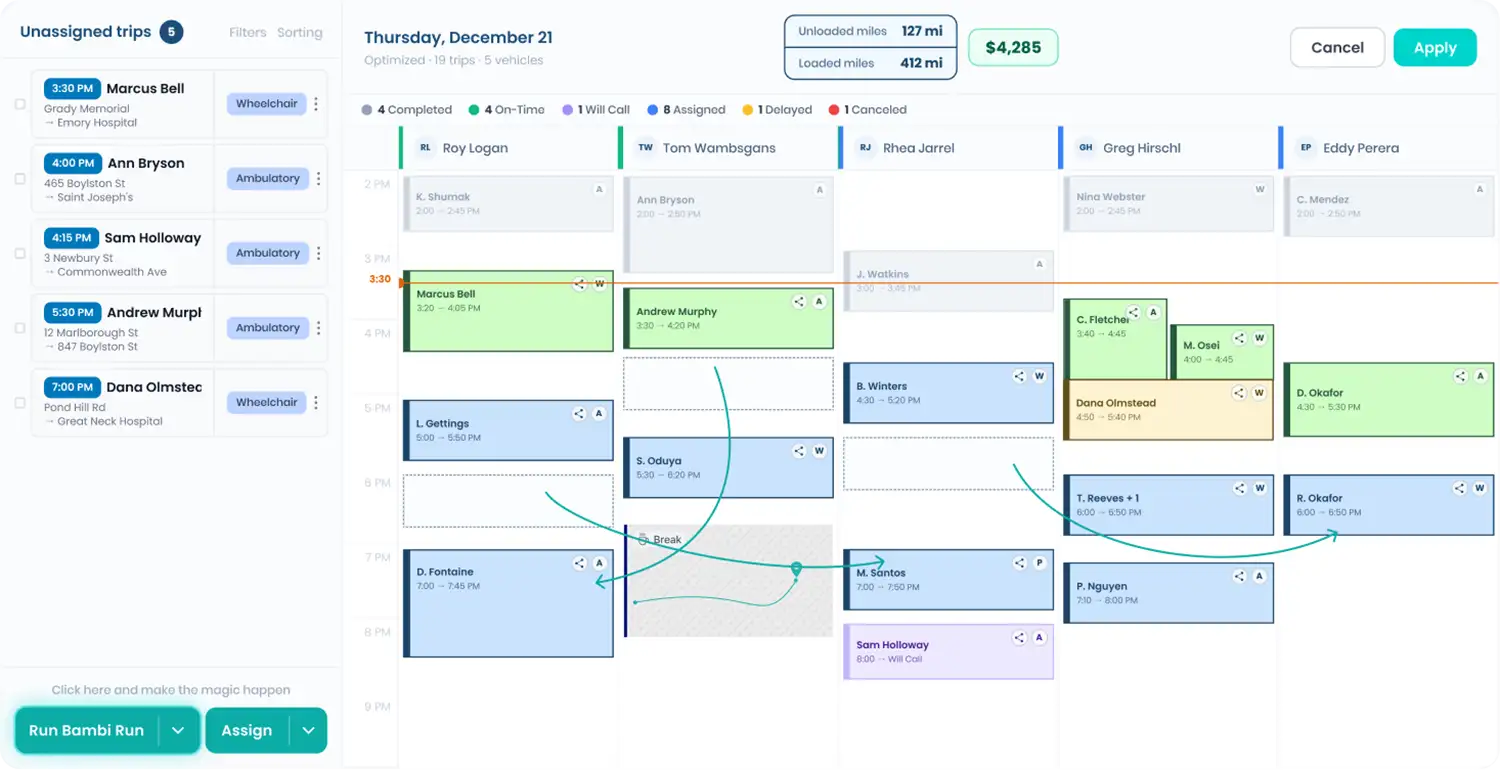

Managing non-emergency medical transportation (NEMT) can be challenging, but the right scheduling platform can simplify operations and improve service quality. Here’s what to prioritize:
- Real-Time Scheduling & Dispatching: Centralized dashboards, live GPS tracking, and instant route adjustments for faster response times and better on-time performance.
- GPS Tracking & Route Optimization: Reduce fuel costs and travel times by dynamically recalculating routes based on traffic and weather.
- Automated Communication: Minimize no-shows with SMS, email, or voice reminders, live ETAs, and two-way messaging.
- Billing & Compliance Tools: Automate claims processing, ensure HIPAA compliance, and reduce errors with real-time eligibility checks and audit trails.
- Integration & Connectivity: Link dispatch, billing, GPS, and broker systems to eliminate manual data entry and speed up payment cycles.
- Reporting & Analytics: Track metrics like vehicle utilization, cost per trip, and on-time rates to identify areas for improvement.
These features save time, reduce costs, and improve patient satisfaction, making them essential for any NEMT provider.
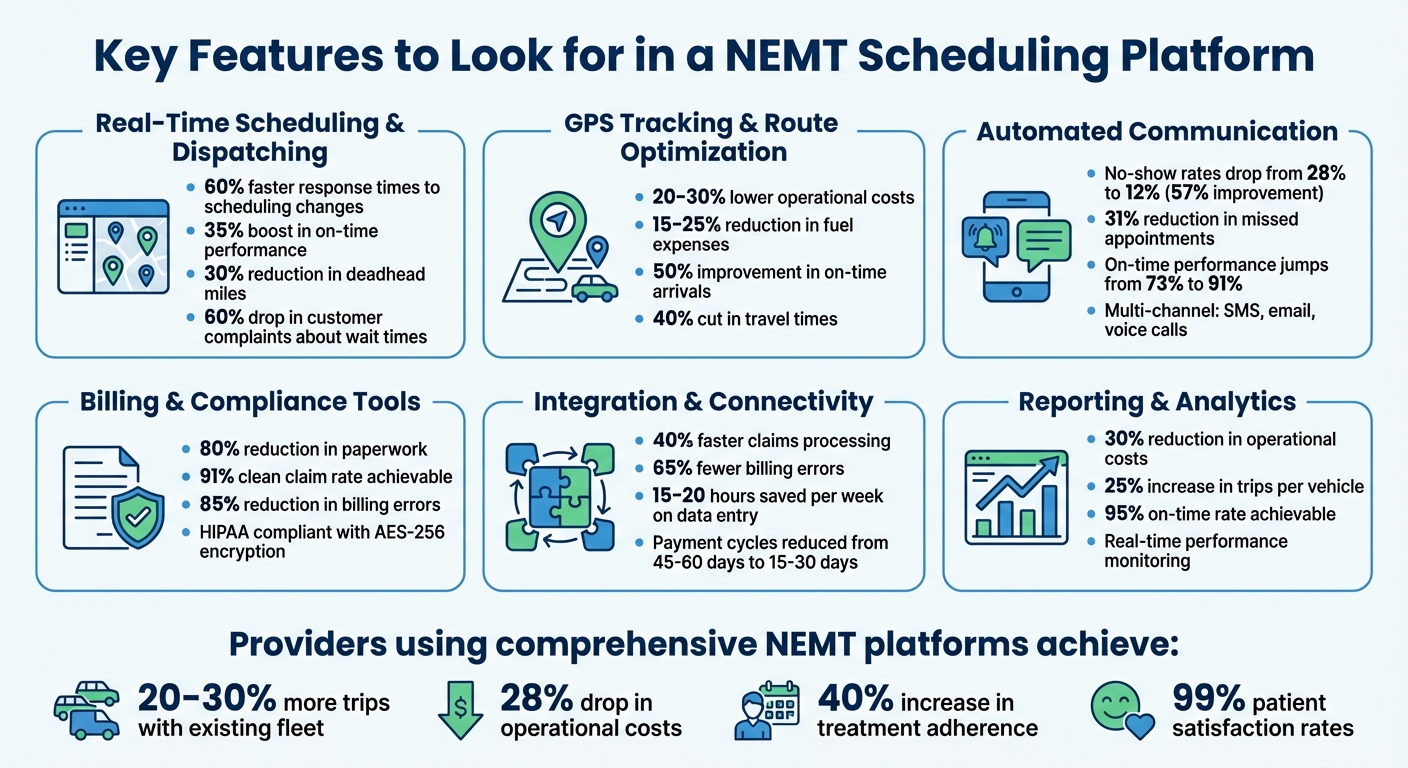
Real-Time Scheduling and Dispatching
Real-time scheduling and dispatching bring clarity and control to what could otherwise be chaos. With a centralized dashboard, dispatchers can monitor every vehicle, driver, and trip as they happen. This setup enables them to assign the closest available driver to a new trip request instantly, using live GPS tracking and up-to-the-minute traffic updates. The result? 60% faster response times to scheduling changes and a 35% boost in on-time performance.
The system continuously tracks the entire fleet, ensuring seamless adjustments when unexpected events occur. For instance, if a trip gets canceled or a new one comes in, drivers are reassigned based on factors like proximity, vehicle type, and patient requirements. Advanced AI recalibrates routes the moment conditions shift, ensuring the most efficient paths are taken. Even in cases of vehicle breakdowns, dispatchers are alerted instantly and can assign a nearby driver to step in, minimizing service disruptions. This real-time adaptability makes on-the-fly scheduling adjustments smooth and effective.
Handling Schedule Changes on the Fly
In the world of transportation, last-minute cancellations, urgent ride requests, and unexpected delays are the norm. Dynamic reassignment tools step in to handle these challenges instantly. Features like accommodating last-minute return trip requests integrate these rides into existing schedules by identifying the nearest available driver. This approach reduces "deadhead miles" - the distance traveled without passengers - by 30%, cutting fuel expenses and improving overall fleet efficiency.
Improving Patient Satisfaction
These enhancements in scheduling don't just streamline operations - they directly improve the patient experience. By factoring in real-time traffic and weather conditions, the platform reroutes drivers to avoid accidents or construction zones, ensuring timeliness even during disruptions. Meanwhile, automated SMS updates provide patients with live ETAs, reducing anxiety and eliminating the need for "where’s my ride" calls.
"Real-time trip management in NEMT means you always know what is happening with your vehicles, your drivers, and your passengers at every moment." - NEMT Platform
The results speak volumes. A New York-based NEMT provider serving Medicaid patients introduced real-time tracking and experienced a 60% drop in customer complaints about wait times. In California, another provider saw a 40% reduction in late pickups thanks to automated route optimization designed to avoid traffic jams. Beyond improving satisfaction, these advancements have a deeper impact: they increase treatment adherence by up to 40% and help lower hospital readmission rates.
GPS Tracking and Route Optimization
Expanding on the benefits of real-time dispatching, GPS tracking takes operations to the next level by fine-tuning routes and monitoring driver activity. It plays a key role in fleet management by helping reduce fuel expenses, cutting down travel times, and holding drivers accountable. When scheduling platforms integrate real-time traffic and weather updates, they can instantly redirect drivers to avoid accidents, construction zones, or traffic jams, ensuring the quickest route is taken. Additionally, real-time location data allows the system to assign the closest available driver for each pickup, while grouping passengers whenever possible. This can lower operational costs by as much as 20% to 30%.
For example, in 2025, a midsize transportation provider in Texas reported saving over $50,000 in fuel costs within just six months, while also increasing their monthly trip volume by 25%. Across the industry, companies that adopt advanced route optimization systems often experience a 15% to 25% reduction in fuel expenses.
Using Traffic Data for Better Routes
Real-time traffic data is a powerful tool for maintaining efficient routes, especially when paired with dynamic dispatching. If a patient cancels or a new trip is added, the system recalculates the best routes for the entire fleet based on live road conditions. This approach can improve on-time arrivals by as much as 50% and cut travel times by up to 40%. By combining live traffic updates with historical traffic patterns, these systems can deliver highly accurate arrival estimates, which not only enhance coordination with medical facilities but also help ease patient concerns.
Monitoring Drivers and Vehicles
GPS tracking offers dispatchers a clear, real-time view of their fleet, making it easier to address delays or unexpected issues. It also tracks driver behaviors like speeding, harsh braking, and excessive idling - factors that can hurt fuel efficiency and lead to faster wear and tear on vehicles. Geofence alerts are another valuable feature, notifying dispatchers if a vehicle strays from its optimized route, ensuring drivers stick to the most efficient path. Digital trip records, which log GPS data, signatures, and timestamps, create a reliable audit trail. Some advanced systems even work offline, ensuring continuous route visibility regardless of connectivity. These monitoring tools not only contribute to better on-time performance but also provide the transparency needed to elevate service delivery to the next level.
Automated Communication and Notifications
Staying on top of communication is just as vital as optimizing routes. One of the biggest challenges in the industry is no-shows, which manual vs. automated NEMT scheduling tools aim to address. No-show rates for NEMT providers typically range from 15% to 30%, with about 40% of these missed trips caused by communication issues. When patients don’t get clear reminders or real-time updates, they either forget their appointments or aren’t prepared when the driver arrives. The cost adds up quickly - each no-show costs providers anywhere from $45 to $85.
Automated systems help bridge this gap by sending notifications through SMS, email, and even voice calls. Many of these tools allow patients to confirm, cancel, or reschedule their rides directly from the notification, which means dispatchers can reassign vehicles without extra manual work. GPS-enabled real-time ETA updates also keep patients and healthcare facilities informed about arrival times, easing the stress of waiting and ensuring patients are ready when the driver arrives. The results? Let’s look at some real-world examples.
In 2025, a major regional healthcare network serving over 150,000 patients adopted smart scheduling with automated reminders and tracking. Within six months, their no-show rate plummeted from 28% to 12% - a 57% improvement. This translated to 2,400 more completed trips annually. Patient satisfaction scores also soared from 3.2 to 4.6 out of 5. Similarly, a small family-run NEMT company with 12 vehicles covering a rural 200-mile area saw missed appointments drop by 31%, while their on-time performance jumped from 73% to 91% in just three months after introducing automated communication systems.
Sending Updates Through Multiple Channels
Reaching patients through multiple communication channels ensures no one is left out. For instance, older adults might prefer automated voice calls, while younger patients are more likely to respond to SMS. Platforms should include features like "Reply 1 to Confirm" or "Reply 2 to Cancel", which feed directly into the dispatch system without needing staff to step in. Two-way messaging adds even more flexibility, allowing drivers to share updates about specific pickup locations or delays. Patients can also use it to provide gate codes or special assistance requests.
Facilities benefit too. Automated notifications sent to clinics or dialysis centers help staff prepare for incoming patients, improving coordination and reducing wait times.
Meeting Different Patient Communication Needs
To make a system truly inclusive, accessibility features are key. These might include screen reader compatibility, voice command options, adjustable text sizes, and high-contrast interfaces for those with visual or cognitive impairments. Multi-language support is another must-have, ensuring non-native speakers can understand trip details and instructions. Providers who prioritize accessibility report impressive outcomes, such as a 40% drop in patient wait times and a 25% boost in satisfaction scores.
Equally important is protecting patient data. All communication must use encrypted channels - AES-256 encryption for storage and TLS 1.2+ for data in transit - to safeguard sensitive health information and maintain HIPAA compliance.
Billing, Claims, and Compliance Management
Billing and managing HIPAA compliance often leave providers buried under mountains of paperwork and payer demands. A well-designed platform can simplify these processes by automating trip documentation and claim submissions. Automated trip documentation captures real-time pickup and drop-off times, GPS-verified mileage, and electronic patient signatures, cutting out the need for manual data entry and reducing errors. Providers who adopt automation have seen an 80% reduction in paperwork. This technology integrates smoothly with scheduling and dispatch systems, creating a streamlined workflow.
Take Metro Medical Transport as an example. This mid-sized provider, operating in three states, was grappling with a 23% claim denial rate in early 2024, which even led to losing a critical Managed Care Organization contract. To prevent revenue loss from such setbacks, providers must address billing errors and no-shows. By switching to a platform with GPS tracking and automated claim submission, they achieved a 91% clean claim rate, reduced denials to just 6% within six months, and boosted their monthly revenue by $200,000. Raquel Purvis, owner of Goodwill Transportation Services, shared her experience:
"One of my biggest issues before utilizing them was billing. They handle that process with ease, ensuring all claims are filed timely and fix errors as needed quickly to ensure timely payments."
Automating Billing and Claims Processing
Modern billing tools transform trip data into claims ready for submission. Route reconstruction APIs regenerate the actual route taken and compare it to pre-approved routes, ensuring Medicaid compliance and avoiding billing discrepancies. These systems automatically format claims to meet payer-specific requirements, using standard forms like CMS-1500 or electronic EDI formats. Additionally, real-time eligibility verification ensures that patient coverage is confirmed before services are provided, preventing denied reimbursements.
Direct API connections with major brokers eliminate the need for manual data entry, reducing disputes and streamlining operations. Built-in claim scrubbing tools catch errors before submission, improving clean claim rates and speeding up payment cycles. For instance, Green Med Trans Inc. utilized these features to achieve a 99.2% claim approval rate while managing over 5,000 trips each month. On top of that, automated systems can save providers 2 to 3 hours of administrative work every day.
Tracking Regulatory Compliance
Beyond billing, integrated compliance management is essential for safeguarding both businesses and patients. Platforms must adhere to strict HIPAA standards, including AES-256 encryption for data storage, TLS 1.2+ for data transmission, two-factor authentication, and role-based access controls. Non-compliance can result in penalties of up to $1 million.
Automated audit trails are another key feature, creating tamper-proof logs of system access, data changes, and trip documentation - critical during regulatory audits. Credential and license management tools track driver licenses, vehicle insurance, and medical certifications, providing alerts for upcoming expirations. For example, Regional Transport Solutions uncovered $45,000 in fraudulent claims from inflated mileage reporting by two drivers. After implementing GPS verification and automated mileage tracking in 2025, the company recovered $38,000 through negotiations with payers and prevented further fraud. Rachel Green, owner of Careful Transportation, highlighted the benefits:
"The app's automated dispatching and billing features have helped us save time and reduce errors, while the real-time tracking and communication features have helped us provide better service to our clients."
Integration and System Connectivity
Effective integration is the backbone of a smooth operation, especially when it builds on tools like streamlined scheduling and automated billing. Managing multiple systems - such as scheduling software, billing tools, GPS tracking and route optimization, and broker portals - can become a headache when these platforms don’t communicate effectively. The result? Your team wastes time manually re-entering data across systems. A well-integrated scheduling platform solves this issue by linking all your business tools through direct API connections, creating a seamless workflow from booking a trip to processing the final payment.
The financial benefits of integration are hard to ignore. Providers using broker-integrated software process claims 40% faster and experience 65% fewer billing errors compared to those relying on manual data entry. This technology also enables providers to secure 40% more broker contracts and increase trip volume by up to 75%. Payment cycles, which often take 45–60 days, can be cut down to just 15–30 days with integrated billing systems. Beyond simplifying operations, these integrations deliver measurable financial gains.
Reducing Manual Data Entry
Seamless data synchronization is a game-changer for eliminating repetitive tasks. With direct API integration to major brokers like ModivCare, MTM, and Access2Care, trip requests automatically flow into your scheduling system - no manual re-entry needed. This automation can save your team 15 to 20 hours of data entry every week. Additionally, automated data exchanges between broker systems, dispatch tools, and billing platforms significantly reduce human errors and streamline claims processing. In fact, automated electronic claims processing can reduce billing errors by 85%.
Bidirectional synchronization takes it a step further. When a driver marks a trip as complete in their mobile app, that status is instantly updated across the broker’s system, your billing platform, and even the healthcare facility’s records. This real-time data sharing minimizes miscommunications that could lead to claim denials or contract disputes.
Connecting All Operations in One Place
Modern platforms are designed to connect every aspect of your operations, using industry-standard protocols like HL7 and FHIR to securely exchange data with Electronic Health Records (EHR). This ensures that patient information and appointment details sync automatically. For billing, standards like EDI 837P for claim submissions and 835 for electronic remittance advice accelerate the revenue cycle while maintaining compliance. Integration with accounting tools like QuickBooks can further simplify invoicing and financial reporting.
Integration TypeStandard/Tool UsedKey BenefitEHR/EMRHL7, FHIR, secure APIsAccurate scheduling & care coordinationBillingEDI 837P/835, CMS-1500Faster reimbursements & fewer denialsBrokerDirect API (ModivCare, MTM)Automated trip import & status updatesFleet/GPSTelematics, Google MapsReal-time visibility & driver safetyAccountingQuickBooks, StripeStreamlined financial management
This holistic approach boosts efficiency and reduces administrative burdens. Take Aerotranscare, for example: by integrating dispatch, billing, and broker communications into one platform, the company cut its call center workload by 40% while maintaining a 98% on-time pickup rate for over 3,000 monthly trips. The company’s owner, Raza, shared:
"Nemt Platform has been a blessing as I can plan my business operations in advance and it saves me a lot of time and energy".
Integration also simplifies compliance. Automated monitoring can reduce audit preparation time by as much as 70%, giving your team more time to focus on what matters most.
Reporting and Analytics Tools
Once a scheduling platform is seamlessly integrated, its reporting and analytics features can become a game-changer for improving daily operations. These tools take raw data and turn it into actionable insights, helping you pinpoint what's working and where adjustments are needed. Instead of relying on guesswork, you can monitor specific metrics that directly influence both your service quality and financial performance.
Tracking Performance Metrics
The best reporting tools focus on the metrics that matter most to your operations. For example, keeping an eye on vehicle utilization - aiming for over 75% during peak hours - and maintaining on-time pickup rates above 90% are key indicators of efficiency. Industry data shows that many providers only reach about 35% utilization, leaving a lot of room for improvement. A reliable dispatch system should also notify managers when on-time performance dips below 90%.
Another critical metric is driver idle time, which highlights inefficiencies in scheduling or zone assignments. Cutting idle time from 25% to 12% can boost completed trips per driver by 15%. Then there's cost per trip, which factors in fuel, wages, maintenance, insurance, and overhead to give you a clear picture of profitability. Combining metrics like trip completion rates, cancellation rates, billing cycle times, and claim rejection rates with cost per trip can reveal where adjustments are needed.
MetricFormula / DefinitionOperational GoalVehicle Utilization(Time with passengers ÷ Total available time) × 100> 75% during core hoursOn-Time Pickup(Trips picked up on time ÷ Total trips) × 100> 90%Driver Idle TimeTime available but not moving passengers< 10% of working hoursCost per TripTotal Operating Costs ÷ Total TripsTrend downward with better routingTrip Completion(Completed trips ÷ Total scheduled trips) × 100Maximize by lowering no-shows
These metrics provide a solid foundation for identifying areas where operations can be fine-tuned.
Finding Ways to Improve Operations
Once you've established these benchmarks, analytics can help you address problems before they escalate. For instance, idle time reports can guide you in reassigning drivers from low-demand zones to busier areas. Reviewing late-arrival data can reveal whether delays are due to systemic issues or specific drivers. Monitoring vehicle downtime and scheduling preventative maintenance can also minimize unexpected disruptions. Advanced platforms even predict periods of high demand, allowing you to schedule drivers and vehicles more effectively.
The financial benefits of using data to optimize operations are striking. Analytics and route optimization can cut operational costs by up to 30% and reduce fuel expenses by 25%. For example, MedTransport Solutions achieved a 40% cost reduction, increased trips per vehicle by 25%, and maintained a 95% on-time rate. Similarly, CareRide grew its fleet from 10 to 30 vehicles - a 300% increase - while keeping the same number of dispatch staff and sustaining a 99% patient satisfaction rate through automation. As Evariste from Kinsemen Transport put it:
"The ability to see our business financials breakdown via brokers, corporate clients, dispatch jobs is simply awesome".
With dashboards offering real-time monitoring, you can focus on exceptions - trips falling outside performance targets - rather than combing through every detail. This shift from static weekly reports to live data allows for immediate adjustments, improving both efficiency and patient care. These insights not only streamline operations but also reinforce the platform's value in delivering high-quality service.
Conclusion
Modern NEMT platforms bring together a suite of features that transform how operations are managed. AI-driven scheduling and route optimization allow providers to handle 20–30% more trips with their existing fleet. With GPS tracking, dispatchers access live location data, enabling automated notifications to give patients accurate ETAs. This same technology helps adjust routes in real time to account for traffic or cancellations, significantly cutting down on no-shows and easing dispatcher workloads.
Beyond efficiency, seamless integration is a game-changer. By linking dispatch systems with billing and compliance tools, trip data automatically connects to claims, reducing manual tasks and speeding up reimbursements. Meanwhile, reporting and analytics tools gather insights from various data points - like scheduling, fuel usage, and driver behavior - to identify operational bottlenecks and guide improvements over time. Providers have seen impressive results, including a 35% boost in on-time performance, a 28% drop in operational costs, and fuel savings ranging from 15% to 25%.
These advancements aren't just about efficiency - they also enhance patient care. As Brent D. Payne from MediDrive puts it:
"Modern NEMT platforms are revolutionizing healthcare transportation through advanced features that enhance operational efficiency and patient care".
The best platforms do more than automate - they create a feedback loop where each trip generates data to refine operations further. When choosing the right NEMT dispatch software, focus on integration capabilities, multi-channel communication, and real-time visibility to ensure all features work together seamlessly.
The financial benefits are undeniable. Multi-location operations often see rapid returns on investment. Reliable transportation also improves patient outcomes, increasing treatment adherence by up to 40% and reducing hospital readmissions. Ultimately, a well-rounded NEMT scheduling platform not only boosts profitability but also strengthens the communities it serves, delivering better care while driving operational success.
FAQs
How does real-time scheduling enhance efficiency for NEMT services?
Real-time scheduling plays a key role in making Non-Emergency Medical Transportation (NEMT) services more efficient. It provides instant updates and allows for quick changes to trip plans. This means fewer delays, better route planning, and accurate ETAs shared with both passengers and drivers.
By simplifying operations, real-time scheduling reduces disruptions, improves punctuality, and enhances overall service dependability. It’s an essential solution for handling the ever-changing needs of NEMT providers while ensuring passengers receive consistent and reliable care.
How does GPS tracking improve route optimization in NEMT scheduling?
GPS tracking plays a key role in making Non-Emergency Medical Transportation (NEMT) scheduling more efficient by offering real-time updates on vehicle locations. With this data, dispatchers and drivers can quickly adapt to changes like traffic jams, road closures, or unexpected delays, keeping trips on schedule and running smoothly.
By pinpointing the best routes, GPS tracking helps cut down on extra mileage, saves on fuel costs, and reduces delays. It also maximizes the use of fleet resources while maintaining timely service - a crucial factor for meeting compliance standards and providing dependable transportation. This technology streamlines operations and ensures patients relying on NEMT services receive consistent, high-quality care.
How does automated communication help reduce no-shows in NEMT services?
Automated communication features in NEMT scheduling platforms play a crucial role in reducing no-show rates by keeping patients consistently informed and engaged. Tools like automated reminders and real-time updates ensure patients know their pickup times, driver locations, and any changes in their schedules. This reduces the likelihood of missed trips and helps appointments run more smoothly.
Real-time communication tools also make it easier to address unexpected delays or issues. They enable quick coordination between dispatchers, drivers, and passengers, ensuring problems are resolved efficiently. By streamlining the flow of information and promoting accountability, these systems build trust and reliability - encouraging patients to stick to their scheduled rides.