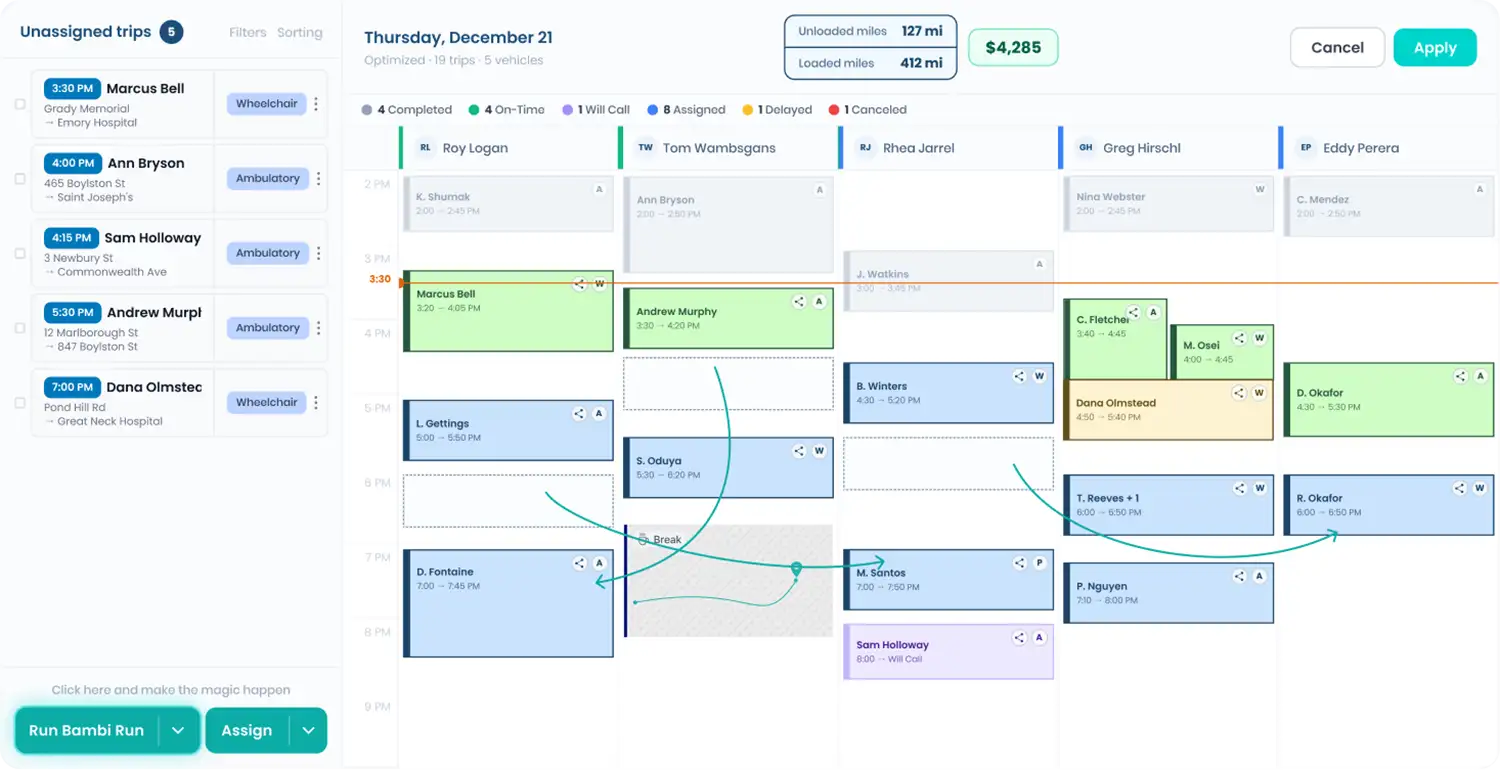

In Non-Emergency Medical Transportation (NEMT), being on time is essential for patient care and meeting business requirements. Delays can harm patient health, increase stress, and lead to penalties from brokers or Medicaid programs if punctuality drops below 90%. Here's how you can improve:
- Track Key Metrics: Monitor on-time rates, average delays, vehicle usage (aim for 75%+), and driver idle time (keep under 10%). Analyze data daily or weekly to spot trends.
- Use Real-Time Technology: GPS tracking, AI route optimization, and automated trip logging help avoid delays, reroute efficiently, and maintain compliance.
- Improve Operations: Set clear performance goals, train drivers, and create backup plans for unexpected issues like vehicle breakdowns or driver absences.
- Communicate Effectively: Send real-time ETA updates to passengers, integrate with healthcare systems, and use centralized dashboards for fleet management.
Key Metrics for Tracking On-Time Performance
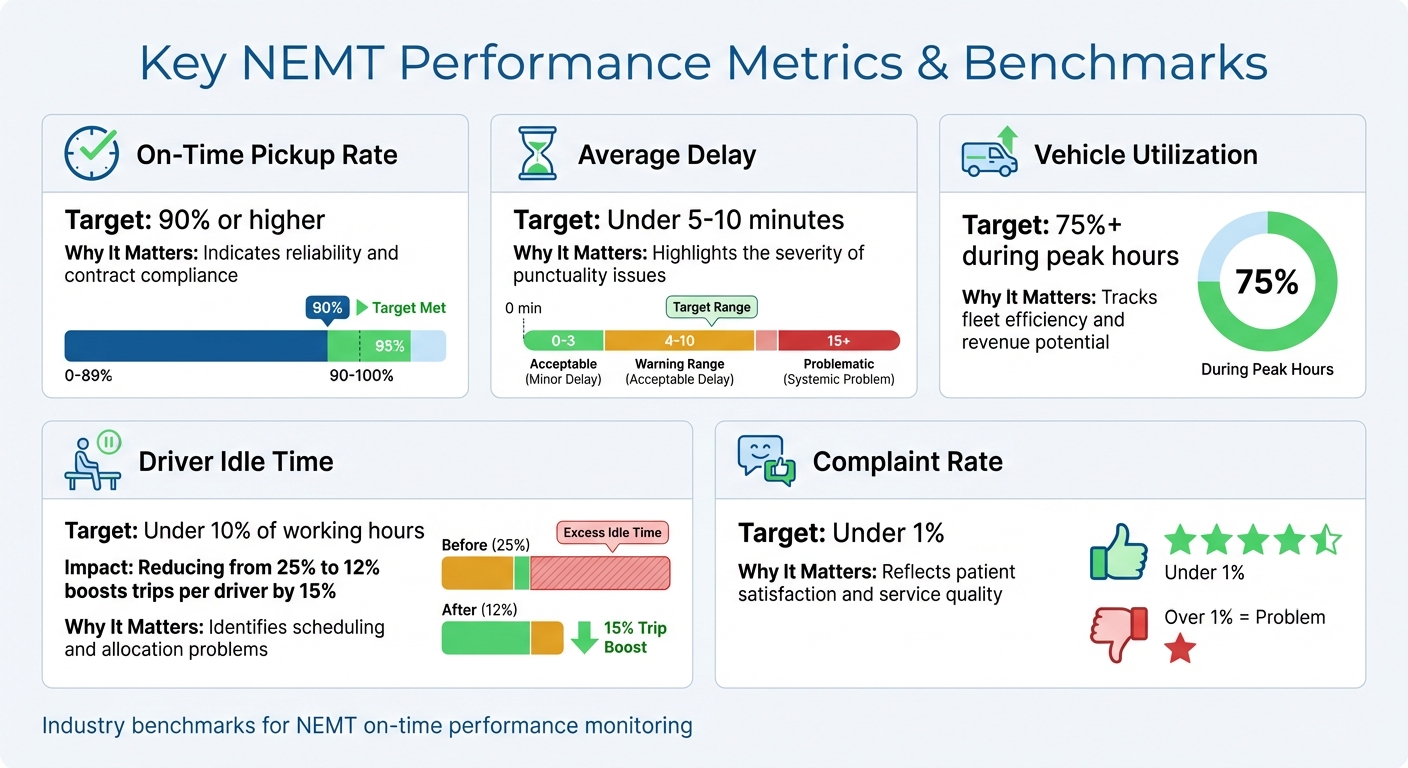
Improvement starts with measurement. By focusing on the right metrics, you can uncover operational strengths and weaknesses, shifting from simply reacting to issues to preventing them altogether. Below are key performance indicators that directly influence service quality.
On-Time Arrival Rates
Accurately tracking on-time performance is critical. Use this formula to calculate your on-time rate: (on-time trips ÷ total trips) × 100. Aiming for a 90% on-time rate is essential to meet contract requirements and avoid penalties. But don’t stop at just counting late pickups - look at the average delay. Implementing real-time tracking allows dispatchers to see these delays as they happen. A delay of 2–3 minutes signals a minor issue, while delays of 15 minutes or more point to larger, systemic problems. Reviewing this data daily or weekly helps identify recurring challenges early, allowing for proactive solutions.
Trip Duration and Fleet Utilization
Comparing scheduled trip times to actual durations can help identify inefficiencies. Another key metric is vehicle utilization, which is calculated as time or miles spent with passengers ÷ total available time or miles. Ideally, this should hit at least 75% during peak hours. Monitoring driver idle time is also crucial - keeping it below 10% of working hours can reveal scheduling inefficiencies. For instance, cutting idle time from 25% to 12% could boost trips per driver by 15%. Analyzing trip data by geographic zones weekly can help address underserved routes and better allocate resources.
Customer Feedback and Complaint Rates
Metrics alone don’t tell the whole story - customer feedback offers a human perspective on service performance. A complaint rate below 1% is considered the industry standard for quality service. Additionally, tracking no-show rates is important, as patients who aren't ready at pickup can create delays. Automated reminders, such as texts or calls, can help ensure patients are prepared, reducing dwell times and preventing delays from snowballing.
MetricTarget BenchmarkWhy It MattersOn-Time Pickup Rate90% or higher Indicates reliability and contract complianceAverage DelayUnder 5–10 minutesHighlights the severity of punctuality issuesVehicle Utilization75%+ Tracks fleet efficiency and revenue potentialDriver Idle TimeUnder 10% Identifies scheduling and allocation problemsComplaint RateUnder 1%Reflects patient satisfaction and service quality
These metrics provide a foundation for using technology and strategic planning to improve punctuality and overall performance.
Using Technology to Monitor and Schedule Trips
Once you know which metrics matter most, the next step is to implement tools that can revolutionize how you manage and coordinate your daily operations. Modern software takes the guesswork out of fleet management by replacing manual processes with real-time solutions that help avoid delays.
Real-Time GPS Tracking
With the right technology, you can monitor and manage your operations as they happen. GPS tracking offers a clear view of each vehicle's location, helping ensure drivers stick to assigned routes while cutting down on unauthorized stops and unnecessary idling. If a vehicle breaks down or faces delays, dispatchers can quickly reassign trips, keeping schedules on track and avoiding missed appointments. This system also allows automated ETA updates to be sent directly to patients via SMS, easing their concerns and reducing no-show rates. Plus, integration with live traffic data enables instant rerouting to bypass accidents, construction, or heavy traffic, improving arrival accuracy. Centralized dashboards make it easy to keep tabs on vehicle usage, on-time performance, and idle time in real-time.
AI-Powered Route Optimization
AI-based tools take route planning to the next level by analyzing pickup and drop-off points, appointment times, vehicle capacity, and accessibility needs. These systems also factor in weather and traffic conditions, rerouting drivers instantly to avoid delays. Dynamic scheduling handles last-minute cancellations or new trip requests without disrupting the entire day’s plan. Multi-stop route planning enables vehicles to transport multiple passengers efficiently by matching compatible time windows and locations. This can cut deadhead miles - miles traveled without passengers - by up to 30%. Providers using these systems often report a 50% increase in on-time arrivals and a 20% to 30% reduction in overall operating costs.
Automated Trip Logging
Automation simplifies record-keeping by capturing digital signatures, odometer readings, and GPS-stamped timestamps for every trip milestone - clock-in, pickup, and drop-off - creating a reliable audit trail. This eliminates errors from paper logs and ensures records are HIPAA-compliant and audit-ready. Look for software that can export logs in formats required by brokers like LogistiCare, MTM, and MAS, which speeds up the reimbursement process. Geographic time-stamping confirms that drivers are at the right location at the right time, while one-click EDI claim submission accelerates billing. You can even configure your dispatch system to alert management if on-time performance dips below 90%. These tools not only streamline operations but also lay the groundwork for more efficient strategies moving forward.
Operational Strategies to Improve Punctuality
Operational strategies work hand-in-hand with technology to ensure services run on time. While technology provides real-time performance insights, strong operational practices are the backbone for managing delays and maintaining efficiency.
Setting Time Performance Standards
Clear performance standards help keep everyone aligned. For instance, aiming for an on-time pickup rate of over 90%, keeping driver idle time below 10% of working hours, and achieving at least 75% vehicle utilization during peak hours are solid benchmarks to follow. Adding time buffers to schedules can help absorb minor disruptions without derailing the entire operation. Historical data is also valuable - flagging high-risk trips, such as those during rush hours or involving passengers with specific mobility needs, allows for proactive adjustments. For example, using automated alerts and schedule tweaks helped improve on-time pickups from 84% to 94%.
Driver Training and Accountability
Training drivers in time management, communication, and the use of tracking tools is essential. A centralized dashboard can help track individual performance, highlighting both top performers and those needing extra coaching. If late pickups are recurring, dig into possible causes like inefficient routes, peak traffic delays, or driver habits. Addressing these issues can have a significant impact - reducing driver idle time from 25% to 12% has been shown to increase trips per driver by 15%. Regular one-on-one reviews of performance metrics provide constructive feedback that not only improves compliance but also boosts patient satisfaction.
Building Contingency Plans
Unforeseen issues like vehicle breakdowns or driver absences can disrupt schedules, so having contingency plans in place is crucial. Protocols for optimizing driver assignments and quick reassignment can keep trips on track. Automated systems that locate and reassign the nearest available driver save time and reduce manual intervention. Partnering with secondary providers or backup services can also help manage overflow during peak demand or vehicle shortages. Additionally, automated SMS alerts can notify patients and facilities of delays, ensuring transparency and easing concerns. For instance, MedTransport Solutions managed to cut cancellations from 28% to 12% in six months by improving confirmation and reminder processes.
MetricTarget BenchmarkImpact of ImprovementOn-Time Pickup Rate> 90%Builds client trust and reduces missed appointments Driver Idle Time< 10%Reducing from 25% to 12% boosts trips per driver by 15% Vehicle Utilization> 75% (core hours)Cuts down on wasted fuel, maintenance, and insurance costs
Using Communication Tools for Better Coordination
Building on the earlier discussion about technology, effective communication plays a key role in keeping schedules on track and addressing delays quickly. These tools improve clarity, reduce confusion, and cut down on the endless "where is my ride?" calls that overwhelm dispatch centers.
Real-Time ETA Updates
Automated notifications for estimated arrival times (ETAs) keep passengers informed about when their ride will arrive. This ensures passengers are ready when the vehicle arrives, minimizing driver wait times and reducing no-shows. When passengers can track their ride in real time, their confidence grows, and the number of update calls drops.
Real-time tracking also helps dispatchers handle unexpected issues before they disrupt the schedule. If a driver encounters traffic or delays, dispatchers can immediately see the problem and take action - whether that’s rerouting the driver or notifying passengers. AI-powered tools further enhance this process by analyzing traffic patterns, weather conditions, and road closures to suggest better routes, helping drivers stay on time. These notifications also support centralized fleet monitoring, making operations more efficient.
Centralized Dashboards for Fleet Management
Centralized dashboards bring everything together - scheduling, messaging, navigation, and compliance alerts - into one platform, eliminating the hassle of juggling multiple systems. Dispatchers can monitor the entire fleet at a glance, including active rides, vehicle statuses, driver assignments, and real-time alerts. This "single view" setup allows teams to focus only on pressing issues, such as late arrivals or unassigned trips.
By integrating GPS tracking into the dashboard, dispatchers gain instant visibility into driver locations, enabling proactive route adjustments. Automated synchronization with Electronic Health Records (EHR) and broker systems through APIs removes the need for manual data entry, ensuring appointment details remain accurate. When schedules change, dispatchers can update the system once, and those changes are reflected instantly across driver apps and passenger notifications.
Connecting with Healthcare Systems
Coordination doesn’t stop internally - integrating with external healthcare systems further improves efficiency. Linking communication tools with healthcare providers, insurers, and brokers automates administrative tasks and reduces the effort required for coordination. Since medical appointments often change, integrated systems allow dispatchers to receive updates in real time and adjust schedules immediately. New instructions can then be sent to drivers via mobile apps, ensuring timely service. AI-based software can also factor in specific passenger needs, like wheelchair or stretcher accommodations, directly into ETA calculations and route planning.
When connecting dashboards to healthcare systems, it’s critical to ensure the platform uses encrypted storage and role-based access to meet compliance standards. Cloud-based systems make data accessible in real time across devices, enabling seamless collaboration between dispatchers and drivers, even when working remotely.
Conclusion
Achieving reliable on-time performance requires a coordinated strategy that blends accurate metrics, cutting-edge tools, and strong operational practices. Start by comparing your current performance with industry benchmarks: aim for a 90% on-time rate, 75% vehicle utilization during peak hours, and driver idle time under 10%.
Invest in AI-driven dispatch systems that replace manual scheduling, account for variables like traffic and road closures, and address specific passenger needs such as wheelchair accessibility. Pair this with real-time GPS tracking and centralized dashboards to give dispatchers a clear view of the fleet and enable quick responses to delays. These technologies help eliminate manual errors and avoid scheduling conflicts, creating smoother operations across the board.
Set measurable performance goals, incorporate schedule buffers, and group rides by geographic zones to minimize unnecessary mileage. Preventive maintenance schedules and regular driver training can further enhance route efficiency. Analyze your data daily or weekly to identify and resolve recurring issues before they grow. Strong communication systems, such as real-time updates, ensure everyone stays informed and aligned.
Automated SMS or app notifications can provide passengers with live ETAs, reducing no-shows and ensuring they’re ready when the driver arrives. Integrate your systems with healthcare providers and brokers through APIs to eliminate manual data entry and maintain accurate appointment information.
For example, cutting driver idle time from 25% to 12% can increase completed trips per driver by 15% and significantly lower costs per trip. Start by auditing your current metrics, setting clear targets, and implementing changes step by step. Regular monitoring and adjustments will build the reliability that ensures patient safety, broker satisfaction, and long-term business success.
FAQs
What counts as “on time” in NEMT?
In the world of Non-Emergency Medical Transportation (NEMT), being "on time" typically means arriving within a set time frame around the scheduled pickup. This window is often defined as 15 minutes before or after the appointment time. That said, the exact definition can shift depending on the provider and the specific operational setup. Punctuality is critical - not just for keeping schedules on track but also for building trust and meeting the expectations of clients who rely on these services.
How do I find the real causes of late pickups?
Analyzing operational data can shed light on why late pickups occur. Tools like AI-powered scheduling and real-time tracking systems are particularly useful for identifying issues. They can uncover problems such as route delays, traffic congestion, or scheduling conflicts that disrupt plans.
By monitoring trips in real time and reviewing metrics like vehicle utilization and dispatch patterns, you can zero in on the root causes of delays. This insight allows you to tackle inefficiencies head-on, helping to reduce delays and boost overall performance.
Which tools should I implement first to improve on-time rates?
To boost on-time performance, investing in scheduling software and real-time tracking systems is a smart move. Scheduling tools designed specifically for NEMT services can streamline route planning, cutting down on unnecessary delays. Meanwhile, real-time GPS tracking lets you monitor vehicle locations as they move, making it easier to adjust routes on the fly and provide clients with accurate ETA updates. Together, these tools create a reliable framework to keep your operations running smoothly and on schedule.