
Non-Emergency Medical Transportation (NEMT) is undergoing a major transformation thanks to technology. Manual processes like spreadsheets and phone calls are being replaced by smarter, faster systems that improve efficiency, reduce costs, and ensure patients get to appointments on time. Here's how:
- AI-Powered Scheduling: Matches trips to drivers in seconds, predicts demand, and reduces missed trips by 25%.
- Real-Time GPS Tracking: Tracks vehicles live, sends accurate ETAs, and improves on-time arrivals by up to 50%.
- Automated Route Optimization: Cuts fuel costs by 15%-30% and reduces empty miles by up to 40%.
- Integrated Communication Platforms: Handles routine inquiries, streamlines messaging, and ensures compliance with secure, logged communications.
These tools not only save time and money but also improve patient care by reducing delays and missed appointments. As Medicaid and insurers demand better documentation, these systems provide audit-ready records and ensure compliance. For NEMT providers, adopting these technologies is key to staying competitive and delivering reliable service.
AI-Powered Scheduling for NEMT Dispatch
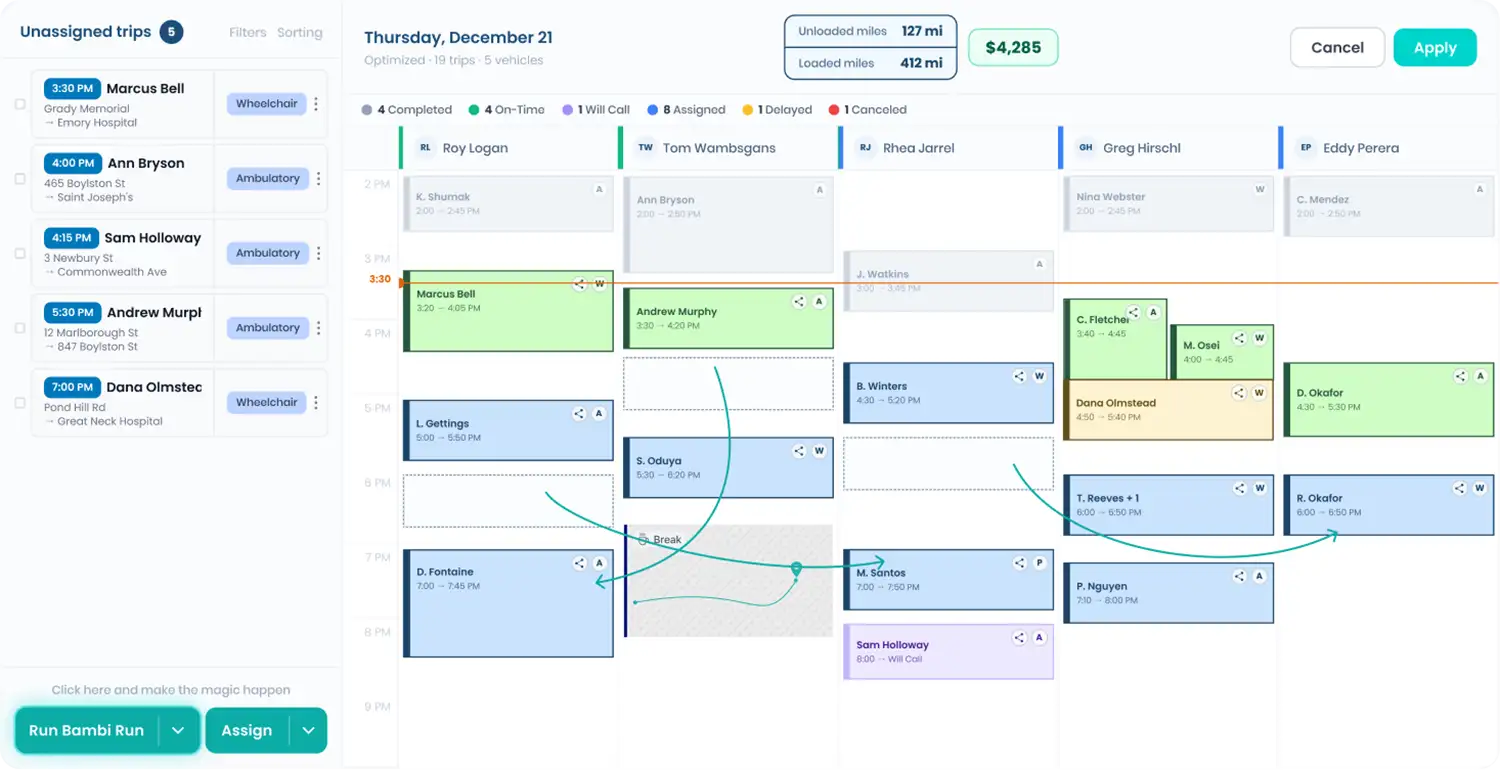
AI-powered scheduling revolutionizes how Non-Emergency Medical Transportation (NEMT) providers assign trips. By analyzing real-time data - like driver locations, vehicle types, certifications, patient priorities, and traffic conditions - AI can match patients with the most suitable driver in just seconds. This automated process removes the guesswork and reduces human error that often plagues manual scheduling.
But it doesn’t stop at trip assignments. AI uses historical trip data, weather forecasts, and seasonal trends to predict demand patterns. This insight allows providers to prepare for peak periods by allocating more vehicles when necessary.
Recurring appointments also get a boost. AI systems embed patient preferences, such as specific pickup times and mobility needs, directly into daily schedules. This not only reduces administrative workload but also ensures a smoother, more reliable service experience for patients.
When disruptions occur - like accidents, road closures, or last-minute cancellations - AI steps in to adapt. It monitors live conditions and reroutes drivers automatically, reassigning trips in real time. In fact, it can optimize over 100 routes in under three seconds, saving dispatchers hours each day to focus on more critical tasks.
Benefits of AI Scheduling
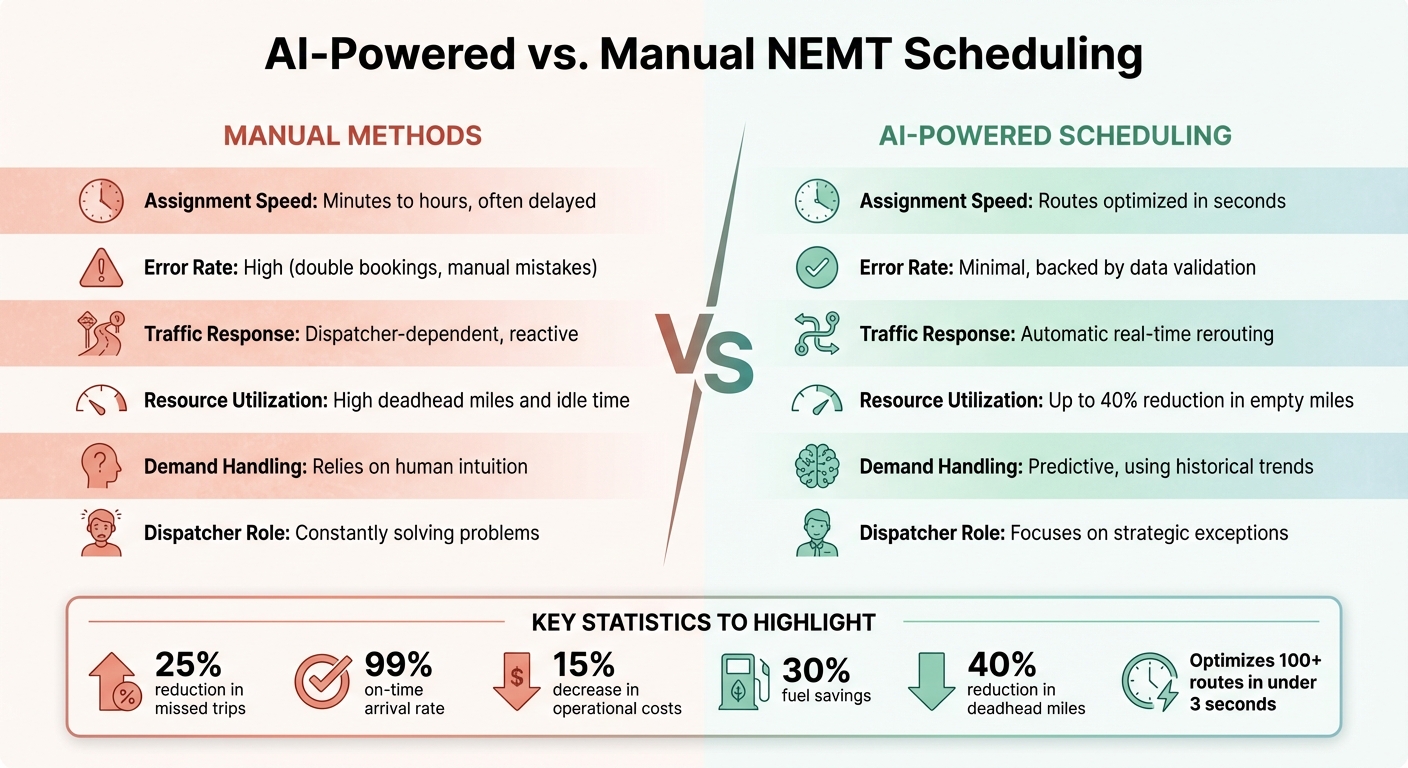
The results of AI scheduling are both tangible and impressive. Providers have reported a 25% reduction in missed trips, a 99% on-time arrival rate, and a 15% decrease in operational costs. Fuel savings are significant too, with expenses dropping by up to 30% due to more efficient routing. Plus, “deadhead” miles - when vehicles travel empty - can be cut by 40%, which maximizes vehicle usage.
These operational improvements directly impact patient care. Reliable transportation increases treatment adherence by as much as 40%. For providers, financial perks go beyond fuel savings. AI systems automatically log trip details, mileage, and driver credentials, streamlining documentation for audits and insurance compliance.
AI also excels at handling complex scheduling constraints. It considers over 70 factors simultaneously, including vehicle capacity, driver hours, and specific patient needs like bariatric or standard wheelchair accommodations. This level of precision ensures compliance and maintains service quality, even as trip volumes grow.
AI Scheduling vs. Manual Methods
Here’s how AI-powered scheduling stacks up against traditional, manual methods:
FeatureManual MethodsAI-Powered SchedulingAssignment SpeedMinutes to hours, often delayedRoutes optimized in secondsError RateHigh (e.g., double bookings, manual mistakes)Minimal, backed by data validationTraffic ResponseDispatcher-dependent, reactiveAutomatic real-time reroutingResource UtilizationHigh "deadhead" miles and idle timeUp to 40% reduction in empty milesDemand HandlingRelies on human intuitionPredictive, using historical trendsDispatcher RoleConstantly solving problemsFocuses on strategic exceptions
Manual scheduling often forces dispatchers into a reactive role, constantly addressing issues as they arise. AI flips this dynamic by anticipating problems and resolving them automatically. For example, if a driver hits unexpected traffic, the system identifies and reassigns the trip to another available driver, ensuring the schedule stays intact.
Scalability is another major advantage. Expanding a manual system typically means hiring more staff, but AI can handle growing datasets and increasingly complex routing without additional labor costs. This scalability is vital as the NEMT market continues to grow, projected to reach $15.57 billion by 2028, with automation playing a key role in that expansion.
These advancements in scheduling pave the way for even greater improvements, especially when combined with real-time GPS tracking for fleet management.
Real-Time GPS Tracking for Fleet Management
Real-time GPS tracking works hand-in-hand with AI scheduling to give dispatchers a clear, instant view of their fleet. It shows exactly where each vehicle is, how fast it’s moving, and whether drivers are ready for new assignments. This level of visibility eliminates the guesswork of manual dispatching, which often relies on radio check-ins or phone calls.
When unexpected events like traffic jams, accidents, or road closures happen, GPS systems allow for immediate rerouting. This keeps schedules intact and helps avoid a domino effect of delays.
The benefits extend directly to patients. Instead of vague arrival windows, real-time GPS systems send precise ETAs via text or app notifications. Patients can even track their ride in real time, reducing stress and uncertainty. For instance, a New York provider serving Medicaid patients saw a 60% drop in complaints about wait times after adopting GPS tracking.
Key Features of GPS Tracking
Modern GPS systems go beyond just showing dots on a map. They create detailed digital logs of trips, including routes, timestamps, and location histories. These records can be critical during audits or liability disputes.
Geofencing is another powerful tool. Dispatchers can set virtual boundaries around key locations - like hospitals or patient homes - and get automatic alerts when vehicles enter or leave these zones.
Driver behavior monitoring adds another layer of oversight. The system tracks risky actions like speeding, hard braking, and rapid acceleration. If unsafe driving is detected, dispatchers receive alerts and can intervene immediately. This not only improves safety but can also lower insurance costs and reduce wear and tear on vehicles. Additionally, if a vehicle breaks down or a driver faces an emergency, dispatchers can quickly reassign a nearby driver to ensure minimal disruptions.
Customer and Business Benefits
These advancements directly improve patient care. Transportation delays cause nearly 30% of patients to miss appointments. Providers using real-time tracking have reported up to a 50% increase in on-time arrivals, which can lead to a 40% boost in treatment adherence.
Healthcare facilities also gain. Missed appointments due to transportation issues cost clinics about $200 per unused physician time slot. Live ETA sharing helps clinics better coordinate patient flow, reducing waiting room congestion.
Real-world examples highlight these benefits. A California provider saw late pickups drop by 40% after adopting GPS tracking. Meanwhile, a Texas-based provider saved over $50,000 in fuel costs in just six months while increasing monthly trip volume by 25%. They achieved this partly by cutting "deadhead miles" - the distance traveled without passengers - by up to 30%. Plus, while manual routing often results in driver utilization rates below 60%, GPS systems can push this number above 85%, enabling providers to serve more patients without adding vehicles.
These advancements lay the groundwork for even better results through NEMT route optimization.
Automated Route Optimization
While GPS tracking pinpoints vehicle locations, automated route optimization takes it a step further by charting the best routes. These AI-driven systems juggle multiple variables at once - like pickup points, appointment schedules, vehicle capacity, wheelchair accessibility, driver qualifications, and Medicaid's strict timing rules. They also integrate live traffic updates and weather conditions, instantly rerouting drivers to avoid delays and accidents.
Multi-stop planning is another game-changer. By grouping passengers into shared rides, the system minimizes "deadhead miles" - the distance vehicles travel without passengers. Instead of dispatching one vehicle per patient, the AI matches compatible passengers based on location and appointment timing. This strategy can cut deadhead miles by 30% to 40%. For instance, a Texas-based provider adopted this method in 2025 and saved more than $50,000 in fuel costs within six months, while also increasing trip volume by 25%.
AI also learns from past trends, like slower routes on Tuesday mornings, and adjusts schedules accordingly. This enables providers to achieve on-time pickup rates as high as 99%.
Static vs. Dynamic Routing
Route optimization can follow one of two paths: static or dynamic. Static routing relies on fixed schedules and spreadsheets, making it inflexible when unexpected changes arise. In contrast, dynamic routing uses AI to adapt in real time, recalculating routes within seconds when faced with last-minute cancellations or sudden traffic jams.
FeatureStatic RoutingDynamic Routing (AI-Powered)Input FactorsManual data, fixed schedules, historical estimatesReal-time traffic, weather, GPS, and cancellationsEfficiencyError-prone; struggles to scale with demandHandles 100+ routes instantly; adjusts on-the-flyCost OutcomesHigh fuel waste from backtracking and idling15-25% fuel savings; 30-40% fewer empty milesFlexibilityRigid; manual changes requiredAuto-adjusts for no-shows and last-minute bookings
This table highlights the advantages of AI-powered dynamic routing. A California provider experienced these benefits firsthand in 2025. By switching to AI-driven dispatch, they reduced late pickups and optimized routes based on predictive traffic data and driver availability. This eliminated the constant stress dispatchers faced when managing routes manually.
Cost and Fuel Savings
Adopting route optimization can slash fuel costs by 15% to 25%, and in some cases, up to 30%. These savings stem from cutting unnecessary miles, reducing idle time, and better grouping of trips. Operational costs drop by 20% to 30% overall.
AI systems also improve driver utilization, pushing it past 85%, compared to the under-60% efficiency typical of manual routing. This means providers can serve more patients without adding vehicles. Plus, fewer miles driven translates to reduced carbon emissions, aligning with community sustainability goals.
The benefits go beyond immediate savings. Optimized routing reduces vehicle wear and tear, extending the lifespan of the fleet and lowering maintenance costs. Combined with real-time GPS tracking and AI scheduling, automated route optimization creates a seamless system for maximizing fleet efficiency.
Communication Platforms for Dispatchers and Drivers
Modern communication platforms have become an essential addition to AI scheduling and GPS tracking and real-time monitoring, enabling instant and secure coordination between dispatchers and drivers. Unlike traditional radio and phone systems, which often cause delays and lack proper compliance records, these platforms combine VoIP, push notifications, and mobile driver apps into a single, unified dashboard. This eliminates the need for multiple tools and streamlines NEMT dispatch operations.
To ensure patient data remains secure, these systems use AES-256 encryption, meeting HIPAA standards for data protection during transmission. Role-based access ensures drivers only see the necessary trip details, such as pickup locations, mobility requirements, and appointment times. Additionally, all communications and transactions are logged, creating an audit-ready trail.
AI-powered virtual receptionists further enhance efficiency by handling routine inquiries 24/7. They can answer common questions like "Where is my ride?" and even book trips without human intervention, leading to a 40% reduction in call center workload for providers. Automated SMS and email reminders have proven effective in cutting no-show rates by 50%, while real-time ETA notifications keep patients updated.
Key Features of Communication Platforms
Driver apps now support real-time, documented messaging, replacing outdated radio communication. Dispatchers can send updates about traffic delays, trip changes, or cancellations directly to drivers' smartphones, ensuring immediate delivery. Multi-channel systems, like those offered by Net2Phone, integrate phone, SMS, and email into one interface for seamless communication.
EHR and broker integrations are another critical feature, automatically pulling patient data from systems like Modivcare and MTM. This eliminates manual data entry errors and ensures that drivers have accurate information about mobility needs - whether a passenger requires a wheelchair, stretcher, oxygen support, or other assistance. Digital signatures and GPS-stamped events replace paper trip logs, reducing the risk of improper disposal violations and ensuring Medicaid audit compliance.
Automated alerts further improve coordination by notifying drivers, dispatchers, and patients simultaneously in the event of delays. For example, if a vehicle is stuck in traffic, the system recalculates the ETA and sends updates to everyone involved, all without requiring dispatcher input.
Impact on Service Quality and Compliance
These advanced features improve both compliance and reliability. Encrypted communication reduces misunderstandings that could lead to missed pickups or address errors.
To protect patient data, these platforms enforce security measures such as automatic session timeouts and multi-factor authentication. If a driver leaves a device unattended, the app logs them out to prevent unauthorized access. Business Associate Agreements (BAAs) with software providers further ensure HIPAA compliance for handling Protected Health Information.
"Bambi has a lot of features. ... I was a driver at a different NEMT company and when I downloaded the Bambi Driver App I found it was easier than the other software."
- Elmouataz Hassan, Tum Trans
The shift to digital platforms has also significantly reduced paperwork and improved compliance. Considering that HIPAA violation fines can average $1.5 million, adopting secure communication tools is a critical investment for NEMT providers. These platforms not only enhance operational efficiency but also ensure seamless coordination and strict compliance across all aspects of NEMT services.
How Technology Solves Common NEMT Problems
Non-Emergency Medical Transportation (NEMT) providers often grapple with issues like idle time, compliance audits, and unpredictable schedules. These challenges can directly affect both their service quality and profitability. However, advancements like AI-driven scheduling, GPS tracking, and modern communication tools are helping tackle these problems head-on. These solutions not only smooth out daily operations but also lead to noticeable improvements in efficiency and regulatory compliance.
Reducing Inefficiencies
Traditional scheduling methods often leave drivers underutilized. In contrast, AI-based scheduling tools can boost driver utilization rates to over 85% while cutting operational costs by 20% to 30%. These systems use real-time data - such as driver proximity, vehicle type, and certifications - to match trips more effectively.
AI also enables ride-sharing opportunities by grouping multiple passengers into a single trip. This ensures that vehicles are used more efficiently, reducing empty miles and fuel expenses. Considering that fuel and maintenance make up nearly 30% of operating costs, these savings can significantly enhance profitability.
Predictive scheduling takes it a step further by analyzing past trip data, weather conditions, and traffic patterns to anticipate demand surges. This allows providers to prepare schedules in advance instead of scrambling to handle last-minute requests. Additionally, dynamic route adjustments help drivers adapt to real-time changes like cancellations or traffic delays, keeping them productive. These optimizations can improve on-time arrivals by up to 50% and reduce travel times by 25%. Ultimately, these efficiency gains also help providers meet strict compliance standards.
Meeting Compliance Requirements
Medicaid audits demand precise documentation, including pickup times, drop-off locations, and mileage. GPS tracking systems create a reliable, time-stamped digital record of every trip, offering geocoded proof that services were delivered as billed. States like Texas, New Jersey, and Florida now require GPS validation for reimbursement, making this technology indispensable.
Automated systems also reduce the risk of human error, which can lead to denied claims or costly clawbacks. Digital logs capture essential details like signatures, GPS data, and route maps, ensuring 100% accuracy during audits. These systems not only protect providers from fraud allegations but also comply with HIPAA regulations by encrypting sensitive patient information.
AI-powered fraud detection adds yet another layer of security by flagging irregularities in billing and trip data before claims are submitted. Predictive analytics further help providers avoid disruptions by monitoring vehicle sensor data and scheduling maintenance before breakdowns occur.
Conclusion
Recent advancements in technology are reshaping how non-emergency medical transportation (NEMT) providers operate. Tools like AI-powered scheduling, real-time GPS tracking, automated route planning, and modern communication systems are no longer optional. They are essential for staying competitive and meeting compliance requirements, and they have become the backbone of patient trust, regulatory compliance, and financial sustainability.
The numbers tell a compelling story: providers using these technologies report operational cost reductions of 20% to 30%, driver utilization rates above 85%, and on-time arrivals improving by up to 50%. Additionally, patient treatment adherence increases by as much as 40% .
The shift to digital-first operations is picking up speed. Medicaid brokers like ModivCare and MTM now demand rapid electronic updates and GPS-validated trips, with some states requiring GPS verification for reimbursement . Providers who stick to manual systems risk denied claims, lost revenue, and even contract disqualification. This is a critical issue as the global NEMT market is forecasted to grow from $8.65 billion in 2021 to $15.57 billion by 2028.
By adopting these technologies, NEMT providers can transform their dispatchers into proactive managers, ready to handle growing market demands while improving outcomes for patients, drivers, and business owners alike .
For those looking to start, focus on AI-powered scheduling and GPS tracking, then expand to automated route optimization and advanced communication tools. It's crucial to select systems that integrate seamlessly with billing and broker platforms to prevent data silos . The benefits are clear: midsize providers have reported saving over $50,000 in fuel costs within just six months, all while boosting service quality and ensuring long-term operational sustainability.
FAQs
How hard is it to switch from manual dispatch to AI scheduling?
Switching to AI-powered scheduling can feel like a big step, but how challenging it is often depends on the systems you already use. The process usually involves a few key steps: migrating your existing data, training your team to use the new tools, and adjusting your workflows to fit the updated system. While the initial setup does take some effort, careful planning and support from your vendor can make the transition much smoother.
What makes it worth the effort? The benefits are hard to ignore. AI scheduling can boost efficiency, streamline routes, and enhance service reliability. For many providers, these advantages far outweigh the hurdles of getting started.
What GPS proof do I need for Medicaid reimbursement and audits?
To meet Medicaid reimbursement and audit requirements, you'll need GPS-based proof that includes key elements like real-time tracking data, trip logs, and electronic proof of service. These records must confirm trip specifics, including timing and locations, in line with Medicaid transportation guidelines. Make sure your documentation is thorough and compliant to steer clear of potential issues during audits.
What should NEMT software integrate with to avoid denied claims?
NEMT software works best when it seamlessly connects with billing and compliance reporting systems. This integration ensures accurate trip documentation and minimizes the chances of claims being denied - a common pain point in the industry.
For instance, tools like Post Trip Route APIs can simplify reporting processes. They help ensure that trips are properly documented while aligning with industry standards, making compliance much easier to manage.
Run the numbers: the free NEMT operational cost estimator puts a yearly dollar figure on empty miles, no-shows, drivers waiting and retyping broker trips.