Running a Non-Emergency Medical Transportation (NEMT) business requires more than just transporting passengers. Managing your budget effectively is crucial to staying profitable and compliant. Here are 7 key metrics every NEMT operator should monitor to ensure financial stability and growth:
Cost per mile measures how much it costs to operate your fleet for every mile driven. To figure this out, divide your total operating expenses by the total miles your fleet has driven during a specific time. But what exactly counts as operating expenses?
Typically, these include fuel, vehicle maintenance, insurance, driver wages, depreciation, and administrative costs. Tracking this on a monthly basis allows you to spot cost trends early. For example, rising fuel prices or older vehicles needing more frequent repairs can push your per-mile cost higher over time.
The type of vehicle you operate also plays a role. For instance, wheelchair-accessible vans often cost more per mile than sedans due to higher fuel consumption and maintenance needs. Geography matters too - urban routes can lead to higher fuel usage and wear-and-tear compared to highway driving, while rural routes often involve longer distances, which can affect efficiency.
This metric isn't just about tracking costs; it’s also a tool for decision-making. If a particular vehicle’s cost per mile is significantly higher than the fleet average, it might be time to consider major repairs or even replacing the vehicle. This kind of proactive planning helps avoid unexpected breakdowns and keeps your expenses manageable.
Finally, don’t forget seasonal impacts. Winter conditions, for example, can drive up costs per mile, so it’s wise to adjust your budget accordingly.
Revenue per trip is calculated by dividing your total revenue by the number of completed rides during a specific period. This metric gives you a clear sense of how effective your pricing strategy is and highlights which service types bring in the most profit.
Different types of trips come with varying revenue potential. For instance, specialized services - like those involving accessible vehicles or additional assistance - often command higher rates than standard rides. Offering these services strategically can help maximize your profitability.
The type of reimbursement model you rely on also has a big impact. Medicaid reimbursement rates are fixed, while private-pay and insurance rates can vary significantly. By diversifying your client base, you can potentially increase your average revenue per trip.
Geography plays a role too. Urban areas tend to generate a high volume of trips, but rural routes might bring in higher earnings per trip even if the total number of trips is lower.
Efficient route planning and scheduling are key to reducing unpaid deadhead miles (the distance traveled without passengers). Cutting down on these miles can significantly improve your revenue.
Adding value-added services - like helping clients with mobility equipment or offering medication reminders - can justify charging higher rates. These extras can also set your business apart in the competitive NEMT market.
Regularly tracking this metric on a monthly basis can uncover important trends. For example, a drop in revenue per trip might signal an increase in lower-paying rides or issues with your pricing. On the other hand, if revenue per trip rises but your total earnings stay flat, it could indicate you’re not completing enough trips overall. To get the full picture, make sure to also monitor payment wait times and accounts receivable as part of your financial tracking.
Payment wait time refers to how long it takes to receive payment after completing a ride, while days in accounts receivable tracks the average time between delivering a service and getting paid. Both of these metrics are crucial for keeping your NEMT business's cash flow steady. Let’s take a closer look at how different payer types might affect these timelines.
Each payer type comes with its own payment rhythm. For instance, government-funded programs often have longer payment cycles compared to private insurance companies, and brokers may operate on their own unique schedules. By tracking these timelines separately, you can spot patterns of delays and adjust your cash flow planning accordingly.
A simple way to stay on top of these metrics is by maintaining a detailed spreadsheet. Log the service date, the date you submitted the claim, and the date payment was received for every trip. This tracking method can help you identify trends with specific payers and pinpoint areas that may need improvement.
Payment delays can disrupt your ability to cover critical expenses like fuel, vehicle maintenance, and driver wages. If delays stretch beyond what you’ve planned for, consider securing a line of credit or revisiting your budget to bridge temporary cash flow gaps.
Errors in claim submissions can also slow down payments. Mistakes such as incorrect patient details, missing authorization forms, or incomplete trip documentation are common culprits. Regularly reviewing and double-checking your claims before submission can help minimize these errors and avoid unnecessary delays.
Lastly, keep a close eye on your accounts receivable aging report to identify overdue balances. Following up on outstanding payments is essential, and automated reminder systems - like email notifications or scheduled calls - can make this process more efficient. These steps can go a long way in ensuring timely collections and maintaining financial stability.
Managing claims effectively is a cornerstone of financial stability for NEMT providers. Two key metrics to keep an eye on are the claims rejection rate - the percentage of insurance claims denied on the first submission - and the payment success rate, which shows how many claims eventually result in payment. Together, these numbers provide a clear picture of your billing process and its impact on your revenue.
Nearly half of in-network claims are initially rejected due to errors in documentation, and a staggering 65% of those denials are never resubmitted, resulting in lost revenue opportunities. For NEMT providers, 10 to 20 percent of Medicaid NEMT claims are typically denied. While these figures might seem manageable at first glance, the cumulative effect on cash flow can be disastrous. If your clean claim rate falls below 80%, the financial losses can be substantial. This highlights the importance of maintaining rigorous documentation standards.
To ensure claims are processed successfully, accurate documentation is non-negotiable. Trip logs must include precise pickup and drop-off times, exact locations, correct mileage readings, and proper driver identification. Additionally, medical necessity documentation and prior authorization details need to be thorough and readily accessible. Common rejection triggers often stem from missing or incorrect patient information, so double-checking these details is critical.
Beyond documentation, proper coding and compliance play a vital role. Each service must be matched with the correct codes and modifiers, and payer-specific guidelines are constantly evolving. Staying updated on these changes can prevent unnecessary rejections and keep your claims moving smoothly through the system.
Dealing with claim rejections can place a heavy burden on administrative teams. Across the healthcare industry, claim denials have risen by 31%, adding more work for already overstretched billing departments. However, implementing quality assurance processes can make a difference - reducing submission errors by 30% and speeding up claims processing by 20%.
When rejections happen, proactive denial management is essential. This means identifying the root causes of denials, correcting errors promptly, and resubmitting claims without delay. The quicker you can resolve and resubmit rejected claims, the faster payments come in, helping to maintain a steady cash flow.
To monitor these metrics, calculate your rejection rate monthly by dividing total rejected claims by total submitted claims and multiplying by 100. For your payment success rate, include both first-pass acceptances and successful resubmissions. Tracking these metrics side by side provides a comprehensive view of your billing performance and pinpoints areas that need improvement.
Breaking down expenses into clear categories helps you spot trends, address issues, and make informed decisions about where to cut costs or allocate resources. By examining each major expense category, you can better understand its impact on your overall budget and identify areas for improvement.
Fuel costs are often one of the largest expenses for many NEMT providers. This category includes not just gasoline or diesel but also fuel cards, taxes, and fuel surcharges. To pinpoint inefficiencies, track fuel expenses by vehicle and per mile. Factors like vehicle age, maintenance schedules, and driver behavior can significantly influence fuel consumption.
Labor costs also make up a substantial portion of operating expenses. These include driver wages, benefits, payroll taxes, workers' compensation insurance, and overtime. It also covers salaries for administrative staff, dispatchers, and contracted services. Keeping an eye on labor costs relative to revenue is crucial for maintaining profitability while offering competitive pay.
Vehicle maintenance and repairs represent another key expense. Regular tasks like oil changes, tire rotations, and brake inspections, along with unexpected repairs, fall under this category. Compare the costs of preventive maintenance and emergency repairs to evaluate your fleet management practices. High emergency repair costs might signal the need for a more proactive maintenance schedule.
Insurance premiums cover commercial auto insurance, general liability, and workers' compensation policies. While these costs are often fixed, they can vary depending on fleet size and safety records. Monitoring insurance expenses on a per-vehicle basis and understanding how safety incidents affect rates can provide valuable insights.
Administrative expenses include office rent, utilities, software subscriptions, communication systems, and office supplies. These costs can quietly escalate if not monitored. Reviewing spending on tools like billing software, dispatch systems, and compliance-related items can help keep administrative costs under control.
To analyze your expenses effectively, calculate each category as a percentage of your total monthly costs. Comparing these percentages over time can reveal trends. For instance, a noticeable rise in fuel costs could prompt you to investigate whether higher prices, inefficient routing, or vehicle maintenance issues are to blame.
Seasonal changes can also impact expenses. Fuel costs might rise in winter due to longer engine warm-ups and traffic delays, while maintenance expenses could increase during harsh weather. Recognizing these patterns allows you to budget more accurately and avoid cash flow surprises. For example, if administrative costs spike, it may be time to evaluate software subscriptions or renegotiate contracts. Similarly, if labor costs are unusually high, consider whether route optimization or additional driver training could improve efficiency.
Consistency is key. Use the same categories each month to ensure accurate comparisons and regularly review your expense breakdown to catch potential issues early.
The fleet utilization rate measures how efficiently your vehicles are being used by calculating the percentage of time they spend actively transporting patients versus sitting idle. This metric has a direct impact on profitability because idle vehicles still incur costs like insurance, depreciation, and maintenance, all while generating no revenue.
To figure out your fleet utilization rate, divide the total hours your vehicles spend on trips by the total available operating hours, and then multiply by 100. For instance, if a vehicle operates 10 hours a day but only spends 6 hours transporting patients, its utilization rate is 60%. In the NEMT industry, well-managed operations generally achieve rates between 50% and 70%.
Higher utilization rates reflect better resource management and increased returns on your vehicle investment. However, pushing rates above 80% can lead to driver fatigue, higher maintenance needs, and less scheduling flexibility. Striking a balance between efficiency and flexibility is essential.
Several factors can influence your utilization rate. For example, your geographic coverage area plays a big role. Providers in dense urban areas often achieve higher rates compared to those in rural regions, where pickups are spaced farther apart. Similarly, appointment clustering - scheduling multiple pickups in the same area within a specific time frame - can significantly boost vehicle productivity.
Seasonal changes also affect utilization differently depending on the region. In northern states, winter weather may lead to slower travel times and appointment cancellations, while summer months often bring increased demand for routine appointments like dialysis. Understanding these patterns allows you to adjust staffing and vehicle deployment to meet demand.
Low utilization is often the result of inefficient routing and scheduling. Vehicles traveling empty between distant pickups waste both time and fuel, while long gaps between trips suggest missed opportunities. Reviewing dispatch logs can help pinpoint these inefficiencies and identify areas for improvement.
Driver availability is another key factor. If you have more vehicles than drivers, some vehicles will sit unused, artificially lowering your utilization percentage. On the flip side, too few vehicles for your driver pool can push utilization rates too high, potentially compromising service quality.
Technology offers effective solutions to address these inefficiencies. Advanced dispatch software can optimize routing to reduce empty miles and identify opportunities to schedule additional trips during low-utilization periods. Real-time tracking tools also help dispatchers make quick adjustments when appointments run late or are canceled unexpectedly.
Tracking each vehicle's utilization over time can reveal trends, such as recurring mechanical issues or patterns that suggest better deployment strategies. Weekly or monthly monitoring provides more reliable insights than daily data, which can be skewed by unusual circumstances.
Finally, consider the financial impact of improving utilization. For example, increasing utilization from 55% to 65% across a 10-vehicle fleet can translate into dozens of additional trips each week without adding to fixed costs. These gains go straight to your bottom line, making fleet utilization one of the most important metrics for managing your budget. By improving this rate, you enhance both operational efficiency and financial performance.
When it comes to financial outcomes, punctuality and service quality are just as critical as cost and claims metrics. On-time performance plays a key role in revenue generation. Late arrivals can result in contract penalties, lower reimbursement rates, and even jeopardize agreements with healthcare facilities and insurers.
Most contracts require providers to arrive within a tight timeframe after the scheduled pickup. Industry standards emphasize maintaining high punctuality rates. Missing the mark often leads to financial penalties for each late pickup, with the specifics varying by contract terms.
Punctuality also ties directly to patient satisfaction scores, which are increasingly important. Healthcare facilities and managed care organizations rely on this feedback when deciding whether to renew contracts with Non-Emergency Medical Transportation (NEMT) providers. Poor satisfaction ratings can mean fewer trips - or even losing a contract altogether. And when a single contract accounts for a large share of annual trip volume, the financial hit can be significant.
To avoid these pitfalls, it’s essential to optimize routes and build in enough buffer time to account for traffic, bad weather, or extended boarding times for patients with accessibility needs. This kind of preparation can prevent delays before they happen.
Driver training is another critical factor. Well-trained drivers who communicate delays promptly and assist patients as needed often receive higher satisfaction ratings. This attention to service pays off when it’s time for contract renewals.
Technology also plays a big role. Real-time GPS tracking and advanced routing software make it easier to stay on schedule. Monitoring these metrics daily can help identify recurring issues and address them before they escalate.
Consistently strong service quality doesn’t just protect existing contracts - it can also lead to better financial terms. Providers with a track record of reliability and high patient satisfaction often earn higher reimbursement rates or gain preferred provider status. On the flip side, weaker performance can result in reduced rates or extra administrative oversight.
Finally, implementing a callback system to gather patient feedback quickly can strengthen your position during contract negotiations. It’s a simple yet effective way to demonstrate your commitment to quality service.
The table below pulls together key performance indicators (KPIs) for easy reference. It outlines essential metrics, their definitions, target benchmarks, business impact, and tracking options - both manual and automated.
| Metric | Definition | Target Benchmark | Business Impact | Manual Tracking | Automated Software |
|---|---|---|---|---|---|
| Cost per Mile | Total operating expenses divided by total miles driven | $1.20–$1.80 per mile | Directly influences profitability and helps set competitive pricing | Requires compiling fuel receipts, maintenance logs, and mileage records | Instant calculation through GPS integration and expense categorization |
| Revenue per Trip | Total revenue divided by the number of completed trips | $25–$45 per trip (varies by region) | Measures pricing effectiveness and contract profitability | Needs manual trip logging and spreadsheet tracking | Tracks trips automatically with integrated billing systems |
| Payment Wait Time | Average days between service delivery and payment receipt | 30–45 days for Medicaid; 15–30 days for private pay | Impacts cash flow and working capital | Requires tracking invoice dates and payment receipts manually | Provides automated aging reports and payment status updates |
| Claims Rejection Rate | Percentage of submitted claims that are rejected or denied | Less than 5% for established providers | Higher rates increase admin costs and reduce revenue | Involves manual review of rejection notices and resubmissions | Offers automated claim validation and alerts with root cause analysis |
| Fleet Utilization Rate | Percentage of time vehicles are actively transporting patients | 60–75% during operating hours | Low rates increase per-trip costs and reduce profitability | Based on driver logs and vehicle usage records | Monitored via GPS with idle time tracking |
| On-Time Performance | Percentage of trips completed within contracted time windows | 95% or higher | Poor performance risks penalties and lost contracts | Relies on driver reports and customer feedback | Tracks in real-time with GPS and automated performance reporting |
This breakdown highlights the operational and financial importance of these metrics. While manual tracking can be time-consuming and prone to errors, automated systems provide real-time, accurate insights. For instance, platforms like Bambi's AI-powered solution ($69 per vehicle per month) simplify tracking by integrating all metrics seamlessly. When fleet utilization shifts, you can immediately see its impact on cost per mile and revenue per trip. This interconnected data allows for quicker decisions on routes, vehicle deployment, and contract adjustments.
Use this table as a practical guide to refine your tracking processes and improve decision-making efficiency.
Keeping tabs on these seven essential metrics lays the groundwork for running a profitable and efficient NEMT business. By monitoring these numbers, you gain the insights needed to make informed financial decisions and tackle potential challenges before they spiral out of control. It’s all about staying ahead of the curve.
Automated tools make this process even smoother. They enable quicker decision-making, better cash flow management, and more effective negotiations with payers. Plus, real-time alerts help you act fast to protect both your revenue and cash flow.
For NEMT operators, technology platforms tailored to your needs can bring everything together. Take Bambi's AI-powered software, for instance. At $69 per vehicle per month, it consolidates all these metrics onto a single dashboard. This kind of integration helps you see how one area - like on-time performance - can influence others, such as contract renewals or revenue per trip. When all your data points are connected, you’re not just improving efficiency - you’re strengthening your financial strategy.
By consistently tracking and analyzing your metrics, you demonstrate financial stability, making your business more attractive for new partnerships and growth opportunities. Start by focusing on the metrics that have the biggest impact on your cash flow, and then expand your tracking as your operations evolve.
In today’s competitive market, success depends on accurate data, consistent monitoring, and quick adjustments to changing conditions. The businesses that embrace this approach are the ones that thrive.
Reducing claim rejections is crucial for boosting revenue in the NEMT industry. Begin by confirming patient eligibility before scheduling any trips. Double-check that all required documentation is accurate and complete to avoid unnecessary issues. Staying updated on the latest coding standards can also help prevent common errors, while thoroughly reviewing claims before submission ensures mistakes are caught early.
Conduct regular audits of denied claims to spot trends and address recurring problems. Providing your team with training on payer-specific guidelines and proper documentation techniques can streamline the claims process and increase acceptance rates. These proactive measures can lead to fewer rejections and a healthier bottom line.
To boost fleet efficiency and drive profitability, NEMT providers can take advantage of real-time GPS tracking. This technology allows them to keep a close eye on vehicle performance and quickly address any issues that arise. By analyzing demand patterns and fine-tuning schedules, providers can cut down on unnecessary miles and improve overall operations.
Monitoring important metrics like vehicle utilization rates and downtime is crucial for spotting areas that need attention. On top of that, leveraging AI-powered tools for dispatching and route optimization can reduce idle time and make sure vehicles are being used to their full potential. The result? Better productivity and higher profitability.
Delays in payments and long accounts receivable periods can create serious challenges for an NEMT business. Without steady cash flow, covering daily expenses, planning for growth, or maintaining financial stability becomes much more difficult. When unpaid invoices pile up, they tie up funds that are essential for keeping operations running smoothly.
To tackle this issue, you can adopt a few practical strategies. Start by setting clear payment terms upfront with your clients, so expectations are well-defined from the beginning. Make it a habit to follow up quickly on overdue invoices - timely reminders can often make a big difference. Additionally, using automated invoicing systems can simplify the collection process, saving time and reducing errors. Another option to consider is accounts receivable factoring, which allows you to access immediate cash by selling your outstanding invoices. These methods can help you minimize payment delays, improve cash flow, and keep your business on solid financial footing.

When choosing Non-Emergency Medical Transportation (NEMT) software, understanding pricing models is as important as evaluating features. Here's a quick breakdown of the main pricing structures:
Each model has pros and cons, so picking the right one depends on your fleet size, budget, and growth plans. For example, fixed pricing suits predictable budgets, while pay-per-use works for fluctuating demand. Evaluate your needs carefully to avoid unexpected costs and ensure smooth operations.
The fixed-price model establishes a set total cost for your NEMT software project before development even begins. This means you’ll know exactly what you’re paying upfront, with no surprises down the line.
This pricing approach works best when your project requirements are clearly defined from the start. It’s particularly useful for organizations, like expanding fleets, that need precise figures to secure board approval for software budgets. Unlike more flexible pricing structures, the fixed-price model prioritizes upfront planning, leaving execution in the hands of the development team.
That said, this model requires detailed specifications outlining every feature, functionality, and system integration before development kicks off. Without this clarity, the process can become challenging.
The fixed-price model comes with its own set of advantages and challenges. Let’s break them down.
One of the biggest benefits is budget certainty. Once the price is set, it won’t change - even if the project takes longer than expected. Any risks tied to delays or additional work fall on the development team, not you. This structure shifts much of the financial risk away from the client.
However, flexibility is limited. If you decide mid-project that you need additional features - like real-time GPS tracking or automated patient reminders - you’ll face extra costs and possible timeline extensions. This rigidity can be a drawback for projects where requirements might evolve.
Another challenge is the potential for scope disputes. Developers might interpret your initial requirements differently than you intended, leading to disagreements over what’s included in the original price. These misunderstandings can create tension and delay the launch of your software.
| Aspect | Fixed-Price Model | Hourly Model | Subscription Model |
|---|---|---|---|
| Cost Predictability | Very High - exact cost known upfront | Low - final cost depends on time spent | Medium - monthly fees are predictable |
| Flexibility for Changes | Low - changes cost extra | High - easy to adjust scope | Medium - depends on service tier |
| Risk Distribution | Low risk for client, high for developer | Shared risk between both parties | Low risk - provider handles updates |
| Upfront Planning Required | Very High - detailed specs needed | Low - can evolve requirements | Low - start with basic features |
This model works best for NEMT providers who have been running manual systems for years and know exactly what they need from a digital solution. On the other hand, if you’re new to NEMT services or still figuring out your software requirements, you might find other pricing models more suitable.
The hourly rate model charges based on the number of hours spent on development work, with rates varying by the expertise and location of the developer. Instead of agreeing on a fixed total cost upfront, you pay as the work progresses, hour by hour.
This model works well for projects where features and requirements are likely to evolve over time. For NEMT providers, this flexibility is particularly useful since their needs often shift during the development process.
With hourly pricing, you have the freedom to add features - like EHR integration or automated billing - whenever they're needed. However, this flexibility comes with a tradeoff: the final cost can be unpredictable. While developers may provide initial time estimates, unexpected changes or additional requirements can extend the timeline. This open-ended approach makes it essential to keep a close eye on the budget.
Here’s a quick breakdown of the advantages and challenges of hourly pricing:
Overall, the hourly rate model is a solid choice for providers moving toward digital solutions, offering the flexibility to adapt and access expert input as the project takes shape.
Subscription-based pricing in the NEMT industry often operates like SaaS, where businesses pay recurring monthly or annual fees. A popular structure within this system is per-vehicle pricing, which charges a fixed rate for each vehicle in the fleet.
The cost adjusts as your fleet grows. For instance, if you manage 10 vehicles, you pay for 10. Expand to 15 vehicles, and your subscription cost increases accordingly. This straightforward approach makes budgeting easier - you’ll always know your monthly software expenses based on the size of your fleet.
Basic per-vehicle plans typically include scheduling and dispatching tools. However, more advanced features - like real-time GPS tracking, patient reminders, analytics, and Medicaid claim submissions - are usually part of higher-tier plans or available as add-ons. This tiered system allows businesses to scale their services predictably, transitioning from basic to advanced tools as their operations grow.
This pricing model is particularly advantageous for expanding NEMT providers. A small startup with just five vehicles pays much less than a larger operation managing 50 vehicles, helping smaller businesses manage cash flow during early growth phases.
However, costs can rise significantly as fleets expand. With industry rates ranging between $200 and $400 per vehicle monthly, a 25-vehicle fleet might spend $5,000 to $10,000 monthly. For a mid-sized provider managing 80 vehicles, subscription costs could reach nearly $300,000 annually. Additionally, many vendors charge one-time setup fees - ranging from $2,000 to $10,000 - and may include transaction fees for services like Medicaid claim processing or API access.
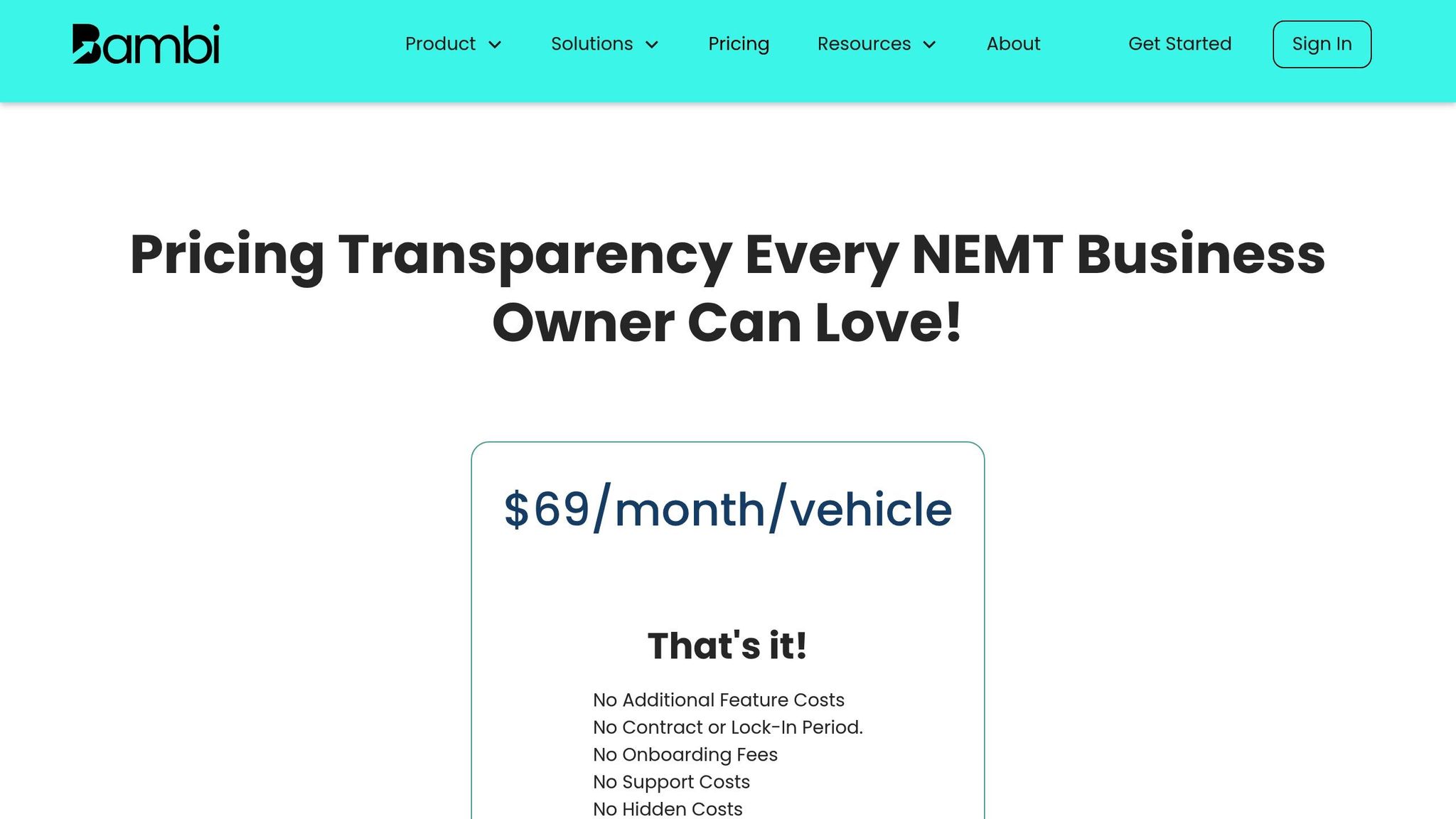
Take Bambi as an example. Their per-vehicle pricing model is set at $69 per vehicle per month, significantly lower than the industry average of $200 to $400. This fee covers essential features like AI-powered dispatching, scheduling, compliance tools, and communication systems, all tailored for NEMT operations.
For a fleet of 20 vehicles, the monthly cost with Bambi would be $1,380. In contrast, industry-standard rates could range from $4,000 to $8,000 for the same fleet size. Over a year, this could mean savings of $31,440 to $79,440 for a 20-vehicle operation.
Bambi’s pricing shows how per-vehicle models can remain affordable while offering robust NEMT management tools. Features like HIPAA compliance, automated scheduling, and real-time communication are included without requiring costly add-ons or premium subscriptions for basic functionality.
After considering fixed and hourly pricing structures, flexible models stand out by offering scalability that adjusts to real-time demand.
With pay-per-use pricing, costs are based on actual usage rather than a flat rate. For instance, providers are typically charged $0.25 per trip.
This setup works well for startups and businesses with fluctuating demand. During slower seasons, costs naturally decrease, helping to ease cash flow concerns. However, at higher trip volumes, the cumulative expenses can surpass those of flat-rate subscriptions. To address this, some vendors offer hybrid pricing - combining a base fee with per-trip charges.
Choosing the right pricing model depends on the size of the operation, its growth stage, and how consistent trip volumes are. Here's a breakdown of how pay-per-use stacks up against other options:
| Pricing Model | Best For | Cost Predictability | Scalability | Initial Investment |
|---|---|---|---|---|
| Pay-Per-Use | Startups, seasonal operations, variable demand | Low – costs fluctuate with usage | High – grows naturally with business | Very Low – minimal upfront costs |
| Fixed-Price | Established providers, predictable volumes | High – same fee regardless of usage | Low – does not adjust to growth | High – significant upfront payment |
| Per-Vehicle Subscription | Growing fleets, consistent operations | Medium – predictable yet scales with fleet | Medium – adjusts with fleet size | Medium – monthly recurring costs |
This comparison underscores how pay-per-use pricing can adapt to dynamic operational needs. Unlike fixed-price models, it scales directly with usage, making it ideal for businesses exploring new markets or expanding into fresh service areas. By spreading expenses over time as trips occur, this approach can also help newer ventures manage cash flow more effectively while building a stable revenue base.
When choosing the right NEMT app for your operation, it's crucial to understand the factors that influence pricing. These include everything from the complexity of features to contract terms, scalability, and compliance requirements. Here's a closer look at how these elements can impact costs:
Feature complexity is one of the biggest pricing drivers. Basic apps with scheduling and dispatching functions are more affordable than platforms loaded with advanced tools like GPS tracking, automated billing, patient communication portals, and compliance reporting. If you're looking for features such as real-time analytics, electronic health record (EHR) integration, or automated insurance verification, expect a noticeable increase in costs.
Onboarding and setup fees can vary widely. Some providers charge upfront for services like system configuration, data migration, and training, while others include these in their subscription fees. The complexity of your existing systems and the amount of historical data to be transferred can also influence these costs.
Contract terms play a significant role in pricing. Month-to-month plans often come with higher rates, while annual contracts usually offer discounts. However, committing to a longer contract might limit flexibility if your needs change. Many providers also offer reduced rates for annual billing compared to monthly payments.
Scalability requirements are another factor to consider. A solution designed for small fleets may not scale well as your operation grows, while enterprise-level platforms might feel like overkill for smaller businesses. Look for options that let you add or remove vehicles, drivers, or features without penalty fees - this flexibility can save you money as your needs evolve.
Integration needs with existing systems, such as billing software or EHRs, can add to the overall cost. Some integrations require additional development work, which may involve one-time fees based on the complexity of the connection.
Support and training levels also influence pricing. While basic email support is often included, enhanced options like phone support, dedicated account managers, or on-site training typically cost extra. Some vendors offer unlimited training as part of their packages, while others charge for additional sessions beyond the initial setup.
Compliance requirements can further drive up costs, especially for providers handling Medicaid patients or operating across multiple states. Software with built-in HIPAA compliance, state reporting tools, and detailed audit trails often comes at a premium compared to simpler scheduling platforms.
To ensure the pricing model aligns with your business needs, consider the following:
The right pricing model should strike a balance between affordability today and flexibility for tomorrow, giving you a clear and reliable cost structure to support informed decisions.
This guide has explored various pricing models for NEMT app development, detailing their advantages and challenges. Choosing the right model depends on your current operations and future growth plans. For instance:
Keep in mind that total costs often include setup fees, training, integrations, and potential overage charges. Factoring these into your decision ensures your investment aligns with your operational needs.
If your fleet includes 5-10 vehicles with consistent monthly trips, per-vehicle pricing can provide predictable costs while leaving room to expand. For businesses dealing with seasonal shifts or uncertain growth, pay-per-use models can help you avoid unnecessary expenses during slower periods. It’s also worth considering that a slightly higher fee with comprehensive support and training may save money in the long run compared to a cheaper option with hidden charges.
To make the most informed decision, start by defining your current needs and projecting future growth. Test different pricing scenarios based on your fleet size and trip volumes. Don’t hesitate to negotiate vendor terms like longer contracts or custom integrations to get more value.
For more expert advice on NEMT pricing and industry trends, visit the Bambi NEMT blog. Staying updated on industry developments can help you make smarter choices as your business evolves.
When deciding on the best pricing model for a NEMT app, it’s essential to consider your business’s specific needs, budget, and growth ambitions. Start by assessing your operating expenses - things like fuel, insurance, vehicle upkeep, and licensing. This will give you a clear picture of what you can afford while still ensuring profitability.
If you value predictable, recurring costs, subscription-based pricing might be the way to go. On the other hand, per-trip or per-vehicle pricing could be a better fit if your business experiences fluctuating demand or has plans to expand. Think about your company’s size, growth trajectory, and how important consistent costs are to your strategy when choosing the model that suits your goals best.
To manage and estimate costs effectively when using an hourly pricing model for NEMT app development, start by defining the project scope and requirements upfront. This helps prevent scope creep, which can lead to unexpected expenses. Collaborate closely with your development team to create a detailed project plan and timeline that outlines every phase of the work.
Keep a close eye on progress and spending throughout the project. Real-time cost analysis tools can be incredibly useful for tracking expenses and making adjustments as needed to stay on budget. It's also important to consider the hourly rates of development teams, which can vary significantly depending on their expertise and location - ranging anywhere from $25 to over $300 per hour. Choosing a team that offers a good balance between cost and quality is essential to staying on track financially while meeting your app development goals.
Keeping your pricing structure efficient as your NEMT fleet expands or changes requires ongoing attention to your operational costs. Regularly examine expenses like vehicle maintenance, fuel, and driver wages. Tools like fleet management software can be a game-changer, helping you monitor spending and spot opportunities to cut costs.
Streamlining routes and using NEMT-specific software can also minimize unnecessary expenses by improving how you schedule and dispatch trips. On top of that, it’s smart to periodically review your trip rates. Adjusting them to match shifts in costs and market trends will help you stay competitive without sacrificing profitability.
NEMT billing and reimbursement are two separate but interconnected processes that impact the financial health of Non-Emergency Medical Transportation providers.
The billing process is under the provider's control, requiring precision to avoid errors that lead to delays or denials. Reimbursement depends on the payer’s review and timeline, often influenced by their policies and processing systems. Missteps in billing can directly affect how quickly or smoothly reimbursement occurs, making accuracy essential.
Understanding these differences helps providers maintain steady cash flow and avoid revenue loss.
A smooth billing process is crucial for avoiding delays and maintaining a steady cash flow. Let’s break down the key steps involved and see how modern technology is making things easier.
After every trip, make sure to record all the essential details - pickup and drop-off times, mileage, passenger information, and any special circumstances. These details form the foundation for a complete and accurate claim.
Next, format the trip data according to the payer’s requirements. This includes using the correct service codes for the type of transportation provided, such as wheelchair-accessible vehicles or stretcher transport. It’s also important to verify patient eligibility and ensure all required fields are filled out correctly.
Submit the claims electronically through payer portals or clearinghouses within the required timeframe, typically 30 to 90 days. Throughout the process, compliance checks are a must. Providers need to ensure that all documentation aligns with federal and state regulations, including HIPAA privacy rules and any applicable Electronic Visit Verification (EVV) standards.
Following these steps helps maintain strict documentation and compliance, which are key to protecting your revenue.
Accurate and thorough documentation is essential to avoid claim denials and audits. The CMS-1500 form remains the standard for most NEMT billing, even as electronic versions become more common. This form requires specific details such as the patient’s Medicaid ID, service dates, procedure codes, and provider information.
Common procedure codes include:
Using incorrect codes is one of the most common reasons for claim denials.
Certain trips or recurring transportation needs may also require prior authorization. Keeping these authorization numbers in your billing system is critical to prevent automatic denials. Additionally, precise mileage documentation is often required, as many payers reimburse based on actual miles traveled. While GPS tracking and route optimization tools can improve accuracy, manual logs can also work if they’re maintained carefully.
Automation can simplify these tasks, as we’ll explore next.
Modern billing software can significantly improve both accuracy and efficiency. For instance, automated billing systems can increase first-pass claim acceptance rates by 25%. These systems reduce human error by automating data entry, standardizing workflows, and validating trip and patient information in real time - all of which help improve cash flow.
Real-time eligibility verification is another game-changer. It allows providers to confirm patient status before or during transport, addressing one of the leading causes of claim denials. Electronic data capture further minimizes errors by transferring trip details directly into the system.
Automated compliance tools are also invaluable. They help providers stay up-to-date with changing regulations, track EVV requirements, maintain audit logs, and ensure HIPAA compliance. This reduces the administrative burden on staff while keeping billing practices aligned with legal standards.
The financial benefits of automation are clear. For example, denial resolution costs can drop from $40 per account to under $15 when automated systems handle initial processing and tracking. Emerging AI-powered tools, such as those based on ChatGPT, are also proving effective in drafting personalized denial appeals, boosting overturn rates by 25%.
When selecting billing technology, look for solutions that integrate easily with your existing dispatch and scheduling systems. Features like customizable claim templates, real-time submission tracking, and detailed reporting dashboards provide valuable insights into your revenue cycle. Many NEMT providers are also adopting integrated platforms - such as Bambi’s AI-powered system - that streamline billing, dispatch, and scheduling into one seamless workflow.
The healthcare claims management market is growing rapidly, with projections rising from $40.77 billion in 2024 to $334.6 billion by 2034, reflecting an annual growth rate of 23.7%. This trend highlights the increasing role of automated billing solutions, giving NEMT providers access to more advanced tools for managing their revenue cycles effectively.
Accurate billing is just the first step; smooth reimbursement practices are what keep cash flow steady. Once claims are submitted, payers take over, reviewing and processing them for payment. Knowing how this workflow operates - and the challenges that come with it - can help NEMT providers stay ahead of potential issues and ensure timely payments.
The reimbursement journey begins when payers receive claims. These claims first go through automated checks to catch errors. If no issues are flagged, they move on to a detailed review. However, claims with errors need corrections before they can proceed.
During the review, payers ensure the services were medically necessary, properly authorized, and met coverage guidelines. For NEMT services, this often means confirming that the patient had no other transportation options and that the trip was for an approved medical purpose. Complex claims may require manual review, which can add delays.
Once a claim is approved, payers issue remittance advice documents. These documents outline payment details, adjustments, and any denied items. They also include critical information like claim numbers, service dates, and adjustment reason codes. Payments are then made, typically via Electronic Funds Transfer (EFT) for providers enrolled in electronic systems, or paper checks for those using traditional methods. EFT payments are generally faster, but processing times can vary. For instance, Medicaid claims often take longer than those submitted to private insurers.
Several issues can complicate the reimbursement process:
To address these challenges, providers need to refine their processes and leverage technology.
Improving reimbursement practices is crucial for maintaining financial health. Here are some strategies that can help:
Billing and reimbursement represent two distinct stages in the NEMT revenue cycle. Understanding these differences is crucial for providers to spot potential issues and improve cash flow.
| Factor | Billing | Reimbursement |
|---|---|---|
| Primary Responsibility | NEMT provider | Insurance payer |
| Key Activities | Claim preparation, coding, and submission | Claim review, approval, and payment |
| Timeline | Starts shortly after service completion | Takes weeks after claim submission |
| Required Documentation | Trip logs, patient signatures, mileage records | Verification of medical necessity and coverage |
| Common Issues | Missing signatures, incorrect codes, incomplete forms | Expired eligibility, authorization gaps, policy violations |
| Cash Flow Impact | No immediate revenue | Direct payment to the provider |
| Control Level | High provider control | Limited provider influence |
| Success Metrics | Clean claim submission rate and speed | Payment rate and processing time |
This breakdown highlights the importance of accurate billing to reduce delays and inefficiencies in the reimbursement process.
Billing is a process providers control. They decide when to submit claims, ensure proper documentation, and apply correct coding. Because of this, providers can directly improve billing accuracy by investing in staff training, refining workflows, and upgrading technology.
Reimbursement, on the other hand, is dictated by the payer’s rules and timeline. Once claims are submitted, providers must wait for insurance companies or Medicaid programs to review and process them. Even perfectly submitted claims can face delays due to payer backlogs or manual reviews. This often leaves providers feeling frustrated, as timely billing doesn’t always guarantee timely payment. While providers can’t control payer timelines, submitting complete and error-free claims can help reduce delays.
The distinction between these processes emphasizes why accuracy in billing is essential for smoother reimbursement.
Accurate billing is the foundation for efficient reimbursement. Errors in the billing phase - like missing patient signatures, incorrect details, or incomplete trip records - can lead to claim denials or delays. For example, a missing patient signature could result in a denial, requiring an appeal that delays payment further.
Consistency is key throughout both billing and reimbursement. Providers must ensure every detail, from trip documentation to claim follow-up, is handled with precision. Those who excel in managing reimbursement not only submit accurate claims but also monitor submission confirmations and address issues as they arise.
Technology plays a critical role here. Advanced NEMT software can detect potential billing errors before claims are submitted, reducing the chance of reimbursement problems. When billing and reimbursement data are integrated, providers can spot recurring issues, fix problem areas, and improve overall revenue cycle performance. Tools like these streamline processes and enhance efficiency, reinforcing earlier discussions on the benefits of automation and compliance.
The Non-Emergency Medical Transportation (NEMT) industry is experiencing rapid growth alongside evolving regulations. Providers are tasked with navigating complex compliance rules, updated billing systems, and increased scrutiny from government payers. To keep up, it's essential to use targeted resources that simplify operations and improve efficiency.
Industry-specific blogs and tools can be a goldmine for NEMT providers looking to refine their billing and reimbursement processes. For instance, the Bambi NEMT blog offers practical advice tailored to both new and seasoned providers. It covers operational challenges, compliance guidelines, and technology solutions designed to streamline workflows.
These platforms tackle the unique hurdles of NEMT operations by providing actionable insights on topics like HIPAA compliance, fleet management, driver training, and billing optimization. Success stories shared on these blogs often highlight how providers have improved dispatching, scheduling, and communication by adopting technology solutions.
Technology integration plays a crucial role in modern NEMT operations. Tools like Bambi's AI-powered software allow providers to analyze billing and reimbursement data, identify recurring issues, and enhance their revenue cycle performance.
Additionally, blogs often discuss broader industry trends. For example, knowing that 36% of Medicare Advantage plans and 91% of MA special needs plans included transportation benefits in 2024 can help providers identify growth opportunities and adjust their services accordingly.
Beyond billing, these tools also support adaptation to shifting compliance standards. Staying informed about regulatory changes is just as important as operational efficiency.
Compliance and billing efficiency are critical for sustaining and growing an NEMT business. This requires a structured approach to documentation, billing accuracy, and ongoing staff training on new regulations. Falling behind on compliance can lead to serious legal, financial, and reputational risks.
Regulatory updates are frequent and demand immediate attention. For example, starting July 1, 2025, providers must use HCPCS S0215 for billing ambulatory/mobility vehicle mileage. Missing such updates could result in denied claims or compliance issues that directly affect revenue. Since individual states often have their own NEMT regulations, staying informed is essential for smooth operations.
Security standards have also tightened significantly. Protecting healthcare data now requires two-factor authentication, encrypted protocols, and robust audit trails. Regular password updates and compliance with these security measures are non-negotiable.
Webinars hosted by industry associations provide direct access to experts who can demystify complex regulations. These sessions often include practical advice that providers can implement right away. Regular participation ensures staff are well-versed in procedure codes, modifiers, and their proper applications - knowledge that's crucial for accurate billing and avoiding claim denials or fraud allegations.
Maintaining consistent compliance not only reduces audit risks and associated costs but also strengthens relationships with payers. This can lead to better contracts, improved reimbursement rates, and enhanced trust with stakeholders.
Grasping the distinct roles of billing and reimbursement is critical for maintaining a financially healthy NEMT business. Billing involves your proactive effort to request payment by submitting accurate documentation and claims on time, while reimbursement reflects how payers respond to those submissions. Together, these processes directly influence your cash flow and overall operational success.
To thrive in this industry, mastering both is non-negotiable. Accurate billing minimizes claim denials, accelerates payment cycles, and ensures compliance with ever-changing regulations. On the other hand, understanding reimbursement workflows helps you identify common rejection issues, anticipate delays, and fine-tune your revenue cycle management. When done right, billing not only ensures accuracy but also lays the groundwork for addressing reimbursement challenges effectively.
Technology plays a pivotal role in streamlining these processes. Modern AI-driven platforms automate billing, reduce human errors, and enhance revenue cycle efficiency. These tools standardize billing rules, generate clear reports, and simplify invoicing, leading to better cash flow and smoother operations. The result? Increased efficiency and satisfaction for both riders and payers.
For actionable tips and industry insights, resources like the Bambi NEMT blog provide valuable guidance to help you optimize revenue and improve patient care.
As regulations tighten and payers become more scrutinizing, the providers who excel in both billing and reimbursement will set themselves apart. Combining precise billing practices, efficient reimbursement management, and smart use of technology creates a solid foundation for growth in this evolving sector. Success in the NEMT industry depends on mastering these interconnected processes.
Billing claim denials in the NEMT industry often happen because of documentation mistakes, coding errors, eligibility problems, late submissions, or missing trip details. Other frequent causes include not following payer guidelines or making errors during the submission process.
To cut down on denials, prioritize accurate documentation and make sure all trip records are complete and error-free. Using tools like automated claim scrubbing and real-time eligibility verification can help catch potential issues before claims are submitted. Regularly training your staff on billing and coding practices can also go a long way in reducing mistakes and improving approval rates. By staying ahead of these challenges, you can keep your cash flow steady and reduce unnecessary administrative stress.
Technology and automation have the potential to make NEMT billing and reimbursement much easier to manage. By cutting down on manual errors, speeding up claim submissions, and streamlining payment tracking, these tools help providers save time and reduce administrative headaches.
For instance, automated systems can take care of tasks like verifying billing details and keeping tabs on reimbursements. Meanwhile, features such as real-time dispatch software and compliance integrations can boost cash flow, shorten the time it takes to get reimbursed, and make better use of resources. These tools not only lower operational expenses but also create a smoother and more dependable financial process for NEMT providers.
To ensure compliance and reduce the risk of audits, NEMT providers should prioritize ongoing staff training. This helps keep employees well-versed in the latest regulations and industry best practices. It's equally important to perform regular internal audits and maintain clear, standardized documentation for every trip and compliance-related activity.
Keeping up with updates to federal and state regulations is essential. Designating a compliance officer can provide oversight and accountability, while adopting a proactive strategy for managing risks helps ensure all legal requirements are met. Using tools like AI-driven software to streamline operations can also simplify compliance tasks and improve overall efficiency.

Clear communication between drivers and dispatchers is essential for smooth NEMT (Non-Emergency Medical Transportation) operations. Miscommunication can lead to missed appointments, higher costs, and compliance risks. Here's what you need to know:
Switching from manual to digital systems not only simplifies daily tasks but also improves service quality and reliability for patients who depend on NEMT services.
In the world of Non-Emergency Medical Transportation (NEMT), strong communication between drivers and dispatchers is the glue that holds everything together. By combining structured protocols, focused training, and clear messaging, organizations can create smoother workflows and deliver better patient care. These elements work hand in hand to cut down on errors, speed up response times, and maintain high service standards.
Clear and consistent protocols are the foundation of effective communication. Without them, drivers and dispatchers can end up misaligned, leading to confusion and inefficiencies.
Protocols should define specific procedures for key scenarios, such as:
For emergencies, clear guidelines should specify when drivers should bypass standard messaging systems to make direct contact with dispatch. Similarly, schedule change protocols ensure that every adjustment is communicated and acknowledged, reducing the chance of missed pickups or delays.
These protocols set the stage for training programs that sharpen communication skills and reinforce consistency across the team.
Training is where communication shifts from being reactive to proactive. Many NEMT providers overlook how much of an impact good communication skills can have on operations and customer satisfaction.
Training programs should focus on:
Simulation exercises using actual dispatch software are especially effective. These allow new employees to practice handling everything from routine pickups to complex, multi-stop routes without disrupting live operations. This hands-on approach builds confidence and familiarity with the tools they’ll use every day.
Quarterly refresher sessions help keep everyone on the same page as operations evolve. These sessions should incorporate lessons learned from recent challenges and introduce any new tools or procedures. With regular training, teams can maintain high communication standards even as situations change.
The way a message is structured can make or break how well it’s understood. Effective communication depends on messages that are clear, concise, and easy to process.
For complex updates, the SBAR method (Situation, Background, Assessment, Recommendation) works well. For example:
For routine updates, a simpler format works best: Who, What, When, Where. For example: "Driver Johnson, pickup Mrs. Smith, 4:15 PM, 456 Oak Avenue." This straightforward structure reduces confusion and speeds up decision-making.
Two-way confirmation protocols are essential to ensure nothing gets lost in the shuffle. Dispatchers should acknowledge driver messages, and drivers must confirm they’ve received and understood their instructions. While digital systems can automate some confirmations, critical details still need human verification.
To manage urgency, messages should include priority indicators. For example:
NEMT (Non-Emergency Medical Transportation) operations depend on technology to keep drivers and dispatchers in sync, ensuring smooth communication and better patient care.
Instant messaging systems tailored for transportation are now a must-have for NEMT providers. Unlike regular texting or email, these platforms are built to handle the specific demands of fleet communication, such as priority alerts, location sharing, and easy integration with dispatch software.
NEMT mobile apps send push notifications to drivers, even while they’re navigating, ensuring they never miss critical updates.
Template messaging allows dispatchers to send pre-written, standardized messages like "Confirm pickup completed", which minimizes errors and saves time. It keeps communication fast and consistent across the team.
Voice-to-text features let drivers respond without taking their hands off the wheel, making communication safer during busy shifts.
Group messaging is especially useful in complex situations. For example, during weather delays, dispatchers can send updates to all affected drivers at once. This not only saves time but also helps drivers stay aware of how their colleagues are managing similar challenges.
This streamlined messaging system supports real-time tracking, which takes route management to the next level.
Real-time GPS tracking gives dispatchers a live view of vehicle locations, speeds, and estimated arrival times, reducing the need for constant check-ins.
Advanced GPS systems with geofencing notify dispatchers automatically when vehicles enter or leave specific areas. This eliminates the need for drivers to manually update their status, freeing them to focus on patient care.
Automatic route optimization is another game-changer. If a driver reports a road closure or heavy traffic, the system quickly calculates an alternate route and sends it directly to the driver’s navigation app. This keeps everything moving without requiring manual input.
Electronic logging replaces traditional handwritten logs, automatically recording accurate timestamps for billing and compliance purposes.
Some systems even use predictive analytics to learn from past traffic patterns and appointment data. These tools can recommend the best departure times and routes, factoring in typical traffic conditions, patient needs, and potential delays at facilities.
These advancements in tracking and routing are complemented by robust digital record-keeping and secure data-sharing systems.
Building on improved communication and tracking, digital records centralize operational data, making compliance and efficiency easier to achieve.
Cloud-based systems allow critical information - like patient pickup instructions, medical equipment needs, and facility contacts - to be updated in real time and accessed from any internet-connected device.
HIPAA-compliant messaging platforms ensure sensitive patient information stays secure. These systems encrypt messages, maintain detailed audit trails, and control access based on user roles. Drivers get the information they need for safe transportation without unnecessary exposure of private details.
Digital trip sheets replace outdated paper forms with mobile-friendly versions. Drivers can quickly and accurately log details like signatures, odometer readings, and incident reports, which are then uploaded instantly to create complete digital records for billing and compliance.
Automated backups save communication logs and trip data to secure cloud storage, ensuring records remain accessible even if devices are lost or damaged.
Integrated platforms bring everything together, merging dispatch, billing, and health records into a single interface. This eliminates the need for staff to juggle multiple apps, simplifying daily workflows.
Audit trails automatically log all communication activities, tracking who sent what messages and when. These detailed records are invaluable for quality checks, regulatory compliance, and resolving disputes over service or billing issues.
Running a smooth non-emergency medical transportation (NEMT) operation isn’t just about having the right tech in place - it’s also about fostering effective communication between drivers and dispatchers. A well-structured approach to coordination can make all the difference in keeping things running efficiently and reliably.
Establishing clear communication guidelines is essential to ensure everyone stays on the same page. Start by defining response times to separate urgent messages from routine ones. For urgent matters, use an escalation protocol: begin with the primary communication channel, then escalate to a phone call, and, if necessary, involve a supervisor.
Daily check-ins can also help maintain consistency. Drivers should confirm their availability and vehicle status at the start of their shift, provide updates throughout the day, and submit a summary at the end of their shift. These regular touchpoints keep dispatchers informed and reduce the risk of miscommunication.
Additionally, a clear communication hierarchy can simplify decision-making. Dispatchers should handle routine changes directly, while urgent or unusual situations should be escalated to supervisors or coordinators. These practices create a reliable framework for communication, ensuring that operations stay smooth even during unexpected challenges.
Once communication protocols are in place, tracking their effectiveness is the next step. This involves monitoring key metrics like response times, trip completion rates, and how quickly incidents are resolved. Adding patient feedback to the mix can provide valuable insights into the quality of service.
Performance dashboards are particularly useful for real-time monitoring. These tools allow supervisors to spot trends and make quick adjustments. For instance, if a driver or dispatcher seems overwhelmed, visual indicators on the dashboard can highlight the issue, enabling timely support before problems escalate.
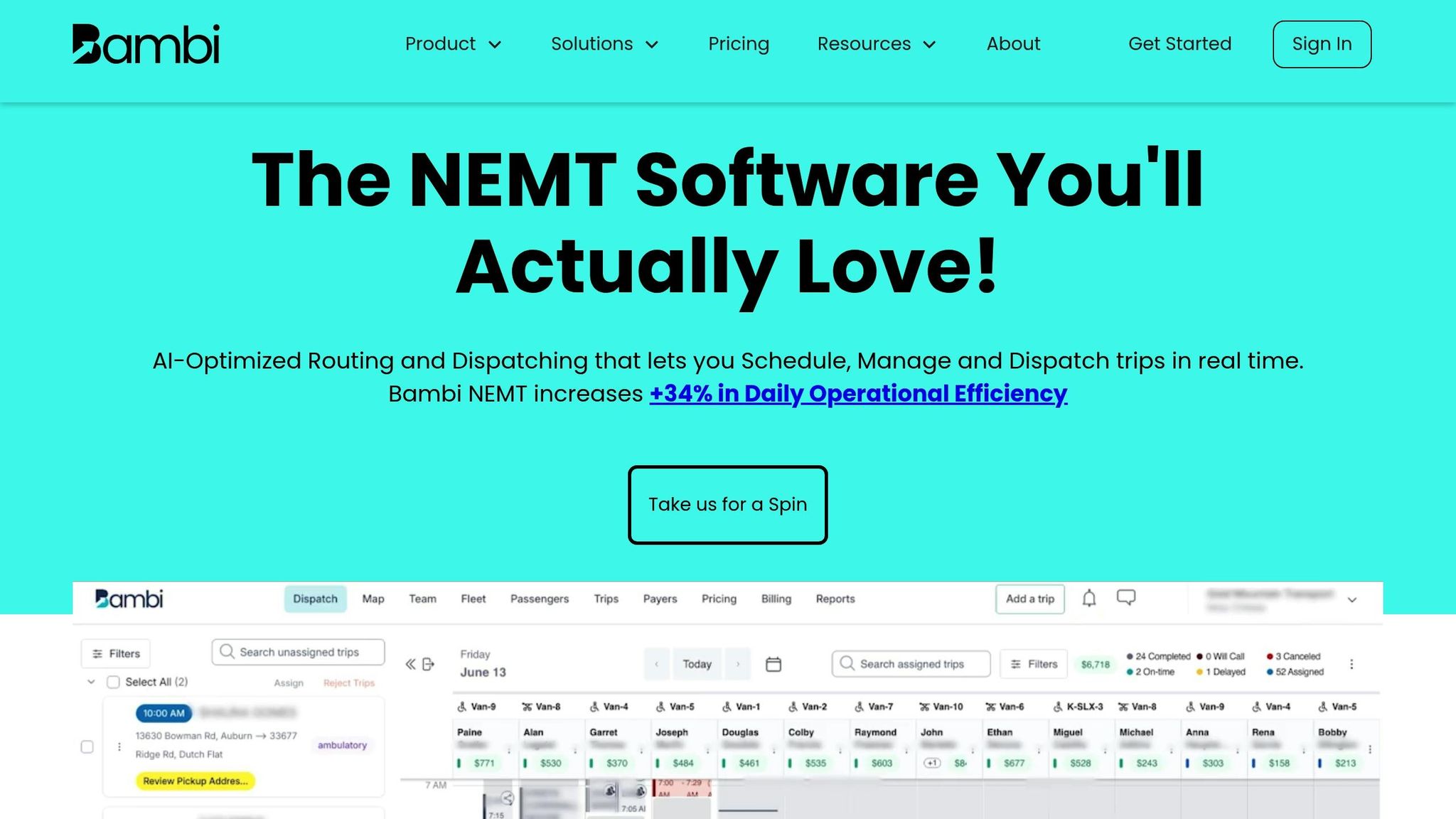
Expanding on the discussion of digital communication tools, Bambi offers a powerful way to improve coordination between drivers and dispatchers in NEMT (Non-Emergency Medical Transportation) operations.
This AI-driven tool simplifies communication while ensuring compliance with healthcare regulations. By combining real-time tracking, automated notifications, and smart scheduling, Bambi tackles common communication challenges. Its integrated approach eliminates operational silos, reducing delays and confusion. Impressively, it boosts daily efficiency by 34%.
The NEMT Driver App serves as the hub for driver-dispatcher communication. It provides real-time updates through SMS and push notifications for trip changes, new assignments, and route adjustments. The app’s standout "Run Bambi Run" feature optimizes scheduling with a single click, managing thousands of trips and instantly updating changes.
Other key features include:
Bambi’s advanced tools deliver measurable improvements, as highlighted by industry professionals. Samuel Harris from On Time On Target Transportation shared, "Bambi streamlines our process, cutting workflow time in half". Similarly, Marc W. stated, "What used to take three hours is now under 30 minutes".
At $69 per vehicle per month, with no hidden fees, Bambi offers exceptional value. Its impact hasn’t gone unnoticed - Bambi received the NEMTAC: INNOVATION IN NEMT AWARD 2025 and holds a perfect 5.0-star rating on platforms like Capterra.
Strong communication between drivers and dispatchers is the backbone of successful NEMT operations. When communication breaks down, it impacts patient care, disrupts efficiency, and can lead to compliance issues. The move from outdated manual processes to real-time digital systems has completely changed how NEMT providers manage their daily tasks.
Real-time software addresses many traditional challenges by offering instant updates on no-shows, cancellations, or vehicle breakdowns. These tools create a steady flow of communication between drivers, dispatchers, and patients, thanks to features like live tracking and automated notifications.
As industry expert Broda puts it, "Communication between drivers and dispatchers is crucial for success". This goes beyond simply exchanging information - it's about building a system that can adapt quickly to changes. These observations lay the groundwork for practical steps that NEMT providers can take to improve their services.
To succeed, NEMT providers must blend technology with effective communication practices. Here are some key takeaways:
Switching to digital communication systems can make a big difference in how Non-Emergency Medical Transportation (NEMT) operations run. Features like real-time updates, automated scheduling, and instant communication between drivers and dispatchers help cut down on delays, improve coordination, and ensure patients get timely service.
By integrating digital tools, you can minimize errors, reduce missed appointments, and simplify processes. This not only makes operations more reliable but also helps deliver better care to patients. Embracing modern technology creates a smoother, more efficient experience for everyone involved.
To enhance communication between drivers and dispatchers, prioritize training programs that develop hands-on skills and encourage collaboration. Role-playing exercises that mimic everyday situations can be especially effective. These scenarios give participants the chance to practice active listening, deliver clear messages, and handle conflicts constructively - all in a low-pressure setting.
Training should also highlight the proper use of technology, like real-time communication tools, to keep everyone aligned and informed. By integrating teamwork and problem-solving activities into these sessions, you can strengthen the working relationship between drivers and dispatchers. This approach not only improves day-to-day operations but also helps minimize delays.
Real-time messaging and GPS tracking are game-changers for communication and patient care in Non-Emergency Medical Transportation (NEMT) services. With GPS tracking, dispatchers can keep an eye on vehicle locations in real time, adjust routes on the fly, and provide accurate estimated arrival times (ETAs). This ensures fewer delays, shorter wait times for patients, and more punctual service.
Meanwhile, real-time messaging allows drivers and dispatchers to stay in constant contact. Whether it's coordinating schedules or handling unexpected changes or emergencies, this instant communication keeps things running smoothly. Together, these tools boost reliability, improve safety, and streamline operations, all while ensuring patients receive timely and efficient care.

Picking the right wheelchair for Non-Emergency Medical Transportation (NEMT) is crucial for safety, efficiency, and patient comfort. Here’s what you need to know:
The right wheelchair enhances patient care, reduces maintenance costs, and ensures smooth NEMT operations. Let’s explore the specifics.
Selecting the right wheelchairs for Non-Emergency Medical Transportation (NEMT) services requires a careful balance of safety, practicality, and patient-specific needs. By focusing on these factors, providers can ensure reliable and compliant service.
Wheelchairs used in NEMT must meet WC19 standards, which ensure they can be securely fastened with tie-downs and lap-shoulder belts during transport. Additionally, the Centers for Medicare and Medicaid Services (CMS) outlines specific guidelines for wheelchair selection and usage in NEMT services.
Key safety features to consider:
These features aren't just about compliance - they're critical for ensuring passenger safety during transport.
For high-volume NEMT services, durability and low maintenance are top priorities. Wheelchairs must be robust enough to handle frequent use while minimizing repair and replacement costs. Providers should also consider specific requirements based on:
Durability is especially critical for commercial-grade wheelchairs, which are built with reinforced frames and long-lasting components. Compatibility with vehicle securement systems ensures both safety and operational efficiency.
Selecting the right wheelchair is crucial for NEMT providers to cater to various patient needs effectively.
Lightweight transport wheelchairs are designed for convenience, featuring aluminum frames, foldable designs, and removable wheels. These qualities make them easy to handle, store, and maintain.
These wheelchairs are a great choice for short-distance, frequent trips due to their portability and ease of use.
The decision between manual and power wheelchairs depends on patient requirements and operational considerations.
Specialized wheelchairs are tailored to meet unique patient requirements, ensuring comfort and safety.
These models help NEMT providers accommodate diverse patient conditions while adhering to ADA and securement system standards. Each wheelchair type plays a role in ensuring smooth and compliant operations in NEMT services.
When selecting wheelchairs for non-emergency medical transportation (NEMT), it’s important to focus on features that improve operations and ensure patient comfort and safety.
Portability plays a big role in making daily operations smoother. Folding mechanisms and lightweight designs help save space in vehicles and make handling easier. These wheelchairs must meet ADA guidelines, which require a 56-inch door opening height and 30-inch wide wheelchair lifts.
Features like quick-release parts and compact folding designs cut down on assembly time, making them easier to store and transport. Lightweight materials also reduce the physical effort needed for loading and unloading, helping staff work more efficiently.
While portability is key, durability is equally important to handle the demands of frequent use.
For long-term use, wheelchairs should be built to last. Materials like aluminum or titanium, reinforced joints, and simple mechanical designs help minimize maintenance needs. Key factors that contribute to durability include:
Durability ensures reliability, but patient comfort and safety are critical for delivering high-quality service.
Passenger comfort and safety are non-negotiable in NEMT operations. Features like automatic securement systems make the process more efficient and reliable.
Comfort-enhancing features, such as ergonomic seating and adjustable components, improve the overall experience for patients during transport. All wheelchairs should comply with ADA and industry standards to ensure both safety and service quality. Routine inspections are essential for maintaining these standards and extending the lifespan of the wheelchair fleet.
Now that we’ve covered key features, let’s dive into specific wheelchair models designed for Non-Emergency Medical Transportation (NEMT) services. This breakdown can help providers choose equipment that meets both operational demands and patient care standards.
Capacity and Cost
Most NEMT wheelchairs handle up to 300 pounds, which covers standard requirements. While manual transport chairs are more affordable upfront, investing in models with stronger frames and better suspension can reduce long-term maintenance costs.
Vehicle Fit
Wheelchairs need to match the dimensions of vehicle doorways, lifts, and securement systems. Foldable models that store easily can improve efficiency and ensure compliance with vehicle specifications.
Safety Features
Prioritize models with these safety elements:
To meet diverse patient needs, it’s smart to have a mix of manual and power wheelchairs. This approach helps NEMT providers maintain high service standards while keeping costs under control.
Making sure wheelchairs are compatible with Non-Emergency Medical Transportation (NEMT) vehicles is crucial for safe operations and quality care.
The Americans with Disabilities Act (ADA) sets specific standards for NEMT vehicles. These include ramps or lifts that are at least 30 inches wide, an interior height clearance of 56 inches, and non-slip flooring to ensure safety for wheelchair users. Additionally, ramps and lifts must support the combined weight of the wheelchair and its user.
Key features for accessible vehicles include:
To optimize space, vehicles can include retractable seating and sufficient turning room for wheelchairs. These adjustments help ensure a smooth and safe experience for passengers, while also allowing staff to focus on securing wheelchairs properly.
After outfitting vehicles with the right accessibility features, the next critical step is securing wheelchairs during transit. NEMT vehicles are required to use WC19-compliant four-point tie-down systems to keep wheelchairs stable and passengers safe.
One advanced option is the Q'STRAINT QUANTUM system, which secures wheelchairs automatically in under 25 seconds, monitors the securement process, and reduces the chance of operator error.
Key practices for securement include engaging wheelchair brakes, attaching tie-downs at the correct angles, and ensuring staff are trained in both securement and emergency procedures.
"Staff training is critical in ensuring that wheelchairs are properly secured and that passengers are safely transported. Training should cover the use of securement systems, emergency procedures, and customer service skills to meet the needs of passengers with disabilities".
Investing in high-quality wheelchairs not only enhances service quality but also helps reduce maintenance costs. New technologies, like automatic securement systems, underline the importance of keeping wheelchair operations up-to-date in NEMT services.
When selecting wheelchairs, focus on these critical factors:
Using specialized equipment, such as lightweight transport chairs, can improve both maneuverability and patient care. Ensuring wheelchairs are a good fit for vehicles is key to delivering reliable NEMT services.
Regular audits are essential to confirm that wheelchairs meet safety standards and align with patient needs. By understanding patient requirements, vehicle capabilities, and industry developments, NEMT providers can offer dependable, patient-centered services.
Lightweight transport chairs, like the Traversa Transport Wheelchair, are a great choice for caregivers. These chairs are easy to handle, portable, and designed to navigate tight spaces effortlessly. However, while caregiver convenience is important, it's also essential to consider the passenger's specific needs and how the wheelchair performs during use.
When picking a travel wheelchair for NEMT services, it's important to focus on features that address both passenger comfort and operational requirements:
Safety Features
Comfort and Practicality
Vehicle Compatibility Make sure the wheelchair is compatible with ADA-compliant lifts and securement systems to ensure smooth integration with NEMT vehicles.
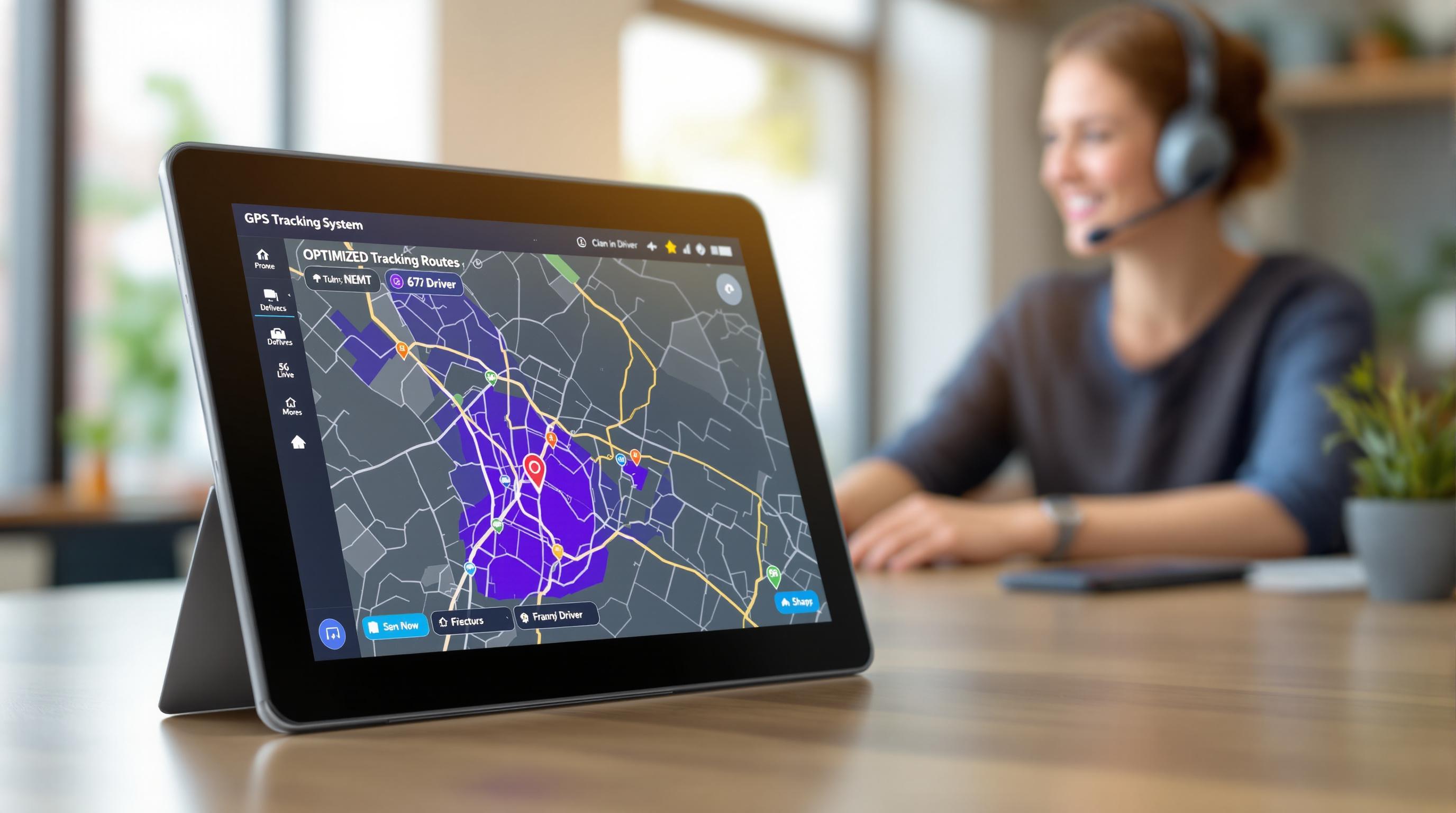
GPS tracking has transformed how Non-Emergency Medical Transportation (NEMT) providers manage dispatch operations. It saves time, reduces costs, and improves service quality by automating processes and providing real-time updates. Here's what GPS tracking can do for NEMT providers:
In NEMT (Non-Emergency Medical Transportation), GPS tracking relies on satellite signals to monitor vehicle locations in real time. By connecting to multiple satellites, the system pinpoints the exact coordinates of each vehicle in your fleet. This information is then sent to your dispatch software, allowing for accurate tracking and better management of your operations.
Modern GPS systems also log offline, GPS-stamped events to prevent blind spots, ensuring you can quickly adjust routes when needed. These core functions lay the groundwork for the advanced dispatch tools discussed below.
GPS dispatch systems bring several tools to the table that improve NEMT operations, including:
"Bambi has a lot of features. The dispatch was so easy me and how I assigned the trips for the drivers. I was a driver at a different NEMT company and when I downloaded the Bambi Driver App I found it was easier than the other software."
When GPS tracking integrates with dispatch software, it creates a smooth workflow for your operations. Real-time updates and automated data sharing mean that when a vehicle reaches a pickup location, the dispatch software immediately updates the trip status.
Samuel Harris from On Time On Target Transportation highlighted the benefits of such integration:
"Bambi has been able to kind of streamline that whole process...it just takes me half the time, or probably even less than that, to get everything kind of squared away."
This integration simplifies tasks by automating processes like:
GPS tracking gives dispatchers instant access to vehicle locations, allowing for smarter, quicker decisions. This real-time visibility helps provide accurate arrival times for patients and healthcare facilities.
"Integrating advanced scheduling software and real-time tracking systems has revolutionized how we operate. Our efficiency has improved dramatically, leading to better service for our clients"
Even in areas with poor connectivity, the system logs offline GPS-stamped events, ensuring no gaps in tracking. This uninterrupted visibility is essential for effective route planning and smooth service coordination.
Using GPS technology, NEMT providers can streamline route planning and cut costs. Here’s how it helps:
These features not only lower expenses but also maintain high service standards. Better route management also strengthens communication between drivers and dispatchers.
GPS tracking simplifies communication between drivers and dispatch teams, creating a more organized workflow. Updates on trip status, schedule changes, and route adjustments are automated through a single platform.
"Bambi has a lot of features. The dispatch was so easy me and how I assigned the trips for the drivers. I was a driver at a different NEMT company and when I downloaded the Bambi Driver App I found it was easier than the other software"
This integrated system ensures instant information sharing and quick responses to any changes, keeping daily operations running smoothly.
For more tips and strategies on improving non-emergency medical transportation services, check out resources from NEMT Entrepreneur (https://hibambi.com).
Picking the right GPS tracking software can make your dispatch process much smoother. Here’s what to look for:
"We're all looking for something just like this… This was our setback, trying to find a system that took credit cards, we could monitor the drivers, we could do dispatch, pay per vehicle… Thank you so much!" - Latoya Blowe, All Smiles Transport
Once you’ve selected the software, take the time to train your team to use it effectively.
Proper training is key to making the most of your GPS system. Focus on these areas:
Well-trained staff can seamlessly integrate GPS tracking into daily operations.
To get the best results from your GPS tracking system, establish clear operational guidelines:
Trip Assignment: Use live location data to schedule trips dynamically.
Route Management: Adjust routes based on real-time traffic conditions.
Status Updates: Automate notifications using GPS data for efficiency.
For more tips and strategies to improve your NEMT dispatch operations, check out resources from NEMT Entrepreneur.
GPS tracking improves the efficiency of NEMT dispatch and raises the quality of service. Incorporating GPS into dispatch operations simplifies processes and delivers measurable benefits, as outlined in this guide.
Here are some key advantages:
For those aiming to improve their dispatch systems, detailed resources are available at NEMT Entrepreneur. GPS technology offers a clear path to modernizing NEMT operations for providers ready to make the leap.

AI and machine learning are transforming Non-Emergency Medical Transportation (NEMT) by solving common challenges like inefficient routing, scheduling errors, and high operational costs. These technologies help providers optimize routes, predict demand, and adjust schedules in real time, leading to better service quality, reduced delays, and lower expenses.
AI is reshaping NEMT operations, making them faster, more reliable, and cost-effective. Providers can start small, address challenges like data security and training, and scale up over time to maximize benefits.
AI and machine learning enable systems to process data and make decisions on their own. In the NEMT (Non-Emergency Medical Transportation) industry, these technologies analyze large volumes of operational data to uncover patterns in transportation needs, traffic trends, and service demands. This helps providers streamline their operations and improve profitability.
Let’s dive into how these tools address the specific challenges faced by NEMT providers.
AI simplifies complex scheduling and operational challenges by analyzing multiple factors at once. Here’s how it works in practice:
AI improves efficiency and lowers costs by optimizing routes and resource allocation. Research shows that AI-powered NEMT platforms can cut empty miles by up to 20%, boosting vehicle usage and revenue per trip.
"Evolving mobility demands require AI-driven solutions and efficient operations" - Autofleet Case Study
Some of the key benefits include:
Now that we've covered the benefits, let’s explore strategies for integrating AI into NEMT routing and scheduling systems.
AI systems can analyze historical data to create accurate forecasts for future needs. By studying patterns like past appointment schedules, travel times, and service usage, providers can better plan vehicle assignments and staff shifts before demand spikes.
For example, AI might reveal that certain areas need more vehicles during specific times, such as Monday mornings for dialysis appointments.
AI uses real-time data to adjust routes on the fly, improving efficiency and service. Here's how different data types impact routing:
"The integration of real-time data sources enables even more precise route optimization and scheduling, leading to significant improvements in operational efficiency", according to a case study from NORCAL Ambulance on AI routing systems.
AI tools consider a range of factors simultaneously:
These systems can quickly adapt to changes like cancellations or traffic delays, ensuring smooth operations. This not only streamlines schedules but also improves driver satisfaction by minimizing conflicts and avoiding overwork.
What sets AI apart is its ability to learn from every adjustment, refining its processes over time. This leads to better patient care, more efficient operations, and lower costs.
Next, we'll explore how to successfully implement AI tools and address potential hurdles.
Bringing AI into NEMT operations requires a thoughtful approach to overcome potential obstacles. One of the biggest challenges is balancing upfront costs with long-term gains. A smart way to handle this is by rolling out AI in phases, which spreads the costs and gives employees time to adjust.
Another major concern is protecting sensitive patient data. It's crucial to select AI platforms that comply with HIPAA regulations and have robust security measures in place to safeguard information.
Once these challenges are addressed, the next step is finding the right AI tools to enhance your operations.
When choosing AI tools, look for platforms that combine advanced features with ease of use. For example, Autofleet's optimization platform excels in managing complex routing while offering a user-friendly experience for dispatch teams.
Traumasoft's Real-Time Routes:
Bambi's AI Platform:
These platforms have already shown measurable results for NEMT providers when implemented correctly.
AI and machine learning have transformed how Non-Emergency Medical Transportation (NEMT) handles routing and scheduling. By relying on data-driven strategies, these technologies have delivered measurable improvements in efficiency and cost savings. Companies using AI-powered tools have experienced benefits like better vehicle use and higher patient satisfaction.
Several key developments are shaping the future of AI in NEMT:
As AI technology continues to advance, NEMT providers can implement these tools step by step, starting small and scaling up over time. This gradual approach ensures steady growth while maintaining quality service.
.jpg)
Scheduling software for NEMT (Non-Emergency Medical Transportation) businesses simplifies driver management by automating tasks, improving communication, and ensuring compliance. Here's how it helps:
Switching to scheduling software like Bambi can save hours of daily work, improve service quality, and ensure smooth NEMT operations.
NEMT scheduling software has redefined how dispatchers assign trips to drivers, making the process faster and more accurate. With AI-powered tools, these systems analyze trip details and recommend the best driver assignments, removing the need for manual effort. This approach not only improves efficiency but also ensures workloads are distributed evenly.
The software evaluates real-time factors to assign the most suitable driver for each trip. By considering key elements - like driver location, traffic conditions, and route efficiency - it reduces unnecessary miles and delays.
In addition to efficient trip matching, the system ensures fair distribution of assignments across the team.
Balancing workloads is crucial for keeping drivers motivated and operations running smoothly. The scheduling software takes into account each driver's schedule and specific needs to ensure fair assignments.
Julian Ssemalulu, owner of Bellshan Homecare, shared how the system has streamlined his workflow:
"How much time it saves me? It's like a day's worth of time. And sometimes once I make the dispatch the system just does the work, so I don't have to sit on the computer all day trying to see where the driver is. I know my drivers and I know my customers so once I make the dispatch that night I'm good for the whole day."
Samuel Harris from On Time On Target Transportation also highlighted the time-saving benefits:
"Bambi has been able to kind of streamline that whole process...it just takes me half the time, or probably even less than that, to get everything kind of squared away."
From a driver's perspective, Elmouataz Hassan of Tum Trans noted:
"Bambi has a lot of features. The dispatch was so easy for me and how I assigned the trips for the drivers. I was a driver at a different NEMT company and when I downloaded the Bambi Driver App I found it was easier than the other software."
This system ensures drivers have consistent schedules, fair workloads, and optimized routes, all while considering their preferences.
For more guidance on improving driver management in non-emergency medical transportation, visit NEMT Entrepreneur at https://hibambi.com.
Today's NEMT scheduling software reshapes how dispatchers manage and communicate with drivers using GPS tracking and integrated messaging. These tools provide real-time insights, making operations smoother and improving service quality.
With GPS integration, dispatchers can constantly monitor their fleet's location and movements. The system logs each vehicle's journey in detail, eliminating tracking gaps and ensuring accurate records.
Even in low-connectivity areas, the system stores location data offline and syncs it once a connection is restored. This ensures a complete trip history is always available. This continuous tracking also supports seamless communication through the integrated messaging system.
The built-in messaging feature allows quick, organized communication between dispatchers and drivers. Dispatchers can send messages instantly, including:
The software also automates status updates, keeping everyone informed without the need for constant manual check-ins. These updates include:
This transparency ensures everyone involved stays updated, helping maintain efficient and reliable transportation services.
These tools don't just offer real-time updates - they also help ensure regulatory compliance. NEMT scheduling software simplifies compliance by automating tracking and reporting, cutting down on manual tasks while keeping all necessary documentation in order.
Digital logging systems automatically capture and store critical trip and driver information, creating electronic records that align with regulatory needs. Key data tracked includes:
Beyond logging, the software also keeps tabs on driver credentials to ensure everything is up to date.
The platform maintains a database of driver credentials and sends automated alerts when renewals are due. This feature helps avoid lapses in compliance and ensures smooth operations.
With advanced reporting tools, managers can monitor performance metrics and pinpoint areas for improvement. These analytics not only help maintain service quality but also streamline overall operations.
NEMT scheduling software simplifies operations by automating repetitive tasks and improving service delivery. Companies that adopt these tools often save time and see better overall performance. Let’s take a closer look at how automation helps reduce errors common in manual scheduling.
Modern scheduling software uses AI to eliminate common dispatching errors and streamline trip assignments. The results are clear, as many NEMT providers have experienced noticeable improvements in their daily operations.
Here’s how efficiency improves:
In addition to reducing errors, these tools bring advanced analytics into the mix, further enhancing service quality.
Analytics features give companies actionable insights to fine-tune their operations. This leads to better resource use and improved service for passengers.
Key data-driven advantages include:
These benefits are reflected in real-world feedback from providers:
"With Bambi, it was super. Everything was right there in front of you. And literally, my lead driver told me it's perfect, in comparison to the old software we used. They were able to just see everything, and then they can now make adjustments on their route."
– Cho Ndiforchu, Owner at Skyline Transport
"People just need to try Bambi. If people just try it for a week they will realize how much time it saves. They are not going to go back to other software."
– Chaliss Pulliam, Protector Transport Services
For more expert tips and tools to enhance your NEMT operations, visit NEMT Entrepreneur at https://hibambi.com.
Modern NEMT scheduling software has redefined how businesses handle trip booking, driver management, communication, and compliance. By automating processes and reducing administrative tasks, it can save up to an entire day of work.
Here’s a quick look at the key improvements:
These advancements lead to better service and happier drivers. As Jeffrey Hoff from Reliant Transport puts it:
"Changing to Bambi it's the most impactful thing I did for my NEMT Business. Bambi's saving my staff hours of daily work and our team has much more time to focus on improvements."
For more tips on improving your NEMT operations or adopting scheduling tools, check out NEMT Entrepreneur at https://hibambi.com. Their resources can help you make the most of these solutions for your business.