

Before you start cruising through Denver’s streets or coasting through mountain passes, let’s make sure you’re on track with Colorado’s regulatory requirements. Here’s your Bambi Knows Best guide to smoothly navigate state rules, secure the right insurance and get your business ready to roll (as you roll up those Bambi biz suit sleeves) in the Centennial State.
To run an NEMT business in Colorado, you need to follow rules set by the Colorado Public Utilities Commission (PUC) and the Colorado Department of Health Care Policy & Financing (HCPF). These regulations cover driver qualifications, vehicle safety standards and more. Compliance here isn’t just about paperwork — it's what keeps your business safe and ensures you’re providing top-notch service to the communities in need, from the high country (no pun-intended) to the Front Range.
In addition to state regulations, your NEMT business needs to meet federal guidelines from the Centers for Medicare & Medicaid Services (CMS), especially if you’ll be providing rides funded through Medicaid. These rules keep your business aligned with national standards, ensuring your service complies at all red-taped levels.
Insurance is your safeguard, so you’ll want to work with companies that specialize in NEMT coverage. Essential insurance types include liability insurance, vehicle coverage and specialized protections for medical transportation services. Make sure your coverage ticks all the boxes for both Colorado and federal requirements. Just like you would pack the right gear for a mountain backpacking trip — be sure you’re prepared for anything the road or forest trail throws at you!
To operate legally in Colorado, you need to get the right licenses and permits. The Colorado PUC will issue the transport permits you need, while local agencies may require additional permits depending on your specific service and region. It’s important to check with local municipalities (like Denver or Boulder) to ensure you’ve covered all your bases( and basecamps). This way, you won’t hit any regulatory speed bumps along the way!
If you’re planning to grow your NEMT team, don’t forget your responsibilities as an employer in Colorado. This includes providing workers’ compensation, adhering to unemployment insurance requirements, and staying up-to-date with state hiring regulations. The Colorado Department of Labor and Employment is a great resource to help you stay compliant and ensure your team is well-supported.
By mastering Colorado’s regulatory requirements and securing the right insurance, you’re laying a strong foundation for a successful NEMT business. Stick to the compliance path, and you’ll be cruising the Centennial State in no time, serving communities from the plains to the Rockies!Feeling confident in your compliance game? Good on ya! Then let’s move on over to Part 4 to explore funding options for your NEMT business in Colorado, or head back to our table of contents to see what’s next in the Bambi Knows Best series.

Part 2: Develop a Business Plan and Get Registered in Colorado
You’ve mapped out the Colorado NEMT market — the peaks and valleys, as vast as the Rockies. Now it’s time to lace up those hiking boots and develop a solid business plan. A well-crafted plan is your way to securing funding, managing operations and navigating Colorado’s unique regulatory landscape.
Your first step in this adventure is picking the right business structure. Think about it as if you had to decide whether you’re snowshoeing or skiing — it affects the way you move forward! In Colorado, common structures include the following:
Each has its perks when it comes to legal protection and taxes, so be sure to consult with a local legal advisor to pick the best fit for your NEMT goals.
Next up, choose a business name that’ll make you stand out—something as striking as the snow-capped Rockies. Head to the Colorado Secretary of State’s website to register your business name and entity. Once registered, you’ll be officially set to operate.
If you’re planning to hire employees or just want to keep your finances in order, an Employer Identification Number (EIN) is a must. You can get one through the IRS website — it’s essential for handling taxes and payroll like a pro.
Now, don’t let tax season sneak up on you like a surprise snow storm — because before you know it, you could be buried under an avalanche of paperwork! In Colorado, the Colorado Department of Revenue is your go-to for sorting out state taxes, whether it’s sales tax, income tax or other relevant business taxes. They'll also help you figure out if your NEMT business requires additional permits.
Depending on where you plan to operate and the specifics of your NEMT services, you may need certain licenses and permits. Colorado requires vehicles used for NEMT to meet strict safety and accessibility standards. You’ll need to ensure your fleet and drivers meet state guidelines, so reach out to Colorado’s Department of Public Health and Environment or the Public Utilities Commission for details.
Don’t go it alone! Colorado has great small business resources. The Colorado Small Business Development Center (SBDC) offers free advice, workshops and even networking opportunities to help you get started. Additionally, local chambers of commerce across the state are great resources for gaining industry insights and local support.
With your business plan and registration in place, you’re ready to make your mark on Colorado's NEMT landscape. In Part 3, we’ll guide you through Colorado’s specific regulations and insurance requirements to keep your business running smoothly. Ready to keep trekking along? Follow through with the full series as you continue building your NEMT business in the Centennial State!

Part 1: Research the Colorado NEMT Market
Before hitting the forest trails (some of Bambi’s all time favs!) of Colorado’s NEMT market, it’s essential to understand the state’s healthcare landscape and transportation needs. From the bustling streets of Denver to the quaint mountain towns, Colorado’s diverse geography shapes the varying demand for NEMT services. Here’s how to get geared up with the Colorado NEMT scene:
1 | Identify Existing NEMT Providers in Colorado
Get to know your fellow trailblazers! Colorado’s Medicaid system, Health First Colorado, is coordinated by TransDev Health Solutions as the primary broker. Other key players include these providers:
Be sure to also check local directories and state resources to find other NEMT providers in Colorado’s major cities and rural, mountainous areas.
2 | Assess the Demand for NEMT Services
Colorado’s aging population — these aren’t just your average snowbirds; they’re the real deal. Picture actual snow-loving retirees who migrate to the mountains instead of away from them, and with that migration comes a growing demand for healthcare. As their needs rise, so does the demand for NEMT services, ensuring they stay connected to essential medical care year-round. Key facilities for bringing business to your business, consider the following (and be sure to check the most up-to-date via Colorado’s Department of Public Health:
3 | Decide on a Target Market
Focus on specific demographics, such as seniors, individuals with chronic conditions or those requiring frequent medical appointments for check ups. Tailoring your services will help you meet the unique needs of Colorado’s communities and save even save you marketing spend when you niche down.
4 | Choose Specific NEMT Services
Determine which services fit best — rides for medical appointments, specialized dialysis transport, or senior mobility solutions. By defining your niche, you can effectively navigate the market and maximize your return on investment.
5 | Understand Medicaid Delivery Models in Colorado
Colorado’s Medicaid system operates with a mix of fee-for-service and managed care models. The state uses a brokerage system to streamline NEMT requests.
Key facts about Colorado’s NEMT system:
6 | Getting Paid
Payments for NEMT in Colorado are primarily handled through Medicaid. Here's how you’ll typically get compensated:
Be sure to follow Medicaid billing guidelines for smooth payment processing. Contact the Colorado Department of Health Care Policy & Financing or your brokerage partners for more details.
With this market overview, you’re ready to more than ready to mosey on forward. Stay tuned for Part 2, where we’ll guide you through developing a business plan for Colorado’s NEMT market, or jump ahead in the TOC to get started on your NEMT journey in the Centennial State!
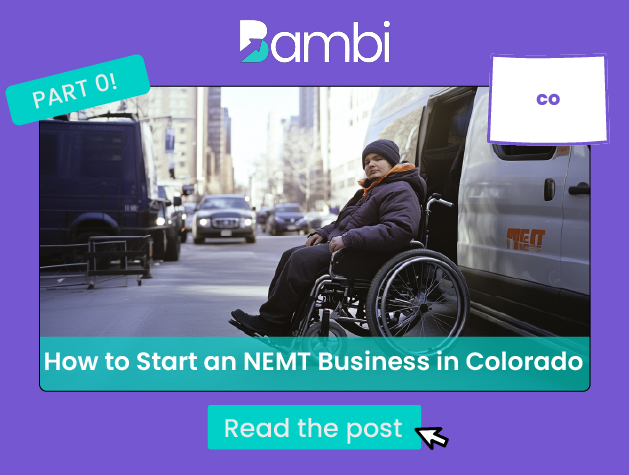
Welcome to Colorado, where the mountains soar ever-so tall, the air is oh-so mountain-fresh and the need for non-emergency medical transportation (NEMT) is ever-so growing. Think of starting an NEMT business here as gearing up for a good ol’ backpacking trip — it’s all about preparation, endurance and knowing the terrain.
Colorado’s population is booming, especially with more residents over 65. With over 16% of the state's 5.8 million people needing reliable transportation to stay connected to healthcare, the opportunity is as clear as a Rocky Mountain vista. From Denver’s bustling streets to the quiet mountain towns, your NEMT business can serve communities statewide.
In this guide, we’ll map out the essentials, from understanding state regulations to building your fleet and hiring a solid team. Sure, you can consider it your trail guide for making a positive impact (and yes, to leaving no trace — electric fleet, anyone?) in the Centennial State.
Ready to summit the world of NEMT in Colorado? Let’s break it down:
With this guide, you’ll be well on your way to building a successful NEMT business in Colorado. Time to hit the trails with those bushy Bambi tails!
We're diving into the exciting phase of that biz planning we’ve all been waiting patiently for — where we get to focus on care-tech — optimizing operations that enhances patient care for your New York State NEMT business.
Get on board (the subway!) with NEMT Software:
Explore our state-of-the-art technology designed to increase efficiency and improve patient care. Our robust NEMT software simplifies scheduling, dispatching and route optimization, ensuring smooth day-to-day operations. With GPS tracking for real-time updates and effective patient communication, our user-friendly platform caters to seasoned professionals and aspiring entrepreneurs alike. At Bambi, we're dedicated to ensuring your business thrives sustainably and successfully!
As we wrap up our comprehensive New York series, meticulously crafted by our dedicated Bambi team, get ready to navigate the New York NEMT market with confidence.
And remember, Bambi knows best! Contact us today for answers to your questions or to schedule a demo of our innovative aiNEMT software tailored for entrepreneurs like yourself. Let's make your NEMT journey a seamless and sunny one!
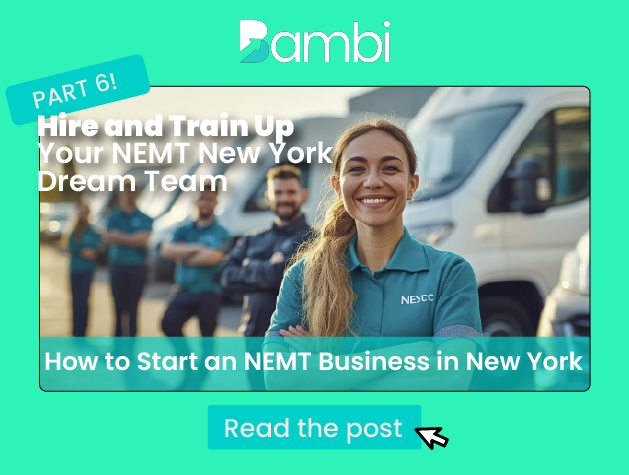
Assembling your stellar NEMT crew in New York is all about bringing together a team of friendly drivers and savvy dispatchers who ensure a smooth ride for your passengers, whether they're city slickers or upstate adventurers heading to medical appointments. Finding these NEMT rockstars means casting a wide net — check out job boards like Indeed and LinkedIn or strut your stuff at local New York job fairs. Trust us, the talent here is as deep as the Hudson River!
Can you believe we're almost there? Let's head to the final stretch in the Empire State, Part 7, where we'll dive into all things tech. Click here to keep the journey rolling forward, or explore other parts of our series on our table of contents here.
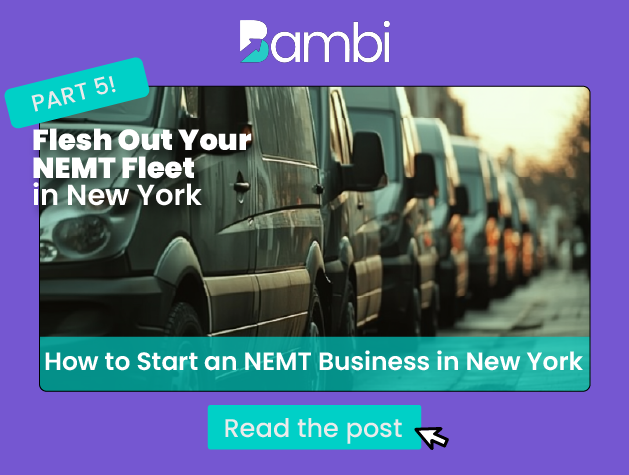
Building a robust and reliable fleet is essential for your NEMT venture amid New York's vibrant city life and scenic countryside. This section provides essential tips on selecting and maintaining vehicles and equipment to ensure safe and comfortable journeys for your passengers.
Picking the perfect vehicles: Invest in vehicles that cater to the unique needs of your clients. Consider features like wheelchair accessibility to comply with ADA regulationsn and ensure inclusivity for all.
Equipping for excellence: Upgrade your fleet with top-of-the-line equipment such as wheelchair lifts, first-aid kit and eco-friendly amenities. Partner with local suppliers who prioritize sustainability — supporting New York businesses promotes efficiency and environmental responsibility, and you know Bambi likes that!
Maintain regular vehicle checks: Establish a rigorous maintenance schedule to keep your fleet operating smoothly and safely, ensuring a seamless experience for passengers and contributing positively to the community.
You're making great strides on that subway of a Bambi series! Ready to dive into Part 6 and discover how to build and train your dream team? Click here to keep moving forward. Alternatively, explore other chapters in the series from the table of contents here.
Starting a startup in New York State is an adventure fit for those with a Bambi-like spirit! Launching a business in this state is brimming with potential, yet meticulous financial planning is essential. Understanding both initial and ongoing expenses is crucial to success in the Empire State. Discuss these matters with potential business partners and your family; they'll be your steadfast support system — like Thumper and Flower are for Bambi — on this journey.
From acquiring vehicles and covering licensing fees to managing insurance premiums, marketing expenditures, and daily operations, startup costs can accumulate quickly. Once you've outlined these financial requirements, securing adequate funding becomes pivotal for launching and sustaining your NEMT business and thriving amidst New York's diverse opportunities.
Consider exploring avenues such as small business loans, connecting with angel investors, or utilizing crowdfunding platforms to gather the necessary funds. Here are some steps and resources to kickstart your quest for financial support in New York State:
The SBA provides several loan programs tailored for small businesses, including the 7(a) loan program, designed to offer financial support to businesses with specific needs.
New York State offers resources such as the New York Business Development Corporation (NYBDC) and Pursuit, which provide assistance to small businesses in securing loans and offering support for financial planning. These organizations are valuable resources for entrepreneurs looking to access capital and navigate the financial landscape of starting or expanding a business in New York State.
The Empire State Development (ESD) oversees economic development initiatives and administers various incentive programs aimed at attracting and supporting businesses in New York State.
While direct grants specifically for launching new businesses may be limited in New York State, there are opportunities available for specialized purposes such as technological innovation and rural development. If you provide NEMT services to rural areas in New York State, you may qualify for grants listed on Grants.gov, a federal resource for grants. For additional opportunities, explore New York-specific small business grants on the US Grants organization website here.
Great progress so far! Ready to dive into Part 5 and expand your NEMT fleet? Click here to continue. Alternatively, explore other sections in the series from the table of contents here
To kickstart your NEMT business in the Empire State, understanding state and federal regulations is essential. Get ready to navigate New York's unique registration and compliance requirements while adhering to federal guidelines for a smooth launch. From ensuring your vehicles meet state standards to securing the necessary insurance, we've got you covered!
To meet New York State's NEMT requirements, you must adhere to specific guidelines and regulations set by the New York State Department of Health (DOH). These include passing background checks, meeting driver qualifications, ensuring vehicle standards compliance and following regulations established by the DOH. They oversee Medicaid (New York State's Medicaid program) and provide comprehensive guidelines and rules for NEMT providers.
NEMT services must also comply with federal regulations established by the Centers for Medicare & Medicaid Services (CMS). Be sure you’re clear on these federal requirements before launching your NEMT business.
To ensure your NEMT business in New York is fully insured, connect with insurance providers specializing in comprehensive coverage that meets state regulations. This safeguards your company, employees, and patients from unforeseen incidents and liabilities. While ITR provides foundational coverage, securing diverse insurance types ensures complete protection in the dynamic environment of New York.
Consult with local city and county offices, as well as the New York State Department of Financial Services, to ascertain the required licenses for heavily regulated industries like NEMT.
When preparing to hire employees, you'll need to ensure compliance with employment laws, including obtaining workers' compensation insurance, unemployment insurance, and meeting new hire reporting obligations. The New York State Department of Labor offers valuable guidance on these regulatory requirements.
By diligently following these steps and utilizing available resources, you can establish your new business in New York with confidence, fully adhering to state regulations.
You're navigating the New York NEMT business subway with finesse — keep riding those rails like a pro! Ready to delve into Part 4 and learn how to secure funding in the Empire State? Click here to continue. Or, check out the table of contents here for more sections in the series.
