
Reliable transportation for patients with frequent medical appointments, like dialysis or therapy, is critical for their health and for NEMT (Non-Emergency Medical Transportation) providers' success. Manual processes often lead to inefficiencies, errors, and high costs, but AI-powered scheduling and route optimization tools are transforming how recurring trips are managed. Here's how to improve operations:
- AI scheduling tools: Automates recurring trips, reduces manual data entry, and prevents errors like double-booking or missed updates.
- Route Optimization: Cuts fuel costs by 15–25%, improves on-time performance by up to 50%, and reduces empty vehicle miles.
- Clear Communication: Automated notifications and real-time updates keep patients, drivers, and dispatchers aligned, reducing no-shows and delays.
- Driver Training: Ensures drivers provide reliable, empathetic service while managing time effectively.
- Data-Driven Adjustments: Analyzing trip history improves routing, reduces late pickups, and increases efficiency.
- Dynamic Dispatching: Handles last-minute changes and emergencies without disrupting schedules.
- Patient Grouping: Clustering trips by location or schedule maximizes vehicle use and reduces costs.
Using AI-Powered Scheduling Software
Comparing manual vs. automated NEMT scheduling shows how AI-powered software eliminates the hassle and errors of manual processes, especially for recurring patient transportation. Tasks like entering weekly dialysis or therapy trips no longer require hours of repetitive data input. Instead, dispatchers can create a trip once, and the system automatically repeats it - saving 2–4 hours per dispatcher each week.
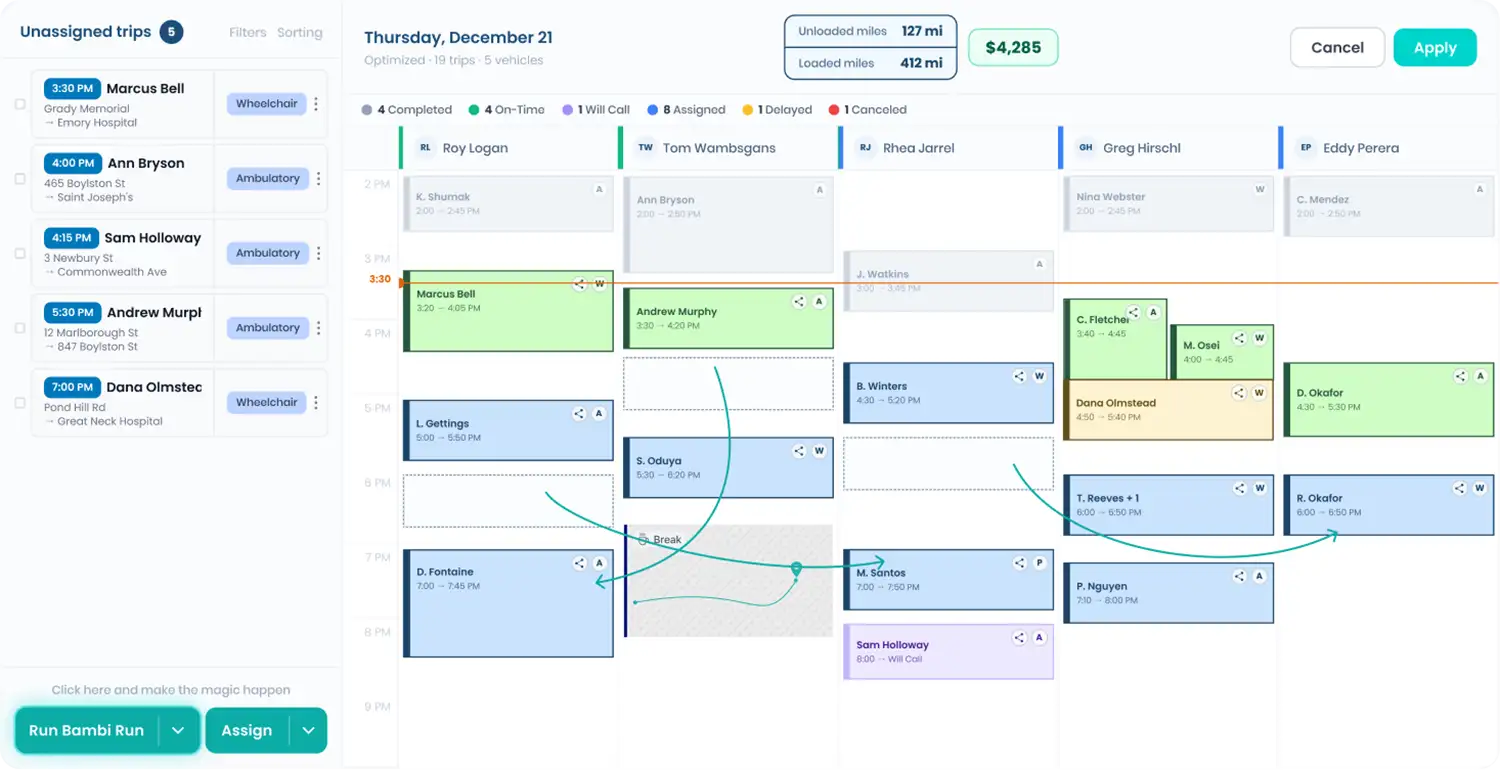
Platforms like Bambi leverage machine learning to streamline scheduling. For example, its "Run Bambi Run" feature pairs passengers with the right drivers and vehicles, whether that’s a wheelchair-accessible van or a standard sedan for ambulatory patients. Julian Ssemalulu, Owner of Bellshan Homecare, shares how this has transformed his workflow:
"Bambi saves me about a whole days worth of time. Once I finished the dispatch I could go do other things and the system just does the work"
This software also simplifies bulk data management. Providers can upload up to 10,000 trip requests from brokers like Modivcare or SafeRide in one go, eliminating manual data entry errors. When last-minute changes arise, such as patient no-shows or added wait times, the AI dynamically adjusts schedules without disrupting the system. Let’s explore the core features and benefits of this approach for recurring patient trips.
Core Features of AI Scheduling Software
The backbone of these platforms is their ability to automate standing orders. For instance, if a patient requires transportation every Monday, Wednesday, and Friday at 8:00 AM, the system schedules these trips indefinitely - until updates are made. It also factors in driver certifications and specific vehicle requirements, ensuring compliance with patient needs.
Constraint-based matching is another key feature. The AI assigns drivers and vehicles based on specific requirements like oxygen support or bariatric equipment. Automated notifications remind patients of their upcoming trips, reducing no-shows. Additionally, the system logs all changes to standing orders, maintaining an audit trail that supports compliance and troubleshooting.
Advantages for Recurring Patient Trips
These features result in major time savings. Booking a trip now takes just two or three minutes, cutting administrative time in half. Adham Harb, Operations Manager at CareTrips, highlights the broader impact:
"It's the easiest and best system that we have ever worked with scheduling wise... our trip count has gone up. Efficiency has gone up"
The software also eliminates common mistakes like double-booking drivers, forgetting holiday closures, or missing updates to treatment schedules. Jeffrey Hoff, Owner of Reliant Transport, underscores this:
"Switching over to Bambi is the most impactful thing I've done for my NEMT business. Bambi's AI is literally saving my staff hours of daily work"
Privacy is a top priority, with the platform maintaining HIPAA compliance during scheduling. With a 5.0-star rating across review platforms and recognition as the 2025 NEMTAC Innovation in NEMT Award winner, Bambi has earned its reputation for reliability. At $69 per active vehicle per month, with no onboarding fees or long-term contracts, the software quickly offsets its cost by reducing administrative burdens and boosting trip capacity.
Improving Route Planning for Predictable Trips
Efficient route planning plays a key role in ensuring patients reach critical treatments on time, especially for recurring trips. When trips happen regularly, consistency becomes non-negotiable - patients rely on dependable service week after week. Poor planning can lead to wasted fuel, frustrated passengers, and drivers stuck in preventable traffic jams.
Manual vs. AI-Powered Route Planning
Manual route planning often depends on a dispatcher’s memory and local know-how. While dispatchers might know common traffic patterns or details about destinations, this approach has its limits. Mistakes like double-bookings or missed road closures are common, and manual routes can’t adapt easily to changing traffic or conditions. On top of that, dispatchers typically spend an extra 2–4 hours each week managing these plans.
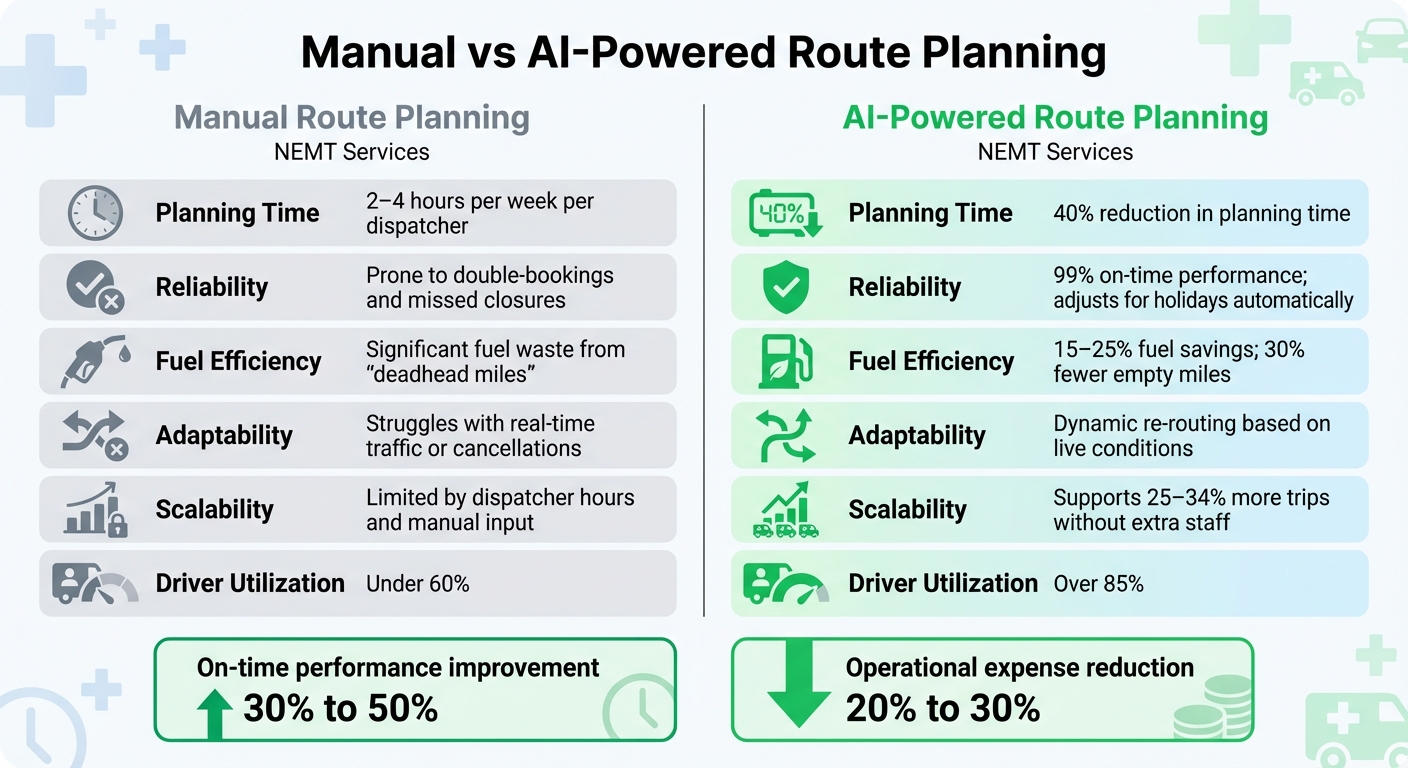
AI-powered systems, on the other hand, can analyze thousands of route options in seconds, accounting for real-time traffic, road closures, weather, and vehicle requirements. The results are impressive: on-time performance improves by 30% to 50%, fuel costs drop by 15% to 25%, and operational expenses are reduced by 20% to 30%. Driver utilization also jumps from under 60% with manual planning to over 85% when automation is used.
FeatureManual Route PlanningAI-Powered Route PlanningPlanning Time2–4 hours per week per dispatcher Automation reduces planning time by about 40% ReliabilityProne to double-bookings and missed closures 99% on-time performance; adjusts for holidays automatically Fuel EfficiencySignificant fuel waste from "deadhead miles" 15–25% fuel savings; 30% fewer empty miles AdaptabilityStruggles with real-time traffic or cancellations Dynamic re-routing based on live conditions ScalabilityLimited by dispatcher hours and manual input Supports 25–34% more trips without extra staff
By incorporating detailed historical data, these systems can further refine route accuracy and efficiency.
Using Past Trip Data to Improve Routes
Historical trip data can uncover patterns that manual planning might overlook. For example, analyzing six months of trip records helped one provider cut late pickups by 40%, while another reduced customer complaints about wait times by 60%.
Centralizing trip data - like pickup locations, times, mobility needs, and vehicle types - into a single digital platform is essential. Algorithms can then pinpoint recurring issues, such as specific patients missing appointments, consistently late routes, or clinics with long wait times. A Texas provider saved over $50,000 in fuel costs in just six months by using this data to eliminate unnecessary detours and streamline multi-stop routes. This also allowed them to increase their monthly trip volume by 25% through better vehicle use.
Smart systems can compare planned routes with actual outcomes, learning to predict arrival times more accurately over time. They also identify no-show patterns, allowing adjustments to schedules before dispatching drivers to pickups that won’t happen. For recurring trips, this means locking in routes that are both efficient and reliable, while still being flexible enough to handle last-minute changes without disrupting the entire schedule.
Setting Up Clear Communication Protocols
Clear communication is the backbone of smooth operations for recurring trips. When dispatchers, drivers, and patients are on the same page and can exchange updates quickly, everything runs more predictably. On the flip side, unclear protocols can turn minor delays into missed appointments and wasted resources. By combining automated notifications with real-time communication tools for drivers, operations can stay on track, even when unexpected issues arise.
Automated Notifications and Reminders
Automated reminders play a key role in ensuring patients are prepared and reducing no-shows. Notifications sent via SMS or phone calls typically include essential details like the pickup time, driver’s name, and vehicle information. For recurring trips - such as those for dialysis or physical therapy, often referred to as "standing orders" - these reminders are especially important for maintaining access to critical treatments.
Two-way messaging adds another layer of convenience, allowing passengers to notify dispatchers about delays or ask questions. At the same time, dispatchers can send real-time updates about driver arrival times. Additionally, automated trip confirmations shared with healthcare providers improve reliability and help cut down on missed appointments.
Real-Time Communication with Drivers
While automated notifications keep patients informed, real-time communication with drivers ensures everyone stays in sync. Driver apps enable instant updates, helping teams quickly adapt to changes like traffic jams, cancellations, or last-minute adjustments. This is particularly crucial for return trips, where clinic discharge times can be unpredictable. Effective coordination in these moments minimizes driver wait times and keeps schedules on track.
Training Drivers for Recurring Routes
Drivers handling recurring trips play a key role in providing efficient, empathetic service, becoming a familiar and trusted part of a patient’s care journey. For individuals with regular appointments, such as those for dialysis or physical therapy, having a consistent driver can bring a sense of comfort and reliability. This specialized NEMT driver training aligns with operational goals, complementing AI-driven scheduling and route optimization.
Building Familiarity with Recurring Patients
Assigning the same driver to recurring routes helps transform transportation into a more personalized and supportive experience. Small gestures, like remembering a patient’s preferred vehicle temperature or accounting for extra time to assist with mobility aids, can make a significant difference in their comfort. NEMT software can store these preferences, allowing drivers to access them easily for every trip. As Ride with Excel Transportation explains:
"Every time we pick up a patient, we're not just providing a ride – we're becoming part of their healthcare support system."
Training should emphasize compassionate communication, teaching drivers to greet patients warmly, speak clearly, and actively listen to their concerns. A professional appearance and verified credentials also help build trust. Beyond improving patient comfort, a well-prepared driver contributes to smoother scheduling and more efficient routes.
Training on Efficiency and Time Management
While building rapport is essential, drivers also need to prioritize efficiency. Time management is vital, as delays can lead to missed treatments. Drivers should understand the importance of standing orders - recurring schedules many patients depend on - and recognize that missing treatments, like a dialysis session, can have serious health implications. Training should stress the importance of arriving 5–10 minutes early and using tracking apps to provide accurate updates. Drivers should also note patterns in patient readiness and confirm clinic schedules ahead of time, ensuring recurring routes run smoothly.
Using Real-Time Dispatch Systems for Adjustments
Even the most carefully planned recurring routes can hit snags - think extended appointments, vehicle breakdowns, or unexpected clinic discharges. That's where real-time dispatch systems step in, adjusting routes and reassigning trips as needed.
By building on AI-powered scheduling and dispatching, these systems ensure disruptions are addressed quickly. Using live GPS data, traffic updates, and constant monitoring, they help keep operations on track when plans go sideways. Instead of overwhelming dispatchers with constant updates, the software flags only the trips that need attention. This approach - called managing by exception - makes the process far more efficient.
Dynamic Scheduling for Last-Minute Changes
Real-time systems shine when last-minute changes pop up, like a patient’s delayed appointment or an urgent new request. They can re-optimize routes instantly, removing completed tasks, adjusting vehicle capacities, and making minimal tweaks to accommodate the change. For example, if a dialysis patient isn’t ready for pickup at 2:00 p.m., the system can redirect the driver to handle a nearby urgent trip, ensuring efficiency before circling back once the patient is ready.
In emergencies like a vehicle breakdown, dispatchers can quickly identify available vehicles within a 3-mile radius. This allows them to assign the nearest driver to handle a critical pickup - such as a dialysis appointment - without causing delays for other passengers.
Improving Coordination During Emergencies
These systems also play a key role in managing unpredictable return trips, where discharge times can vary due to clinical workflows. Instead of having drivers wait around, the software combines rider status updates with driver availability through unified readiness signals. Once a patient is ready, the system dispatches the closest available vehicle, cutting down on wait times and improving overall efficiency.
Geofencing adds another layer of precision by creating virtual boundaries around facilities. When vehicles enter or exit these zones, the system logs the event and sends notifications to the appropriate parties. Dispatchers can even set up webhooks to get instant alerts when specific conditions are triggered.
Tracking metrics like Return-Trip On-Time Performance (OTP), Average Dwell Time, and Exception Resolution Time helps measure how effectively these adjustments are minimizing disruptions.
Grouping Patients by Trip Patterns
Organizing patients based on recurring trip patterns takes efficiency to the next level. By grouping individuals with similar schedules and destinations, you can make better use of vehicle capacity and cut down on empty miles. For example, clustering patients from the same dialysis center or nursing home reduces fuel costs and improves on-time performance. This approach complements optimizing NEMT routes and scheduling, ensuring every trip contributes to better fleet utilization.
The numbers back this up. AI-driven scheduling can slash manual planning time by around 40%. On top of that, intelligent dispatching systems can improve fleet efficiency by 20% to 30%, allowing providers to manage up to 34% more trips without needing extra staff or vehicles. Strategic patient grouping doesn’t just save time - it transforms how your operation grows.
Common Recurring Trip Categories
Different patient groups have specific transportation needs that impact trip planning. Here’s a closer look at a few common categories:
- Dialysis patients: These individuals typically need transportation three times a week with tight arrival windows, as missing a session can have severe health consequences. Facility clustering and multi-pickup planning are especially effective for this group.
- Chemotherapy patients: Ongoing treatments often require extra care due to frailty. Door-through-door service, along with built-in buffer times, ensures their trips run smoothly.
- Physical therapy patients: With predictable schedules, usually twice a week, they are ideal for automated standing orders and ride-sharing arrangements.
Customizing Services for Each Group
Once you’ve grouped patients, it’s essential to customize services to meet their specific needs. For dialysis patients, confirm all details - addresses, mobility requirements, and appointment times - before setting up a standing order. This prevents service disruptions. Regularly review schedules since treatment plans or clinic hours can change, and plan ahead for holiday closures to avoid unnecessary trips that waste resources.
Keep an eye on no-show trends. If a patient repeatedly misses a scheduled trip, adjust their standing order to avoid wasting time and fuel. Sending SMS or phone reminders can also cut down on no-shows and improve driver efficiency. Additionally, when grouping patients by mobility type - whether ambulatory, wheelchair, or stretcher - make sure they are assigned to the right vehicle to prevent overbooking and maintain safety. These small but critical adjustments not only improve patient satisfaction but also streamline operations and maximize fleet performance.
Conclusion
A well-rounded approach to technology and communication is at the heart of effective recurring transportation management. By combining advanced AI tools, clear communication channels, and personalized services, organizations can create a system that not only reduces costs but also improves reliability and, most importantly, patient health outcomes. Providers can further optimize these outcomes by using a patient load analyzer to ensure capacity matches demand.
For example, real-time GPS tracking and automated SMS reminders have proven to cut patient wait times dramatically - from over 30 minutes to less than 10. These kinds of improvements are essential, especially for patients needing time-sensitive treatments like dialysis or chemotherapy.
Customizing transportation services to cater to different patient needs - whether it’s for recurring dialysis treatments or physical therapy sessions - ensures a dependable and patient-centered experience. Research also shows that dependable transportation can boost treatment adherence by up to 40% and lead to a noticeable drop in hospital readmissions.
FAQs
How do I set up recurring trips without creating duplicates?
To keep recurring trips organized and avoid duplicates, consider using scheduling tools that offer recurrence schedules or repeat options. These features let you specify repeat days, set end dates, and even exclude certain dates. Additionally, automation tools can streamline the process by managing recurring schedules efficiently. They ensure trips are only created when needed, while still allowing for adjustments or cancellations. This approach helps maintain accuracy and eliminates the risk of duplicate entries.
What should I do when a clinic runs late on return trips?
To manage clinic delays effectively, it's essential to incorporate flexibility into scheduling and utilize tools for real-time coordination. For example, adjustable time windows can help absorb delays without throwing the entire schedule off track. Additionally, real-time communication between drivers and riders ensures everyone stays informed, allowing for quick route adjustments when needed. These approaches not only help maintain reliability but also reduce missed appointments and ensure a consistent level of service, even when clinics experience unexpected delays.
How can I reduce no-shows on standing orders?
To cut down on no-shows for standing orders, consider implementing automated scheduling and reminder systems. These tools can help manage recurring rides while sending timely SMS or email reminders to patients. Adding real-time GPS tracking and updates ensures patients stay informed about their ride status, reducing uncertainty. Establishing clear cancellation policies and offering incentives for consistent attendance can further encourage reliability. By blending smart technology with effective communication, you can significantly reduce missed pickups and improve overall efficiency.