By Nick Hoffmeyer, Head of Marketing at Bambi · Updated October 2026
Short answer: A NEMT no-show costs you the miles and driver time you spent getting to an empty curb, plus the revenue from a trip you cannot bill. With the example numbers below, one no-show is about a $61 swing, and 30 a month is roughly $22,000 a year. Your numbers will differ, so plug in your own. The fix is mostly process: confirm the day before, handle will-calls on purpose, follow your broker's no-show steps exactly, and track no-shows by rider and facility so you can see the pattern.
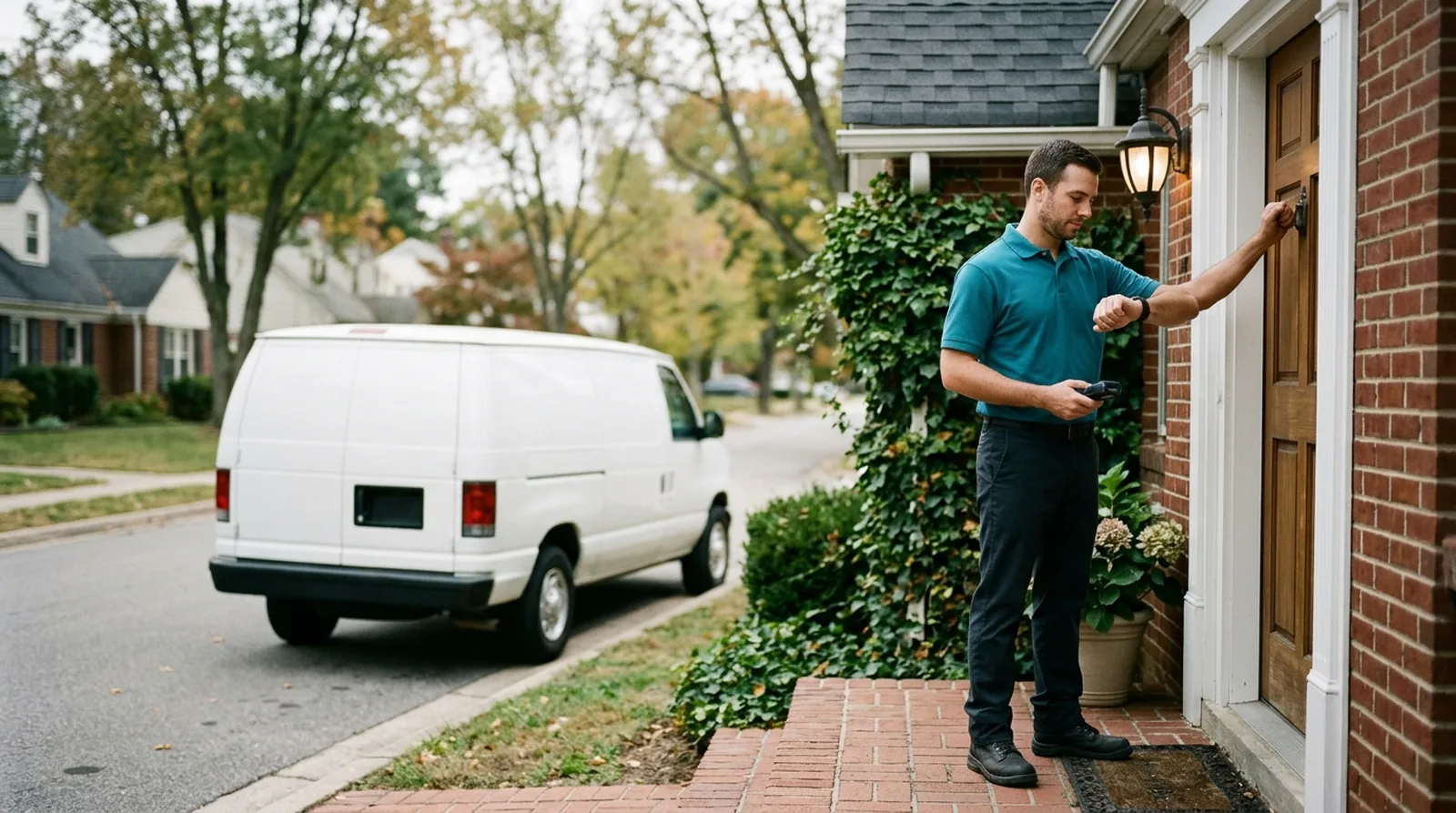
Every NEMT owner knows the feeling. The driver pulls up, waits, calls, waits some more, and the rider is not there. The van leaves empty. Nobody writes that down as a cost. It just quietly disappears into fuel, payroll and a slightly smaller deposit at the end of the month.
Let's put a number on it.
A simple cost model for one no-show
The numbers below are example inputs, not industry averages. They are here to show the math. Replace each one with your own figures, or run them through our free NEMT trip cost calculator to get your real cost per mile and per hour first.
1. Deadhead miles
The driver still drives to the pickup and then on to the next job, with nobody on board.
- Example input: 12 empty miles
- Example input: $0.60 per mile vehicle operating cost (fuel, maintenance, tires, insurance share)
- Cost: 12 × $0.60 = $7.20
2. Driver time
The drive to the pickup, the required wait, and the call to dispatch or the broker before leaving.
- Example input: 35 minutes (20 minutes driving, 15 minutes waiting and calling)
- Example input: $24 per hour loaded driver cost (wage plus payroll taxes)
- Cost: 35 ÷ 60 × $24 = $14.00
3. Revenue you do not get to bill
- Example input: $40 for the trip leg
- Lost: $40.00
- If the return leg drops too, double it.
4. Add it up
- Spent on nothing (miles + driver time): $7.20 + $14.00 = $21.20
- Revenue not earned: $40.00
- Swing per no-show: $61.20
Now scale it. At 30 no-shows a month, that example fleet spends $636 driving to empty curbs and misses $1,200 in billable trips. That is $1,836 a month, or about $22,000 a year.
One honest caveat. If your driver is on the clock either way and had nothing else to do, that driver time was going to be paid regardless. The real loss is the trip that driver could have run in that slot instead. Either way, the no-show costs you something. On a tight day, it can also make the next pickup late, which is a different and sometimes more expensive problem.
Want the full yearly picture, including empty miles and drivers waiting across the whole fleet? Our NEMT operational cost estimator puts a yearly dollar figure on the costs that never get their own P&L line.
5. Broker penalties and risk
This part depends entirely on your broker contract, so read yours. What the published manuals we reviewed say:
- Rider no-shows are usually not counted against you, if you follow the steps. CareOregon's NEMT provider manual template (December 2025) says brokerages are responsible for telling member no-shows apart from provider no-shows, and that providers "will not be held accountable for member no shows."
- Provider no-shows are counted against you. The same manual lets a brokerage put a provider with "a repeated pattern of no shows" on a corrective action plan.
- Complaints cost trips. Modivcare's Mississippi transportation provider manual (February 2024) says excessive substantiated complaints about a provider may result in fewer assigned trips, liquidated damages, or contract termination.
Which means the paperwork matters. A rider no-show you did not document correctly can look a lot like a provider no-show.
What no-shows cost the people paying for the ride
The provider's loss is the smallest part of the story. The rider still needed that appointment.
- About 5.8 million people in the U.S. delayed medical care in 2017 because they did not have transportation, according to a 2020 study in the American Journal of Public Health (Wolfe, McDonald and Holmes).
- Missed appointments cost the U.S. healthcare system an estimated $150 billion a year, a figure from a 2017 industry commentary in Healthcare Innovation. It is a widely repeated estimate, not the result of a published study, so use it as a rough scale rather than a precise number.
If you want to make that case to a broker or facility when you are bidding against a cheaper operator, we wrote a whole post on it: why the cheapest NEMT provider costs the payer more.
Five ways to cut your no-shows
1. Confirm every trip the day before
The simplest fix is still the best one. Modivcare's Mississippi manual tells providers to contact members "no later than the night before the scheduled trips to confirm the trip and thereby reduce the risk of Member 'no shows.'" A call or text the evening before catches the rider whose appointment moved, who already got a ride from family, or who forgot. Every trip cancelled the night before is a trip you can backfill.
Keep it short, and only include what the rider needs: pickup time, pickup window, and a number to call if plans change.
2. Handle will-calls on purpose
Will-call return trips cause a lot of no-shows that are not really no-shows. The rider is not ready, the driver cannot wait, and the trip gets marked. Know your rules. CareOregon's template gives the broker one hour to pick up once a member calls in ready, and the driver only has to wait 15 minutes after arriving. Louisiana Medicaid's provider responsibilities allow up to two hours after a will-call request.
Practical habits: ask the facility for a realistic finish time when you book the outbound leg, keep one vehicle loosely scheduled during peak return hours, and call the rider or the front desk before you dispatch, not after the driver arrives.
3. Follow the broker's no-show steps exactly, every time
Both manuals spell out a wait and a call. Modivcare's Mississippi manual says the driver must wait at least 10 minutes after the scheduled pickup time, contact the broker's provider line for authorization before leaving, and document the attempt on the trip log. CareOregon's template says wait at least 15 minutes and notify dispatch before departing. Train every driver on the rule for each broker you work with, and make sure the timestamp, location and call are recorded. That record is what keeps a rider no-show from turning into a provider no-show on your file.
4. Write a cancellation policy for private-pay and facility work
For private-pay riders and direct facility contracts, you set the terms. A clear late-cancellation window, written into your booking confirmation and facility agreement, gives you something to point to. For Medicaid and broker trips, do not charge riders fees on your own; member no-shows go through the broker's process. Our post on private-pay vs Medicare and Medicaid billing covers how those two worlds differ.
5. Track no-shows by rider and by facility
No-shows are rarely random. They cluster around a handful of riders, a specific facility whose appointments run long, or a standing trip nobody cancelled after the treatment ended. Tag every no-show with the rider, the pickup location, the time and the reason, and look at the list once a month. Separate rider no-shows from your own missed trips, because brokers will. If you run a lot of standing orders, our guide to managing recurring transportation covers how to keep them current, and how to monitor and improve on-time performance covers the related reporting.
Where software helps
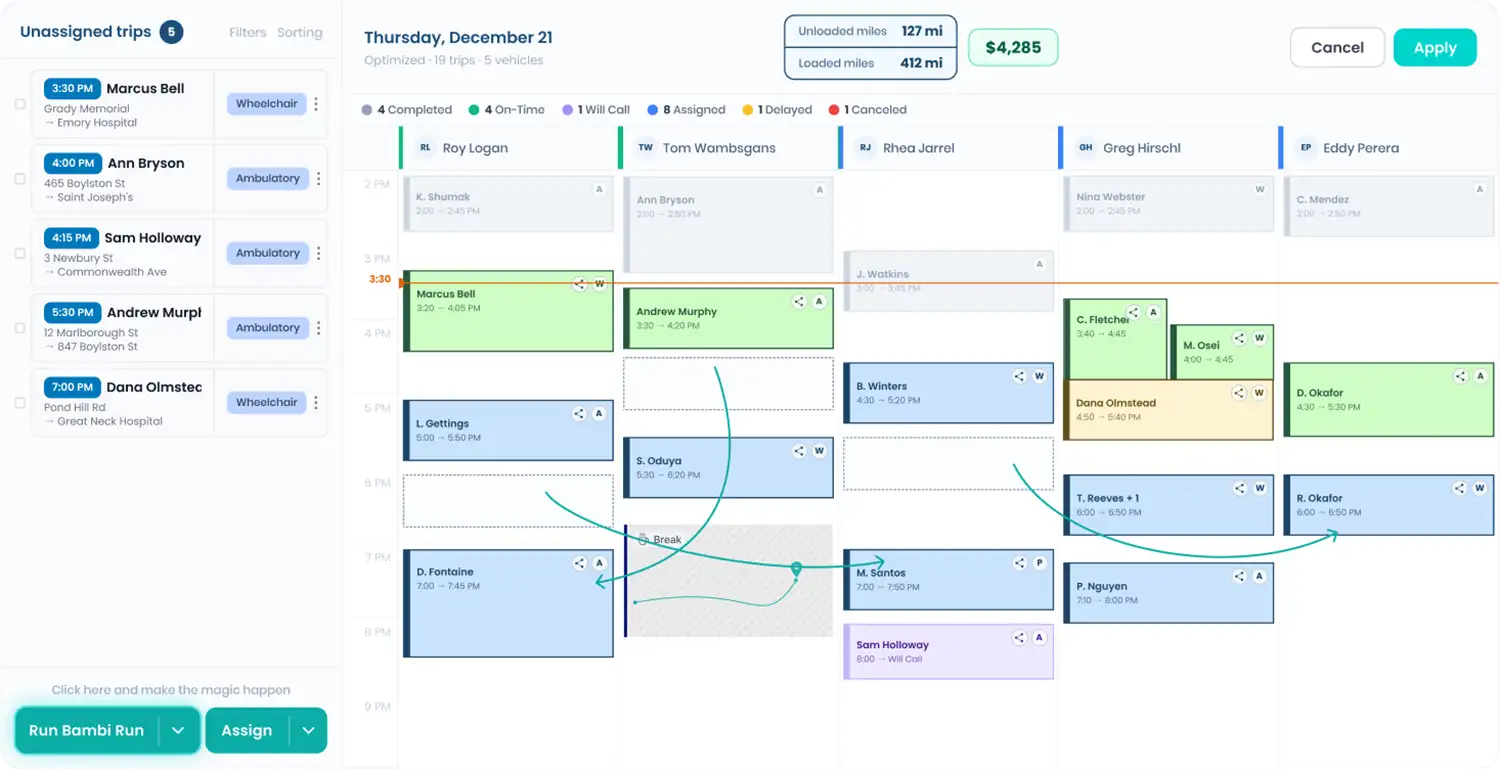
None of this requires software, but it is a lot easier when trip status, timestamps and GPS location are captured automatically instead of on a paper log. In Bambi, drivers move each trip through its statuses in the Driver App and capture GPS and time-stamped signatures at pickup and drop-off, Fleet HQ shows dispatch every vehicle so a freed-up driver can be handed another trip, and a dispatcher can re-run Run Bambi Run on just the affected trips or vehicles when a no-show opens a gap. Bambi is $69 per active vehicle per month, month to month, with no setup fees.
FAQs
How much does a no-show cost a NEMT company?
It depends on your miles, driver pay and trip rates. With example inputs of 12 empty miles at $0.60 a mile, 35 minutes of driver time at $24 an hour, and a $40 trip, one no-show is a $61.20 swing: $21.20 spent plus $40 not billed. Plug your own numbers into our trip cost calculator.
Do NEMT brokers pay for rider no-shows?
It depends on the broker contract, so read yours. The manuals we reviewed focus on documentation: wait the required time (10 minutes in Modivcare's Mississippi manual, 15 in CareOregon's template), contact dispatch or the broker before leaving, and log the attempt. CareOregon's template says providers are not held accountable for member no-shows.
What is the fastest way to reduce NEMT no-shows?
Confirm every trip the evening before. It catches cancellations while you can still backfill the slot, and it is the step broker manuals themselves recommend. After that, track no-shows by rider and facility so you can fix the repeat cases.
Curious what no-shows and empty miles add up to across your whole fleet? Run the operational cost estimator, and if you want to see how Bambi tracks trip status in real time, book a demo.