

Running a non-emergency medical transportation (NEMT) business comes with unique challenges. From ensuring timely pickups to managing fuel costs, every detail matters. That’s where a tool to evaluate driver efficiency can transform your operations. By analyzing key performance indicators, you gain actionable insights to streamline your fleet and enhance service quality.
Understanding how your team performs on the road is crucial for growth. Metrics like trips completed per hour or distance traveled per job highlight strengths and weaknesses in your workflow. Maybe one driver consistently covers more ground with fewer miles—why? Digging into these numbers helps you replicate best practices across your team. It’s not just about cutting costs; it’s about delivering reliable care to patients who depend on your service.
With the right data, you can make informed decisions to boost productivity. Whether you’re a small provider or managing a larger fleet, tracking performance ensures you’re always a step ahead. Start using tools designed for non-emergency transport businesses and watch your efficiency soar without sacrificing quality.
Tracking productivity helps you understand how efficiently your drivers are operating. Are they completing enough trips per hour? Are they driving excessive miles per trip, which could signal poor route planning? These metrics reveal where you can save time and fuel, ultimately improving service for your clients and reducing costs. Plus, it’s a great way to identify top performers and areas for training.
Benchmarks can vary based on region and service type, but a general rule of thumb is around 2-3 trips per hour for urban NEMT drivers during peak demand. Miles per trip often average between 5-10 miles, depending on whether you’re in a rural or city setting. Our tool lets you input custom benchmarks if you’ve got specific industry data or internal goals to compare against.
No worries! Our tool has built-in validation to catch errors. If you accidentally input a negative number or leave a field blank, it’ll prompt you with a clear error message to fix the data. We want to make sure your results are accurate, so we double-check that all entries are positive numbers before crunching the stats.

Running a non-emergency medical transportation (NEMT) business comes with unique challenges, especially when it comes to defining your operational reach. That’s where a dedicated NEMT Service Area Planner can make all the difference. This tool empowers providers to map out their coverage zones by simply entering a starting point and a desired radius, ensuring patients in need can access reliable transport services.
Understanding the boundaries of your healthcare transport operations isn’t just about logistics—it’s about serving your community effectively. By visualizing the regions you can cover, you’re better equipped to allocate resources, target high-demand areas, and even expand strategically. Whether you’re a small provider or managing a larger fleet, having a clear picture of your reach helps build trust with clients and partners alike.
Beyond just drawing a circle on a map, tools like these let you factor in population density to focus on areas with greater need. It’s a practical way to refine your strategy without getting bogged down in complex data. Start planning today and ensure your NEMT services are positioned for maximum impact!
The NEMT Service Area Planner provides a solid estimate based on the radius you input from a central point. If we can’t integrate a live map, we use geographic data to list approximate towns or regions within your range. It’s not pinpoint precise due to real-world variables like road access or local boundaries, but it’s a fantastic starting point for planning. For exact details, you might want to cross-check with local maps or GIS tools.
Right now, the tool focuses on a single central location to keep things simple and clear. If you’ve got multiple bases, just run the tool separately for each one to map out individual service areas. We’re working on adding multi-location support in the future, so stay tuned for updates!
No worries! The tool has built-in validation to catch unrecognized locations. If it doesn’t find your input, it’ll prompt you to double-check the spelling or try a nearby city or zip code. Stick to standard formats—like ‘Springfield, IL’ or a valid zip—and it should work smoothly. If you’re still stuck, drop us a note, and we’ll help troubleshoot.
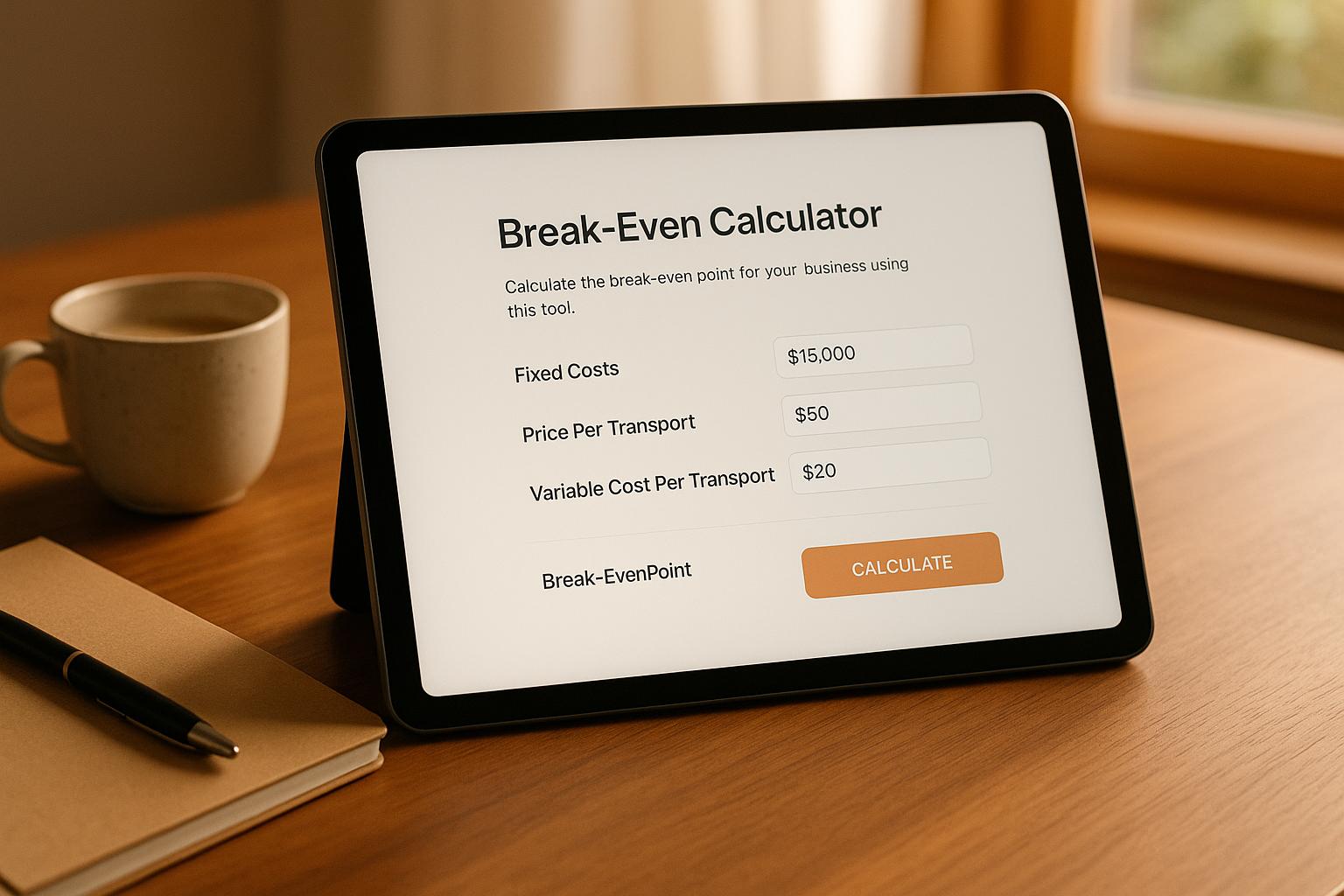
Running a non-emergency medical transportation (NEMT) business comes with unique challenges, from managing a fleet to ensuring timely service for clients. One of the biggest hurdles is figuring out when your revenue will finally cover your expenses. That’s where a tool like an NEMT break-even calculator becomes a game-changer. It offers a straightforward way to analyze your fixed costs, variable expenses, and income per trip to determine the exact number of rides needed to reach financial stability.
For small business owners in the medical transport sector, every dollar counts. You’ve got ongoing costs like vehicle maintenance, driver wages, and insurance, not to mention fluctuating fuel prices. A clear understanding of your financial tipping point helps you set realistic goals, adjust pricing if needed, and make informed decisions about scaling your operation. By using a dedicated calculation tool, you can take the guesswork out of planning and focus on growing your service. Whether you’re just starting out or looking to optimize an established company, knowing your numbers is the first step to long-term success in this vital industry.
Fixed costs are the expenses that don’t change based on how many trips you make. Think of things like vehicle insurance, office rent, or monthly loan payments for your fleet. These are the bills you’ve gotta pay whether you’re running one trip or a hundred. This calculator lets you plug in that total so you’ve got a clear picture of what you’re working to cover.
If your revenue per trip is less than or equal to your variable cost per trip, there’s no way to break even—you’re losing money on every ride. For example, if you spend $30 on fuel and wages per trip but only charge $25, you’re in the red no matter how many trips you do. The tool will flag this with an error message so you can rethink your pricing or cut costs.
This tool gives you a solid estimate based on the numbers you provide. It’s built to handle the basic math of dividing your fixed costs by the profit per trip (revenue minus variable costs). That said, real-world factors like seasonal demand or unexpected expenses might shift things a bit. Use this as a starting point for planning, and adjust as you gather more data from your NEMT operation.

Running a Non-Emergency Medical Transportation (NEMT) business comes with unique challenges. From juggling vehicle maintenance to managing driver schedules, it’s easy to lose sight of your financial health. That’s where a tool like our NEMT Profit Margin Analyzer becomes a game-changer. It helps business owners break down their revenue and expenses, offering a clear picture of profitability without the headache of manual calculations.
Every dollar counts in the medical transport industry. Fuel costs can spike, insurance premiums might creep up, and client billings can fluctuate. By using a dedicated analyzer, you gain insight into your net profit and overall margin, helping you identify areas to cut costs or invest more. Maybe you’ll discover that adding another vehicle could boost revenue without breaking the bank—or that trimming certain overheads could save you thousands. This kind of clarity empowers you to make decisions with confidence, ensuring your operation runs smoothly and sustainably. So, dive into your numbers today and see how small tweaks can lead to big wins for your NEMT venture.
It’s as accurate as the data you provide! We’ve set realistic default values for costs like vehicle maintenance ($1,000 per vehicle) and driver wages ($3,000 per driver), based on industry averages. But every business is unique, so you can adjust these numbers to reflect your actual expenses. The tool calculates your profit margin by subtracting total costs from revenue and gives you a clear percentage—so you’ll know exactly where you stand.
Absolutely. Whether you’ve got one vehicle or twenty, this analyzer works for you. Just input the number of vehicles and drivers, along with their associated costs, and it’ll scale the calculations accordingly. You’ll see a detailed cost breakdown by category, which is super helpful for spotting inefficiencies in larger operations.
No problem at all. This tool is built for flexibility. You can update any input—revenue, fuel costs, wages, or other expenses—whenever they change. Each time you tweak a number, the results refresh instantly, showing your updated profit and margin. It’s a great way to play out ‘what-if’ scenarios and plan ahead.
Running a non-emergency medical transport business is no small feat. Between ensuring client safety and navigating a web of regulations, there’s a lot on your plate. That’s where a tailored compliance tool can make all the difference. Our free generator helps providers create a personalized list of requirements, ensuring you meet both federal and local standards without the guesswork.
Staying on top of rules isn’t just about avoiding fines—it’s about building trust with clients and authorities. Whether it’s driver training, vehicle inspections, or accessibility guidelines, missing a single step can put your operation at risk. With regulations varying by state and service type (like wheelchair or stretcher transport), a one-size-fits-all approach just doesn’t cut it. A customized non-emergency medical transport checklist ensures you’re covering all bases, from ADA mandates to insurance minimums.
Don’t spend hours researching rules for your region. Input a few details about your business, and let our tool do the heavy lifting. You’ll get a clear, actionable guide to keep your services running smoothly and safely.
Our tool pulls from a database of common NEMT regulations, including federal requirements like ADA compliance and vehicle safety standards. It also layers in state-specific rules based on your location, covering things like driver certifications, insurance minimums, and local licensing. While it’s not exhaustive, it gives you a solid starting point to ensure you’re on the right track. If there’s something unique to your area, we often include links to relevant resources so you can dig deeper.
Absolutely! While the tool is primarily designed with U.S. federal and state regulations in mind, we’ve included a text field for international users to input their region. For non-U.S. locations, the checklist will focus on general best practices and federal-level guidance that might apply globally, like basic safety standards. You’ll still get a useful framework, though you may need to consult local authorities for specific rules in your country.
Yes, once your customized checklist is generated, you can download it as a PDF or print it directly. The format includes checkboxes for each requirement, making it easy to track progress. Feel free to share the PDF with your team or keep printed copies in your office—whatever works best for managing compliance across your operation.
.png)
His NEMT trip volume in Dallas, Texas jumped 33% overnight! | NEMT Experts Podcast Episode 88
See the full interview on YouTube
Please don't forget to subscribe and like NEMT Experts Podcast on YouTube.
Also, available to watch on Spotify
And listen (audio only) on your other favorite podcast platforms Apple and Pandora.
In this episode of the NEMT Experts Podcast, Nirav sits down with Jay Mudrick of Fleet Advisory Associates, who explains the benefits and drawbacks of leasing vehicles versus buying them.
1. Leasing > Buying for Most NEMT Operators
Leasing preserves cash flow, avoids heavy upfront costs, and offers flexibility. Jay recommends leasing especially for newer or growing companies that need to focus their capital on scaling operations, not vehicle ownership.
2. Flexibility and Reputation Matter More Than Ownership
Commercial leases offer “open-end” terms that let operators keep vehicles as long as needed without penalties, helping them upgrade before breakdowns harm client trust and brand reputation.
3. Backups Are Essential for Trust
Every NEMT fleet should include a well-maintained backup vehicle. Downtime not only disrupts service but also risks facility contracts and long-term credibility with brokers and administrators.
"When your vehicle is a billboard driving around all day, reputation is everything. Downtime can kill your business."
"You don't get a second chance to turn down a facility admin. Maybe you get a second call—but you're no longer the first call."
"Leasing frees up the cash you need to grow. Hire more drivers, win more contracts, scale faster. Let your vehicles pay for themselves."

Starting a Non-Emergency Medical Transportation (NEMT) venture is an exciting opportunity to serve a growing need in healthcare accessibility. However, understanding the financial commitment is crucial before diving in. That’s where a reliable cost estimation tool comes in handy—helping you map out expenses and make informed decisions.
Launching a business in this niche involves juggling multiple costs, from securing vehicles to hiring qualified drivers. Vehicle expenses alone can vary depending on whether you buy or lease, while operational costs like insurance and office space add up quickly. Beyond that, one-time fees for licensing and marketing can catch new entrepreneurs off guard. Having a clear breakdown of these figures empowers you to plan with confidence and avoid common pitfalls.
Every medical transportation operation is unique, shaped by factors like location and scale. Our tool lets you customize inputs to reflect your specific goals, whether you’re starting small with a single van or building a larger fleet. By getting a handle on your initial investment, you’re setting the stage for a sustainable and impactful service in your community.
This tool covers all the major expenses you’re likely to face in your first year of running a Non-Emergency Medical Transportation business. That includes vehicle costs—whether you’re buying or leasing—driver salaries, office rent, insurance per vehicle, and miscellaneous one-time costs like licensing or marketing. You can adjust every value to match your specific plans, so the estimate feels tailored to your vision.
The default values—like $30,000 per vehicle for purchase, $500/month for leasing, or $3,000/month per driver—are based on industry averages for NEMT businesses in the U.S. Of course, costs can vary widely depending on your location, the type of vehicles you choose, or local labor rates. That’s why we’ve made it easy to tweak every number to reflect your reality.
Absolutely! Our calculator lets you toggle between purchasing and leasing vehicles, instantly updating the cost based on your choice. Leasing is calculated over a 12-month period to give you a first-year total, while purchasing reflects the upfront cost. Play around with both options to see which fits your budget and long-term goals better.
.png)
His NEMT trip volume in Dallas, Texas jumped 33% overnight! | NEMT Experts Podcast Episode 88
See the full interview on YouTube
Please don't forget to subscribe and like NEMT Experts Podcast on YouTube.
Also, available to watch on Spotify
And listen (audio only) on your other favorite podcast platforms Apple and Pandora.
In this Part 2 of 2 episodes of the NEMT Experts Podcast, I sit down with Obioha Alukogu, who shares how he grown his trip volume and streamline his growing NEMT business in the greater Dallas, Texas area.
1. Operational Efficiency Drives Massive Growth
By switching to Bambi’s Run Bambi Run feature, Obioha increased his monthly trip volume from 1,200 to 1,600 — a 33% jump — with just 8 vehicles. Route optimization eliminated dead miles and enabled better real-time dispatching.
2. Saying “Yes” Opens Doors
Obioha’s growth strategy centers on always saying yes — even before he has a solution. From expanding service areas to billing United Healthcare directly, his willingness to figure things out post-commitment helped him win contracts and scale fast.
3. Passion and People Are the Foundation
Success in NEMT goes beyond logistics. Obioha attributes his growth to his passion for helping others, deep client relationships, and building a loyal team. Personal touches, emotional support, and leadership by example have earned him trust and referrals.
“Once I say yes to you, I just go back and start figuring out how I'm gonna actualize that. And it always works.”
— Obioha Alukogu
“You live, breathe, and sleep your NEMT business. But you're only able to do that if you're passionate about what you do.”
— Nirav Chheda
“I know you already have your vehicles... I'm just here in case you have a trip conflict. If I call you at 2:00 AM, can you pick up our patient? Absolutely. Boom — she signed the contract.”
— Obioha Alukogu

When deciding whether to renew your Non-Emergency Medical Transportation (NEMT) insurance or switch providers, the choice boils down to cost, coverage, and convenience. Both options have pros and cons, and your decision impacts your business's financial security, compliance, and daily operations.
| Factor | Renewing Existing Policy | Switching Providers |
|---|---|---|
| Cost | Stable rates; loyalty discounts | Potential savings; initial setup costs |
| Coverage | Familiar terms; may not meet new needs | Tailored options for current growth |
| Claims Process | Known procedures; faster resolution | New processes; possible delays |
| Administrative Effort | Minimal paperwork; quick updates | Time-intensive research, documentation |
| Compliance | Established processes; low risk | Requires vetting new provider compliance |
Start your review early - at least 90 days before renewal - to compare policies, avoid last-minute decisions, and ensure continuous coverage. Whether you stick with your current insurer or switch, prioritize policies that align with your business needs and protect against potential risks.
Renewing your insurance policy can be a smart move, but it’s worth carefully weighing the benefits against the potential drawbacks before making a decision.
One of the biggest perks of sticking with your current policy is convenience. You’re already familiar with your agent, the policy terms, and the claims process. This familiarity can save you time and reduce the hassle of dealing with administrative tasks.
Another advantage is your claims history. If you’ve maintained a clean record, you could benefit from lower premiums. Many insurers offer discounts for periods without claims, which can help you save money over time.
Consistent coverage is another key benefit. Renewing ensures there are no gaps in your coverage, which is especially important for NEMT businesses that deal with specific risks, such as transporting wheelchair or stretcher-bound passengers.
Finally, if your operations haven’t changed much - whether it’s the size of your fleet, the types of vehicles you use, or your service area - renewing makes sense. Your insurer already has a solid understanding of your risk profile, which can help keep rates competitive.
But renewal isn’t without its challenges.
One major downside is the potential for rising premiums. NEMT insurance costs are already significant, and if you’ve had multiple claims or other issues, your renewal rate could climb.
Another issue is limited flexibility. Many direct insurers offer standard policies that may not adapt to your business’s changing needs, leaving you with coverage that doesn’t fully align with your operations.
By automatically renewing, you also risk overlooking better deals. The insurance market changes constantly, and other providers might offer more competitive rates or broader coverage options that better suit your business.
There’s also the possibility of renewal refusal. Insurers might decline to renew your policy if there have been problems, such as multiple claims, missed payments, or incomplete disclosures during the policy term.
Lastly, broker fees can add to your costs. These fees, which typically range from 6% to 12%, can make your renewal more expensive than you initially realize.
Renewing your policy is often a good idea if you’ve implemented strong safety measures that your insurer values. For example, having thorough driver screening processes, regular vehicle maintenance, and effective safety training programs can lower your risk profile and help you retain claim-free discounts.
If your insurer has handled claims efficiently and understands the unique challenges of the NEMT industry, maintaining that relationship can provide peace of mind. A provider familiar with your business can often offer tailored solutions that fit your needs.
Renewal is also a practical choice if your operations have remained stable. With NEMT auto insurance costs ranging from $4,200 to $18,000 per vehicle annually - and a median of about $12,000 for $1,000,000 liability limits - predictable pricing is a big advantage. Stability in your fleet size, service areas, and operational model can help your insurer keep premiums manageable.
For businesses with steady operations and strong safety measures, renewing your current policy can provide consistent pricing and reliable coverage tailored to your needs.
Making the move to a new insurance provider can be worthwhile, especially if the advantages outweigh the effort involved in the transition.
Lower costs are often a driving factor for NEMT businesses considering a switch. Many providers offer competitive pricing to attract new clients, which could mean noticeable savings through reduced premiums, discounts, or better bundling options. This is particularly appealing given the typically high expenses tied to NEMT insurance.
Enhanced coverage options can be another compelling reason to switch. As your business grows - whether that means adding vehicles, expanding services, or operating in new areas - your insurance requirements may shift. A new provider might offer policies that better match your current needs, eliminating unnecessary features or addressing gaps in coverage.
Improved customer service can make a big difference in your day-to-day operations. If your existing provider has slow claims processing, poor communication, or limited availability, switching to one with a reputation for responsive and reliable service can save you time and reduce stress.
Access to modern tools and technology is becoming increasingly valuable. Many newer providers offer digital solutions like mobile apps and online platforms for managing policies, filing claims, and receiving updates in real time. These tools can simplify administrative tasks and integrate seamlessly with your business systems, helping you run a more efficient operation.
Switching providers isn’t as simple as renewing your current policy, but with careful planning, it can align your insurance with your evolving business needs.
With the right preparation and a step-by-step approach, switching to a new NEMT insurance provider can lead to better coverage, smoother service, and potential savings that benefit your business in the long run.
Deciding between renewing your current policy or switching providers can significantly impact your NEMT business. Each option comes with its own set of benefits and challenges, and the right choice depends on your specific priorities and operational needs.
If stability and simplicity are your main focus, renewing your existing policy might be the way to go. It keeps things straightforward and minimizes disruptions. However, if you're aiming to cut costs or improve coverage, switching providers could be worth the extra effort. Your decision might also hinge on the size of your fleet and the complexity of your operations. Smaller businesses often find renewal easier to manage, while larger or fast-growing companies might benefit from exploring new providers.
| Factor | Renewing Existing Policy | Switching Providers |
|---|---|---|
| Cost | Stable premiums with loyalty discounts; may miss better rates | Potentially lower premiums; setup fees and initial costs possible |
| Compliance | Established compliance processes; minimal risk of lapses | Requires verifying new provider meets regulations; temporary risks |
| Claims Process | Familiar procedures for faster claims handling | New processes may cause delays during the adjustment period |
| Administrative Effort | Minimal paperwork; most data already on file | Significant research, documentation, and transition management |
| Long-Term Business Impact | Predictable service levels; limited opportunities for growth | Potential for better coverage and service; risk of transitional issues |
When making your decision, consider how costs, administration, and compliance requirements align with your business goals.
NEMT insurance costs typically range from $4,200 to $18,000 per vehicle annually. If your business has a clean claims history, you might qualify for premium reductions of up to 20%. However, operating in high-risk areas can drive costs up by 15–30%. While renewing offers stable rates, switching could lead to savings, though initial costs like setup fees might offset these benefits.
Renewing is generally less demanding, as it involves updating existing information and maintaining current processes. Switching, on the other hand, requires gathering new documentation, researching providers, and training staff on unfamiliar systems. For smaller businesses, this added workload can be overwhelming, while larger organizations may have the resources to handle the transition more smoothly.
Proper insurance can reduce compliance-related issues by as much as 40%. Renewing ensures continuity with established compliance processes, while switching necessitates verifying that the new provider meets all regulatory requirements. This can introduce temporary compliance risks, especially during the transition period.
Technology can help ease the burden, particularly during a switch. Digital tools, like those highlighted on the Bambi NEMT blog, simplify policy management by tracking renewal dates, storing compliance documents, and automating communication with providers. These tools can minimize administrative headaches and reduce the likelihood of coverage lapses.
Making the right insurance choice involves gathering reliable data, using practical tools, and staying updated on industry changes that might impact your coverage needs.
Schedule annual reviews at least 90 days before renewal. This gives you plenty of time to explore your options without feeling rushed. During these reviews, assess claims, fleet updates, and any new regulations that could affect your coverage.
Create a simple comparison chart to track premiums, deductibles, limits, and exclusions across various insurers. This side-by-side view makes it easier to evaluate which provider offers the best fit for your needs.
Work with specialized insurance advisors who understand the unique risks of NEMT operations. They can help identify gaps in your coverage and might even negotiate better rates based on your safety record and operational practices.
Compare your coverage to industry benchmarks using data from local NEMT provider networks or state associations. These resources often share average premium ranges and coverage recommendations, giving you a sense of whether your rates are competitive. Keep in mind, though, that your specific risk profile may justify premiums above or below these averages.
Request detailed claims reports from your current provider. These reports can reveal patterns in your claims history, helping you pinpoint which coverage areas are most critical. If your claims are minimal, use this as leverage to negotiate better terms with potential new providers.
Using digital tools can make these review processes even more efficient.
Technology simplifies insurance management, saving time and reducing hassle.
Policy management tools can send automated reminders 60 to 90 days before your policy expires, helping you avoid last-minute decisions that could lead to costly mistakes.
Fleet management software integrates insurance tracking with data on driver behavior, vehicle maintenance, and safety metrics. This information can be invaluable during premium negotiations, as insurers often reward proactive risk management.
Compliance tracking systems ensure your coverage aligns with federal and state regulations. These tools update automatically when rules change, flagging any gaps in coverage before they become compliance issues.
Document storage platforms keep all your insurance paperwork - like certificates, policy details, and claims history - organized and easy to access. This can significantly speed up the process if you decide to switch providers.
Beyond your reviews and tech tools, external resources can help you make well-informed decisions.
Industry publications and regulatory websites are excellent for keeping up with insurance requirements and market trends. Staying informed ensures your coverage remains compliant and competitive.
Professional associations provide networking opportunities where you can learn from other providers' experiences. These connections often offer honest feedback about claims processing, customer service, and overall satisfaction with different insurers.
Technology platforms like Bambi's NEMT blog offer valuable insights into insurance management and operational strategies. For $69 per vehicle per month, Bambi’s AI-powered software helps NEMT providers streamline operations and maintain compliance. Their blog frequently covers insurance topics, regulatory updates, and best practices to guide your decision-making.
Insurance market reports from commercial brokers give an annual snapshot of premium trends, coverage changes, and emerging risks. These reports can help you decide whether renewing or switching providers makes the most sense based on current market conditions.
Balancing cost, coverage, and efficiency is key. Use these tools and resources to make a well-rounded decision, but don’t overanalyze - ensure you act before your current policy lapses.
Deciding between renewing your current policy or switching providers comes down to weighing cost, coverage, and convenience. There's no one-size-fits-all answer - it all depends on your specific circumstances, claims history, and long-term business goals.
Start evaluating your options well before your policy expires. This extra time allows you to gather quotes, review the fine print, and negotiate terms without rushing into a decision that could leave your business exposed.
If your current provider has consistently handled claims fairly, offers competitive rates, and continues to meet your evolving needs, sticking with them might be a smart move. Familiarity with your provider can simplify the process, especially if you've built a strong relationship with your agent or claims team.
That said, don’t let comfort hold you back if better options are available. Switching providers makes sense when you can secure lower rates, enhanced coverage, or better customer service. While transitioning policies can be a bit of a hassle, it’s often worth it if it saves you significant money or provides stronger protection for your fleet.
Leverage technology to make the process smoother. Tools like fleet management software can help you track safety metrics and demonstrate your risk management practices to insurers. Digital policy management tools can also keep you organized, ensuring you avoid coverage gaps during transitions. Using these tools as part of your strategy can help you negotiate better terms and maintain seamless coverage.
One thing you cannot compromise on is continuous coverage. In the NEMT industry, even a single day without insurance could leave you vulnerable to major liabilities and regulatory penalties. Whether you decide to renew or switch, make sure there’s no lapse in your coverage.
Lastly, consider working with insurance professionals who specialize in NEMT operations. Their expertise can help you identify gaps in your coverage and negotiate better deals, especially if you’re switching providers. They’ll also guide you through the transition process, reducing any potential headaches.
At the end of the day, your choice impacts your business’s cash flow, compliance, and overall security. Take the time to review your options, prioritize uninterrupted coverage, and choose the plan that best aligns with your budget and protects your business.
When it's time to decide whether to renew your current NEMT insurance or explore a new provider, it’s important to weigh a few critical factors. Look closely at the quality of coverage, premium costs, and the provider’s reputation. Your policy should be tailored to the specific needs of your NEMT business, ensuring it covers the unique aspects of your operations.
Take a moment to assess your insurer’s customer service and responsiveness. Have there been any recent changes to the policy terms? Also, check if they offer perks like discounts, additional benefits, or compliance assistance that could support your business. Regularly comparing these elements can help you lock in the best coverage at a price that aligns with your budget and operational needs.
Technology plays a crucial role in simplifying the management of NEMT (Non-Emergency Medical Transportation) insurance and ensuring compliance during provider transitions. By automating essential tasks, software solutions can keep track of driver and vehicle certifications, licenses, and insurance details. This reduces the chances of errors and helps prevent issues like denied trips. On top of that, these tools make document management much easier by keeping compliance-related paperwork organized, up-to-date, and readily accessible.
Automated scheduling and dispatch systems also enhance operational efficiency. They allow businesses to quickly adapt to new insurance requirements without compromising service quality. By cutting down on administrative tasks, technology enables NEMT providers to focus on what truly matters - offering dependable transportation services while maintaining compliance with ease.
Switching NEMT insurance providers can offer benefits like lower premiums, improved coverage options, or better customer support. But it’s not without its challenges - there’s the potential for coverage gaps, higher upfront costs, or administrative headaches during the transition.
To make the switch seamless, start by thoroughly reviewing the new policy to ensure it aligns with your specific needs and adheres to NEMT regulations. Work closely with both your current and new insurers to avoid any lapse in coverage, and double-check that all necessary documents are completed and submitted. By planning ahead and understanding the details of both policies, you can minimize disruptions and keep your operations running smoothly.
For NEMT providers, staying updated on insurance options is crucial for safeguarding your business and delivering uninterrupted service to your clients.
