
Leveraging AI and Machine Learning to Optimize NEMT Routing and Scheduling
AI and machine learning are transforming Non-Emergency Medical Transportation (NEMT) by solving common challenges like inefficient routing, scheduling errors, and high operational costs. These technologies help providers optimize routes, predict demand, and adjust schedules in real time, leading to better service quality, reduced delays, and lower expenses.
Key Benefits:
- Route Optimization: Cuts travel time and fuel costs by up to 20%.
- Demand Forecasting: Allocates resources based on historical and real-time data.
- Real-Time Adjustments: Handles traffic, cancellations, and last-minute changes seamlessly.
- Improved Efficiency: Boosts vehicle utilization by 30-40% and reduces empty miles.
AI is reshaping NEMT operations, making them faster, more reliable, and cost-effective. Providers can start small, address challenges like data security and training, and scale up over time to maximize benefits.
AI and Machine Learning Basics for NEMT
What Are AI and Machine Learning?
AI and machine learning enable systems to process data and make decisions on their own. In the NEMT (Non-Emergency Medical Transportation) industry, these technologies analyze large volumes of operational data to uncover patterns in transportation needs, traffic trends, and service demands. This helps providers streamline their operations and improve profitability.
Let’s dive into how these tools address the specific challenges faced by NEMT providers.
How AI Meets NEMT Needs
AI simplifies complex scheduling and operational challenges by analyzing multiple factors at once. Here’s how it works in practice:
| AI Capability | NEMT Application | Impact |
|---|---|---|
| Pattern Recognition | Examines historical trip data | Anticipates periods of high demand |
| Real-time Processing | Tracks current traffic conditions | Adjusts routes to avoid accidents and delays |
| Automated Learning | Learns patient preferences | Customizes service to meet individual needs |
Benefits of Using AI in NEMT
AI improves efficiency and lowers costs by optimizing routes and resource allocation. Research shows that AI-powered NEMT platforms can cut empty miles by up to 20%, boosting vehicle usage and revenue per trip.
"Evolving mobility demands require AI-driven solutions and efficient operations" - Autofleet Case Study
Some of the key benefits include:
- Improved Efficiency and Cost Savings: AI analyzes thousands of variables almost instantly to create the best possible routes, reducing fuel expenses and travel time.
- Enhanced Service Quality: Real-time updates ensure on-time arrivals and higher patient satisfaction.
Now that we've covered the benefits, let’s explore strategies for integrating AI into NEMT routing and scheduling systems.
AI Strategies to Improve NEMT Routing and Scheduling
Using Predictive Analytics to Plan for Demand
AI systems can analyze historical data to create accurate forecasts for future needs. By studying patterns like past appointment schedules, travel times, and service usage, providers can better plan vehicle assignments and staff shifts before demand spikes.
For example, AI might reveal that certain areas need more vehicles during specific times, such as Monday mornings for dialysis appointments.
Optimizing Routes in Real Time
AI uses real-time data to adjust routes on the fly, improving efficiency and service. Here's how different data types impact routing:
| Data Type | Impact on Routing | Benefit |
|---|---|---|
| Traffic Updates | Recalculates routes automatically | Cuts down on delays |
| Weather Conditions | Suggests safer alternative routes | Enhances safety |
| Last-minute Changes | Adjusts schedules dynamically | Improves resource usage |
| Vehicle Location | Optimizes fleet distribution | Reduces response times |
"The integration of real-time data sources enables even more precise route optimization and scheduling, leading to significant improvements in operational efficiency", according to a case study from NORCAL Ambulance on AI routing systems.
Flexible Scheduling and Resource Use
AI tools consider a range of factors simultaneously:
- Patient needs and preferences
- Vehicle capacity and equipment requirements
- Driver availability and qualifications
- Geographic spread of appointments
These systems can quickly adapt to changes like cancellations or traffic delays, ensuring smooth operations. This not only streamlines schedules but also improves driver satisfaction by minimizing conflicts and avoiding overwork.
What sets AI apart is its ability to learn from every adjustment, refining its processes over time. This leads to better patient care, more efficient operations, and lower costs.
Next, we'll explore how to successfully implement AI tools and address potential hurdles.
How to Start Using AI in NEMT
Tackling Challenges in AI Adoption
Bringing AI into NEMT operations requires a thoughtful approach to overcome potential obstacles. One of the biggest challenges is balancing upfront costs with long-term gains. A smart way to handle this is by rolling out AI in phases, which spreads the costs and gives employees time to adjust.
Another major concern is protecting sensitive patient data. It's crucial to select AI platforms that comply with HIPAA regulations and have robust security measures in place to safeguard information.
| Challenge | Solution | Impact |
|---|---|---|
| Staff Training | Structured onboarding | 90% staff adoption in 3 months |
| Initial Costs | Phased rollout | 15-20% reduction in upfront costs |
| Data Security | HIPAA-compliant platforms | Zero data breaches reported |
| System Integration | API-first solutions | 40% faster deployment |
Once these challenges are addressed, the next step is finding the right AI tools to enhance your operations.
AI Tools to Consider for NEMT
When choosing AI tools, look for platforms that combine advanced features with ease of use. For example, Autofleet's optimization platform excels in managing complex routing while offering a user-friendly experience for dispatch teams.
Traumasoft's Real-Time Routes:
- Predictive analytics for better demand forecasting
- Dynamic route optimization to save time and resources
- Automated scheduling to streamline operations
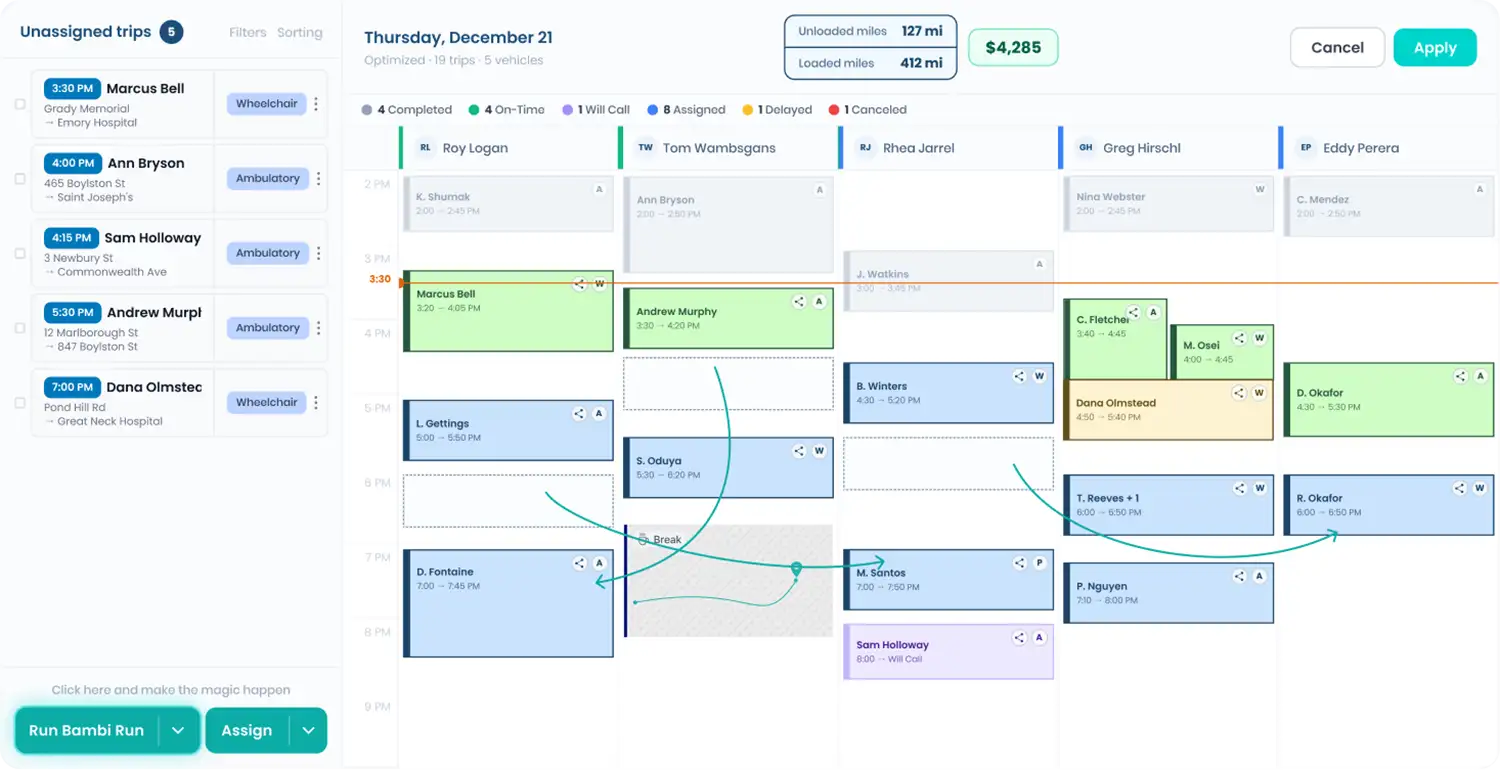
Bambi's AI Platform:
- Real-time fleet tracking for better visibility
- Automated dispatch for faster response times
- Smarter resource allocation to improve efficiency
These platforms have already shown measurable results for NEMT providers when implemented correctly.
Run the numbers: the free NEMT operational cost estimator puts a yearly dollar figure on empty miles, no-shows, drivers waiting and retyping broker trips.
Summary and What's Next for AI in NEMT
Main Points to Remember
AI and machine learning have transformed how Non-Emergency Medical Transportation (NEMT) handles routing and scheduling. By relying on data-driven strategies, these technologies have delivered measurable improvements in efficiency and cost savings. Companies using AI-powered tools have experienced benefits like better vehicle use and higher patient satisfaction.
| Achievement | Industry Average Impact |
|---|---|
| Reduction in Operational Costs | 15-25% |
| Increase in Vehicle Utilization | 30-40% |
| Improved On-Time Performance | 35-45% |
What's Ahead for AI in NEMT
Several key developments are shaping the future of AI in NEMT:
- Autonomous Vehicles: Self-driving cars are currently being tested and could soon offer affordable, dependable transportation for patients. These vehicles are especially useful for individuals with mobility challenges, featuring accessibility options that ensure reliable service.
- Better Predictive Analytics: Future AI tools will offer even more precise forecasting and optimization, allowing providers to anticipate service demands with greater accuracy.
- Smarter Resource Allocation: Advanced algorithms will dynamically assign vehicles based on historical data and real-time updates. For instance, AI can shift vehicles to high-demand areas during peak times, cutting wait times and improving overall service.
As AI technology continues to advance, NEMT providers can implement these tools step by step, starting small and scaling up over time. This gradual approach ensures steady growth while maintaining quality service.