One button beats the whiteboard. Live tracking beats the radio. Bambi beats the day before it beats you.
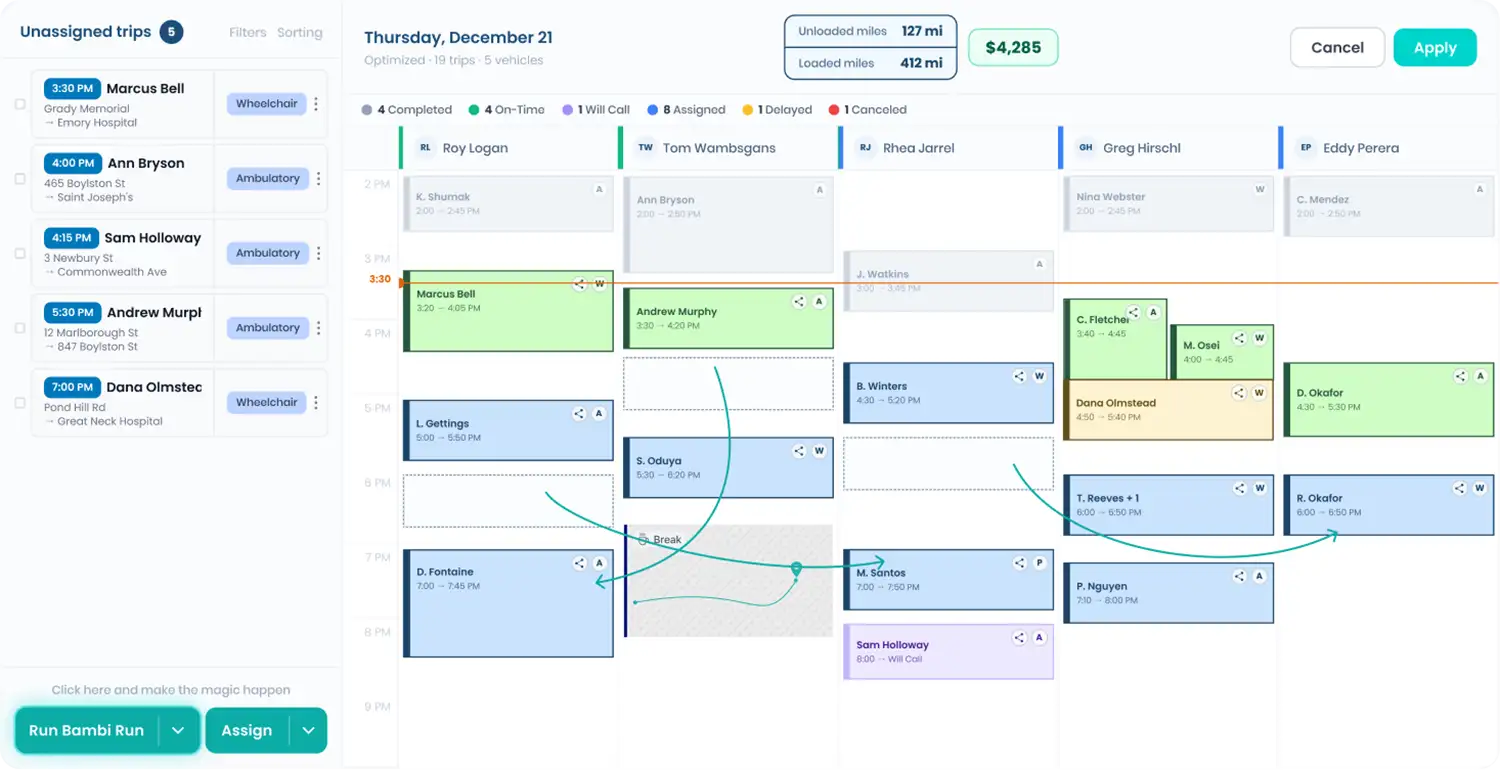
Stop dragging and dropping trips by hand. One press and the AI analyzes, groups, and assigns your entire daily manifest for maximum efficiency.
Live GPS in Fleet HQ and silent messaging to The Co-Pilot. You always know where the fleet is. Drivers always know their next stop.
Traffic happens. Appointments run long. Drag, drop, and recalculate in seconds. Handle the exceptions without breaking a sweat.
Recurring dialysis and PACE runs populate the schedule automatically with Trip Subscriptions. One less stack on the Monday pile.

Hit Run Bambi Run and watch a messy queue of unassigned trips resolve into a clean, optimized schedule. The AI works through trip volumes, vehicle configurations, driver assignments, multi-load opportunities, travel times, live traffic, and millions of route permutations. You approve. It applies.
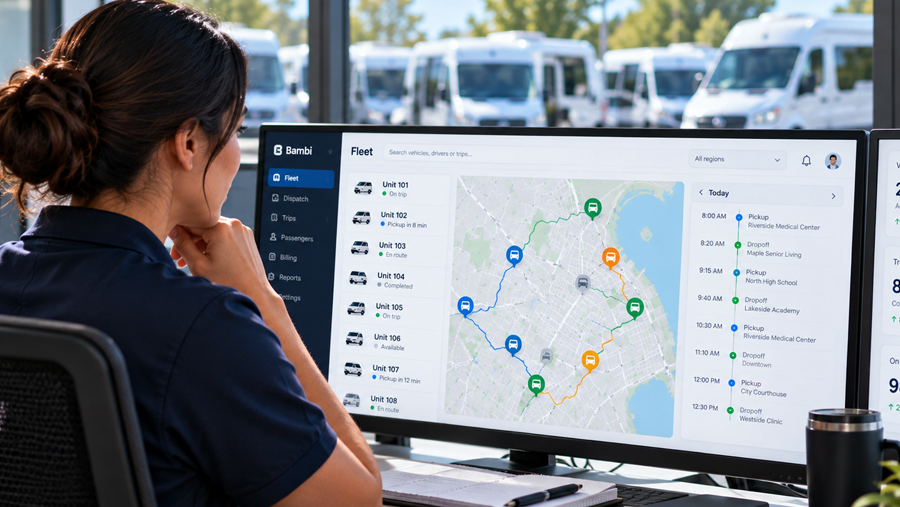
Fleet HQ gives you a live map, real-time ETAs, and driver status in a single view. Stop calling drivers to find out where they are.
Drag a trip, drop it on another driver, and the route recalculates instantly. Multi-load suggestions surface as you go. The exceptions stop being emergencies.
I fell in love with Bambi because I used MediRoutes at my last company... and when I got into Bambi I was like "OMG this is way more user friendly!” Bambi is great.


Shorter at the start and calmer in the middle.
The morning build is one press. Run Bambi Run works through trip volumes, vehicle configurations, driver assignments, multi-load opportunities, travel times, and live traffic, then hands you an optimized board to approve rather than a blank grid to fill.
The middle of the day is where most dispatchers actually lose time, because the day goes sideways. An appointment runs long, a driver does not answer, a trip cancels twenty minutes out. In Fleet HQ you have live GPS and real-time ETAs on one screen, so you already know where everyone is. Drag a trip onto another driver and the route recalculates in seconds, with multi-load suggestions surfacing as you go.
The goal is not that nothing goes wrong. It is that exceptions stop being emergencies.
The one-click scheduling and routing engine, and the feature most customers describe first.
Instead of dragging trips onto drivers one at a time, you press it once. It analyzes, groups, and assigns your entire daily manifest, optimizes the route order, and hands you a board to approve.
What it replaces is not really a piece of software. It is the whiteboard, the sticky notes, and the two hours before everyone else's day starts.
It is also usable mid-day, not just for the morning build. When five trips cancel at once, you can rerun it against what is left.
Fleet HQ is the live operational view. One screen with GPS positions, real-time ETAs, driver status, and performance dashboards. It is what replaces calling a driver to ask where they are, and it is what lets an owner confirm the fleet is running right without being chained to the radio.
Get Paid is the revenue side. It automates trip verification, generates broker-compliant invoices, and tracks every claim from submission through payment.
The reason those are two named products rather than one billing tab is that they solve different failure modes. Fleet HQ is about the trips you are running right now. Get Paid is about the trips you already ran and have not been paid for. In NEMT the second pile is usually bigger than owners expect.
Trip Subscriptions handle the recurring side. Dialysis three times a week, a standing PACE run, the same student route every school day. You set the pattern once and the trips populate the schedule automatically instead of being rebooked by hand every week.
For a lot of providers this is the majority of their volume, which means it is the majority of the rebooking labor too.
Passenger multi-loading groups passengers heading the same direction into a shared route. That is where revenue per vehicle actually improves, because you are moving more people without adding a van or a driver. Run Bambi Run surfaces multi-load opportunities automatically rather than leaving you to spot them.
The dispatcher side is easy because the core action is one button. The part that takes real attention is drivers, and that is true of any platform.
Driver adoption is where NEMT software rollouts fail. Not because drivers resist technology, but because a bad app costs them time on a route where they are already behind. If the app is awkward they stop using it, they call dispatch instead, and within a month you are paying for a system that describes a workflow nobody follows.
The Driver App is built to survive that test: turn-by-turn navigation, trip details, and signature capture, in something usable one-handed.
The practical advice is to get your drivers on it during the overlap period rather than on cutover day.