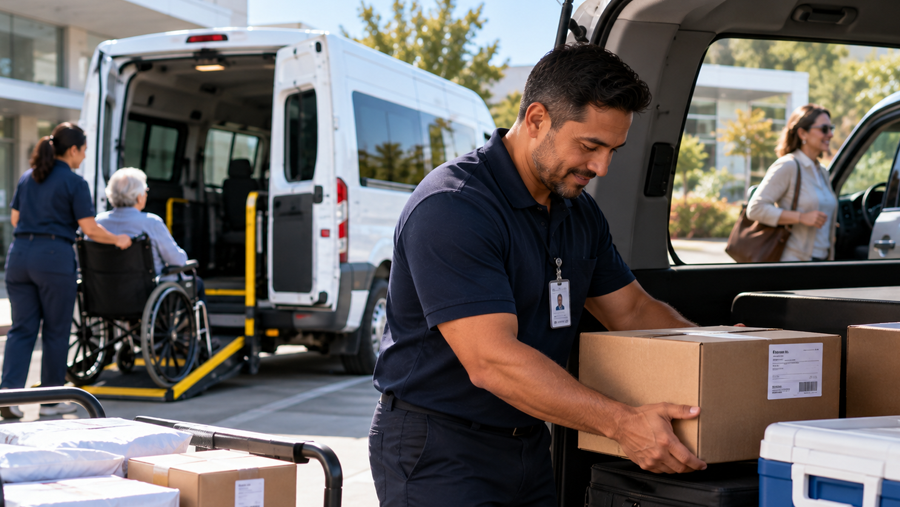
Plenty of NEMT providers do not stop at medical trips. Student transportation, special-needs school routes, even medical deliveries and courier work. Bambi handles those routes with the same scheduling, the same driver app, and the same flat $69 per vehicle. One platform for every kind of trip you run.

Recurring routes, special-needs ready, one driver app, multi-load efficiency. The platform you already pay for, doing more.
Same students, same stops, same bell schedule. Trip Subscriptions populate the route automatically, every school day, with no rebooking.
Passenger details, accessibility needs, and consistent driver assignments travel with every route, the same way they do for your medical trips.
The Co-Pilot handles a school run the same way it handles a dialysis trip. No new tool for your team to learn.
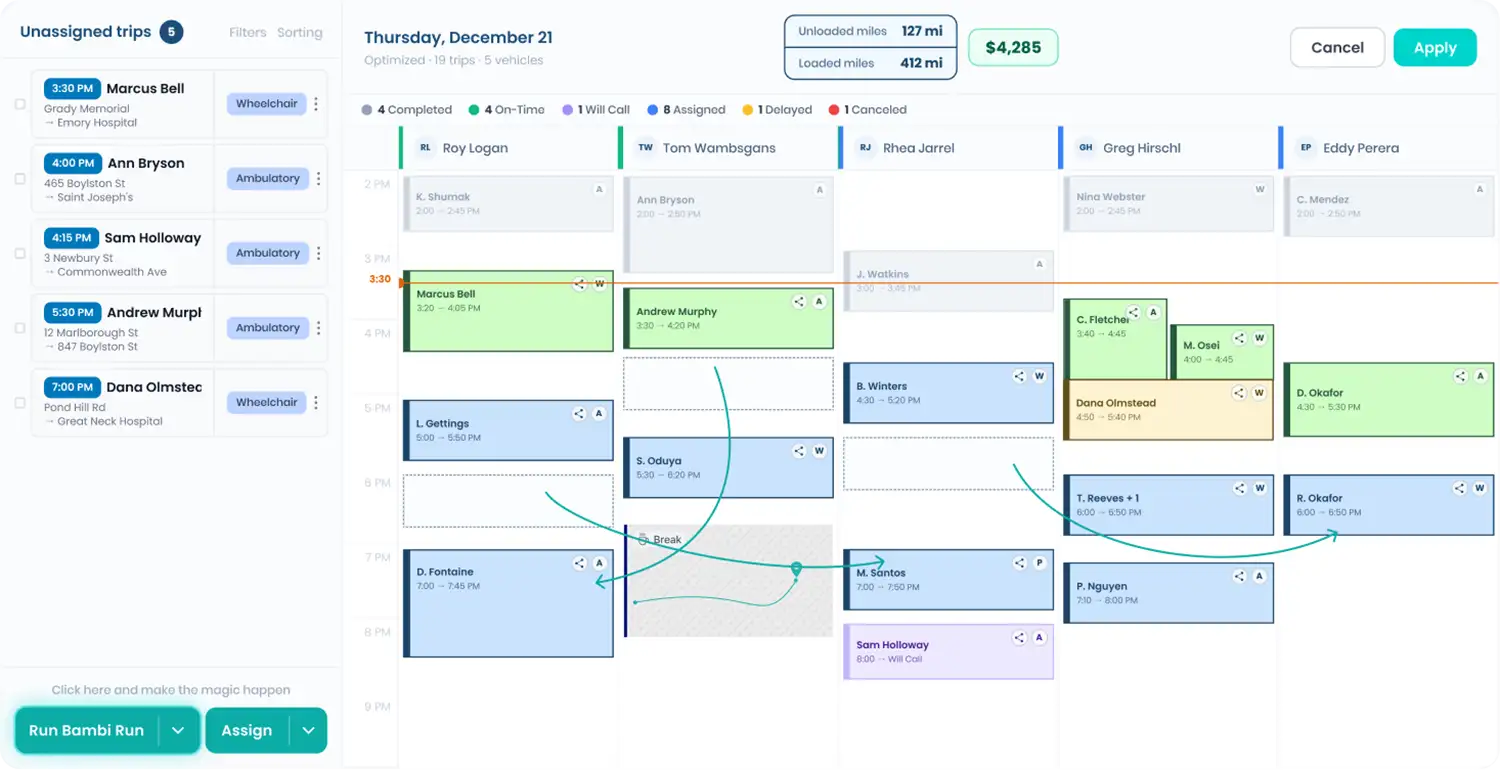
Group students headed the same direction into efficient shared routes. More trips per vehicle and better revenue per mile.

Run the whole operation, NEMT and student routes, from one board. No second login, no second invoice, no separate system to reconcile. Run Bambi Run optimizes all of it together.
Medical deliveries. Courier runs. Private-pay trips. If it is a vehicle with a route, Bambi can schedule and optimize it. The capacity you already paid for stops sitting idle between medical trips.
Student routes repeat every school day. Build them as recurring trips, let Run Bambi Run fit them around your medical work, and only touch the schedule when the school calendar changes.
Four, and they need different things from the same platform.
Owners and operators need margin protection, clean compliance, and pricing that does not punish growth. Dispatchers and admins need the daily board to stop being a game of Tetris. Drivers and attendants need an app that works one-handed in a driveway. Facility partners need to request a trip without adding a phone call to someone's day.
The honest version is that in most NEMT businesses these are not four people. They are one or two people wearing four hats. Bambi is built for that, which is why the dispatcher tools do not assume a dedicated dispatcher and the owner dashboards do not assume someone whose only job is reading dashboards.
Trip Subscriptions handle the recurring side. Dialysis three times a week, a standing PACE run, the same student route every school day. You set the pattern once and the trips populate the schedule automatically instead of being rebooked by hand every week.
For a lot of providers this is the majority of their volume, which means it is the majority of the rebooking labor too.
Passenger multi-loading groups passengers heading the same direction into a shared route. That is where revenue per vehicle actually improves, because you are moving more people without adding a van or a driver. Run Bambi Run surfaces multi-load opportunities automatically rather than leaving you to spot them.
The one-click scheduling and routing engine, and the feature most customers describe first.
Instead of dragging trips onto drivers one at a time, you press it once. It analyzes, groups, and assigns your entire daily manifest, optimizes the route order, and hands you a board to approve.
What it replaces is not really a piece of software. It is the whiteboard, the sticky notes, and the two hours before everyone else's day starts.
It is also usable mid-day, not just for the morning build. When five trips cancel at once, you can rerun it against what is left.
The dispatcher side is easy because the core action is one button. The part that takes real attention is drivers, and that is true of any platform.
Driver adoption is where NEMT software rollouts fail. Not because drivers resist technology, but because a bad app costs them time on a route where they are already behind. If the app is awkward they stop using it, they call dispatch instead, and within a month you are paying for a system that describes a workflow nobody follows.
The Driver App is built to survive that test: turn-by-turn navigation, trip details, and signature capture, in something usable one-handed.
The practical advice is to get your drivers on it during the overlap period rather than on cutover day.
Compare the full annual cost rather than the monthly number, because the monthly number is where this category hides things.
Add up your current platform fee, any per-user or per-driver charges, the driver app if it is billed separately, support tier, broker integration fees, and the amortized onboarding cost. Then divide by vehicles.
The number people are usually surprised by is not the base rate. It is that the features they use most were priced as add-ons.
If your current cost per vehicle per month lands under $69 with everything included, we would genuinely like to know. That is a fair conversation to have.