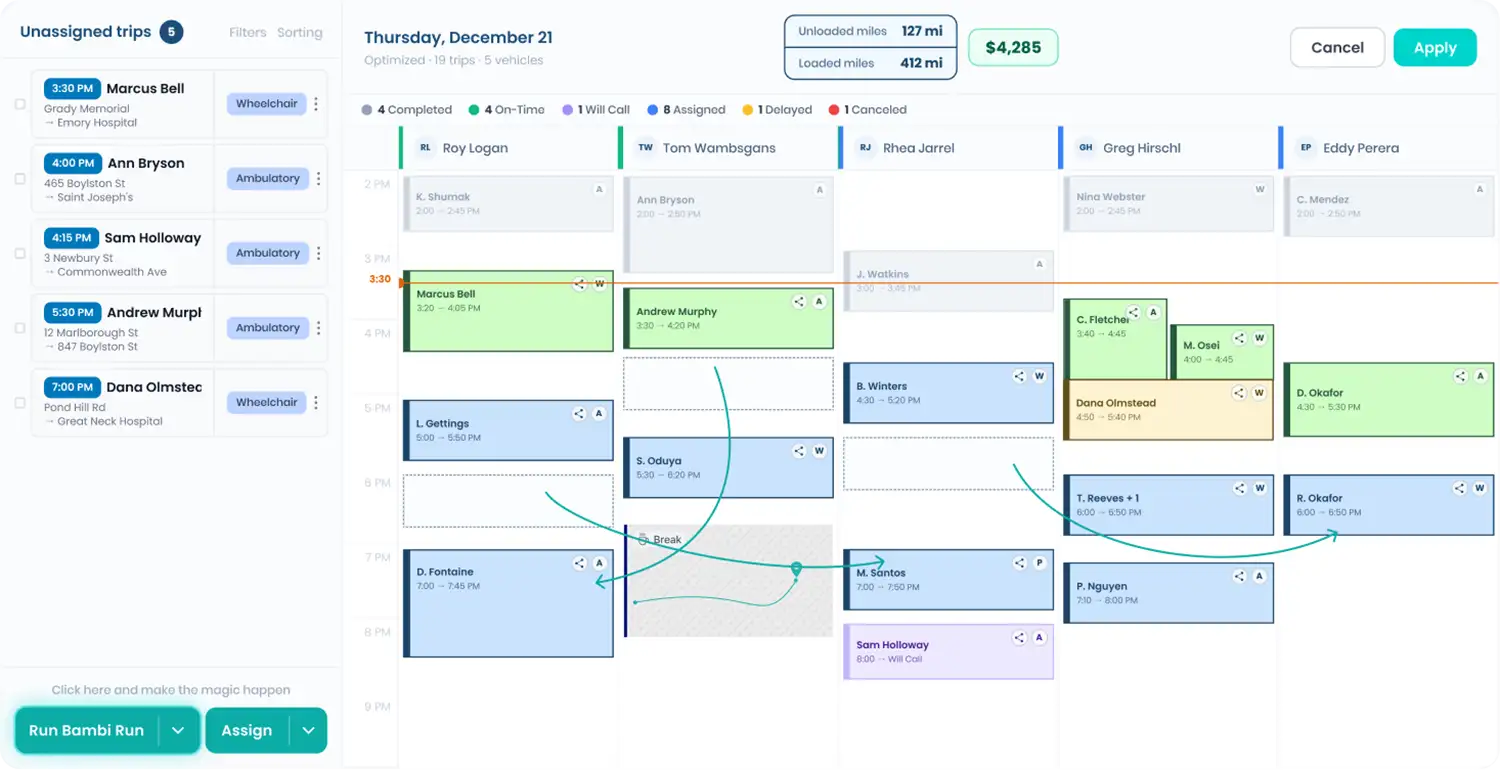

Managing disruptions in Non-Emergency Medical Transportation (NEMT) can feel overwhelming. Issues like no-shows, cancellations, vehicle breakdowns, and delays drain revenue, waste resources, and disrupt patient care. But modern software solutions can simplify these challenges.
Here’s how NEMT providers can use technology to improve operations:
- AI Scheduling: Automatically adjusts schedules for cancellations or delays, reducing no-show rates by up to 40%.
- Real-Time GPS Tracking: Helps reroute vehicles instantly during traffic or breakdowns.
- Automated Communication: Sends reminders via SMS or calls, addressing 40% of missed appointments caused by poor communication.
- Centralized Dashboards: Streamlines dispatcher-driver communication for faster, error-free updates.
Common Operational Challenges in NEMT
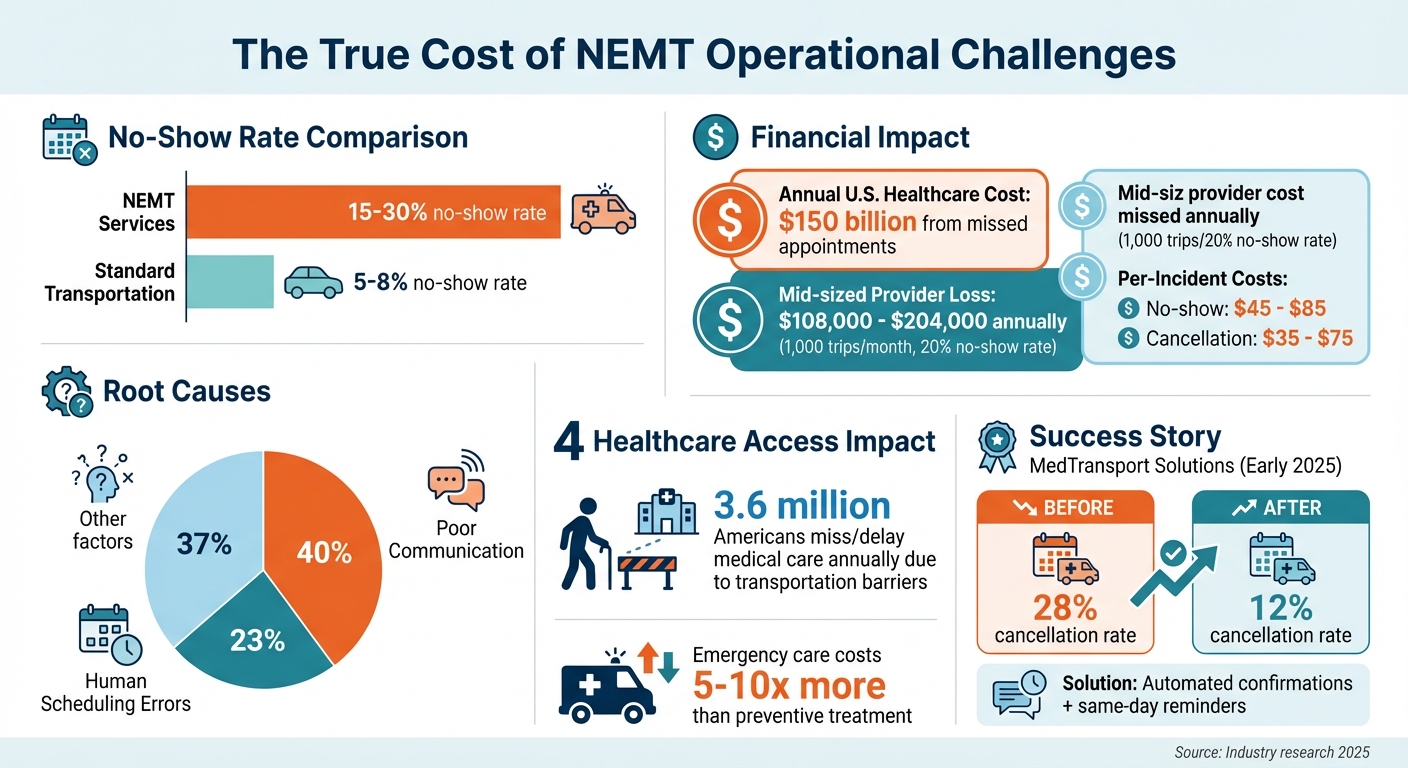
Before diving into how advanced software can streamline exception handling, it's crucial to understand the unique challenges faced by Non-Emergency Medical Transportation (NEMT) providers. These challenges often go beyond those of general transportation, with no-show rates ranging from 15% to 30%, compared to 5% to 8% in standard transportation services. These aren't just minor scheduling issues - they're systemic problems that drain revenue, waste resources, and jeopardize patient health.
Missed medical appointments cost the U.S. healthcare system a staggering $150 billion annually. To put this into perspective, a mid-sized NEMT provider managing 1,000 trips each month and facing a 20% no-show rate could lose between $108,000 and $204,000 annually. Each disruption - whether it's a cancellation, a vehicle breakdown, or a scheduling mistake - creates a ripple effect that impacts the entire operation.
Beyond the financial toll, these issues damage relationships with healthcare partners and erode trust with patients. Missed rides often mean missed treatments, such as dialysis or chemotherapy, which can lead to emergency care costing 5 to 10 times more than the preventive treatment itself. Alarmingly, about 3.6 million Americans miss or delay medical care each year due to transportation barriers. These challenges set the stage for a closer look at specific operational hurdles like cancellations, breakdowns, and real-time schedule adjustments.
Last-Minute Cancellations and No-Shows
No-shows and last-minute cancellations hit NEMT providers where it hurts - financially and operationally. A single no-show can cost between $45 and $85, while cancellations range from $35 to $75 per incident. These costs stem from wasted driver wages, fuel, and vehicle maintenance, all without generating revenue.
The reasons behind these disruptions vary. Human scheduling errors account for up to 23% of no-shows, while poor communication is responsible for about 40%. Patients might forget their appointments, provide incorrect addresses, or fail to notify providers of facility delays. For instance, MedTransport Solutions faced a 28% cancellation rate in early 2025, but after introducing automated confirmations and same-day reminders, they reduced that rate to 12%.
These inefficiencies also strain the workforce. Drivers waste time waiting for patients who never arrive, while dispatchers scramble to fill last-minute gaps. This chaotic environment often leads to high turnover rates in an industry already grappling with labor shortages.
Vehicle Breakdowns and Delays
Mechanical issues are another major pain point, disrupting not just one trip but often the entire day’s schedule. A mid-route breakdown leaves drivers stranded, patients missing critical appointments, and dispatchers scrambling to find replacement vehicles - all while managing frustrated healthcare facilities.
The financial impact goes beyond repair costs. Providers lose revenue from missed trips and pay for idle driver time, stretching already tight budgets. Sarah J., Operations Manager at MetroCarre Medical Transport, described the situation before adopting advanced software:
"Before NEMT Platform, our dispatchers were overwhelmed. We were constantly battling daily delays, managing frustrated drivers, and struggling immensely with efficient non-emergency transportation scheduling".
Repeated mechanical failures also harm the trust healthcare partners place in NEMT providers. Reliable transportation is critical for ensuring patients arrive on time for treatments, and frequent breakdowns can lead to lost contracts and a tarnished reputation. These challenges highlight the need for digital tools that enable real-time adjustments and proactive management.
Real-Time Schedule Changes
Dynamic external factors - like traffic accidents, road closures, facility delays, or insurance authorization issues - demand quick and accurate responses. Unfortunately, manual vs. automated NEMT scheduling often highlights how manual processes fall short. Dispatchers relying on phone calls, text messages, or handwritten notes are prone to errors and miscommunications.
The inefficiencies add up quickly. Real-time disruptions result in "deadhead" miles (trips without passengers) and idle vehicle time, which waste fuel and driver wages without generating revenue. Bob Martin from NEMT Cloud Dispatch explains the stakes:
"An error in a schedule doesn't just annoy a customer; it can bring about regulatory fines or lost business".
Manual processes also create compliance risks. Without digital logs or GPS tracking, providers struggle to verify service delivery, leading to denied reimbursements and potential audit failures. The constant need for manual adjustments can also burn out dispatchers, who must work overtime to manage emergencies that could have been avoided with better technology. These operational hurdles underscore the importance of software solutions that automate and streamline real-time scheduling challenges.
How Software Improves Exception Management
Managing exceptions manually often feels like controlled chaos - dispatchers scrambling to handle phone calls and scribbled notes while trying to keep everything on track. Modern NEMT software changes the game. Instead of just digitizing old processes, it uses AI, real-time GPS tracking, and centralized communication platforms to handle cancellations, breakdowns, and schedule changes in a matter of seconds. This approach doesn’t just simplify - it fundamentally reshapes how providers manage disruptions, making operations smoother and more efficient.
AI-Powered Scheduling for Automated Adjustments
Picture this: a patient cancels a trip via an AI voice agent or text message. Instead of creating a scheduling headache, advanced scheduling optimization tools instantly update the system, freeing up the driver for another assignment. This kind of instant adjustment can boost same-day trip capacity by up to 15%. AI algorithms step in to quickly resolve scheduling conflicts, suggesting backup drivers or alternate time slots without any manual effort.
Beyond that, predictive risk scoring takes things further. By analyzing factors like rider history, time of day, weather, and facility type, the system flags trips likely to result in no-shows. Dispatchers can then take proactive steps, like making extra confirmation calls or scheduling backup trips. Automated reminders - sent via SMS, voice calls, or app notifications at intervals like 24 hours, 1 hour, and 15 minutes before pickup - help tackle the communication gaps responsible for about 40% of missed appointments.
Here’s a real-world example: In June 2025, a Regional Healthcare Network serving over 150,000 patients adopted smart scheduling with EHR integration and automated reminders. Within six months, their no-show rate dropped from 28% to 12%, leading to 2,400 more completed trips annually and an 18% cut in fuel costs. For mid-sized providers, a 40% reduction in no-shows could mean recovering over $100,000 in yearly revenue.
Dynamic Rerouting and Dispatch Tools
AI-powered scheduling is great for planning ahead, but what about when something unexpected happens? That’s where dynamic rerouting tools come in. Whether it’s a vehicle breakdown or a traffic jam, these tools integrate real-time GPS and live traffic data to detect problems like accidents or road closures. They then provide drivers with alternative routes instantly. The system can also reassign the nearest available driver and adjust the fleet’s schedule on the fly, cutting down response times and minimizing wasted miles. Patients and facilities are automatically updated with revised ETAs, keeping everyone in the loop.
Take, for instance, a rural NEMT provider with a 12-vehicle fleet. By adopting AI-powered route optimization and automated communication tools, they reduced missed appointments by 31% and improved on-time performance from 73% to 91% in just three months. With centralized dashboards, dispatchers can monitor all vehicle statuses in real time, stepping in manually only when necessary.
Better Communication Between Drivers and Dispatchers
Effective communication is critical, and modern software makes it seamless by consolidating everything into a central hub. This hub acts as the go-to source for dispatchers and drivers alike. Dispatchers can send trip assignments - including rider details, pickup times, and special instructions - directly to drivers’ mobile apps in an instant.
When schedules shift due to traffic or last-minute cancellations, updated directions are sent to drivers immediately, eliminating the need for endless phone calls. HIPAA-compliant messaging channels ensure secure, auditable coordination. Drivers can log arrival times, waiting periods, and rider readiness in real time, with all updates reflected on the dispatcher’s dashboard.
AI voice agents, like "Olivia", are also stepping in to handle routine communication tasks. These agents manage about 60% of calls, including driver check-ins, pickup confirmations, and trip status updates - all without human involvement. This automation eases the mental load on drivers, allowing them to focus on safe driving. Plus, automated reminders help ensure patients are ready for pickup, reducing driver idle time and keeping everything running efficiently while maintaining a thorough communication log for audits.
How to Implement Exception Handling Software
Evaluate Your Operational Needs
Start by pinpointing where your processes are falling short. For example, how much time does your team spend handling trip intake manually through calls, emails, or texts? If scheduling trips takes hours, that's a clear signal something needs to change. Look at how cancellations and breakdowns are managed. Are dispatchers relying on handwritten notes or making multiple manual calls to resolve issues?
Make a list of your specific challenges. Do you need to match passengers with vehicles that have specific equipment or drivers with certain certifications? If this feels like a daily struggle, an automated matching system could be a game-changer. Also, check if you’re using major broker systems - automated bulk uploads can save a lot of time on data entry. Don’t forget to assess communication gaps. Can riders, dispatchers, and drivers connect immediately when something goes wrong?
Once you’ve mapped out your needs, you can start looking for software that meets your operational requirements.
Choose the Right Software
Look for software that supports real-time integrations and bulk-data uploads. It should handle last-minute changes like re-assignments, no-shows, or unexpected trip requests without requiring manual fixes. Cloud-based platforms are ideal since they synchronize operations in real time, and HIPAA-compliant messaging ensures secure communication.
Take Bambi, for instance. It offers these features for $69 per active vehicle per month with no hidden fees or contracts. Its AI-driven "Run Bambi Run" tool eliminates hours of manual scheduling and comes with 24/7 dedicated support to ease the transition. With a 5.0/5 rating across review platforms and recognition like the NEMTAC Innovation in NEMT Award 2025, it’s a strong contender.
After choosing the right platform, focus on training your team and keeping a close eye on results to ensure the software delivers on its promise.
Train Staff and Track Results
Opt for software with an easy-to-use interface so your team can get up to speed quickly. Adham Harb, Operations Manager at CareTrips, shared his experience:
"The simple interface allowed me to resolve questions independently, boosting our efficiency".
Training shouldn’t be a one-and-done activity. Schedule weekly review meetings to go over exception reports and billing denials. This helps you identify recurring issues and areas where additional training might be needed.
Use the software’s audit logs to trace who made changes and when, which can pinpoint where errors are happening. Regularly monitoring metrics like trip counts, administrative labor costs, and the time spent on manual versus automated scheduling will help you measure your return on investment. As Jeffrey Hoff from Reliant Transport put it:
"Changing to Bambi it's the most impactful thing I did for my NEMT Business. Bambi's saving my staff hours of daily work and our team has much more time to focus on improvements".
Conclusion
Handling exceptions doesn’t have to feel like an uphill battle for your NEMT operation. With the right software, unexpected disruptions can transform into manageable, automated solutions. Imagine a system that automatically reassigns trips during vehicle breakdowns, reduces no-show rates by 35% to 50% through multi-channel reminders, and offers real-time GPS tracking for accurate ETAs - all working together to keep operations running smoothly. These tools don’t just improve reliability; they create a framework for smoother, more efficient workflows.
Switching from manual spreadsheets to AI-powered platforms isn’t merely about adopting new technology - it’s about empowering your team to focus on tasks that truly matter. As one industry expert explains:
"AI handles the data-intensive, repetitive tasks, freeing up human staff to focus on what they do best: providing empathetic customer service, building relationships, and making nuanced judgments."
Smart scheduling brings measurable returns by significantly cutting no-show rates and reducing costs, offering real savings for operations. Many systems pay for themselves within 12 to 18 months, turning this investment into a practical decision rather than an optional upgrade.
To maximize these benefits, take a closer look at your current processes, choose software that provides real-time integration, and ensure your team is well-trained. Success in this industry isn’t about avoiding disruptions - it’s about having the tools and strategies to handle them effortlessly. Start building a more resilient operation today.
FAQs
What software features matter most for handling no-shows and cancellations?
Managing no-shows and last-minute cancellations can be challenging, but certain software features make it much easier. Here are three key tools that stand out:
- Automated reminders: Sending reminders 24 hours and 1 hour before pickup significantly reduces no-shows. These timely notifications keep the appointment fresh in the patient's mind and allow them to confirm or update their plans.
- Real-time communication tools: These tools make it simple for patients to cancel or reschedule on the spot. By providing instant access to updates, they help avoid confusion and keep schedules running smoothly.
- AI-powered scheduling: With AI, driver allocation and rerouting become more efficient. This allows for quick adjustments to minimize disruptions caused by last-minute changes.
Together, these features not only streamline operations but also improve reliability and overall service quality.
How do I calculate ROI from exception-handling software for my fleet?
To figure out ROI, weigh the financial gains from cutting down on no-shows, cancellations, and scheduling hiccups against the expenses of the software. Consider savings from better routing and improved fleet usage, then subtract all costs, like licensing and training. The formula is: ROI = (Net Benefits ÷ Total Costs) × 100%. For instance, if you save $50,000 a year and spend $10,000, your ROI would be 400%.
What integrations should NEMT software support to reduce billing denials?
NEMT software needs to work seamlessly with electronic billing systems, automated coding tools, and electronic claim submission platforms. These integrations simplify the billing process, minimize errors, and support accurate, timely submissions - helping to reduce the chances of claim denials.