
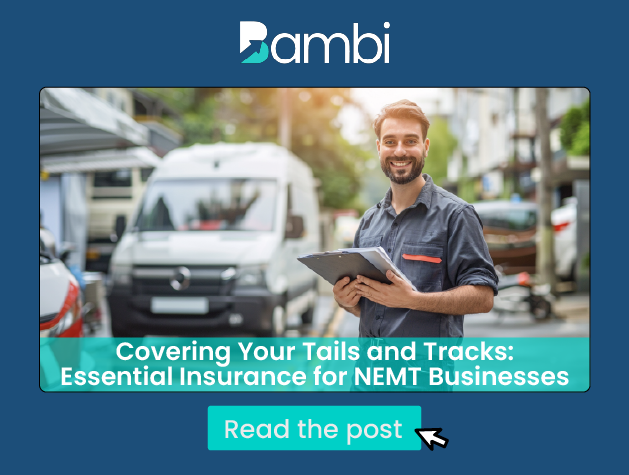
Amidst the tranquility of the forest, even Bambi knows the importance of being prepared and covered, ensuring calmness and coverage in every aspect of his journey. Just like Bambi, NEMT businesses journey through the intricate paths of healthcare transportation, ensuring that patients reach their destinations safely and soundly.
Yet, amid this noble pursuit, it's crucial for NEMT businesses to secure the right insurance coverages, safeguarding themselves, their employees and their passengers from potential risks and liabilities lurking (in the forest shadows) along the way.
Let's delve into the essential kinds of insurance coverages that NEMT businesses should consider, so that their tracks are covered, and their tails remain bushy and busy on more important matters — like taking care of their cool and calm riders!
By securing these types of insurance coverage, NEMT businesses can be sure they mitigate risks, protect their assets and can operate with confidence knowing they are adequately covered in case of accidents or legal claims. With these essential insurance coverages in place, your NEMT business can journey through the forest of healthcare transportation with confidence, just like Bambi nimbly navigates the woods with such grace. Because in being adequately covered, not only are you mitigating risks, you’re safeguarding your assets, and maintaining peace of mind when unexpected challenges and accidents occur.
What are you waiting for? Get on those insurances so you can rest assured that each of your NEMT rides is met with the assurance of comprehensive insurance coverage. And in the background, we’ve got your tails on the tech front! Just reach out — we’ve got you covered there.

In the Disney classic, Bambi, we all know and love, the young deer navigates the forest, learning about life, friendship and the importance of the natural world. In a very similar vein, our NEMT software brand with the same name, embodies the spirit of that dear Disney deer, offering a helping hoof to NEMT providers.
Because, it’s our mission is to bring carefully-designed tech to the caretaking industry, sustainably — through an AI-optimized system that ensures the well-being and safety of those it serves. And so we’re dedicated to making the world a better place — not just for Bambi and his woodland friends, but for patients, drivers and business owners alike.
Speaking of which, Julian Ssemalulu, owner of Bellshan Homecare, enthusiastically describes his experience with our NEMT aiNEMT software on our recent podcast, stating: “It’s made my life much easier…saving [me] a day’s worth of work. I could go and do my things and the system just does the work."
It’s no wonder he feels this way; our software is designed to streamline operations, saving providers time and resources so they can focus on what matters most — providing excellent care to their patient riders.
Through our innovative, sustainable and efficient technology, we aim to transform the NEMT industry, promoting a greener and more caring planet. Here are the specific ways we’re making the planet greener and saving money and time for our NEMT business owners:
Embracing affordability and efficiency
Running a NEMT business involves juggling many-a-task, from managing schedules and routes to ensuring timely patient care. Our software is designed with the needs of NEMT providers like Ssemalulu in mind, offering an affordable and efficient solution that saves time and resources. By streamlining operations, our platform allows business owners to focus on other critical aspects of their work, enhancing overall productivity and their customer service.
Run Bambi Run: optimizing routes and reducing redundancies
A dear key feature of our software, Run Bambi Run, is dedicated to optimizing routes and reducing redundancies. Just as Bambi learns to navigate the forest with agility and precision, our software ensures that NEMT providers can schedule rides that utilize the most efficient routes. This not only reduces travel time and fuel consumption but also minimizes the environmental impact of their fleet. By leveraging advanced algorithms and real-time data, Run Bambi Run enhances route planning, ensuring that every trip is as sustainable as possible.
A commitment to sustainability
At the heart of our mission is a commitment to sustainability. As a caretech and greentech (yeah, we’ll give ourselves this one, too!) company, we understand the importance of protecting our planet for future generations. By optimizing NEMT operations through our carefully crafted technology, we help reduce carbon emissions and promote eco-friendly practices. Our software empowers providers to make greener choices (like investing in electric NEMT vehicles for one!), contributing to a healthier environment for everyone — patients, drivers and our communities at large.
Caring for our planet and all its inhabitants
All in all, our commitment to sustainability practices goes beyond efficient route planning. We believe every action contributes to making the planet safer and more sustainable. Our software supports a wide range of green initiatives, from reducing paper usage through digital scheduling to promoting the use of eco-friendly vehicles (as we did so above). By fostering a culture of sustainability within the NEMT industry, we aim to create a ripple effect that benefits all living creatures, from those cute Bambi cousins frolicking in our forests to the patients relying on NEMT services.
So what do you say? Let's prance like Bambi — swiftly, nimbly and full of heart for our one world. Whether you're an NEMT business owner or considering it, if you're not already using our NEMT software, embrace it (or ask for a demo first) and join us in making a positive impact on your business and our planet.
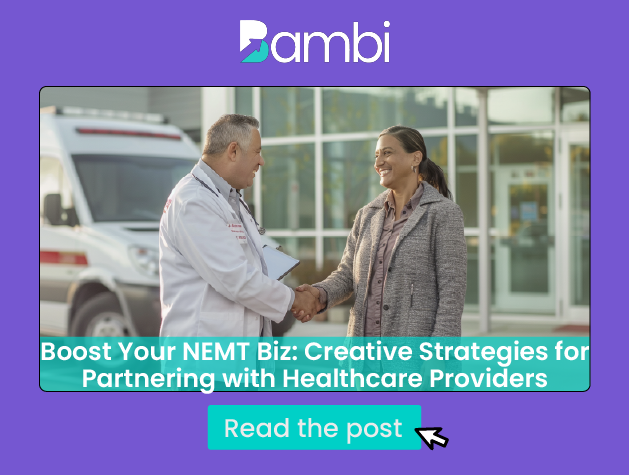
Non-emergency medical transportation (NEMT) is crucial for those who face mobility challenges or lack reliable transportation. Collaborating with healthcare facilities like adult day care centers, dialysis facilities and rehabs, isn’t just about improving patient care — it’s about boosting your bottom line, too! At Bambi, we're all about supporting NEMT business owners to land new biz creatively. Ever wonder why we write all these educational articles? It’s partly for the love of the industry, but here’s a little secret: it’s also our tactic to land new business opportunities of our own. ;)
Ready to hustle and find new ways to support your riders? Here’s how to think outside the Bambi box to strengthen healthcare facility and provider partnerships to expand your business:
Understand healthcare providers' needs: Healthcare providers prioritize patient care and need reliable partners who can ensure patients arrive for appointments on time. Highlight how your NEMT service can help them achieve better patient attendance and compliance with treatment plans.
Provide value beyond the transport: Don’t just be a ride — be an experience! Offer services like door-to-door assistance, wheelchair accessibility, and trained personnel who can provide basic medical help during the trip. Think like Bambi: he wouldn’t just guide you safely through the forest; he'd offer a helping hoof, empathy, and great conversation along the way.
Integrate technology: Embrace tech like GPS tracking and real-time updates to give healthcare providers visibility and peace of mind about patient transportation. This not only optimizes routes for efficiency but also reduces the carbon footprint — saving patients time, reducing stress, and keeping our planet greener. Think of it as navigating the forest with a high-tech compass, ensuring everyone gets to their destination smoothly and sustainably.
Comply with care: Ensure that your NEMT service meets all rules, regulatory standards and certifications required by healthcare facilities. This will build trust and confidence among healthcare providers.
Educate and train: Be like Bambi and teach your forest friends how to navigate the NEMT woods better — everyone wins! Do so by hosting educational workshops and training sessions for healthcare providers and facility business owners on the benefits of NEMT services. Show them how to use NEMT effectively and highlight how it can boost patient attendance and health outcomes, benefiting the entire healthcare system.
Share that data: Show off your success! Share relevant data and reports with healthcare providers and facility owners to highlight the positive impact of your services on patient care and their health outcomes. This can include attendance rates, patient feedback and transportation metrics. Don’t forget to showcase how your efficient routes are lowering the carbon footprint, thanks to your smart use of technology (like ours!) where everyone benefits, including the planet!
Collaborative marketing: Partner with healthcare facilities on strategic marketing campaigns. This could include joint social media promotions, guest written blog posts or cross-pollinating content on your newsletters that highlight the benefits of using your NEMT service.
Offer customized solutions: Tailor your NEMT plans to meet the unique needs of different healthcare providers, just like different deer in the forest have their own paths and preferences — so do these business partnerships. Provide specialized vehicles for various medical conditions, ensuring everyone gets the kind of care they need.
Always be thinking about partnerships (and cultivating relationships): Get creative with how you bring and add value. Imagine teaming up with telemedicine providers to offer transportation for virtual visits or even partnering with pharmacies to deliver medications — these are great ways to meet the patient riders for those B2C direct patient calls.
By focusing on these strategies, you can build strong partnerships with healthcare providers that not only improve patient care but also drive growth for your NEMT business. Remember, be like Bambi in the forest: be proactive, understand the needs of your friends and consistently deliver exceptional service. And with Bambi's spirit of care and creativity, you'll be sure to navigate the world of NEMT nimbly and successfully!
Following the release of our article, NEMT Brokers — The Real Bambis of the Industry, the non-emergency medical transportation sector experienced an uptick in new competitors entering the Bambi forest. While we jest, acknowledging our playful core values, the growth in this industry is no laughing matter. With the rise in chronic health issues and the aging population, the demand for NEMT services is steadily increasing.
Entering an industry with job security and a focus on ensuring the safety of others is not only reasonable but also provides a pathway to long-term business success. Here's a simple guide on how to become a Broker or Bambi, as we affectionately call it in the forest of NEMT.
While we previously covered how to become an NEMTpreneur, providing valuable insights for newcomers to the industry, this article focuses on navigating the intricacies of the business once you're established. We'll assume you have the foundational knowledge of setting up a business but may require guidance on connecting the dots and serving as the intermediary between hospitals, transportation companies, technology providers and more.
Again, assuming you have your business plan and even a name for your Bambi-heart driven biz, first things first. And that you’ll need to obtain the necessary licenses and certifications. Every jurisdiction is different so be sure to research and obtain the required licenses and permits to operate as an NEMT broker in your local area. And depending on where you’ll operate, ensure compliance with local, state and federal regulations governing the provision of your transportation services.This foundational step sets the stage for a solid and legally sound business framework.
With your necessary operating licenses secured, the next step is assembling your caregiving team — carefully. These individuals are the backbone of your Bambi biz, capable of making or breaking its success. It's imperative to hire people who genuinely care, as their dedication is pivotal to the services you provide. Fortunately, nurturing comes naturally to those with Bambi blood; a little training is all it takes to harness their inherent caregiving instincts.
Next up, you'll require the right tech support to empower your team. At Bambi, we're proud to offer our all-in-one aiNEMT solution, designed to dispatch, dash, and drive — deerly. However, beyond our soft, simple and streamlined SaaS lies a myriad of other technology providers eager to accelerate your NEMT service's growth. Take the time to explore local providers; after all, supporting local initiatives fosters sustainability for our one and only planet while thinking globally.
And lastly, embrace the power of partnerships. Form robust connections with healthcare providers, hospitals, clinics and rehabilitation centers. Cultivate valuable relationships with transportation companies, such as taxi services (they'll come in handy), specialized NEMT fleets and even ride-sharing platforms — you’ll be surprised at how all the technologies tend to
connect amongst each other. These collaborations ensure reliable transportation solutions for your clients. By fostering these strategic partnerships, you elevate your service quality and cement your reputation as a trusted Bambi in the NEMT industry.
All in all, in becoming an NEMT broker you’ll nurture not only that of your business but also the well-being of those you serve. So embrace your inner Bambi, and let your caregiving journey be one full of discovery and growth, gentle guidance, compassion and connection.
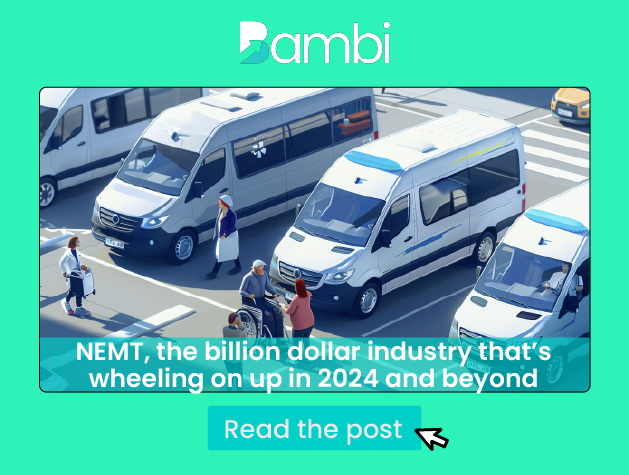
The global non-emergency medical transport (NEMT) industry is driving the care-economy well into the future. Many factors come into play for this booming billion dollar business that sits at the crossroads of healthcare and transportation. We summarized three reasons, of what we believe to be the biggest for this boom.
Check out these four must-know NEMT stats to get a hand on the wheel of this four-letter acronym’s upward trajectory.
People — from at-home patients of medical practices to folks with one-off medical needs — need NEMT. Too many Americans do not receive the care required because they cannot make it to their medical appointments — and the reason being: they simply don’t have access to transportation that will get them from A to B. This not only affects their own health and well-being, but that of the entire healthcare system, too.
It’s not just Americans that need the help getting to/from their medical appointments. It’s a global issue, too. The worldwide NEMT market is expected to experience notable expansion, reaching an estimated value of USD 15.58 billion by 2028. Sadly, the demand for NEMT services is on the rise due to the increasing prevalence of chronic diseases and a growing geriatric population. (Source: GlobeNewswire, 2023). This underscores the need for additional NEMT providers and an increase in the quality of current NEMT trips to bridge the gap and prepare for this massive additional wave of demand. This is a massive need and opportunity for NEMT providers, governments, care providers, and citizens to unite and ensure this critical service for the next decade.
There are clearly demonstrated cost benefits linked with NEMT services (i.e. faster recovered and healthier patients, less hospital overhead and human resources to name a few). And soon enough, healthcare providers and policymakers will see that it makes sense to consider boosting investments in NEMT in order that providers, patients and the general population benefit wherever and whenever NEMT services are available.
From the healthcare system people and the planet — everyone benefits when NEMT services are provided. It really does increase well-being and accessibility for all. The investment and integration of NEMT service into the healthcare system not only saves lives and money, it makes money, too!
Insurers and governments are becoming more aware of the critical link that NEMT plays in the healthcare ecosystem. The awareness that Investing in quality transportation for citizens and patients continues to proliferate for public options like Medicare and Medicaid at the state level in the US, especially with Program of All-Inclusive Care for the Elderly (PACE). Rates for trips are set at the individual state and program level depending on several factors like distance, rural or non-rural, and equipment needs (wheelchair, stretcher, etc.). Currently, unfortunately many states and regions are not providing adequate trip reimbursement rates to truly incentivize and reward NEMT providers for their efforts. However, we think that this is going to change, and forward-thinking NEMT providers and organizations like the Non-Emergency Medical Transportation Accreditation Commision (NEMTAC) and The Transportation Alliance are lobbying local, state, and federal governments to push for industry change.
As far as we can tell, the data above clearly showcases why continued and increased investment in NEMT service providers in 2024 and beyond are so crucial to not only the care economy, but the overall one, too.
Whether you’re a new or veteran NEMT business owner looking to streamline your service, we’ve got the scheduling and management-optimization software for you!
And if you’re keen to get into this lucrative caretaking business, it’s quite obvious that it’s one that’s going to keep driving the economy forward, always providing that job security while you provide security for the clients you take care of.
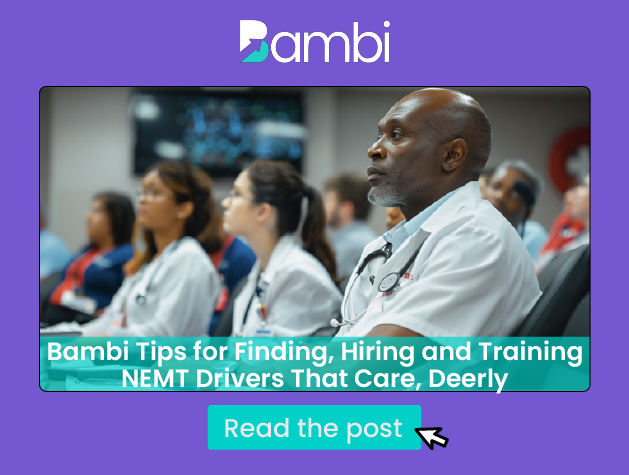
When it comes to the enchanted forest of non-emergency medical transportation (NEMT), it's the drivers who are the gentle dear guides of the service, entrusted with the crucial task of safely transporting patients to and from medical appointments.
This said, we know that finding skilled and competent NEMT drivers can sometimes feel like stumbling on a rare fantastic fungi in Bambi’s forest, but it’s really not that tricky of a find as there are more and more folks keen to take their office to the road.
And upon some heart-felt welcoming through thorough compassionate company onboarding, we’re confident you’ll land some lovely drivers who are highly qualified and/or willing to get there through rigorous training.
Because we understand customer service and reliability of your NEMT business is of utmost importance, we'll walk you through Bambi’s forest of tips that will assist you in finding and fostering the finest of drivers for your team. And if you need more tips, we recommend listening to the NEMT Startup Coach’s tell-all on the topic.
Before you begin your search, take the time to clearly define the qualities and qualifications you're seeking in an NEMT driver. Consider factors such as driving experience, empathy, communication skills and reliability. Creating a detailed job description outlining these requirements will help beckon the kind-hearted Bambi souls who will align with your service's ethos, values and standards.
To connect with those who share a heart for healthcare, wander into those tailored recruitment havens. Partner with nearby vocational sanctuaries, community colleges or healthcare habitats. Don't forget to venture into the digital glades of online job boards, social media groves and NEMT industry-specific clearings, where a gentle rustle of potential curious candidates awaits.
As applications flutter into your care, nurture them with a thorough screening to uncover the very best candidates who match your vision. Conduct background checks, peer into driving records and feel the pulse of candidates' dedication to patient care and professionalism. Consider inviting them to a face-to-face interview, where you can really gain a glimpse of their interpersonal magic and assess their fit for the role.
Once you've selected promising candidates, invest in their comprehensive training to equip them with the knowledge and skills necessary for success as a new NEMT driver. Provide courses on safe driving practices, patient handling techniques, emergency procedures, customer service excellence and more! Ensuring that all your drivers receive proper certification and stay up-to-date with the necessary regulatory requirements will be imperative to keep consistency to your high standards for patient care and connection with your corporate culture.
Bambi and his friends were always learning new ways of the forest. So, like our dear deer and furry companions, encourage ongoing professional development and learning opportunities for your NEMT drivers. This furthers the point above, but be sure to offer regular training sessions, workshops and even invitations to NEMT industry conferences so they can continue to upskill and keep informed about best practices and emerging trends. Fostering a supportive environment where drivers feel empowered to share insights, feedback and learn from each other's experiences is also the Bambi way.
Beyond technical skills, instill in your drivers the essence of empathy and tenderness. They signed up to be working in caregiving so it likely just comes naturally in their character. Train them to provide respectful, patient-centered care, recognizing the unique needs and concerns of each individual they’ll be driving. Encourage them to build rapport with patients, to nurture connections, offering reassurance, support and companionship throughout the entire journey. Again, we’re not saying they have to become besties like Bambi seems to do with all who crossed his paths, we’re just saying some compassion and conversational skills go a long way.
All in all, we know that finding, hiring, and training competent NEMT drivers is essential for delivering high-quality, reliable transportation services to patients in need. By defining your ideal candidate profile, tapping into targeted recruitment channels, screening candidates thoroughly, prioritizing training and certification, promoting continuous learning and emphasizing compassionate care, you can build a team of skilled and dedicated drivers who uphold the values of your NEMT service and make a positive impact on the lives of those they serve.
Because with each mile traveled, your fleet of NEMT drivers will leave behind a trail of warmth and comfort, brightening the lives of those they serve and service.
.png)
See the full interview on YouTube.
Please don't forget to subscribe and like NEMT Experts Podcast on YouTube.
Also, available to watch on Spotify
And listen (audio only) on your other favorite podcast platforms Apple and Pandora.
In a recent NEMT Experts podcast episode, Nirav Chheda, CEO of Bambi, interviewed Ed Bandas and Dave DeRoin from Broda about their groundbreaking Traversa chair. This innovative product is transforming the non-emergency medical transportation (NEMT) industry by providing a safer, more comfortable, and more profitable solution for stretcher and gurney trips.
Key Takeaways:
Interesting Quotes:
Conclusion:
The Broda Traversa chair is a revolutionary product that is transforming the NEMT industry. With its focus on safety, comfort, and profitability, it's no wonder that NEMT providers and patients alike are embracing this innovative solution. To learn more about the Traversa chair and how it can benefit your business, visit the Broda Seating website or contact their sales team.
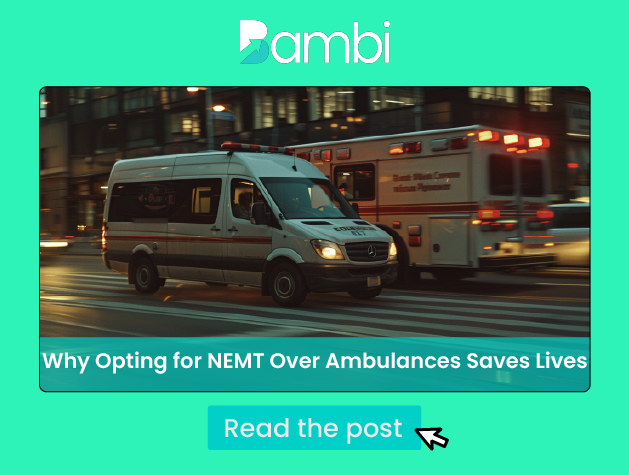
Within the world of medical transportation, the urgency and nature of the situation determine the appropriate mode of transport. While calling 911 for ambulances is vital for life-threatening emergencies, there’s a significant need for an alternative solution when the situation is not a matter of life or death. For those not-so-urgent moments, this is where non-emergency medical transportation (NEMT) providers come to the rescue.
You can think of it as not crying wolf, but calling Bambi instead — a gentle, suitable option for those non-critical needs. Because crying wolf actually presents a problem in the healthcare industry and puts actual lives in danger. In the context of medical transport, "crying wolf" can be equated to calling an ambulance for non-emergency situations.
What happens when you cry wolf
There’s misallocation of resources can lead to several problems:
This is why it's crucial for non-emergency patients to avoid calling 911 and instead utilize NEMT services. By doing so, they help ensure that emergency medical resources remain available for those who truly need them. NEMT provides a practical and cost-effective solution — in fact, Medicaid in most states covers this as services for its beneficiaries — for patients who need medical transportation without the urgency of an ambulance.
Why call a dear NEMT provider instead
As you all know by now, having kept up with our Bambi content, NEMT services cater to a wide range of needs, including:
Opting for NEMT over an ambulance
In non-emergency situations there are several benefits. Here are a few of those reasons:
Make the Right Call
In the end, it’s all about making the right call. Educating patients, caregivers, and healthcare providers about the appropriate use of medical transportation is crucial, and that's why we at Bambi are here to help. Here are some guidelines to help determine when to call NEMT instead of an ambulance:
In the way that crying wolf can lead to unnecessary panic and resource strain, calling an ambulance for non-emergencies can have similar consequences. By understanding and utilizing NEMT services appropriately, we can ensure that medical resources are used efficiently and effectively — and save lives at the same time. This serves as a friendly reminder that the next time you’re faced with a non-emergency medical transport need, remember: don’t cry wolf, call Bambi instead.
Of course, this isn’t to say you shouldn’t use emergency vehicles. If you’re ever in doubt about your health or that of a loved one, always call 911. Taking ownership of your health and promptly addressing concerns is crucial, whether it's for yourself, a loved one or even a stranger in need — because that's the Bambi way, helping out forest friends near and dear to his deer heart, or making a new friend of all kinds.
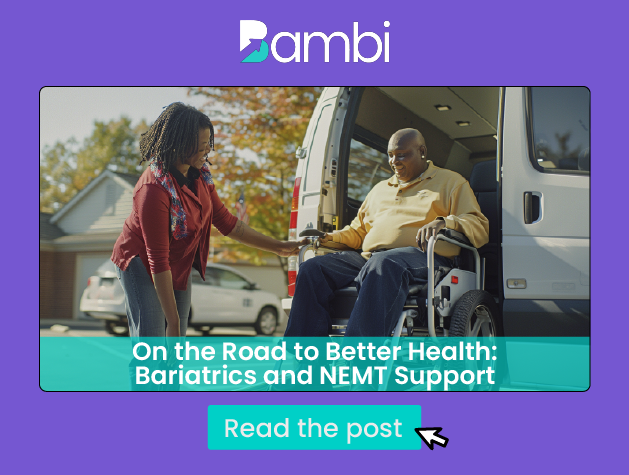
In our Insights articles, our goal is to enlighten and educate our caretech customers about the diverse range of individuals they may encounter while providing non-emergency medical transportation (NEMT) services. We have discussed wheelchair-bound customers, those requiring stretchers, and recently, individuals needing transportation to and from dialysis appointments, physical therapy and adult day care centers. However, we have not yet explored the unique needs of bariatric customers receiving treatment for obesity.
That’s what we'll address here now, but first, let's understand what bariatrics even is.
Bariatrics is a branch of medicine that deals with the causes, prevention and treatment of obesity. It encompasses a wide range of treatment modalities, including lifestyle and behavioral changes, pharmacotherapy and surgical interventions like gastric bypass and sleeve gastrectomy. Bariatric professionals include doctors, dietitians, surgeons and other healthcare providers, including NEMTs, who specialize in helping patients manage obesity through medical and surgical means.
In short, while obesity refers to the condition of having excess body fat, bariatrics refers to the medical field dedicated to the treatment and management of obesity.
Our big Bambi hearts go out to these patients who are on the journey to better health. They have made the courageous decision to seek treatment for their obesity and are actively engaged in this process. This is why they rely on NEMT services to get to their appointments and take steps toward managing their weight. They need your NEMT provider support more than ever. Because sadly, sometimes, these individuals have been ostracized by their families due to their weight issues, leaving them with few sources of support, which can be incredibly isolating and distressing.
To better understand the scope and impact of bariatric treatments, consider these statistics:
Over 250,000 bariatric surgeries are performed annually in the United States. Approximately 42.4% of adults in the US are obese, increasing the demand for bariatric treatments. Bariatric surgery is considered one of the most effective treatments for severe obesity, with significant weight loss and health improvements reported. The prevalence of obesity-related conditions such as heart disease, diabetes, and sleep apnea is high, further driving the need for bariatric treatments. Bariatric surgery can reduce mortality rates in severely obese patients by 30-40%. These facts underscore the significant impact of obesity and the crucial role of bariatric treatments in addressing this health issue in the United States. (Source: American Society for Metabolic and Bariatric Surgery (ASMBS)).
NEMT services are essential for ensuring bariatric patients receive safe, reliable and comfortable transportation to their medical appointments and therapy sessions, supporting their overall health and well-being. Here’s how:
Specialized NEMT vehicles: Bariatric patients often require vehicles that can accommodate their size and weight safely. NEMT providers often have specialized vehicles equipped with ramps, lifts and larger seating capacities to transport bariatric patients comfortably.
Accessibility: NEMT services ensure that bariatric riders have access to transportation that meets their mobility needs. This includes assistance via a helping hoof with boarding and disembarking from the vehicle, which can be challenging for individuals with such limited mobility.
Regular medical appointments: Bariatric patients may need regular medical appointments for follow-ups, nutritional counseling and post-surgery rehabilitation through physical therapy. NEMT services help ensure they can attend these appointments on a consistent basis.
Safety and comfort: NEMT providers are trained to handle the unique needs of bariatric patients, ensuring their safety and comfort during transportation. This includes properly securing the patient and equipment — such as their wheelchairs to prevent injury during transit.
Dignity and independence: Access to reliable NEMT allows bariatric patients to maintain their independence and dignity, rather than relying on family members or struggling with inaccessible public transportation.
All in all, the compassionate care provided by NEMT drivers plays a significant role in the lives of bariatric patients. Beyond ensuring safe and comfortable transportation, these drivers offer empathy and support that is invaluable to these often vulnerable riders.
As a caretech company deeply committed to the well-being of our customers and their customers, we understand the importance of this support. We strive to ensure that bariatric patients receive the very best care from our dear NEMT providers.It is through their dedication and empathy that we can all make a meaningful difference in the lives of those we serve, supporting their journey to improved health and quality of life. Now that’s the Bambi way after all!
