

By Nick Hoffmeyer, Head of Marketing at Bambi · Updated September 28, 2026 · 8 min read
Reviewed by Howard F. Berkowitz, a non-emergency medical transportation and paratransit expert with 30+ years in the industry (H&S Consulting).
Bariatric NEMT transport is non-emergency medical transportation built around a rider's size and mobility needs: a vehicle and equipment rated to carry them safely, a ramp or lift wide enough for a real transfer, and a driver trained to help without rushing or compromising the rider's dignity.
Bariatric patients are some of the most frequent NEMT riders, heading to dialysis, post-surgical follow-ups, physical therapy, and specialist visits week after week. When the vehicle or the plan doesn't fit the patient, the trip gets unsafe fast: a lift strains past its rating, a doorway is too narrow for a safe angle, or a driver improvises a transfer they were never trained to do. This guide covers what makes a trip "bariatric" in dispatch terms, the vehicle and equipment differences that matter, how trips get classified and booked, and how to train drivers to handle transfers safely and respectfully.
What Counts as a "Bariatric" NEMT Trip?
A trip counts as bariatric when a rider's weight, body size, or mobility needs exceed what a standard wheelchair-accessible van and its stock equipment are rated to handle. That's a dispatch and equipment question, not a diagnosis. Bariatrics as a medical field treats obesity and related conditions, including bariatric surgery, but "bariatric transport" in NEMT just means the trip needs a larger door opening, a reinforced or wider ramp, a higher-capacity lift, and often a bariatric-rated wheelchair or stretcher instead of standard equipment.
Bariatric patients are also a large and growing share of the rider base providers serve. More than 270,000 metabolic and bariatric surgical procedures were performed in the United States in 2023, according to the American Society for Metabolic and Bariatric Surgery, and CDC survey data puts adult obesity prevalence at 41.9%. Both numbers point the same direction: bariatric-ready vehicles aren't a niche add-on for most fleets, they're core capacity.
Why a Standard Wheelchair Van Isn't Always Enough
A standard wheelchair-accessible NEMT van is built around ADA minimums designed for a broad range of wheelchair users, not for the highest end of rider weight and width. Bariatric trips need equipment built past that baseline: doorways and ramps wide enough for a bariatric wheelchair or stretcher to pass through at a safe angle, lifts and ramps rated above the vehicle's stock capacity, reinforced flooring and securement points that can handle the added load, and bariatric-specific wheelchairs or stretchers instead of standard-width models. Manufacturer weight ratings vary significantly by vehicle and equipment model, so match the rider's needs against the specific vehicle's documented capacity rather than a general rule of thumb.
Choosing the right vehicle starts before the trip is ever booked: match the rider to a vehicle whose documented ramp or lift rating covers them.
How Dispatchers Classify a Bariatric Trip by Level of Service
Dispatchers classify a bariatric trip the same way they classify any other trip, by level of service, then flag the extra equipment and vehicle requirements on top of it. Level of service is the dispatch category that determines what kind of vehicle and crew a trip needs, ranging from ambulatory to wheelchair to stretcher. A bariatric rider might need a wheelchair-level or stretcher-level trip with an added bariatric equipment flag, which tells dispatch to assign a vehicle with the right ramp width, lift capacity, and restraint system rather than the next available van. Getting this classification right the first time avoids a driver arriving at the curb with equipment that can't safely handle the rider.
Standard vs. Bariatric-Equipped Vehicles
- Doorway/ramp width: Standard Wheelchair Van: Meets ADA minimum clearance; Bariatric-Equipped Vehicle: Wider opening for larger wheelchairs/stretchers
- Ramp/lift weight rating: Standard Wheelchair Van: Rated for typical wheelchair + rider loads; Bariatric-Equipped Vehicle: Reinforced, higher-capacity lift or ramp (check the manufacturer's documented rating)
- Flooring/securement: Standard Wheelchair Van: Standard tie-down points; Bariatric-Equipped Vehicle: Reinforced floor anchors rated for higher load
- Wheelchair/stretcher type: Standard Wheelchair Van: Standard width; Bariatric-Equipped Vehicle: Bariatric-width wheelchair or stretcher
- Crew: Standard Wheelchair Van: Single driver, standard training; Bariatric-Equipped Vehicle: Driver trained in bariatric transfer technique; some trips need a second crew member
Treat the specific weight and width numbers in any equipment spec sheet as the source of truth. They vary by manufacturer and model year, so a fleet's compliance file should always point to the actual documentation for the vehicles and lifts in service rather than a generic industry figure.
Securement, Safety, and Driver Training for Bariatric Transfers
Securement for a bariatric trip follows the same ADA-based principles as any wheelchair or stretcher trip: independent tie-downs at the rated number of points, plus a separate lap and shoulder belt system, sized and positioned for the equipment actually being used. Our ADA-compliant wheelchair transport guide covers the securement and accessibility standards that apply across rider types, including the two-part tie-down-plus-seatbelt requirement.
Bariatric transfers add physical demands standard driver training doesn't fully cover. Drivers need hands-on instruction in body mechanics for larger transfers, when and how to use a second crew member instead of pushing through alone, and how to operate bariatric-rated lifts without exceeding their capacity. Just as important: language and approach. Ask before assisting, use plain and respectful language, and never make a rider feel rushed or like their size is the topic of conversation. A driver who handles a bariatric transfer calmly and without commentary is doing the job right.
Dispatcher's Bariatric Trip Booking Checklist
- Confirm the rider's mobility level (ambulatory, wheelchair, or stretcher) and any bariatric equipment need at intake, not at the curb.
- Match the trip to a vehicle with a documented ramp/lift rating and doorway width that fits the rider, using current manufacturer specs.
- Confirm the vehicle carries the correct bariatric wheelchair or stretcher, not a standard-width unit.
- Flag whether the trip needs a second crew member for a safe transfer.
- Verify securement equipment (tie-downs plus independent lap and shoulder belts) is rated for the added load.
- Note any transfer preferences or mobility limitations from the rider or facility so the driver isn't improvising at pickup.
- Confirm pickup and drop-off locations have adequate clearance (doorways, curb cuts, elevators) for the vehicle and equipment.
- Log the trip's equipment requirements in the dispatch system so future bookings for the same rider default correctly.
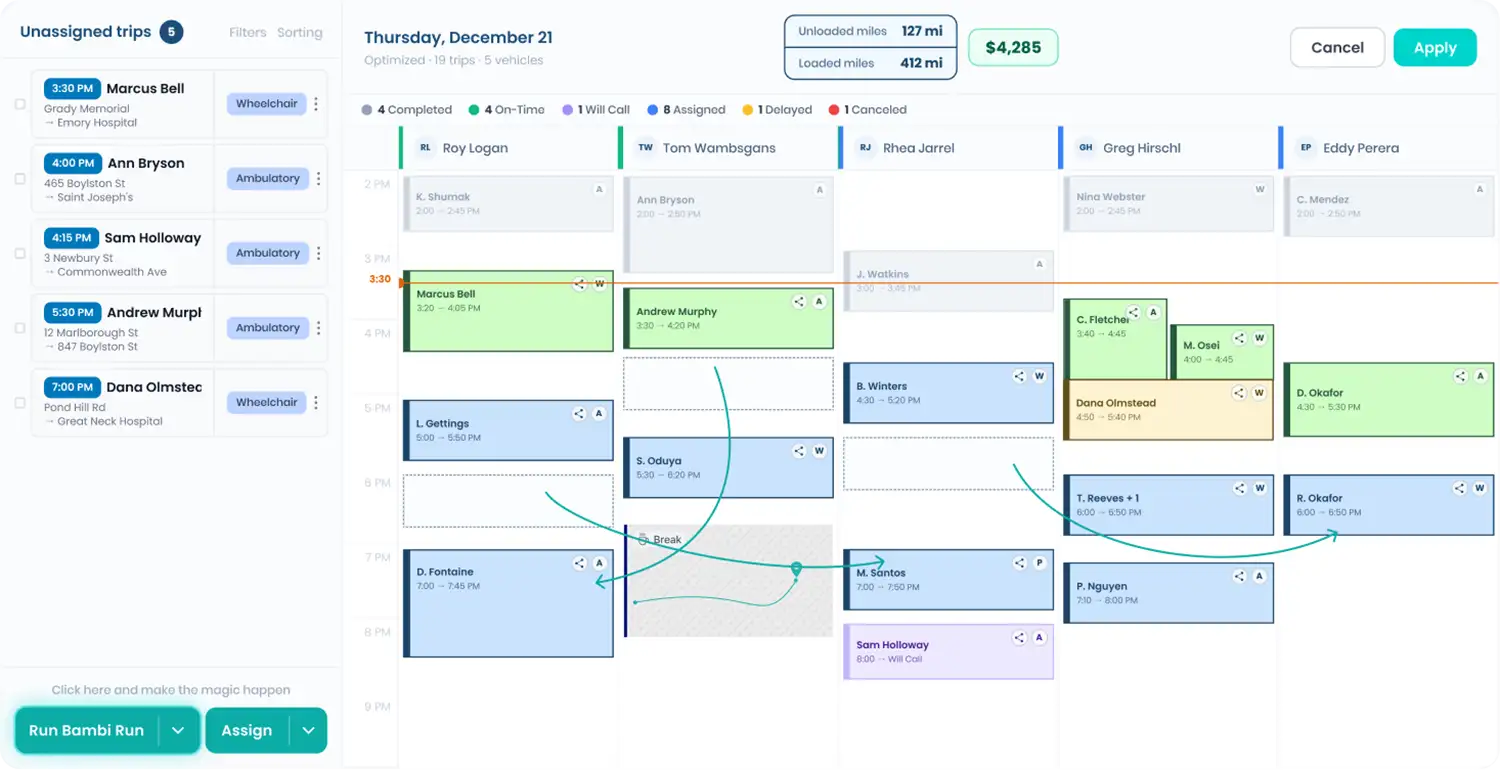
Put the equipment requirement and transfer plan in the trip notes, not in a dispatcher's head, so every driver who picks up the rider sees the same plan. Bambi's Fleet HQ keeps trip details and vehicle assignments in one live view, so the match in step 2 happens at booking instead of at the curb.
Frequently Asked Questions
What makes an NEMT trip "bariatric" instead of just a wheelchair trip? A bariatric trip is one where the rider's weight, body size, or equipment needs exceed a standard wheelchair van's ramp, lift, or securement capacity. It still gets a wheelchair or stretcher level-of-service classification, plus a bariatric equipment flag so dispatch assigns the right vehicle.
Do bariatric patients need a special wheelchair or stretcher? Often, yes. Standard-width wheelchairs and stretchers may not fit the rider safely or may exceed their own weight rating. Fleets serving bariatric riders typically stock bariatric-width equipment rated for higher loads, matched to the vehicle's own ramp and lift capacity.
Does a bariatric trip always need two drivers? Not always, but many transfers do require a second crew member for safety, especially stretcher transfers or riders with limited mobility. Dispatch should flag this need at booking so the right crew is scheduled, not decided in the driveway.
How do dispatchers know a trip needs bariatric equipment? It should be captured at intake, either from the rider, the referring facility, or trip history, and logged in the dispatch system as part of the trip's level-of-service and equipment profile so it's assigned automatically on repeat bookings.
Are bariatric-equipped vehicles ADA compliant? They need to meet the same ADA securement and accessibility standards as any wheelchair-accessible vehicle, with equipment sized and rated for the higher loads bariatric trips require. See our ADA-compliant wheelchair transport guide for the full standard.
Run the numbers: the free NEMT operational cost estimator puts a yearly dollar figure on empty miles, no-shows, drivers waiting and retyping broker trips.
Equip Your Fleet, Not Just Your Vans
Safe, dignified bariatric transport comes down to matching the right vehicle, equipment, and trained crew to the trip, every time, not just when someone remembers to ask. Bambi's Fleet HQ and Driver App keep the trip plan in one place, from the dispatcher's screen to the driver's phone. That's the humans-behind-the-AI part of Bambi, built so your team spends less time guessing and more time getting people to care safely. See it for yourself on our pricing page, $69 per active vehicle per month, flat, no annual contracts.
About the author Nick Hoffmeyer is Head of Marketing at Bambi, the AI-powered dispatch and scheduling platform for non-emergency medical transportation (NEMT) providers. He works with NEMT owner-operators every day on growth, SEO, and the operational systems that help fleets run more trips with less stress. More from Nick: LinkedIn