
When discussing dignity in healthcare, oftentimes it’s referred to the care provided at the end of a patient’s life, ensuring their passing is supported with the utmost comfort and respect. However, this article explores healthcare dignity from the angle of improving and prolonging patients' lives, allowing them to live with dignity, too.
Because at Bambi, we’re all about empowering individuals to lead more dignified lives, which is why we prioritize empathy and care for patients benefiting from our care-tech. And having studied the industry and been supporting the NEMT businesses for a while now, we know and have witnessed first-hand the positive impact that NEMT services have on an entire community let alone an individual's promotion of their own self will.
The obvious impact of NEMT services extends far beyond transportation to and from medical appointments — it plays a pivotal role in promoting independence and dignity for patients. Here’s how:
This, perhaps, is the most obvious outcome when patients have access to NEMT services. It’s simple. If patients can utilize an NEMT service, they’re able to reach the medical appointments, treatments and therapies they need, arriving to and from their appointments safe, sound and seen.
Some people have relatives who are free to drive Miss Daisy to and from her weekly appointments, but most aren’t as lucky. And even when they have someone available to help drive them, no one wants to burn out a loved one by asking for lifts to/from appointments on a regular basis. More than 40 percent of older and disabled adults rely on family, friends and neighbors for rides, and around three-quarters of caregivers list providing or arranging transport as one of their primary duties, according to a 2021 survey by the National Aging and Disability Transportation Center (NADTC), a program administered by USAging and Easterseals that promotes accessible transit.
NEMT services let patients own their own schedule and not interrupt their families’ day-to-day lives. By providing reliable transportation options that fit their needs, NEMT services reduce patients' reliance on caregivers or family members for rides. This increased independence enhances their self-sufficiency, diminishing those icky feelings of dependency.
Access to NEMT support upholds patients' dignity by providing them with safe transportation options that respects their autonomy and privacy. There’s no need to call up a family member or even an ambulance, which can sometimes bring up feelings of shame. NEMT service really is a dignity-affirming one in promoting patients' self-esteem, self-respect, which contributes to their overall sense of well-being.
NEMT services offer patients the flexibility and convenience to schedule trips to their medical appointments according to their own unique schedules, granting them autonomy and control over their own time.This also allows for those feel-good feelings of being independent (again), enabling patients to make healthcare decisions free from family matters and other external limitations.
All in all, through our extensive research of the industry — and in literally being out on the road with our dear customers — we can vouch that NEMT services is one for those softies, and empowers patients to live more dignified and independent lives, positively impacting their health and those of their relationships.
Ever wondered what happens when Mrs. Jones down the street needs a ride to her podiatrist appointment (because let's face it, those bunions aren't going to walk themselves)? Enter the fascinating, fast-paced, and sometimes (whispers) slightly chaotic world of NEMT, also known as Non-Emergency Medical Transportation.
Now, before you get all sirens-blaring excited, NEMT isn't about flashing lights and emergency crews. It's about ensuring folks who need to get to medical appointments but can't drive themselves, get there safely and comfortably. Think friendly drivers, comfy vans (although a fancy ambulance would be pretty cool), and a whole lot of logistical wrangling to make sure everyone gets where they need to be on time.
The NEMT crew caters to a diverse bunch. Imagine everyone from senior citizens needing dialysis treatment to folks with disabilities requiring ongoing medical care. They're the friendly faces who help ensure everyone has access to the medical attention they deserve, regardless of their ability to get there themselves.
So, who makes the NEMT magic happen? Let's meet the crew:
Okay, let's be honest, NEMT isn't always sunshine and lollipops (although we wish it could be!). There can be challenges like managing tight schedules, dealing with unexpected delays (traffic jams, anyone?), and ensuring everything runs smoothly even when things get a little bumpy.
But hey, that's where the problem-solving skills and teamwork come in! The NEMT crew thrives on finding creative solutions and working together to make sure every ride is a success.
Need Help? Bambi has you covered! Our comprehensive NEMT management software is tailor made for a new NEMT owner.Bambi is an AI-powered dispatch and scheduling platform for non-emergency medical transportation (NEMT) companies, that helps NEMT dispatchers and drivers communicate, optimize trips, and manage their routes and riders in real-time.
Our time is finite. It’s outrageously brief, however, we have many “shimmering possibilities of our four thousand weeks,” according to Oliver Burkeman, the author of Four Thousand Weeks: Time Management for Mortals.
Four thousand weeks is assuming we live to be eighty years old. Some will live longer, some shorter. And if we think about time and what most of us adults do with most of it, we’re in jobs to support our livelihood.
Remember our name was inspired by the magical sparkle dust that is Disney? So, of course, we at Bambi, love a good adjective that shines. And the illuminating description of “shimmering possibilities” definitely emulates a positive outcome and provides much hope for our future careers.
First and foremost, it’s important to know that you can always change your career to have a shiny new job. It’s never too late. And secondly, there should be no shame in doing so. Follow your heart and work hard for it!
We’ve rounded up some interesting statistics that might help you feel more empowered about changing your career, if you happen to be on the fence about it. But then we’ll focus on folks in caretaking careers as those are our customers after all.
It’s also important to note, when people think about a big change in career, some think they have to switch up the entire industry. And that’s not the case. For instance, if you’re a softie who works in healthcare, you can still find a new career path within the wider system. It can be as simple as swapping out those scrubs for software instead. We’ll explain what we mean by this later, but first, those stats!
Now about that career pivot in healthcare for those who have a knack for and love of caretaking, but might just have an entrepreneurial calling; have you heard of the multi-billion dollar non-emergency medical transport (NEMT) industry?
It’s a booming industry and will remain on the rise for the foreseeable future. And the more healthcare providers and policy makers see the growing demand, the more they’ll invest in NEMT services, creating even more opportunities for NEMT businesses (and even tech companies to support them!) to enter the market.
At Bambi, we’re in the business of supporting NEMT businesses — whether they're new to the game or long-time veterans. And we’ve seen a lot of folks trading their scrubs for software in order to stay in the healthcare industry, but to take on a more of this entrepreneurial role we’re speaking of.
Sure, we’re being playful when we say to trade out your scrubs for some tech setup (maybe you still like wearing scrubs at the desk, dispatching or out driving when you pick up patients — you do you!) What we are serious about, though, is that this can be a viable and doable career change.
Especially, because we know that our software fits right into an first-time entrepreneur’s startup pack and streamlines their workflow from optimally syncing schedules, trips, fleets and routes all through our fun-in-one, AI-powered scheduling algorithm. We really make the management side of the NEMT business not just seem easy peasy, but be an actual breeze. Bambi really knows best.
We also know individuals transitioning from the world of caretaking whether that be specific to home care or hospitals, healthcare professionals have a deep understanding of patient care, medical needs and healthcare systems, which can be valuable assets in starting and managing a NEMT business. In addition, doctors, nurses, medical support staff or even office clerks, may have an entrepreneurial spirit and be drawn to the aspect of owning a business in order to make a positive impact on their community's access to healthcare.
All in all, as the demand for NEMT services continues to grow due to an aging population and increasing healthcare needs, as well as more and more folks having a calling to create a more flexible and autonomous career for themselves, we couldn’t recommend owning a NEMT business more. It might just be that shimmering dream job you’ve been driven (pun-intended!) to do. And when you’re ready to switch out those scrubs, know we’ve got you covered with the softly designed software!
Check out our How to Start an NEMT business guide for a comprehensive guide on what to do to have a successful NEMT launch.
Anyone in the care business has to have a big, warm heart and a soft, squishy soul.
At Bambi, we are serious about CareTech that supports businesses who provide and connect healthcare. So, you could say we create software for softies.
We care even more for our customers, the good-hearted people driving non-emergency medical transport (NEMT) businesses, who use our NEMT software on a daily basis to take care of their companies and customers in need of their care.
We strive to be and build like Bambi. Always. This is why our software is delicately designed with the unique needs of both our customers and theirs in mind. It’s why we bring our whole hearts into the hard work of making the work of our NEMT business customers easier. Because when their on-screen work is streamlined, they get to spend more time off of it — being fully present with their customers, who could really use their positive energy and soft-souled attention for pick up, transport and drop off.
At the core of our code is a big soft spot. Some might say it’s empathy. Those in the tech industry, however, would call it human-centric design. Here at Bambi, we would simply name it just that: Bambi.
There’s even a button labeled “Run Bambi Run” that runs on AI-powered algorithms optimally scheduling and routing an entire NEMT fleet from patient pick up to drop off at their medical appointments to, ultimately, arriving home, post-medical dialysis, routine check up, what be it — sustainably. Not only are we coding in softness for NEMT patients but for our planet, too.
We understand that not all NEMT software users are tech-savvy and, that at the end of the day, most of us are simply looking for simple tools that are gentle, intuitive and save us time for what really matters — life happening off the screen.
That's why our experienced team of software developers are dedicated to continually crafting and iterating our platform, prioritizing ease-of-use above all else. No matter if you’re a NEMT business veteran or new to the business, our all-in-fun platform is as easy as pressing down on the gas and going!
Our platform’s simple, clean design is not only soft on the eye, it’s scientifically calming on the entire whole being’s well-being. From Bambi’s user-friendly interfaces to calming color palettes, every aspect of our software is designed with softness in mind.
Inside our platform customers experience lots of clutter-free and cleansing white space reducing cognitive load, all the while putting the mind at ease entirely.
They also experience soothing splashes of tranquil turquoise in our buttons to call action and attention to calm — it’s our primary brand color after all!
Did you know that our branded turquoise color “combines the calming properties of blue with the renewal qualities of green, making it a color that promotes emotional balance and stability.” It’s also a color when used in environments, be that in tech or physical spaces, it invigorates mental activity and a sense of emotional well-being. (Turquoise Color Psychology and Meaning). And because we want our customers’ work environment to flow creatively and with balance like any serene sea, we keep the turquoise in sight across our site for that subtle sweet serenity.
Not only are we about carefully building CareTech Software, we’re about cultivating and nurturing a community of like-souled individuals (or “dears on the road,” as we like to call them) in the NEMT business who appreciate our keen attention to every calming detail in our technology so they can feel safer and more efficient on the road.
Have you seen our podcast - NEMT Experts on YouTube or Spotify? We love having the opportunity to be right there in their NEMT vehicles with our community of NEMT drivers, dispatchers and business owners! Because the more we experience their day-to-day joys and get to know the inevitable industry pain points, the more we can design, build in and ship features needed to make their lives even easier — making those patients needing to get the healthcare needed, streamlined, too.
This adage reminds us that kindness and strength can exist simultaneously. It's easy to mistake compassion, empathy, or a gentle approach for a lack of inner fortitude. However, true strength often lies in the ability to remain compassionate in the face of difficulty or to extend forgiveness instead of seeking retribution. Softness is a manifestation of emotional intelligence and flexibility, while weakness implies a lack of determination or character.
If you think about it, Bambi’s created one big, soft and resilient forest-full of tender loving care to help transform NEMT tech, professionals and healthcare.
So the 4Ws of NEMTreprenuership from part one solidified your calling to keep caretaking, but pivoting to do so more in a business sense. Awesome! The NEMT industry could benefit from more driven and heart-felt folks like you! We’ll be honest, though, starting any business from scratch isn’t easy, but it’s always worth it.
Becoming an NEMTrepreneur requires careful planning, understanding of the market, being and staying compliant with the different rules and regulations and providing high-quality services to your customers. It is a lot to juggle, especially in the beginning, but just like Bambi we believe in your nimbleness to navigate it all with your swift and agile business skills.
And with Bambi (our NEMT Software and community) on your side, we’re confident you’ll succeed in no time. Without further ado, in this second part of the series, we’ll give you our top ten tried and tested tips in starting an NEMT biz:
That’s it folks! We realize this might feel like one big homework assignment or ten, but it’s always important to take it slow and steady in the beginning. Give yourself some compassion like you do your customers. Build up your confidence, supportive community and the foundational software to get you flowing with ease and fun in this new fulfilling endeavor.
And if this all still feels like a lot, know there’s always support from our community of dears on the road already successfully running their NEMT businesses. There are also plenty of NEMT coaches out there eager to empower you and hold you accountable along the way as you get started.
We believe in you! And whenever you need a hoof or hand, just reach out to us at Bambi.
Perhaps you’ve always had an entrepreneurial spirit and a calling to do something more with your caregiving career, but haven’t known exactly how or when to make that pivot. Or maybe you’ve already decided it’s time to swap your scrubs for some software and become a non-emergency medical transport (NEMT) business owner.
Regardless of where you’re at on your NEMTreprenuer journey, we’re here to help set you up for success from our fun-in-one easy to use NEMT Software that streamlines the hard work of scheduling, dispatching and fleet management to providing you with heartware (a.k.a. tips and tools through our podcast on YouTube & Spotify and blog of industry insights) so you can learn from our community of dears on the road who are already thriving in their own NEMT businesses.
To stay true to our promise in setting you up with success, here are providing you with a two-part NEMTreprenuer guide to getting started. In this first part, we’ll begin walking you through the 4 Ws before approaching the how-tos. It’s always good to get our Ws covered first so you can understand at a higher-level exactly why one might want to go all in with the N, E, M and T.
In the second part, will dive into the how-to make the magic of following your dream to be an NEMTreprenuer happen. We love that magical sparkle dust, we’re named after a Disney character after all. Without further ado, let’s get to those Ws.
An NEMTreprenuer is an entrepreneur in the non-emergency medical transport (NEMT) industry. This is someone who runs their own NEMT business or more. Yup, there are such things as serial ENTrepreneurs out there, too! Those folks are scaling their NEMT businesses and some are even franchising them, too.
Anywhere there’s infrastructure in place for roads and a community of people living in the vicinity with the need for transport support to and from their medical appointments is a great place to start an NEMT business. Sure, NEMT businesses can succeed in many places, but it’s best if there’s already a demand for the service and the infrastructure in place to support transportation logistics.
In fact, we’ve noticed some of the most successful NEMT businesses are born out of rural areas with little access to public transportation, and are also in communities where there are many elderly folk often in need of medical care. And when you combine the two you’ve got the makings of a booming NEMT business.
There isn’t one characteristic or type of person that goes into the NEMT business. But from our experience, we’ve found these folks tend to have a soft soul for supporting their communities, taking care of people in need and have a heart spot for hard work and hustle. They’re business-minded folks who love to dig into the heartwork from the ground up.
There are many reasons why people go into this NEMT business, but some of the biggest reasons are the following:

They say first comes love, then comes marriage and sometimes a baby comes in a carriage or in our case a deer with a NEMT van...
So we sing a similar, but different song here — where the lyrics end with a Bambi, in a lush forest full of software code and streets of NEMT gold.
We’re also all about that love being first, too. Most of us at Bambi live in cities where rideshare apps like Uber and Lyft operate so have had the privilege to experience the joy of getting around town, be it in a pinch or on a planned date. These drivers are connected to a super ease-to-use app that allows them to see we need a lift right when we need it. What’s not to love about that?!
Now, before we jump to the wedding (there’s got to be a proposal first, people!), it’s important to know a bit more backstory to add more love to this little love story. And that’s that our co-founders, Nirav Chheda (CEO) and Charles Henik (CTO), both have had personal experiences involving non-emergency medical transport (NEMT) services — or lack thereof — in their past. Both understood there were multiple inefficiencies in the NEMT business, many of which were not necessarily to be blamed on human error and life’s inevitable mishaps, but due to the fact that there wasn’t (yet) a savvy enough NEMT Software out on the market for NEMT business owners — nothing quite simple and streamlined enough like Uber, Lyft or for local taxi service owners.
It’s also important to note that at Bambi, we’re passionate people — a bunch of softie software engineers — who care about creating of utmost quality CareTech software. Add passion to any budding romance and you’ve got a marriage coming soon.
And so it’s inevitable. When you combine this fiery passion for care with a pure love for ease-of-use apps like Uber, sparks collide and a proposal to get married would be the viable next step. You know, to lock in that love for the long-haul!
In preparing for the big day (or product launch in tech terms), we at Bambi spent hours upon hours honing our code, design, and app and ship the most innovative in the market: an all-in-one, AI-powered NEMT scheduling and fleet management optimization software designed by humans with care for humans that caretake.
And in marrying the simplicity one might similarly find in the backend of an rideshare app with the NEMT service industry, you get a pretty cute, clever and bushy tailed AI-powered platform that allows NEMT businesses to dispatch, dash and drive — deerly.
And so, there you have it folks. That’s how we at Bambi made a Bambi NEMT platform!
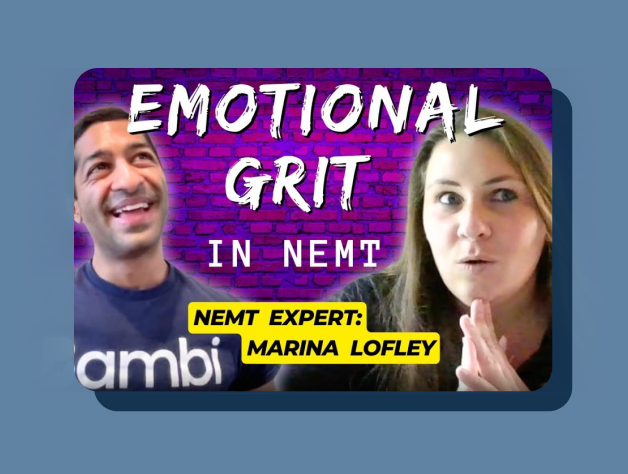
Bambi CEO Nirav Chheda talks with Marina Lofley, Owner/Founder of Crowned Care Transport nd the Founder of "NEMT Network", on dealing with the consistent emotional toll of transporting NEMT passengers.
See the full interview on YouTube: https://youtu.be/UxL9bPXEmqM
Please don't forget to subscribe and like NEMT Experts Podcast on YouTube: https://www.youtube.com/@bambihealth
Also, available to watch on Spotify: https://bit.ly/43y8bsM
And listen only on your other favorite podcast platforms Apple, Stitcher, and Google Play.
Nirav Chheda and Marina Lofley, the founder of a non-emergency medical transportation (NEMT) business and NEMT Network has a conversation about the emotional aspects and challenges of working in the NEMT field.
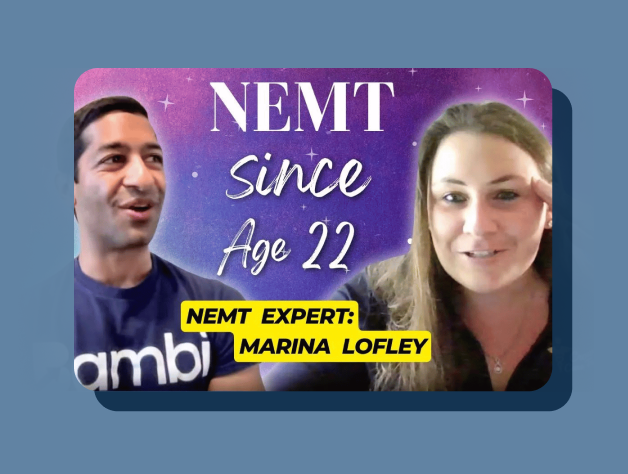
Bambi CEO Nirav Chheda talks with Marina Lofley, Owner/Founder of Crowned Care Transport since the age of 22, and the Founder of "NEMT Network", which teaches others how to start and run a NEMT business.
See the full interview on YouTube: https://youtu.be/momdC7JS3LQ
Please don't forget to subscribe and like NEMT Experts Podcast on YouTube: https://www.youtube.com/@bambihealth
Also, available to watch on Spotify: https://podcasters.spotify.com/pod/show/bambi-nemt/episodes/NEMT-Experts-Podcast-Episode-20-NEMT-Since-Age-22-e2ha19r
And listen only on your other favorite podcast platforms Apple, Sticher, and Google Play.
Marina's story highlights the realities faced by many NEMT business owners:
Marina runs a successful operation with six vehicles but still works 60-70 hour weeks. This shows the tremendous dedication it takes to thrive in this industry. If you're considering starting an NEMT business, check out Marina's resources on TikTok (@neemtnetwork), her website, and consider reaching out for guidance.
