About this episode
Samuel Harris, a logistician by trade who started On Time On Target Transportation in Richmond, Virginia two years ago, expected $25,000 to $30,000 of revenue in year one and booked roughly half of it with a single van and himself behind the wheel. He now runs two vehicles, a Ram ProMaster 1500 that carries two wheelchairs at once and a rear entry Toyota Sienna, across a 50 mile radius where about 90 percent of the work stays inside the city. Two years in he is still driving one of them himself, because the ceiling is not trips but people who show up.
Key takeaways
- Harris funded the launch himself, pulling from his 401 and personal savings rather than taking a bank loan, then handled the research and permitting on his own before buying the first van.
- He set both his trip rates and his hourly driver pay by surveying the market and landing in the median, deliberately neither the highest nor the lowest price in Richmond.
- Revenue comes from private pay, small contracts with local rehab centers, and the Veterans Administration, which sometimes needs two wheelchair passengers from a veterans home moved in one run.
- An unpaused Indeed ad draws about 100 applicants a week and floods his inbox until he stops it. Background screening including MVR and urine analysis runs roughly $100 to $120 per person.
- A highly recommended driver lasted about three weeks without ever completing a full week. Harris says he leaned on the referral instead of vetting, and went back behind the wheel himself.
Chapters
- 0:00 Introduction
- 0:47 Overview of Sam's business
- 2:50 Getting the 2nd vehicle
- 4:30 Sources of rides, pricing, and managing
- 7:47 Paying drivers and finding drivers
- 10:30 Funding the business
- 11:30 Area coverage
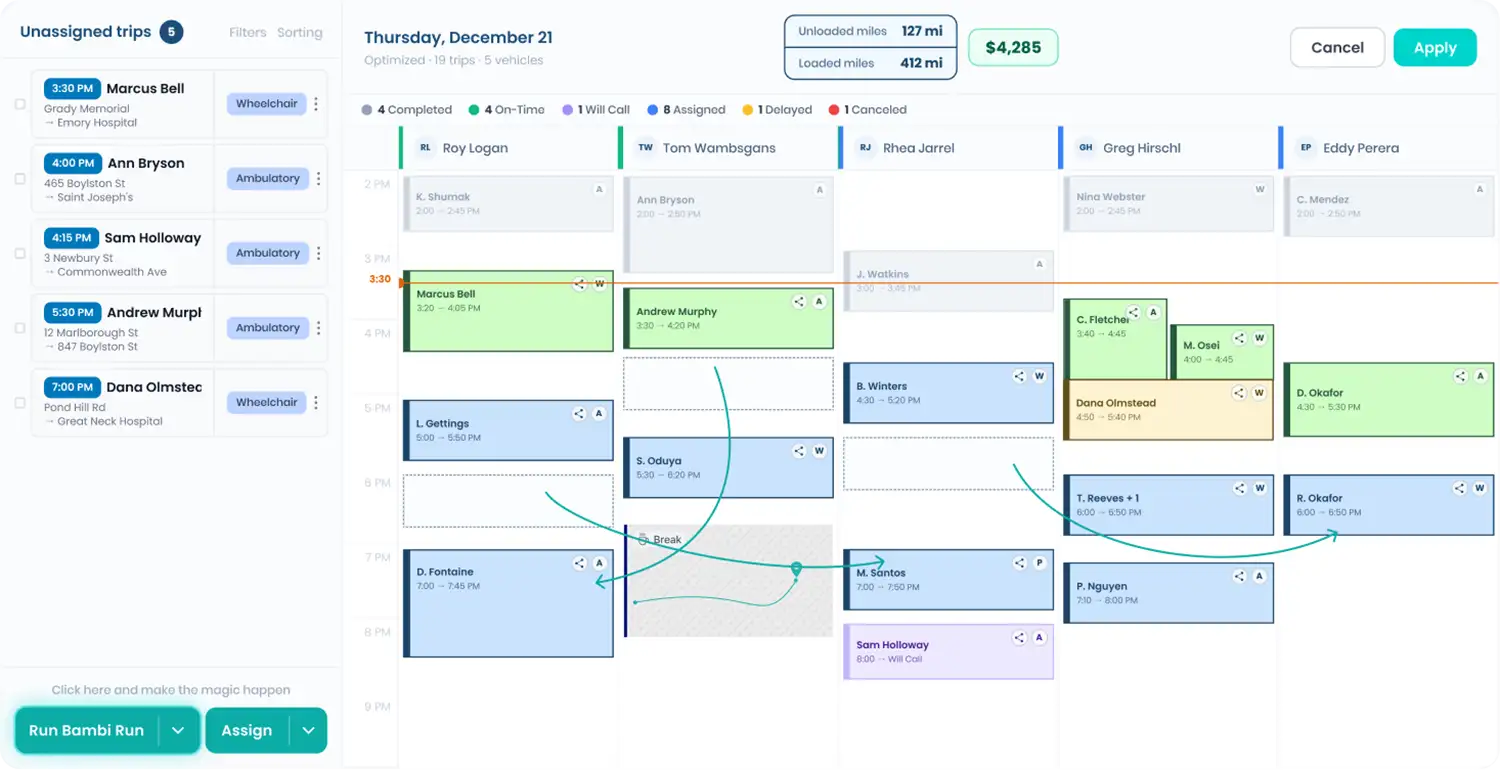
- 13:50 Efficiency gains with Bambi
- 20:30 Vehicle types
- 23:47 Client types
- 25:13 Challenges in hiring drivers
- 30:20 Easy onboarding with Bambi