About this episode
Ryan Reifert bought Carelink Transportation in Muscatine, Iowa with four ambulatory vans and no wheelchair service, and inside two years took it to eleven vehicles, seven ambulatory and four wheelchair, after nearly tripling revenue in year one. The growth engine is distance: Carelink works a minimum 100 mile radius, ran a single trip covering 600 miles on one Sunday, and crosses state lines for treatment center placements. Reifert prices those runs with a load fee plus mileage past a free band, has not changed the rate in a year, and sources them from a broker portal local competitors skip.
Key takeaways
- Carelink went from four ambulatory vans to eleven vehicles, seven ambulatory and four wheelchair, in under two years. Reifert says revenue nearly tripled in the first year and the vans are bought outright.
- Pricing is a load fee plus mileage past a free band Reifert illustrates as five or ten miles. The rate has not changed in a year, and a deadhead discharge return gets no premium.
- Brokers post rides in an online portal Reifert calls the locker, sometimes 50 for the following week. He wins the long runs because providers around him say they cannot staff them.
- Three of his drivers prefer two or three long trips a day over the six or seven a local route yields. On six hour destinations Carelink puts the driver in a hotel overnight.
- Passengers refuse other providers and pay out of pocket to keep Carelink, and two closing grocery stores now pay the company to haul shoppers to the store still open.
Chapters
- 0:00 Introduction
- 0:46 Ryan's background
- 2:09 Overview of Carelink Transportation
- 5:20 Long distance trips
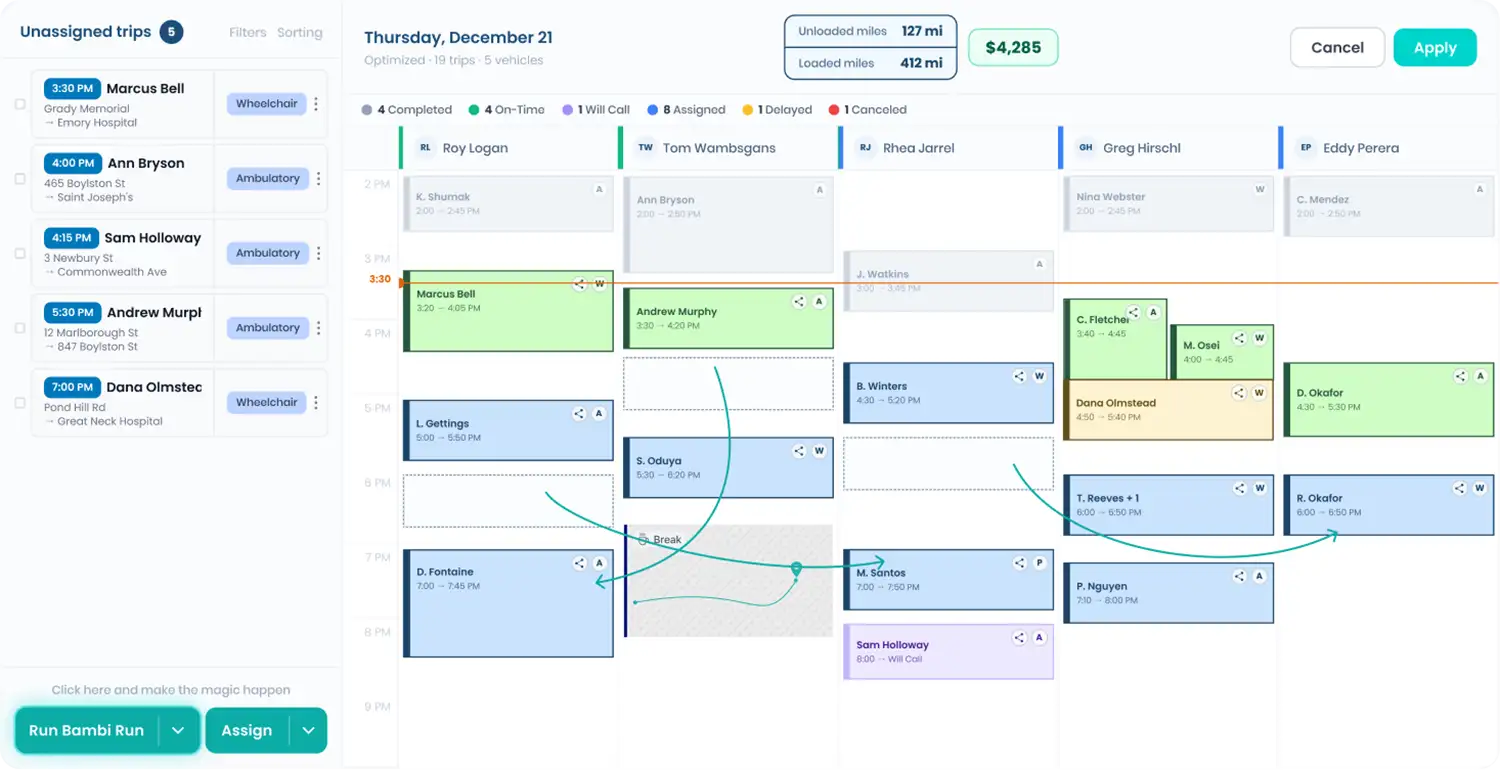
- 11:39 Bambi software makes NEMT easy
- 16:49 Back to long distance trips
- 20:00 Company culture is key
- 27:35 Future of the NEMT business
- 31:58 Final takeaway