[0:03] Howard Berkowitz: out there and sit there and see Joe's transportation company shows up and see what he's doing.
[0:09] Howard Berkowitz: Is he doing ambulatory? Is he doing wheelchair?
[0:11] Nirav Chheda: Is he doing talks. I have a very special guest with us today, the one and only Mr.
[0:34] Nirav Chheda: Howard Berkowitz. Howard, how you doing?
[0:37] Howard Berkowitz: Good afternoon. Good afternoon. How are doing?
[0:40] Nirav Chheda: Well, Howard, I'd rather you introduce yourself rather than me.
[0:45] Howard Berkowitz: Ah, great. Uh, I've uh been in the transportation space for 35 plus years.
[0:52] Howard Berkowitz: Uh I started out as a vice president for New York City Transit Authority.
[0:57] Howard Berkowitz: Ran operations and planning uh for the city of New York for subways and buses.
[1:02] Howard Berkowitz: Uh left that organization uh to come to Florida.
[1:06] Howard Berkowitz: I've owned a number of companies.
[1:08] Howard Berkowitz: Uh one of them being a non-emergency medical transportation company.
[1:13] Howard Berkowitz: We grew that to 50 vehicles, did about 1,200 trips a day.
[1:19] Howard Berkowitz: uh and uh just uh blossomed from there.
[1:22] Howard Berkowitz: Um my experience for non-emergency and general transportation uh expanded and grew over the years and sort of became uh the uh uh the go-to person for my county.
[1:37] Howard Berkowitz: I sit on a number of boards.
[1:38] Howard Berkowitz: Uh NEMTAC is one of them.
[1:40] Howard Berkowitz: I sit on the certification uh board as well as the resource and advisory board and sit in Palm Beach County vehicle for hire.
[1:49] Howard Berkowitz: Uh we help write the ordinances in the county and my main focus really is the NEMTAC which is actually helping create the standards in the United States being a standards creator.
[2:01] Howard Berkowitz: So that's pretty much where I am right now.
[2:04] Nirav Chheda: Yeah. See this is why I wanted you to introduce yourself cuz you've done so many things in this in this industry.
[2:09] Nirav Chheda: I knew I was going to miss at least some things.
[2:12] Nirav Chheda: Howard, you have three and a half decades of experience in NEMT and there's not a lot of people who can say that and I just want to say, you know, as part of your introduction, you know, we have
[2:25] Nirav Chheda: customers of Bambi who have used your consulting services to get them from zero to one, from one to much larger than one.
[2:34] Nirav Chheda: People only have glowing things to say about how invaluable you are.
[2:39] Nirav Chheda: I mean, I literally have Bambi customers telling me like, I could not have gotten to where I am, you know, without Howard.
[2:45] Nirav Chheda: Um, so I'm really excited to have you on.
[2:48] Nirav Chheda: And today's topic is a very relevant one for especially companies that are just starting out.
[2:54] Nirav Chheda: We're going to have you talk about some of the common pitfalls that any companies fall into when they're trying to get up and started.
[3:03] Nirav Chheda: And you know this is going to be an overview and of course you know getting you and your help on a personal basis is you know there's nothing like it in avoiding these pitfalls but I want to just
[3:15] Nirav Chheda: go through some of these pitfalls so that people understand hey here are the things that I have to look out for.
[3:21] Nirav Chheda: So without further ado the first one is not doing your homework when you're deciding to get up and running.
[3:29] Nirav Chheda: Um I'll let you take it away Howard.
[3:32] Howard Berkowitz: Yeah, that that's one of the largest problems that individuals do not do.
[3:38] Howard Berkowitz: They don't do their homework. Meaning that um they go on the internet and they'll see a bunch of stuff out there and they'll say, "Oh, that's a great business for me." And they'll go in and they'll start a
[3:48] Howard Berkowitz: company and start to do all this stuff instead of saying, "Hey, is there enough business in my area to actually support what I want to do?" So, they don't research the market.
[3:58] Howard Berkowitz: That's one of the big problems.
[4:00] Howard Berkowitz: they they listen to other people and one part of the country may be a little bit different if you only have a certain number small amount of individuals that live in your town uh and you're looking for business
[4:13] Howard Berkowitz: and there's not enough business to support what you do, you need to find out about that ahead of time.
[4:18] Howard Berkowitz: Uh you know, that's one of the reasons that uh I find that uh when people come to me, they've already gone through some of these mistakes.
[4:25] Howard Berkowitz: before they either get to me as a consultant or anybody else, it's important for them to do their homework.
[4:31] Howard Berkowitz: You know, see what competitors are in the area, go to a lot of the facilities that are out there and sit there and see Joe's transportation company shows up and see what he's doing.
[4:43] Howard Berkowitz: Is he doing ambulatory? Is he doing wheelchair?
[4:45] Howard Berkowitz: Is he doing stretcher? You know, what is he doing out there that you know maybe you can do?
[4:50] Howard Berkowitz: Is there enough marketplace for you and him and other competitors?
[4:54] Howard Berkowitz: So that that's one of the most important things.
[4:57] Howard Berkowitz: Uh you know go to those places of business as part of your homework.
[5:01] Howard Berkowitz: See pricing. See if the pricing will support your area.
[5:05] Howard Berkowitz: Sometimes you know pricing is just driven down so low in an area that you may not be able to survive in an area.
[5:11] Howard Berkowitz: You know you want to come in with X amount and they're really looking at Y or Z.
[5:15] Howard Berkowitz: So pricing is another issue uh that you really do.
[5:19] Howard Berkowitz: and overall do your homework to make sure uh you know you can support your business that you really want to open and grow overall and most entrepreneurs don't do that.
[5:32] Howard Berkowitz: I try to instill in all of my clients and I make them entrepreneurs that I want them to do their homework.
[5:40] Howard Berkowitz: um my whole premise behind what I do as a consultant and entrepreneur of multiple other companies.
[5:50] Howard Berkowitz: I mean besides having non-emergency, I've owned taxis.
[5:53] Howard Berkowitz: I've owned limousine services. I've run large paratransit operations.
[5:58] Howard Berkowitz: I've built a very large transportation broker in Miami.
[6:02] Howard Berkowitz: Uh you know handling over 100,000 trips a month.
[6:06] Howard Berkowitz: And the biggest thing that I can tell that potential entrepreneurs and individuals that want to own a non-emergency company is do your homework.
[6:15] Howard Berkowitz: Get out there and what I help them do is to help them uh instead of just giving them the fish.
[6:23] Howard Berkowitz: I want to teach them how to fish.
[6:25] Howard Berkowitz: This way they'll always understand what they did and how you know they did it.
[6:29] Howard Berkowitz: Not just that I did it and handed it to them and sort of walked away.
[6:32] Howard Berkowitz: So that that's again do your homework.
[6:35] Nirav Chheda: Yeah. And I think, you know, from what I'm hearing, like a big part of doing your homework is doing the market research um is like, you know, the core component of doing your homework there.
[6:48] Nirav Chheda: And this sort of leads into the second topic or pitfall rather, which is failing to have a business structure or failing to have the correct business structure.
[7:01] Nirav Chheda: Um I'll let you take it away.
[7:04] Howard Berkowitz: Yeah, business structure is is quite important because for one um it protects the company overall and it protects the uh overall integrity of the business.
[7:17] Howard Berkowitz: Um it's not just there to protect you uh for lawsuits.
[7:22] Howard Berkowitz: It it's there to give your business a structure so you can do certain things and use that as a springboard overall for what you want to do for uh your overall operations.
[7:32] Howard Berkowitz: um a uh limited liability corporation, an LLC is important to have.
[7:38] Howard Berkowitz: Uh you want to make sure that everything is done correctly when you do file that.
[7:43] Howard Berkowitz: Uh if you're going to do an INC, certain states uh are more prohibitive in an INC because you sometimes will run into something called dual taxation.
[7:53] Howard Berkowitz: You'll get taxed on the personal level as well as the corporation level.
[7:58] Howard Berkowitz: uh probably want to go with an S corporation if you're going to do an INC.
[8:02] Howard Berkowitz: Again, check your with your uh your tax professionals for your specific area.
[8:07] Howard Berkowitz: But make sure make sure you protect yourself because one of the biggest ways that individuals uh when they get sued, the first thing that happens is they show that the corporation uh was fake or false and they pierce
[8:21] Howard Berkowitz: the corporate veil and then now you're held liable personally.
[8:25] Howard Berkowitz: So again, protect yourself by having a business structure.
[8:29] Howard Berkowitz: It is paramount when doing business.
[8:31] Howard Berkowitz: And show people you're serious about what you do and have a corporation.
[8:34] Howard Berkowitz: Have your name as an LLC, an INC, limited partnership, whatever structure, but make sure you embrace the legal structure for the business uh setup that you want to uh set up for your company.
[8:49] Nirav Chheda: All right, on to number three.
[8:53] Howard Berkowitz: Not training drivers is the number one reason that companies uh go out of business.
[9:04] Howard Berkowitz: Uh have general issues and problems.
[9:07] Howard Berkowitz: Uh they'll have uh they they'll have a guy watch something on video online, which is usually uh a reason that the individual doesn't do things correctly, hands-on.
[9:19] Howard Berkowitz: Uh some people just don't do the training that's necessary.
[9:24] Howard Berkowitz: Uh whether it be how to handle individuals in their operations, uh how to handle ambulatory passengers, wheelchair especially is is a specialty, stretcher is more of a specialty.
[9:36] Howard Berkowitz: You have to make sure that the training takes place, that the individuals are fluid in doing it, and that you have a structure in place to continually educate and re-educate your individuals every two years uh or just do
[9:52] Howard Berkowitz: random checks on the individuals to make sure they're doing it correctly.
[9:56] Howard Berkowitz: And and that is paramount in this industry that training does not take place.
[10:01] Howard Berkowitz: Uh, and that's again, NEMTAC is creating those standards for a lot of that training.
[10:07] Howard Berkowitz: It's being done online. Um, hands-on and I'm a certified trainer in the United States.
[10:14] Howard Berkowitz: Uh, certified master trainer in uh, wheelchair securement as well as stretcher securement.
[10:20] Howard Berkowitz: And we help the individuals make sure that they're doing things properly and protecting their companies, protecting the riding public, protecting the insurance company who's had faith in them to, you know, give them insurance for their for their companies
[10:34] Howard Berkowitz: and overall and making sure that they do things properly and keep their passengers safe that they provide service to.
[10:43] Nirav Chheda: And that leads right into our fourth one, which is accidents.
[10:48] Howard Berkowitz: Accidents are one of the biggest reasons again that companies will go out of business and [clears throat] have uh crisis management required.
[10:58] Howard Berkowitz: Um again back to that previous one, no training of individuals do wheelchairs, no training for stretcher incidents.
[11:06] Howard Berkowitz: These things continually happen uh where they uh don't train, no training uh accidents occur.
[11:15] Howard Berkowitz: The number two uh the two biggest items uh for injuries uh for let's say wheelchairs is not anything to do with an accident.
[11:25] Howard Berkowitz: Uh it's more of sharp turns and sudden braking to avoid an accident and making a sharp turn.
[11:32] Howard Berkowitz: Uh individuals come out of the wheelchair and they get injured and then they really have problems.
[11:38] Howard Berkowitz: lawsuits occur and injuries occur and insurance claims occur and all these things keep raising the insurance uh costs for all the non-emergency companies out there and the costs keep escalating and um if you keep raising your own rates
[11:55] Howard Berkowitz: by having incidents, you may not be able to get insurance which means that you'll go out of business or worse is you'll operate illegally with no insurance and then that could be really detrimental.
[12:08] Howard Berkowitz: Uh, but injuries cause lawsuits. Lawsuits cause companies to go out of business and when that happens, they go into the NEMT graveyard and that's not a good thing.
[12:19] Howard Berkowitz: We want to try to keep people out of again by uh training and basically educating your drivers on how to protect the passengers and be safe at all times.
[12:31] Howard Berkowitz: There's really it's paramount that individuals learn the training and education and how to get things done and how to do things properly because when they don't that's when all these things come apart and [clears throat] then you have
[12:46] Nirav Chheda: incidents and And we saved the best for last.
[12:53] Nirav Chheda: My my personal favorite one is hiring a Hiring a consultant.
[13:00] Howard Berkowitz: matter who you hire, whether it be myself or anybody else out there, you always want to hire a consultant that has experience in in the field.
[13:08] Howard Berkowitz: Um, preferably somebody who owned a company uh is preferable.
[13:14] Howard Berkowitz: They've had vehicles, they've had employees, uh, they just didn't collect a paycheck and work for somebody else.
[13:20] Howard Berkowitz: So, that's most important um, for specifically for NEMT.
[13:26] Howard Berkowitz: You don't want to hire a consultant who is just a management consultant because they don't know the industry.
[13:32] Howard Berkowitz: And [clears throat] hiring a specific consultant that is really based in the space, it is really really important to do because they understand the pitfalls and problems uh that occur overall and over time especially with the training and
[13:51] Howard Berkowitz: with doing certain things. um they can help you way before you even start where you most people they go online and they Google stuff and they read stuff and they see oh I want to start a business and
[14:05] Howard Berkowitz: they want to do uh transportation this and that and they read a lot of stuff on the internet and there's a lot of good stuff out there but there's also a lot of garbage out there so people say
[14:15] Howard Berkowitz: oh they want to go get a Medicaid number you know or a Medicare number not realizing that Medicare really doesn't cover non-emergency medical transportation.
[14:25] Howard Berkowitz: Not not in the traditional sense.
[14:27] Howard Berkowitz: Uh it's always done through um Medicare Advantage plans and things like that, but for the most part, uh they take a lot of information off the internet and it it's really not pertinent to a lot of the stuff
[14:40] Howard Berkowitz: that has to be done. Um what we do from our side is we create for our clients a business blueprint roadmap.
[14:49] Howard Berkowitz: And what that does is we see what skills that they have.
[14:53] Howard Berkowitz: We help them along. We encourage them in certain areas and we basically set them up so they can succeed at what they do by having this road map that would help them see all the pitfalls and look at
[15:07] Howard Berkowitz: each item. And we walk them through it.
[15:10] Howard Berkowitz: And we basically we want to teach them how to fish, not just give them the fish.
[15:15] Howard Berkowitz: because if we give them the fish and then we're finished working with them and we step away, they have no idea how to run their business.
[15:23] Howard Berkowitz: And and that's a very very big problem.
[15:25] Howard Berkowitz: Um they may not have a skill set that they think they could run their business with.
[15:30] Howard Berkowitz: I had one client uh that worked for a very large coffee chain, And he said, "Oh, I just make coffee." I said, "You don't just make coffee.
[15:40] Howard Berkowitz: You learned the system." And he said, "What do you mean I learned the system?" I said, "You learned the system.
[15:45] Howard Berkowitz: If I wanted a caramel macchiato, flat, whatever those different drinks are, you know that you need two pumps of this, two shots of espresso, this amount of this, this amount of that." So, you've learned the process.
[15:59] Howard Berkowitz: So, your skill set is you understand how processes work.
[16:03] Howard Berkowitz: This business is no different. When you secure an individual in a wheelchair or a stretcher, there's a process in place that you learn.
[16:10] Howard Berkowitz: And once you learn that process, you understand it and now you understand how to safeguard those individuals.
[16:16] Howard Berkowitz: Um, when you set up your business, uh, it's important to, uh, have a methodology in place to handle all of these trips that come in.
[16:26] Howard Berkowitz: Um, when I was doing my business, uh, and I had my non-emergency transportation company, we handled 1,200 trips a day.
[16:34] Howard Berkowitz: We didn't have any software at the time.
[16:36] Howard Berkowitz: the software that was out there uh was some of the big guys and it was very expensive.
[16:40] Howard Berkowitz: We couldn't afford to do it.
[16:42] Howard Berkowitz: So we did everything by hand.
[16:44] Howard Berkowitz: Today technology has come around uh completely and there are a lot of good products out there.
[16:50] Howard Berkowitz: Uh but some of the products are very very top heavy.
[16:54] Howard Berkowitz: Uh some of them uh uh you need your MBA and uh engineering degree to really understand and how to work them.
[17:02] Howard Berkowitz: and they're filled with a lot of stuff that really is not needed in the industry.
[17:07] Howard Berkowitz: Um, you know, there's just a lot of these software and you have to really go through them.
[17:12] Howard Berkowitz: I don't like to call out any software out there.
[17:15] Howard Berkowitz: Um, but there but there's a number of really good products that are out there.
[17:18] Howard Berkowitz: Um, of course, one of them is being Bambi.
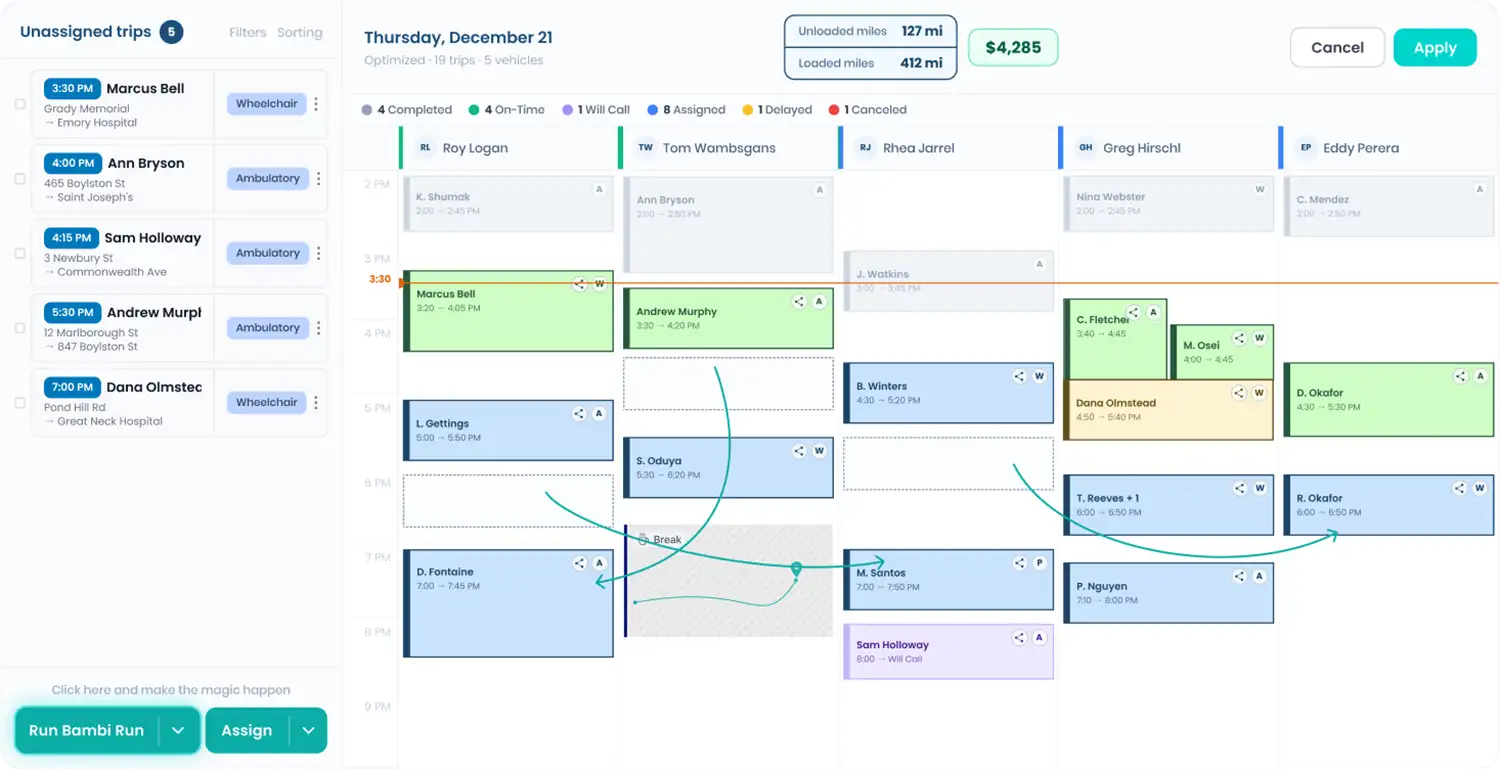
[17:21] Howard Berkowitz: The the product is very easy to use.
[17:24] Howard Berkowitz: Um, it literally you don't need any type of, you know, uh, degrees to use it yet.
[17:30] Howard Berkowitz: I it's highly functional. It's it's highly uh AI uh driven and it allows individuals to really really take control of their business and make their lives much easier.
[17:42] Howard Berkowitz: And and a lot of the other products that are out there are just they have just too much stuff in there, you know, for at least a startup.
[17:49] Howard Berkowitz: Uh maybe a bigger guy maybe wants that stuff, but I can't see why.
[17:53] Howard Berkowitz: And and again, I've been doing this for quite a while and you know, it just too top heavy, you know, with all these different things and you don't really need that.
[18:02] Howard Berkowitz: Uh, and then at Bambi is nice because you can grow with the company and the product line um has a lot of stuff in there and they're very um reactive and take advice from clients and just overall grow
[18:18] Howard Berkowitz: and see what the industry needs and that's really important in the industry because as the industry does evolve um it's good to get on board with an individual company that really understands the needs of the non-emergency space and
[18:33] Howard Berkowitz: I think they really do that where a lot of guys have just really said oh what do you need what do you and they develop stuff for one company and it's really very very segmented to that company and
[18:44] Howard Berkowitz: most other guys don't need it so it becomes very top heavy overall um and you know that that's pretty much uh you know what ends up happening so consulting is an important part um I urge people to do again
[19:00] Howard Berkowitz: do their homework first before they come to me uh or come to a any kind of consultant.
[19:06] Howard Berkowitz: Uh if you don't know how to do it, hire somebody who does because it'll allow you to spend x amount of dollars upfront to understand the market before you invest thousands thousand dollars in vehicles.
[19:20] Howard Berkowitz: And you know, before you do any of that stuff, you really really need to do your homework.
[19:24] Howard Berkowitz: It is paramount. Uh I have guys that come in and buy vehicles and do this and do that.
[19:30] Howard Berkowitz: and find out that they can't use these vehicles or uh they invest in a stretcher vehicle and find out stretcher is not allowed in their particular local of government area in certain states.
[19:43] Howard Berkowitz: Um overall they really need to plan and I just go by the adage that uh when people fail to plan they plan to fail and again do your homework and make sure you understand what's going on and you
[19:57] Howard Berkowitz: know how everything works. when they fail to plan, they plan to fail.
[20:03] Nirav Chheda: I like that. Howard, I just got to point out for the audience, you know, I've known you as long as I've been in the NEMT industry and you're one of the few people who has over three decades of
[20:17] Nirav Chheda: experience in this industry and you've been consulting for NEMT companies for a large amount of that time.
[20:24] Nirav Chheda: Nobody stays in this industry as long as you have unless they have a genuine passion for what they do.
[20:32] Nirav Chheda: And this isn't just coming from me.
[20:33] Nirav Chheda: This is coming from Bambi customers who I've spoken with about you.
[20:36] Nirav Chheda: You know, they tell me Howard has a genuine passion for this and his help for our business comes from a genuine place.
[20:44] Nirav Chheda: So, I just want to say, you know, Howard, I'm really honored to have you on um to have you as a friend and adviser, and thank you so much.
[20:53] Nirav Chheda: And I think the info that you're giving everyone is so invaluable, not to be underestimated.
[21:00] Nirav Chheda: Um thank you so much. Are there any final thoughts you want to leave the audience with?
[21:04] Howard Berkowitz: No. Again, just do your homework.
[21:07] Howard Berkowitz: Pay attention to what's out there.
[21:09] Howard Berkowitz: Um you can read. There's nothing wrong with educating yourself and understanding the industry, but don't get wrapped up in a lot of the stuff.
[21:18] Howard Berkowitz: A lot of the stuff is marketing stuff and pushes this and that.
[21:21] Howard Berkowitz: Um, you know, see what else is going on out there.
[21:25] Howard Berkowitz: See the competitors out there. You know, make sure you educate your team so they can make the right maneuvers and understand things and how things work.
[21:35] Howard Berkowitz: safeguard your passengers and just overall, you know, pay attention to the industry, get involved.
[21:41] Howard Berkowitz: Uh, NEMTAC is a is a great place to get involved.
[21:44] Howard Berkowitz: Um, you know, just overall, you know, get involved and make a difference.
[21:49] Howard Berkowitz: That's what NEMTAC does. It helps write those standards, uh, which do not exist currently in the marketplace today for the most part, but they will very, very soon.
[21:59] Nirav Chheda: Run, Bambi, run. Awesome. Thanks Howard.