[0:00] Nirav Chheda: You're running a world-class NEMT operation, and you're the only one in your whole country that's doing it.
[0:07] Muthuri Kinyamu: I'm very happy to connect with you because I've learned a lot from your episodes.
[0:24] Nirav Chheda: Welcome back to NEMT Experts. I have a very special guest with me today, our first international podcast guest.
[0:33] Nirav Chheda: It's Muthuri Kinyamu, who has started NEMT Kenya, which services Nairobi, Mombasa, and all of Kenya.
[0:41] Nirav Chheda: Muthuri is pioneering NEMT in his home country and running a world-class operation that we actually have things to learn from here in the US.
[0:50] Nirav Chheda: Hujambo.
[0:52] Muthuri Kinyamu: Yes, sijambo.
[0:54] Nirav Chheda: Tell me about your story of of starting the transportation business in Kenya.
[0:59] Muthuri Kinyamu: I've been in tourism for about 12 years now. I I started with tourism.
[1:06] Muthuri Kinyamu: And my previous company was called Turnup Travel, and we used to do inbound travel into Kenya from the US, UK, and and produce content.
[1:18] Muthuri Kinyamu: Then come COVID is when I did tour into accessible tourism. And this is us just trying to reimagine the new normal for for for tourism.
[1:30] Muthuri Kinyamu: But it was inspired by a client, a friend of ours, who lost her eyesight just around COVID, 2021 thereabouts.
[1:39] Muthuri Kinyamu: So we were just tinkering on what to do. You know, she wanted to keep traveling, and that's kind of sent me into this path.
[1:47] Muthuri Kinyamu: Now, when we thought of accessible tourism, we didn't know where to start. It's a systemic problem.
[1:54] Muthuri Kinyamu: It's very broad. You know, there are information gaps, there are infrastructural gaps, the mobility gaps, and then then disability is very wide.
[2:04] Muthuri Kinyamu: So, I purchased a vehicle that had a swivel seat. And just say, let me just start with a vehicle and see where this leads.
[2:14] Muthuri Kinyamu: You know, a vehicle will be at the airport today, next day it's at a corporate office, and it will kind of lead you into different places and stakeholders.
[2:23] Muthuri Kinyamu: So, that's what we started with, but then sooner or later or later we realized also, you know, elderly people were using the seat for medical appointments, and we didn't have a name for that.
[2:33] Muthuri Kinyamu: You know, we were just like, you know, uh this was a referral, and so the client turned out to be an elderly person, the client turned out to be a wheelchair user who could transfer.
[2:44] Muthuri Kinyamu: And then that's when I started um sort of like looking for the packaging, you know, for this.
[2:54] Muthuri Kinyamu: Uh so, initially our medical transportation business was part of, you know, a service under accessible travel, but as it grew broader, we realized we needed to separate these two businesses because they have very different stakeholders,
[3:11] Muthuri Kinyamu: they need different certifications, and in a nascent market like this where uh regulation is catching up, we kind of were in a space where we needed to work with regulators, work with um the tourism boards to kind of understand what medical tourism looks like,
[3:33] Muthuri Kinyamu: help develop some of the standards, and so that is how uh NEMT mobility then is later born as a standalone business and operates as such.
[3:44] Nirav Chheda: How long ago did you start the NEMT business?
[3:47] Muthuri Kinyamu: Back to 2023, you know, that's kind of when we, you know, as a service line and accessible travel.
[3:56] Muthuri Kinyamu: Then much later, 2024 towards the end is now when we kind of started spinning it off as, you know, as a business on its own, acquired more vehicles.
[4:11] Muthuri Kinyamu: And then from there we started getting into partnerships with airlines, with hospitals. So it's it's it's it's grown sort of organically.
[4:21] Muthuri Kinyamu: You know, now we're in two cities, Nairobi and Mombasa. So, you know, it's clients lead us to to, you know, help us identify gaps.
[4:31] Muthuri Kinyamu: And then from there we we match that with inventory, grow our capacity. So it's it's it's it's been like that.
[4:38] Nirav Chheda: And how many vans do you operate with today? For NEMT?
[4:43] Muthuri Kinyamu: Under us, six. But there is a network of a 29 Kenya that we can use whenever we are fully fully maxed out.
[4:52] Muthuri Kinyamu: Yes, and that's across Nairobi and at the coast.
[4:56] Nirav Chheda: Okay, so 29 NEMT vans across Kenya that are in your network.
[5:02] Muthuri Kinyamu: Yes.
[5:03] Nirav Chheda: So you partner with other NEMT businesses throughout Kenya?
[5:07] Muthuri Kinyamu: These are These are like vehicle owners who went and discovered maybe they bought a vehicle with the ramp, they bought a vehicle that had a swivel seat.
[5:18] Muthuri Kinyamu: You know, so they can do medical transportation now with that capability, but not like proper structured, you know, NEMT business kind of thing.
[5:30] Muthuri Kinyamu: That doesn't really exist yet, you know, as as in that scale. So that's what we are trying to to to mainstream and standardize.
[5:40] Muthuri Kinyamu: But the regulation is not really there yet Um, because our medical act only recognizes BLS and ALS ambulances.
[5:53] Muthuri Kinyamu: So, it has no category for utility vehicles as ours. So, that's a regulatory gap that we're trying to kind of develop.
[6:02] Nirav Chheda: On the regulatory side, it's not too different in the US as well.
[6:05] Muthuri Kinyamu: Yes. Yes.
[6:06] Nirav Chheda: Not as regulated as we would like.
[6:10] Nirav Chheda: That's one thing that Kenya and the US have in common.
[6:15] Muthuri Kinyamu: That's good to hear and you've done it much, much longer, you know.
[6:18] Nirav Chheda: Muthuri, tell me about how you got into these partnerships with airlines and hospitals.
[6:25] Muthuri Kinyamu: Well, because of my background in tourism, we're already working with airlines as, you know, um either a supplier or, you know, in my previous business, you know, I'm still working with Kenya Airways to do their content and events and,
[6:43] Muthuri Kinyamu: you know, CSR activities. So, I have some network over there. So, when we started talking about accessible tourism, Kenya Airways was also developing a product for passengers with reduced mobility.
[6:57] Muthuri Kinyamu: Uh, of course, for them, this is much broader in terms of their customer journey, but then there was a gap when it came to that last mile connectivity to and from the airport.
[7:08] Muthuri Kinyamu: So, you are natural fit and not something that the other suppliers would would do for them.
[7:15] Muthuri Kinyamu: Then comes integration. So, integrations matter because sometimes airlines are running on third-party uh systems and uh you also have uh data protection in terms of what they can share.
[7:31] Muthuri Kinyamu: So, they're in a regulated space. So, that's been the hardest piece to navigate based on what what integration would look like uh and vis-a-vis what compliance and legal would allow them to to run with.
[7:46] Muthuri Kinyamu: So, but we kind of find seem to now have a sweet spot of how they able to add this on the ancillary revenue services without, you know, increasing their software subscription.
[7:59] Muthuri Kinyamu: And so, they're able to add that capability and and, you know, enable their guests, mostly transiting through Nairobi or Mombasa, to to to book a transfer on one single system.
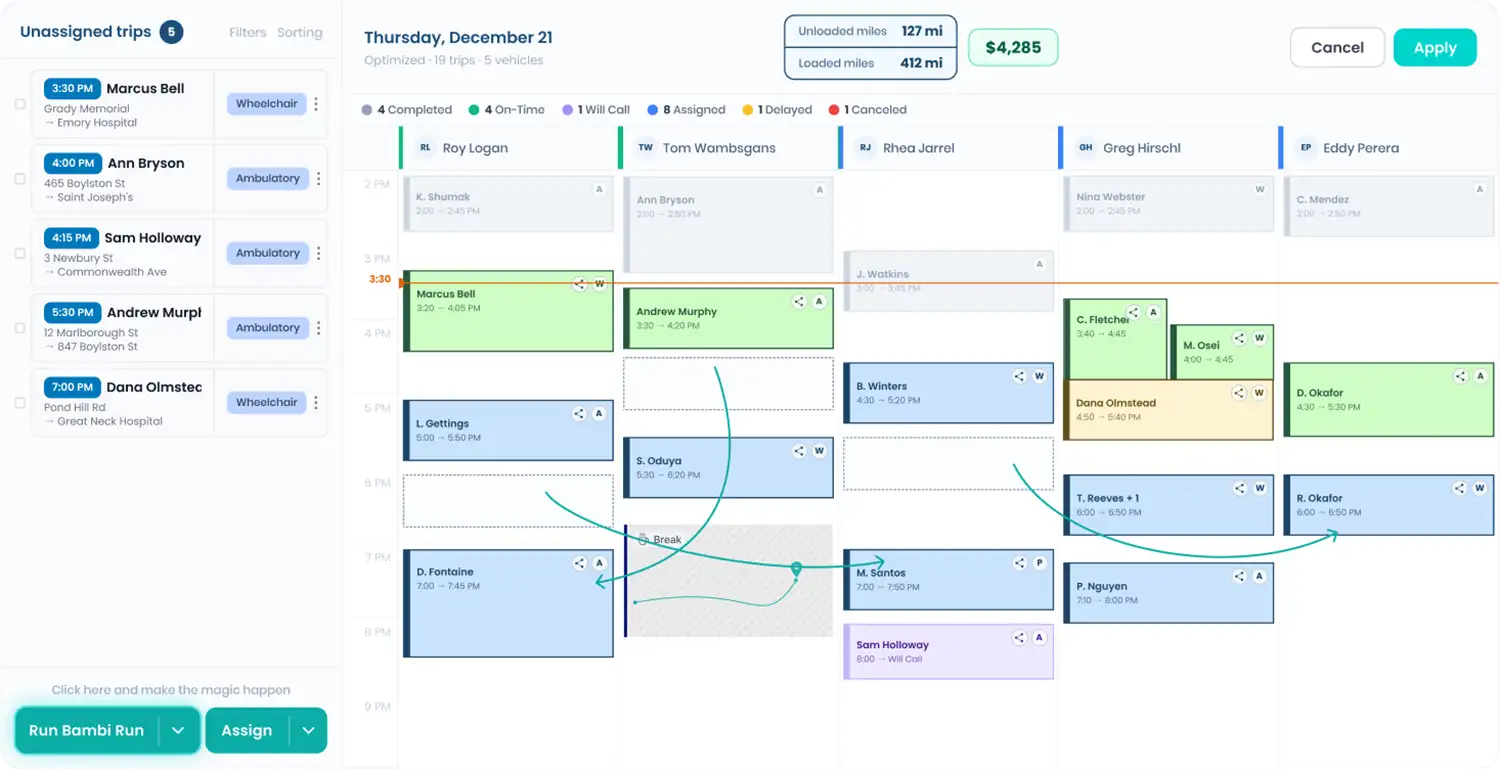
[8:14] Nirav Chheda: I see. And do you use software right now to manage your fleet and do dispatching?
[8:20] Muthuri Kinyamu: Yeah, we have a SaaS product where we log in trips, we, you know, clients and and and journeys that have been scheduled or completed.
[8:33] Muthuri Kinyamu: Because again, these are scheduled trips. Very, you know, we rarely don't we don't do emergency trips.
[8:39] Muthuri Kinyamu: So, we are able to kind of say, "This one has been taken for 30 days.
[8:43] Muthuri Kinyamu: This one has 7 days around this conference. This has that." So, it's very easy to to look at our demand and availability and confirm with the clients.
[8:54] Nirav Chheda: Okay, nice. Is it like a local African software product?
[9:00] Muthuri Kinyamu: Yes, it's it's it's joint Africa. So, they are a SaaS for for transporters.
[9:06] Muthuri Kinyamu: So, they allow you to, you know, add clients, rates, and create routes. And then from there, you once you have like a scheduled trip, you have you then to go there and create an an sort of an a ride,
[9:21] Muthuri Kinyamu: assign it to a driver, you know, then you can see the vehicles that are due for maintenance, insurance expiring.
[9:28] Muthuri Kinyamu: It it kind of helps us now, you know, move that clutter out of the WhatsApp and and emails to one single place of truth.
[9:37] Muthuri Kinyamu: Yeah.
[9:37] Nirav Chheda: Yeah.
[9:39] Muthuri Kinyamu: Yeah.
[9:39] Nirav Chheda: Vehicle insurance. I guess you guys deal with the same problems that American NEMT businesses do.
[9:47] Muthuri Kinyamu: What do Americans go through?
[9:49] Nirav Chheda: Uh Americans uh say that vehicle insurance is one of the biggest increasing costs for them over the years.
[9:57] Nirav Chheda: I don't know how it is in Kenya. Is it similar?
[10:00] Muthuri Kinyamu: Um here we are doing a comprehensive PSV insurance. Um then from there because our categorization is not as an ambulance, uh we we sort of are looked at as like tourist service vehicles.
[10:17] Muthuri Kinyamu: But now on the certifications on the drivers, you give them like some paramedic training so that they're able to do first aid, basic life support, uh disability etiquette to handle uh patients and and travelers,
[10:31] Muthuri Kinyamu: you know, uh better. So, that's what we call complement both on the on the vehicle and on the on the on the drivers to ensure that someone has, you know, a good ride.
[10:44] Nirav Chheda: What does the business look like on a day-to-day basis? You said you have six vans and you have access to 29 vans total with the other one-off people who own their own vans.
[10:57] Nirav Chheda: So, how many vans are getting used every day? How many transports are being done?
[11:03] Muthuri Kinyamu: We have um a contract here with one of the largest uh hospitals. So, some do lease vehicles long-term.
[11:12] Muthuri Kinyamu: So, we they lease a vehicle with a with a driver and they do like two shifts uh both daytime and nighttime.
[11:21] Muthuri Kinyamu: So, that's one line of uh of work or stream that still just does, you know, medical transportation, but now for their old clients.
[11:30] Muthuri Kinyamu: We have now the regulars like, you know, uh family A that goes for appointments twice weekly.
[11:39] Muthuri Kinyamu: So, they can subscribe to a bundle and would always send a vehicle to them.
[11:44] Muthuri Kinyamu: So, our business because it sits in the middle of healthcare and tourism, if you part of the fleet sometimes is used for conferences, for leisure visitors coming into Kenya, for Kenyans in the diaspora visiting home for like 2 weeks,
[12:01] Muthuri Kinyamu: 3 weeks. So, they lease a vehicle and use that for the period they're in Kenya.
[12:06] Muthuri Kinyamu: Um because tourism is seasonal, you have now these, you know, spikes in in industrialization.
[12:13] Muthuri Kinyamu: But medical is a bit more evenly spread out, you know, across the month.
[12:19] Muthuri Kinyamu: So, at any point we are running maybe at, you know, 2/3 of the fleet.
[12:24] Muthuri Kinyamu: And it goes up to, you know, 120. Now we have to now outsource especially because of the long leases.
[12:32] Nirav Chheda: And and the people you're actually selling this to are often adult people who are booking rides on behalf of their elderly parents in Kenya.
[12:42] Nirav Chheda: Is that right?
[12:44] Muthuri Kinyamu: It some could be that. Some could also be like, um let's say, a younger generation that's of course finds us on social media, finds our vehicles videos and stuff.
[12:59] Muthuri Kinyamu: And they would be more of the people who get this information and then they're able to pull and book, you know, being that they're a bit digital savvy.
[13:09] Muthuri Kinyamu: But it could also be an organization that's trying to support one of their colleagues who's had maybe an accident for a few trips uh to appointments.
[13:21] Muthuri Kinyamu: It could be a church that wants to support, you know, uh, a disabled member, you know, to to to come to church regularly.
[13:30] Muthuri Kinyamu: It could be, uh, uh, you know, a social welfare group looking out for one of their own.
[13:36] Muthuri Kinyamu: So, there, you know, and and we have different bundles, not just the Tibba one.
[13:41] Muthuri Kinyamu: So, there's like a frequent flyer. We have one for like a visitor who just needs a return airport transfer and maybe a city tour.
[13:52] Muthuri Kinyamu: So, there there we've developed a number of them just for different use cases that are easy plug and play.
[13:58] Nirav Chheda: Do Would you say that most of your customers find you through social media?
[14:03] Muthuri Kinyamu: Yes, social media be first, you know, for discovery. They can then go to the website, see if the different things we offer, referrals.
[14:13] Nirav Chheda: Muthuri, you have a very professional-looking website. You know, I was just showing earlier.
[14:18] Nirav Chheda: But, it it's really No, I I'm complimenting you on this. This is a a really nice website.
[14:24] Muthuri Kinyamu: Yeah.
[14:25] Nirav Chheda: Someone comes to this and they see that, "Okay, this is a very professionally-run operation."
[14:30] Muthuri Kinyamu: Yeah. Thank you.
[14:33] Nirav Chheda: Yeah. You Your pricing is listed clearly. Um, tell me, I mean, it seems like you don't really have any competitors in your entire country.
[14:45] Nirav Chheda: Is that right?
[14:47] Muthuri Kinyamu: There are There is a There is a As I mentioned, you know, if if you're looking at like disability-friendly transport, there's a a company There are two operators who do like, you know,
[14:59] Muthuri Kinyamu: cater to Anyone who's doing multigenerational travel is handling, you know, elderly people. Some come with, you know, their slow walkers.
[15:08] Muthuri Kinyamu: But, to the level we have, you know, we are doing NEMT, no one is No one has the capabilities we have.
[15:16] Muthuri Kinyamu: If someone asks for like, uh, you know, "Take me to the hospital," they either get a regular taxi or an ambulance.
[15:24] Muthuri Kinyamu: So, we have been trying to now push for There is a middle here, which is you know, um safer, more convenient, adapted, that's not you know, an ambulance.
[15:38] Muthuri Kinyamu: And also it's not as basic as a regular Uber. Uh and and that's been catching up because, you know, you it's a lot more comfortable to people.
[15:49] Muthuri Kinyamu: But, you know, health care struggles to where to place us. So, they're like, are you guys a regular car hire taxi company or, you know, but these are not ambulances.
[16:00] Muthuri Kinyamu: So, unlike the US where I think NEMT is widely understood and and and accepted and funded.
[16:09] Muthuri Kinyamu: Here, our clients are private pay. So, they're always comparing between your cost vis-à-vis what a regular car would cost vis-à-vis what the ambulance charges them.
[16:20] Nirav Chheda: You know, you mentioned that there's a seasonality to your business. Now, is that just on the tourism side mostly or does it also heavily impact your NEMT side?
[16:30] Muthuri Kinyamu: You know, people with disabilities plan trips way far ahead, way out of, you know, way way ahead.
[16:38] Muthuri Kinyamu: So, there are people planning for 2028 trips to Kenya already. Um but you need to have these regular trips that keep you running.
[16:47] Muthuri Kinyamu: Doing contracts with hospitals, which now gives you like a long-term
[16:52] Muthuri Kinyamu: commitment, a quarter, a year, has also helped us, you know, utilize a fleet a bit better.
[16:59] Muthuri Kinyamu: But also keeping some for ourselves also ensures that anytime you make a call, we don't turn you away because we didn't have availability.
[17:09] Muthuri Kinyamu: So, that's So, it's it's both and we also use the downtime for for marketing, for demos, for, you know, showcases, for our own content.
[17:19] Muthuri Kinyamu: So, you know, if we are not serving clients, we are out marketing, we are out doing business development, we are out visiting facilities, you know.
[17:32] Muthuri Kinyamu: So, it it kind of works out to ourselves somewhat, one way or the other.
[17:37] Nirav Chheda: Nice. And you mentioned you you keep a certain vehicle or some vehicles on the side, so you always have capacity to take in calls from people and you don't have to turn them away.
[17:49] Nirav Chheda: How are you able to keep those vehicles free? I mean, are you turning people away to keep the vehicles free?
[17:55] Muthuri Kinyamu: No, no, no, no, no. What I mean is, for example, if someone comes to us like a family and say they need um
[18:02] Muthuri Kinyamu: to lease a vehicle, I would ask them, because you you you just need to move maybe three or four times a week, you know?
[18:10] Muthuri Kinyamu: You don't necessarily need to lease that vehicle and take it off our our inventory.
[18:16] Muthuri Kinyamu: You know, it's good money, but then if if we are not showing up at more places and more facilities and more homes, then people don't discover the service.
[18:25] Muthuri Kinyamu: So, there is an opportunity cost to that, you know? So, we are not like declining rides, we are just offering an alternative and saying, "Hey, we can still, you know, book this bundle and it gives you priority whenever you need to.
[18:39] Muthuri Kinyamu: We have a number of vehicles, so there will no be no time where we are unavailable, you know, um Again, we also encourage, you know, uh like book at least 24 hours in advance,
[18:53] Muthuri Kinyamu: so that then we are able to to do scheduling and see where there are gaps.
[18:57] Muthuri Kinyamu: Um but above all, the idea is to if you call us three, four times or twice and and if the answer is, "Oh, you know, all our vehicles are out," then you start now saying,
[19:10] Muthuri Kinyamu: "Okay, these guys are never available. So, you never call back. So, I would like to still serve someone who's reached out and probably because those who call really need the service, you know?
[19:22] Muthuri Kinyamu: So, they don't have as many alternatives as is like in the US. So, I would like to to at least take that burden off that family.
[19:31] Muthuri Kinyamu: Get them that. And then it becomes really part of the highlight of the evenings.
[19:37] Muthuri Kinyamu: People are now using them for like social events, recreation. So, it's just gone beyond medical.
[19:43] Muthuri Kinyamu: And that gives us a lot of joy because these are now families that have taken back that agency to you know, go out to dinner with this person.
[19:54] Muthuri Kinyamu: Go out to worship, go to a nature trail. And and that's important from, you know, a psychological or a wellness perspective that people don't just associate these vehicles with treatment and pain.
[20:11] Muthuri Kinyamu: They could also deliver joy.
[20:13] Nirav Chheda: I think a lot of the NEMT business in the US can learn a similar lesson here.
[20:18] Nirav Chheda: It's not just about taking people to their health care. It's about taking people to wherever they need beyond health care so they can actually live their lives.
[20:27] Muthuri Kinyamu: We've proven that with the infrastructure that we are building that you could run a you know, a business like this over here.
[20:35] Muthuri Kinyamu: Whether that inspires someone to invest in their own unit and add to that network of 29, it's good, you know, because people will start now asking for these vehicles in in other towns,
[20:48] Muthuri Kinyamu: in other places, you know, for other use cases. And so, it's for me the greater good is is is more meaningful than our share of it, you know?
[20:58] Muthuri Kinyamu: So, we need to grow the cake. We need to grow the the pie first.
[21:02] Muthuri Kinyamu: And then, you know, if you have a slightly bigger piece, your friends and others still have a piece that's sizable, too, you know.
[21:10] Nirav Chheda: How do you think about driver training?
[21:13] Muthuri Kinyamu: It's necessary because one, for safety, two, for confidence, and and three, for standardized service.
[21:21] Muthuri Kinyamu: So, where you know, no matter who is on that ride, you're certain that, you know, of course, when you're starting, people have, "Oh, I want Muthuri to come pick me."
[21:32] Muthuri Kinyamu: Next it's Jimmy, next is Hamisi, so next is someone else. But with training, you're able to standardize that service so that the client just buys into the service, not an individual, you know?
[21:46] Muthuri Kinyamu: Uh, the second thing is, um, if you don't do it right, then, you know, this is just someone's life treatment.
[21:55] Nirav Chheda: It's incredible. It's like you're running a world-class NEMT operation, and you're the only one in your whole country that's doing it.
[22:03] Muthuri Kinyamu: Yeah, it's it's it's it's interesting, you know? I I think your podcast has really, you know, been, you know, I listen to guys speak on how they started, how they run, what inspired them,
[22:16] Muthuri Kinyamu: compare notes, you know, see what we could pick from that. For me, I think those are the things that we live for, knowing that the impact, you know, someone has not left their home for 3 years,
[22:28] Muthuri Kinyamu: you know? Being able to go to church. It's it's transformational in ways that you cannot not even money can buy because yeah, for me, that's that's what counts mostly, you know?
[22:42] Muthuri Kinyamu: Being able to take people on safari that thought it was not possible for them, you know?
[22:48] Muthuri Kinyamu: Um, and and thinking through the barriers they may experience and what we need to have in place for them to not only just do it, but do and enjoy, you know?
[23:00] Nirav Chheda: This this is really just making my day and my week, honestly.
[23:05] Muthuri Kinyamu: I'm very happy to connect with you because I've learned a lot from your episodes.
[23:10] Nirav Chheda: I'm just so excited. I've never done any, you know, international podcast episode before.
[23:16] Nirav Chheda: You're my first.
[23:18] Muthuri Kinyamu: Your your your system or software should follow suit now. Open it to Africa, you know.
[23:24] Nirav Chheda: I know. I know, right? I hope I hope someday soon.
[23:28] Muthuri Kinyamu: Yeah, you have the first client waiting.
[23:33] Muthuri Kinyamu: Run, Bambi, run.