About this episode
Derrick Edwards runs Premier Transit in Mobile, Alabama, and built the company on stretcher transport, the one service no other NEMT provider in Mobile County offers. He charges roughly a third of the 1,000 to 1,600 dollars an ambulance bills for a round town trip, saving facilities 800 to 1,000 dollars a ride, and he covers five counties with about eight people on payroll. Edwards credits deliberately slow organic growth, advice from a retired operator who watched million dollar companies fold under 950,000 dollars of overhead, and paying staff above the floor rather than chasing volume.
Key takeaways
- Edwards prices stretcher work against ambulances, not other vans. An ambulance bills 1,000 to 1,600 dollars for a round town trip and Premier Transit runs it for about a third.
- He deliberately has not pitched stretcher service to outside facilities yet, because he runs only one stretcher vehicle and refuses to take volume he cannot cover.
- His partner's uncle, a retired NEMT operator in Virginia, described firms with eight to 10 vans billing a million a year and folding in two years under 950,000 dollars of overhead.
- Edwards holds his rate rather than undercut himself. He says brokers come back, and broker trip notes now read client requests Premier Transit more often than he can fill.
- Before auto assigning, he locks riders to vehicles: an electric wheelchair runs 400 to 500 pounds and a 300 pound passenger pushes an 800 pound lift to its limit.
Chapters
- 0:00 Introduction
- 0:21 Winning with stretchers
- 2:51 Organic growth
- 6:15 Compensate staff right
- 7:38 Helping other NEMT providers
- 10:23 Negotiating rates
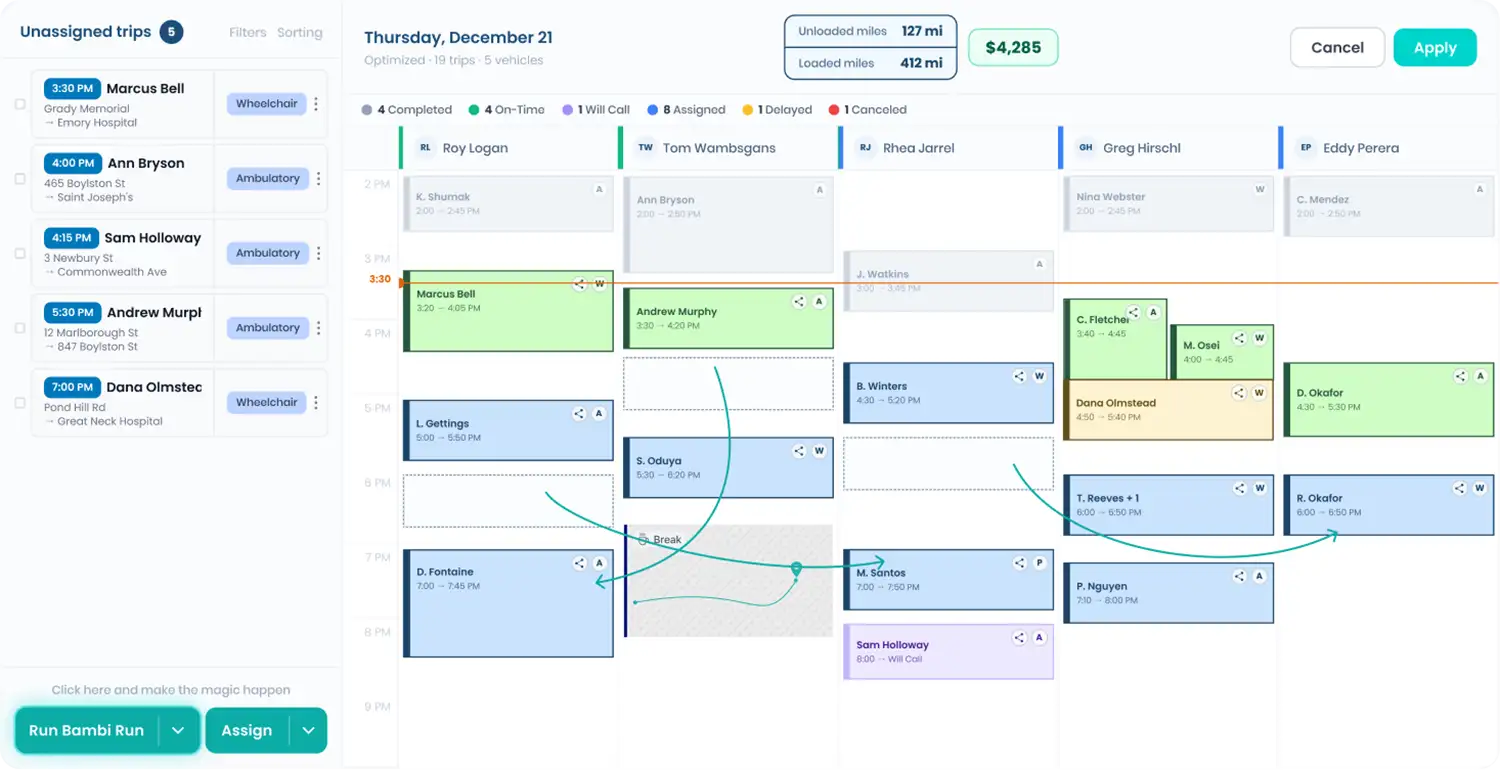
- 11:35 Bambi software is needed
- 16:14 "Run Bambi Run" auto-scheduler
- 21:30 Bambi is the one