About this episode
Jeremy Scalzi, director of business development at M7 Ride in Connecticut and vice chairman of the NEMTAC board, runs a fleet his father started in 1987 with 15 taxis and grew past 160 vehicles statewide. M7 added Medicaid transportation in 1988 and still runs an independent contractor model in which drivers lease a vehicle one week at a time, set their own hours, and can sit out a week entirely. Scalzi's father lobbied the Connecticut legislature for 12 years before the state approved M7 in 2009 as its first wheelchair accessible transportation provider.
Key takeaways
- M7 Ride leases vehicles to drivers one week at a time, so a driver who earned well can skip the next week. Surveys asking drivers if they wanted employee status came back no.
- Before moving employees onto a contractor model, Scalzi says settle how much control you are willing to surrender, then talk to a labor attorney because the rules differ by state.
- A sedan sells three products, not one. Adding door-to-door, door-through-door, and person-to-person to curb-to-curb lets you contract with facilities for assistance your drivers already give away free.
- Any broker API built for ride sharing needs an immunocompromised flag, Scalzi says, because those passengers cannot be shared, and the routing engine has to honor the flag.
- NEMTAC standards move from volunteer committees to the board and then into public comment. Scalzi says defining one term, pickup time, is wildly more complex than anyone expects.
Chapters
- 0:00 Introduction
- 0:21 Background of Jeremy and M7 Ride
- 5:15 Drivers as contractors
- 9:44 Selling NEMT services against competitors
- 12:50 Becoming healthcare adjacent
- 17:52 API integrations with brokers
- 21:01 Standards across the NEMT industry
- 23:35 TTA and NEMTAC
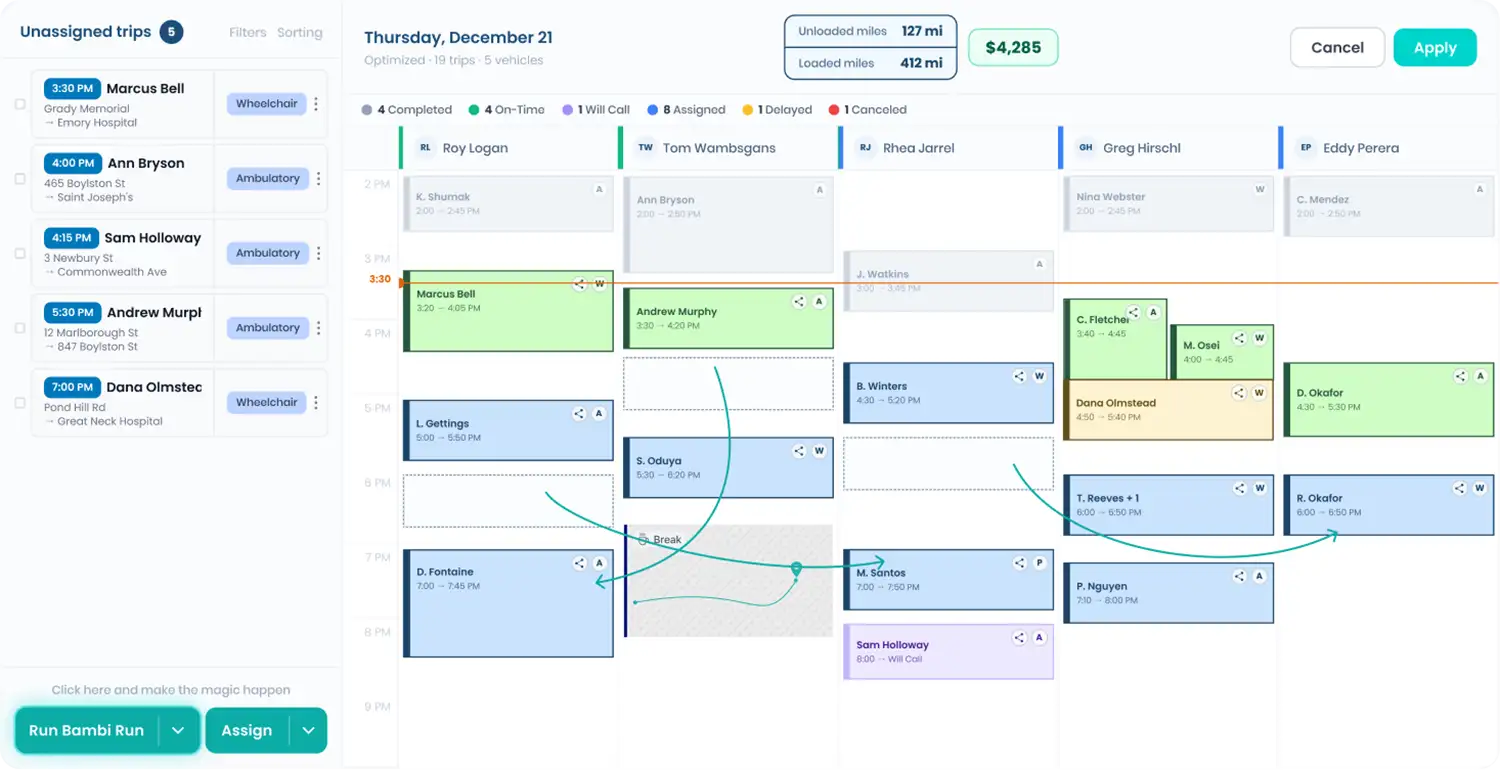
- 26:45 RUN BAMBI RUN!!