About this episode
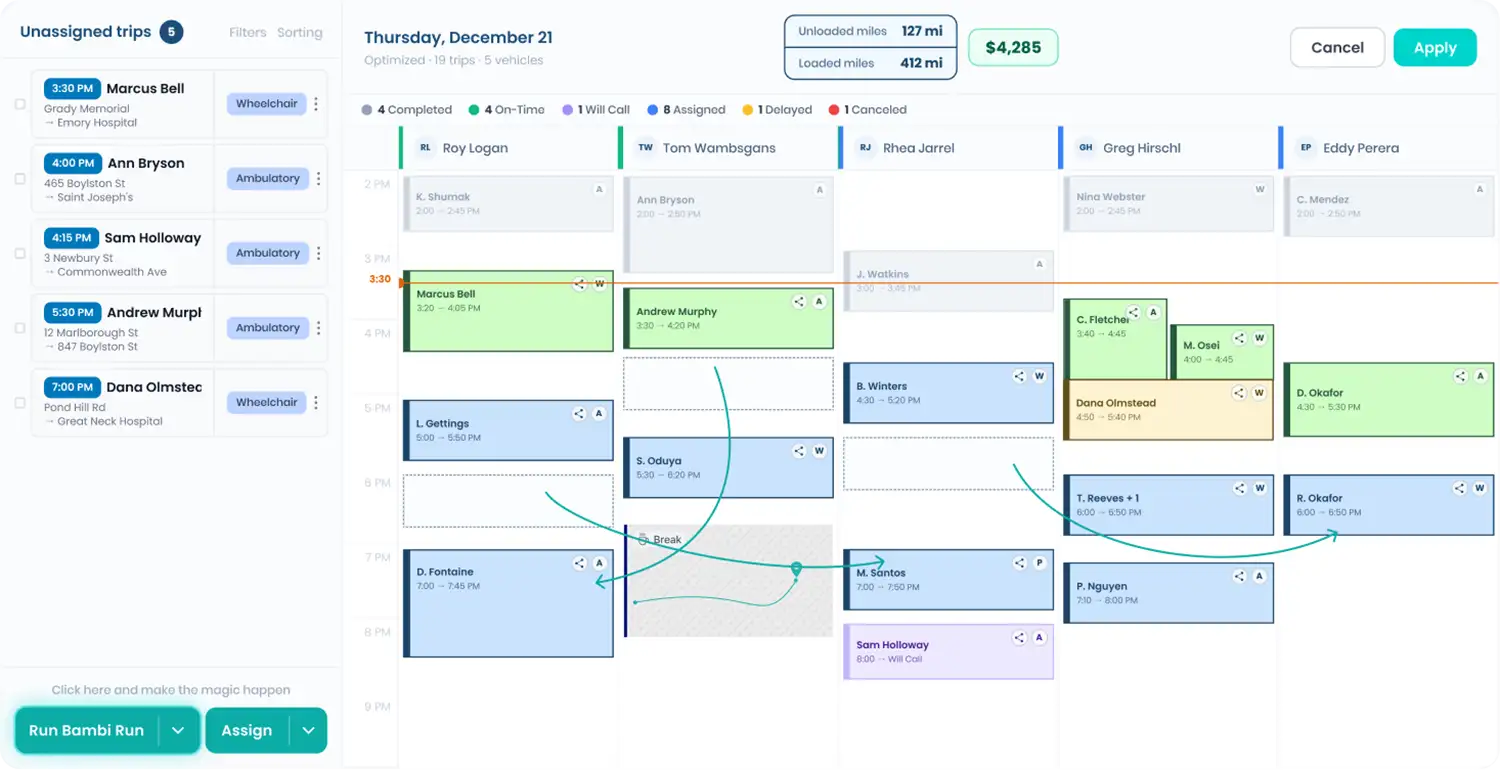
Scott Symonds, owner of SMART Ride in rural New Hampshire, spent 32 years in EMS, fire and law enforcement, then emptied the family savings and went from decision to licensed and on the road in about 31 days. He expected 8 to 12 trips a week; three years later SMART Ride averages 48 to 56 trips a day across an eight vehicle fleet, largely because hospitals that once held discharges until a BLS ambulance freed up now call him. Growth that fast broke the pencil and paper desk calendar they started on, double booking rides, and forced the move to dispatch software.
Key takeaways
- Symonds went from decision to licensed, credentialed and road ready in about 31 days, running it with his wife and their oldest daughter Kim as the first driver.
- Broker credentialing brought volume they had not sized, and the paper calendar produced double bookings they handled by admitting the mistake up front and helping reschedule the trip.
- SMART Ride runs around the clock, which in practice means a 3 AM hospital discharge that finishes just before the 5 AM dialysis transports start.
- Regional EMS is squeezed by a declining workforce and rising call volume, so discharges that once waited on a BLS truck now route to NEMT and free the ambulance for 911 calls.
- Symonds stalled on software over cost fear, then bought in for connectivity that stores trip data through rural dead zones; the next target is 100 percent paperless by the following quarter.
Chapters
- 0:00 Introduction
- 0:39 Starting the NEMT business
- 4:17 Growing pains
- 5:27 Identifying NEMT demands
- 7:56 Diverting ambulance rides to NEMT
- 9:29 Investing in technology
- 14:38 The future SMART Ride
- 16:26 Advice to NEMT entrepreneurs
- 18:13 RUN BAMBI RUN!!