About this episode
Tony Aycock, a senior manager at Call The Car, the Southern California broker that also runs its own fleet, creates 900,000 to a million reservations a month and completes or no-shows about 850,000 rides. Moving its in-house fleet onto real-time routing cut daily fleet routers and dispatchers from seven or eight to one or two, with nobody laid off and the rest moved onto the subcontractor network. Aycock's advice to providers is to finish credentialing before chasing volume and to specialize in wheelchair work, roughly 15 percent of trips, instead of joining 200 providers fighting over the 5 percent that is gurney.
Key takeaways
- Call The Car creates 900,000 to a million reservations a month against California health plans including LA Care, Blue Shield, and Inland Empire Health Plan, serving tens of thousands of individual patients.
- Fleet routing staff went from seven or eight people a day to one router plus about two regional monitors. Nobody was cut; the rest were moved to placing trips with subcontractors.
- Credentialing gaps stall new vendors for weeks or even months: missing vehicle inspections, incomplete vehicle lists, and the LADOT permits required across large parts of Los Angeles.
- Gurney work pays more in every market but the volume is capped. Aycock puts it near 5 percent of trips with roughly 200 providers competing, against 15 percent wheelchair that few chase.
- The in-house fleet is branding and white glove service rather than a profit center, so Call The Car is turning on multi-loading to make long Inland Empire routes pay.
Chapters
- 0:00 <Untitled Chapter 1>
- 0:25 Introduction: Meet Tony Aok from Call the Car.
- 0:53 The scale of operations: Managing 1,000,000 reservations a month.
- 2:09 How technology enabled massive growth.
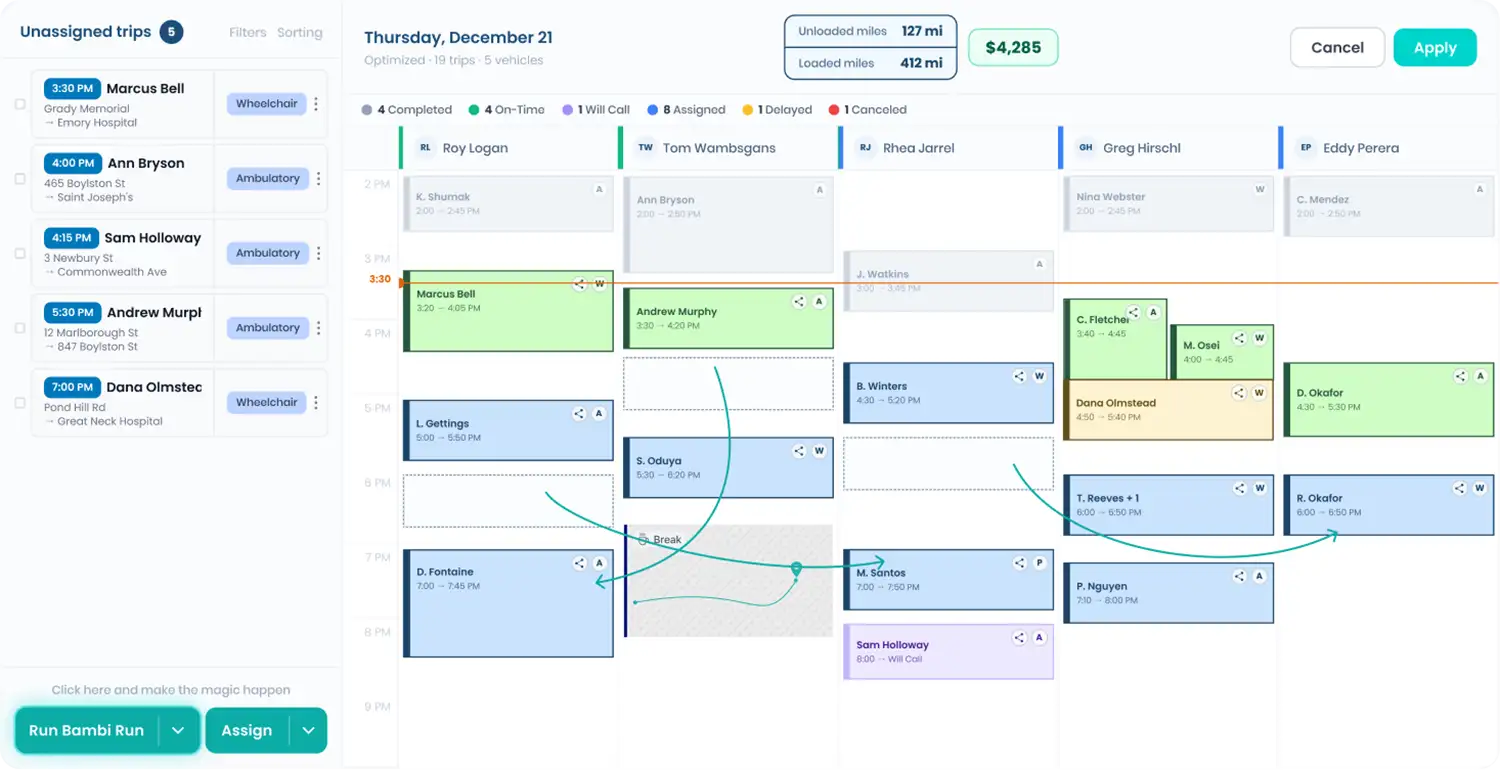
- 3:19 Switching to Bambi: Real-time routing and performance gains.
- 4:19 Workforce management: Reallocating dispatchers for better efficiency.
- 5:31 The impact of "Run Bambi Run" on subcontractor networks.
- 8:11 Handling expansive regions like the Inland Empire.
- 10:00 Multi-loading and making a fleet more profitable.
- 11:37 Advice for NEMT providers: Credentialing and avoiding common pitfalls.
- 13:07 Market strategy: Finding the "low-hanging fruit" in wheelchair transportation.