[0:02] Nirav Chheda: us. Uh I'm Bambi CEO Nirav Chheda and I'm here with NEMT expert Ray Hagan.
[0:29] Nirav Chheda: organization that consults new businesses, particularly NEMT businesses on getting from zero to one.
[0:36] Nirav Chheda: And he is the vice president at WellTrans, which is the largest NEMT broker in the state of Indiana.
[0:43] Nirav Chheda: Ray, thanks so much for being with us.
[0:45] Ray Hagan: Yeah, thanks for having us. Uh super excited to be on today and kind of talk through, you know, kind of that initial getting started at that jumping off point for for people who are looking to get into the
[0:58] Nirav Chheda: NEMT space. Awesome. So Ray, what we're going to do today, as we've discussed, is a lightning round.
[1:04] Nirav Chheda: We have about 15 topics that any companies need to think about.
[1:10] Nirav Chheda: We're going to spend just one to two minutes, you know, at high speed on each topic and jump from topic to topic and then of course we can dive into these topics in future talks.
[1:21] Nirav Chheda: So let's get Number one, deciding to open an NEMT business.
[1:29] Nirav Chheda: So I mean the business isn't just about driving.
[1:31] Nirav Chheda: It's about ensuring safe, reliable, and compliant transport for those in need.
[1:36] Nirav Chheda: talk to us about the commitment involved and deciding to open an NEMT business.
[1:41] Ray Hagan: Absolutely. So, I think the first thing that individuals need to think about when deciding whether or not to open an NEMT business, the reason behind it, right?
[1:53] Ray Hagan: Because when you're owning and running an NEMT business, you're dealing with people.
[1:59] Ray Hagan: people of all different kinds, backgrounds, ethnicities, um, social determinants, health determinants, all those things.
[2:08] Ray Hagan: So, so going into it with the understanding that you're going to be dealing with people every single day is probably the first thing that I always talk to people about when they when they ask whether or not starting
[2:20] Ray Hagan: an EMT business is is the right fit for them.
[2:25] Nirav Chheda: Okay. Thank you. [bell] Topic number two, market research.
[2:31] Nirav Chheda: So there are two aspects of this.
[2:33] Nirav Chheda: One is the demand. You know what's the demand for NEMT services in your area.
[2:38] Nirav Chheda: You know the elderly population, the disabled individuals and those without transport.
[2:42] Nirav Chheda: And number two is the is the competition, right?
[2:45] Nirav Chheda: You have to identify what other NEMT providers are in their area and how you would compete against them.
[2:50] Ray Hagan: So talk to us. Yeah. So with market research, there's a lot of things that go into it, right?
[2:57] Ray Hagan: Every state is a little different.
[2:59] Ray Hagan: Every geography is a little different.
[3:02] Ray Hagan: Um the first thing that I always try to point out is understanding how an individual's geographic area works, right?
[3:13] Ray Hagan: From a from a competition standpoint, from a need standpoint.
[3:16] Ray Hagan: Um, so in Indiana there are multiple brokers who operate in the same geography, right?
[3:24] Ray Hagan: So if a if a individual is coming and wanting to open up an EMT business here in Indiana, the first thing that we look at is what is the need, right?
[3:35] Ray Hagan: What is the need in their particular area?
[3:38] Ray Hagan: And you can find that out first of all just by contacting brokers.
[3:43] Ray Hagan: If your geography has a brokered N&T service, right, it's the first place to start.
[3:51] Ray Hagan: It's very easy to reach out to them, ask what the need in that general area is and getting get an understanding of what a typical day's volume would look like.
[4:02] Ray Hagan: Uh the second thing that I would look into is what are the local facilities and local nursing homes, dialysis centers, hospitals, all those different facilities that need and require NEMT transportation for their Some of those states and geographies
[4:23] Ray Hagan: allow for private independent contracting. So getting an understanding from those facilities what that need what that demand is.
[4:32] Ray Hagan: Is it already being filled um or are they struggling to find a quality reliable provider to come in and transport their their patients uh to and from appointments?
[4:44] Ray Hagan: And then the third thing is just putting out feelers and looking at the you know essentially the competition.
[4:51] Ray Hagan: You know who's out there right now in their general area.
[4:55] Ray Hagan: It may be a scenario where, you know, in a heavily populated metropolitan area, you're going to be up against quite a few competitors.
[5:04] Ray Hagan: However, traveling a few minutes in a different direction may put you in a slightly more rural area where there aren't providers willing to service that area.
[5:14] Ray Hagan: So, understanding the why, you know, is there not enough run volume or trip volume?
[5:20] Ray Hagan: Is there not enough um out of that area to support a driver?
[5:33] Ray Hagan: Or is it a scenario where they're just further spaced out?
[5:37] Ray Hagan: trips take longer and developing a strategy that would incorporate those types of trips um to make sure that it's a profitable uh market for you to put your your vehicles and your drivers in on a regular basis.
[5:52] Nirav Chheda: Got it. Let's move to the next topic.
[5:55] Nirav Chheda: Number three, state regulation and requirements.
[5:59] Nirav Chheda: So, every state has its requirements for NEMT businesses.
[6:03] Nirav Chheda: Um what do people do about that?
[6:06] Ray Hagan: Yeah. So that's the that is the number one thing that catches people up in in the process uh is understanding what each state or each region's regulatory requirements are.
[6:20] Ray Hagan: Um traditionally you're going to have to get some version of insurance.
[6:24] Ray Hagan: Um amounts vary by state um and location, but also if they're partnering with brokers.
[6:31] Ray Hagan: Um, sometimes a broker will have a higher limit requirement than what a particular um, region or state may require.
[6:42] Ray Hagan: So, understanding what those are before going in and just purchasing things.
[6:50] Ray Hagan: uh reach out to your state um Medicaid office, get with them, understand what all is required to go through, get certified, be approved in order to take Medicaid transportation, Medicare, or any other type of transportation required um by
[7:11] Ray Hagan: the state. Some states require you to go through the Department of Health to get uh your vehicle certified and licensed.
[7:18] Ray Hagan: Um similar to like a taxi cab company that has to go through and do um inspections.
[7:24] Ray Hagan: Most of your brokers will also require vehicle inspections um for the vehicles within their within your fleet um that are going to be participating.
[7:34] Ray Hagan: Um and then states themselves will often require an initial inspection of a vehicle.
[7:40] Ray Hagan: Uh so understanding that both from the regulatory certification standpoint um to get approved by the state a vehicle standpoint uh but also the requirements that your that you have to have for your drivers um most states require that
[7:58] Ray Hagan: drivers have some form of CPR first aid cultural competency um different certifications and trainings that are required um in order to transport members.
[8:12] Ray Hagan: Uh you'll also have to do your Office of Inspector General um and your FA federal database searches to make sure that that none of your drivers have ever been excluded from any type of federal funding program.
[8:28] Ray Hagan: Um, so doing those searches and understanding what those are beforehand um will save you a lot of time, money, and resources on the front end uh before you get to a point where you're starting to make your first
[8:42] Ray Hagan: hires and bring on more more staff.
[8:45] Nirav Chheda: Sounds good. Topic number four, aligning expectations of cost.
[8:51] Nirav Chheda: So NEMT businesses have various costs, right?
[8:54] Nirav Chheda: Vehicle, insurance, employee, software, compliance. How do you think about that?
[8:59] Ray Hagan: Yeah. So, from a cost standpoint, there's a significant amount that goes into it.
[9:04] Ray Hagan: One, you have the cost of just starting your business.
[9:08] Ray Hagan: Um, some states, it's relatively cheap to register uh your business and walk through the process of of getting certified through the state.
[9:16] Ray Hagan: Um, other states, not so much.
[9:19] Ray Hagan: So, understanding what that's going to look like ahead of time.
[9:23] Ray Hagan: Um, vehicle cost, right? vehicles are constantly on the rise.
[9:28] Ray Hagan: So, understanding the pros and cons of buying new, purchasing used, and leasing vehicles.
[9:37] Ray Hagan: Um, most of the time in situations where you're putting on high miles, um, the leasing options come with pros and cons.
[9:47] Ray Hagan: So, understanding the different leasing programs with used vehicles, you you're getting a used vehicle.
[9:54] Ray Hagan: So, making sure that a mechanic has gone through and inspected the vehicle for deficiencies and issues.
[10:00] Ray Hagan: Uh, so you don't get out, get a member in the vehicle, and then the vehicle breaks down.
[10:06] Ray Hagan: Uh, and then with new vehicles, just understanding the depreciation value of that vehicle the second that you drive it off the lot.
[10:14] Ray Hagan: From an insurance standpoint, um insurance is probably the second highest expense that a company will have outside of labor cost.
[10:25] Ray Hagan: Um so understanding your state or region's insurance um speaking with an insurance broker ahead of time, um understanding what a general cost for that level of of insurance would be.
[10:39] Ray Hagan: Um, in Indiana, um, the state requires $1.5 million in general and auto liability.
[10:46] Ray Hagan: On average for a new venture, um, that runs between 15 to$17,000 a year per vehicle.
[10:55] Ray Hagan: So, understanding what your local geography requires, uh, and reaching out to those individuals who can help give you an understanding of cost ahead of time.
[11:08] Ray Hagan: Um, then you're looking at compliance, right?
[11:11] Ray Hagan: You've got to do your your driver's training.
[11:13] Ray Hagan: You've got to stay on top of your state business license, certifications.
[11:18] Ray Hagan: Um, there's always some cost associated with that.
[11:23] Ray Hagan: Um, and then my favorite one is software, right?
[11:26] Ray Hagan: Understanding the cost associated with software.
[11:29] Ray Hagan: That's my favorite one, too. Um people people who are just getting into NEMT um don't always understand how much work and time goes into planning a route.
[11:44] Ray Hagan: Right? If you're a routebased organization that has dedicated pickup and drop off times, understanding that and building an efficient route that saves you time and money is going to be key.
[11:58] Ray Hagan: So getting software in place that helps you with that saves you significant amount of time as an owner u but also as an operator.
[12:08] Ray Hagan: A lot of companies will start off where the owner is also a driver.
[12:12] Ray Hagan: So they're going out and they're putting 8 10 12 hours in a vehicle coming back and then attempting to plan routes.
[12:19] Ray Hagan: Find a way to make it as streamlined and efficient as possible.
[12:24] Ray Hagan: and software is definitely an an advantage um to helping you do that.
[12:31] Nirav Chheda: Next topic, creating a business structure.
[12:34] Nirav Chheda: So, a company has to decide whether they're going to be a sole proprietorship, LLC, corporation, partnership.
[12:41] Ray Hagan: How do they think about So, the number one thing that I recommend here is speaking to a business attorney um to one get a full understanding of where they want to go, right?
[12:58] Ray Hagan: Um it's not hard to set up an LLC or a sole proprietor.
[13:03] Ray Hagan: Uh but the thing to keep in mind is the the liability on you as an individual.
[13:09] Ray Hagan: Um, but also understanding where you want to go as a as an organization.
[13:14] Ray Hagan: Uh, are you going to be an organization that has two or three or four vehicles or are you going to be an organization that has 30, 40, 50 vehicles?
[13:24] Ray Hagan: Um, there's a lot of liability and a lot of risk that goes into having uh additional vehicles and a large organization.
[13:33] Ray Hagan: um speaking to those th those business attorneys can help give clear direction on not only where you're starting but where you're wanting to go.
[13:43] Ray Hagan: So halfway down the path you don't have to make a transition from an LLC into a uh an incorporated type model saving you time, money, and energy.
[13:55] Nirav Chheda: Got it. Topic number six, obtaining insurance.
[13:59] Nirav Chheda: So, you've already touched on this a bit in topic number four.
[14:03] Nirav Chheda: Um, but you know, you got vehicle insurance, liability insurance, workers compensation.
[14:08] Nirav Chheda: Um, anything you want to expand on?
[14:12] Ray Hagan: Yeah. So, I again, insurance is the second highest cost.
[14:15] Ray Hagan: Um, but understand that insurance is a it's a necessity because that is the buffer between you and your business going out of going out.
[14:29] Ray Hagan: Right. An ent uh by trade you're in a vehicle transporting people.
[14:37] Ray Hagan: Um people are expensive. If you get into an accident and that passenger is hurt, um, maimed or, you know, if a tragic accident occurs and and somebody is deceased, um, lawsuits will incur and the number of NEMT related
[14:59] Ray Hagan: lawsuits have risen significantly over the last several years.
[15:05] Ray Hagan: Um, the same with the trucking industry.
[15:07] Ray Hagan: Um, anytime that somebody has the opportunity to get out there and attempt to make an easy buck off of a lawsuit, you should expect that they're going to.
[15:18] Ray Hagan: So, make sure that you're doing your due diligence, you have the proper insurance in place.
[15:23] Ray Hagan: Um, not only for you, but also for your um that the workers comp thing for for organizations that have uh W2 employees um is huge because if if that worker goes out, you don't have the workers comp insurance,
[15:40] Ray Hagan: that's going to come back to you if you don't get strung up in state regulation and requirements on that as well.
[15:48] Ray Hagan: So, making sure that you understand exactly what your state requires from an insurance level um and that you have not only the minimum amounts but sufficient amounts to cover you and your business in the event of an Got
[16:03] Nirav Chheda: it. Topic number seven, authority [bell] requirements.
[16:07] Nirav Chheda: You've got US DOT MC numbers.
[16:10] Ray Hagan: Tell us about that. Yeah, so understanding your business is going to be key here.
[16:15] Ray Hagan: Um, are you an organization that's going to strictly stay within the confines of your state or are you going to be an organization that crosses um over state lines?
[16:27] Ray Hagan: Because if you're a an instate only and you've never crossed state lines, typically you can go through and just get your intrastate operating authority.
[16:37] Ray Hagan: Um, every state has slightly different requirements on whether or not they require you to have a US DOT number or if you can go just directly to the state and file for your operating authority.
[16:49] Ray Hagan: Um, states like Indiana require you to still have your US DOT number before applying for your instate operating authority.
[16:59] Ray Hagan: Um and then for organizations that are operating in between state lines, um having your interstate operating authority through um the Department of Transportation, getting your uh FMCSA numbers situated, going through that process, but also making sure that you're
[17:20] Ray Hagan: staying on top of the annual and by reertification um documents.
[17:27] Ray Hagan: That's something that continuously trips providers up is um just not staying on top of those those yearly and and bianual um and semianual requirements based on each individual state.
[17:40] Ray Hagan: Um, set a set a reminder in your calendar because that's the number one thing that'll trip people up.
[17:46] Ray Hagan: And getting pulled over for not uh not having your operating operating active um can and will result in in significant fines.
[17:58] Nirav Chheda: Okay. Topic number eight. Registering with your Medicaid broker or your Medicaid office.
[18:06] Nirav Chheda: Tell us about it. Yeah. again.
[18:08] Ray Hagan: So, go going back to, you know, topic number two when you're reaching out to your state is understanding are you in a broker model or you are you in a state or regionally sponsored model.
[18:20] Ray Hagan: Um, if you're in a broker model, talk to other organizations, talk to other companies, see which brokers are easy to work with.
[18:30] Ray Hagan: Starting with those going through the process typically involves contracting, submitting all required credentiing and regulatory items, vehicle inspections, um training depending on the state, um going through and getting all that stuff taken care of sooner rather than later.
[18:51] Ray Hagan: Um and asking questions along the way is huge.
[18:54] Ray Hagan: Um, also understanding that each broker has different requirements.
[19:00] Ray Hagan: So, as you're going through your your contracting and credentiing portion of your your brokerage interactions, make sure to read those contracts.
[19:10] Ray Hagan: Make sure that you thoroughly understand those requirements.
[19:13] Ray Hagan: You know, is it a scenario of you have a 10-minute wait time for member no-shows or is it 15 minute or are you unable to classify individuals as no-shows?
[19:25] Ray Hagan: Are there penalties associated with um on-time performance and failure to meet that?
[19:32] Ray Hagan: Is there requirements for the number of trips that you're supposed to take?
[19:36] Ray Hagan: um if you give a a minimum quota, you know, understanding those requirements during saves a lot of time and frustration once you're contracted and once you're you're actually going.
[19:50] Ray Hagan: Um also understanding if there are differences between your broker requirements and your state requirements.
[19:58] Ray Hagan: So making sure that you are in a position to identify which trips meet which requirements so that you can accommodate those and keep yourself in the green.
[20:10] Nirav Chheda: All right, topic number nine, regulatory and compliance requirements.
[20:16] Nirav Chheda: So you've got vehicle standards, driver qualifications, reporting requirements.
[20:21] Ray Hagan: Tell us about it. Yeah, so again, every state's different in what these requirements are.
[20:27] Ray Hagan: Um, in Indiana, most of the brokers uh require that uh billing and trip submission details are submitted no later than 90 days after the trip has occurred.
[20:40] Ray Hagan: Um, failure to do that may result in non-payment of trips um or penalties.
[20:48] Ray Hagan: So understanding those regulatory issues. Um also understanding insurance expires, your state certifications require trainings expire.
[21:04] Ray Hagan: So staying on top of those, not just, hey, this training expires today, I need to get it fixed, but being proactive, knowing that in 30 days, this driver needs to go back through these training requirements that the state
[21:19] Ray Hagan: or the broker put out put in place.
[21:22] Ray Hagan: So being proactive about getting that training done ahead of time to keep yourself out of a situation where you have to pull two or three or four drivers out on the same day.
[21:33] Ray Hagan: um or risk them being shut off or placed inactive and no longer being able to be out there performing trips, keeping the wheels moving and the business growing.
[21:46] Nirav Chheda: Got it. Topic number 10, hiring drivers and staff.
[21:50] Nirav Chheda: You got to make sure they have the required certifications, pass background checks, they're trained in patient sensitivity.
[21:57] Ray Hagan: Tell us about it. Yeah. So, from from a hiring staff, this is this is always a difficult situation.
[22:05] Ray Hagan: Everybody wants to hire the the best possible person that they can.
[22:10] Ray Hagan: Um, but understanding who that person is for your organization is going to be key.
[22:15] Ray Hagan: You know, finding people who are compassionate, finding people who are reliable, um, who are dedicated to the mission um, of your organization, right?
[22:25] Ray Hagan: Because you're transporting people. So, you want to find individuals who want to serve that population, that want to make sure that they're doing what's needed by the organization to keep the organization growing and in compliance um with what
[22:41] Ray Hagan: their contracted requirements are. Um but also understanding that in almost every state uh national background checks, state background checks, sex offenders checks, um OIG and um SAM checks are all required.
[23:01] Ray Hagan: So getting those done ahead of time, asking those questions upfront during the interview of, hey, we're going to have to do a background check and a drug screen.
[23:12] Ray Hagan: Um, we're going to have to check your OIG and your SAM.
[23:15] Ray Hagan: U, we're going to go through and be checking these things.
[23:18] Ray Hagan: Are there any concerns? Understanding that upfront may save you time going through the process and then finding out that this individual has, you know, a felony that happened last year.
[23:30] Ray Hagan: And now you've spent the time and the money on those those checks and you spent your time.
[23:38] Ray Hagan: And again, your time is extremely valuable, especially as an owner.
[23:43] Ray Hagan: Uh, but understanding that upfront saves time.
[23:46] Ray Hagan: And then going through and getting the proper training, right?
[23:50] Ray Hagan: The more time that you spend training your your drivers efficiently and effectively saves you time on the back end from complaints and issues, possible accidents and incidents.
[24:07] Ray Hagan: So doing as much as you can on the front end and then staying up on top of that training and those requirements and making sure that you're staying in touch with your driver population for retention.
[24:19] Ray Hagan: It's becoming increasingly more difficult to find quality drivers, let alone keep them once they're employed.
[24:26] Ray Hagan: So keep them engaged, keep them active, um, and really keep your ears to the ground on on what's going on throughout your organization.
[24:35] Nirav Chheda: Got it. So topic number 11, I guess you've already covered a bit, which is training your staff.
[24:41] Nirav Chheda: Um, anything more you want to expand on in terms of safety protocols, customer service, regulatory and comp compliance in terms of training your staff?
[24:50] Ray Hagan: Yeah. Um, so you every state, every broker typically has some version of a required training um, minimums that have to be met.
[25:01] Ray Hagan: Never be afraid to go above and beyond that.
[25:04] Ray Hagan: um organizations like CTAA and NEMTAC um put out great training that is that's free or low cost that you can provide to your drivers to really increase their awareness and understanding what it is that you're doing as an
[25:21] Ray Hagan: organization and where you want to head.
[25:24] Ray Hagan: So don't be scared of training them to a higher level than what's expected.
[25:32] Nirav Chheda: All right, we're on to topic 12, which is my favorite one.
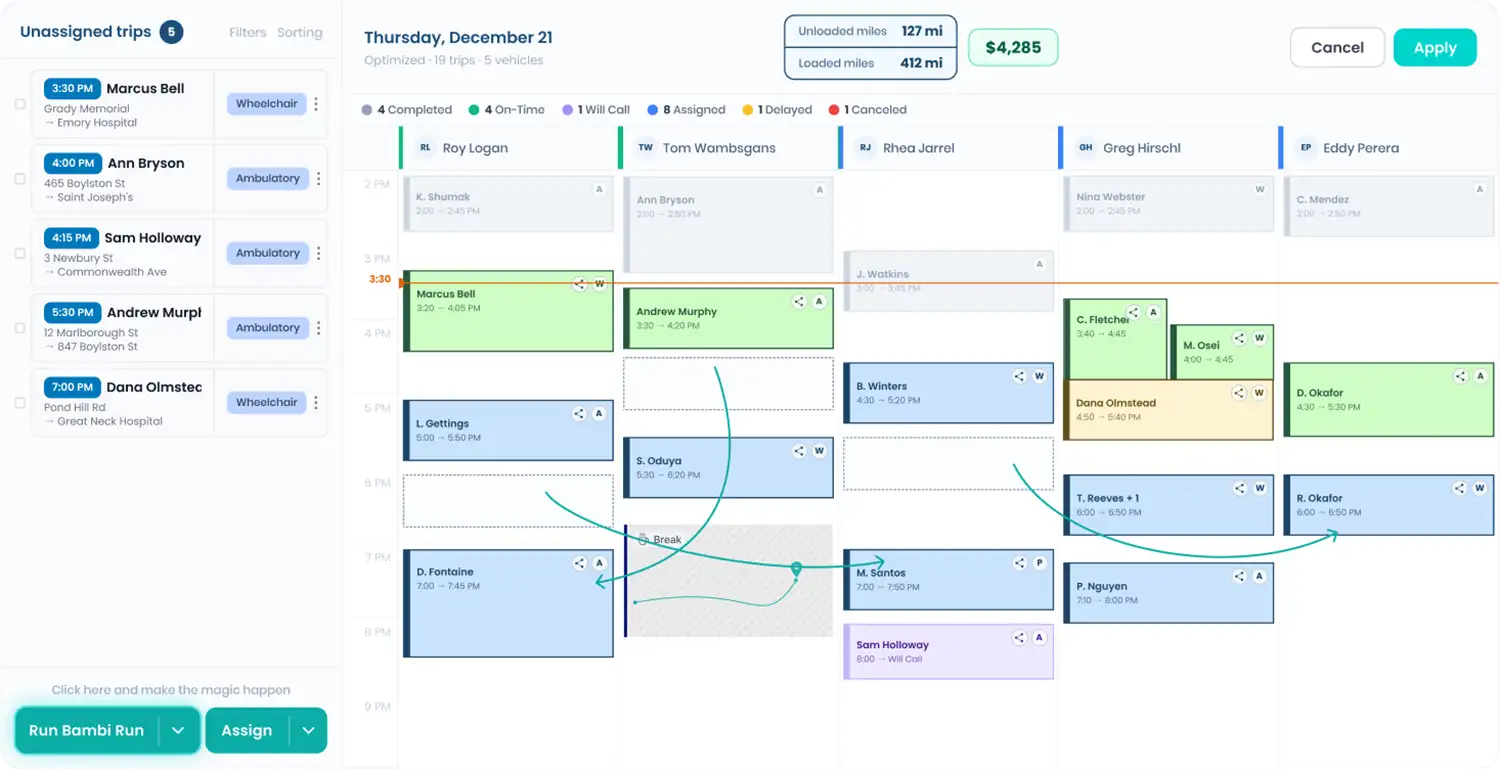
[25:36] Nirav Chheda: Dispatching software. NEMT businesses have to invest in reliable dispatch software that streamlines the process of assigning trips to driver and vehicle schedules, planning their routes and schedules for the day, um, tracking in real time.
[25:53] Ray Hagan: Tell us about it. Yeah. So, from a software standpoint, I cannot express how important it is.
[26:03] Ray Hagan: Um, in Indiana, like I said, we're there are multiple brokers that cover the same geography and transportation providers that will work with multiple brokers.
[26:13] Ray Hagan: So, when you're getting fed trips from multiple locations, having software that can help you navigate through the best possible situations that make your organization is key.
[26:29] Ray Hagan: Uh, but also being able to effectively and efficiently see what's going on in your organization.
[26:37] Ray Hagan: Are there drivers that are getting too many trips that they can't be efficient and now they're running late?
[26:44] Ray Hagan: Or are there drivers that just aren't getting used very much?
[26:47] Ray Hagan: Um, in organizations that have done a lot of manual planning, um, I've always found that as soon as they switch over to software, their load volume between drivers significantly levels out, which increases the driver satisfaction, increases engagement, increases
[27:10] Ray Hagan: efficiencies, saves the company money, but also allows for them to see gaps and holes in their schedules, Right.
[27:17] Ray Hagan: Every NEMT organization wants to fill those holes and fill those gaps as much as possible because that's how they stay efficient and keep making money, keep transporting people and keep the wheels moving.
[27:30] Ray Hagan: Being able to see those holes throughout your entire organization um is a is a resource that is by far the the greatest thing since an EMT became an available service.
[27:48] Nirav Chheda: Can't disagree with you there. We could do a whole topic on that one and we probably will.
[27:54] Nirav Chheda: But for now, let's move on to topic number 13, which is accounting and personnel software.
[28:00] Nirav Chheda: So, you got to maintain clear financial records.
[28:03] Ray Hagan: You got to have accounting staff that use specialized software to manage your finances, invoicing, and Y and that's exactly it is when it comes an EMT, transporting people to and from the locations is the primary purpose behind it.
[28:22] Ray Hagan: But getting paid is what keeps the business going.
[28:26] Ray Hagan: So understanding your state or broker's billing requirements um is going to be huge.
[28:35] Ray Hagan: Are there time limits between when you can submit your invoices or your completion details for payment?
[28:42] Ray Hagan: Also, what's the turnaround time on those payments after you submit them?
[28:47] Ray Hagan: Is it a 7-day, 14-day, 21-day, 30-day turnaround time?
[28:53] Ray Hagan: Because understanding that you're going to need to understand your cash flow and understanding how much money you're going to need to have in the bank to pay for fuel, pay for vehicle maintenance, pay staffing, um, costs, pay insurance,
[29:08] Ray Hagan: any other costs associated with the business.
[29:11] Ray Hagan: Understanding that. So having accounting personnel and billing personnel so that you can quickly and efficiently send out your completion details and your invoices to get that turnaround on payment is going to be huge, but also making sure that
[29:27] Ray Hagan: you're staying compliant with local and state and federal tax laws.
[29:34] Nirav Chheda: All right. So you've already touched on topic 14 a bit, which is billing and submitting claims, right?
[29:40] Nirav Chheda: Um, anything more you want to add to that?
[29:43] Ray Hagan: The big thing for that is just making sure that you are being transparent.
[29:49] Ray Hagan: Um, I've seen it too many times from the broker side where a transportation provider will forget to do this one thing or that one thing and they'll they'll fake it.
[30:03] Ray Hagan: um understand that software technology and um fraud, waste, and abuse are at an all-time high.
[30:16] Ray Hagan: So if you know if an organization thinks that they can just squeeze one under and just hand jam it on their own, um understand that they will get caught and they will be probably fined and removed as an
[30:30] Ray Hagan: eligible provider and placed on those o and SAM checks for exclusions.
[30:35] Ray Hagan: Um, so just be transparent. Talk with your broker.
[30:38] Ray Hagan: Talk with your agency. Understand, you know, what you can and can't do um in situ in certain situations when it comes to filling an invoice and making sure that you're staying on top of any and all changes that
[30:53] Ray Hagan: come through over the years. Got it.
[30:57] Nirav Chheda: Topic 15, state business authority requirements.
[31:01] Nirav Chheda: So, I guess businesses need to regularly check with their states business authorities to make sure they're updated with the licensing permits and other mandates, Yep.
[31:09] Ray Hagan: Exactly. Making sure that you're staying on top of any required reertification documents, um any of your attestations that your state or Medicaid office or broker may require.
[31:24] Ray Hagan: Um understanding if there are certain time tables for those.
[31:29] Ray Hagan: Um, in Indiana, a business has to reertify and affirm that they're still operating every two years.
[31:36] Ray Hagan: However, if you're a nonprofit organization, you have to do it every year.
[31:41] Ray Hagan: So, understanding what those differences are and staying on top of them so that you can continue to be in compliance with your state um, and your broker and your Medicaid office.
[31:55] Nirav Chheda: Last and least, the final topic, which is certainly everyone's favorite, taxes.
[32:02] Nirav Chheda: Um, businesses got to keep accurate financial records for tax purposes.
[32:06] Nirav Chheda: They got to understand the local, state, and federal tax obligations.
[32:11] Ray Hagan: What are your thoughts? Yeah, just this is one of those topics where I always recommend that you have a second or even a third set of eyes.
[32:21] Ray Hagan: Um, tax laws are always changing at the the local, state, and federal levels.
[32:28] Ray Hagan: So, understanding what those are, having the right people in place, um, and making sure that you're double-checking them.
[32:35] Ray Hagan: Um, a lot of CPAs um, and tax professionals will also recommend, you know, that you have a second set of eyes look at your your documents.
[32:46] Ray Hagan: Um, because again, th those laws are changing.
[32:50] Ray Hagan: um exemptions change. Um but also understanding the understanding the business as a whole.
[32:57] Ray Hagan: Um and finding out what things are tax exclusions and where you may get additional breaks um and credits for your organization based on the the structure of the organization are key.
[33:14] Ray Hagan: um to help limit the amount of taxes that you have to pay on top of keeping your organization up going and compliant.
[33:25] Nirav Chheda: Awesome. Well, that wraps up our 16 topics um that are the main points that NMP businesses need to think about when going from zero to one.
[33:35] Nirav Chheda: Ray, thank you so much. And if anybody has any questions for Ray, just write to us at and we will get all of your questions answered by email.
[33:49] Nirav Chheda: Run, Bambi, run. Awesome. Thanks, Ray.