
Clear communication between drivers and dispatchers is essential for smooth NEMT (Non-Emergency Medical Transportation) operations. Miscommunication can lead to missed appointments, higher costs, and compliance risks. Here's what you need to know:
- Key Benefits of Effective Communication: Boosts efficiency, improves customer experience, and ensures compliance with regulations.
- Challenges with Manual Systems: Outdated methods increase errors and delays. Digital tools offer real-time updates, route optimization, and automated notifications.
- Best Practices: Use clear protocols, train for active listening and concise messaging, and confirm all updates to avoid misunderstandings.
- Technology Tools: Real-time messaging apps, GPS tracking, and digital record-keeping streamline operations and reduce administrative burdens.
Switching from manual to digital systems not only simplifies daily tasks but also improves service quality and reliability for patients who depend on NEMT services.
Key Elements of Effective Communication
In the world of Non-Emergency Medical Transportation (NEMT), strong communication between drivers and dispatchers is the glue that holds everything together. By combining structured protocols, focused training, and clear messaging, organizations can create smoother workflows and deliver better patient care. These elements work hand in hand to cut down on errors, speed up response times, and maintain high service standards.
Creating Standard Protocols for Daily Operations
Clear and consistent protocols are the foundation of effective communication. Without them, drivers and dispatchers can end up misaligned, leading to confusion and inefficiencies.
Protocols should define specific procedures for key scenarios, such as:
- Routine check-ins: Drivers should report at the start of their shift, between trips, and at the end of the day.
- Emergencies: Drivers must know when to contact dispatch immediately and how to provide critical details like location, the nature of the emergency, and estimated arrival times at medical facilities.
- Schedule changes: Dispatchers should use a standardized process to communicate last-minute cancellations, additions, or route modifications. Drivers must confirm receipt of these updates to avoid miscommunication.
For emergencies, clear guidelines should specify when drivers should bypass standard messaging systems to make direct contact with dispatch. Similarly, schedule change protocols ensure that every adjustment is communicated and acknowledged, reducing the chance of missed pickups or delays.
These protocols set the stage for training programs that sharpen communication skills and reinforce consistency across the team.
Training for Clear Communication
Training is where communication shifts from being reactive to proactive. Many NEMT providers overlook how much of an impact good communication skills can have on operations and customer satisfaction.
Training programs should focus on:
- Active listening: Drivers and dispatchers should repeat back key details to confirm they’ve understood. For instance, if a driver receives a route change, they might say, “Confirming pickup at 123 Main Street at 2:30 PM instead of 2:15 PM.”
- Clear messaging: Staff should practice delivering concise, structured messages that prioritize essential details.
- Conflict resolution: Role-playing and simulations can help staff handle tense situations calmly and professionally.
Simulation exercises using actual dispatch software are especially effective. These allow new employees to practice handling everything from routine pickups to complex, multi-stop routes without disrupting live operations. This hands-on approach builds confidence and familiarity with the tools they’ll use every day.
Quarterly refresher sessions help keep everyone on the same page as operations evolve. These sessions should incorporate lessons learned from recent challenges and introduce any new tools or procedures. With regular training, teams can maintain high communication standards even as situations change.
Clear Messages and Confirmation Steps
The way a message is structured can make or break how well it’s understood. Effective communication depends on messages that are clear, concise, and easy to process.
For complex updates, the SBAR method (Situation, Background, Assessment, Recommendation) works well. For example:
- Situation: Vehicle 12 has a flat tire.
- Background: Currently at the pickup location for a 3:00 PM appointment.
- Assessment: Repair will take 30 minutes.
- Recommendation: Dispatch a backup vehicle for this pickup and reassign Vehicle 12’s remaining trips.
For routine updates, a simpler format works best: Who, What, When, Where. For example: "Driver Johnson, pickup Mrs. Smith, 4:15 PM, 456 Oak Avenue." This straightforward structure reduces confusion and speeds up decision-making.
Two-way confirmation protocols are essential to ensure nothing gets lost in the shuffle. Dispatchers should acknowledge driver messages, and drivers must confirm they’ve received and understood their instructions. While digital systems can automate some confirmations, critical details still need human verification.
To manage urgency, messages should include priority indicators. For example:
- Immediate: For emergencies that require instant attention.
- Priority: For schedule changes that impact current trips.
- Routine: For general updates that can be addressed during normal check-ins.
Technology Tools for Better Driver-Dispatcher Communication
NEMT (Non-Emergency Medical Transportation) operations depend on technology to keep drivers and dispatchers in sync, ensuring smooth communication and better patient care.
Real-Time Messaging and Mobile Apps
Instant messaging systems tailored for transportation are now a must-have for NEMT providers. Unlike regular texting or email, these platforms are built to handle the specific demands of fleet communication, such as priority alerts, location sharing, and easy integration with dispatch software.
NEMT mobile apps send push notifications to drivers, even while they’re navigating, ensuring they never miss critical updates.
Template messaging allows dispatchers to send pre-written, standardized messages like "Confirm pickup completed", which minimizes errors and saves time. It keeps communication fast and consistent across the team.
Voice-to-text features let drivers respond without taking their hands off the wheel, making communication safer during busy shifts.
Group messaging is especially useful in complex situations. For example, during weather delays, dispatchers can send updates to all affected drivers at once. This not only saves time but also helps drivers stay aware of how their colleagues are managing similar challenges.
This streamlined messaging system supports real-time tracking, which takes route management to the next level.
GPS Tracking and Automatic Route Changes
Real-time GPS tracking gives dispatchers a live view of vehicle locations, speeds, and estimated arrival times, reducing the need for constant check-ins.
Advanced GPS systems with geofencing notify dispatchers automatically when vehicles enter or leave specific areas. This eliminates the need for drivers to manually update their status, freeing them to focus on patient care.
Automatic route optimization is another game-changer. If a driver reports a road closure or heavy traffic, the system quickly calculates an alternate route and sends it directly to the driver’s navigation app. This keeps everything moving without requiring manual input.
Electronic logging replaces traditional handwritten logs, automatically recording accurate timestamps for billing and compliance purposes.
Some systems even use predictive analytics to learn from past traffic patterns and appointment data. These tools can recommend the best departure times and routes, factoring in typical traffic conditions, patient needs, and potential delays at facilities.
These advancements in tracking and routing are complemented by robust digital record-keeping and secure data-sharing systems.
Digital Records and Secure Information Sharing
Building on improved communication and tracking, digital records centralize operational data, making compliance and efficiency easier to achieve.
Cloud-based systems allow critical information - like patient pickup instructions, medical equipment needs, and facility contacts - to be updated in real time and accessed from any internet-connected device.
HIPAA-compliant messaging platforms ensure sensitive patient information stays secure. These systems encrypt messages, maintain detailed audit trails, and control access based on user roles. Drivers get the information they need for safe transportation without unnecessary exposure of private details.
Digital trip sheets replace outdated paper forms with mobile-friendly versions. Drivers can quickly and accurately log details like signatures, odometer readings, and incident reports, which are then uploaded instantly to create complete digital records for billing and compliance.
Automated backups save communication logs and trip data to secure cloud storage, ensuring records remain accessible even if devices are lost or damaged.
Integrated platforms bring everything together, merging dispatch, billing, and health records into a single interface. This eliminates the need for staff to juggle multiple apps, simplifying daily workflows.
Audit trails automatically log all communication activities, tracking who sent what messages and when. These detailed records are invaluable for quality checks, regulatory compliance, and resolving disputes over service or billing issues.
Best Practices for Driver-Dispatcher Coordination
Running a smooth non-emergency medical transportation (NEMT) operation isn’t just about having the right tech in place - it’s also about fostering effective communication between drivers and dispatchers. A well-structured approach to coordination can make all the difference in keeping things running efficiently and reliably.
Setting Clear Communication Standards
Establishing clear communication guidelines is essential to ensure everyone stays on the same page. Start by defining response times to separate urgent messages from routine ones. For urgent matters, use an escalation protocol: begin with the primary communication channel, then escalate to a phone call, and, if necessary, involve a supervisor.
Daily check-ins can also help maintain consistency. Drivers should confirm their availability and vehicle status at the start of their shift, provide updates throughout the day, and submit a summary at the end of their shift. These regular touchpoints keep dispatchers informed and reduce the risk of miscommunication.
Additionally, a clear communication hierarchy can simplify decision-making. Dispatchers should handle routine changes directly, while urgent or unusual situations should be escalated to supervisors or coordinators. These practices create a reliable framework for communication, ensuring that operations stay smooth even during unexpected challenges.
Tracking and Measuring Communication Performance
Once communication protocols are in place, tracking their effectiveness is the next step. This involves monitoring key metrics like response times, trip completion rates, and how quickly incidents are resolved. Adding patient feedback to the mix can provide valuable insights into the quality of service.
Performance dashboards are particularly useful for real-time monitoring. These tools allow supervisors to spot trends and make quick adjustments. For instance, if a driver or dispatcher seems overwhelmed, visual indicators on the dashboard can highlight the issue, enabling timely support before problems escalate.
Using Bambi for Better Dispatch Communication
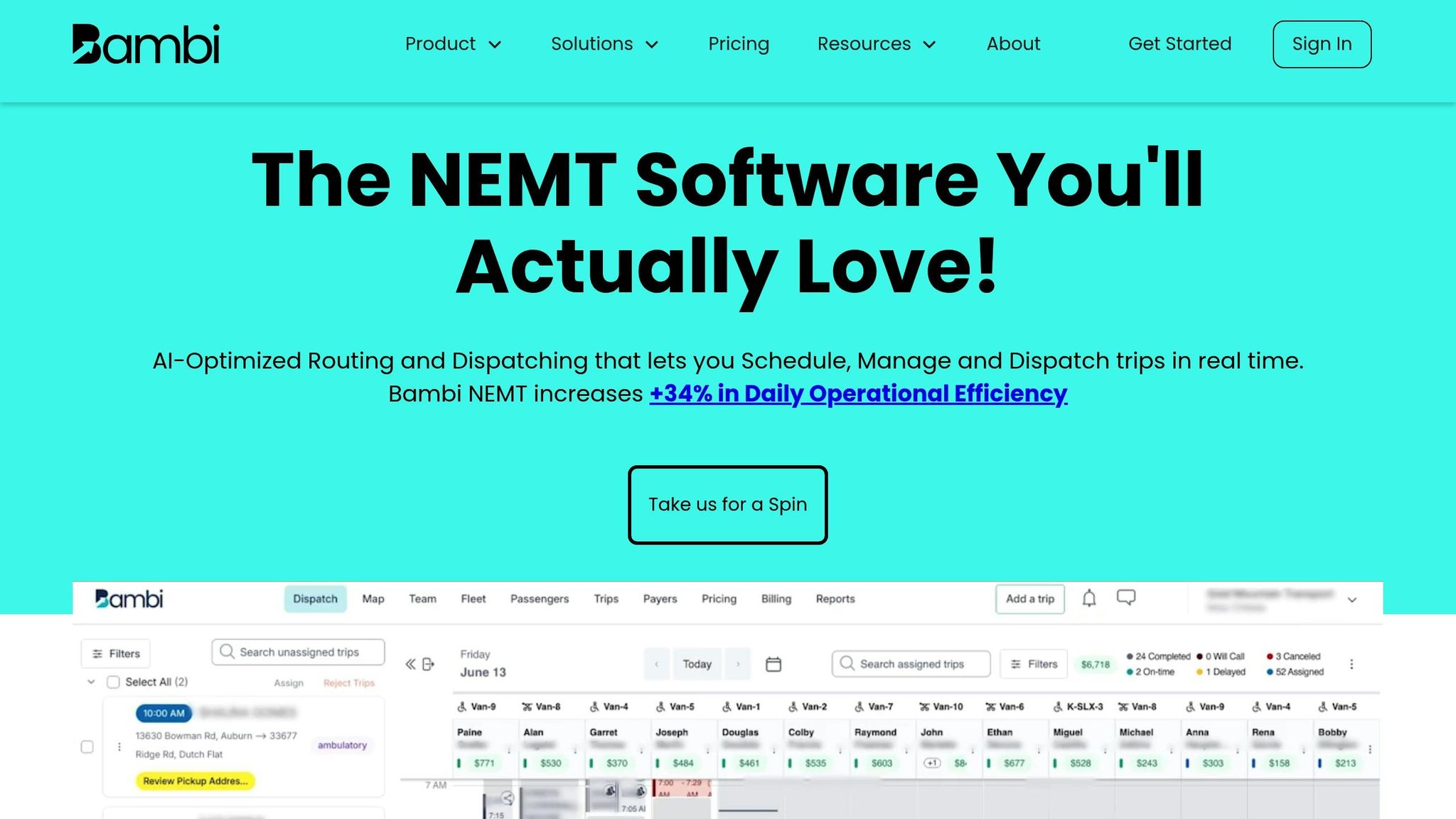
Expanding on the discussion of digital communication tools, Bambi offers a powerful way to improve coordination between drivers and dispatchers in NEMT (Non-Emergency Medical Transportation) operations.
This AI-driven tool simplifies communication while ensuring compliance with healthcare regulations. By combining real-time tracking, automated notifications, and smart scheduling, Bambi tackles common communication challenges. Its integrated approach eliminates operational silos, reducing delays and confusion. Impressively, it boosts daily efficiency by 34%.
Main Features of Bambi
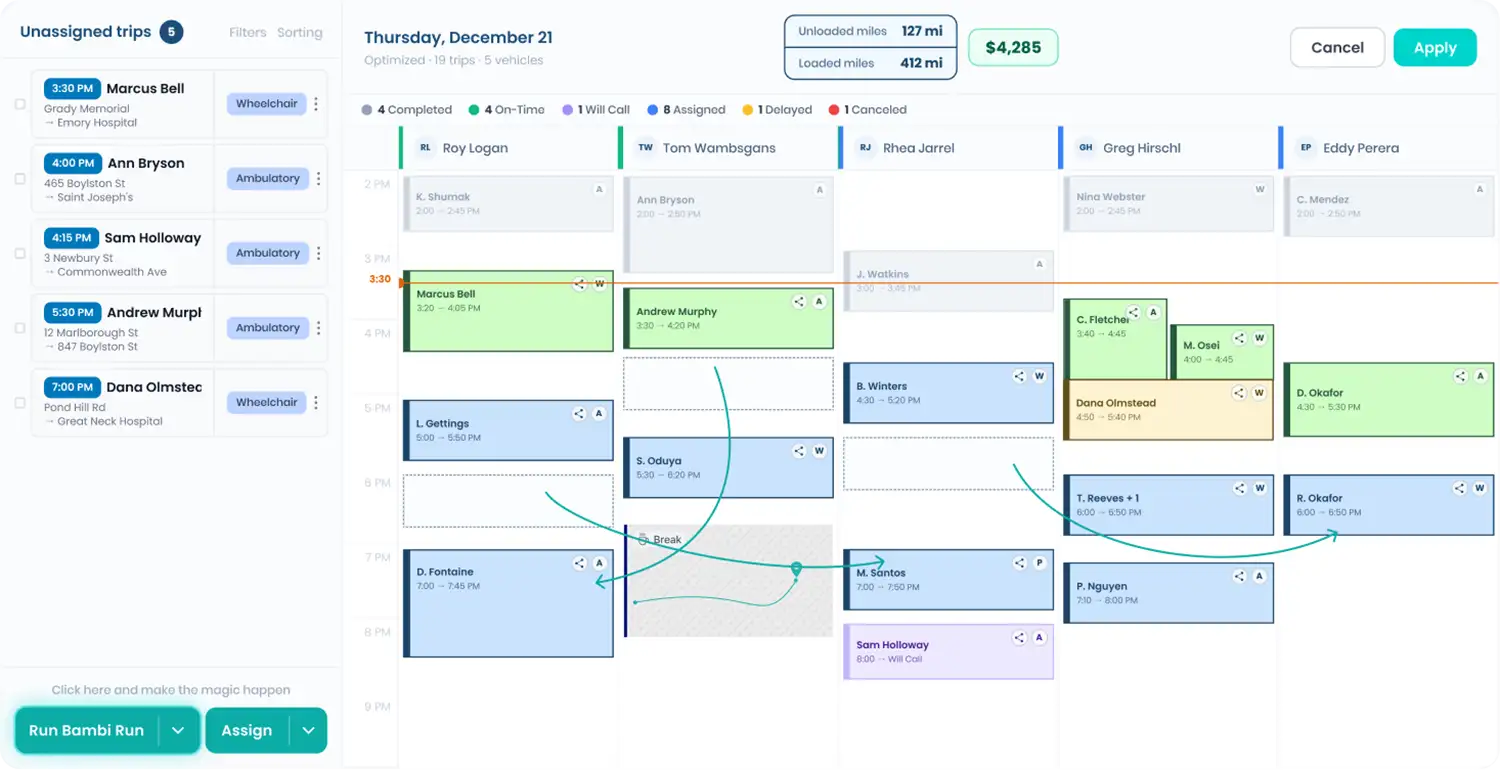
The NEMT Driver App serves as the hub for driver-dispatcher communication. It provides real-time updates through SMS and push notifications for trip changes, new assignments, and route adjustments. The app’s standout "Run Bambi Run" feature optimizes scheduling with a single click, managing thousands of trips and instantly updating changes.
Other key features include:
- GPS Tracking: Continuous tracking with offline GPS support ensures accurate journey records, even without a stable connection.
- Compliance Tools: HIPAA-compliant data management is enhanced by electronic service verification (E-Signatures) and automated time-stamping.
- Operational Tools: Bulk trip management, repeat trip scheduling, audit history, and pre-shift vehicle inspections provide better oversight and coordination.
Benefits and Pricing
Bambi’s advanced tools deliver measurable improvements, as highlighted by industry professionals. Samuel Harris from On Time On Target Transportation shared, "Bambi streamlines our process, cutting workflow time in half". Similarly, Marc W. stated, "What used to take three hours is now under 30 minutes".
At $69 per vehicle per month, with no hidden fees, Bambi offers exceptional value. Its impact hasn’t gone unnoticed - Bambi received the NEMTAC: INNOVATION IN NEMT AWARD 2025 and holds a perfect 5.0-star rating on platforms like Capterra.
Conclusion
Strong communication between drivers and dispatchers is the backbone of successful NEMT operations. When communication breaks down, it impacts patient care, disrupts efficiency, and can lead to compliance issues. The move from outdated manual processes to real-time digital systems has completely changed how NEMT providers manage their daily tasks.
Real-time software addresses many traditional challenges by offering instant updates on no-shows, cancellations, or vehicle breakdowns. These tools create a steady flow of communication between drivers, dispatchers, and patients, thanks to features like live tracking and automated notifications.
As industry expert Broda puts it, "Communication between drivers and dispatchers is crucial for success". This goes beyond simply exchanging information - it's about building a system that can adapt quickly to changes. These observations lay the groundwork for practical steps that NEMT providers can take to improve their services.
Key Points for NEMT Providers
To succeed, NEMT providers must blend technology with effective communication practices. Here are some key takeaways:
- Adopt real-time tools: Use tracking systems, communication platforms, and route optimization software to streamline operations. These systems are essential for maintaining coordination, but they work best when paired with skilled users.
- Prioritize training: Regular training helps drivers communicate clearly and effectively, turning them into active contributors to smooth operations rather than passive participants.
- Maximize software features: Take full advantage of tools for managing calls, alerts, and messages efficiently. Proper training ensures your team knows how to use these features, leading to faster response times, improved customer satisfaction, and better overall performance.
FAQs
How does switching from manual to digital communication systems enhance NEMT operations?
Switching to digital communication systems can make a big difference in how Non-Emergency Medical Transportation (NEMT) operations run. Features like real-time updates, automated scheduling, and instant communication between drivers and dispatchers help cut down on delays, improve coordination, and ensure patients get timely service.
By integrating digital tools, you can minimize errors, reduce missed appointments, and simplify processes. This not only makes operations more reliable but also helps deliver better care to patients. Embracing modern technology creates a smoother, more efficient experience for everyone involved.
What are the best training methods to improve communication between drivers and dispatchers?
To enhance communication between drivers and dispatchers, prioritize training programs that develop hands-on skills and encourage collaboration. Role-playing exercises that mimic everyday situations can be especially effective. These scenarios give participants the chance to practice active listening, deliver clear messages, and handle conflicts constructively - all in a low-pressure setting.
Training should also highlight the proper use of technology, like real-time communication tools, to keep everyone aligned and informed. By integrating teamwork and problem-solving activities into these sessions, you can strengthen the working relationship between drivers and dispatchers. This approach not only improves day-to-day operations but also helps minimize delays.
How do tools like real-time messaging and GPS tracking improve communication and patient care in NEMT services?
Real-time messaging and GPS tracking are game-changers for communication and patient care in Non-Emergency Medical Transportation (NEMT) services. With GPS tracking, dispatchers can keep an eye on vehicle locations in real time, adjust routes on the fly, and provide accurate estimated arrival times (ETAs). This ensures fewer delays, shorter wait times for patients, and more punctual service.
Meanwhile, real-time messaging allows drivers and dispatchers to stay in constant contact. Whether it's coordinating schedules or handling unexpected changes or emergencies, this instant communication keeps things running smoothly. Together, these tools boost reliability, improve safety, and streamline operations, all while ensuring patients receive timely and efficient care.