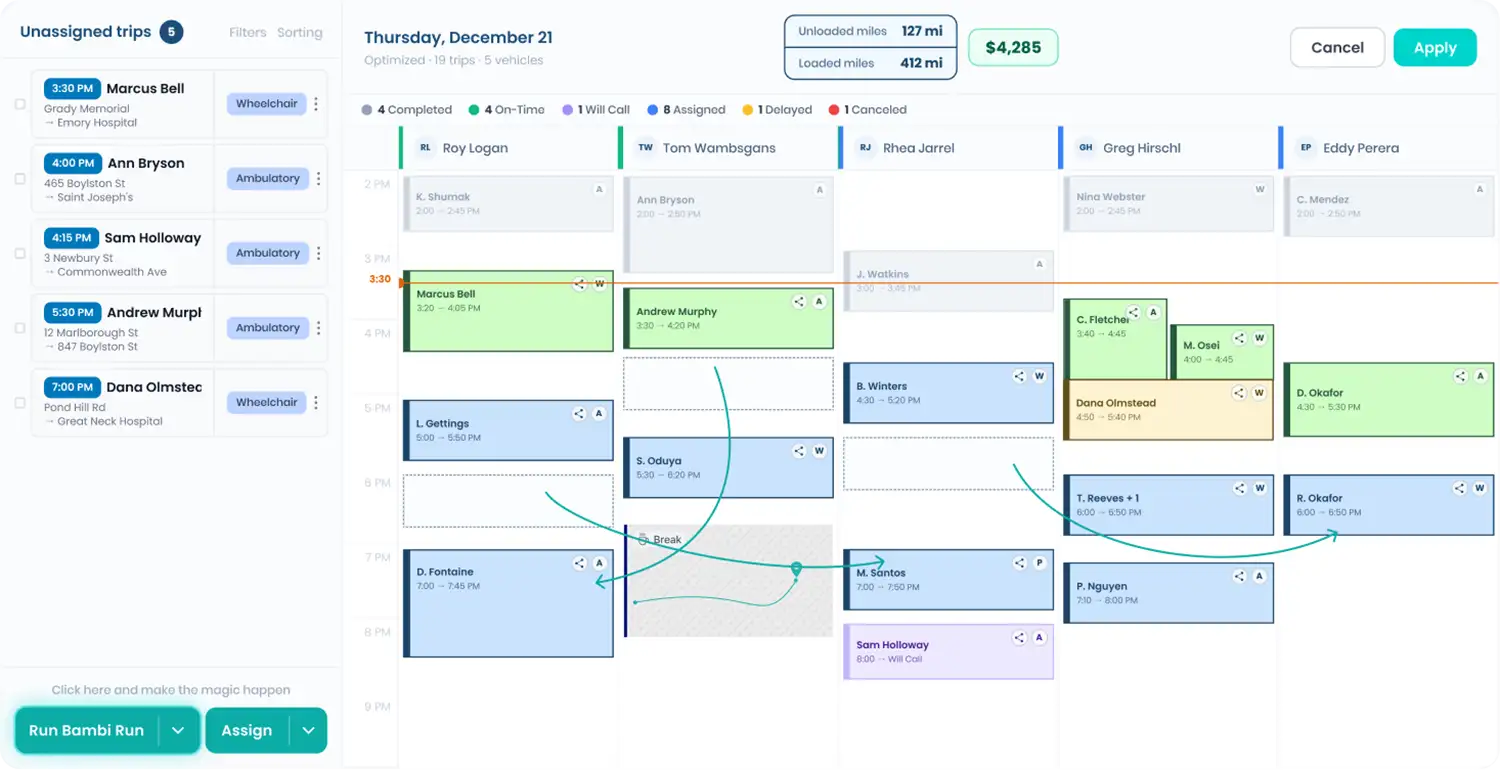

NEMT software simplifies and improves driver navigation by automating route planning, providing real-time traffic updates, and integrating tools into a single driver app. This leads to fewer delays, better fuel efficiency, and smoother operations. Here's how:
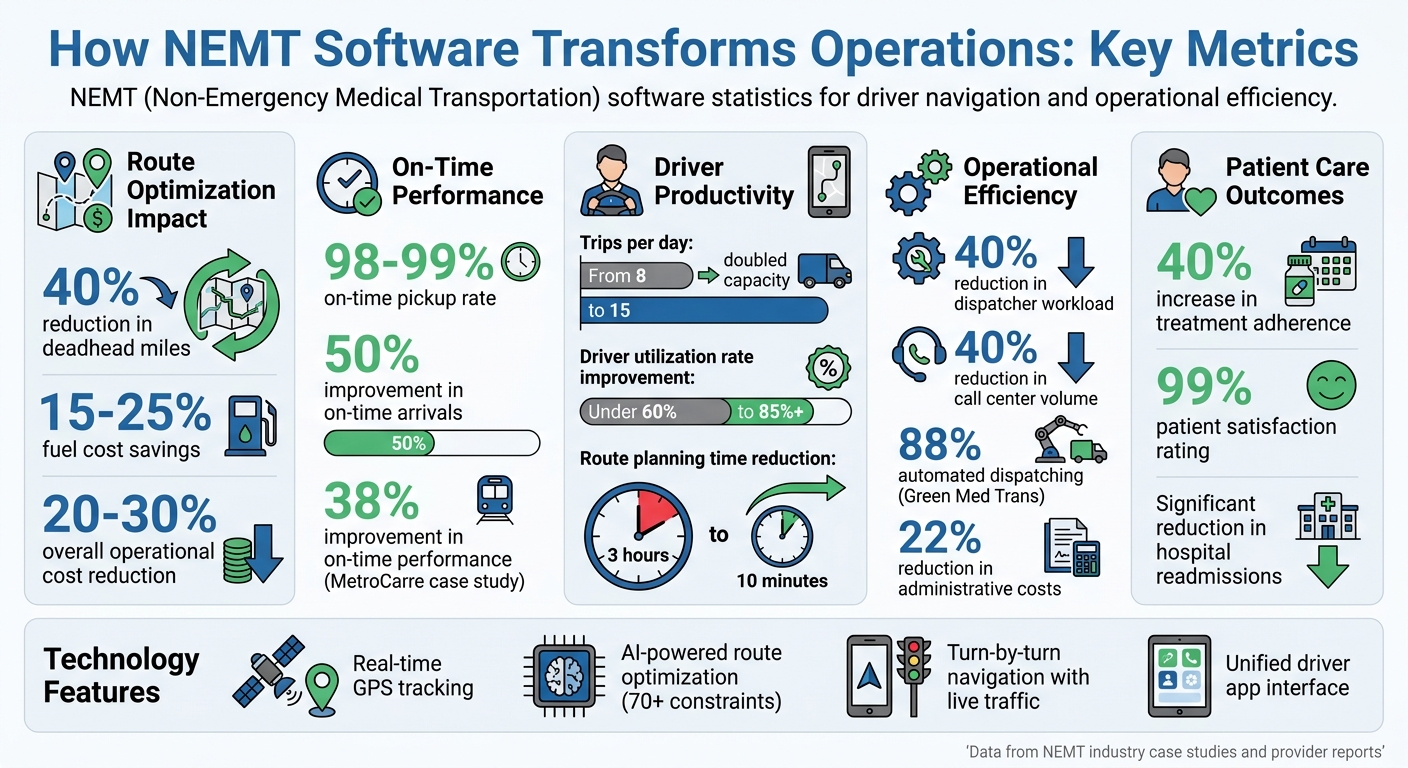
- AI-powered route optimization reduces "deadhead" miles by up to 40% and cuts fuel costs by 15–25%.
- Real-time GPS tracking ensures dispatchers and drivers stay informed about vehicle locations and delays.
- Turn-by-turn navigation with live traffic updates adjusts routes instantly for faster travel times.
- Driver apps consolidate trip details, navigation, and status updates, reducing distractions and improving safety.
These features help NEMT providers increase on-time arrivals to 98–99%, double daily trip capacity from 8 to 15, and improve patient satisfaction. By reducing inefficiencies, NEMT software ensures reliable transportation for patients and lowers operational costs.
Real-Time GPS Tracking for Fleet Visibility
Real-time GPS tracking gives NEMT providers live updates on vehicle locations, speeds, routes, and arrival times. Unlike older systems that rely on delayed breadcrumb data, modern GPS platforms provide instant insights into every vehicle's status. Dispatchers can monitor their entire fleet through a single, cloud-based dashboard, which displays active rides, driver assignments, and vehicle statuses all at once. This streamlined approach eliminates the need for manual checks.
The system also records trip milestones automatically, creating a digital log that simplifies reporting for Medicaid and Medicare audits. In emergencies, GPS can pinpoint exact vehicle locations, allowing for quick rerouting of nearby drivers. This real-time visibility not only improves fleet management but also ensures drivers stay accountable.
Monitoring Driver Accountability
With GPS tracking, driver behavior is continuously monitored. Unsafe actions like speeding, harsh braking, or going off-route are flagged instantly. Supervisors receive real-time notifications when drivers deviate from their assigned routes or make unscheduled stops, ensuring that safety protocols and schedules are followed. This data is invaluable for performance reviews and safety training, helping NEMT providers maintain high service standards.
Automated alerts reduce the need for constant manual checks, creating a transparent system that minimizes disputes over service delivery. This level of accountability improves the overall efficiency of dispatch operations.
Improving Dispatch Coordination
Real-time location data also enhances dispatch decision-making. Proximity-based dispatching automatically identifies and assigns the closest qualified driver to a pickup location. This method can lower dispatcher workload by up to 40%, reduce fuel consumption, and shorten patient wait times. Live traffic data helps dispatchers adjust routes to avoid delays and keep services running on time.
Dynamic trip management ensures flexibility during unexpected situations, such as last-minute cancellations, urgent requests, or vehicle breakdowns. Dispatchers can quickly reassign drivers, keeping operations seamless and ensuring patients get to their appointments without delays.
Turn-by-Turn Navigation with Traffic Updates
NEMT software provides drivers with turn-by-turn navigation by integrating live data on accidents, road closures, and traffic congestion. This allows the system to instantly recalculate the fastest route, building on the real-time fleet insights mentioned earlier. If delays occur, updated routes are sent directly to the driver's mobile device, ensuring they can bypass traffic bottlenecks and stick to tight pickup schedules - even during rush hour.
The software also uses live traffic data to calculate highly accurate arrival times, automatically sharing this information with patients through SMS or app notifications. This level of communication not only reduces patient anxiety but also fosters trust. For instance, a Texas-based NEMT provider implemented AI-driven route optimization with real-time traffic updates and saw impressive results: they saved over $50,000 in fuel costs within six months and increased their monthly trip volume by 25%.
Reducing Traffic-Related Delays
Live traffic updates give drivers the ability to avoid congestion before it becomes a problem. When the system detects a major delay - like a multi-vehicle accident or construction - it instantly redirects drivers to less congested routes. Impressively, this process factors in over 70 constraints, including pickup windows and vehicle-specific requirements, to determine the best alternative path.
MetroCarre Medical Transport experienced a 38% improvement in on-time performance after adopting NEMT management software with integrated scheduling and routing. They also reduced administrative costs related to billing and scheduling by 22%. Dispatchers benefit from live GPS dashboards, which let them identify bottlenecks early and reassign drivers if a route becomes impassable. This keeps the fleet running smoothly, saving time and reinforcing the reliability clients count on.
Improving Client Satisfaction
Timely arrivals not only ensure patients get to their appointments but also enhance future appointment adherence, improving overall care outcomes. Reliable NEMT services have been shown to increase treatment adherence by up to 40% and lower hospital readmissions significantly. Automated notifications, such as "driver is 5 minutes away", eliminate uncertainty and help patients prepare for their rides.
As Katrina Mokhtari, Owner of Essential Health, put it: "I appreciate how user-friendly Bambi is for both drivers and dispatchers. It effectively solves our dispatching routing issues by using Google Maps traffic tools to provide accurate estimated times of arrival, which really helps us with planning."
Route Optimization and Automated Rerouting
AI-powered route planning is changing the game for NEMT providers by solving complex logistical puzzles in seconds. It evaluates a wide range of factors - like pickup and drop-off points, appointment schedules, vehicle capacities, and driver availability - managing over 70 variables simultaneously to chart the most efficient routes. This level of precision eliminates the trial-and-error of manual vs. automated NEMT scheduling, ensuring every trip is optimized down to the finest detail.
When plans change unexpectedly, the system doesn’t skip a beat. Automated rerouting uses live data from traffic reports, weather conditions, and road closures to instantly adjust routes. For example, if an accident blocks a driver’s path or a patient cancels at the last minute, the software recalibrates the entire schedule without requiring human input. This real-time adaptability ensures smooth operations, especially for multi-stop trips, and keeps everything running on schedule despite unforeseen disruptions.
Planning Multi-Stop Trips Efficiently
Multi-stop route planning takes efficiency to a new level by grouping compatible pickups and drop-offs along the shortest possible route. This method boosts vehicle usage while cutting down on unnecessary driving. In fact, providers using AI-powered grouping have reduced "deadhead miles" - the distance traveled without passengers - by 30% to 40%. The software also considers special requirements, like wheelchair or stretcher needs, to assign the right vehicle for each route.
Some providers report that tasks that once took three hours to plan can now be completed in just 10 minutes thanks to automated systems. Driver productivity also jumps significantly, with utilization rates climbing from under 60% with manual planning to over 85% with AI automation. This allows drivers to complete more trips per shift without working longer hours, which directly reduces operational costs. In fact, automated route planning can cut overall expenses by as much as 20% to 30%.
Adapting to Unexpected Changes
Dynamic rerouting ensures that real-world hiccups don’t derail operations. When delays, road closures, or other disruptions occur, the system recalculates the best route in seconds and sends updated instructions straight to the driver’s device. This quick adjustment minimizes delays and keeps schedules on track, which is especially critical for time-sensitive medical appointments. Providers using automated systems have reported up to a 50% improvement in on-time arrivals.
The cost savings are just as impressive. Fuel expenses often drop by 15% to 25%, with some providers seeing reductions of up to 30%. Fewer missed appointments and less time spent idling in traffic mean drivers can focus on what matters most: getting patients where they need to go efficiently and on time.
Driver App Integration for Easy Navigation
The driver app blends advanced route planning with real-time updates, creating a centralized tool that simplifies operations for NEMT drivers. Acting as a one-stop hub, it combines navigation, trip details, and dispatch communication into a single interface. This eliminates the hassle - and the danger - of juggling multiple apps while on the road.
By replacing fragmented systems with a unified platform, drivers can access accurate, timely information, making their workflow smoother and more efficient. This streamlined system builds on automated route planning features, further simplifying the tasks drivers face daily. With all the tools they need in one place, drivers can focus on navigating effectively and updating trip statuses without unnecessary interruptions.
Centralized Access to Trip Details
Modern driver apps provide a detailed trip manifest, offering everything from passenger information to special instructions - all in one view. Drivers can quickly access pickup and drop-off addresses, appointment times, contact details, and notes about specific needs, such as wheelchair or stretcher assistance. All of this is just a tap away.
Integrated navigation tools, often powered by Google Maps, offer turn-by-turn directions to the fastest routes directly within the app. This eliminates the need to switch between different applications, reducing confusion and helping drivers stay focused.
The app also simplifies status updates with intuitive, one-tap options: En Route, Arrived, Picked Up, and Dropped Off. Each update instantly notifies dispatchers and triggers the next navigation step. This automation not only keeps all parties informed but also reduces dispatcher workload by as much as 40%.
By consolidating trip management into a single interface, the app helps drivers stay organized and focused, as outlined below.
Reducing Driver Distractions
Integrating navigation with essential functions significantly reduces distractions for drivers. Traditional methods - like juggling calls, radios, and standalone GPS devices - can lead to errors and delays, ultimately increasing the risk of missed pickups. A unified app minimizes these issues by presenting only the information drivers need for each trip, lowering cognitive demands and prioritizing safety and patient care.
The app also incorporates administrative tasks like vehicle inspections, digital signatures, and payment processing. By eliminating the need for physical paperwork or switching devices, drivers can maintain their focus on the road. Built-in safety alerts and reminders, such as prompts for wheelchair lock checks or trip completion confirmations, further ensure adherence to proper protocols without additional oversight.
This integration of tools and features not only enhances safety but also creates a smoother, more satisfying experience for drivers.
Benefits of NEMT Software for Operational Efficiency
NEMT software isn't just about better navigation - it’s a game-changer for overall efficiency and cost management. By optimizing routes and streamlining processes, it reduces fuel costs, minimizes vehicle wear, and simplifies administrative tasks.
Cost Savings Through Fuel Efficiency
Cutting fuel expenses is one of the most immediate benefits of NEMT software. Providers often see fuel costs drop by 15% to 25% thanks to advanced route optimization. The software calculates the best routes and groups passengers effectively, reducing unnecessary miles. In fact, AI-powered grouping can decrease "deadhead miles" - those driven without passengers - by 30% to 40%.
On top of that, automated route planning can lower total mileage by up to 20%. Fewer miles mean less wear and tear on vehicles, which translates to lower maintenance costs. Plus, by tracking engine hours and mileage, the software helps schedule preventive maintenance, extending the life of your fleet and avoiding expensive repairs [11, 14].
Better Driver Performance
Drivers benefit too. With easy-to-use navigation tools, they can focus on driving safely and providing quality service. AI dispatch systems can improve driver utilization rates from under 60% (with manual systems) to over 85%, often doubling their daily trip capacity from 8 to 15 trips.
Clear, automated instructions give drivers the confidence to complete more trips without constant back-and-forth communication with dispatch. Real-time updates and automated status logging reduce the need for radio or phone check-ins, making their workday smoother and more efficient. This improved workflow not only boosts productivity but also increases job satisfaction, helping to lower turnover rates.
Smoother Operations for Better Client Service
Better navigation tools create a ripple effect that improves service delivery across the board. Providers using automated optimization report up to a 50% boost in on-time arrivals, a critical factor in patient satisfaction and health outcomes. Reliable transportation significantly impacts treatment adherence, with a 40% increase linked to improved navigation.
These tools also reduce dispatcher workloads and call center volume by as much as 40% [4, 6], allowing staff to focus on handling exceptions rather than routine tasks. This means smaller teams can manage higher trip volumes without compromising quality, ultimately enhancing client care and operational efficiency.
Conclusion
NEMT software transforms navigation hurdles into opportunities for operational efficiency. With real-time GPS tracking, providers gain full fleet visibility. Dynamic route optimization helps cut fuel costs and reduces empty miles, while driver app integration consolidates critical trip details in one place. These tools work together to address common challenges and turn them into advantages that improve both service quality and profitability.
Here’s what providers can expect: on-time pickups rise to 98–99%, fuel expenses drop by 15–25%, and driver productivity increases from 8 to 15 trips per day. Additionally, call center volumes decrease by 40%, as drivers navigate more independently without frequent check-ins. These improvements benefit everyone involved, from dispatchers to drivers to passengers.
Beyond operational gains, better navigation ensures patients arrive at their appointments on time, which leads to a 40% improvement in treatment adherence and fewer hospital readmissions. The software also handles real-world challenges like traffic delays, last-minute cancellations, and complex multi-stop routes, allowing dispatchers to focus on exceptions instead of routine tasks. Drivers, meanwhile, receive clear, step-by-step directions that simplify every trip.
FAQs
What GPS hardware or phones do drivers need for real-time tracking?
Drivers must have GPS-enabled smartphones or mobile devices capable of supporting real-time tracking. These devices play a key role in using NEMT software efficiently, allowing for precise navigation and providing timely updates throughout trips.
How does the software handle last-minute cancellations or add-on rides?
NEMT software simplifies handling last-minute cancellations and unexpected ride requests with tools for real-time updates and adaptable scheduling. Its features, such as GPS tracking and automated route optimization, enable dispatchers to swiftly modify plans, reassign trips, and adjust routes. This helps reduce delays, ensures drivers can respond effectively to changes, and keeps operations running smoothly.
Can drivers use in-app navigation offline in areas with weak cell service?
Yes, drivers can rely on in-app navigation even in areas with poor cell service. Many NEMT mobile apps are designed with offline capabilities for essential features like navigation and trip details. This ensures drivers can continue providing service without interruptions, even in low-connectivity zones.