
Automation can drastically reduce the workload in Non-Emergency Medical Transportation (NEMT) operations by streamlining scheduling, billing, and compliance processes. Here's how:
- AI-Powered Scheduling: Automates route planning, prevents double bookings, and adjusts for real-time traffic or delays, improving efficiency by 20–30%.
- Billing Tools: Cuts claim denial rates by up to 70% and ensures faster reimbursements with accurate, automated trip data and electronic submissions.
- Real-Time Communication: Centralized platforms simplify dispatcher-driver coordination and provide live vehicle tracking, reducing errors and delays.
- Fleet Management: Alerts for maintenance and compliance deadlines ensure vehicles and drivers meet regulatory standards, avoiding penalties.
Key takeaway: Automation saves time, reduces errors, and helps NEMT providers scale services effectively while improving patient satisfaction.
AI-Powered Scheduling and Dispatch Automation
Scheduling and dispatching often become pain points for many NEMT operations. Relying on manual processes can lead to avoidable mistakes - double-bookings, assigning the wrong vehicle type for a wheelchair-accessible trip, or leaving drivers idle while urgent requests pile up. These human errors contribute to up to 23% of NEMT no-shows, resulting in lost revenue and dissatisfied patients.
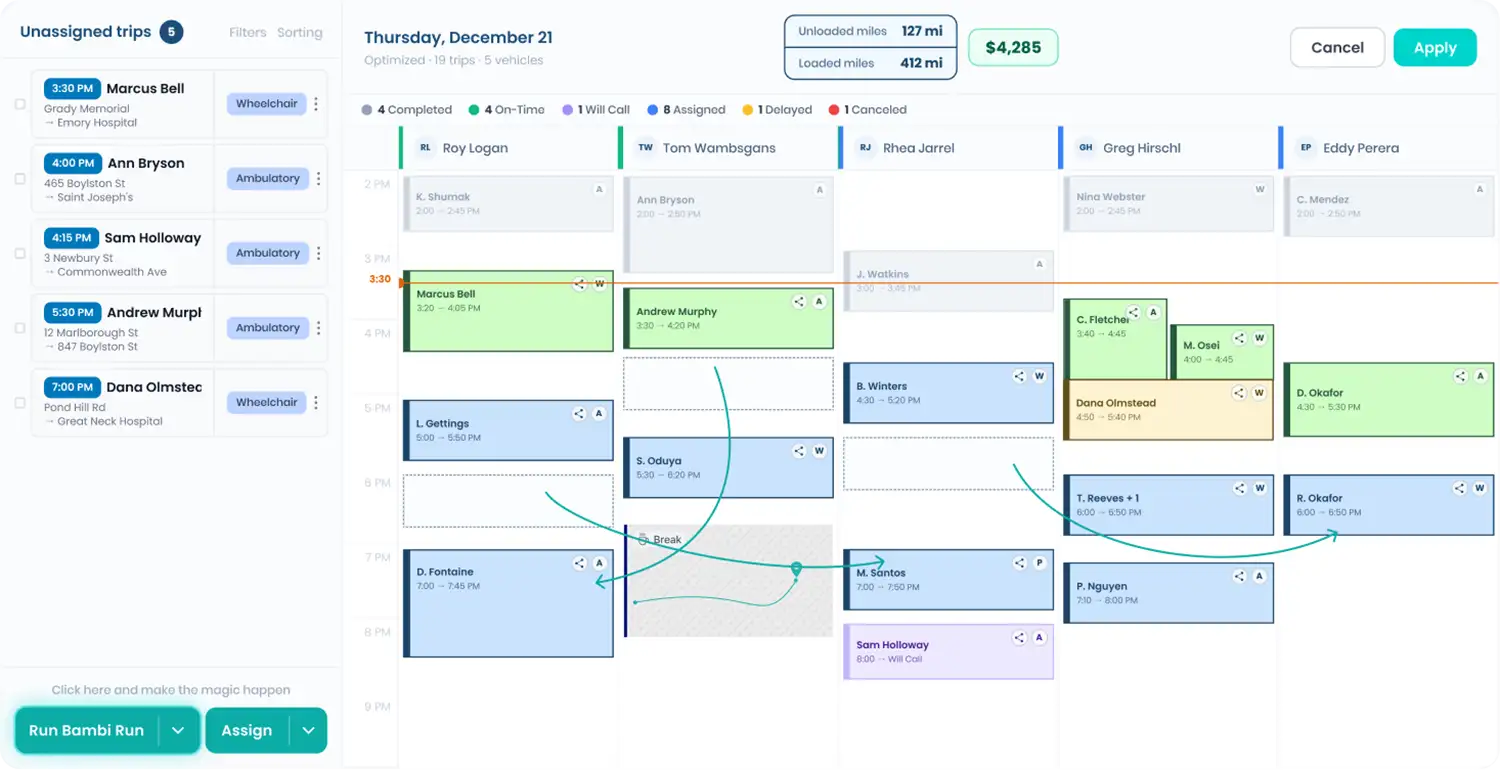
AI technology changes the game by automating and optimizing scheduling. Instead of manually juggling calendars or guessing the best routes, AI algorithms analyze real-time factors like driver GPS locations, certifications, vehicle types, traffic, and weather. This allows the system to assign the right driver and vehicle to each trip efficiently, cutting out delays and miscommunication.
How AI Streamlines Scheduling
AI scheduling tools leverage machine learning and natural language processing to handle trip requests, manage schedules, and allocate resources. When brokers submit trips, the system not only assigns them to available slots but also predicts peak demand using historical trends, seasonal patterns, and event data. This foresight helps adjust driver availability proactively.
AI also prevents scheduling conflicts before they escalate. For instance, if a driver is delayed due to traffic, the system flags the issue and suggests alternatives, such as assigning a backup driver or rescheduling the trip. This predictive capability ensures smoother workflows and enables real-time adjustments to keep operations running smoothly.
Real-Time Dispatch and Smarter Resource Use
AI doesn’t stop at scheduling - it also revolutionizes real-time dispatching. Automated systems continuously track live traffic updates, road closures, and accidents. If a highway shuts down mid-route, the AI instantly reroutes the driver, avoiding confusion and keeping trips on track.
Resource allocation becomes more strategic with AI. The system reduces "deadhead" miles (when a vehicle travels without a passenger) by grouping trips intelligently. For example, if a driver drops off one patient near a facility and another pickup is nearby, the system reassigns the trip to minimize empty miles. These route optimization algorithms can manage hundreds of vehicles simultaneously, boosting efficiency without adding administrative strain. This scalability is especially important as the NEMT market is expected to grow to $15.57 billion by 2028.
Automated Billing and Claims Processing
Relying on manual data entry for details like mileage, wait times, and modifiers often results in claim denials and delays in reimbursements. However, automated billing tools have proven to be a game-changer. Organizations using these tools report a drop in claim denial rates by 35% to 70%, while some providers have slashed billing errors from 15% to under 3%. This dramatic improvement ensures claims are accurate from start to finish.
Automated Billing Systems for Accuracy
Automated billing systems streamline the process by converting completed trip records directly into billable claims. GPS logs confirm actual mileage, and mobile apps capture digital signatures as proof of service. These systems also validate trip records to catch issues like missing modifiers, incorrect codes, or incomplete documentation. Real-time eligibility checks ensure Medicaid or insurance coverage and confirm prior authorizations before a trip begins, avoiding charges for non-covered services. Additionally, Electronic Data Interchange (EDI) integration allows for one-click submissions to clearinghouses and state portals, making the process faster and more efficient.
Simplifying Insurance Claims Submission
Medicaid and Medicare come with strict, state-specific formatting rules, and automated platforms simplify compliance by using customizable templates tailored to each payer’s requirements. If a claim is rejected, denial management dashboards guide staff through the correction and resubmission process, helping recover lost revenue. These platforms also integrate with accounting tools like QuickBooks, syncing invoices and payments automatically. This prevents double-entry errors and keeps financial records up to date.
"Billing errors, delayed claims, and compliance gaps don't just slow cash flow - they threaten business survival".
Digital Communication and Tracking Platforms
Relying on manual coordination methods like calls, radios, and texts often slows down operations. NEMT software simplifies this by offering a centralized communication hub that combines scheduling, routing, and messaging in one place. This eliminates the constant back-and-forth between dispatchers and drivers, extending the efficiency of automation beyond just scheduling and billing to include real-time communication as well.
Digital Communication for Team Coordination
With NEMT platforms, dispatchers can instantly share complete trip details - such as rider information, pickup times, and specific instructions - directly to drivers through mobile apps. These apps also send real-time alerts for changes like cancellations, delays, or updated routes. Rachel Green from Careful Transportation highlights the benefits:
"The app's automated dispatching and billing features have helped us save time and reduce errors, while the real-time tracking and communication features have helped us provide better service to our clients".
Additionally, AI-powered virtual assistants streamline routine tasks, such as booking rides, confirming appointments, and answering common questions via phone, text, or chat. This automation reduces the workload on dispatchers, allowing them to focus on more complex challenges. Secure two-way messaging further ensures clear and auditable communication channels.
Real-Time Vehicle and Trip Tracking
Real-time tracking takes operational efficiency a step further by enabling quick responses to unexpected issues. GPS-enabled tools provide dispatchers with live visibility of all vehicles on a single dashboard, eliminating the need for constant check-ins. Features like automated logging of pickup and drop-off times, as well as mileage, reduce paperwork and minimize errors. Riders also benefit from automated ETA updates sent via SMS, email, or voice, cutting down on "where is my ride?" inquiries. When unexpected situations arise - like vehicle breakdowns or last-minute cancellations - dispatchers can swiftly reassign trips to the nearest available driver.
Victoria Sean from Smart Transportation shares her experience:
"NEMT Platform has transformed the way we manage our transportation services. With features like real-time vehicle tracking and automated route planning, our operations have become more efficient and effective".
Fleet Management and Compliance Automation
Automation is transforming fleet management and compliance, moving away from outdated manual methods that rely on drivers' memory and physical records. These traditional systems often lead to missed maintenance tasks, expired certifications, and last-minute scrambles during audits. Automated fleet management takes a proactive approach, using software to monitor vehicle conditions and ensure compliance. This shift helps streamline operations and improve overall efficiency.
Automating Vehicle Maintenance and Reporting
Automation simplifies routine vehicle upkeep. Software sends automatic reminders for oil changes, tire rotations, or major repairs based on mileage or time intervals. AI tools analyze sensor data and usage patterns to predict potential failures, enabling preemptive action. Drivers can complete pre-trip inspections digitally on mobile devices, and flagged issues are instantly routed to maintenance teams - cutting out the need for paper logs.
Telematics systems also monitor driver behaviors like speeding, harsh braking, and idling, which directly impact fuel costs and vehicle wear. Automation helps reduce fuel consumption by optimizing routes to avoid unnecessary "deadhead" miles - empty trips - and excessive idling. Dashboards tracking driver performance make it easier to identify areas for improvement, allowing managers to coach drivers with high idle times and minimize fuel waste.
Ensuring Compliance Through Automated Systems
Compliance with regulations such as HIPAA, Medicaid, and state-specific requirements demands precise record-keeping. Automated systems handle this by maintaining digital records of driver licenses, background checks, and vehicle certifications. Alerts for upcoming renewals prevent the risks and penalties associated with expired credentials. Setting reminders 30 to 60 days in advance ensures deadlines are never missed.
Digital audit trails simplify Medicaid or insurance audits by organizing trip records, driver signatures, and GPS-verified geolocations. These systems also prioritize data security, using AES-256 encryption and role-based access controls to safeguard Protected Health Information (PHI), ensuring only authorized personnel can access sensitive information. By centralizing HIPAA-related documents and trip logs in one digital platform, organizations can maintain compliance effortlessly, eliminating the need for cumbersome physical filing systems.
How to Implement Automation in Your NEMT Business

Step-by-Step Implementation Guide
Start by pinpointing the biggest challenges in your operations - things like scheduling conflicts, billing errors, or frequent no-shows. Once you’ve identified these bottlenecks, research platforms that align with your fleet and services. Request demos to ensure the software integrates seamlessly with your EHR or broker systems. From there, map out a plan to shift from manual to automated workflows.
Create a detailed timeline for tasks like data migration and system customization. Assign a project lead to manage the transition process. Begin with a pilot program at one location to gather feedback and address any hiccups before rolling out automation across your entire operation. This phased approach can immediately ease the administrative workload by streamlining scheduling, billing, and compliance processes.
Training is key for a smooth transition. Provide role-specific guidance - use quick-reference materials and videos to help drivers get comfortable with mobile apps, dispatchers with routing tools, and administrative staff with billing features. Leverage the software’s analytics tools to monitor KPIs such as on-time performance and fuel efficiency. Automate recurring trips to eliminate repetitive data entry and free up your team for more strategic tasks.
Manual vs. Automated Workflows Comparison
Switching from manual to automated workflows can transform your NEMT operations. Automation reduces human error, speeds up processes, and allows your team to focus on tasks that add more value to your business. Here’s a breakdown of how automation changes key aspects of NEMT workflows:
TaskManual WorkflowAutomated WorkflowImpactSchedulingHandwritten logs, phone/email bookings, and spreadsheets that often lead to double bookings.AI-driven scheduling with dynamic matching based on vehicle type and proximity.Prevents double bookings and boosts on-time performance.Billing & ClaimsManual data entry and faxing, prone to errors and missed deadlines.Automated trip data verification and electronic claim submissions with eligibility checks.Speeds up reimbursements, improves claim acceptance rates, and reduces fraud risk.DispatchingRadio-based coordination with limited visibility of vehicle locations.Real-time GPS tracking and instant job offers sent to driver devices.Lowers dispatcher workload and cuts down on vehicle idle time.CompliancePaper trip logs and manual record-keeping that complicate audits.Digital logs, Electronic Visit Verification (EVV), and automated audit trails.Simplifies audits and ensures compliance with HIPAA and Medicaid regulations.Rider CommunicationManual phone reminders leading to high no-show rates.Automated text/phone reminders and self-service apps with real-time trip tracking.Reduces no-shows and cancellations, improving overall service reliability.
"The investment [in software] pays off through increased operational efficiency, better patient service, and reduced administrative overhead." – MediRoutes
Conclusion
Automation has shifted from being a luxury to an absolute necessity for Non-Emergency Medical Transportation (NEMT) operations, especially in a market expected to hit $15.57 billion by 2028. By automating processes, providers can cut up to 70% of manual tasks, shrink billing times from hours to mere minutes, and improve route efficiency by 20–30%.
This technology isn't just about efficiency - it’s about scaling smartly. Traditional operations often see costs skyrocket by 80–90% when capacity doubles. In contrast, automated systems allow providers to achieve far more favorable revenue-to-cost ratios, like 2:1 or even 3:1. Additionally, healthcare plans and state agencies increasingly prefer providers using AI-powered platforms because these systems deliver measurable improvements in reliability and efficiency. The result? A smoother, more reliable experience for patients.
"Automation is not a trend; it's the future of NEMT. Providers who implement automated systems can save money, increase client satisfaction, and experience long-term growth." – Bob Martin
Automation also transforms the patient journey. Tools like automated intake systems can handle up to 90% of routine inquiries and increase booking conversions by as much as 40%. Features like automated reminders and real-time tracking help reduce no-shows, while GPS logging and digital trip records ensure compliance with HIPAA and Medicaid standards. These benefits underscore that automation isn’t just an enhancement - it’s a game-changer for NEMT providers.
Beyond operational improvements, automation redefines how providers scale and deliver care. By eliminating repetitive tasks, teams can focus on strategic growth and building stronger partnerships with healthcare organizations. Sticking to outdated methods like spreadsheets and manual claims processing isn’t just inefficient - it risks falling behind in a rapidly evolving industry.
FAQs
What’s the best place to start automating in my NEMT business?
The smartest way to kick off automation in your NEMT business is by focusing on dispatch and scheduling. Implementing NEMT dispatch software simplifies trip coordination, routing, and driver management by keeping everything in one place. This reduces the chances of manual mistakes. Plus, AI-driven scheduling and route optimization make operations more efficient by cutting down travel time and ensuring timely pickups. Automating these key areas sets the stage for smoother operations and better service overall.
How do I ensure automated billing meets Medicaid requirements?
To comply with Medicaid requirements, it's crucial to use software that can handle tasks like automating eligibility checks, verifying trip and patient data, and ensuring adherence to Medicaid rules. Look for key features such as:
- Electronic claim submissions for faster processing.
- Real-time trip capture to track services accurately.
- Compliance checks to meet standards like HIPAA.
Also, make sure your billing processes are regularly updated to align with your state's Medicaid regulations. Automation plays a big role here - it reduces errors, improves claim accuracy, and ensures all documentation is in order, making reimbursements much smoother.
What does NEMT automation need to be HIPAA-compliant?
To meet HIPAA compliance, NEMT automation systems need to prioritize strong security measures to protect patient data. This includes implementing safeguards for protected health information (PHI), ensuring that data is transmitted securely, and maintaining detailed audit trails. These practices are essential for preventing data breaches and minimizing the risk of legal consequences.