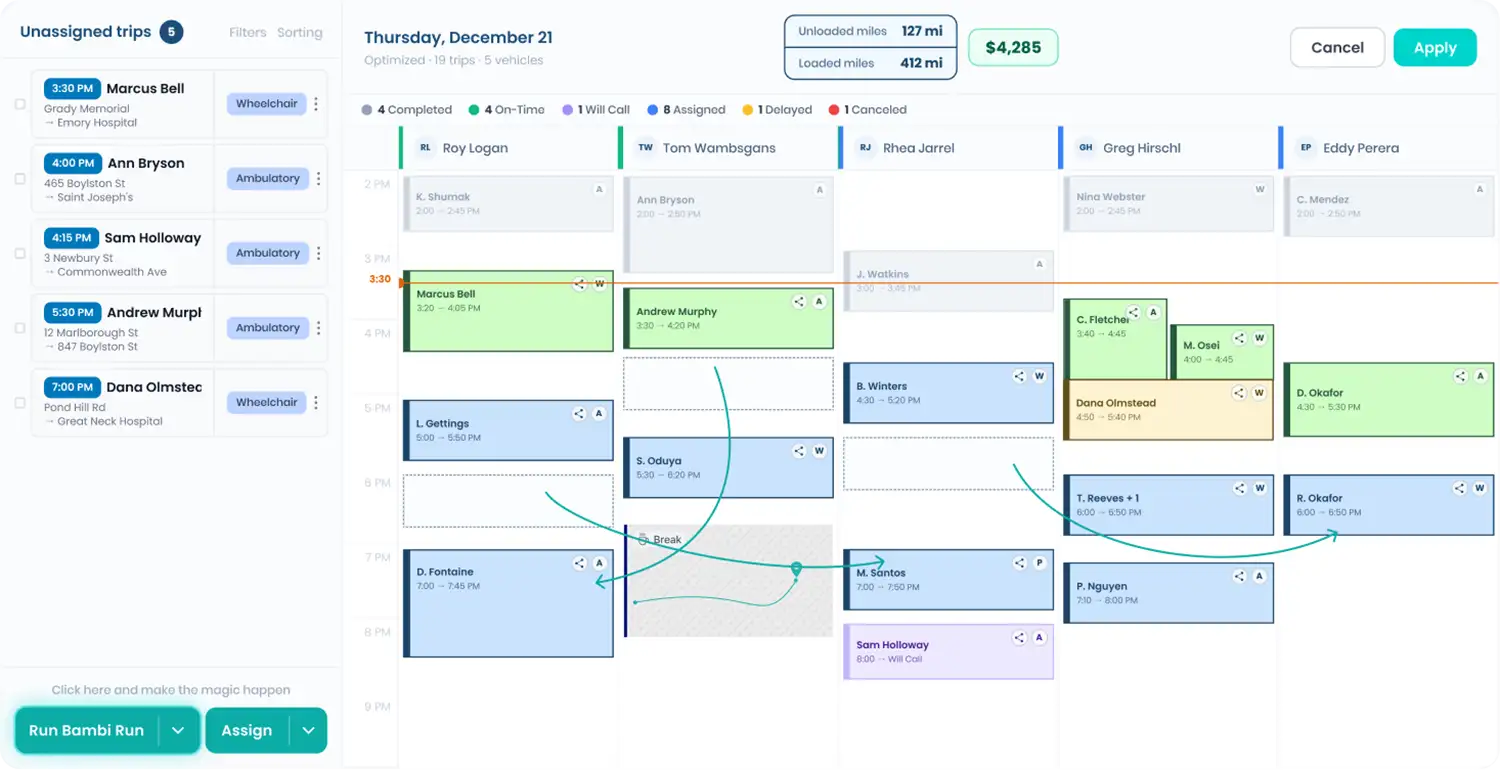

NEMT (Non-Emergency Medical Transportation) software simplifies managing recurring rides, such as dialysis or therapy appointments, by automating scheduling, optimizing routes, and improving billing accuracy. Here’s how it helps:
- Manual vs. Automated Scheduling: Set up recurring trip templates once, reducing manual entry errors and saving hours of daily scheduling work.
- Route Optimization: Groups riders by location and needs to reduce travel time and costs, improving efficiency by up to 40%.
- Dynamic Adjustments: Handles schedule changes, driver reassignments, and real-time traffic updates seamlessly.
- Enhanced Communication: Sends automated ride reminders, real-time updates, and allows two-way communication for riders and caregivers.
- Accurate Billing: Transfers trip data directly to billing systems, achieving clean claim rates over 95%.
- Compliance Tracking: Ensures driver and vehicle credentials are up-to-date and provides audit-ready documentation.
This approach reduces no-shows, improves reliability, and cuts operational costs, making recurring ride management smoother for providers and riders alike.
Automating Scheduling for Recurring Rides
Setting Up Recurring Trip Templates
With NEMT software, dispatchers only need to set up a recurring trip once. They input all the key details - days, times, pickup and drop-off locations, mobility requirements (like wheelchair or stretcher needs), and the appointment window type ("Arrive By" or "Ready By"). From there, the system automatically creates future trips based on this single setup.
This is a game-changer because manually re-entering recurring trips often leads to errors, like missed pickups or incorrect timing, which are common in NEMT operations. Something as small as a typo in an address or mismatched mobility type can result in claim denials and rejections. By using templates, the system ensures consistent and accurate data every time.
Here’s a useful tip: for treatments like dialysis, where the end time can vary, enable the "will-call" option. This feature holds the return trip in a queue until the patient is ready, so drivers aren’t stuck waiting unnecessarily. Additionally, choose software with field validation at intake (like Medicaid ID or mobility level) to ensure every trip generated is ready for billing from the start.
Once templates are in place, the software takes care of any schedule changes seamlessly.
Handling Changes to Recurring Schedules
Schedules aren’t static - clinics close for holidays, patients adjust appointments, and drivers may call out sick. NEMT software is built to handle these changes without requiring dispatchers to redo an entire week’s schedule.
For permanent changes (like a new pickup address), all it takes is updating the template, and every future trip reflects the change instantly. For one-time exceptions (like a canceled appointment due to a holiday), the system flags the conflict and allows you to cancel or adjust just that instance. If a driver becomes unavailable, the software identifies the affected trips and suggests reassigning them to drivers with capacity, saving dispatchers from hours of manual rescheduling.
"Cancellations, substitutions, and holiday exceptions are handled without rebuilding the schedule." - NEMT Cloud Dispatch
Every change is logged automatically, ensuring accountability. This dynamic scheduling approach also helps with demand forecasting, making planning more efficient.
Using Recurring Schedules to Forecast Demand
Recurring templates don’t just simplify scheduling - they also provide a clear view of future workload. For instance, recurring Monday morning dialysis trips highlight peak demand at 7:00 a.m., allowing dispatchers to plan their fleet accordingly.
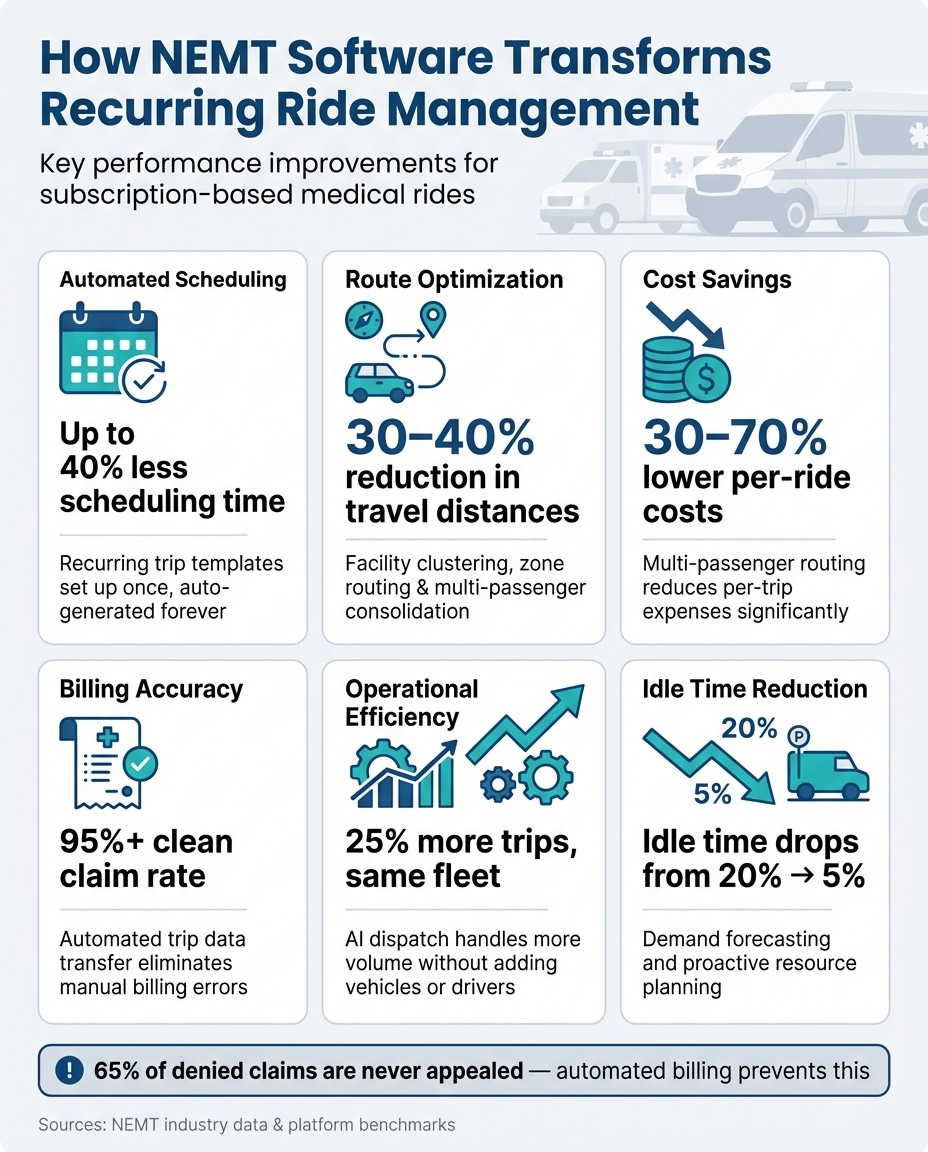
AI-powered scheduling can reduce scheduling time by up to 40% for operations managing over 5,000 trips a month, with the potential to increase trip volume by more than 30% in just a few months. A good practice is to review the volume of auto-generated recurring trips every Friday. This helps determine if additional part-time drivers or vehicles are needed for the upcoming week. By forecasting demand, dispatchers can allocate resources more effectively, improving reliability and reducing idle time - which can drop from 20% of shift hours to as low as 5%.
This shift from reactive to proactive resource planning ensures smoother operations and better service for both patients and providers.
Route Optimization and Dispatching for Subscription Rides
Building Efficient Routes for Recurring Trips
Once recurring trips are generated, the next big step is figuring out how to optimize their routes. This is where route optimization tools come into play.
One helpful feature is facility clustering. The software automatically groups riders who share a common pickup or drop-off location, like a dialysis center or a nursing home. Instead of sending multiple vehicles to the same spot, one driver can handle all the stops in an efficient sequence. This method can cut travel distances by as much as 30–40% compared to random dispatching.
For subscription rides that follow predictable patterns, the optimization engine uses zone routing. This approach assigns specific vehicles to certain geographic areas, which keeps drivers closer to their regular riders, reduces unnecessary travel, and improves punctuality. Additionally, when riders have overlapping schedules and similar mobility requirements, multi-passenger routing consolidates 2–6 riders into one vehicle. This strategy can lower per-ride costs by 30–70%. Together, these techniques ensure precise matching of vehicles and drivers to recurring trips.
Automated Vehicle and Driver Assignment
After creating optimized routes, the system goes a step further by automatically assigning the right vehicles and drivers to each trip. Manual route planning can be slow and prone to errors, but NEMT software simplifies the process by evaluating over 50 factors at once. These include things like wheelchair securement spots, stretcher tie-downs, oxygen equipment, and driver certifications, ensuring the best-fit vehicle is chosen for each rider's needs.
This automation is critical. For instance, assigning a stretcher vehicle when a standard wheelchair-accessible van would do wastes valuable resources. The software prevents such mismatches by applying these rules to every assignment. It also pre-matches drivers to recurring trips based on past performance, offering riders consistency by pairing them with familiar faces. Meanwhile, the system monitors driver credentials, flagging any expiring certifications like licenses or CPR training to ensure compliance.
Making Real-Time Route and Dispatch Adjustments
Even with fixed schedules, real-world conditions can throw a wrench into plans. Traffic jams, driver absences, or patients running late can disrupt even the best-laid plans. Real-time dispatch tools step in to keep things on track, offering a live view of all active trips and driver locations so dispatchers can quickly address any issues.
When delays happen, the software automatically reallocates trips to the nearest available driver and recalculates routes using live traffic updates. For rides with unpredictable end times - like those for dialysis or outpatient procedures - the will-call feature ensures a vehicle is dispatched only when the patient is ready, cutting down on idle time.
"DispatchGenie makes adjustments in real time to find the best vehicle for every passenger, look for multiload opportunities, and more." - RouteGenie
The results are impressive. Providers using optimized dispatch systems can handle 25% more trips without adding vehicles or drivers, while AI-powered routing platforms can slash overall operational costs by 20–30%. For NEMT providers managing dozens of daily subscription rides, these efficiencies add up fast.
Communication and Rider Experience for Recurring Rides
Automated Ride Reminders and Notifications
Timely communication is key to keeping recurring rides on track. Automated reminders make it easier for riders to stay prepared, reducing no-shows and keeping schedules running smoothly.
Modern Non-Emergency Medical Transportation (NEMT) platforms send reminders through the rider's preferred method - SMS, email, or voice. Typically, these systems send one reminder 24 hours before the scheduled pickup and another an hour prior. This is especially helpful for recurring trips - like dialysis or physical therapy - where riders might lose track of specific days despite following a regular schedule.
In addition to reminders, these platforms provide real-time updates on driver status, including notifications when the driver is on the way, has arrived, or when the rider has been dropped off. Many systems also include a "Where's My Ride?" feature in SMS reminders, allowing caregivers to track the vehicle's GPS location. This reduces the need for status-check calls.
For after-hours situations, IVR (Interactive Voice Response) systems allow riders to confirm or cancel trips automatically. These systems now achieve an impressive 90–95% accuracy in processing requests without requiring staff intervention.
Two-Way Communication with Riders and Caregivers
While reminders are helpful, enabling two-way communication takes things a step further. Riders can respond to SMS notifications (e.g., texting "1" to confirm or "2" to cancel), which immediately alerts dispatchers to any changes. This allows for quick adjustments, preventing small issues from escalating into larger problems.
For caregivers managing recurring trips for loved ones, direct communication through SMS or in-app messaging can resolve schedule changes without the hassle of extra calls. Driver apps also play a role by sending real-time updates. For example, when a driver marks their arrival or notes that a rider needs more time, this information is instantly relayed to dispatch. Best practices in the industry show that reminders are most effective when they allow riders to confirm, cancel, or request changes, enabling dispatchers to reassign resources proactively.
This level of interaction also improves coordination with facilities and caregivers, creating a smoother overall experience.
Coordinating with Facilities and Programs
Recurring rides often involve medical appointments, such as dialysis, outpatient therapy, or adult day programs, making facility coordination essential. Without proper communication, delays can ripple through the appointment schedule.
NEMT platforms address this by offering facility portals. High-traffic locations like dialysis centers or nursing homes can use secure logins to manage incoming and outgoing trips, set up recurring schedules for patients, and trigger will-call returns when a patient is ready to leave. This eliminates the need for constant back-and-forth phone calls, significantly cutting down on scheduling errors. For instance, a university hospital reported a 70% drop in scheduling mistakes after implementing scheduling optimization tools.
Facilities that use Electronic Health Records (EHR) benefit even further. Integration with NEMT software allows patient mobility needs - like wheelchairs, stretchers, or oxygen requirements - to be included in transport requests automatically. This eliminates manual data entry and ensures the right vehicle is dispatched for recurring trips.
All communication, whether it’s reminders, real-time updates, or facility notifications, must comply with HIPAA regulations. Encrypted systems are a baseline requirement for handling Protected Health Information (PHI) in recurring medical transport.
Billing, Compliance, and Performance Tracking for Recurring Rides
Efficient recurring ride management doesn’t stop at scheduling and dispatching. Billing, compliance, and performance tracking are equally crucial to keeping operations running smoothly.
Automating Billing for Recurring Services
Handling billing manually for recurring rides can lead to costly mistakes and missed revenue opportunities. For providers managing numerous weekly trips - like those for dialysis or therapy - manual entry often results in errors that cause denied claims. NEMT software eliminates this issue by automatically transferring completed trip data, such as GPS-verified timestamps, electronic signatures, and loaded mileage, directly from the driver’s app to the billing system.
Top-performing NEMT providers maintain a clean claim rate of 95% or higher, while those struggling may drop below 80%.
"The difference between a 95% clean claim rate and an 80% clean claim rate represents tens of thousands of dollars in annual revenue." - Elite Med Financials
Modern platforms simplify the complexities of dealing with multiple payers. Whether it’s Medicaid fee-for-service, Medicare Advantage, broker-managed plans, or private pay, each comes with unique billing requirements. Automated claim scrubbing ensures accuracy by validating HCPCS codes (like A0080 for wheelchair transport), modifiers, and ICD-10 codes before submission. When payments are processed, ERA 835 files automatically post them and flag underpayments for follow-up. This is especially important given that 65% of denied claims are never appealed, leading to significant revenue loss.
Staying Compliant with Industry Standards
Recurring rides demand precise documentation - pickup and drop-off times, mileage, and passenger verification - for every trip. NEMT software addresses this with Electronic Visit Verification (EVV) features, including GPS-linked timestamps and digital signatures captured at the point of service.
Compliance extends beyond trip-level data. Providers must ensure that driver licenses, vehicle insurance, and certifications like CPR remain current. The software tracks these credentials and prevents dispatching drivers or vehicles with expired qualifications before a trip is confirmed. For Medicaid audits, the system creates a chronological audit trail, flowing directly from the driver app to billing. This eliminates manual data entry errors that often result in penalties.
Eligibility verification is another key step. Running EDI 270/271 transactions 24–48 hours before a recurring trip ensures active coverage, reducing the risk of automatic denials on the service day.
Tracking Key Metrics to Improve Recurring Rides
Analytics tools transform trip data into actionable insights. For subscription-based rides, monitoring specific metrics can reveal areas for improvement:
MetricGoalWhy It Matters for Recurring RidesOn-Time Rate95%+Vital for time-sensitive appointments like dialysisNo-Show %Under 5%High no-show rates waste vehicle capacity on fixed schedulesClean Claim Rate95%+Ensures steady cash flow for high-volume servicesDays in A/RUnder 30 daysTracks how quickly payments are processedDeadhead MilesMinimizeReduces empty miles between recurring stops
Real-time dashboards and historical data help dispatchers adjust high-priority trips - like dialysis runs - before issues arise. For example, using NEMT routing software can cut deadhead miles by 15–25% and boost vehicle utilization by 10–20%. Regularly reviewing these metrics, such as monthly audits, can uncover patterns. Whether it’s a route taking too long or a passenger frequently missing rides, these insights allow providers to make proactive adjustments. This not only improves operational efficiency but also enhances service quality and broker performance ratings.
Conclusion: Managing Recurring Rides More Effectively with NEMT Software
Handling recurring subscription-based rides manually can quickly become overwhelming. Tasks like rebuilding daily manifests, addressing billing errors, and fielding endless "where's my ride?" inquiries create a heavy administrative load that can stifle growth. This is where NEMT software steps in, revolutionizing operations and easing the burden.
The primary benefit is clear: automation takes care of repetitive tasks, freeing your team to focus on exceptions and unique cases. Providers using automated solutions report a dramatic reduction in scheduling time. What once took hours each morning can now be done in just minutes. Over time, this efficiency adds up, especially for high-frequency services like dialysis trips or adult day care transportation.
The impact goes beyond scheduling. With smarter route-scheduling integration, seamless data integration from driver apps to billing systems, and automated reminders, common issues like mismatches and no-shows are minimized. These tools also ensure high claim accuracy and improve overall reliability. Real-time dashboards provide insights into potential problems, helping providers address them proactively and deliver dependable service to riders who rely on consistent transportation for their health needs.
"Efficient, reliable transportation is the backbone of Non-Emergency Medical Transportation (NEMT) businesses." - Mike Author
For those looking to optimize recurring ride operations, NEMT Entrepreneur offers a wealth of practical guides, tools, and resources tailored to these challenges. Whether you're just starting to implement standing order templates or fine-tuning compliance workflows, having the right tools and knowledge can simplify processes and lower costs.
FAQs
How do I set up a recurring ride template?
Creating a recurring ride template in NEMT software is a straightforward process, thanks to the scheduling feature. Here's how it typically works:
- Start by selecting the 'Recurring' option within the scheduling module.
- Define the recurrence pattern, such as weekly rides on specific days.
- Input key details, including the rider's information, vehicle assignment, and driver details.
Most NEMT systems also come equipped with tools to detect scheduling conflicts and validate the information you’ve entered, ensuring everything is accurate and ready to go. For precise instructions, check the scheduling module in your specific software.
What happens if a recurring trip is changed or canceled?
When a recurring trip is modified or canceled, the software takes care of updating the schedule instantly. It handles changes like cancellations or rescheduling to ensure trip details remain accurate. Plus, it notifies both drivers and clients about the adjustments, keeping operations running smoothly and everyone in the loop.
How does the software keep recurring ride billing compliant?
The software streamlines recurring ride billing by automating tasks to minimize errors, creating precise claims and invoices, and adhering to tailored protocols for different client types - like Medicaid, NEMT brokers, or private pay. This ensures smoother billing processes, reduces the risk of rejected claims, and avoids incorrect reimbursements.