Cloud-based dispatch systems are transforming Non-Emergency Medical Transportation (NEMT) by replacing outdated manual processes like spreadsheets and phone coordination. These platforms centralize scheduling, GPS tracking, billing, and communication into one efficient system. Here’s why they matter:
- Improved efficiency: Automates scheduling, reduces double bookings, and eliminates manual errors.
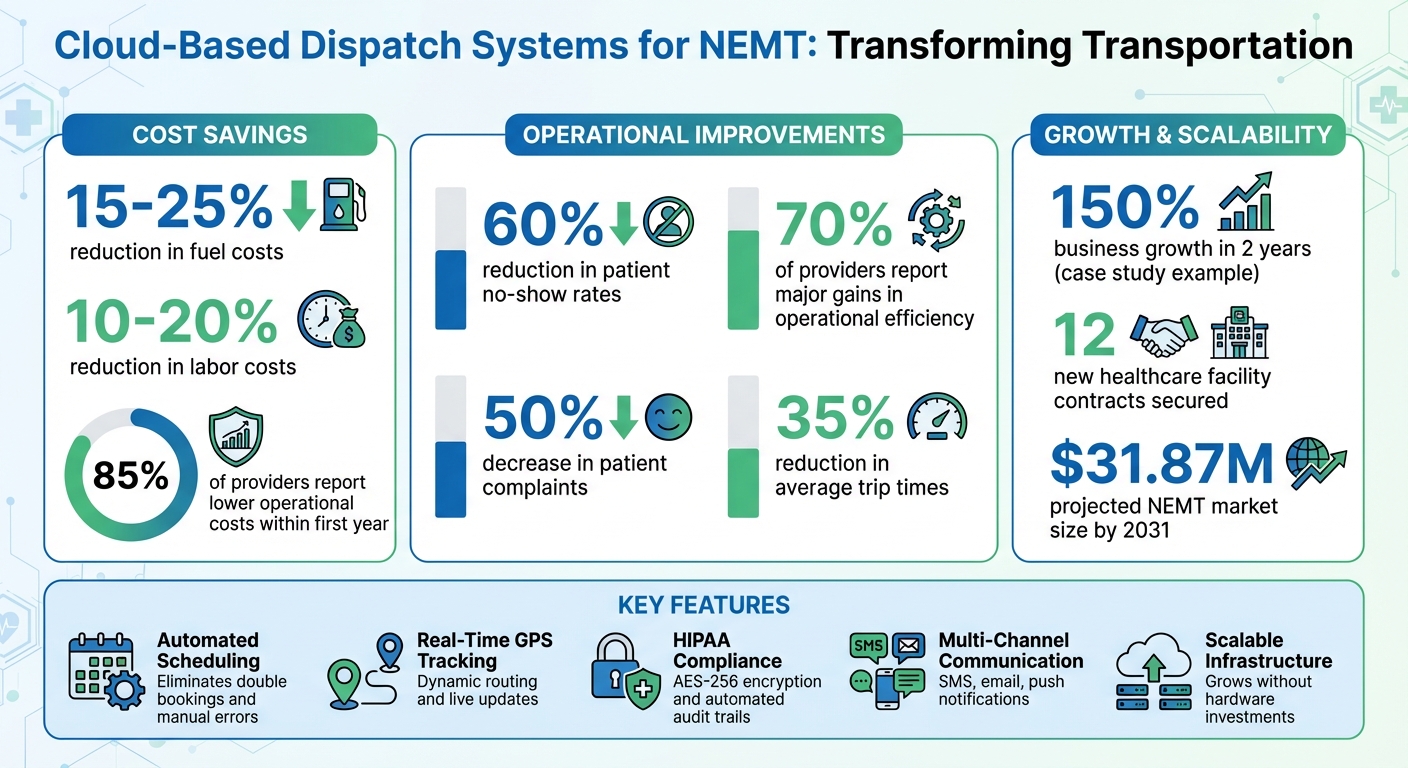
- Cost savings: Cuts fuel expenses by 15-25%, lowers labor costs by 10-20%, and reduces billing errors.
- Real-time updates: GPS tracking and dynamic routing ensure on-time performance and better communication with patients.
- Scalability: Easily supports fleet growth without costly IT investments.
- Compliance: Ensures HIPAA compliance with secure data handling and automated audit trails.
Automated Scheduling and Streamlined Operations
Simplifying Trip Intake and Driver Assignments
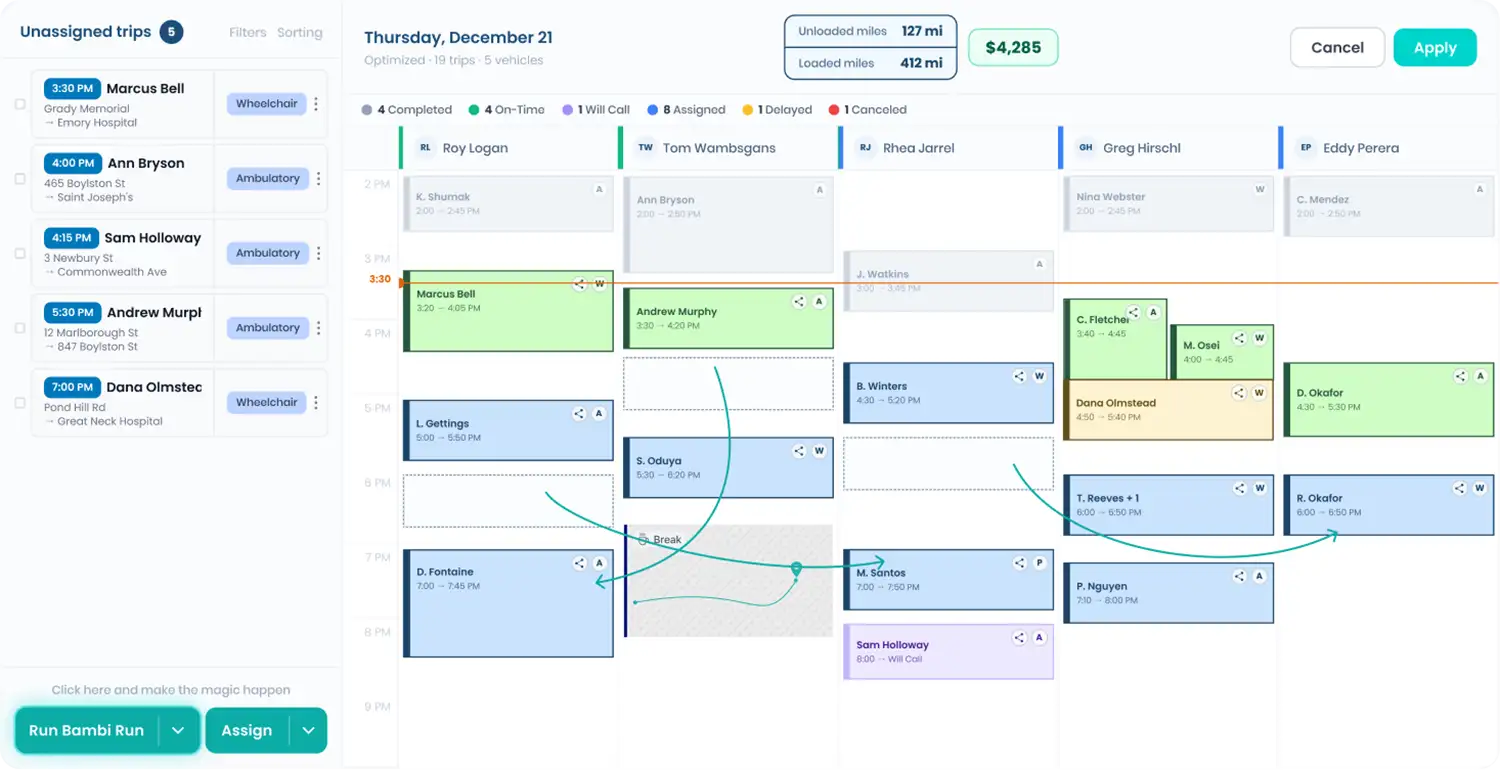
Cloud-based dispatch systems take the hassle out of managing trip requests by centralizing everything in one place. No more juggling phone calls or emails - these systems process trip requests seamlessly, cutting out the need for manual data entry. Once a request is in, automated checks quickly verify patient insurance or Medicaid coverage, making scheduling faster and ensuring reimbursements happen without delays.
Smart algorithms step in to match patients with the nearest available vehicle. They factor in real-time proximity, driver availability, and specific needs like wheelchair access and driver certifications. If delays pop up, the system dynamically reassigns trips to keep everything running smoothly.
"Manual scheduling often results in overlapping trips or missed appointments. Automation eliminates these mistakes".
This technology ensures drivers are assigned efficiently, avoiding fatigue while making the most of the fleet. Common issues like double-bookings or scheduling conflicts - typical with old-school spreadsheet systems - become a thing of the past. The result? Less chaos and a lighter administrative workload.
Reducing Administrative Workload
Automated scheduling doesn’t just save time - it transforms operations. Cloud systems handle recurring appointments, like those for dialysis or physical therapy, without requiring manual input. They also manage last-minute changes, cancellations, and additions with ease. Instead of relying on manual phone calls, patients and caregivers receive automated SMS updates with trip details and estimated arrival times.
On top of that, these systems streamline data logging for invoicing, insurance claims, and reporting. They even take care of behind-the-scenes tasks like updates, security patches, and hardware maintenance, so there’s no need for local IT support. It’s a hands-off approach that keeps everything running smoothly while cutting down on administrative headaches.
Real-Time Route Optimization and Cost Savings
Dynamic Route Planning for Fuel and Time Savings
Cloud-based dispatch systems use AI-powered algorithms to analyze live traffic conditions and other key factors, constantly refining routes in real time. Instead of sticking to fixed paths, these systems adapt on the fly. For instance, if an accident or traffic jam occurs, the system quickly recalibrates to guide vehicles around the delay.
This flexible routing approach leads to measurable savings. Many NEMT providers report fuel cost reductions ranging from 15% to 25% thanks to optimized routing. Beyond saving on fuel, these systems also reduce wear and tear on vehicles. Real-time GPS tracking gives dispatchers an up-to-the-minute view of vehicle locations, enabling quick trip reassignment when necessary.
"AI-driven route optimization ensures that vehicles take the shortest and fastest paths, significantly reducing fuel consumption across your fleet." - Bob Martin, NEMT Cloud Dispatch
In addition to cutting fuel costs, optimized routing helps extend the life of vehicles. It delays the need for frequent maintenance tasks like oil changes, brake repairs, and tire replacements, ultimately lowering upkeep expenses. These savings can then be redirected toward enhancing service quality and patient care. Plus, by reducing costs, providers can improve punctuality, further boosting overall service reliability.
Improving On-Time Performance
Real-time updates build on the benefits of optimized routing to improve reliability even further. Live route adjustments ensure estimated arrival times remain accurate, even when conditions change unexpectedly. For example, if traffic causes delays, the system recalculates the ETA and informs patients and facilities right away. This kind of communication and reliability has helped many NEMT providers cut patient no-show rates by 60%.
When unexpected issues arise - like a vehicle breakdown or a delayed driver - the system quickly redistributes assignments to avoid missed appointments. Dispatchers also receive proactive alerts, allowing them to address delays before they escalate. Older systems that relied on static schedules and manual calls simply can't match this level of coordination. In fact, 70% of NEMT providers using cloud-based dispatch solutions report major gains in operational efficiency. By shifting from reactive to proactive management, these systems reduce administrative headaches and create a smoother, more dependable experience for patients.
Better Communication and Patient Experience
Real-Time Communication Tools
Cloud-based systems make communication smoother and faster by sending real-time alerts through SMS, email, and push notifications. These alerts notify patients about upcoming pickups and allow them to confirm or reschedule with just one click. Drivers also benefit from instant mobile updates about assignments or last-minute changes.
One standout feature is "Where's My Ride", which provides real-time GPS tracking and estimated arrival times (ETAs). This feature helps reduce the stress of waiting by giving patients and caregivers accurate updates on vehicle arrival times. Integrated VoIP and SMS services enable dispatchers to communicate directly with drivers about issues like traffic delays or route adjustments. These updates are then shared with patients, ensuring everyone stays informed. Families and caregivers are also kept in the loop with timely trip updates, making sure patients are ready when the vehicle arrives. Additionally, digital tools like electronic signatures and logs help verify arrivals and address any disputes regarding pickups.
These tools don’t just make operations more efficient - they also play a big role in improving patient trust and satisfaction.
Building Patient Confidence and Satisfaction
Clear and proactive communication does more than just streamline logistics; it helps build trust and enhances the overall patient experience. By providing transparent updates, patients feel less uncertain and more at ease.
A great example of this comes from Regional Healthcare Transportation Services. After switching to a cloud-based platform, this mid-sized NEMT provider saw a 60% drop in no-show rates in just six months, thanks to automated reminders and better communication practices. They also experienced a 50% decrease in patient complaints and a 35% reduction in average trip times, leading to noticeable improvements in patient satisfaction scores.
These systems also allow providers to store important patient-specific details, such as medical conditions or special equipment needs like wheelchairs. This ensures drivers are well-prepared to deliver personalized and safe service. By focusing on these details, providers establish themselves as dependable partners in the patient’s healthcare journey. Multi-channel alerts guarantee that reminders reach patients through their preferred communication method, and one-click confirmations make it easy for patients to confirm their attendance.
Compliance, Scalability, and Data Access
Meeting Industry Compliance Requirements
Cloud-based dispatch systems make it easier for NEMT providers to meet strict healthcare regulations, eliminating the hassle of manual record-keeping. These platforms rely on AES-256 encryption to safeguard patient data during transmission and storage, ensuring that electronic health records and trip logs remain secure. With role-based access controls, staff members only see the information they need - drivers access trip details, while billing teams handle financial data - reducing the risk of unauthorized access to Protected Health Information.
Another major benefit is the inclusion of automated audit trails. These systems record every user activity, system access, and data change in tamper-proof logs. As NEMT Cloud Dispatch explains:
"HIPAA compliance is not just about avoiding penalties. It is about protecting patients, strengthening partnerships, and future-proofing your NEMT business."
Cloud platforms also stay ahead of compliance updates. They automatically implement the latest security patches and adapt to evolving HIPAA and payer regulations. Real-time eligibility verification further enhances compliance by confirming patient insurance or Medicaid status before trips begin, helping to prevent fraud. This is critical because HIPAA violations can lead to hefty fines - ranging from thousands to millions of dollars - and the potential loss of key broker contracts.
Scalable Solutions for Growing Businesses
Cloud-based systems are designed to grow with your business without requiring significant hardware investments. Unlike legacy systems that demand new servers and IT infrastructure, these platforms expand virtually without limits as your fleet grows. Even smaller providers can access advanced dispatching tools used by larger operators, all without the burden of high upfront costs.
Take Metropolitan Medical Transport as an example. After adopting a cloud-based dispatch system, they grew their operations by 150% in just two years and secured 12 new healthcare facility contracts - all while maintaining full HIPAA compliance. The system handled this growth seamlessly, with no need for additional servers or IT staff.
The financial benefits are just as compelling. Providers often see fuel cost reductions of 15–25% and labor cost savings of 10–20%, with 85% reporting lower operational costs within the first year of implementation. AI-powered scheduling allows businesses to manage more trips without significantly increasing administrative staff, keeping overhead low while revenue climbs. This scalability also supports unified, real-time monitoring across all operations.
Real-Time Data Access and Reporting
Cloud systems provide complete visibility into operations from any internet-connected device. Dispatchers can track vehicle locations, trip statuses, and driver performance in real time, allowing them to quickly address delays or cancellations. Management teams can oversee everything remotely, enabling round-the-clock coordination without being tied to a physical office.
The reporting tools turn raw data into actionable insights. Metrics like response times, job completion rates, and resource usage help identify bottlenecks before they escalate. Financial dashboards give a clear view of revenue, claim statuses, and overall performance in real time. Plus, features like GPS breadcrumbs, timestamps, and digital signatures create a reliable audit trail, reducing fraudulent claims and ensuring billing accuracy.
Conclusion
Cloud-based dispatch systems are quickly becoming a game-changer for NEMT providers aiming to stay ahead in 2026. By replacing outdated manual processes with features like automated scheduling and real-time GPS tracking, these platforms tackle everyday operational headaches that can impact your bottom line. Think fewer double bookings, trips running on time, and smoother overall operations.
On top of that, these systems help providers cut fuel and labor costs while nearly eliminating billing mistakes. These savings can mean the difference between struggling with inefficiencies and achieving scalable profitability. Plus, the financial perks directly support sustainable growth.
But it’s not just about saving money. Cloud platforms are designed to grow with your business. Whether you’re managing a small fleet or expanding into new regions, they adapt to your needs. Real-time data access also gives you the power to monitor operations, make quick decisions, and maintain high service standards.
With the NEMT market expected to hit $31.87 million by 2031, embracing digital transformation today positions providers to capture that growth. By streamlining operations now and preparing for future cost and compliance challenges, cloud-based dispatch systems set the stage for long-term success. The time to act is now for NEMT providers looking to thrive in a rapidly evolving industry.
FAQs
How hard is it to switch from spreadsheets to a cloud dispatch system?
Switching from spreadsheets to a cloud-based dispatch system might seem like a big step, but it’s surprisingly straightforward and comes with plenty of perks. While you’ll need to invest some time in setup and training, these systems are built to be intuitive and adaptable. With features like automated scheduling, real-time updates, and access from any device, the transition becomes much smoother. Plus, it helps cut down on errors and boosts efficiency, making it a smart move for improving service quality and simplifying operations.
Will a cloud dispatch system integrate with my billing and Medicaid workflows?
Yes, a cloud dispatch system can work alongside your billing and Medicaid workflows. These systems typically offer tools for smoother billing processes, compliance tracking, and simplified Medicaid reimbursement handling. This makes claims processing faster and more dependable for NEMT providers.
What internet or mobile service do drivers need for real-time GPS and updates?
Drivers must have a dependable internet or mobile data connection paired with GPS functionality. This ensures they can access real-time tracking and updates, enabling precise location sharing and smooth communication throughout their tasks. Reliable connectivity is key to keeping operations on track without interruptions.